
Written and collected by Zia H Shah MD
Abstract
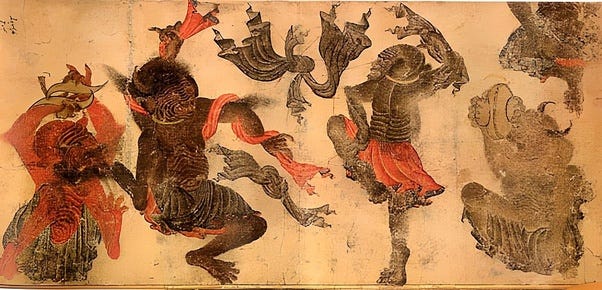
Summary: This research-based commentary examines Qur’anic verses 46:29–33, 46:18, and 72:1–7, which describe encounters with “jinn.” Traditionally, jinn are understood as invisible supernatural beings made of smokeless fire. However, drawing on the Qur’an itself and modern scholarly insights (especially the works of Zia H. Shah MD), we explore a rational reinterpretation: in these passages, “jinn” represents hidden groups of humans – often influential leaders or remote communities – rather than otherworldly spirits. We analyze each verse in context, showing how the jinn in Surah Al-Ahqaf (46) and Surah Al-Jinn (72) behave and speak like human listeners of the Quran, even referencing the Torah of Moses and affirming pure monotheism. We also discuss Qur’an 46:18, which pairs jinn and humans together under God’s judgment, implying a shared human accountability. In a thematic epilogue, we present Quran 34:40–45 (in M.A.S. Abdel Haleem’s English translation) to demonstrate how the Qur’an strongly suggests that people’s “worship” of jinn refers to idolizing human leaders in religion, politics, and society rather than worshipping supernatural demons – indeed, most people have never literally worshipped “invisible jinn.” This perspective, rooted in the Qur’an and supported by modern commentary, dispels the myth of literal demons interacting with humans thequran.love thequran.love. It instead highlights a timeless lesson: humans must not blindly follow hidden influencers (“jinn” as power-wielding elites or misguided elders), but think for themselves and submit only to God’s guidance.
Read further in Microsoft Word file:


 The Glorious Quran and Science
Leave a comment