
Written and collected by Zia H Shah MD
Abstract
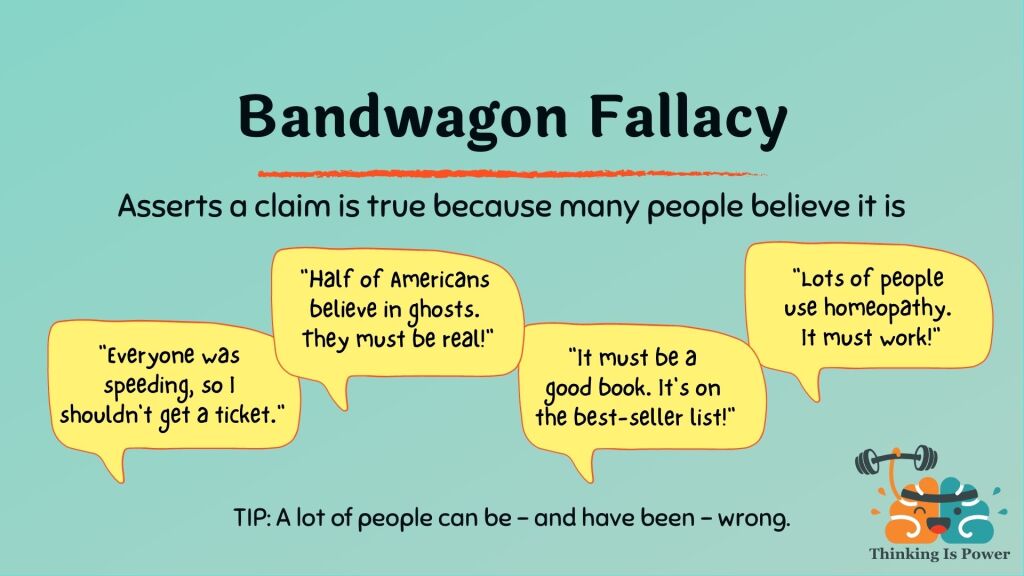
Truth does not depend on numbers. This principle is powerfully asserted in the Quran, which warns against mistaking popular opinion for fact. In Surah Al-An‘am 6:116, God tells Prophet Muhammad (and by extension all readers) that following the majority can lead one astray, for “they follow nothing but conjecture” quran.com. In other words, widely held beliefs—if not based on sound knowledge—are mere guesswork, not a proof of truth. This Quranic insight anticipates what philosophers and scientists have echoed for centuries: reality is not decided by vote or popularity. An idea isn’t true just because many (or even most) people accept it. This article explores Quranic verses that connect conjecture with misguidance and emphasize that truth stands on its own even if held by a lone individual. We also examine the argumentum ad populum (appeal to popularity) fallacy, drawing on scholarly voices to debunk it, and provide real-world examples—from religious doctrines to scientific paradigms—where the majority’s view was not a reliable guide to truth. The discussion maintains a scholarly tone accessible to the 1.8 billion Muslims worldwide, highlighting a unifying message: critical thinking, evidence, and divine guidance must trump the whims of the crowd.
The Quran on Conjecture and Misguidance
The Quran repeatedly cautions that conjecture (ظنّ, zann – baseless assumption or guess) is a hallmark of misguided thinking. In the verse 6:116 mentioned above, the Quran explicitly links following the majority with being led away from the truth: “If you obey most of those on earth, they will lead you astray from Allah’s path. They follow nothing but conjecture, and they do nothing but guess.” quran.com. Here, conjecture represents beliefs not grounded in knowledge or revelation. The majority of people, Allah warns, may very well be following illusions or inherited ideas rather than truth. This remarkable verse establishes that truth is independent of consensus. Right and wrong are not determined by counting heads or by the customs of the multitude. In Islamic theology, truth comes from God – objective and unchanging – even if only a minority uphold it at times.
Another Quranic verse drives home this point further: “Most of them follow nothing but ˹inherited˺ assumptions. And surely assumptions can in no way replace the truth.” quran.com (Yunus 10:36). This verse uses nearly the same terms: most people are following assumptions (conjecture), and assumption cannot substitute for truth. In a similar vein, Surah An-Najm 53:28 says of those who speak without knowledge: “They follow nothing but conjecture; and conjecture avails nothing against Truth.” corpus.quran.com. By stating “conjecture avails nothing against the truth,” the Quran asserts that no matter how widespread a false idea may be, it cannot overcome or alter the reality of the truth. Objective truth stands firm even when human beings speculate or fantasize otherwise.
The Quran also criticizes blind conformity to prevailing beliefs and traditions. Surah Al-Baqarah 2:170 depicts people who, when urged to follow divine revelation, retort that they will stick to what the majority of their ancestors did. The Quran pointedly asks: “Even though their forefathers had absolutely no understanding or guidance?” quran.com. This rhetorical question exposes the folly of adhering to ancestral or majority practice in spite of clear evidence of its error. In another passage, the Quran adds a sharper rebuke: would they persist in that path “even if Satan was inviting them to the punishment of the Blaze?” (31:21). The message is clear: popular precedent or mass acceptance does not grant legitimacy to a falsehood.
Throughout the Quran, we find indications that truth often resides with a conscientious minority rather than the unthinking majority. For example, when Prophet Noah preached for many years, only a handful believed in him while the majority scoffed; the Quran notes that “none believed with him except a few” corpus.quran.com. Likewise, many other prophets stood almost alone with the truth against nations of disbelievers. The Quran observes that “most people do not know” (7:187) or “most people will not believe” despite the desire that they would (12:103), emphasizing that truth is not negated by lack of majority support. Indeed, righteousness and true guidance may belong to a single sincere believer in the face of a world of opposition. The Prophet Muhammad ﷺ himself began his mission virtually alone, opposed by the majority in Mecca, yet the truth of his message did not depend on their initial acceptance. Over time the truth prevailed, vindicating the stance of the lone truthful voice against the crowd.
Islamic wisdom traditions highlight this theme strongly. The esteemed Companion ʿAbdullāh ibn Masʿūd defined the true community (al-Jamāʿah) not as the biggest group, but as the group upon the truth – “The Jamāʿah is what conforms to the truth, even if you are alone.” tumblr.com. In other words, one upright individual following God’s guidance constitutes a “united community” in God’s sight, whereas a majority united on misguidance have actually left the true community abuaminaelias.com. This striking statement by ibn Masʿūd reinforces the Quranic paradigm: a truth is a truth even if only one person believes in it, and it remains falsehood even if the whole world were to endorse it. Truth is qualitatively distinct from the popularity of belief. As Mahatma Gandhi would later put it, “Even if you are a minority of one, the truth is the truth” – a sentiment perfectly in line with Islamic thought.
Read further in Microsoft Word file:






Leave a Reply