

Written and collected by Zia H Shah MD
Abstract
Surah al-Shams (“The Sun,” Qur’an 91) is a potent chapter of the Quran composed of a series of cosmic oaths followed by verses on the human soul’s moral compass and a historical example. This commentary examines each verse verse-by-verse, integrating scientific insights (from physics, astronomy, cosmology, geology, biology, and psychology) with philosophical and theological reflections. The chapter opens by swearing oaths on phenomena such as the sun, moon, day, night, sky, and earth – natural wonders that modern science has richly illuminated – and uses these as evidence exhibits supporting the subsequent claim about the human conscience and character (verses 7–10). We explore how the physics of the sun, the astronomy of the moon, the day-night cycle and circadian biology, the expanding universe, and Earth’s geology and the evolution of life all underscore a purposeful design in creation. This, in turn, reinforces the Quran’s central message in this sūrah: that humans are endowed with a divinely inspired moral sense, and one’s moral choices (to purify or to corrupt the soul) shape one’s destiny. A final section reflects on the historic tale of Thamūd (verses 11–15) – an ancient people who disastrously ignored their moral guidance – as a cautionary illustration. Throughout, the commentary is structured academically yet maintains a devotional tone, aiming to deepen both intellectual and spiritual appreciation of Surah al-Shams. Key sources from scientific research and classical interpretation are cited to provide a comprehensive, up-to-date understanding.
Introduction
Surah al-Shams (91st chapter of the Qur’an) is a Meccan surah of 15 verses. It is distinctive for opening with seven sweeping oaths: by the Sun and its radiant light, by the Moon, by the Day, by the Night, by the Sky, by the Earth, and by the human Soul. In classical Arabic rhetoric, oaths serve to grab attention and underscore the gravity and truth of the message that follows. Here, each oath seems to “present evidence” from the natural world in support of a profound spiritual truth about human nature myislam.org myislam.org. Verses 7–10 declare that God perfectly fashioned the human self, instilled in it an understanding of right and wrong, and that moral cultivation leads to success while moral corruption leads to failure. In verses 11–15, the surah cites the example of Thamūd, an arrogant ancient nation that rejected their prophet and divine sign, as an illustration of collective moral failure and its destructive consequences.
This commentary adopts a multidisciplinary approach to each verse, treating the Quranic oaths as pointers to scientific realities and philosophical insights that reinforce the surah’s moral message. Modern discoveries have unveiled astounding facts about the sun, moon, and cosmos – facts unknown to the 7th-century Arabian audience – which today allow us to appreciate these verses with a new depth of awe. We will discuss how the Sun’s physics and role in sustaining life, the Moon’s unique characteristics that make Earth habitable, the regularity of day and night and its effect on living creatures, the structure and expansion of the heavens, and the geology of Earth and the emergence of life all testify to a finely tuned universe. Such a cosmos is consonant with the Quranic view of a purposeful Creation and lends credence to the idea that humanity’s moral faculties are likewise part of that divine purpose.
The structure of the commentary is as follows: each verse (or pair of closely related verses) is first quoted in Arabic alongside the English translation by M.A.S. Abdel Haleem, then analyzed. Scientific data and theories are presented to illuminate the verse’s imagery, philosophical implications are drawn, and theological interpretations (from an Islamic perspective) are given to tie the natural “sign” back to the surah’s central theme of moral responsibility. A brief thematic epilogue will then summarize how the cosmic signs and moral message converge, offering a holistic understanding of Surah al-Shams as both a scientific marvel and a devotional guide.
The Oaths as Evidence Exhibits – An Overview
Before diving into verse-by-verse detail, it is helpful to visualize the relationship between the oath subjects (verses 1–7) and the moral claims they bolster (verses 7–10). The Quran often uses created phenomena as ayāt (signs) pointing to truths about the Creator and His guidance. In Surah al-Shams, the “signs” are the celestial and terrestrial wonders listed in verses 1–6, culminating in the human self in verse 7. These are effectively presented as witnesses in support of the bold assertion that follows: that within each person is a Divinely given moral compass whose nurture or neglect determines salvation or loss. We can summarize these correspondences in a structured way:
| Quranic Oath (Verse) | Scientific Perspective on the Oath Subject | Significance to Human Life & Morality |
|---|---|---|
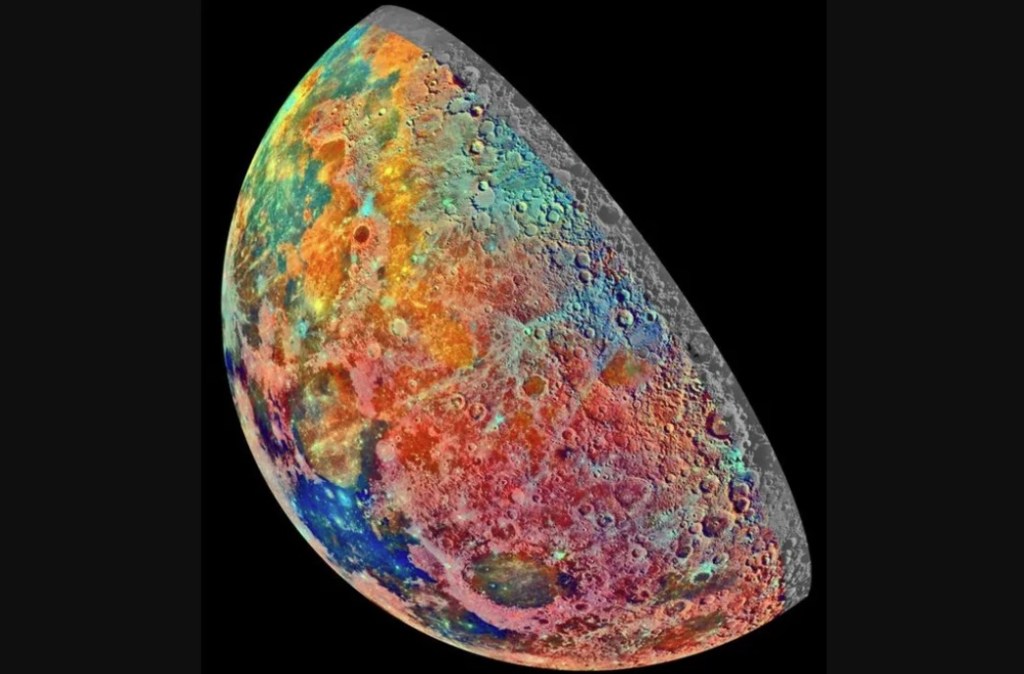
| 91:1 – Sun <br/>“By the sun in its morning brightness”myislam.org | The Sun’s energy is produced by nuclear fusion of hydrogen in its core, radiating life-giving light and heat en.wikipedia.org. It is a stable, mid-life star whose steady output over billions of years has sustained Earth’s biosphere reasons.org. The Sun’s mass and composition are finely tuned; stars exactly like our Sun (with its long-term stability) are rare reasons.org. Earth orbits at the “Goldilocks” distance where the Sun’s warmth allows liquid water, making life possible. | The Sun’s brilliance sustains physical life and symbolizes illumination (knowledge, guidance). Its consistency and fine-tuned nature point to an ordered cosmos. This serves as evidence of a wise Creator, underpinning the spiritual premise that the same Creator imparted light of conscience to the human soul. Just as sunlight reveals the world, divine guidance illumines the moral path. |
| 91:2 – Moon <br/>“…and by the moon as it follows it (the sun)”myislam.org | The Moon likely formed from a giant impact early in Earth’s history, and its presence has been crucial for Earth’s habitability. Our Moon is unusually large relative to its planet, and it stabilizes Earth’s axial tilt, preventing wild climate swings thequran.love. The Moon’s gravitational pull causes tides that influenced ocean mixing and may have aided the evolution of life from sea to land. Of 200+ moons in our solar system, none in the inner region is like Earth’s moon thequran.love. Scientists note that complex life might not exist without the Moon – “if there were no moon, there would have been no land-based life on our planet” thequran.love thequran.love. | The Moon’s synchronized orbit (“follows” the sun by reflecting its light at night) and its essential role in creating a stable environment underscore purposeful design in the cosmos. It is a celestial reflector, receiving light and giving gentle guidance in darkness – a metaphor for the human heart receiving divine light. The Moon’s impact on Earth’s seasons and tides highlights how interconnected creation is, bolstering the claim that God intentionally prepared the world for human life. Thus, the human soul is part of a deliberate plan, and its moral faculty is intentional – not an accident. |
| 91:3 – Day <br/>“…by the day as it displays the sun’s glory”myislam.org | The Day is caused by Earth’s rotation on its axis (~24 hours), bringing the sun into view. This regular rotation is governed by Newtonian physics and conservation of angular momentum from Earth’s formation. Daylight literally “displays” the sun, allowing its energy to power ecosystems (photosynthesis) and warm the planet. Over Earth’s history, life has evolved under the predictable cycle of day and night. Most living creatures, including humans, have circadian rhythms—24-hour biological clocks tuned to the day-night cycle. Daylight is the strongest external cue aligning our circadian rhythm, which prepares our bodies for activity in morning and rest at night cdc.gov. Human physiology (hormone levels, body temperature, alertness) follows a daily pattern linked to the sun’s schedule cdc.gov. | The predictability of day speaks to an underlying order in creation. Daytime is associated with clarity, productivity, and life. By “showing the sun’s glory,” day makes knowledge and work possible. Philosophically, this suggests that as physical light reveals reality, God’s truth reveals moral reality. The alignment of our internal clocks with the sun emphasizes we are designed to live in harmony with natural law – and by extension, moral law. Just as thriving in life requires respecting the natural cycles (activity by day, sleep by night), thriving in soul requires respecting the moral cycle of seeking enlightenment and moderating rest. |
| 91:4 – Night <br/>“…and by the night as it conceals it (the sun)”myislam.org | The Night is the complement of day, when Earth’s rotation hides the sun from a given locale. The sun’s disappearance beneath the horizon brings darkness, which triggers a cascade of biological responses. In humans, darkness prompts the pineal gland to release melatonin, facilitating sleep. Virtually all life has adapted to nightly rest or altered activity patterns. Adequate nighttime sleep is essential for memory consolidation, cellular repair, and overall health. The circadian purpose of night is to allow organisms to recuperate; disruption of the light/dark cycle (e.g. shift work) can harm health cdc.gov cdc.gov. The night sky, meanwhile, reveals a vault of stars and the wider universe that daylight conceals. | Darkness provides rest, reflection, and an experience of awe at the cosmos. As an oath, the night testifies to the necessity of contrast and limits. Without night, there is no recovery; without moral restraints, the soul is exhausted. The covering of sunlight by night symbolizes how material reality isn’t all there is – just as the bright sun is hidden but the greater universe becomes visible, material pursuits dim at night and man is invited to ponder higher truths. Theologically, night’s quiet and obscurity hint at humility and introspection, key for moral purification. The cycle of day and night thus suggests a balanced life: active striving for good (day) moderated by periods of rest and introspection (night). Both serve the soul’s health, underscoring the wisdom of the One who ordained them. |
| 91:5 – Sky <br/>“…by the sky and how He built it”myislam.org | The sky (al-samā’) here signifies the entire cosmos or firmament. Modern cosmology reveals that the universe indeed has a built structure: space and time originated in a Big Bang ~13.8 billion years ago. The “building” of the sky can evoke the finely balanced physical laws and architecture of the cosmos. The Quran in another verse says “We built the sky with might and We are expanding it” (51:47), which startlingly aligns with the discovery that space itself is expanding map.gsfc.nasa.gov. In the 1920s, Edwin Hubble observed distant galaxies receding, leading to Hubble’s Law of cosmic expansion map.gsfc.nasa.gov. Moreover, the universe’s fundamental constants appear “fine-tuned” for life – e.g., if the initial expansion rate after the Big Bang had been minutely different, the universe would have either quickly collapsed or expanded too fast for stars to form. Physicist Stephen Hawking noted that if expansion one second after the Big Bang differed by 1 part in 10^17 (0.00000000000000001), the universe would have recollapsed; if faster by 1 part in 10^6, galaxies and planets would not form brainyquote.com. Such precise calibration suggests an extraordinary cosmic balance. | Swearing by the sky’s construction highlights the vastness, order, and intentionality of creation. The sky’s grandeur and the extreme fine-tuning of cosmic parameters serve as compelling evidence of a Creative Power with purposeful design. Philosophically, this elevates the human soul’s significance: we are not in a chaotic, meaningless universe, but one “built” with exacting care – implying our moral nature is part of that intentional design. The verse implicitly asks: if the majestic heavens obey divine laws, should not the human being likewise follow the divine moral law within? The expanding, law-bound universe lends weight to the surah’s later claim that God, who ordered the cosmos, also ordered the human soul with moral understanding. It fosters humility and accountability: the same God who upholds galaxies holds us accountable for our choices. |
| 91:6 – Earth <br/>“…and by the earth and how He spread it”myislam.org | The Earth is our cradle of life, uniquely suited in countless ways to support complex organisms. “Spread out” (ṭaḥāhā) can imply the earth’s expanse and the preparation of its surface for life. Modern geology shows Earth’s crust indeed underwent a spread: continental drift on plate tectonics has shaped land distribution and recycled nutrients. Plate tectonics are driven by Earth’s internal heat and have critical benefits: they regulate the carbon cycle and climate over eons, helping prevent runaway greenhouse or icehouse conditions reasons.org. Earth’s size, composition, and distance from the sun all fall within narrow ranges that make it habitable reasons.org reasons.org. Water is abundant, and the atmosphere is protective yet breathable. Over ~4 billion years, Earth’s environment has remained stable enough for life to evolve from simple cells to complex beings. Paleontology and genetics indicate a progression of life forms, with brief bursts like the Cambrian explosion (~540 million years ago) introducing most animal body plans. Notably, humans arose very late (our species Homo sapiens only ~300,000 years ago) – implying a long “preparation” of Earth’s biosphere. Scientists like Hugh Ross observe that advanced life required billions of years of simpler life to build up oxygen and moderate climate, and numerous fine-tuned events (from supernovae seeding heavy elements reasons.org to just-right asteroid impacts) for intelligent life to emerge reasons.org. This suggests the process of evolution was guided by many unlikely coincidences, effectively a “guided evolution” towards the rise of conscious, moral beings. | The Earth’s hospitality is a foundational sign of divine providence. By observing how Earth was shaped and prepared, we see a stage meticulously set for human life – reinforcing that our existence is intended, not accidental. Theologically, “spreading the earth” evokes the image of God making Earth a comfortable dwelling (cf. Qur’an 20:53). All the complex geological and ecological processes that sustain life lend support to verses 7–10: the same Creator who patiently guided the cosmos and life to this point also guided the human soul with inner knowledge (verse 8). The Earth-oath testifies that God nourishes and sustains – physically through Earth’s provisions, and morally through revelation and conscience. It also suggests accountability: if Earth, through its obedient natural laws, produced creatures capable of morality, those creatures (humans) are expected to obey the moral law. In short, Earth’s entire history is evidence of divine intentionality culminating in human beings – who must then honor that purpose by living righteously. |
| 91:7 – Soul <br/>“…and by the soul and how He formed it”myislam.org | After the macrocosm, the Quran turns to the microcosm: the human nafs (soul or self). God’s fashioning of the soul “and how He formed it” alludes to the exquisite design of the human person, both physically and spiritually. Biologically, Homo sapiens possess a brain of remarkable complexity – ~86 billion neurons organized into neural networks giving rise to consciousness. Evolutionary biology can trace aspects of our psychology (emotions, instincts) to earlier animals, yet self-aware rational consciousness remains something uniquely heightened in humans. The “forming” might be understood as endowing humans with fitra (an innate disposition) and faculties like intellect, will, and emotion in just proportion. Philosophically, thinkers from Aristotle to Descartes marveled at the human mind’s abilities – reason, language, moral judgement – which far exceed survival needs. Neuroscience still struggles to explain how subjective consciousness arises from matter (“the hard problem of consciousness”). The verse’s wording implies a deliberate calibration: our drives, passions, and reason were balanced by the Creator. Indeed, the human psyche contains dual potential (aggressive impulses vs. empathy, etc.) that must be regulated. This verse invites considering the dignity of personhood: each soul is handmade by God, bearing His breath (cf. Qur’an 15:29) and thus immeasurable worth. | By swearing on the human soul, God brings the evidence close to home. After reflecting on the vast universe, we now reflect inward on our own nature. The intricate formation of the self – with its moral and spiritual capacities – is perhaps the strongest proof of all that we are meant for a purpose. In Islamic theology, humans are God’s vicegerents on earth, entrusted with moral freedom. The soul’s design, with conscience and reason, signals that we are accountable agents. As the hadith says, “God has inscribed goodness in all things”; our soul is primed to recognize goodness. This verse sets the stage for the next: having shown that the soul is divinely crafted, the Quran will assert that the Creator also invested it with moral guidance. It is a poignant reminder that knowing right from wrong is part of our very nature, not merely a social construct. The balance in the soul’s design also implies the need for continual self-discipline to maintain that balance – a theme about to be developed. |
Having outlined these connections, we now proceed to each verse for detailed commentary, linking the science of each “oath” to the philosophical and theological lessons drawn from it, and ultimately to the surah’s core message about ethical success and failure.
Read further in Microsoft Word file:
 The Glorious Quran and Science
Leave a comment