
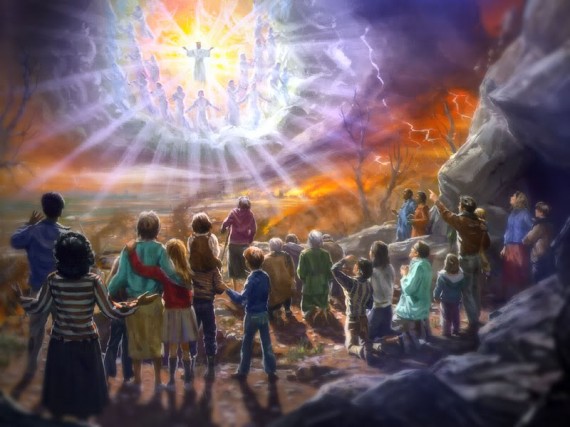
Epigraph
وَمَكَرُوا وَمَكَرَ اللَّهُ ۖ وَاللَّهُ خَيْرُ الْمَاكِرِينَ
إِذْ قَالَ اللَّهُ يَا عِيسَىٰ إِنِّي مُتَوَفِّيكَ وَرَافِعُكَ إِلَيَّ وَمُطَهِّرُكَ مِنَ الَّذِينَ كَفَرُوا وَجَاعِلُ الَّذِينَ اتَّبَعُوكَ فَوْقَ الَّذِينَ كَفَرُوا إِلَىٰ يَوْمِ الْقِيَامَةِ ۖ ثُمَّ إِلَيَّ مَرْجِعُكُمْ فَأَحْكُمُ بَيْنَكُمْ فِيمَا كُنتُمْ فِيهِ تَخْتَلِفُونَ
The disbelievers schemed but God also schemed; God is the Best of Schemers.
God said, ‘Jesus, I will cause you to die and raise you up to Me: I will purify you of the disbelievers. Till the Day of Resurrection, I will make those who follow you superior to those who disbelieved. Then you will all return to Me and I will judge between you regarding your differences. (Al Quran 3:54-55)
Written and collected by Zia H Shah MD
Abstract
The belief in the second coming of Jesus (Isa) is a widely held tenet of mainstream Sunni Islamic eschatology. According to traditional Sunni teachings—derived largely from hadith—Jesus was miraculously raised alive to heaven and will return to earth before the Day of Judgment to defeat evil and restore justice. This article provides a comprehensive overview of this belief and examines its prevalence among Sunni Muslims across different countries and eras. It discusses how the importance ascribed to Jesus’s return varies geographically and historically, from its relatively marginal role in classical Sunni thought to its enduring popularity in contemporary Muslim societies. The paper also presents theological and rational critiques of the doctrine: Qur’anic evidence cited by scholars who question a literal return, as well as scientific arguments regarding the implausibility of a 2000-year-old man returning to life. Furthermore, it profiles prominent Sunni scholars—past and present—who have rejected the literal second coming, including Sir Syed Ahmad Khan and Javed Ahmad Ghamidi, highlighting their reasoning and Quran-based interpretations. In a respectful theological tone, the discussion balances the faith-based perspective that views Jesus’s return as a miraculous divine promise with the critical perspective that considers it a mythical or symbolic narrative. A thematic epilogue reflects on what this debate reveals about the interplay between Islamic tradition, modern thought, and the enduring human hope for divine justice.
Introduction
The second coming of Jesus Christ is a concept often associated with Christian theology, yet it also occupies an important place in Islamic belief, particularly within Sunni tradition. In Islam, Jesus (known as Prophet Isa, peace be upon him) is revered as a prophet and messiah, though not divine, and many Sunni Muslims believe that he will return to Earth as a sign of the end times. This belief stems not from the Qur’an’s explicit text but from the Hadith literature and classical Islamic eschatology. Over centuries, Muslim scholars have elaborated a detailed narrative of Jesus’s future descent and role in the last days. However, this doctrine has not gone unquestioned. Throughout Islamic history – especially in the modern era – various thinkers and theologians have revisited the scriptural bases of the belief and debated its plausibility in light of both Quranic evidence and rational inquiry.
In the following sections, we will first outline the mainstream Sunni narrative about Jesus’s return and its scriptural foundations. Next, we will explore how prevalent this belief is among Sunni Muslim populations in different countries, and how much emphasis is placed on it in diverse cultural contexts. We will then examine historical shifts in the importance and interpretation of the second coming doctrine, noting periods of heightened apocalyptic expectation versus times of skepticism or reform. After that, the article will present arguments against the literal second coming from two angles: (a) Quran-centered theological arguments that question whether the Quran actually supports Jesus’s physical return, and (b) scientific or rational arguments that highlight the biological implausibility of a 2000-year-old human returning to life. Finally, we will profile Sunni scholars who have rejected a literal second coming – including their motivations and reasoning – with special attention to the views of Sir Syed Ahmad Khan and Javed Ahmad Ghamidi. A brief epilogue will conclude with reflections on the significance of this debate for contemporary Islamic thought.
Read further in Microsoft Word file:
 The Glorious Quran and Science
Leave a comment