
Epigraph
أَفَلَا يَتَدَبَّرُونَ الْقُرْآنَ ۚ وَلَوْ كَانَ مِنْ عِندِ غَيْرِ اللَّهِ لَوَجَدُوا فِيهِ اخْتِلَافًا كَثِيرًا
Abstract
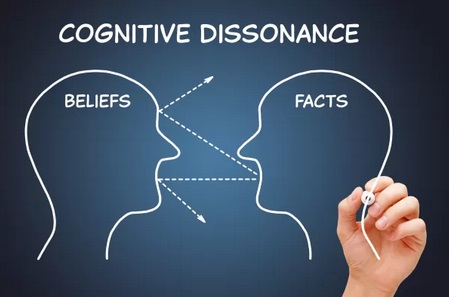
Qur’an 4:82 poses a profound challenge and invitation: “Will they not think about this Quran? If it had been from anyone other than God, they would have found much inconsistency in it.” myislam.org. This verse asserts that the Glorious Qur’an is free of contradictions – a claim with deep psychological, philosophical, and theological implications. In this commentary, we explore how Qur’an 4:82 guides us to overcome our inner conflicts and blind spots by encouraging honest reflection. Psychologically, the verse addresses phenomena like cognitive dissonance (the mental stress of holding conflicting beliefs) and even alludes to the harms of “double bind” situations, where contradictory messages can fracture one’s mental well-being. Philosophically, it invokes the law of non-contradiction as a test of truth – suggesting that a truly divine message must be logically coherent and that any genuine contradictions in one’s worldview signal a need for re-examination. Theologically, classical and modern scholars have long pointed to this verse as evidence of the Qur’an’s divine origin and a directive to resolve apparent discrepancies in interpretation. By examining classical exegesis alongside contemporary insights (including the writings of Zia H. Shah MD on double binds, cognitive dissonance, and Quranic coherence), we find that Qur’an 4:82 offers a path to psychological harmony, a coherent philosophy of life, and a consistent theology. In essence, faith in a contradiction-free divine revelation can inspire us to confront our personal doubts and societal paradoxes, leading us toward a more integrated and conflict-free understanding of reality.
Introduction: A Call to Reflection and Consistency
In Surah Al-Nisa (4:82), the Qur’an makes a bold appeal to its readers: “Do they not reflect upon the Qur’an? Had it been from anyone other than Allah, they would have found within it much contradiction.” (MAS Abdel Haleem translation) myislam.org. At its core, this verse suggests that the absence of internal inconsistencies in the Qur’an is a hallmark of its truth. It invites us to “think about” or deeply ponder (Arabic tadabbur) the scripture’s content themuslimtimes.info. The underlying logic is simple but powerful: truth from an All-Knowing source will not contradict itself, whereas a false or human-made scripture would inevitably contain discrepancies. As one modern scholar observes, “the verse in effect teaches a rational criterion for truth in scripture – non-contradiction” thequran.love.
This “falsification test” grounded in consistency has resonated with Muslims for centuries. Classical commentators note that the Qur’an was revealed gradually over 23 years on a wide range of topics, yet it “came on a consistent, well-arranged pattern that decisively proves it is from God alone” themuslimtimes.info themuslimtimes.info. The seamless harmony of the Qur’anic message – despite its diverse subjects in theology, law, ethics, and history – is taken as a sign of its divine origin themuslimtimes.info. In contrast, human writings or philosophies often betray contradictions when examined over time thequran.love. Thus, Qur’an 4:82 is both a challenge to skeptics (to find inconsistencies if they can) and a reassurance to believers that any perceived conflicts in the text or in life can be resolved through deeper understanding.
Beyond affirming the Qur’an’s consistency, this verse has a broader human message: it prompts us to consider how we handle contradictions in our own lives and beliefs. Do we notice and address the inconsistencies in our thinking, or do we ignore them due to bias or habit? The verse’s tone – “Will they not reflect?!” – is almost a rebuke, suggesting that an unwillingness to honestly engage with the truth is a kind of intellectual and spiritual failing themuslimtimes.info themuslimtimes.info. In the sections that follow, we will delve into three dimensions of Qur’an 4:82’s wisdom:
- Psychologically, how consistent divine guidance helps us overcome inner conflicts like cognitive dissonance and harmful double binds, leading to mental well-being.
- Philosophically, how the principle of non-contradiction underpins a coherent worldview, and how the Qur’an aligns faith with reason.
- Theologically, how classical and contemporary scholars interpret this verse as a call to maintain a contradiction-free understanding of the Qur’an and of Islam, ensuring that our religious beliefs are coherent and free of doubt.
By examining these perspectives, we’ll see that Qur’an 4:82 is more than a claim about a holy book – it’s a recipe for achieving clarity of mind and soul by aligning with a truth that has “no crookedness” themuslimtimes.info or inconsistency. It encourages us to overcome our blind spots and double standards through sincere reflection, thereby harmonizing our psychology, philosophy of life, and theology under the banner of divine consistency.
Read further in Microsoft Word file:




 The Glorious Quran and Science
Leave a comment