
Written and collected by Zia H Shah MD
Abstract
This essay explores how human cognition (thinking) and emotion (feeling) arose through evolution and how these scientific insights can be harmonized with the Quran’s view of human consciousness under a theistic evolution paradigm. We summarize a Closer To Truth discussion on “How Did Cognition and Emotion Evolve?”, which depicts the gradual co-development of thought and feeling in our animal ancestry. We then align this with Quranic concepts and the scholarly perspective of Dr. Zia H. Shah, who argues that biological evolution is a divinely guided process compatible with Islamthequran.love. We review the science of human origins – how Homo sapiens emerged over millions of years with advanced mental and emotional capacities – and then show how the Qur’an’s teachings can be interpreted to see evolution as Allah’s chosen method of creationthequran.lovethequran.love. The narrative emphasizes harmony between science and faith: evolution need not be viewed as a blind, purposeless process, but rather as unfolding under a wise divine planthequran.love. In conclusion (a thematic epilogue), we reflect on the broader implications of this synthesis, suggesting that embracing a Quranic theistic evolution model enriches our understanding of human origins and fosters mutual respect between scientific inquiry and spiritual beliefthequran.love.
Evolution of Cognition and Emotion: A Co-Development
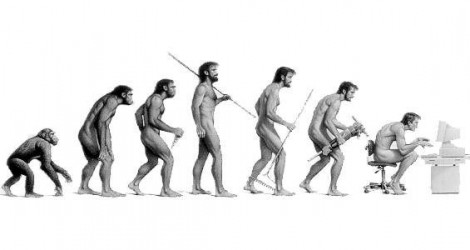
Modern science depicts human origins as a gradual, branching process spanning millions of yearsthequran.love. Our species evolved from apelike ancestors over roughly 6 million years, acquiring key traits in stages. For example, early hominins developed bipedalism (walking on two legs) >4 million years ago, and later our lineage experienced a dramatic expansion of brain size and cognitive abilitythequran.love. By around 300,000 years ago, anatomically modern humans had emerged in Africa, and by ~70,000 years ago some migrated out of Africa to populate other continentsthequran.love. Throughout this journey, nature “sculpted” human physical and mental capacities step by stepthequran.love. The emergence of behaviors we consider uniquely human – complex tool-making, language, symbolic art, elaborate social structures – was incremental, not instantaneous, becoming fully pronounced mainly in the last ~100,000 yearsthequran.love. In short, there was no single “moment” when a human mind popped into existence; rather, the evidence shows a continuum of development from more primitive ancestors to us, with each innovation building on prior foundationsthequran.love.
One of the most fascinating aspects of this story is the evolution of the mind and emotions themselves. The Closer To Truth discussion “How Did Cognition and Emotion Evolve?” emphasizes that the mental gap between humans and animals is one of degree, not kindthequran.love. In the 19th century, Charles Darwin argued exactly this: looking across species, we find a continuum of mental abilities; differences in intelligence or feeling are quantitative, not absolutethequran.love. He wrote that “there is no fundamental difference between man and the higher mammals in their mental faculties” and that all differences are “of degree, not of kind”factsanddetails.com. Darwin even documented how animals share emotional expressions with us – for example, young chimpanzees when tickled will produce a laughter-like sound and sparkling eyes, much as human children dofactsanddetails.com. Modern science has vindicated Darwin’s thesis of mental continuity. Many animals demonstrate basic problem-solving or communication, and they experience emotions like fear, affection, joy, and grief. Studies in comparative cognition have revealed surprising intelligence in creatures once thought mindless, from tool use in crows to empathy in ratsthequran.love. Likewise, affective neuroscience shows that the core brain systems for emotion in humans are present in other mammals. The fundamental neural circuits for emotions – the “ancestral mammal brain” – still operate inside our own brainsthequran.love. This indicates that primal feelings (hunger, fear, mating drives, maternal care, etc.) evolved long before humans, and were later built upon by higher cognition in primates and especially in Homo sapiensthequran.love.
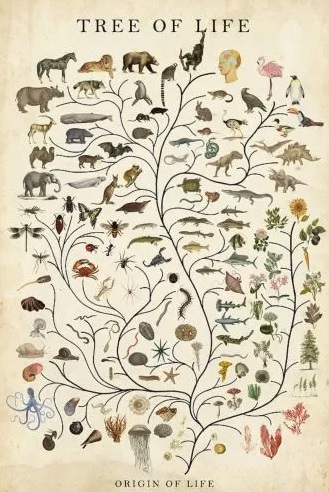
Crucially, cognition and emotion co-evolved hand-in-hand over millions of yearsthequran.love. Early mammals’ emotions drove learning and survival behavior (for instance, fear conditioning helps avoid danger, social bonding promotes group survival). As some mammals developed greater cognitive skills (memory, problem-solving, communication), they could support more complex social emotions (like empathy, loyalty, or envy). In turn, stronger emotions – e.g. a mother’s care for offspring or loyalty within a tribe – provided selective advantages that spurred further cognitive development (such as better communication to coordinate, or memory of social relationships)thequran.love. In our hominin ancestors, this feedback loop ramped up. By the time Homo sapiens emerged with a much larger brain, evolution had equipped our species with an exceptional mind: capable of self-awareness, abstract reasoning, technological creativity, rich language, and a broad spectrum of emotions from awe and compassion to jealousy and guiltthequran.love. Yet none of these capacities appeared as a sudden miracle; they are the cumulative outcome of a long natural historythequran.love. Every faculty we pride ourselves on has antecedents in earlier creatures. Our linguistic ability likely built on primate vocal and gestural communication; our moral sentiments (like fairness or altruism) have roots in the social behaviors of other social animals (for example, monkeys exhibit rudimentary fairness, and elephants show empathy). The Closer To Truth experts underscore that thinking and feeling developed together: as our ancestors became smarter, they formed deeper social bonds and new emotions; conversely, stronger social emotions favored greater cooperation and cultural transmission, which accelerated cognitive gainsthequran.love. Evolution thus wove an ever-more sophisticated mind, but one that remains a continuation of the animal mind in evolutionary termsthequran.love. As one expert noted, in nature we see “numberless gradations” bridging the simplest life forms to the most complex, so that what separates us from bacteria or fish is not an unbridgeable chasm but a series of small steps accumulating over eonsthequran.love. In sum, science presents human consciousness not as a mystically inserted anomaly, but as the flowering of capabilities traceable across the tree of life.
Skull evolution of human ancestors over ~3 million years, from early hominins (e.g. Australopithecus) to modern Homo sapiens. Such fossil evidence highlights the gradual anatomical changes (especially brain size increase) accompanying our cognitive evolution. thequran.love thequran.love
It is important to stress that acknowledging this evolutionary continuity does not negate human uniqueness; rather, it places it in context. Humans do possess unusual abilities (complex language, art, advanced reasoning) and a sense of self-reflective consciousness that seems far richer than other animals. However, the evolutionary view suggests these abilities were built upon templates present in simpler form earlier. Many traits once thought to set humans wholly apart – tool use, morality, culture, emotion – are now known to exist in rudimentary forms in other species factsanddetails.com factsanddetails.com. This realization has humbled our perspective, yet we also recognize that at some point in our lineage, quantitative changes (more neurons, more social learning, more tool complexity) led to a qualitative shift – a critical mass yielding true sapience (“wisdom”). The fossil and archaeological records indicate that by around 80,000–100,000 years ago, something changed in Homo sapiens: we see an explosion of symbolic artifacts, creative tools, and cultural complexity not observed before factsanddetails.com factsanddetails.com. Some paleoanthropologists suggest a “cognitive revolution” occurred, possibly linked to the full development of complex language or abstract thought. In religious terms, one might view this as the stage at which humans became the kind of being that could receive revelation and bear moral responsibility – essentially when human consciousness in the full sense ignited. This bridges us to the Quranic perspective, which we will explore next: how the Quran describes the origin of human consciousness and how that might align with a guided evolutionary process.
Read further in Microsoft word file:


 The Glorious Quran and Science
Leave a comment