
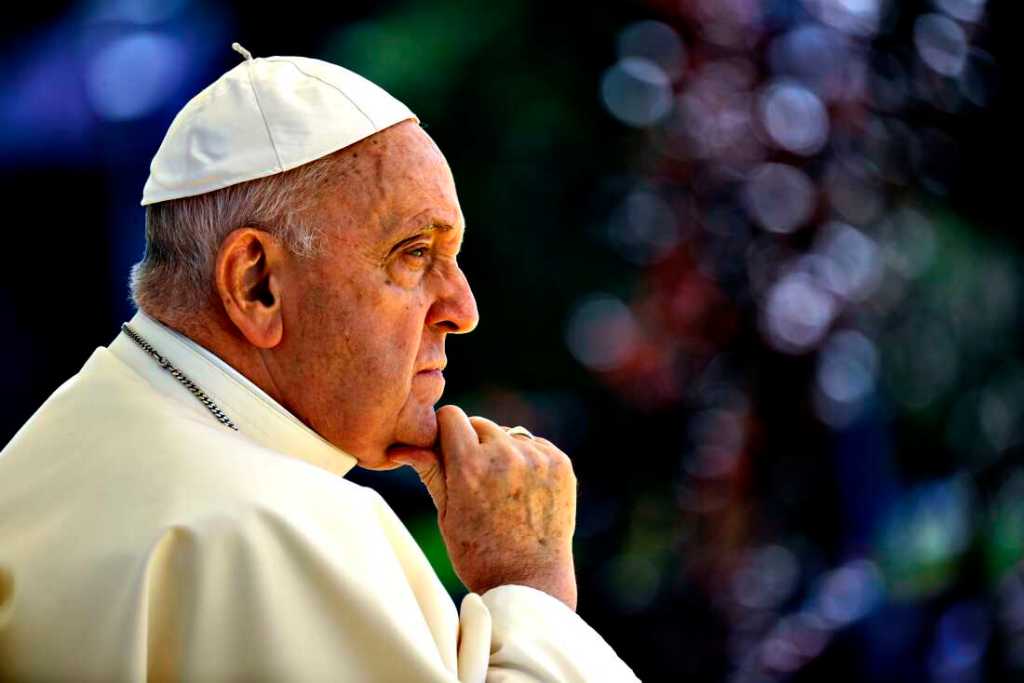
Written and collected by Zia H Shah MD
Abstract
The doctrine of papal infallibility – the belief that the Pope is preserved from error when pronouncing solemn dogmatic teachings – has a complex history of formulation within Roman Catholicism and remains a point of divergence among Christian traditions and other faiths. This article provides a historical overview of how papal infallibility emerged and was formally defined at the First Vatican Council in 1870, highlighting key ecclesiastical debates and theological developments. It then critically examines how this doctrine is viewed outside the Catholic Church: Eastern Orthodox Christianity emphasizes the infallibility of the Church through ecumenical councils and rejects the unilateral papal claim; Protestant Christianity, grounded in sola scriptura, denies any human infallibility in doctrine and critiques the papal office as unscriptural; Judaism, while revering rabbinic authority, has no equivalent concept and stresses the fallibility of even its highest religious courts; Sunni Islam considers only the prophetic message and sacred text as preserved from error, denying any post-prophetic infallible authority, whereas Shia Islam upholds the ‘ismah (infallibility) of certain divinely appointed Imams, a concept analogous in some ways to papal infallibility yet differing in scope and basis. Through a neutral, scholarly lens, the article explores each tradition’s perspective, providing a comparative analysis of authority and infallibility across religious boundaries. An epilogue offers thematic reflections on how these differing views of infallibility reflect deeper theological principles and historical experiences.
Introduction
Debates over religious authority and doctrinal certainty have shaped the history of many faith communities. In Roman Catholicism, one of the most distinctive – and often controversial – assertions of authority is the doctrine of papal infallibility. This doctrine holds that under specific conditions, the Bishop of Rome (the Pope) can define teachings on faith or morals that are safeguarded from error by the Holy Spirit. Formally defined relatively late in church history (at the First Vatican Council of 1869–1870), papal infallibility has since become a cornerstone of Catholic ecclesiology, symbolizing the Pope’s unique role as supreme teacher of the Churchewtn.com. Yet, from its inception, the doctrine has been contested both within Catholic circles and by those outside the Catholic Church. Understanding papal infallibility requires not only tracing its historical development in the Catholic context, but also examining how other religious traditions respond to or critique the notion that a single religious leader could be immune from error in defining doctrine.
In what follows, we first chart the emergence and formalization of the infallibility dogma in Catholicism, noting how it was rooted in earlier ideas about papal authority but took on a definitive shape in the late 19th century amid specific theological and political currents. We then explore the perspectives of Eastern Orthodoxy, Protestantism, Judaism, and Islam (Sunni and Shia) on this doctrine. Each tradition offers a distinct critique or interpretation shaped by its own theological principles: Orthodoxy favors conciliar infallibility of the whole Church; Protestantism upholds Scripture as the only infallible authority; Judaism emphasizes the fallibility of even its greatest sages; Sunni Islam reserves infallibility to prophets and holy scripture alone; and Shia Islam posits an infallible guidance vested in its Imams, paralleling yet differing from the papal claim. Through these comparisons, the article sheds light on how concepts of authority and truth are navigated across religious lines, and how the Catholic idea of papal infallibility stands in both contrast and conversation with analogous ideas elsewhere. This neutral, academic inquiry will draw on historical documents, theological writings, and scholarly analyses to provide a comprehensive view of papal infallibility’s place in interfaith dialogue.
Read further in Microsoft Word file:



 The Glorious Quran and Science
Leave a comment