
Written and collected by Zia H Shah MD
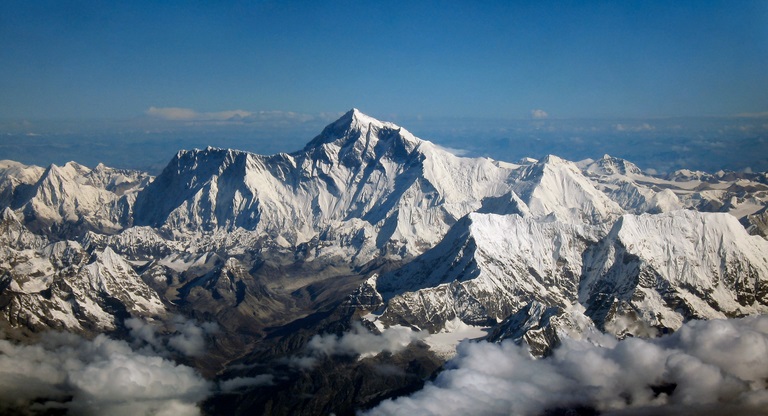
What could a 7th century Arab know about the mountains? Probably not much more than that they exist and are high and majestic. Nevertheless, there are more than 48 verses talking about different aspects of mountains, physical, scientific, philosophical, or theological. There are at least four articles that I have written about these references before:
The Glorious Quran and the Floating Mountains
The Glorious Quran: Mountains as Earth’s Natural Shock Absorbers
The Glorious Quran: ‘And (look) at the mountains, how they are anchored?’
The Glorious Qur’an 21:30–33 – Scientific and Theological Insights – In 5 Minutes
Today we will talk about a verse that highlights that earth was not born with the mountains, and our planet went through different eras of formation, one of which was the rising of the mountains:
قُلْ أَئِنَّكُمْ لَتَكْفُرُونَ بِالَّذِي خَلَقَ الْأَرْضَ فِي يَوْمَيْنِ وَتَجْعَلُونَ لَهُ أَندَادًا ۚ ذَٰلِكَ رَبُّ الْعَالَمِينَ
وَجَعَلَ فِيهَا رَوَاسِيَ مِن فَوْقِهَا وَبَارَكَ فِيهَا وَقَدَّرَ فِيهَا أَقْوَاتَهَا فِي أَرْبَعَةِ أَيَّامٍ سَوَاءً لِّلسَّائِلِينَ
Say, ‘How can you disregard the One who created the earth in two Days? How can you set up other gods as His equals? He is the Lord of all the worlds!’ He placed solid mountains on it, blessed it, measured out its varied provisions for all who seek them––all in four Days. (Al Quran 41:9-10)
When we come to think of the rising of the mountains on the surface of earth, the Glorious Quran says that they did not come in the initial formation of the planet but came through on a different day or a different era, it creates a scene exactly in keeping with the modern scientific understanding of the mountain formation:
Mountain-Building Timeframes – Forming a Mountain Range
Mountain ranges do not form overnight – they typically develop over tens of millions of years or longer as tectonic forces slowly crumple and uplift the crust. A mountain-building event (an orogeny) usually spans a vast timescale: orogenies often take place over tens or even hundreds of millions of years k12.libretexts.org. For example, the Himalayan range began rising around 50 million years ago when India collided with Asia and continues to rise today geolsoc.org.uk. In the case of the Andes, subduction of the Nazca plate under South America initiated uplift tens of millions of years ago; recent studies suggest the Andes reached their towering heights in stages, with a major pulse of rapid uplift occurring only ~10–6 million years ago after long-term crustal thickening bristol.ac.uk. Similarly, the Rocky Mountains of North America formed during the Laramide Orogeny, which lasted roughly 40 million years (approximately 75–35 Ma) en.wikipedia.org. These examples illustrate that a “single” mountain range can take on the order of 10–100+ million years to fully develop from the onset of tectonic collision to peak elevation. The prolonged timeframe arises because convergence and uplift happen incrementally: plates collide at only a few centimeters per year, and mountains continue rising until tectonic forces wane or erosion counterbalances uplift.
Earth’s First Mountains – Early Orogeny in Deep Time
Mountain ranges have been forming on Earth for billions of years. Our planet is about 4.54 billion years old ultimatekilimanjaro.com, and once the early crust solidified and plate tectonics began, mountain-building processes would have started. Geological evidence indicates that mountain ranges were already forming by the Archean Eon (over 3 billion years ago). One of the oldest known mountain remnants is the Barberton Makhonjwa Greenstone Belt in South Africa, which dates to approximately 3.5 billion years ago ultimatekilimanjaro.com. This shows that by 3.5 Ga (billion years ago), volcanic activity and continental collisions were uplifting Earth’s crust into proto-mountain ranges. By the late Archean (~2.7–2.5 Ga), major orogenic events like the Kenoran (Algoman) orogeny were occurring; this event – a series of continent collisions in what is now North America – lasted on the order of <100 million years and brought the Archean Eon to a close around 2.5 Ga en.wikipedia.org. The end of the Archean marks a significant shift in Earth’s crustal development: by ~2.5 Ga, the first stable continental cores (cratons) had formed, and continental crust had thickened to ~40 km, indicating substantial mountain-building had taken place en.wikipedia.orgen.wikipedia.org. In summary, mountain ranges began forming as early as ~3.5 billion years ago, not long after Earth’s crust became stable, demonstrating that plate tectonic and orogenic processes have been active for most of Earth’s history.
Read the rest of the story in PDF file:



 The Glorious Quran and Science
Leave a comment