
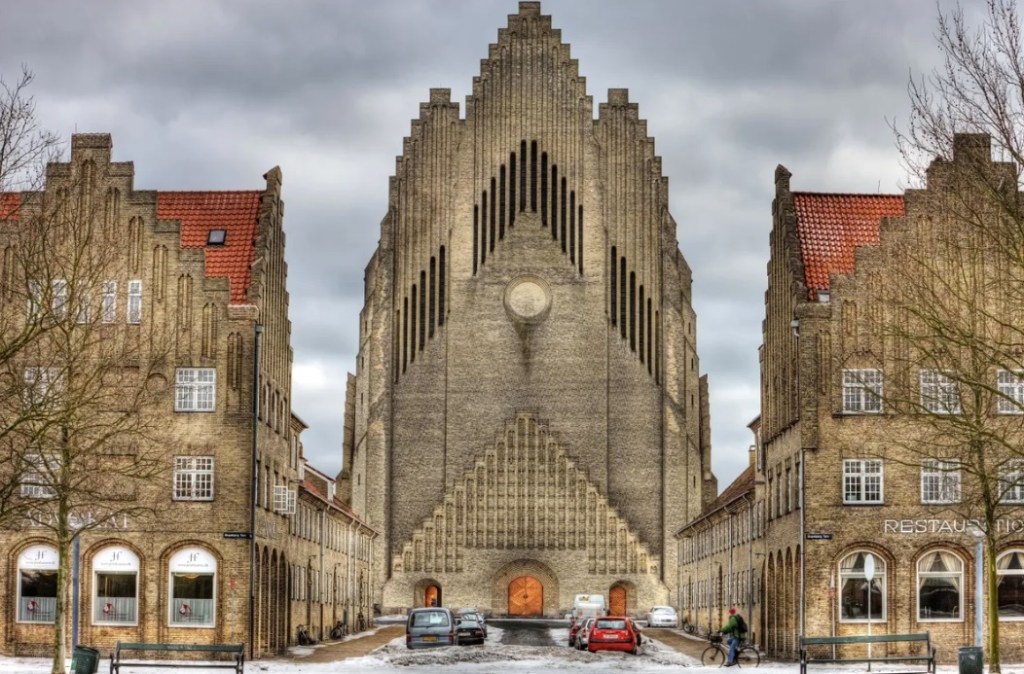
Presented by Zia H Shah MD
Abstract
This research report provides an exhaustive examination of the life and thought of Søren Aabye Kierkegaard (1813–1855), arguably the most significant religious thinker of the nineteenth century and the progenitor of modern existentialism. The first movement of this study charts Kierkegaard’s biography, from his formative years under the shadow of his father’s Jutlandic melancholy through his tumultuous engagement to Regine Olsen, to his final, sacrificial stand against the Danish State Church. The second movement consists of a detailed essay analyzing Kierkegaard’s radical critique of “Christendom”—a term he used to distinguish institutionalized, cultural religion from the “Christianity of the New Testament.” Through a dense synthesis of primary textual evidence, including his pseudonymous works and his final polemics in The Moment, the report explores his denunciations of the professionalized clergy, the “comedy” of state-mandated rituals, and the abolition of the “offense” of faith. By investigating his epistemological insistence on subjectivity and the “infinite qualitative distinction” between man and God, the report reveals how Kierkegaard’s attack was not an assault on faith itself, but a desperate attempt to reintroduce the difficulty and “terror” of genuine Christianity into a complacent society. The report concludes with a thematic epilogue evaluating his enduring impact on twentieth-century theology and the existentialist tradition.
The Architect of Inwardness: A Biography of Søren Kierkegaard
The Paternal Inheritance and the Jutland Ghost
Søren Aabye Kierkegaard was born on May 5, 1813, in Copenhagen, Denmark, as the seventh and last child of Michael Pedersen Kierkegaard and Ane Sørensdatter Lund. His childhood was not one of youthful frivolity but was instead steeped in an atmosphere of intense intellectual rigor and religious gloom, dictated by the overwhelming presence of his father. Michael Kierkegaard was a self-made man of significant wealth, having risen from a poverty-stricken shepherd on the Jutland heaths to a prosperous wool merchant in the capital. However, his material success was perpetually shadowed by a profound, “fathomless” melancholy that would define the Kierkegaardian household.
The roots of this family despair were tied to Michael’s conviction that he was under a divine curse. As a young boy suffering in the Jutland heaths, Michael had cursed the name of God—an act he believed could never be forgiven. This sense of guilt was compounded by the fact that he had impregnated Søren’s mother, then a servant in his house, while still grieving his first wife. In his journals, Søren would later refer to the revelation of these paternal secrets as the “Great Earthquake,” a psychological trauma that forced him to reinterpret all phenomena of his early life. This paternal influence instilled in Søren a precocious maturity and a belief that he, like his father, was “selected for suffering” and was fundamentally an “exception” to the universal norms of human life.
The Academic Malaise and the Socratic Awakening
Kierkegaard entered the University of Copenhagen in 1830 to study theology, largely to fulfill the expectations of his father. However, the young Søren was far from a diligent student of divinity. He spent a decade in a state of academic malaise, more interested in the literary and philosophical currents of the day—Goethe, the German Romantics, and the “System” of Hegel—than in his theological examinations. During this period, he cultivated the persona of a brilliant but detached flâneur, a regular at the Royal Theatre and the coffee houses, masking his inner turmoil with biting wit and aesthetic distraction.
His intellectual course was fundamentally altered by his engagement with the figure of Socrates. In Socrates, Kierkegaard found a role model for the “corrective” thinker—one who does not provide a positive system of knowledge but uses irony to strip away the illusions and pretensions of his contemporaries. His doctoral dissertation, On the Concept of Irony with Continual Reference to Socrates (1841), was both an academic triumph and a manifesto for his future authorship. He defended the thesis successfully, marking his transition into serious intellectual life just as he faced the greatest personal crisis of his biography.
The Regine Olsen Dialectic and the Sacrifice of the Universal
The most enduringly famous chapter of Kierkegaard’s life began in 1840 when he became engaged to the fourteen-year-old Regine Olsen. While Kierkegaard was genuinely enamored with her, the engagement immediately triggered a period of agonizing soul-searching. He became convinced that his “spectral” nature and his hereditary melancholy made him unfit for the “universal” institution of marriage. He believed that to bring Regine into his world of inner darkness would be a sin, yet to break the engagement would be to brand himself a scoundrel in the eyes of Copenhagen society.
In 1841, he took the radical step of breaking the engagement without a public explanation, even acting as a cold-hearted seducer to force Regine to hate him and thus find the strength to move on. This act of “teleological suspension of the ethical” became the central trauma and the primary creative engine of his literary life. He fled to Berlin for several months to attend lectures by Schelling, but he spent most of his time writing. The result was an explosion of literary productivity between 1843 and 1846, where he published foundational works like Either/Or, Fear and Trembling, and Repetition. Through these works, he explored the tension between the individual and the universal, using Regine as the “muse” for his dialectic of sacrifice and faith.
The Indirect Communication and the Pseudonymous Author
Kierkegaard’s authorship during the mid-1840s was characterized by a complex “polyphony” of voices. He employed various pseudonyms—Johannes Climacus, Victor Eremita, Constantin Constantius, Johannes de Silentio—to present different worldviews or “existence-spheres”. This was not a deceptive tactic but a pedagogical strategy he called “indirect communication”. By distancing himself from the text, he forced the reader to confront the existential dilemmas presented and to make their own choices rather than relying on his authority.
During this period, he delineated the “three stages on life’s way”: the aesthetic, focused on immediacy and the avoidance of boredom; the ethical, characterized by commitment and duty; and the religious, defined by the “infinite qualitative distinction” between the individual and the divine.
| Biographical Milestone | Year | Significance |
| Birth in Copenhagen | 1813 | Born into a wealthy but melancholic household. |
| Death of Mother & Siblings | 1834 | Intensified the sense of a family curse. |
| “The Great Earthquake” | 1835 | Revelation of his father’s sins and existential crisis. |
| Engagement to Regine Olsen | 1840 | Catalyst for his mature authorship. |
| Broken Engagement & PhD | 1841 | Departure for Berlin and launch of literary career. |
| Publication of Either/Or | 1843 | Established the theory of existence-spheres. |
| The Corsair Affair | 1846 | Turning point from indirect to direct communication. |
| Collapse and Death | 1855 | Died during the height of his attack on the church. |
The Corsair Affair and the Weight of the Crowd
In 1846, Kierkegaard’s life took a sharp turn into public infamy following the “Corsair Affair”. After Kierkegaard challenged The Corsair, a popular satirical journal, to satirize him, the magazine launched a merciless campaign of ridicule focused on his thin legs, his uneven trousers, and his personal eccentricities. While Kierkegaard initially brushed this off, the unrelenting public mockery made him a pariah in the streets of Copenhagen.
This experience profoundly deepened his hostility toward “the crowd” and the burgeoning power of the popular press. He began to see the “public” as an abstract entity that destroyed individual responsibility and the “press” as a tool for the mass-production of shallow, unreflective thought. This social isolation drove him further into his religious task, shifting his focus from philosophical “fragments” to explicitly Christian discourses.
The Final Crisis: The Attack upon “Christendom”
The final years of Kierkegaard’s life were defined by a “biblical prophet” persona. He became increasingly convinced that the “official” Christianity of Denmark was a counterfeit, a “prodigious illusion” that had forgotten what it meant to follow Christ. The catalyst for his open revolt was the death of Bishop Jacob Peter Mynster in 1854. When H.L. Martensen, Mynster’s successor, hailed the late bishop as a “witness to the truth” in the apostolic tradition, Kierkegaard exploded in a series of polemics.
He launched a broadsheet titled The Moment (Øieblikket), in which he used his inheritance to fund a final, blistering assault on the institutional church. He called for a full boycott of the church and declared that “the whole building is full of poison”. On October 2, 1855, at the peak of this conflict, Kierkegaard collapsed in the street. He was taken to Frederik’s Hospital, where he died on November 11, 1855. He refused the last rites from a state priest, maintaining his protest even as his physical life ebbed away.
The Essay: A Radical Polemic Against the Illusion of Christendom
The Definition of the Enemy: Christendom vs. Christianity
The central thesis of Kierkegaard’s critical essay on religion is the ontological and existential chasm between “Christianity”—the radical, suffering path of the individual following Christ—and “Christendom”—the socio-political structure that had turned faith into a comfortable cultural identity. For Kierkegaard, Christendom was not a historical success of the Gospel, but its most thorough defeat. He argued that by making Christianity the “official” religion of the state, the church had effectively abolished the very possibility of being a Christian.
Kierkegaard’s criticism was rooted in a semantic and spiritual deception he believed had infected his nation. He noted that in Denmark, every person was considered a Christian by the mere fact of their birth and registration in the civil registry. He famously declared, “If everyone is a Christian, then no one is”. This “illusion of Christendom” allowed the masses to “play at being Christians” without ever experiencing the “terror” or the “offense” of the New Testament. He observed with biting sarcasm that even those who never attend church or mention God except in oaths are “certified as Christians for eternity” by the state.
The “System” and the Murder of the Individual
Kierkegaard’s critique of Christianity cannot be separated from his philosophical war against Hegelianism. He viewed G.W.F. Hegel’s “System”—which attempted to mediate all contradictions and explain the development of “Spirit” through history—as the ultimate intellectual justification for Christendom. Hegel’s philosophy suggested that Christianity was a “moment” in the historical progress of reason, effectively making the “universal” higher than the “individual”.
Against this, Kierkegaard asserted the “infinite qualitative distinction” between man and God. He argued that “subjectivity is the truth” and that “a logical system is possible, but an existential system is impossible”. In his Concluding Unscientific Postscript, he mocked those who sought to prove Christianity through historical evidence or logical proofs. He believed that as long as a person is “objectively” searching for truth, they are in a state of “approximation” and can never make the “leap of faith” required for a genuine relationship with God. He famously compared the objective thinker to a man who pick up a skittle ball and puts it in his coat, saying “Boom! The earth is round!” to prove he is not crazy—using an objective truth to avoid the subjective reality of his own existence.
The Professionalization of the Sacred: The Clergy as “Cannibals”
Perhaps Kierkegaard’s most famous and vitriolic criticisms were directed at the professional clergy. He viewed the “priest” in Christendom as the ultimate “Sophist,” a man who makes a living by pretending to understand the divine while actually serving the interests of the state and his own comfort. He compared the pastors of Copenhagen to “cannibals” who kept the bodies of Christian martyrs “in brine tubs for winter provision,” living off the sacrificial legacy of the apostles without being prepared to follow them.
In his polemic in The Moment, he wrote:
“Everyone understands what cannibals are, they are man-eaters. I shall now show that the pastors are cannibals, and in a far more odious way… The Savior required one thing: imitation… Quite differently the ‘priest.’ He makes a show of being devoted to the highest degree to the man whom he eats”.
He argued that the “witness to the truth” in the New Testament was a man who was “scourged, maltreated, dragged from one prison to the other”. In contrast, the state bishops and deans were “elegant undertakers,” charming the world in “Christianese” while effectively “burying” Christianity beneath a mountain of worldly comfort and civil ceremonies. He specifically targeted Bishop Mynster for “soft-pedaling” the Gospel, slurring over anything “inopportune” or “strenuous” in order to maintain “peace,” which Kierkegaard saw as the “first requisite for enjoying this present life”.
The Comedy of the State-Church Rituals
Kierkegaard viewed the central rituals of the Danish People’s Church—infant baptism, confirmation, and the state wedding—as a “Christian comedy” or “worse still”. He argued that these ceremonies were used to “take God for a fool” by transforming a radical spiritual rebirth into a mere family celebration or a civic duty.
He mocked the “machinery of baby baptism,” noting that it turned the “fullness of time” into a production line of non-Christians. Regarding confirmation, he saw it as a theatrical performance where young people who “normally feel no need at all for religion” were pressured into pledging an eternal allegiance they did not understand. He satirized the absurdity of a “Christian nation” by suggesting that even the “domestic animals” living in such a country would eventually be considered Christians, given the lack of any actual spiritual requirement beyond being born in Denmark.
| Critique Category | Kierkegaard’s Argument | Key Quote/Metaphor |
| Clergy/Pastors | Faith has been professionalized and marketed for social status and income. | “Pastors are cannibals… who keep the bodies of Christian martyrs in brine tubs”. |
| Infant Baptism | Removes the individual’s choice and the “offense” of conversion. | “A society of non-Christians… taking God for a fool”. |
| The Crowd | The masses destroy individuality and make faith impossible. | “The crowd is untruth… Christianity teaches the way is to become subjective”. |
| State Church | Christianity has become patriotism, which is its antithesis. | “State Churches and People’s Churches and Christian countries are nonsense”. |
| Scholarship | Theology uses “learning” to defend itself against the New Testament. | “A dragon at faith’s door… the Bible is confounding, scholarship restrains it”. |
The Abolition of the “Offense”
A central pillar of Kierkegaard’s critique was the church’s attempt to remove the “offense” (Skandalon) from Christianity. He argued that the New Testament presents Christ as a “stumbling block”—the paradoxical claim that God appeared in the form of a lowly, suffering servant who was executed as a criminal. For Kierkegaard, the “possibility of offense” is the only doorway to genuine faith; if one is not offended by the absurdity of the Incarnation, one has not understood it.
In Practice in Christianity, he wrote:
“Take away the possibility of offense, as they have done in Christendom, and the whole of Christianity is direct communication; and then Christianity is done away with, for it has become an easy thing, a superficial something which neither wounds nor heals profoundly enough”.
He accused the church of “knavishly” falsifying the definition of Christianity by making it “plainly comprehensible” and “probable”. By transforming the Gospel into a set of moral platitudes or a historical theory, the church had removed the “fire” and the “sword” that Christ brought to the earth. He lamented that the “Woe to the person who could comprehend the mystery of atonement without detecting anything of the possibility of offense”.
The Seducer and the Scholar: The Scheme to Ignore the Bible
Kierkegaard was deeply critical of the way “Bible societies” and academic theologians approached the scriptures. He argued that Christians had become “scheming swindlers” who used the complexity of scholarship as an excuse for inaction. He famously suggested that instead of printing more Bibles, the “Bible society” should gather all the New Testaments on a mountain and ask God to take them back because people are “not fit to go in for this sort of thing”.
He wrote with searing irony:
“The bible is very easy to understand. But we Christians are a bunch of scheming swindlers. We pretend to be unable to understand it because we know very well that the minute we understand, we are obliged to act accordingly… Christian scholarship is the Church’s prodigious invention to defend itself against the Bible”.
He compared theologians to people who avoid a clear command to “sell all you have” by analyzing the “obscure passages” of the text. He believed that even understanding “the least little bit” of the Word instantly binds the reader to act, yet Christendom had created a “prodigiously prolix illusion” of scientific learning to ensure the Bible never gets “too close”.
The Political Dimension: The Failure of the Christian State
Kierkegaard viewed the integration of Church and State as a “criminal offense” against God. He argued that the state, which is focused on “public security, water, illuminations, roads,” and “bridge-building,” has goals that are the exact antithesis of Christianity’s world-denying demands. For Kierkegaard, a state or nation that claims to be “Christian” is simply using “Eternity up its sleeve” to govern people more effectively.
He described Christendom as an effort by the human race to “go back to walking on all fours” by getting rid of the spiritual burden of Christianity while pretending to follow it. He argued that once Christianity became “patriotism,” it ceased to be the “incendiarism” that Christ intended. He called for a full separation, asserting that “State Churches and People’s Churches and Christian countries are nonsense”. In his view, the state’s role is to ensure standard of living and security, whereas Christianity’s role is to introduce “fear and trembling” and a “qualitative leap” that transcends all worldly concerns.
The “Sunday-Christian” and the Lack of Imitation
The target of much of his irony was the “Sunday-Christian” who lives a life of “paganism” throughout the week and then “twaddles” with a pastor about the promises of the New Testament on Sunday. He argued that “in Christendom, we play at believing,” remaining in the “old grooves of finiteness” while using religious language as a decorative layer.
He contrasted this with the “imitation of Christ” (Imitatio Christi). For Kierkegaard, Christ did not come to be “admired” but to be “imitated”. Admiration is a way of keeping the divine at a distance, while imitation requires the individual to “leave footprints” and participate in Christ’s suffering. He noted that the official preaching in Christendom leaves out the essential “dying away” and “being born again,” replacing it with a “mediocrity” that neither wounds nor heals.
The “Moment” of Awakening (Øjeblikket)
In his final polemical magazine, The Moment, Kierkegaard consolidated these critiques into an urgent call to arms. The “moment” was his existential category for the “blink of an eye” where eternity intersects with time, demanding a decision. He argued that the “present moment” in Denmark was a time of “total darkness” where the “God of truth” was being “mocked” every Sunday.
In Issue VII of The Moment, he famously wrote:
“I do not call myself a Christian, do not say myself that I am a Christian… This is my quite peculiar task… to make clear what in truth Christianity’s requirement is”.
He believed his mission was “Socratic”—to “rectify the concept of what it means to be a Christian” by stripping away the “illusion” of Christendom. He pleaded with his readers to “shun the priests” and to stop participating in the “Christian criminal case”. He wanted to force people into a “choice”: either to be “offended” and openly reject Christianity, or to accept it with the full knowledge of the sacrifice it requires.
The Epistemological Paradox: Faith and Uncertainty
Kierkegaard’s critique of Christianity was also a critique of certainty. He argued that “certainty is the most dangerous enemy” of faith. If we could have objective, scientific proof of Christianity’s truth, faith would become impossible, as faith is defined by “objective uncertainty” and “passionate inwardness”. He criticized theologians for trying to “prove” God’s existence, arguing that the more excellent the “defense” of Christianity, the more it is “disfigured” and “abolished”.
He wrote:
“The objective thinker finds truth by approximation, while the subjective thinker finds truth by appropriation… Faith is a state of objective uncertainty in which the individual affirms his or her own subjectivity”.
He believed that “truth is found in the existence of the subjective thinker” and that the religious person must understand that “suffering is an essential aspect of his or her own existence”. By trying to make Christianity “probable” or “historically reliable,” Christendom had removed the need for the “passionate tension” that is the hallmark of spirit.
Thematic Epilogue: The Legacy of the Corrective
The Afterlife of the “Single Individual”
The biography and essay of Søren Kierkegaard reveal a man who lived as an “epigram” calculated to make people aware. His life was a “dialectical lyric,” a performance designed to shatter the collective identity of the “crowd” and restore the primacy of the “single individual”. At the time of his death in 1855, Kierkegaard was largely ignored outside of Denmark, viewed as an eccentric and bitter critic of the establishment. However, by the early twentieth century, his thought began to exert a “cataclysmic” influence on the Western world.
His legacy is divided into two primary streams: existentialist philosophy and dialectical theology. In the realm of philosophy, Kierkegaard is universally recognized as the “father of existentialism”. His analysis of anxiety (Angst) as the “dizziness of freedom”—the vertigo that arises when an individual realizes they are responsible for their own essence through their choices—laid the groundwork for the 20th-century works of Martin Heidegger and Jean-Paul Sartre. Sartre’s assertion that “man is condemned to be free” is a direct secularization of Kierkegaard’s exploration of the existential burden of choice. Heidegger’s concept of Dasein and the importance of confronting “nothingness” and “death” to live authentically are deeply indebted to Kierkegaard’s “death project” and his critique of “the they” (das Man), which parallels Kierkegaard’s critique of the “crowd”.
The Theological Revolution: Barth and Tillich
In the field of theology, Kierkegaard’s “Attack upon Christendom” provided the intellectual ammunition for a revolution against 19th-century liberal Protestantism. Karl Barth, in his seminal Epistle to the Romans, utilized Kierkegaard’s “infinite qualitative distinction” to argue against the conflation of God with national-cultural values. Barth characterized the divide between humanity and the divine as a “crisis” (krisis), asserting that “God is God” and cannot be mediated by human logic or state institutions. While Barth later warned against “the poison of a too intense pietism” in Kierkegaard, his foundational “revolt” was fundamentally Kierkegaardian in its rejection of cultural Christianity.
Paul Tillich also drew heavily on Kierkegaard’s concepts of “alienation” and “anxiety”. Tillich’s definition of God as the “Ground of Being” and his analysis of faith as “ultimate concern” reflect Kierkegaard’s insistence that religious questions must be asked from a state of existential need. Tillich saw Kierkegaard as an essential “representative of existentialism” who correctly identified the hypocrisy of the church and the “shallowness” of the bourgeoisie.
The Enduring Corrective
Kierkegaard famously described his work as a “corrective,” and himself as “nothing more than a corrective”. A corrective, he argued, must study the “weak side of the Establishment” and “vigorously and one-sidedly present the opposite” to bring the pendulum back to the center. He did not intend to be a prophet for all time, but a specific voice for a specific crisis.
The relevance of Kierkegaard’s critique persists because the “illusion of Christendom” continues to evolve. In a contemporary world defined by “selfies,” social media, and the “constant forms of self-representation,” Kierkegaard’s appeal to “become concretely engaged in our existences” resonates as a warning against losing oneself in imagination or conformism. His insistence that truth must be “taken up into my life” rather than remain “cold and naked” knowledge remains a challenge to both religious dogmatism and secular abstraction.
Ultimately, Kierkegaard’s “Attack” was an act of “reckless love” for the figure of Christ. He identified with Christ’s suffering and was willing to sacrifice his reputation, his health, and his fortune to ensure that the “offense” of the New Testament would not be forgotten. He died as he lived: an “exception” who stood before God in the “moment,” challenging the “crowd” to find a truth worth living and dying for.
| Legacy Domain | Primary Influence | Key Contribution |
| Existentialism | Sartre, Heidegger, Camus | Focus on individuality, freedom, anxiety, and the absurd. |
| Theology | Karl Barth, Paul Tillich | Infinite qualitative distinction, crisis-theology, and “Ground of Being”. |
| Psychology | Rollo May, Viktor Frankl | Concepts of angst and despair as foundational to the human condition. |
| Social Critique | Jacques Ellul, Theodor Adorno | Rejection of “the crowd,” mass culture, and state-controlled religion. |
| Christian Ethics | Dietrich Bonhoeffer | Focus on the “imitation of Christ” and suffering for the truth. |
Kierkegaard’s life remains “an epigram calculated to make people aware”. He was the man in Copenhagen whom “every poor person could freely accost and converse with on the street,” yet he was also the man whose “biting sarcasm” tore down the most powerful institutions of his day. His work ensures that as long as there is an institution called “the church,” there will be a voice from the nineteenth century reminding it that it is always in danger of becoming its own opposite.



 The Glorious Quran and Science
Leave a comment