

Presented by Zia H Shah MD
Divergent Epistemologies in Contemporary Islamic Thought: A Comparative Analysis of Zakir Naik and Zia H. Shah on Evolution and Common Ancestry
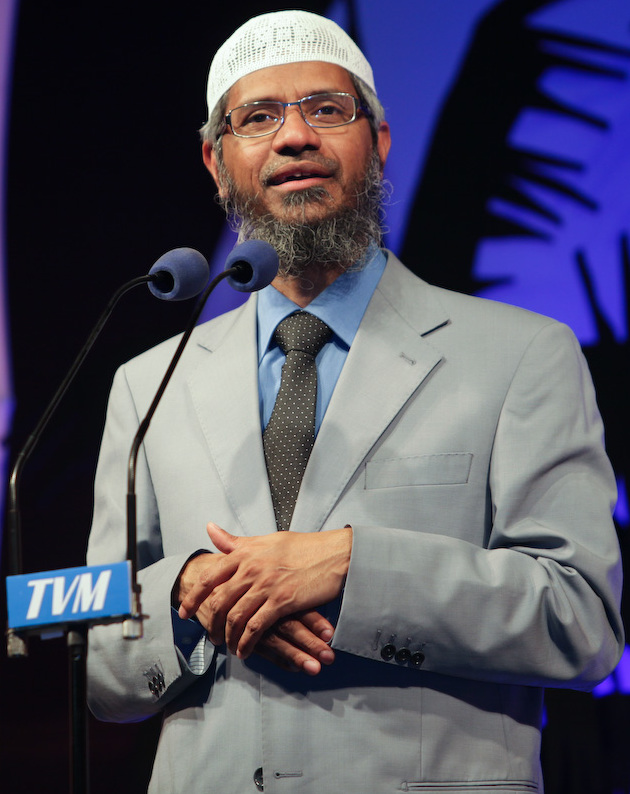
The intersection of biological evolution and Islamic theology represents one of the most dynamic and contentious intellectual frontiers in the contemporary Muslim world. This report provides an exhaustive, expert-level examination of two prominent intellectual figures whose work characterizes the diverging paths available to modern believers: Dr. Zakir Naik and Dr. Zia H. Shah. Dr. Naik, a globally influential orator, represents a “Concordist” or “Scientific Miracles” framework that vigorously denies the biological common ancestry of human beings, framing evolution as an unproven hypothesis that contradicts the Adamic narrative. Conversely, Dr. Zia H. Shah, a physician and editor, advocates for “Guided Evolution,” a model that embraces the genomic evidence for common ancestry—including the vital role of human endogenous retroviruses and placental development—as the elegant mechanism of divine creativity. This analysis delves into the biographical backgrounds of both men, provides a comprehensive summary of their arguments regarding Darwinian theory, and explores Shah’s unique synthesis of aesthetic transcendence, wherein the pervasive beauty and mathematical order of the cosmos serve as empirical signposts for a purposeful Creator. By contrasting Naik’s “God of the Gaps” approach with Shah’s “God of Natural Law,” the report elucidates the profound second-order implications of these competing epistemologies for the future of religious and scientific integration.
Biographical Profiles: The Physician as Orator and the Physician as Intellectual
The professional trajectories of Dr. Zakir Naik and Dr. Zia H. Shah illustrate two distinct modes of engagement with the modern world. While both were trained in the rigorous clinical traditions of medicine, their subsequent roles as public intellectuals reflect diverging methodologies for reconciling faith with empirical discovery.
Dr. Zakir Naik: The Global Voice of Islamic Concordism
Born on October 18, 1965, in Mumbai, India, Zakir Abdul Karim Naik was raised in a religiously observant Konkani Muslim household. His father, Abdul Karim Naik, was a physician and social worker, providing a familial foundation for his eventual pursuit of medicine. Naik attended St. Peter’s High School and Kishinchand Chellaram College before earning his Bachelor of Medicine and Bachelor of Surgery (MBBS) from the Topiwala National Medical College and the University of Mumbai.
Despite his medical qualifications, Naik’s career underwent a seismic shift in the early 1990s. Inspired by his 1987 meeting with the South African orator Ahmed Deedat—a figure known for his mastery of comparative religion—Naik transitioned from clinical medicine to full-time Islamic dawah (proselytization). In 1991, he founded the Islamic Research Foundation (IRF) in Mumbai, an organization dedicated to clearing misconceptions about Islam and presenting the faith as a religion of reason and logic.
Naik’s influence expanded globally with the 2006 launch of Peace TV, a satellite television network that reached an estimated viewership of over 100 million people. His style is characterized by a prodigious memory, allowing him to quote extensively from the Quran, Hadith, and other religious scriptures, including the Bible and the Vedas. While he is often associated with Salafi thought, Naik prefers to present himself as a non-sectarian seeker of “established scientific facts” that validate the Quranic text. Since 2016, legal and political controversies in India have led Naik to reside in self-imposed exile in Malaysia, where he remains a polarizing yet central figure in Islamic discourse.
Dr. Zia H. Shah: The Synthesis of Medicine and Metaphysics
Dr. Zia H. Shah represents the archetype of the physician-intellectual whose engagement with science is both clinical and philosophical. An alumnus of King Edward Medical University in Pakistan, Dr. Shah’s training and practice span three continents. He completed his internal medicine residency at United Health Services in Binghamton, New York, from 1989 to 1992, followed by a fellowship in Pulmonary and Critical Care at Buffalo University from 1992 to 1995.
As a board-certified specialist in Internal Medicine, Pulmonary Disease, and Sleep Medicine, Dr. Shah has over four decades of experience in the medical field. He currently serves as the Director of the Internal Medicine Residency Program at Guthrie Lourdes Hospital in New York, where he is deeply committed to training the next generation of physicians. His professional career is defined by a commitment to physician wellness and the integration of compassionate patient care with medical education.
Parallel to his medical duties, Dr. Shah has emerged as a prolific writer and editor focused on bridging the epistemic gap between religion and science. He serves as the Chief Editor of The Muslim Times and the Chair of Religion and Science for the Muslim Sunrise. Having authored over 400 articles, Dr. Shah’s work seeks to move beyond the apologetics of “scientific miracles” to a more nuanced “Guided Evolution” framework. He views the “Book of Scripture” and the “Book of Nature” as harmonious revelations, and his intellectual mission is to use modern discoveries in genomics, physics, and neuroscience to reveal the “Divine Mind” behind the cosmos.
| Biographical Attribute | Dr. Zakir Naik | Dr. Zia H. Shah |
| Birth/Education | Mumbai; MBBS, University of Mumbai | Pakistan; MD, King Edward Medical Univ. |
| Medical Specialty | General Medicine (Clinical practice ceased in 1991) | Pulmonary, Critical Care, and Sleep Medicine |
| Primary Platform | Peace TV Network; Public Oratory | The Muslim Times; The Glorious Quran and Science blog |
| Core Methodology | Concordism; Comparative Religious Polemics | Guided Evolution; Scientific and Philosophical Synthesis |
| Geographic Context | Malaysia (Exile); global reach in SE Asia and Africa | USA (New York/Pennsylvania); academic and clinical focus |
| Role in Evolution Debate | Denial of macro-evolution and common ancestry | Advocacy for common ancestry and theistic evolution |
Zakir Naik’s Polemic Against Evolutionary Theory: A Detailed Examination
Dr. Zakir Naik’s rejection of biological evolution is a cornerstone of his theological framework, which prioritizes the literal narrative of human creation as a special act of God. His arguments are designed to provide a “rational” basis for dismissing Darwinian theory while accepting other aspects of modern science.
The Linguistic Demotion: Theory vs. Fact
The fundamental pillar of Naik’s argument is the linguistic distinction between “theory” and “fact.” He emphasizes that Darwinism is universally labeled as the “Theory of Evolution” rather than the “Fact of Evolution”. In Naik’s epistemology, a theory is synonymous with a tentative hypothesis, a guess, or speculation. He contrasts this with the Big Bang or the spherical Earth, which he labels as “established facts” that are compatible with the Quran.
By categorizing evolution as a mere theory, Naik grants his audience permission to dismiss it as a transient scientific fashion. He argues that its continued popularity in the scientific community is not due to empirical weight but is a lingering byproduct of the 19th-century reaction against the Christian Church’s persecution of scientists like Galileo. Scientists, he claims, embraced Darwinism as an “enemy of my enemy is my friend” strategy to oppose religious dogma.
The Critique of Common Ancestry and Speciation
Naik focuses much of his polemic on the perceived lack of evidence for macro-evolution—the transition of one species into another. While he acknowledges “micro-evolution” (variations within a species, such as human skin color or bird beak length), he maintains that these changes never result in a new kind of organism.
- The “Monkey” Narrative: Naik frequently employs the visceral argument that “humans did not come from monkeys”. This phrasing serves to leverage emotional revulsion toward animal ancestry and frames evolution as an insult to human dignity (Karamah). He argues that the theory “insinuates” that humans are merely refined apes, which contradicts the Quranic view of humans being created in the “best of molds”.
- The Fossil Record and “Missing Links”: Naik asserts that paleoanthropology is a field based on imagination rather than hard data. He claims there are no definitive links between different hominid stages, such as Australopithecus (“Lucy”), Homo erectus, and Homo sapiens. He cites historical scientific frauds like the “Piltdown Man” to suggest that the entire discipline is prone to fabrication. He argues that so-called missing links are either extinct ape species or fully human individuals, with no transitional forms in between.
- Molecular and Mathematical Barriers: From a genetic perspective, Naik argues that the probability of a functional DNA molecule forming through the transition from ape to human is effectively zero. He describes the complexity of the genetic difference as a “chasm” that could only be crossed by a direct creative act, not by random mutations and selection.
- Scientific Dissidents: To bolster his credibility, Naik quotes scientists who have expressed skepticism toward Darwinism, such as P.P. Grassé, Albert Szent-Györgyi, and Fred Hoyle. He uses these references to suggest a “silent majority” of dissident scientists, positioning the rejection of evolution as a legitimate scientific stance.
Adamic Exceptionalism and the Quranic “Safety Valve”
The core objective of Naik’s polemic is to protect the literal reality of Adam as the first human, created directly from clay. However, he uses the lack of chronological detail in the Quran to his advantage. He points out that while the Bible’s genealogy suggests Adam lived 6,000 years ago—which contradicts the fossil record—the Quran provides no such date. This allows Naik to accept deep geological time and the existence of ancient pre-Adamic creatures while still maintaining that the “human” lineage of Adam was a separate, special creation.
Zia H. Shah’s Framework of Guided Evolution: The Molecular Signature of the Creator
Dr. Zia H. Shah offers a radically different paradigm, which he terms “Theistic Evolution” or “Guided Evolution.” He argues that the evidence for common ancestry is no longer a matter of interpretation but is an “established fact” revealed through the lens of modern molecular biology.
Common Ancestry and Genomic Reality
For Shah, the “Elephant in the room” is the genomic evidence that renders common ancestry irrefutable. He contends that the refusal of figures like Zakir Naik to engage with this data is a “strategic failure” equivalent to the 17th-century Church’s refusal to look through Galileo’s telescope.
Shah emphasizes that the genetic similarity between humans and other primates is not merely a “common blueprint” (as Naik argues) but is evidenced by shared genetic “scars”. These include:
- Endogenous Retroviruses (ERVs): Ancient viral sequences integrated into the germline of ancestors and passed down to all descendants in the same genomic locations.
- Synteny: The identical arrangement of genes across chromosomes in different species.
- Shared Mutations: Genetic errors that are present in both humans and chimpanzees, which can only be explained by descent from a common ancestor who first incurred the mutation.
Shah argues that these molecular markers provide a mathematical certainty for common ancestry that far outweighs the debates over fossil fragments.
The Viral Architect: HERVs and the Human Genome
One of Shah’s most profound arguments for guided evolution is the role of human endogenous retroviruses (HERVs) in defining human identity. He rejects the traditional view of the genome as a stable, purely mammalian sequence, describing it instead as a “collaborative masterpiece” and a “chimeric assembly”.
- HERVs as Essential Hardware: Approximately 8% of the human genome consists of these viral remnants, which Shah describes as “active, vibrant participants” rather than “junk DNA”. He posits that many of the most critical stages of human development are powered by repurposed viral hardware.
- Placental Development and Syncytins: Shah provides a detailed analysis of how the mammalian placenta—the very organ that allows for internal pregnancy—could not exist without captured viral genes. He explains that Syncytin-1 (from HERV-W) and Syncytin-2 (from HERV-FRD) are essential for fusing cells into the syncytiotrophoblast, the layer that mediates maternal-fetal nutrient exchange and immune tolerance. For Shah, the fact that a lethal pathogen was “endogenized” into a life-giving organ is a clear sign of a guided, rather than blind, evolutionary process.
- Neurobiology and the Arc Gene: Shah extends this “viral architect” model to the human brain. He cites the Arc gene, which is critical for long-term memory and synaptic plasticity. Arc is derived from ancient retrotransposons and still behaves like a virus, self-assembling into capsids to transport genetic material between neurons. In Shah’s view, the “vital spark” for human cognition is provided by the ghosts of ancient viruses, illustrating an integrated genomic ecosystem.
Guided Evolution vs. Blind Chance
Shah distinguishes his position from atheistic materialism by arguing that the mechanism of evolution is not random but “subtly directed to fulfill a divine design”. He utilizes several perspectives to build this case:
- Taqdīr as Natural Law: Shah reinterprets the Islamic concept of taqdīr (divine decree) not as pre-written fate, but as the “laws of nature” that God has programmed into the universe. Evolution, therefore, is the biological law through which God brings about new species over time.
- The God of Natural Law: He critiques the “God of the Gaps” theology of Naik, which looks for God only in the “miraculous” exceptions to science. Shah argues for a God who is present in the process itself—the God of the “program” rather than just the “glitch”.
- Quantum Indeterminacy: To explain the mechanism of guidance, Shah proposes that quantum physics provides the “interface” for divine action. Since quantum events are probabilistic, God can influence the direction of mutations at the subatomic level without violating the observable laws of physics.
| Feature | Zakir Naik’s Views | Zia H. Shah’s Views |
| Common Ancestry | Rejected as an unproven hypothesis | Accepted as an established molecular fact |
| Human Origin | Instantaneous creation of Adam from clay | Gradual biological development; Adam as spiritual milestone |
| The Genome | Complex DNA proves immediate design | Viral remnants (HERVs) prove common ancestry and guided complexity |
| Mechanism | Randomness is impossible, therefore evolution is false | Evolution is the “Natural Law” (taqdīr) designed by God |
| Methodology | Polemical critique of scientific consensus | Synthesis of “Book of Scripture” and “Book of Nature” |
| Argument for God | Miracles that bypass science | Beauty, order, and guided laws within science |
The Argument from Aesthetic Transcendence: Beauty as a Path to God
A unique and central pillar of Zia H. Shah’s theology is the “Argument from Beauty.” While Zakir Naik focuses on the logical and historical proofs of the Quran, Shah argues that the pervasive aesthetic splendor of the universe is an empirical signpost to the Divine that cannot be explained by survival alone.
Beauty as a Sign (Āyāt)
Shah centers his reflection on Quranic verses such as 32:7—”He made beautiful all that He created”—and 59:24, which identifies God as Al-Khāliq (The Creator), Al-Bāri’ (The Originator), and Al-Muṣawwir (The Fashioner). He argues that a truly “blind and random world” should be “tasteless” or devoid of aesthetic value. Instead, the universe exhibits what he calls an “aesthetic surplus” or “transcendental excess”—beauty that goes beyond what is needed for biological stability.
- Symmetry and Mathematical Order: Shah points to the “startling bias” toward symmetry in the natural world, from the radial patterns of flowers to the near-symmetric spiral of the Milky Way. He argues that the “unreasonable effectiveness of mathematics” in capturing the physical world suggests the universe is guided by an intelligible “Divine Mind”.
- Cosmic Perfection: Following the challenge in Quran 67:3-4 to find a “flaw” in the heavens, Shah highlights how modern images from the James Webb Space Telescope reveal a universe of majestic structure. He argues that this “seamless beauty” is intended to humble the observer and compel recognition of a perfect Designer.
Case Study: The Firefly and Biological Artistry
Shah uses the firefly as a specific “case study” of how beauty, evolution, and faith interconnect. He highlights several features:
- Engineering Elegance: Firefly bioluminescence is nearly 100% efficient and generates virtually no heat, a form of engineering more elegant than human-made technology.
- Synchronous Beauty: He references the synchronous fireflies of the Great Smoky Mountains, which coordinate their blinking in unison. Shah argues that such “nature theater” often goes beyond strict survival needs, serving as an “extravagant splendor” that aligns with the Islamic attribute of God as Al-Muṣawwir.
- Evolution of Beauty: While evolutionary biology may explain specific traits via sexual selection (e.g., the peacock’s tail), Shah asks why humans possess a capacity for awe at abstract art or complex music. This “capacity for awe” suggests that evolution was guided toward observers capable of perceiving meaning.
Beauty as a Bridge to the Transcendent
Shah views moments of “aesthetic arrest”—such as hearing a concerto or viewing a starry night—as experiences that bypass intellectual defenses to speak directly to the spirit. He draws from a multi-faith synthesis, connecting Islamic thought with:
- Plato’s “Ladder of Love”: Where earthly beauty leads the soul to the eternal Form of Beauty.
- Kant’s “Sublime”: Where the awe of vast natural wonders points to our own rational-spiritual nature that transcends the material realm.
- Hinduism’s “Satyam, Shivam, Sundaram”: The idea that Truth, Goodness, and Beauty are essential aspects of the Divine.
By presenting beauty as a “homing beacon” or “doorway,” Shah provides an antidote to the “atheist gaze” that fixates solely on the problem of suffering. He argues that the overwhelming prevalence of beauty and order is the primary reality (Haqq), making the anomaly of suffering a catalyst for spiritual growth rather than evidence of a chaotic world.
Comparative Epistemology: The Conflict of Two Books
The divergence between Zakir Naik and Zia H. Shah is ultimately a conflict of epistemologies—how one chooses to interpret the “Book of Scripture” in relation to the “Book of Nature.”
Concordism vs. Scientific Exegesis
Dr. Zakir Naik represents the Concordist school, which seeks to prove the Quran’s divinity by finding “scientific miracles” in its text. However, this approach is selective; it elevates portions of science that agree with a literal reading and demotes portions that do not (like evolution) to the status of “theory”. This methodology creates a static theology that must constantly defend itself against new scientific consensus.
Dr. Zia H. Shah represents the Scientific Exegesis (Tafsir al-Ilmi) school, which views science as a tool to uncover the deeper, metaphoric meanings of the Quran. For Shah, the Quranic narrative of Adam is a “spiritual milestone” rather than a denial of biological history. He reinterprets “creation from clay” as abiogenesis and “creation in stages” as evolution. This methodology allows for a dynamic theology that embraces scientific progress as a way of increasing reverence for the Creator.
Humanity and Human Rights
The two positions also lead to different social conclusions. Zakir Naik’s focus on Adamic exceptionalism and the rejection of evolution often aligns with a more conservative, sometimes exclusionary interpretation of religious law. Zia H. Shah’s acceptance of a common African ancestor for all humans—derived from genomic data—serves as the biological foundation for his advocacy of universal human rights and interfaith unity. His bio statement—”I am a Jew, a Catholic, a Christian and a Muslim”—is a manifesto against the sectarianism that he believes stems from a lack of scientific and theological integration.
Thematic Epilogue: The Harmony of Reason and Revelation
The intellectual landscape of modern Islam is profoundly shaped by the tension between the oratorical defense of tradition and the scientific pursuit of synthesis. The comparison between Dr. Zakir Naik and Dr. Zia H. Shah reveals that the debate over evolution is not merely a technical disagreement over fossil records or genetic sequences, but a fundamental question about the nature of God’s interaction with the world.
Dr. Zakir Naik offers a fortress of literalism, providing a “rational” defense for those who view modern science as a threat to the sanctity of the Adamic origin. His rhetoric focuses on the “chasm” between species and the “improbability” of chance, aiming to preserve the dignity of the human form through a special act of creation. In this view, God is the Miracle-Worker who occasionally intervenes to set the world right.
Dr. Zia H. Shah, however, proposes a horizon where science and scripture are two verses of the same melody. By embracing the “viral architecture” of the human brain and the “molecular scars” of common ancestry, he transforms the “chasm” into a bridge. For Shah, God is the “Supreme Artist” and the “God of Natural Law,” whose presence is found not in the absence of evidence, but in the elegant complexity of the evolutionary journey itself. His argument from aesthetic transcendence suggests that a “tasteless” universe could never have produced the firefly’s light or the human soul’s capacity for awe.
As the Muslim world navigates the challenges of the 21st century, the choice between these two epistemologies will define the relationship between faith and the future. Whether one follows the polemic of denial or the path of guided splendor, the underlying quest remains the same: the search for the “Divine Mind” in the vast and beautiful tapestry of life.




 The Glorious Quran and Science
Leave a comment