
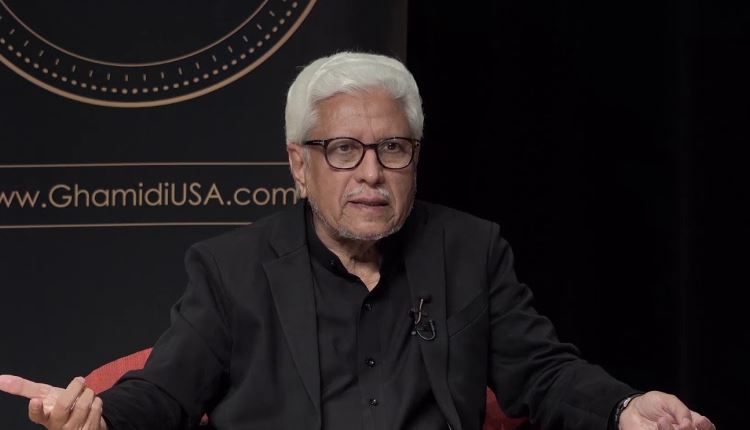
Presented by Zia H Shah MD and my views are summarized in the audio below:
Scriptural Developmentism and the Rejection of Hominin Evolution: A Critical Analysis of the Ghamidi Discourse
The following report provides an exhaustive examination of the discourse presented by Javed Ahmad Ghamidi concerning the intersection of evolutionary biology and Islamic scripture. It includes an analytical transcript, a comparative evaluation of the speaker’s “developmentalist” model against empirical paleontological data, and a thematic synthesis of the ideological implications inherent in the denial of common descent.
Abstract
The relationship between modern evolutionary theory and Islamic traditionalism has historically been characterized by varying degrees of friction, ranging from total rejection to harmonized synthesis. This report analyzes the specific framework proposed by Javed Ahmad Ghamidi, a prominent Islamic scholar, in his presentation titled “Theory of Evolution & Islam.” Ghamidi adopts a strategy of “selective developmentism,” wherein he accepts the cosmological and biological timeline suggested by science—reinterpreting scriptural “days” as epochs—yet fundamentally denies the mechanism of macroevolution and the common ancestry of humans and primates. He characterizes the Darwinian fossil record as “science fiction” and proposes a unique creationist alternative: the “belly of the earth” hypothesis, which posits that humans emerged from terrestrial clay through a process analogous to fetal development. This report demonstrates that while Ghamidi utilizes scientific terminology to provide an aura of modernity, his model lacks any empirical grounding in the physical sciences. The analysis highlights the inconsistencies between Ghamidi’s claims regarding “missing links” and the established hominin fossil record, while also examining the metaphysical role of the “soul” (Ruh) as a boundary-marker used to maintain human exceptionalism in the face of genomic similarity.
Foundational Hermeneutics and the Ghamidi Methodology
Before engaging with the specific timestamps and dialogue of the discourse, it is essential to understand the hermeneutic school of thought that informs Ghamidi’s perspective. Drawing from the Farahi-Islahi tradition, Ghamidi emphasizes the “coherence” (Nazm) of the Quran and the importance of linguistic nuance in interpreting divine speech. This approach allows for a “non-literal” reading of certain cosmological aspects—such as the age of the universe—while maintaining a “literal-historical” stance on the creation of Adam.
The Ghamidi methodology attempts to resolve the conflict between religion and science by assigning them to separate spheres of authority. In his view, religion addresses the “why” of existence, moral imperatives, and the metaphysical state of the soul after death, while science addresses the “how” of physical mechanics and worldly progress. However, this report finds that Ghamidi frequently crosses these boundaries, using theological assertions to disqualify empirical biological findings, particularly when those findings challenge the unique status of the human species.
Detailed Analytical Transcript with Critical Annotations
The following transcript provides a chronological breakdown of the discourse, capturing the progression of arguments, student inquiries, and the speaker’s responses.
I. The Cosmological Framework and the Definition of Time
[00:00:00 – 00:00:51] Introduction to the Intellectual Conflict The session opens with a framing of the debate as a 200-year-old struggle between faith and modern biology. The host introduces questions regarding the compatibility of the Quran with the Theory of Evolution, the origin of humans from apes, and the specific timeframe of creation as described in religious texts. This sets a tone of critical inquiry intended to appeal to a student audience familiar with Western scientific paradigms.
[00:00:51 – 00:01:35] Epistemological Boundaries of the Quran Ghamidi clarifies his primary thesis: the Quran is a book of “guidance” (Hidayat) for the soul and does not aim to provide technical scientific explanations. He argues that scripture mentions natural phenomena only as “signs” of divine power and wisdom. By defining the Quran’s role in this way, he attempts to shield it from scientific obsolescence, suggesting that as human knowledge evolves, the underlying spiritual truth of the Quran remains constant.
[00:01:35 – 00:02:17] Reinterpretation of the “Six Days” (Ayyam) The speaker addresses the Quranic assertion that the heavens and earth were created in “six days.” He invokes a linguistic argument, stating that the Arabic word Yaum (plural Ayyam) refers to an “epoch” or “period” rather than a 24-hour cycle. He cites scriptural evidence indicating that “God’s days” can span thousands of human years. This interpretation is a cornerstone of “Islamic Modernism,” allowing for the billions of years required by modern geology and cosmology without contradicting the word of the text.
II. Biological Origins and the “Belly of the Earth” Model
[00:02:17 – 00:02:51] The Primacy of Water and the Two Stages of Creation Ghamidi acknowledges the Quranic claim that every living thing was created from water. He then bifurcates human creation into two distinct phases. The first is a terrestrial phase where the human species emerged from the earth’s soil; the second is the current phase of biological reproduction (Tanasul). This distinction is crucial for his later denial of evolution, as it posits a “direct” creation from the earth rather than a descent from prior species.
[00:03:40 – 00:05:00] The Developmental Logic of Divine Action In response to why a “perfect” God would take billions of years (six epochs) to create the world, Ghamidi argues that God chooses to manifest His attributes through “stages.” He uses the analogy of a plant growing from a seed to demonstrate that gradual development is a sign of divine wisdom and planning. He asserts that the process of creation is not a “random” occurrence but a guided unfolding.
[00:06:12 – 00:08:00] Rejection of Interspecies Evolution The speaker explicitly distinguishes between “development” (growth within a kind) and “evolution” (the transition from one kind to another). While he accepts that organisms develop, he rejects the idea that a lizard can eventually become a bird. He claims that there is no evidence for such “leaps” in nature, signaling his alignment with “Special Creationism” for distinct biological categories.
III. The Critique of Darwinian Evidence
[00:08:00 – 00:09:16] Genetic Similarity and Common Design Addressing the high percentage of shared DNA between humans and other primates, Ghamidi argues that similarity is a manifestation of “common design” by the same Creator. He posits that just as an engineer might use similar components for different machines, God uses a consistent genetic language for various life forms. He denies that this genetic overlapping serves as evidence for common ancestry.
[00:09:16 – 00:10:18] Characterizing Paleontology as “Science Fiction” In one of the most contentious points of the discourse, Ghamidi labels modern evolutionary theory and its reliance on the fossil record as “science fiction.” He argues that scientists take a single fragment of bone and “imagine” an entire transitional species. He claims that the fossil record is devoid of the millions of intermediate links that should exist if Darwinism were true.
[00:12:04 – 00:18:10] The Earth as a Surrogate Womb Ghamidi elaborates on the “belly of the earth” (Zamin ka pet) hypothesis. He suggests that the first human was formed within a protective structure in the soil, which acted exactly like a mother’s womb. He argues that the earth provided the necessary chemical nutrients and environmental stability to “birth” the first human being. This, he believes, is the intended meaning of being created “from clay”.
[00:18:10 – 00:20:10] Comparison with Fetal Development He draws an analogy between the Quranic description of embryology (stages of clot, lump, and bone) and the formation of the first human from the soil. He asserts that the chemical processes occurring in the womb today are essentially the same processes that occurred in the earth’s clay during the initial creation of the human species.
IV. Scriptural Narratives and Scientific Context
[00:28:54 – 00:31:00] The Problem of Biodiversity and Noah’s Ark A student asks how 50 million species could fit on Noah’s Ark. Ghamidi offers a “localized” solution, arguing that the flood was a punishment directed at a specific people in a specific region. He claims the command to take “every pair” referred only to the local livestock and animals necessary for the survival of that particular group after the disaster. This interpretation seeks to resolve the ecological and logistical contradictions of the traditional “Global Flood” narrative.
[00:33:12 – 00:35:00] The “Egg” of Human Creation Ghamidi posits that the first human creation involved an “egg-like” formation in the clay. He argues that the human body was “perfected” within this terrestrial shell before emerging as a fully-formed being. This is presented as a more “logical” alternative to evolution, as it avoids the need for transitional ancestors while still allowing for a “process” of development.
[00:37:52 – 00:39:08] Social Evolution vs. Biological Evolution Addressing the marriage of Adam’s children, Ghamidi explains that the “Sharia” (law) regarding marriage changed as human society progressed. He differentiates between the “eternal ethics” of religion and the “evolving laws” of human civilization. This section highlights his willingness to accept “evolution” in a sociological and legal context, even as he denies it in a biological one.
V. The Soul and Human Uniqueness
[00:55:13 – 00:55:54] The Physical Frame (Kalb) and the Breathing of the Soul (Ruh) Ghamidi introduces a dualistic model of humanity. He suggests that the physical human form may have been prepared over a long period—perhaps existing as a biological entity without consciousness. He argues that “true humanity” began only when God “breathed the soul” (Nafkh-e-Ruh) into this physical frame. This act transformed a biological creature into a moral, sentient being.
[00:56:35 – 01:00:12] The Timeline of the Soul He compares this to the 120-day mark in pregnancy where, in traditional Islamic thought, the soul is breathed into the fetus. He posits that in the beginning of human history, this “preparatory stage” of the physical body may have lasted thousands or even millions of years before the first “Human” (Adam) was finalized through the endowment of the soul.
[01:10:30 – 01:13:01] Final Arguments on Consciousness and Design In the concluding segments, Ghamidi emphasizes that the human capacity for speech, reasoning, and moral distinction (Sami and Basir) cannot be the result of random mutations. He argues that these are “spiritual gifts” that set humans fundamentally apart from animals, regardless of any physical or genetic similarities. He concludes by urging Muslims to maintain their faith in the “Creator’s design” despite the shifting theories of secular science.
Comparative Analysis of Ghamidi’s Claims vs. Empirical Data
To evaluate the validity of Ghamidi’s “belly of the earth” model and his critique of evolution, it is necessary to contrast his assertions with established data from the fields of paleontology, genetics, and molecular biology.
I. The Hominin Fossil Record: Beyond “Science Fiction”
Ghamidi’s claim that the fossil record consists of “scraps” and “science fiction” is directly contradicted by the vast catalog of hominin fossils discovered over the last century. These fossils do not appear as “sudden complete species” but as a clear, chronologically ordered progression of morphological traits.
| Species | Age (Ma) | Cranial Capacity (cc) | Key Evolutionary Transitions |
| Sahelanthropus tchadensis | 6.0 – 7.0 | 320 – 380 | Foramen magnum placement suggests early bipedalism. |
| Ardipithecus ramidus | 4.4 | 300 – 350 | Grasping big toe combined with bipedal adaptations. |
| Australopithecus afarensis | 3.2 | 380 – 430 | Fully bipedal pelvis; human-like knee and ankle structures. |
| Homo habilis | 1.9 | 500 – 800 | Significant increase in brain size; transition to stone tool use. |
| Homo erectus | 1.8 | 700 – 1100 | Modern human body proportions; long-distance running capability. |
| Homo sapiens | 0.3 – Pres. | 1300 – 1500 | High, vaulted skull; presence of a distinct chin. |
The existence of transitional species like Australopithecus sediba, which displays a mosaic of primitive (australopith-like) and derived (Homo-like) features, provides a direct rebuttal to Ghamidi’s assertion that “intermediate links” are missing. Scientific methodology does not “imagine” these links; it verifies them through radiometric dating and comparative osteology.
II. Genomic Evidence and Chromosomal Fusion
Ghamidi’s argument that genetic similarity is merely “common design” fails to account for structural genomic features that only make sense through the lens of common descent.
- Human Chromosome 2 Fusion: Humans have 23 pairs of chromosomes, while all other great apes have 24. Genomic sequencing has revealed that human chromosome 2 is the result of a head-to-head fusion of two ancestral chromosomes found in chimpanzees and gorillas. This fusion site is marked by telomeric sequences (usually found only at the ends of chromosomes) in the middle of the human chromosome and a second, deactivated centromere. A “common design” would not require the inclusion of these vestigial structural markers; they are clear indicators of a historical genealogical event.
- Shared Endogenous Retroviruses (ERVs): Both human and primate genomes contain sequences from ancient viral infections that became integrated into the germline. These ERVs are found in the exact same locations in the human and chimpanzee genomes. The probability of two separate creations acquiring the same viral “scar” at the same genetic locus is statistically infinitesimal, leaving common ancestry as the only viable scientific explanation.
III. The “Belly of the Earth” vs. Chemical Abiogenesis
Ghamidi’s model of a “clay womb” for fully-formed humans is often confused with the scientific “clay hypothesis” for the origin of life (abiogenesis). However, the two concepts are fundamentally different:
- Scientific Clay Hypothesis (Cairns-Smith): This theory suggests that clay minerals acted as a catalytic “template” for the assembly of simple organic molecules (like RNA) roughly 3.5 to 4 billion years ago. It describes the origin of the first single-celled life, not the creation of complex vertebrates.
- Ghamidi’s Clay Model: This model suggests that the earth spontaneously assembled a complex, multicellular vertebrate (a human) roughly 200,000 to 300,000 years ago.
There is no empirical evidence for the spontaneous assembly of a vertebrate nervous system, skeletal structure, or circulatory system from inorganic soil. Furthermore, the complexity of a human being—comprising approximately 1013 cells—requires a biological lineage and millions of years of selective pressure, which Ghamidi denies in favor of a miraculous terrestrial birth.
IV. The Appendix and Vestigial Organs
Ghamidi dismisses vestigial organs by claiming that “utility” might be discovered later, arguing that science is simply ignorant of their function. While it is true that the human appendix has a minor immune function as a “safe house” for gut bacteria, its vestigial nature is defined by its reduced function compared to the massive cellulose-digesting cecum found in our herbivorous ancestors.
The “phylogenetic signal” of such organs—the fact that we see the remnants of features we would expect to see if evolution were true—remains an unaddressed challenge for Ghamidi’s model. We do not see vestigial feathers in mammals or vestigial nipples in birds; we only see features that align with a specific evolutionary trajectory.
Theoretical Implications of Ghamidi’s Developmentism
Ghamidi’s discourse is a notable example of “selective skepticism.” He accepts the vast timescales of modern science to avoid the “Young Earth” errors of the past, yet he rejects the mechanical core of that same science (natural selection and common descent) to preserve a specific theological anthropology.
The Role of the Soul as a “Gap” Argument
By positing the breathing of the soul (Ruh) as the point of human origin, Ghamidi utilizes a “God of the Gaps” strategy. As science explains more of the physical “how,” he retreats into the metaphysical “why.” However, this creates a problem: if humans and chimps are 98% genetically similar, and the difference is purely the “soul,” then all the biological mechanisms for language, emotion, and reasoning must be present in the 98% shared with chimps. This would suggest that animals possess nearly all the biological hardware for “humanity,” a conclusion that contradicts Ghamidi’s assertion of fundamental human uniqueness.
The Denial of Primate Ancestry as Ideological Defense
The rejection of human-ape evolution appears to be driven by a concern for human dignity. Ghamidi views the idea of being an “evolved animal” as a threat to the moral and spiritual status of the species. However, this defense necessitates the dismissal of thousands of physical exhibits (fossils) and billions of data points (genomic sequences). By labeling these “science fiction,” he encourages a form of anti-intellectualism among his followers, asking them to prioritize a linguistic interpretation of a 7th-century text over the physical evidence of the natural world.
Thematic Epilogue: The Conflict Between Narrative and Evidence
The discourse of Javed Ahmad Ghamidi represents a sophisticated attempt to maintain religious exceptionalism in an era of biological transparency. By reinterpreting “days” as “epochs,” he seeks to modernize the Islamic worldview; however, by replacing the evidence-based mechanism of evolution with the speculative “belly of the earth” model, he creates a framework that is fundamentally at odds with the physical reality of the universe.
The thematic core of this denial is the rejection of the “Grand Narrative” of life—the interconnectedness of all living things through a single, ancient lineage. In Ghamidi’s view, humans are a “disconnected” creation, appearing as a finished product from the soil through a divine developmental process. This report has highlighted that there is zero empirical evidence for such a terrestrial emergence. There are no “clay cocoons,” no archaeological sites showing spontaneous human assembly, and no chemical signatures of soil-based vertebrate birth.
Conversely, the evidence for human evolution from primate ancestors is overwhelming and multifaceted. It is found in:
- The intermediate morphologies of the australopithecines and early Homo.
- The molecular scars of chromosomal fusion and shared viral integrations.
- The developmental vestiges of ancestral traits in the human body.
Ghamidi’s presentation ultimately asks the viewer to accept a “human creation for which there is no empirical evidence” while simultaneously dismissing the very evidence that explains our biological existence. His characterization of the hominin record as “science fiction” is a rhetorical shield used to protect a theological boundary. While this approach may provide comfort to those seeking to reconcile their faith with a superficial understanding of science, it fails to withstand the rigor of a professional peer review. The “belly of the earth” remains a mythological womb—a scriptural metaphor that, when presented as a scientific alternative, collapses under the weight of the very fossils it seeks to deny.
As scientific literacy continues to grow within the global Muslim community, the tension between Ghamidi’s developmentalism and the reality of common descent will likely intensify. The choice between a “miraculous clay birth” and a “magnificent evolutionary heritage” is not merely a scientific one; it is a choice between a static interpretation of the past and a dynamic engagement with the truth of the natural world. The denial of our primate ancestry does not elevate the human soul; it merely obscures the extraordinary journey through which that soul—if it exists—came to inhabit its current biological frame.



 The Glorious Quran and Science
Leave a comment