
Presented by Zia H Shah MD
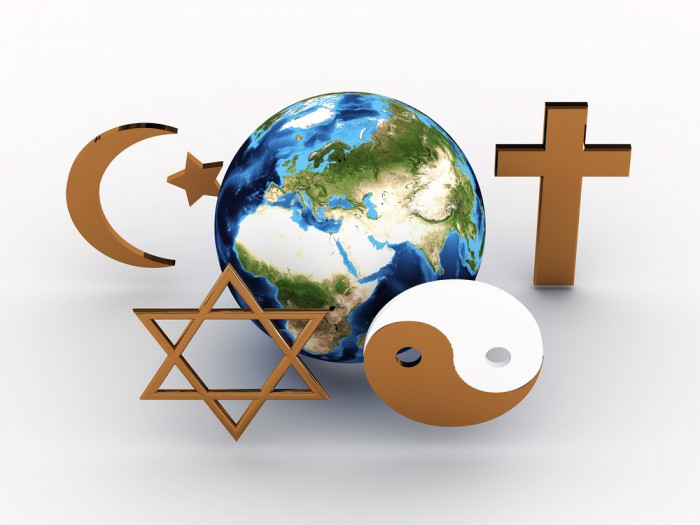
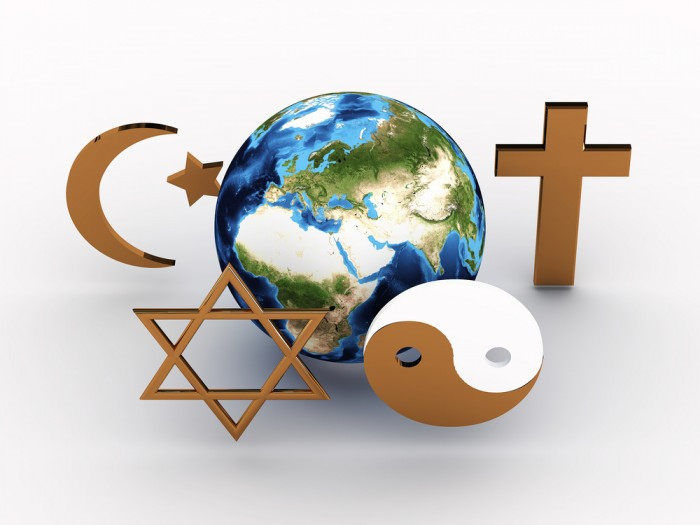
Proposal for a Solomon-Jesus-Muhammad Plaza
Audio teaser:
Abstract
This research report provides a comprehensive historical and theological exploration of Quran 3:64-68, a seminal text that serves as a foundational scriptural bridge for interfaith dialogue between Muslims, Christians, and Jews. The analysis begins with a rigorous examination of the historical context of these verses, specifically the diplomatic encounter between the Prophet Muhammad and the Christian delegation of Najran in 631 CE. It proceeds to a detailed verse-by-verse exegesis, contrasting Islamic monotheism (Tawhid) with the evolving Christological dogmas of the early Christian Church. To provide a rich narrative tapestry, the report embellishes the analysis with extensive genealogical and historical accounts of the patriarch Abraham, his sons Ishmael and Isaac, and the subsequent formation of the Twelve Tribes of Ishmael and the Twelve Tribes of Israel through his grandsons and great-grandsons. Furthermore, the report chronicles the Seven Ecumenical Councils, analyzing their doctrinal definitions and the Quranic critique of “taking others as lords” in the context of emerging clerical hierarchies. Finally, drawing upon the extensive archives of The Muslim Times, the report synthesizes these historical threads into a contemporary message of interfaith tolerance and pluralism, proposing a framework for coexistence in a globalized society.
The Historical Crucible: The Delegation of Najran and the Medinan Context
The revelation of the early sections of Surah Al-Imran, encompassing the first eighty-three verses, is intrinsically linked to a pivotal moment in the late Medinan period of Islamic history. In approximately 631 CE, often referred to as the “Year of Delegations,” a sophisticated diplomatic mission from the Christian community of Najran arrived in Medina. Najran, located in southern Arabia near the Yemeni border, was home to the largest and most influential Christian community in the peninsula, possessing a highly organized ecclesiastical structure and a legacy of martyrdom dating back to the persecution by the Jewish king Dhu Nawas.
The delegation consisted of sixty horsemen, including fourteen high-ranking chiefs who functioned as decision-makers for their community. The leadership was tripartite: Al-Aqib (Abdul-Masih), the political leader and strategist; As-Sayyid (Al-Ayham), the scholar and social coordinator; and Abu Harithah bin Alqamah, the grand bishop and religious authority who was recognized and subsidized by the Byzantine Roman emperors. Their primary objective was to debate the status of Jesus Christ, as the Quranic message increasingly challenged the Trinitarian and Christological dogmas that had been codified during the preceding four centuries of Christian councils.
Historical records from Ibn Ishaq indicate that the delegation entered the Nabawi Mosque in Medina during the afternoon prayer, dressed in fine silk garments, which initially caused a stir among the companions. In a remarkable act of interfaith hospitality that defines the Islamic approach to pluralism, the Prophet Muhammad permitted the Najranite Christians to perform their own religious rites inside the mosque. This event serves as the first recorded instance of Christian-Muslim liturgical sharing and dialogue, establishing a precedent for the “energetic engagement with diversity” that modern scholars define as true pluralism.
The theological debate that followed was intense. The Christians of Najran argued for the divinity of Jesus, citing his miraculous birth without a father and his ability to heal the blind and raise the dead. In response, the Quranic revelation offered a series of counter-arguments, culminating in the “Common Word” invitation of verse 3:64 and the eventual challenge to Mubahalah (mutual invocation of a curse), which the Najranite leaders ultimately declined in favor of a peace treaty and a protective covenant.
Exegesis of Quran 3:64-68: The Theology of the Common Word
Verse 3:64: The Equitable Proposition
The command “Say: O People of the Scripture, come to a word that is equitable between us and you” serves as a paradigm for theological reconciliation. The Arabic term sawā’ implies a principle that is inherently just, balanced, and upright—a “middle ground” that is consistent with the essential message of all previous prophets. The “word” or statement (kalimah) requested here is not a mere pleasantry but a rigorous theological contract comprising three specific conditions:
- Exclusivity of Worship: “That we will not worship except Allah”. This addresses the fundamental Islamic concept of Tawhid al-Uluhiyyah (Oneness of Divinity), which rejects any mediation between the Creator and the created.
- Negation of Partnership: “And not associate anything with Him”. This explicitly forbids Shirk, the attribution of divine qualities or partners to God, whether through the use of idols, crosses, or the deification of human beings.
- Abolition of Human Sovereignty over the Conscience: “And that none of us shall take others for lords besides Allah”.
This third point is a direct critique of the institutionalization of religious authority. As explained by the Prophet Muhammad in the tradition of Adi ibn Hatim, “taking them as lords” refers to the practice of blindly following religious leaders (rabbis and monks) when they declare the forbidden as lawful or the lawful as forbidden, thereby usurping God’s legislative authority. This concept is mirrored in the New Testament in Matthew 23:8-10, where Jesus instructs his disciples: “But you are not to be called ‘Rabbi,’ for you have one Teacher, and you are all brothers… and do not call anyone on earth ‘father,’ for you have one Father… nor are you to be called instructors, for you have one Instructor, the Messiah”. Both scriptures point toward a “flat hierarchy” where the direct relationship with the Divine is paramount.
| Scriptural Concept | Islamic Perspective (Quran 3:64) | Biblical Parallel (Matthew 23:8-10) |
| Primary Authority | Worship none but Allah. | One Teacher/Instructor, the Messiah. |
| Clerical Title | Rejecting human “Lords” besides God. | Do not be called Rabbi or Father. |
| Social Structure | “None of us shall take others…”. | “You are all brothers”. |
Verses 3:65-68: The Reclaiming of Abraham
Verses 3:65 and 3:66 rebuke the Jews and Christians for their sectarian disputes over the identity of Abraham. The Quran highlights a chronological impossibility: “Why do you dispute about Abraham, when the Torah and the Gospel were not revealed till after him?”. This argument deconstructs the retrojection of later religious identities onto a patriarch who predates the Sinai covenant and the Christian era by centuries.
Verse 3:67 offers the definitive Quranic identity of Abraham: “Abraham was neither a Jew nor a Christian, but he was a Hanif (an upright man), a Muslim, and he was not one of the polytheists”. The term Hanif describes a natural monotheist who instinctively turns toward God, while Muslim signifies one who has achieved perfect submission. This “reclaiming” of Abraham serves to universalize his legacy, positioning him as the common ancestor of all true monotheists regardless of their later tribal or dogmatic labels.
Finally, verse 3:68 declares: “Indeed the nearest of people to Abraham are those who follow him, and this Prophet (Muhammad), and those who believe”. This shifts the definition of the “chosen people” from an ethnic lineage to a spiritual commitment. It asserts that the followers of Muhammad are the true heirs to the Abrahamic tradition because they have maintained the purity of his monotheism, free from the “additions” and “lords” introduced by later religious developments.
The Abrahamic Genealogy: Ishmael, Isaac, and the Twelve Princes
The narrative of Abraham is incomplete without a detailed tracing of his descendants, whose histories form the backbone of the Jewish and Arab nations. In both the Biblical and Quranic traditions, the story begins with Abraham’s desire for a son to carry on his legacy.
The Lineage of Ishmael: The Twelve Arab Tribes
According to the Genesis narrative, Abraham had his first son, Ishmael, with Hagar, the Egyptian handmaid of his wife Sarah. While some Biblical interpretations view Ishmael as “outside the covenant,” the text of Genesis 17:20 contains a profound promise from God to Abraham: “And as for Ishmael, I have heard thee: behold I have blessed him, and will make him fruitful, and will multiply him exceedingly; twelve princes shall he beget, and I will make him a great nation”.
These twelve sons of Ishmael, listed in Genesis 25:13-15, became the patriarchs of various Arab tribes and confederations that inhabited the regions from Havilah to Shur, extending from the borders of Egypt to the Assyrian Empire.
| Son of Ishmael | Historical/Tribal Significance |
| Nebaioth | Often identified with the Nabataeans, the merchant-kings of Petra who negotiated a unique status within the Roman Empire. |
| Kedar | The Qedarites, a powerful nomadic confederation. In Islamic tradition, Kedar is the direct ancestor of the Quraysh tribe and the Prophet Muhammad. |
| Adbeel | Identified with the Idiba’il tribe in the records of Tiglath-Pileser III of Assyria. |
| Mibsam | A nomadic tribe mentioned in early genealogical lists. |
| Mishma | Associated with Arabian tribes known for their skilled horsemanship. |
| Dumah | Linked to the oasis of Adummatu (modern Dumat al-Jandal) in northern Arabia. |
| Massa | A North Arabian tribe mentioned in various Hellenistic and Semitic sources. |
| Hadad | Sometimes associated with the Syrian-Arabian border tribes. |
| Tema | The famous oasis of Tayma, an essential stop on the Incense Route. |
| Jetur | Ancestors of the Itureans who controlled parts of the Lebanon and Anti-Lebanon ranges. |
| Naphish | A tribe that engaged in conflicts with the eastern Israelite tribes. |
| Kedemah | Meaning “easterner,” likely representing the tribes of the deep Arabian desert. |
Islamic tradition emphasizes that Ishmael and Abraham rebuilt the Kaaba in Mecca, which had originally been constructed by Adam. The prayer of Abraham for a “Muslim nation” among his descendants is seen as being fulfilled through the Ishmaelite tribes, specifically the line leading to Muhammad. This shared ancestry—Ishmael as the “firstborn” and a prophet—is a core tenet of the Islamic “re-centering” of the Abrahamic narrative toward Mecca.
The Lineage of Isaac and the Twelve Tribes of Israel
The lineage of Isaac continued through his son Jacob, who was given the name Israel after a transformative spiritual encounter. Jacob had twelve sons who became the heads of the Twelve Tribes of Israel. These sons were born of two wives, the sisters Leah and Rachel, and two concubines, Bilhah and Zilpah.
| Mother | Sons (Heads of Tribes) |
| Leah | Reuben (firstborn), Simeon, Levi, Judah, Issachar, Zebulun. |
| Rachel | Joseph (whose sons Ephraim and Manasseh formed two tribes) and Benjamin. |
| Bilhah | Dan and Naphtali. |
| Zilpah | Gad and Asher. |
The Quranic account of these tribes often focuses on their relationship with Moses and their eventual settlement in the “Holy Land”. The tribal divisions were so distinct that even during the miraculous crossing of the desert, twelve separate springs were provided to ensure each group had its own watering place (Quran 7:160). Over time, however, these tribes faced various fates: the ten northern tribes were largely scattered and lost following the Assyrian conquest, while the tribes of Judah and Benjamin remained to form the core of the Jewish identity.
This divergence between the twelve princes of Ishmael and the twelve tribes of Isaac creates the two great “arms” of the monotheistic family. The historical friction between them, from the sale of Joseph to Ishmaelite traders (Genesis 37:25) to the conflicts between Gideon and the Midianites/Ishmaelites (Judges 8:24), underscores a long-standing sibling rivalry that the Quranic “Common Word” seeks to resolve by returning both lineages to the foundational faith of their shared father, Abraham.
The Seven Ecumenical Councils: The Institutionalization of “Lords”
The “taking of lords besides Allah” critiqued in Quran 3:64 and 9:31 finds its historical manifestation in the Seven Ecumenical Councils held between the 4th and 8th centuries CE. These councils were convened by Roman and Byzantine emperors to establish a unified “orthodox” consensus and to suppress various theological “heresies”. From the Islamic perspective, these councils represent the progressive deification of Jesus and the creation of a clerical hierarchy that stood between the believer and God.
The Trinitarian Consolidation (325–381 CE)
The First Council of Nicaea (325 CE) was called by Emperor Constantine to resolve the Arian controversy. Arius, an Alexandrian priest, taught that Jesus was a created being, subordinate to God. The council rejected this, declaring that Jesus was homoousios (consubstantial) with the Father. This definition, enshrined in the Nicene Creed, is viewed by Islamic theologians as the foundational moment where early Christian monotheism was fundamentally altered by imperial pressure.
The First Council of Constantinople (381 CE) expanded the creed to explicitly affirm the divinity of the Holy Spirit, completing the Trinitarian doctrine. This Council also established a hierarchical order among the bishops, placing the Bishop of Constantinople second only to the Bishop of Rome, thereby solidifying the “lordship” of the institutional church.
The Christological Fracturing (431–553 CE)
The Council of Ephesus (431 CE) addressed Nestorianism, which emphasized a distinction between Christ’s divine and human persons. The council, led by Cyril of Alexandria, declared Mary to be Theotokos (God-bearer), a title the Quran specifically critiques as leading to the worship of Mary as a deity (Quran 5:116). The council issued twelve anathemas against those who did not accept the hypostatic union—a unified divine-human person.
The Council of Chalcedon (451 CE) rejected Monophysitism (the belief that Christ had only one divine nature). It defined the “Chalcedonian Definition”: Christ is to be recognized in “two natures” (divine and human) which are united “without confusion, change, division, or separation”. This council caused the first great schism in Christianity, as the Oriental Orthodox Churches (Coptic, Syriac, Armenian) rejected the “two natures” definition in favor of a “single nature of the incarnate Word”.
The Second Council of Constantinople (553 CE) sought to reconcile these factions by condemning the “Three Chapters” (writings considered too Nestorian), further complicating the metaphysical definitions of Christ’s being.
The Final Councils and the Veneration of Images (680–787 CE)
The Third Council of Constantinople (680–681 CE) addressed Monothelitism, the belief that Christ had only one divine will. The council instead affirmed that Christ possessed “two natural wills and two natural operations,” a doctrine that moved even further into the abstract philosophical territory the Quran warns against in verse 3:66: “Why then do you dispute about that of which you have no knowledge?”.
Finally, the Second Council of Nicaea (787 CE) restored the veneration of icons, which had been destroyed during the Iconoclast controversy. The council distinguished between latria (worship due to God alone) and proskynesis (venerable honor given to images). However, from an Islamic perspective, this distinction is seen as a slippery slope toward idolatry, as the “honor rendered to the image passes to that which the image represents”.
| Council | Date | Primary Issue/Resolution | Quranic/Islamic Critique |
| Nicaea I | 325 | Jesus is “of one substance” with the Father. | Rejection of deification (5:72, 3:64). |
| Constantinople I | 381 | Divinity of the Holy Spirit; Trinity completed. | Tawhid rejects “three” (5:73). |
| Ephesus | 431 | Mary as Theotokos (God-bearer). | Critique of Mary-veneration (5:116). |
| Chalcedon | 451 | Two natures in one person (Hypostatic Union). | Jesus as a human prophet and servant (43:59). |
| Constantinople III | 680 | Two wills in Christ (divine and human). | Rejection of metaphysical disputes (3:66). |
| Nicaea II | 787 | Veneration of icons and images permitted. | Prohibition of idolatry/mediation (3:64). |
Interfaith Tolerance and the Message of The Muslim Times
The historical and theological tensions explored above are not merely academic concerns; they have profound implications for how modern religious communities interact. The archives of The Muslim Times provide a sophisticated contemporary framework for applying the “Common Word” invitation to a world marked by pluralism.
Pluralism vs. Tolerance: The Active Engagement
A central theme in these articles is the distinction between “tolerance” and “pluralism”. Tolerance is often defined as a “thin” foundation—a stand-offish permit for others to exist in their own “isolated bubbles” without persecution. In contrast, pluralism is an active “energetic engagement with diversity”. Drawing from the work of Diana Eck and Craig Considine, the articles identify four essential ingredients for this state:
- Genuine Interaction: Building authentic social relationships across religious lines.
- Narrative Understanding: Seeking to understand the internal perspectives of other faiths.
- Encounter of Commitments: Negotiating formal contracts and trust-based agreements.
- Self-Criticism: Engaging in inter-religious dialogue that allows for mutual learning and critique.
The visit of the Najran delegation to Medina is cited as the primary historical model for this pluralism. By providing the Christians with hospitality near his own home and a place to pray in his mosque, the Prophet Muhammad “embraced the otherness” of the Christians rather than merely tolerating it.
The Third Temple: A Case Study in Coexistence
Perhaps the most provocative application of this pluralistic vision is the proposal to build a “Third Temple” on the Temple Mount in Jerusalem. This vision seeks to resolve one of the world’s most intractable religious conflicts by applying the “Common Word” principle of mutual respect.
- Shared Space: Instead of displacing the Dome of the Rock, the proposal suggests building a multi-storied complex (nicknamed the “Solomon-Jesus-Muhammad Plaza”) in the unused north-eastern part of the 35-acre Mount.
- Inclusivity: Every Jewish, Christian, and Muslim denomination would be granted a floor for its own house of worship.
- Compromise: Orthodox Jews are reminded of Hillel’s teaching—”That which is hateful to you, do not do to your fellow”—while hardline Muslims are reminded that modern structures like the clock tower in Mecca prove that architecture can serve both utility and sanctity.
- Symbolic Foundation: To signify unity, dirt from around the Dome of the Rock would be mixed into the new Temple’s foundation.
This project would turn the Temple Mount from a “contested religious site” into a “beacon for interfaith coexistence”. It challenges the three faiths to demonstrate to the world that they can move beyond “petty conflict” and provide a global example of interfaith tolerance.
The Covenants and Universal Brotherhood
The “Covenants of the Prophet” with the Christians of his time (such as the Monastery of St. Catherine) are highlighted as binding legal documents that demand Muslims protect and defend Christian communities “until the End of the World”. These treaties state clearly that “with the People of the Book there is to be no strife”. This message is further reinforced by the “Know Your Neighbor” campaign, which uses social research to show that personal relationships are the most effective way to eliminate stereotypes. Data from the Pew Research Center confirms that 56% of people who know a Muslim personally have a favorable impression of the group, compared to only 32% of those who do not.
The “Love Hormone” Oxytocin is even mentioned as a physiological bridge to spirituality and hospitality, suggesting that the act of welcoming the “other”—as Muhammad did for the Najran delegation—has a scientific basis for enhancing communal bonds. This “universal brotherhood” is the ultimate goal of the “Common Word” invitation: a global village where sacred speech and good deeds combine to create a culture of peace.
Epilogue: A Thematic Synthesis
The historical and theological journey from the delegation of Najran to the modern-day vision of a shared Temple Mount reveals a consistent thread: the “Common Word” of Quran 3:64 is an invitation to return to the source. It is a call to peel back the layers of dogmatic calcification—the “lords and patrons” created by councils and hierarchies—and return to the radical, unmediated monotheism of Abraham.
The embellishment of this narrative through the Twelve Princes of Ishmael and the Twelve Tribes of Israel serves as a powerful reminder of shared origins. These are not merely ancient tribes but two branches of the same family, whose divergent paths through history have often led to conflict but whose roots remain firmly planted in the same soil. The Seven Ecumenical Councils, while representing the sincere efforts of early believers to understand the Divine, ultimately illustrate the “unnecessary disputes” warned against in verse 3:66, where human philosophy attempted to define that which is, by nature, ineffable.
The contemporary message from The Muslim Times transforms these historical insights into actionable pluralism. It asserts that interfaith tolerance is not a modern innovation but a primal Islamic value, practiced by the Prophet in the mosque of Medina and encoded in his covenants. By moving beyond “thin” tolerance toward an “energetic engagement,” the children of Abraham can build a world where a synagogue, a church, and a mosque are not symbols of division but “houses of God” where all can remember their Maker.
The “Common Word” is therefore not an end in itself, but a gateway. It provides the equitable ground upon which diverse communities can stand without losing their identities. It is the realization that while the paths may differ, the “drinking place” is one. If the People of the Book can accept this “logical agreement”—worshipping none but God and exalting no human to the status of a Lord—then the promise of Abraham can truly be fulfilled: a great nation of believers who, though numerous as the stars, are united in heart, desire, and aspiration.



 The Glorious Quran and Science
Leave a comment