
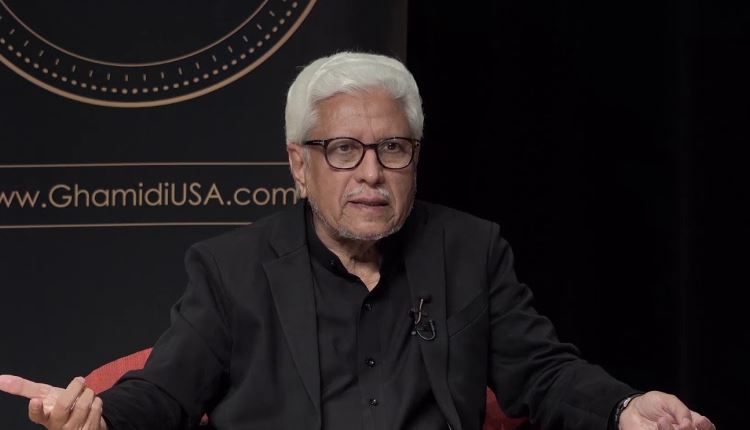
Presented by Zia H Shah MD
The evolution of Quranic exegesis in the Indian subcontinent represents a pivotal shift from atomistic, verse-by-verse analysis to a holistic, structural methodology centered on the concept of Nazm (coherence). This intellectual tradition, often referred to as the Farahi school, posits that the Quran is not a fragmented collection of disparate revelations but an organically unified discourse where every verse, surah, and group of surahs is governed by a specific central theme or umood. Founded by Hamiduddin Farahi, refined by Ameen Ahsan Islahi, and systematically modernized by Javed Ahmad Ghamidi, this school challenges traditional hermeneutics by prioritizing internal textual evidence and classical linguistic structures over external historical reports. The following report provides an exhaustive analysis of the methodological foundations, linguistic philosophies, and jurisprudential implications of this influential school of thought.
Abstract
This report examines the scholarly trajectory of the Farahi-Islahi-Ghamidi school, an intellectual movement that has fundamentally redefined Quranic commentary through the principle of Nazm-ul-Quran (Coherence of the Quran). It begins with a biographical and methodological investigation into Hamiduddin Farahi, whose discovery of the surah-level central theme (umood) and emphasis on pre-Islamic Arabic poetry laid the groundwork for a monovalent interpretation of the scripture. The analysis transitions to Ameen Ahsan Islahi, who institutionalized these concepts in his nine-volume masterpiece Tadabbur-i-Quran, introducing the architectural framework of seven surah groups and the system of surah pairing. Finally, the report explores the contemporary work of Javed Ahmad Ghamidi, who evolved the school’s research into a comprehensive theological system, Meezan, and a formal exegesis, Al-Bayan. Ghamidi’s distinction between immutable Sunnah and historical Hadith, his rejection of variant readings (Qira’at), and his reformist views on gender, jihad, and political philosophy are analyzed as the culmination of the school’s commitment to the Quran as the ultimate Mizan (Scale). The report concludes with a thematic epilogue on the school’s impact on modern Islamic thought and its role in countering Orientalist critiques of Quranic structure.
The Architect of Structural Unity: Hamiduddin Farahi and the Discovery of Nazm
The genesis of the modernist Farahi school can be traced to the intellectual crisis of the late nineteenth-century Indian subcontinent, where traditional Islamic education often struggled to respond to the linguistic and philosophical challenges posed by Western Orientalism. Hamiduddin Farahi (1863–1930), a scholar of immense linguistic depth and a cousin of the renowned theologian Shibli Nomani, dedicated over fifty years to reflecting on the Quranic text. Farahi’s education was uniquely polymathic; having mastered Arabic and Persian under Nomani, he was admitted to Aligarh Muslim University on the recommendation of Sir Syed Ahmad Khan, who noted that Farahi knew more Arabic than the professors of the college. His subsequent study of Hebrew under the German Orientalist Josef Horovitz provided him with a comparative perspective on Semitic rhetoric, which proved instrumental in his discovery of Quranic coherence.
Farahi’s primary contribution to Islamic scholarship was his contestation of the widely held view that the Quran, as a revelation delivered piece-by-piece over twenty-three years, lacked a logical or aesthetic arrangement. He argued that every surah of the Quran is a complete unit with a specific central theme, or umood, around which all its verses revolve. In his seminal work, Muqaddimah Nizam al-Quran, Farahi expressed his conviction that the lack of attention to this internal order was the primary cause of sectarianism and misinterpretation in the Muslim world. He wrote:
“I observed that most differences in understanding the Qur’ānic text owed themselves to the fact that the interpreters did not consider the Qur’ānic nazm. Had they been clear on the orderly arrangement of the text and were aware of the central themes of the surahs, all possibilities of falling in difference would have been eliminated.”
Linguistic Foundations and the Critique of Atomism
Farahi’s methodology was rooted in a return to the classical Arabic of the Jahiliyyah (pre-Islamic) period. He maintained that the Quran was revealed in the eloquent dialect of the Quraysh, and thus, its interpretation must be grounded in the idioms, structures, and poetry of that era. He famously argued that “the greater part of the Quranic intricacies and wisdom is buried in the fine arrangement and correspondence of the Quran”. To uncover this wisdom, Farahi prioritized internal principles over external traditions, identifying order, proportion, and unity as the three constituents of Nazm.
| Intellectual Profile: Hamiduddin Farahi | Details |
| Birth and Death | 18 November 1863 – 11 November 1930 |
| Education | Arabic/Persian under Shibli Nomani; B.A. from Allahabad University; Hebrew under Josef Horovitz |
| Key Concepts | Nazm (Coherence), Umood (Central Theme), Nazm-ul-Quran |
| Major Works | Nizam al-Quran, Mufradat al-Quran, Asalib al-Quran, Muqaddimah Nizam al-Quran |
| Legacy | Founder of the Farahi School; Chief Administrator of Madrasatul Islah |
Farahi was particularly critical of “atomistic” exegesis, where verses are isolated from their surrounding context to support various sectarian agendas. He believed that only by recognizing the coherence of the text could the Quran be truly regarded as a Mizan (Balance) and a Furqan (Distinguisher). His approach sought to prove to Western critics that the Quran was not a haphazard collection of injunctions but a highly sophisticated literary masterpiece. By anchoring the meaning of the text in its structural unity, Farahi aimed to produce a “univocal” interpretation that would safeguard the scripture from the “crookedness” of those who would “sever the words from their context”.
Systematizing the Vision: Ameen Ahsan Islahi and Tadabbur-i-Quran
While Farahi laid the foundational principles of Nazm, it was his most eminent student, Ameen Ahsan Islahi (1904–1997), who fully realized this vision through his nine-volume Urdu commentary, Tadabbur-i-Quran. Islahi spent twenty-two years applying Farahi’s theories to the entire Quranic text, establishing beyond doubt that the Quran possesses both structural and thematic coherence. His methodology was characterized by a meticulous analysis of surah relationships, thematic progression, and the division of the Quran into seven distinct groups.
The Architecture of the Seven Surah Groups
Islahi proposed that the 114 surahs of the Quran are arranged into seven discrete groups, each revolving around a central theme that mirrors the stages of the Prophet Muhammad’s mission in Arabia. Each group typically begins with one or more Makkan surahs and concludes with one or more Madinan surahs, with the relationship between them described as that of the “root of a tree and its branches”.
| Group | Surah Range | Central Theme and Thematic Focus |
| Group I | Al-Fatihah (1) – Al-Ma’idah (5) | Islamic Law: Focuses on the promulgation of legal frameworks for the new community. |
| Group II | Al-An’am (6) – Al-Tawbah (9) | Consequences of Rejection: Warns the Mushrikin of Makkah of the fate of those who deny the Prophet. |
| Group III | Yunus (10) – An-Nur (24) | Prophetic Domination: Glad tidings of the Prophet’s eventual victory and domination in Arabia. |
| Group IV | Al-Furqan (25) – Al-Ahzab (33) | Arguments for Prophethood: Substantiates Muhammad’s mission and the requirements of faith in him. |
| Group V | Saba (34) – Al-Hujurat (49) | Monotheism (Tawhid): Arguments substantiating the oneness of God and the faith requirements thereof. |
| Group VI | Qaf (50) – Al-Tahrim (66) | The Hereafter (Akhirah): Arguments substantiating belief in the afterlife and its implications. |
| Group VII | Al-Mulk (67) – An-Nas (114) | Admonition (Indhar): Final warnings to the Quraysh regarding their fate if they persist in denial. |
The Pairing System and Surah Unity
A distinctive feature of Islahi’s methodology is the pairing system of surahs. He asserted that every surah, with minor exceptions, is paired with another that complements its message. This pairing is not merely thematic but linguistic, as Islahi redefined the term mathani (often translated as “oft-repeated”) as the plural of muthanna, meaning “double” or “two”. He wrote that “each surah is paired with another one and the relationship between them is like that between wife and husband”. Examples of this include the pairing of Al-Baqarah and Al-i ‘Imran, and Al-Falaq and Al-Nas.
Surah Al-Fatihah serves as the primary exception to this rule, acting as a preface to both the entire Quran and the first group of surahs. For Islahi, the identification of the amud (central theme) of each surah was a logical necessity for any meaningful work, asking rhetorically: “Is it, then, imaginable that a divine speech would lack these components?”. This commitment to structural unity allowed Islahi to resolve “apparently conflicting passages within a surah” by identifying their common thematic anchor.
The Reconstruction of Thought: Javed Ahmad Ghamidi and the Meezan
Javed Ahmad Ghamidi (born 1952), a direct student of Islahi, has focused on applying the Farahi-Islahi framework to the broader landscape of Islamic theology, law, and contemporary life. Ghamidi’s work is characterized by a “clear, clinical manner” that seeks to separate the “pristine content of religion” from later historical developments such as Tasawwuf (Sufism), traditional Fiqh (jurisprudence), and scholastic Kalam. His comprehensive treatise, Meezan, and his formal exegesis, Al-Bayan, represent the ultimate manifestation of the school’s research.
The Quran as the Ultimate Scale
Ghamidi maintains that the Quran is the Meezan (Scale) and the Furqan (Distinguisher), the decisive argument in every matter of faith. He famously posits that any religious narrative, whether from historical imams or canonical Hadith collections, must be rejected if it contradicts the clear verdicts of the Quran. He emphasizes that the Quran was revealed in “eloquent Arabic” that is clear, cogent, and free from ambiguity. In Meezan, he writes:
“The Qur’ān is regarded as the mīzān (the scale) and the furqān (distinguisher between right and wrong), a status which it itself claims. It is the scale in which everything related to religion must be weighed and the decisive word in every matter of religion. Everything in religion must stand in subservience to its verdicts.”
Ghamidi argues that because the language of the Quran is clear, no interpretation should be accepted that relies on rare or unknown linguistic styles (shadh). He illustrates this with specific examples: in certain verses, the word al-najm must mean “stars,” and al-ibil can only mean “camel,” based on the conventional understanding of the original addressees.
The Distinction Between Sunnah and Hadith
A cornerstone of Ghamidi’s thought is the sharp distinction he draws between Sunnah and Hadith, terms that are often conflated in traditional scholarship.
- The Sunnah: Defined as the religious tradition of Prophet Abraham’s religion which Muhammad revived, reformed, and instituted among his followers. It is transmitted through the “perpetual adherence” (tawatur) of the community and carries the same authority as the Quran.
- The Hadith: Viewed as a “historical record” of Prophetic teachings that cannot change or modify the Quran in any way. Its scope is limited to explaining religion or delineating the Prophet’s exemplary character.
Ghamidi asserts that the Quran is not dependent on Hadith for its explanation; rather, “the Hadīth need to be interpreted in the light of the Qur’ān”. This framework allows him to scrutinize canonical sources like Bukhari and Muslim to ensure they do not contradict the Quranic Meezan.
| Source | Definition in Ghamidi’s Framework | Authority Level |
| Qur’ān | The final word, Mīzān, and Furqān. | Primary/Ultimate |
| Sunnah | Rituals and traditions of Abraham revived by Muhammad. | Primary |
| Hadīth | Historical record of the Prophet’s words and actions. | Secondary/Explanatory |
Methodological Revisions and Legal Reform
The application of Nazm and the prioritization of the Quran have led Ghamidi to several significant departures from traditional Islamic jurisprudence (Fiqh). He distinguishes between the divine Sharia and the human exercise of Fiqh, characterizing the latter as subject to error and human weakness.
The Monovalent Text and the Rejection of Qira’at
Perhaps Ghamidi’s most controversial stance is his rejection of the multiplicity of Quranic readings (Qira’at) and the “seven ahruf” narrative. While traditional orthodoxy accepts variant readings as sanctioned by the Prophet, Ghamidi maintains that the Quran is a “consummately certain” text revealed in a single, eloquent dialect—that of the Quraysh. He accepts only the reading of Hafs ‘an ‘Asim, declaring all other canonical readings as non-Quranic.
Ghamidi justifies this by arguing that the “seven ahruf” narrative contradicts the Quran’s own claim to clarity and that the reports themselves are “enigmatic” and “militate against commonsense”. He specifically critiques the chain of narrators for these reports, such as Ibn Shihab al-Zuhri, whom he accuses of “obfuscation in transmission” (tadlis). For Ghamidi, the reading practiced today by the overwhelming majority of Muslims is the only one that has enjoyed the “qawli tawatur” (verbal consensus) of believers since the time of the Companions.
Jurisprudential and Political Reforms
Ghamidi’s use of the Nazm principle allows him to specify the “addressees” of the text, thereby limiting the scope of certain verses to their historical context. This has profound implications for modern legal issues:
- Inheritance: Ghamidi identified what he considers mathematical errors in traditional inheritance laws (Awl). He argues that the misinterpretation arises from a lack of knowledge of classical Arabic and a failure to reconsider the views of predecessors.
- Apostasy and Stoning: He views the death penalty for apostasy as a specific punishment for those who denied the truth in the presence of the Prophet, not a universal law for all time. Similarly, he argues that stoning (rajm) was a punishment for public spread of vulgarity (hirabah), not a standard penalty for consensual adultery.
- Gender and Hijab: Ghamidi argues that the face veil is not mandatory and that the specific directives in Surah Al-Ahzab were intended for the Prophet’s wives or as protective measures for women in the specific social context of Medina.
- Jihad and State: He posits that Jihad can only be waged by an organized Islamic state to end oppression, and that the formation of such a state is not a religious obligation per se, but rather a matter of democratic consultation (shura) among Muslims.
Mathematical Implications: The Case of Inheritance
To illustrate the clinical precision of Ghamidi’s methodology, one may examine his critique of the classical inheritance ratios. Using LaTeX to represent the mathematical problem found in traditional Fiqh:
In a scenario where a man dies leaving a wife, three daughters, and both parents, traditional ratios are:
Wife=81,Daughters=32,Mother=61,Father=61
Summing these results in:
243+2416+244+244=2427
Because the total exceeds 1, traditional jurisprudence uses Awl to increase the denominator to 27, thereby reducing each share. Ghamidi argues that this “mathematical error” is absent in the Quran if the text is read with linguistic precision. He maintains that the shares for parents and spouses are fixed relative to the remainder or the original total depending on the specific wording, a view that removes the need for human-invented mechanisms like Awl.
The Global Impact of the Farahi School
The Farahi-Islahi-Ghamidi tradition has not only reshaped internal Islamic discourse but has also engaged with Western scholarship. Dr. Mustansir Mir has been instrumental in introducing the concept of Nazm to Western academics, arguing that the school’s work marks a “radical departure from the traditional style of exegesis”. Mir emphasizes that this approach proves the Quran possesses a coherence that is “not only aesthetically pleasing but carries profound hermeneutical significance”.
| Scholar | Contribution to Farahi School Scholarship |
| Mustansir Mir | Introduced Nazm to Western academia; authored Coherence in the Qur’an. |
| Farhad Shafti | Conducted critical analysis of Farahi methodology and theological implications. |
| Shehzad Saleem | Translated Al-Bayan and Meezan into English; researched history of Quranic text. |
| Khalid Masud | Analyzed Ghamidi’s role in “Enlightened Moderation” and state sovereignty. |
Despite its rationalist appeal, the school faces significant criticism from traditionalists. Ahmad Javed and others have argued that making Nazm the primary condition for understanding the Quran essentially “makes the divine speech hostage to our arbitrary principle”. Critics contend that Ghamidi’s interpretations align too neatly with “Western nations’ views and dispositions”. However, Ghamidi maintains that his conclusions are reached purely through the “traditional Islamic framework” of linguistic and structural analysis.
Thematic Epilogue: The Restoration of the Divine Balance
The Farahi-Islahi-Ghamidi school represents a profound effort to rediscover the organic unity of the Quranic message. By moving away from the “atomistic” traditions that fragmented the text, these scholars have sought to restore the Quran to its rightful place as the Meezan—the ultimate scale of religious truth. This journey began with Hamiduddin Farahi’s conviction that “the greater part of the Quranic intricacies and wisdom is buried in the fine arrangement” of the book. It was matured by Ameen Ahsan Islahi, whose life’s work demonstrated that the Quran is a “well-connected and systematic book,” divided into seven groups that tell the story of the Prophetic mission.
The contemporary work of Javed Ahmad Ghamidi serves as the intellectual climax of this tradition, presenting a “counter-narrative” to both radical and stagnant interpretations of Islam. His insistence on the “monovalent” nature of the Quran and his sharp distinction between the immutable Sunnah and historical Hadith provide a framework for a modern Islamic identity that is both scripturally anchored and rationally defensible.
Ultimately, the impact of this school lies in its ability to bridge the gap between ancient revelation and modern reason. By proving the structural and thematic coherence of the Quran, they have not only answered the challenges of Orientalism but have also provided the Muslim Ummah with a methodology to “hold fast to the Cable of Allah and be not divided”. Their legacy is the restoration of the “fine face of God” through a text that is perceived not as a haphazard collection of verses, but as a miraculous, unified, and eternally applicable discourse.

 The Glorious Quran and Science
Leave a comment