
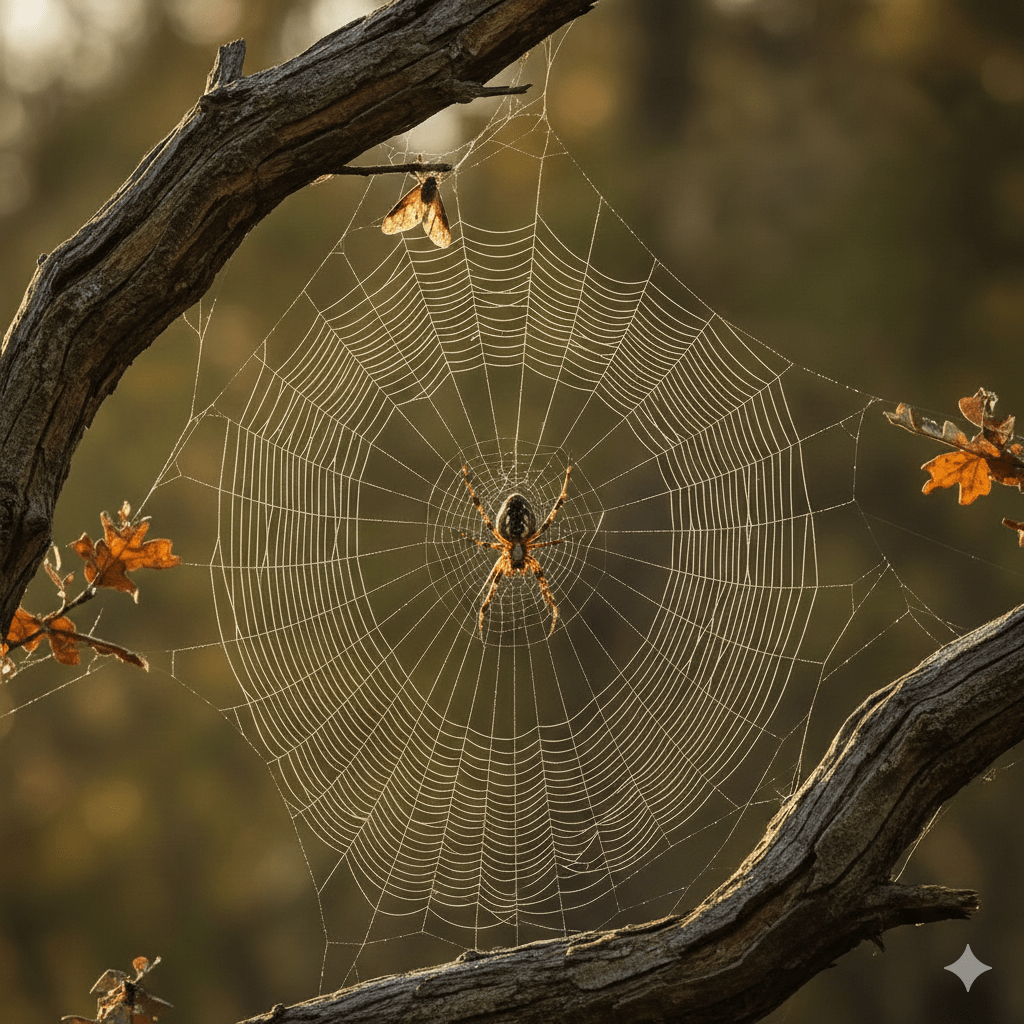
Epigraph
يَا أَيُّهَا النَّاسُ ضُرِبَ مَثَلٌ فَاسْتَمِعُوا لَهُ ۚ إِنَّ الَّذِينَ تَدْعُونَ مِن دُونِ اللَّهِ لَن يَخْلُقُوا ذُبَابًا وَلَوِ اجْتَمَعُوا لَهُ ۖ وَإِن يَسْلُبْهُمُ الذُّبَابُ شَيْئًا لَّا يَسْتَنقِذُوهُ مِنْهُ ۚ ضَعُفَ الطَّالِبُ وَالْمَطْلُوبُ
Presented by Zia H Shah MD
Abstract
Quran 22:73 sets forth a striking parable: even if all of humanity or the so-called deities they invoke united their powers, they could not create a single fly. And if a mere fly were to snatch something away from them, they would be helpless to recover it. This commentary explores the verse’s profound implications across scientific, philosophical, and theological domains. Scientifically, the verse anticipates the limits of human creativity – despite modern advances like cloning and genetic engineering, we cannot originate life from scratch, underscoring the intricate complexity of even the smallest creatures. Philosophically, it raises fundamental questions about consciousness and life: the “Hard Problem” of subjective experience and the mystery of the life-force suggest that life’s essence is more than just the sum of material parts, defying reductionist explanation. Theologically, Quran 22:73 underlines the incomparable creative power of the One God (Allah) and the utter impotence of false gods or idols, guiding us toward humility and monotheism. In sum, the humble fly becomes a powerful sign – an ayat – that illuminates the chasm between the Creator and the created, inviting humanity to recognize the divine source of life and consciousness.
Introduction: The Parable of the Powerless Creators
The verse in question reads: “People, here is an illustration, so listen carefully: those you call on besides God could not, even if they combined all their forces, create a fly, and if a fly took something away from them, they would not be able to retrieve it. How feeble are the petitioners and how feeble are those they petition.” (Quran 22:73). This vivid image was revealed in the context of Arabian idolaters who worshipped various gods and idols. It serves as a humbling parable: the most minor form of life – a fly – lies forever beyond the creative reach of all beings apart from Allah. The idols, and by extension any entities invoked besides God, are shown to be utterly impotent in the realm of creation. If even a fly (among the lowliest of creatures in human estimation) eludes their power, then surely they cannot rival the Creator of all life. By emphasizing that even collective effort (“even if they combined all their forces”) cannot produce this tiniest of creatures, the Quran compels the reader to reflect on the limit of human power and the majesty of divine creative power. Furthermore, the verse’s second image – a fly carrying off a morsel that cannot be recovered – underscores the futility of false gods: they cannot even protect or reclaim what is theirs from a feeble insect. In this simple metaphor, the Quran conveys the weakness of both the worshippers and the objects of their worship in comparison to Almighty God. Historically, this humbled the arrogance of polytheists; today, it remains a timely reminder for anyone who would put undue faith in worldly powers, be it technology, human ingenuity, or idols of our own making.
Scientific Perspective: The Impossibility of Creating Life from Scratch
From a modern scientific standpoint, Quran 22:73 stands as a prescient challenge to human technology and knowledge. In the 21st century we possess advanced genetic labs, we have cloned sheep and engineered genetically modified organisms. One might ask: have we not come close to “creating” life? Not so fast, to echo the caution of Dr. Zia H. Shah. Every feat of biotechnology so far has involved building upon existing life. When scientists cloned Dolly the sheep, they started with a living cell; when they modify bacteria or plants, they tweak DNA that already exists. In the words of one scholar, “we cannot allow any cheating or building on God’s already present creations”. In other words, all our experiments reverse-engineer the biological models Allah has placed in nature – but originating life remains beyond us. Quran 22:73’s challenge is to produce life independently, without leaning on the divine toolkit of DNA, RNA, cells and biochemistry that is already in place. So far, humanity has not even synthesized a functional cell from raw elements, let alone a complex organism like a fly.
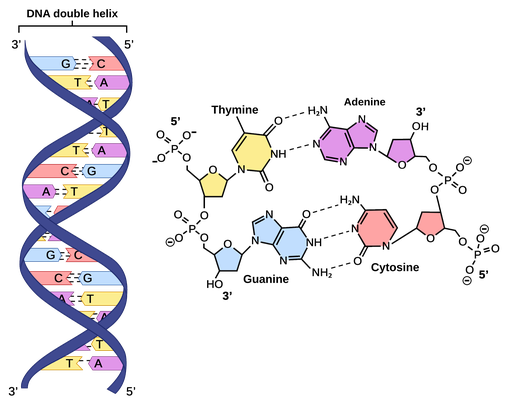
Even the basic building blocks of life, such as the DNA double helix, are products of divine creation. No scientific enterprise has ever created these biological architectures from scratch, underscoring the Quran’s claim that we cannot “create a fly” without God’s handiwork.
Indeed, researchers pushing the envelope of synthetic biology acknowledge how far we are from true creation. A famous effort by J. Craig Venter’s team managed to create a so-called “minimal synthetic cell” with a genome of 473 genes – the smallest genome of any self‐replicating organism. Yet crucially, even this “synthetic” bacterium was not conjured from nothing: it was put together using the machinery and components of existing bacteria (they inserted a human-designed genome into a pre-existing cell shell). Moreover, our understanding of life’s requirements is still incomplete. As the Venter Institute reported, “even with all the advances… there is still not a single self-replicating cell in which we understand the function of every one of its genes.” In other words, scientists do not fully understand what makes even the simplest cell come alive, much less design one from the ground up. To create a humble fly, consider what would be needed: a complete blueprint of thousands of genes orchestrating the fly’s development and metabolism, the fabrication of cells with all their molecular machines (proteins, membranes, organelles), and the emergence of complex organ systems (eyes, wings, digestive tract, nervous system) working in unison. Modern science, for all its triumphs, cannot approach this level of integrated complexity. No laboratory has ever assembled raw chemicals into a living insect. Even the tiniest bacterium has proven too complex for us to understand exhaustively, let alone invent.
The Quranic challenge thus rings true in the lab: life only comes from life, and the secret of life’s spark eludes our grasp. We may modify life, extend or imitate life’s processes, but we do not have the breath of life that could animate inert matter. Dr. Zia Shah humorously suggests that if materialists are serious about meeting this challenge, they should “start from scratch and build it on silicon or some other element” rather than borrowing God’s carbon-based designs. After all, using DNA, proteins, and cells as given is like using God’s ingredients. But even being “very lenient” by allowing scientists to use existing raw materials of the universe (like silicon from exploding stars), the feat remains impossible. As the famous astronomer Carl Sagan quipped, “To really make an apple pie from scratch, you must begin by inventing the universe.” By that measure, creating even a fly would require powers that belong only to the Author of the universe.
In summary, no amount of human “combined forces” has yielded a new life-form. Billions of dollars of research and the most brilliant minds have not broken the fundamental barrier described in Quran 22:73. The verse’s scientific insight is that life is not a trivial mechanism to be concocted; it is an irreducibly complex phenomenon. Each advance in biology – from mapping the genome to understanding the cell’s nano-machinery – has only deepened appreciation for how sophisticated and finely tuned even the “simplest” living creature is. The tiny fly, with its rapid reflexes and compound eyes, remains a marvel of engineering beyond our replication. This aligns with the Quran’s message that such complexity is a Sign of the Creator, not an accident of unguided matter. Far from meeting the Quranic challenge, modern science inadvertently testifies to it: the more we learn about life, the more remote the prospect of creating it becomes. The petitioners (humanity) and those they petition (false gods, or even the false god of technological omnipotence) are indeed “feeble” next to the creative might required to originate life.
Philosophical Perspective: Consciousness and the Mystery of Life
Beyond the biochemical complexity of a fly’s anatomy, Quran 22:73 invites reflection on a deeper puzzle: what is the difference between a living fly and a pile of molecules? Why can’t we simply assemble non-living parts into a living whole? This touches on the age-old philosophical questions of life and consciousness. In the challenge to “create,” the Quran implicitly points to that intangible spark which, in religious terms, we call the soul or ruh. Philosophers and scientists have long struggled with the “Hard Problem of consciousness” – the enigma of how subjective experience arises from physical matter. Even the simplest organisms exhibit a rudimentary will to live, to avoid harm or seek nourishment. Higher organisms, especially mammals and humans, possess rich inner worlds of perception and feeling. Where do these qualities come from? Modern materialism has no adequate answer. Neuroscience can trace neural circuits and chemists can describe neurotransmitters, but no equation or experiment can explain why it “feels like something” to be alive – why a fly experiences anything (however primitive) rather than nothing at all. As one commentary notes, “despite the comprehensive mapping of neural correlates, the ‘Hard Problem’ of how physical matter generates immaterial awareness remains unsolved.” In simpler terms, when we do not truly understand what consciousness is or how life’s self-awareness works, we cannot create it.
Dr. Zia H. Shah emphasizes this point: humans may have a “great desire to make artificial intelligence conscious,” but in reality “we have very limited understanding of consciousness”, and “when we do not understand something, we cannot create it.”. The fact is, no one has ever generated a conscious mind inside a machine, nor even fully explained how consciousness arises in ourselves. Our inability to manufacture awareness in AI highlights a parallel with the Quranic fly challenge: “In short, humans are unable to put consciousness in AI. Not only that, we are even unable to create even simpler life. The Quranic challenge still holds: Make a fly, if you can.” The “fly” thus symbolizes not just biological life, but the elusive quality of living beings that sets them apart from inert matter – the spark of sentience, however faint. It is as if the Quran is foregrounding the gulf between life and non-life, which in philosophical terms could be considered the gulf between matter and mind (or spirit). A fly, insignificant as it may seem, is experiencing its little world in a way a rock or a robot never can.
Some philosophers, unwilling to accept anything beyond material processes, have gone so far as to deny the reality of consciousness – calling it an “illusion”. Notably, atheist philosopher Daniel Dennett argued that what we call conscious experience might just be a trick of brain circuitry with no inner awareness at all. This extreme skepticism, however, only underscores how confounding consciousness is for a purely materialistic worldview. As Dr. Shah wryly observes, the denial of obvious daily experiences like free will and consciousness by some staunch materialists is “a strong clue for theism,” for it shows the contortions one must go through to avoid acknowledging a reality that might point beyond matter. Most thinkers, however, do acknowledge consciousness as real, even if inexplicable. The distinguished philosopher David Chalmers called it “the hard problem”, and others like Thomas Nagel have noted that there is always a subjective dimension (“what it is like to be a bat,” for example) that cannot be captured by objective science. In Islamic philosophy, this mysterious element of life is understood as stemming from the ruh (soul or spirit) – a direct command from the divine realm. The Quran explicitly addresses human epistemic limits here: “And they ask you concerning the soul. Say, ‘The soul is by the command of my Lord; and of the knowledge thereof you have been given but a little.’” (Quran 17:85). Thus, our knowledge of the essence of life and consciousness is inherently limited by God’s decree. We might catalogue genes and neurons, but the inner light of awareness remains a black box. This aligns perfectly with Quran 22:73’s implication that generating life (with its inward reality) is not just difficult but fundamentally beyond creaturely power.
From a philosophical theology perspective, these points form an argument for the existence of a transcendent Creator. If even intelligent, conscious humans cannot manufacture consciousness, how much less likely is it that unconscious nature blindly produced it? As Dr. Shah poses: “When humans know what consciousness is (at least from personal experience) and yet cannot create it, how can lifeless or inanimate elements, randomly reacting with each other, lead to conscious life… in the absence of a conscious and All-Knowing Creator?”. This rhetorical question invokes the principle of sufficient reason: a cause should be proportionate to its effect. Mindless matter alone seems insufficient to cause mind. Therefore, many theist philosophers argue that mind ultimately comes from Mind – a Divine Consciousness that gifted creation with this property. This line of reasoning is sometimes dubbed the “argument from consciousness” for God’s existence. It complements the classic design argument: not only is life complex (design), it is also sentient and intentional, which strongly suggests a Designer with intentionality. In Shah’s words, while this can be seen as a kind of “God-of-the-gaps” argument, it is a gap that will never be filled by science – an irreducible gap – “based on the Quranic verse about the human soul and its challenge to the atheists to make a fly, if they can.”. In other words, the Quran itself asserts that certain mysteries (like the soul) are divinely guarded from full human comprehension, and life’s creation is one of them.
It is noteworthy that the richness of consciousness across the animal kingdom can also inspire awe at the Creator’s wisdom. Dr. Shah’s exploration of “mammalian consciousness as the irreproachable sign of the Creator” surveys how each species has unique sensory and experiential capabilities, none of which can be explained away as mere accidents. Bats navigate by ultrasound, platypuses detect electric fields, dogs have a remarkable sense of smell – each is a tailored suite of sensory qualia that suits the creature’s life. Such bespoke consciousness, he argues, is an “irreducibly complex gift tailored to each creature.” It defies any one-size-fits-all material explanation. Crucially, despite advances in AI, we have not imbued any machine with even the simplest animal’s sentient awareness. Engineers can mimic the behavior of a fly (e.g. drones that fly and react to obstacles), but the drone does not strive or experience – it just executes code. The Quranic phrasing pinpoints this qualitative difference: the idols or humans can move objects or create machines, but they cannot create a living being with its own internal drive. This gap between sophisticated automation and true life is as wide as ever. In Islamic thought, this is because life and consciousness are “of the command of my Lord”, a direct bestowal from the divine realm. We may analyze the physical vehicle (the “biological hardware”), but the “breath of consciousness remains the exclusive domain of the Divine.”. Any attempt to play God in this arena hits an invisible wall – the limit of material causation. Thus, philosophy, cognitive science, and theology converge on Quran 22:73’s wisdom: life, especially conscious life, is a sacred mystery pointing beyond itself. It’s a signpost directing the mind to consider the necessity of a higher Source – one that is life and gives life, one that is conscious and bestows consciousness.
Theological Perspective: Monotheism and the Creator’s Unmatched Power
In its original context, Quran 22:73 is a powerful theological indictment of idolatry. The Quran frequently invites people to compare the power of the one true God (Allah) with the powerlessness of any other beings they associate with Him. Here, the creation of life is presented as the litmus test of divinity. Creation ex nihilo – bringing life from non-life – is an ability unique to God in Islamic theology. No matter what divine status people may impute to saints, angels, prophets, or idols, none of them share this creative power. “Look at these beings you call upon besides Allah,” the verse implies, “can they even create a fly? No!” By highlighting such a minuscule example, the Quran employs almost a touch of irony: those “gods” you revere are not even up to this trivial task, so how could they be gods at all? In another verse, the Quran says, “Certainly, the creation of the heavens and the earth is greater than the creation of mankind; but most men know not.” (Quran 40:57). If making a universe or even a human being is a greater act, here Allah chooses a fly – among the lowliest creatures – to drive the point home all the more. Any being that lacks the power to create life is by definition not God.
In Islamic theology, Allah is Al-Khaliq (The Creator) and Al-Muhyi (The Giver of Life). These are not just grand titles; they signify that every living being owes its existence and life-force to God’s direct agency. The Quran repeatedly draws attention to God’s role as Creator as a proof of His sole right to be worshipped. “O humanity! Worship your Lord who created you and those before you…” says Quran 2:21, linking worship to creative act. Conversely, worshipping others (shirk) is seen as both foolish and ungrateful, since those others “have created nothing and were themselves created” (as another verse states). Quran 22:73 encapsulates this by almost mocking the false gods – be they idols of wood and stone, or even living beings like kings or saints who are treated like gods – as utterly weak. They cannot give life to even the smallest thing; in fact, they depend on the created order themselves. The verse’s ending, “How feeble are the petitioners and how feeble are those they petition,” paints a picture of mutual impotence. The worshipper (“petitioner”) is weak because he is asking help from a false god; the false god (“those they petition”) is equally weak because it has no power to respond. This mutual feebleness is in stark contrast to the Quran’s portrayal of Allah as the All-Powerful, Self-Subsisting reality upon whom all depend.
The imagery of the fly snatching away something also carries theological symbolism. In pagan rituals, people would place offerings of food in front of idols or in temples. It is as if the Quran says: imagine a fly comes and sits on that offered sweet or grain and carries off a tiny bit – can your mighty idol do anything to stop it or retrieve the offering? The answer is obviously no. The sacred precincts of the false gods are violated by a mere insect, and nothing happens. This illustrates that these deities have no dominion even over the lowliest creatures of God’s kingdom. Some classical commentators note that a fly dissolves its food with its saliva and once it consumes the offering, it is chemically altered such that even a human could not recover the exact thing that was taken. This adds a literal truth to the parable: what the fly takes truly cannot be retrieved. But beyond the literal, the act is a metaphor for how the false gods cannot give back anything to their devotees – they cannot restore what is lost, be it a material morsel or the deeper things humans seek (health, guidance, sustenance). All those needs can only be fulfilled by the true God. Thus, Quran 22:73 serves as a succinct theology lesson: Life comes only from the Ever-Living (Al‑Hayy), and those who worship the Lifeless or the powerless are on the wrong path.
In a broader theological reflection, this verse also addresses human hubris in a secular age. Today, even those who do not worship statues might put almost religious faith in human science and progress. The challenge “create a fly” humbles not only ancient idolaters but also modern atheists or transhumanists who might harbor a Promethean ambition to rival the powers of God. There is a reason Quran 22:73 directly addresses “People” (an-nas) – it is a universal call to all humanity to recognize our limitations. No matter how advanced our civilization becomes, certain powers belong solely to the Divine. As Dr. Shah notes, attempts to create conscious AI or synthetic life often stem from “the desire to step into the role of a creator by bringing inanimate matter to life,” a “Promethean lure” that ultimately ends in failure. Islam teaches that the line between Creator and creation is inviolable – “Allah intervenes between a man and his heart,” says the Quran (8:24), indicating that our very consciousness is sustained by God’s ongoing command. We are not independent beings that can grant life onward; we are contingent beings always reliant on the Source. Understanding this leads one to ** humility** and faith. The verse’s lesson dovetails with the Quranic concept of tawhid (oneness of God): since only God can create and give life, only God is worthy of worship. All other powers in the universe, real or imagined, fall short of this defining attribute of deity.
Furthermore, the Quran often calls creation itself a “sign” for those who reflect. In this vein, Quran 22:73 uses the fly – a tiny member of creation – as a sign of God’s might. In one commentary, the diverse capacities found in living creatures are described as an ongoing revelation alongside scripture: nature is like a book where each species testifies to God’s creativity. The fly’s inability to be replicated by us reinforces the idea that nature is not a human invention but a divine gift. Thus, scientifically examining a fly (or any creature) can be a spiritual exercise leading to greater awe of God. This integrates theological insight with scientific observation, a harmony often emphasized by Dr. Shah’s “Two Books” framework – the Book of Scripture and the Book of Nature in unison. In Quran 22:73 we see a perfect example: a Quranic verse directing us to ponder a natural phenomenon (the life of a fly), which in turn illuminates a theological truth (the glory of the Creator).
Epilogue: The Fly as an Ayah (Sign) of the Creator
In the end, the challenge of the fly is more than a polemic against idol worship – it is a timeless invitation to contemplation and wonder. A believer standing before the intricate design of a fly’s wing or the complexity of its compound eyes can’t help but proclaim, “Blessed is Allah, the Best of creators!” (cf. Quran 23:14). Likewise, a scientist mapping the fly’s genome or studying its neural circuitry may marvel at how such sophistication fits in a creature so small. Quran 22:73 asks us to listen carefully to this illustration, to let the humble fly teach us a grand lesson: there is an infinite gap between us and the Source of Life. We may swat flies in annoyance, yet we cannot spark even a flicker of life in dead matter. We spend centuries unraveling the secrets of nature, yet each answer begets new questions – a perpetual reminder that “of the knowledge thereof you have been given but a little.” Our ingenuity has limits, but God’s creative word, “Be,” has no limit.
In a world where humanity sometimes teeters between arrogance and despair – arrogance in our technological prowess, despair in our search for meaning – Quran 22:73 centers us. It tells us that truth and meaning lie in recognizing the signs of God all around us, even in a fly buzzing by. The verse’s concluding description, “how feeble” we are, is not meant to demean us but to enlighten us. It frees us from the illusion of self-sufficiency and directs us to the proper object of reliance and worship. The seeker and the sought (if the sought is other than God) are both weak; but when the seeker turns to the True Creator, he is connecting with the source of all strength. This realization can be profoundly liberating and comforting. As we acknowledge our inability to create life, we simultaneously affirm that our lives have a Creator – one who is wise enough to fashion a fly with microscopic precision, and caring enough to sustain every creature.
Thus, the fly stands as an irreproachable sign of the Creator. Its existence testifies to a will and knowledge far beyond ours. In the Quran’s eloquence, a tiny winged insect becomes a preacher of monotheism and humility. Whether one approaches this verse as a scientist amazed by biology, as a philosopher pondering consciousness, or as a spiritual soul seeking God, the message coalesces into a single truth: Life is sacred and originates only from the Author of Life. The inability of all others to conjure life is, in itself, proof of the One who can. Like a final flourish to the argument, imagine the scene the verse evokes – all of humanity’s geniuses, all the idol-gods, all jinn and angels, collaborating in the greatest laboratory ever built, and on the table lies a lifeless fly-shaped assemblage of atoms… they command it to live, but it does not. It never will, for that divine spark is not theirs to give. In that humbled silence, one hears the Quran’s resonant proclamation: “Indeed, God is the Creator of all things, and He is the One, the Prevailing.” Realizing this is the true purpose behind the parable of Quran 22:73. The fly’s challenge leads us to the ultimate answer – La ilaha illallah, there is no deity but God, the Creator who alone confers life and to whom all creation returns.
Sources:
- The Glorious Quran (22:73; 17:85; 40:57) – translations and commentaries
- Shah, Zia H. MD. “The Quranic Challenge to the Atheists: Make a Fly, if You Can.” The Glorious Quran and Science, Jan 21, 2023.
- Shah, Zia H. MD. “Arguing God from Consciousness.” The Glorious Quran and Science, Nov 24, 2024.
- Shah, Zia H. MD. “The Divine Interstice: Mammalian Consciousness as the Irreproachable Sign of the Creator.” The Glorious Quran and Science, Jan 29, 2026.
- Venter Institute. “First Minimal Synthetic Bacterial Cell.” (Press Release) Mar 2016 – on the limits of synthetic life creation.
If you would rather read in Microsoft Word file:
 The Glorious Quran and Science
Leave a comment