
Presented by Zia H Shah MD
Audio summary
Abstract
This comprehensive report investigates the profound and often overlooked structural, theological, and historical interrelationship between Judaism and Islam. Positing these two traditions as “twin religions” within the Abrahamic family, the analysis challenges the conventional tripartite grouping of Judaism, Christianity, and Islam by demonstrating that the Judeo-Islamic bond possesses a unique theological DNA characterized by strict, uncompromising monotheism (Tawhid and Achdut Hashem) and a nomocentric focus on Divine Law (Sharia and Halakha). Through a rigorous examination of scripture, medieval philosophy, legal jurisprudence, and mystical tradition, this study illuminates how Islam served as both a preservative vessel for ancient Jewish practices and a catalyst for Jewish intellectual renewal during the medieval “Golden Age.”
A central focus of this inquiry addresses the user’s specific query: “What can Judaism learn from Islam?” Drawing on the insights of medieval pietists like Abraham Maimonides and modern theologians such as Abraham Joshua Heschel and Rabbi Jonathan Sacks, the report argues that Islam offers Judaism a model for reclaiming the “audacity of public prayer,” the integration of the Divine into the mundane, and the recovery of a holistic “body-soul” worship that was arguably diluted by the influence of Western secularism and the Haskalah (Jewish Enlightenment). The document integrates explicit Quranic citations to demonstrate the theological validity accorded to the Torah and the People of the Book within Islamic revelation, while also engaging with contemporary scholarship on the challenges of mutual bias and the potential for a renewed “Convivencia” based on shared eschatological and ethical hopes.
1. Introduction: The Abrahamic Siblinghood
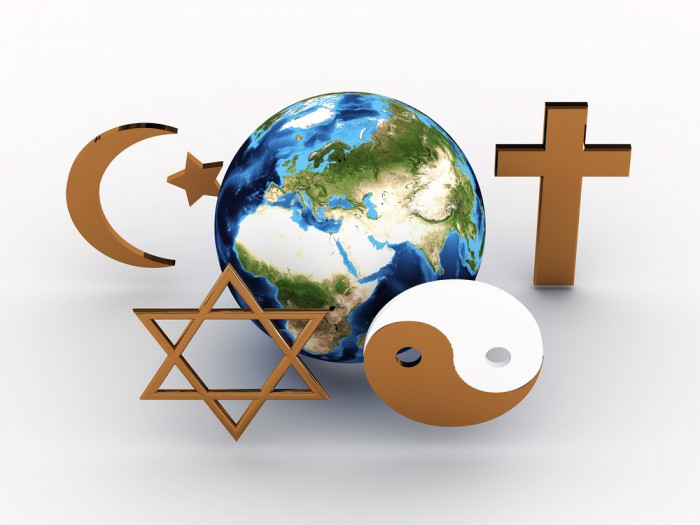
The classification of Judaism and Islam as “Abrahamic” religions is frequently deployed in interfaith discourse as a diplomatic platitude, yet this terminology conceals a far more rigorous theological reality. Unlike the relationship either faith holds with Christianity—which introduced the complex doctrines of the Trinity and Incarnation—the relationship between Judaism and Islam is one of structural mirroring. They are arguably the only two major world religions that share a mutually intelligible theology of the Absolute.
1.1 The Misconception of the “Western” Religion
In the modern geopolitical imagination, Judaism is often grouped with Christianity as part of the “Judeo-Christian” West, while Islam is positioned as the “Eastern” Other. This classification is historically and theologically erroneous. As noted by Rabbi Jonathan Sacks and various historians, Judaism is an Eastern religion in its origins, orientation, and temperament. Its textual tradition, legal structure, and cultural rhythms are deeply Semitic, sharing more with the ethos of the Quran than the Hellenized theology of the Church.
The “Judeo-Christian” construct is a relatively modern invention, largely a product of post-WWII American sociology. For nearly a millennium prior, the dominant intellectual and cultural axis was “Judeo-Islamic.” From the academies of Baghdad to the courts of Cordoba, the definitive works of Jewish grammar, philosophy, and law were written in Judeo-Arabic, within a civilization where the muezzin’s call and the cantor’s chant formed a dissonant but unified harmony.
1.2 The Theology of the “Twin”
Scholars of comparative religion argue that Islam and Judaism are “twins” because they both emphasize orthopraxy (right action) over orthodoxy (right belief). While belief is foundational, the primary mode of religious existence in both faiths is the adherence to a comprehensive system of Divine Law—Halakha for Jews and Sharia for Muslims. This “nomocentrism” creates a shared psychology of religion where the believer navigates the world through the lens of permission and prohibition (Assur/Mutar in Hebrew, Haram/Halal in Arabic).
Furthermore, the Quranic narrative does not seek to erase the Jewish past but to colonize it for the purpose of monotheistic restoration. The Quran is replete with references to the “Children of Israel” (Bani Isra’il), validating their original covenant while critiquing their subsequent lapses. This establishes a dynamic of “sibling rivalry” rather than total estrangement. The Quranic assertion that Abraham was a Hanif (a pure monotheist) who was “neither a Jew nor a Christian” (Quran 3:67) serves to reset the Abrahamic lineage to a primal state that both Jews and Muslims claim as their inheritance.
2. The Absolute: Strict Monotheism (Tawhid and Achdut)
The single most powerful bond between Judaism and Islam is their uncompromising insistence on the absolute unity of God. This is not merely a shared belief but a shared rejection of any dilution of that unity, specifically the Christian doctrine of the Trinity.
2.1 The Definition of Unity
In Judaism, the central creed is the Shema: “Hear O Israel, the Lord our God, the Lord is One” (Hashem Echad). This unity is defined as simple and indivisible. There are no parts, no persons, and no physical form associated with the Divine.
Islam mirrors this with the doctrine of Tawhid. The Quranic chapter Surah Al-Ikhlas is viewed by scholars as the theological equivalent of the Shema:
Quote from the Quran:
“Say: He is Allah, the One (Ahad). Allah, the Eternal, Absolute (As-Samad). He begetteth not, nor is He begotten; And there is none like unto Him.”
— Surah Al-Ikhlas (112:1-4)
The linguistic connection between the Hebrew Echad and the Arabic Ahad underscores the shared Semitic root. Both faiths assert that God is the sole Creator, Sustainer, and Judge of the universe, and that directing worship to any other entity is the ultimate sin—Avodah Zarah (foreign worship) in Judaism and Shirk (association) in Islam.
2.2 The Rejection of Incarnation and Intermediaries
Both traditions vehemently reject the idea of God becoming human. For Maimonides, the Christian concept of the Trinity constituted a compromise of monotheism (making Christianity Shituf—worship of God plus a partner), whereas Islam was regarded as pure monotheism (Yichud). Maimonides wrote in his legal code, the Mishneh Torah, that regarding the unity of God, the Muslims are “not idolaters in any way” and their monotheism is “without blemish”.
This theological validation had immense legal implications. It meant that Jews could enter mosques to pray (as they contain no idols), whereas entering a church was historically forbidden by Jewish law due to the presence of icons and statues.
2.3 Negative Theology: The Via Negativa
The intellectual rigor of this monotheism reached its zenith in the medieval period through the philosophy of “Negative Theology”—the idea that human language is incapable of describing God’s essence. One can say that God exists, but one cannot say what God is, only what He is not (e.g., God is not finite, God is not ignorant, God is not corporeal).
This philosophical approach was developed by Muslim thinkers like Al-Farabi and Avicenna (Ibn Sina) and adopted wholesale by Jewish thinkers like Maimonides. Maimonides’ insistence that biblical anthropomorphisms (God’s hand, God’s eye) must be interpreted metaphorically is a direct application of the Islamic Kalam (dialectical theology) tradition. Thus, the “Jewish” understanding of God that dominates orthodoxy today is deeply indebted to Islamic philosophical categories.
2.4 Aniconism: The Ban on Images
Flowing from this abstract view of God is a shared aniconism—a prohibition against visual representations of the Divine or, in stricter interpretations, living beings.
- Judaism: The Second Commandment prohibits making graven images.
- Islam: The Hadith traditions strictly forbid the creation of images (Taswir) of sentient beings.
Historically, Jewish attitudes toward art fluctuated. Ancient synagogues (like Beit Alpha) contained zodiac wheels and human figures. However, following the rise of Islam and the iconoclastic controversies, Jewish practice aligned closely with Islamic norms. Synagogues in the Islamic world abandoned figural art entirely, adopting the “arabesque”—infinite geometric patterns that direct the mind to the abstract Infinite rather than the concrete form. This shift represents a clear instance of Islamic aesthetic theology reinforcing and shaping Jewish practice.
3. Revelation and Scripture: Intertextuality and Validation
The relationship between the Quran and the Torah is complex, characterized by validation, critique, and intense intertextuality. Contrary to the view that Islam simply rejects prior scriptures, the Quran explicitly anchors its own authority in the validity of the Torah (Tawrat) and the Gospel (Injil).
3.1 The Quranic Validation of the Torah
The Quran refers to the Torah with high reverence, describing it as “Guidance and Light” (Hudan wa-Nur).
Quote from the Quran:
“Indeed, We revealed the Torah, containing guidance and light, by which the prophets, who submitted themselves to Allah, made judgments for Jews. So too did the rabbis and scholars judge according to Allah’s Book, with which they were entrusted and of which they were made keepers.”
— Surah Al-Ma’idah (5:44)
This verse is theological dynamite. It explicitly affirms that:
- The Torah is a Divine revelation.
- The Prophets judged by it.
- The Rabbis (Rabbaniyun) were entrusted with its keeping.
- Jews are judged by their own law.
This suggests that, in the Quranic worldview, the Jewish legal tradition is not a human invention but a divinely authorized system for the Jewish people.
3.2 Moses (Musa) and the Children of Israel
No prophet is mentioned more in the Quran than Moses (136 times). His life trajectory—from the basket in the Nile to the confrontation with Pharaoh, the splitting of the sea, and the revelation at Sinai—is retold with meticulous detail. The Quran portrays Moses as the ultimate archetype of the struggle against tyranny and idolatry, a precursor to Muhammad.
Quote from the Quran:
“And We certainly gave Moses the Scripture, so do not be in doubt over his meeting. And We made it a guide for the Children of Israel.”
— Surah As-Sajdah (32:23)
The Quran also acknowledges the “chosenness” of the Children of Israel in their time: “O Children of Israel, remember My favor which I have bestowed upon you and that I preferred you over the worlds” (Quran 2:47). This establishes a historical continuity where Islam views itself as the successor to the Israelite mission.
3.3 The Debate on Abrogation and Pluralism
A critical theological question is whether the Quran “abrogates” (cancels) the Torah or “confirms” it as a valid path for Jews. While mainstream Islamic theology often argues for abrogation (supersessionism), certain Quranic verses suggest a pluralistic validity.
Quote from the Quran:
“To each of you We have ordained a code of law (Shir’ah) and a way of life (Minhaj). If Allah had willed, He would have made you one community, but His Will is to test you with what He has given each of you. So compete with one another in doing good.”
— Surah Al-Ma’idah (5:48)
This verse is interpreted by pluralist thinkers as a Divine sanction of religious diversity. It implies that the differences in law between Jews (Halakha) and Muslims (Sharia) are intentional, designed to foster a “competition in good deeds” rather than a war of conversion. This offers a potent theological foundation for mutual respect.
3.4 “A Common Word”
The Quran outlines the terms of engagement between the faiths. It does not demand that Jews become Muslims to enter into dialogue, but rather that they return to the “common word” of pure monotheism.
Quote from the Quran:
“Say, ‘O People of the Scripture, come to a word that is equitable between us and you – that we will not worship except Allah and not associate anything with Him and not take one another as lords instead of Allah.’”
— Surah Ali ‘Imran (3:64)
4. Divine Law: The Architecture of Holiness (Halakha and Sharia)
If theology is the soul of these religions, Law is the body. The structural isomorphism between Halakha and Sharia is unique in comparative religion. Both systems view the totality of human life—from civil governance to toilet etiquette—as subject to Divine instruction.
4.1 Comparative Jurisprudence
| Feature | Jewish Law (Halakha) | Islamic Law (Sharia) |
| Foundational Text | Torah (Written Law) | Quran (Recitation) |
| Oral Tradition | Talmud (Mishna/Gemara) | Sunnah (Hadith collections) |
| Consensus | Minhag (Custom) / Rabbinic Consensus | Ijma (Consensus of Scholars) |
| Reasoning Tool | Sevarah / Kal Vachomer (A fortiori) | Qiyas (Analogy) / Ijtihad (Striving) |
| Legal Ruling | Psak Halakha / Responsa | Fatwa |
| Goal | Holiness (Kedusha) | The Path (Sharia) / Submission |
Both systems rely on a “dual Torah” structure: a written text that is cryptic and an oral tradition that explains it. In Judaism, the Oral Law was written down in the Talmud; in Islam, the sayings of the Prophet were collected in the Hadith (e.g., Bukhari, Muslim).
4.2 Dietary Laws: The Holiness of Consumption
The dietary codes (Kashrut and Halal) share a deep logic. Both prohibit the consumption of:
- Pork: Viewed as impure.
- Blood: Viewed as the seat of life.
- Carrion: Animals that died of natural causes or were killed by other animals.
- Predatory Animals: Generally forbidden in both (with minor variations).
The method of slaughter (Shechita vs. Dhabihah) is nearly identical, requiring a sharp knife to sever the trachea and esophagus to ensure rapid death and drainage of blood.
- Commonality: Both require the mention of God. In Islam, Bismillah must be said over each animal. In Judaism, a Bracha (blessing) is recited over the act of slaughter.
- Interaction: Historically, this allowed for commensality. Muslims generally accept Kosher meat as Halal (since it is slaughtered by People of the Book in the name of God). Jews, however, typically do not accept Halal meat as Kosher due to stricter requirements regarding the inspection of the lungs (Bedikah) and the prohibition of the sciatic nerve.
4.3 Ritual Purity: The Water of Life
Water is the medium of transition from the profane to the sacred in both faiths.
- Judaism: Mikveh (full body immersion) is required for converts, women after menstruation, and historically for men seeking purity. Netilat Yadayim (hand washing) is required before eating bread and upon waking.
- Islam: Ghusl (full immersion) is required after sexual intercourse or menstruation. Wudu (partial ablution—washing hands, face, feet) is required before the five daily prayers. The rigorous obsession with physical cleanliness as a prerequisite for standing before God is a shared trait that distinguished both communities from medieval Christendom, where bathing was often viewed with suspicion.
4.4 Maimonides and the Islamization of Jewish Law
The influence of Islam on Jewish law is most visible in the work of Maimonides. Before him, Jewish law was disorganized, scattered across the associative arguments of the Talmud. Maimonides wrote the Mishneh Torah, the first systematic code of Jewish law. Scholars have demonstrated that the structure of this code—organizing laws by conceptual categories (e.g., “Laws of Sale,” “Laws of Prayer”)—was inspired by Islamic Fiqh manuals. Maimonides effectively “Islamized” the form of Jewish law to make it accessible and logical, proving that interaction with Islam helped Judaism clarify its own tradition.
5. The Golden Age of Symbiosis: Philosophy and Culture
The “Golden Age” in Al-Andalus (Muslim Spain) serves as the historical proof-of-concept for the creative potential of Judeo-Islamic interaction. This period was not merely one of tolerance but of active symbiosis.
5.1 The Translation Movement and the Arabicization of Thought
In the 9th and 10th centuries, the Islamic world undertook a massive project to translate Greek philosophy and science into Arabic. Jews participated in this intellectual revolution. Saadia Gaon (882–942), the head of the academy in Sura (Iraq), translated the Bible into Arabic (Tafsir). He used Islamic rationalist theology (Kalam) to systematize Jewish belief, writing Emunot ve-Deot (“Beliefs and Opinions”) to defend Judaism using the very tools of Islamic logic.
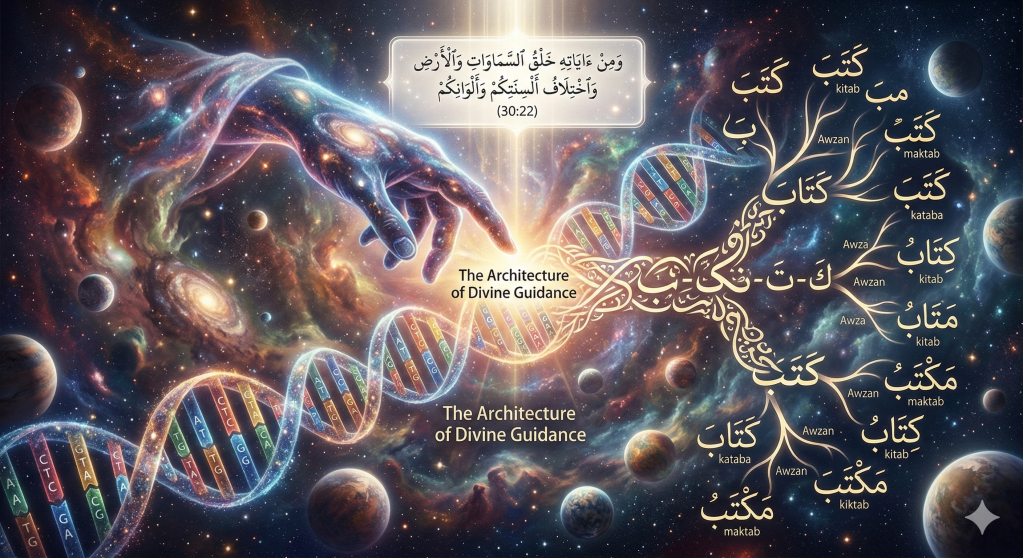
Insight: Without the Arabic language, Hebrew grammar as we know it might not exist. Jewish linguists like Dunash ben Labrat and Judah Hayyuj applied the rules of Arabic grammar (trilateral roots) to Hebrew, unlocking the linguistic structure of the Torah. Thus, the modern understanding of the Hebrew Bible is filtered through the lens of medieval Arabic philology.
5.2 Maimonides: The Eagle and the Philosophers
Moses Maimonides (Rambam) is the towering figure of this era. His Guide for the Perplexed was written in Judeo-Arabic and is essentially a sustained dialogue with Islamic Aristotelian philosophers (Al-Farabi, Avicenna, Averroes).
- The “Golden Mean”: Maimonides adopted the Aristotelian ethic of the “Golden Mean” (moderation), a concept widely discussed in Islamic ethics (Akhlaq).
- Prophecy: His theory of prophecy—that it requires both perfection of the imagination and the intellect—is drawn directly from Al-Farabi’s political philosophy.
- Influence: Maimonides represents the pinnacle of Jewish thought engaging with Islam without being subsumed by it. He respected Islamic thinkers as “monotheists” and “philosophers” while maintaining the distinctiveness of the Torah.
5.3 Synagogue Architecture: The Mudéjar Aesthetic
The cultural symbiosis was carved in stone. Synagogues like El Tránsito and Santa María la Blanca in Toledo, Spain, look indistinguishable from mosques in their interior design. They feature horseshoe arches, complex geometric tiling, and stucco texts (Hebrew verses carved in Arabic calligraphic styles). This “Mudéjar” style reflects a Jewish community that felt culturally at home in the Islamic aesthetic universe, rejecting the figural art of Christendom in favor of the abstract, infinite patterns preferred by Islam.
6. Mysticism: The Inner Dimensions (Sufism and Kabbalah)
While the legal connection is well-known, the mystical connection is arguably deeper. Jewish mysticism (Kabbalah) and Islamic mysticism (Sufism) share a history of mutual influence.
6.1 The Jewish Sufis of Egypt
In the 13th century, Rabbi Abraham Maimonides (son of the Rambam) led a movement of “Jewish Sufis.” He observed that the Sufis practiced intense devotion, nightly vigils, and prostrations that he believed were originally Jewish practices lost during the Exile. He wrote Kifayat al-‘Abidin (“The Sufficiency of the Servants”), a guide to Jewish piety that is structurally and thematically a Sufi manual. He instituted reforms in the synagogue—washing feet before prayer, kneeling, and arranging congregants in straight rows—to recapture this “lost” Jewish piety through the mirror of Islam.
6.2 Duties of the Heart
Bahya ibn Paquda’s Hovot HaLevavot (“Duties of the Heart”) is one of the most beloved books of Jewish ethics (Musar). It is, in essence, a Jewish adaptation of Islamic ascetic literature. Bahya quotes Islamic mystics (referring to them as “the pious ones”) and structures the spiritual journey according to Sufi “stations” (Maqamat), such as Tawakkul (Absolute Trust) and Ikhlas (Sincerity). Through Bahya, Islamic spirituality entered the bloodstream of the Yeshiva world, teaching Jews for centuries how to cultivate an inner life.
6.3 Shared Mystical Concepts
- Devekut and Fana: The Jewish goal of Devekut (cleaving to God) resonates with the Sufi goal of Fana (annihilation of the self in the Divine), though Judaism typically emphasizes retaining individual identity to perform mitzvot.
- Kavvanah and Niyyah: Both traditions emphasize that an act without intention (Kavvanah/Niyyah) is like a body without a soul. The legal validity of prayer depends on this inner direction of the heart.
7. What Can Judaism Learn from Islam?
This section directly addresses the user’s query regarding the lessons Judaism can draw from its “twin.” In the modern era, where Judaism in the West has been heavily influenced by Protestant Christianity (emphasizing decorum, privatization of faith, and bifurcation of secular/religious), Islam offers a reminder of Judaism’s own Eastern, holistic roots.
7.1 The Audacity of Public Prayer
Modern Jewish thinkers like Abraham Joshua Heschel and Rabbi Joseph Soloveitchik expressed a “holy envy” for the Islamic capacity for public worship.
- The Observation: Heschel noted the unselfconscious way Muslims drop to their knees in prayer (Salah) wherever they are—airports, sidewalks, offices. This reflects a “God-intoxicated” consciousness where the Creator takes precedence over social embarrassment.
- The Lesson: Modern Judaism has largely retreated to the synagogue. Islam challenges Judaism to reclaim the public sphere for God. Soloveitchik noted that the physical “choreography” of Jewish prayer (kneeling, prostration) was largely abandoned (except on High Holidays) partly to differentiate from Christians, but Islam preserved the ancient Semitic mode of worship involving the whole body.
7.2 The Rejection of the Secular/Religious Divide
Islam refuses to bifurcate life into “religious” and “secular” spheres. There is no “Church” vs. “State” in classical Islamic thought; there is only the Ummah under God.
- The Lesson: Judaism, too, was originally a totalizing system. The concept of Halakha covers business ethics, warfare, and agriculture. However, the Enlightenment (Haskalah) encouraged Jews to be “a Jew at home and a man on the street.” Islam’s resistance to this bifurcation offers a model for a holistic Jewish identity where Torah permeates the marketplace and the public square, not just the sanctuary.
7.3 Submission (Islam) as a Religious Value
The very word Islam means “Submission.” The cultural ethos of Islam is Inshallah (“If God wills”).
- The Lesson: Judaism is famous for its “culture of argument”—struggling with God (Israel means “wrestles with God”). While this is a strength, it can lead to a spiritual arrogance. Jewish thinkers suggest that Judaism needs to re-balance the “audacity of argument” with the “peace of submission” (Hislamut). The story of the Akedah (Binding of Isaac) is central to both faiths, but Islam highlights the aspect of unquestioning surrender that modern Jews often struggle to internalize.
7.4 Religious Pride
Rabbi Jonathan Sacks frequently cited the “religious pride” of Islam as a necessary corrective to Jewish apologetics. In a Western culture that often mocks faith, Muslims are frequently unapologetic about their distinctiveness (hijab, prayer, fasting). Sacks argued that Jews should learn from this dignity and stop trying to make Judaism “palatable” to secular norms, but rather celebrate its distinctiveness with the same confidence.
8. Eschatology and the Shared Destiny
The eschatological visions of both faiths are strikingly similar, focusing on the restoration of justice in history rather than a purely other-worldly salvation.
8.1 The Messiah and the Mahdi
- Judaism: Awaits the Mashiach (Messiah), a human king from the line of David who will rebuild the Temple, gather the exiles, and bring world peace.
- Islam: Awaits the Mahdi (Guided One), a descendant of Muhammad who will fill the earth with justice as it was filled with oppression.
- Comparison: Unlike the Christian view of a divine Savior who atones for sin, both the Messiah and the Mahdi are political-religious leaders who effect historical change. They confirm the validity of God’s law rather than abrogating it.
8.2 The “End of Days” Scenario
Both traditions speak of a final confrontation with evil (Armilus in Jewish texts / Dajjal in Islamic texts) followed by the Resurrection of the Dead (Tehiyyat HaMetim / Qiyamah).
- Divergence: A major difference is the Islamic belief that Jesus (Isa) will return to assist the Mahdi and break the cross (rejecting Christianity) and kill the swine. Judaism does not foresee a return of Jesus.
- Convergent Hope: Both faiths ultimately look forward to a time when “God will be One and His Name One” (Zechariah 14:9), a verse that aligns perfectly with the triumph of Tawhid.
9. Contemporary Relations and Theological Challenges
Moving from the medieval to the modern, the relationship faces new challenges, yet the theological bedrock remains.
9.1 Overcoming Bias: The Work of Dr. Tamer Metwally
A significant development in modern scholarship is the internal critique of bias. Dr. Tamer Metwally, an Islamic scholar, has written extensively on “Bias Against Judaism in Contemporary Writings.” He argues that many modern Muslim polemics rely on European antisemitic tropes rather than authentic Islamic sources. He calls for a return to the Quranic view of the Jews as People of the Book, arguing that respecting Judaism strengthens Islam, as Islam is the “branch” and Judaism the “root”.
9.2 The “Covenant of Fate” vs. “Covenant of Faith”
Rabbi Jonathan Sacks distinguished between the “Covenant of Fate” (shared suffering/history) and “Covenant of Faith” (shared destiny/purpose). He argued that Jews and Muslims share a “Covenant of Faith” as monotheists standing against the tide of secular nihilism. He posited that the West needs the moral voice of the Abrahamic faiths to counter the disintegration of family and community.
9.3 Tikkun Olam vs. Islah
A productive area for modern cooperation is the comparison of Tikkun Olam (Repairing the World) and Islah (Reform/Repair).
- Tikkun Olam: Often interpreted today as social justice, traditionally it meant establishing God’s sovereignty.
- Islah: Means repairing the state of the community or the self to align with God’s will.
- Synthesis: Both concepts drive the believer to engage with the brokenness of the world. They offer a theological vocabulary for Jews and Muslims to work together on poverty, environment, and civil rights without needing to compromise their distinct theologies.
Epilogue: Thematic Reflections – The Mirror of the Semites
The Mirror of Ishmael
History suggests that Judaism and Islam function as mirrors. When one flourishes, the other often finds renewal through the interaction. The Golden Age was not an accident but a product of this reflection. Today, as both faiths navigate the pressures of secular modernity, the mirror remains. Islam reminds Judaism of the power of submission and public presence; Judaism reminds Islam of the power of interpretative resilience and minority survival.
The Lost Language of the Body
The modern Jew often prays with the mind and the lips; the Muslim prays with the knees and the forehead. The “lesson” from Islam is a call to return to a holistic service of God—Avodah—that encompasses the body. It is a reminder that monotheism is not just an idea to be thought, but a reality to be lived, breathed, and bowed before.
The Final “Competition”
The Quranic directive to “compete in good deeds” (5:48) offers a roadmap out of conflict. If both communities viewed their distinctiveness not as a cause for war but as a Divine test of righteousness, the energy currently spent on polemics could be redirected toward the shared Abrahamic mission: to proclaim the One God in a fractured world. As Rabbi Sacks noted, Isaac and Ishmael ultimately stood together at the grave of Abraham. The theology for that reunion exists; it waits only for the courage of the “children” to embody it.
If you would rather read in Microsoft Word file:
 The Glorious Quran and Science
Leave a comment