
Abstract
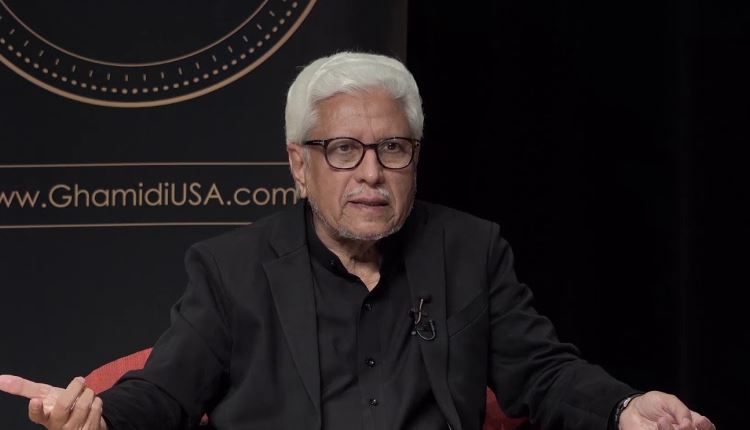
Javed Ahmad Ghamidi, a prominent contemporary Islamic scholar, takes a critical stance towards mysticism (taṣawwuf) and the Sufi tradition. He argues that Islam’s only valid sources of religious guidance are the Qur’an and the established Sunnah, explicitly rejecting personal mystical experiences – such as dreams or spiritual “inspiration” (ilhām) – as sources of law or doctrinescribd.com. Ghamidi has even described Sufism as a “parallel religion” alongside Islam, by which he means that Sufism developed into a complete system of thought with its own principles and methods, running parallel to the prophetic teachingsscribd.com. This description has been controversial, as Sufis themselves consider their practices part of Islam, not a separate faith.
This report first outlines Ghamidi’s perspective on mysticism and Sufism, explaining why he deems it a deviation from Islamic fundamentals. It then offers a critique of his stance, examining counter-arguments and the historical role of mysticism in Islam. While Ghamidi’s emphasis on scriptural sources highlights an important principle – that personal visions cannot override universally binding revelation – his blanket dismissal of the mystical tradition raises questions. The critique explores how authentic spiritual experiences (like true dreams) have been acknowledged in Islam and how Sufism, despite its excesses, has contributed positively to Islamic spirituality and scholarship. In conclusion, a thematic epilogue reflects on balancing the inner spiritual dimension with the outer religious law, considering whether mysticism truly stands apart from Islam or is an integral part of the faith’s rich tapestry.
Ghamidi’s Stance on Mysticism and Sufism
Sufism as a “Parallel Religion”
Ghamidi provocatively refers to Sufism (taṣawwuf) as a “parallel religion.” By this, he does not mean Sufism is an officially separate religion like Christianity or Hinduism, but rather a parallel system of thought – a complete religious philosophy developed alongside mainstream Islamscribd.com. According to Ghamidi, the Prophets brought a divinely revealed system (the Qur’an and Sunnah), whereas Sufi mystics over centuries formulated their own system with unique principles and practices. He points out that some eminent Sufi scholars themselves (for example, Shah Waliullah) described Sufism as having distinct principles and an independent origin of knowledge, effectively creating a “parallel but separate philosophical system” to reach truthscribd.com.
Importantly, Ghamidi acknowledges that individual Sufis consider themselves devout Muslims. They do not claim to be outside Islam – in fact, they usually combine their Sufi beliefs and practices with orthodox Islamic faith in Allah and His Prophetscribd.com. However, Ghamidi’s critique is directed at Sufism as an ideology. In his view, over time Sufism solidified into a framework that stands apart from the Quranic-prophetic framework. He often notes that classical Sufi literature proposes its own terminologies, hierarchies (such as saintly “friends of God”), and spiritual methods (like specific forms of dhikr, bay‘ah to a spiritual shaykh, etc.) which are not derived from the Prophet’s teachings but from mystical experimentation. Thus, when he labels Sufism a parallel religion, Ghamidi is saying that it offers an alternate path to truth parallel to Islam’s original path – a claim that many Sufis and other Muslims understandably find objectionable.
Denial of Mystical Epistemology
At the heart of Ghamidi’s rejection of mysticism is an epistemological principle: the sources of Islam’s religious knowledge are only the Qur’an and the Sunnah. He emphatically states that “No dream, inspiration, or inner light can ever be made a source of religion, for religion must be based on certainty, not on the emotions or experiences of individuals.”scribd.com In other words, subjective mystical experiences – no matter how profound they feel – cannot establish doctrines or obligations for the Muslim community. Ghamidi’s viewpoint is that personal spiritual experiences lack the certainty and verifiability required to form the basis of Sharī‘ah (religious law) or credo. Only the Prophet Muhammad’s revelation (the Qur’an) and his authoritative example (Sunnah) carry that weight in Islam.
From this perspective, Ghamidi denies the authority of mysticism, not necessarily the existence of mystical experiences. In his writings and lectures (e.g. in Mīzān), he acknowledges that people may have dreams or feelings of divine inspiration, but he insists these have no binding power on anyone besides the person who experiences themscribd.com. Unlike prophets, mystics are not recipients of revelation meant for mankind. Thus any guidance they receive is personal and cannot add to or alter Islam’s teachings. Ghamidi is concerned that elevating kashf (unveiling of spiritual insights) or ilhām (personal divine inspiration) to the level of religious proof opens the door to subjective whims and even charlatanism, undermining the objectivity of Islam’s message. By rejecting mystical insight as a source of religious truthscribd.com, he aims to safeguard the purity of Islamic doctrine from what he sees as unverified additions introduced by Sufis over time.
Criticism of Sufi Doctrines and Practices
Ghamidi’s critique extends to specific Sufi doctrines and rituals which he feels conflict with Islamic teachings. One major example is the Sufi concept of Wahdat al-Wujūd (the Unity of Being), historically espoused by figures like Ibn ‘Arabi. This doctrine posits an ultimate oneness of God and creation (often interpreted as God being immanent in everything). Ghamidi staunchly rejects Wahdat al-Wujūd as a form of pantheism incompatible with tawḥīd (Islamic monotheism)scribd.com. He argues that the Qur’an presents God as distinct and transcendent above His creation; thus, saying “God is everything” or manifest in the world dilutes the clear line between Creator and creation. In a lecture, he put it succinctly: equating God with the existence of the universe is “not Tawheed but a form of pantheism.”scribd.com For Ghamidi, mystic monism undermines the core Islamic belief in a transcendent, singular God.
Additionally, Ghamidi questions the legitimacy of many Sufi practices that lack prophetic precedent. For instance, organized dhikr circles with repetitive chanting, the system of bay‘ah (oath of allegiance) to a Sufi sheikh, the concept of silsila (spiritual chain of authority), excessive veneration of saints’ tombs, and other rituals are viewed as innovations (bid‘ah) in religion from Ghamidi’s reformist outlookscribd.com. He notes that such practices were not taught or practiced by Prophet Muhammad or the early generations, but were introduced later as part of the Sufi path. In his analysis, even if these innovations began as attempts to spur piety, they eventually formed an alternate religious culture that sometimes detracts from the practical and moral focus of Islamscribd.com. For example, extreme Sufi emphasis on fana’ (annihilation of the ego in God) or seclusion from society could, according to Ghamidi, lead to neglecting one’s concrete duties in the world – tilting Islam’s balanced emphasis on both worship and righteous action into an otherworldly escapism.
Summary of Ghamidi’s Position
In summary, Ghamidi sees mysticism and Sufism as well-intentioned but ultimately misguided offshoots in Islamic history. He acknowledges that Sufism began as a reaction to the worldliness that crept into the early Muslim community – early ascetics sought to revive spirituality and sincerity when Muslims had grown materially wealthy but “spiritually hollow”scribd.com. However, Ghamidi argues that over the centuries this impulse morphed into a distinct philosophy that introduced speculative theology and novel practices. He maintains that true Islamic spirituality (tazkiyah, or purification of the soul) is achieved through the moral and rational teachings of the Qur’an and Sunnah rather than any secret esoteric pathscribd.com. In his words, “The Qur’an’s path to God is moral and rational, not esoteric or hidden. Every believer can walk it through sincerity, worship, and good deeds.”scribd.com
Therefore, Ghamidi’s denial of mysticism is not a denial that Muslims can have moving spiritual experiences; it is a denial that such mysticism constitutes a valid or parallel route to religious truth. To him, Sufism is “parallel” only in the sense that it runs alongside Islam with a differing methodology – and he views that methodology (seeking knowledge via inner illumination, pursuing unity of being, etc.) as a deviation. Ghamidi’s critique is ultimately a call to return to scriptural fundamentals, purging Islam of what he sees as accretions that cannot be substantiated by the Prophet’s example.
Critique of Ghamidi’s Perspective
Ghamidi’s perspective has provoked considerable debate. While many orthodox and reformist Muslims agree with elements of his critique (for example, the primacy of Qur’an and Sunnah, and wariness of unverified “revelations”), others argue that his blanket characterization of Sufism as a parallel religion is an oversimplification – even an injustice – to a rich tradition within Islam. The following points present a critique of Ghamidi’s stance, highlighting areas where his conclusions may be too rigid or overlook important nuances:
1. Mystical Experiences in Islamic Tradition
It is important to note that Islam itself acknowledges the reality of true dreams and visions – albeit with careful qualifiers. The Prophet Muhammad (ﷺ) explicitly taught that toward the end of times, the dreams of believers would rarely be false, and “the dream of a believer is one of forty‐six parts of prophecy.”abuaminaelias.com In another narration, he said “Nothing remains of prophethood except Mubashshirat,” explained as righteous dreams that give glad tidings. These statements indicate that, although formal prophethood ended with Muhammad, God may still choose to communicate individual guidance or signs to people through dreams or inspiration. Such experiences are not considered new doctrines, but they are seen as a personal mercy or insight from God. For instance, the Qur’an itself recounts the story of the king of Egypt at Joseph’s time who had a truthful dream foretelling a famine, which Prophet Joseph interpreted (Qur’an, Surah Yusuf). Likewise, many companions of the Prophet and pious Muslims since have reported being guided or warned by truthful dreams.
Ghamidi does not deny the occurrence of these experiences – even his own affiliated scholars on the Ask Ghamidi forum affirm that “True dreams are a reality… In an authentic hadith the Holy Prophet mentioned that they are from God.”ask.ghamidi.org. However, by insisting that no inner experience can be a source of religion, Ghamidi downplays the significance such experiences have had in Islamic piety. The critique here is one of balance: one can agree with Ghamidi that personal revelations cannot establish new religious obligations, yet still recognize that they hold spiritual value. Throughout Islamic history, countless Muslims (including scholars) have taken inspiration from dreams or felt guided by moments of mystical illumination – using them to motivate personal reform, scientific insight, or artistic creativity, without claiming any new Shariah from them. Dismissing all mystic inspiration as useless or dangerously subjective overlooks the fact that faith is not purely an intellectual affair; it also resides in the interior experiences of believers. As long as those experiences do not contradict the Qur’an and Sunnah, many argue they can enrich one’s relationship with God.
Indeed, even outside explicitly religious spheres, there are fascinating cases of knowledge gained in quasi-mystical ways. A famous example often cited is the case of Srinivasa Ramanujan, the Indian mathematical genius. A devout Hindu, Ramanujan credited his astounding mathematical discoveries to visions from a goddess in his dreams, saying his formulas were “revealed” to him by the divinenews.emory.edu. Of course, Ramanujan’s dreams have no religious authority in Islam (and he himself was Hindu, not Muslim), but the example is illuminating: it suggests that human minds can sometimes access profound truths through dreams or intuition beyond normal reasoning. If such things are possible in mathematics and science, Muslim mystics ask, why cannot a saintly person receive a helpful insight in a dream or a moment of divine inspiration to solve a personal or community problem? Critics of Ghamidi argue that completely rejecting mysticism’s role may impoverish the Islamic tradition, stripping away the intuitive and inspirational aspects that have always been a part of the lived experience of Muslims. In short, personal mystical revelations should not and do not change Islamic law – on that, most Muslims agree with Ghamidi – but they can still be seen as “useful and revelatory” on an individual level, a point Ghamidi’s strict epistemology leaves little room for.
2. Sufism Within Islam, Not Apart from It
Labeling Sufism a “parallel religion” has struck many as an unfair characterization. Historically, Sufism (taṣawwuf) developed within the fold of Islam, not as an outside competitor to it. From the 8th century onward, what we call Sufism was essentially an emphasis on iḥsān (spiritual excellence) – the third dimension of the famous hadith of Gabriel (alongside islām and īmān). Early Sufis like Hasan al-Basri or Rabia al-Adawiyya were simply devout Muslims focused on asceticism, love of God, and purification of the heart. Over time, a more systematic Sufi methodology evolved, but its great masters – Junayd of Baghdad, Abdul Qadir Jilani, Jalaluddin Rumi, Imam Al-Ghazālī, etc. – never saw themselves as outside Islam. In fact, Imam Al-Ghazālī (5th century Hijri) wrote “Iḥyā’ ‘Ulum al-Dīn” (Revival of the Religious Sciences), blending Sufi spirituality with orthodox practice, and his works are revered in mainstream Sunni scholarship. Such figures argued that Sufism is the inner dimension of Islam, concerned with character development and closeness to God, complementing the outer observance of Shariah.
Critics point out that Ghamidi’s blanket dismissal of Sufism as a separate system ignores this integrative history. Sufism at its core does not preach a different creed or a different God; rather, it seeks a deeper experience of the same faith. The fact that Sufis “combine their Sufi beliefs with their faith in Allah and the Prophet” (as Ghamidi’s own clarification notesscribd.com) is evidence that most Sufis view taṣawwuf as part and parcel of Islam. Accusing Sufism of being a parallel deen (religion) can be perceived as accusing Sufis of covert apostasy or creating a new religion – a charge they vehemently reject. Even when Ghamidi explains he means “parallel system of thought” by the word “religion,” the phrasing is easily misunderstood and, some argue, misleading. A more nuanced critique could target specific excesses or errors within Sufism without delegitimizing the entire spiritual tradition that so many orthodox Muslims, past and present, have followed.
3. Overlooking Sufi Contributions and Reform
Another critique of Ghamidi’s approach is that it seemingly overlooks the positive contributions of Sufi scholars to Islamic thought, culture, and morality. Despite his criticism, Ghamidi and his circle do acknowledge that many Sufis were also accomplished Islamic scholars in other fieldsask.ghamidi.org. Historically, Sufi-inclined scholars produced some of Islam’s greatest works in Quranic exegesis, Hadith, jurisprudence, literature, and social reform. For example, Shah Waliullah Dehlawi – whom Ghamidi himself often respects in jurisprudential discourse – was a Sufi of the Naqshbandi order, yet he wrote important works reconciling Islamic law with spirituality. His books Hujjatullāh al-Bāligha and Al-Fawz al-Kabīr bridged gaps between external scholarship and inner faithask.ghamidi.org. Imam Abu Hamid al-Ghazālī, possibly the most famous example, underwent a personal spiritual transformation and embraced Sufism; afterward he penned masterpieces like Iḥyā’ ‘Ulum al-Dīn, which renewed religious understanding for many and countered the skepticism of philosophers. Numerous other “Sufi scholars” – such as Jalaluddin Rumi, Imam Nawawi, Shah Abdul Aziz, Bediuzzaman Said Nursi in the 20th century, etc. – have reinforced Islamic values and inspired devotion among the massesask.ghamidi.org.
By branding Sufism wholesale as a parallel, misleading system, Ghamidi’s narrative might underappreciate this legacy. The mystical tradition has also shown capacity for self-correction and reform from within. There have been puritanical Sufi reformers (like Sheikh Ahmad Sirhindi or Shah Ismail Shaheed) who fought innovations and reminded Sufis to stay within Shariah boundaries. Thus, one can argue that the solution to problematic mysticism is internal revival and guidance, not tossing out the entire tradition as anathema.
Furthermore, the sharp dichotomy Ghamidi draws – either follow Qur’an/Sunnah or follow mysticism – may be a false binary in practice. Countless Muslims have managed to benefit from both scripture and spirituality, seeing them in harmony. For such people, Sufism was not a “different religion” but a means to soften the heart, inculcate intense God-consciousness, and thereby better follow the Qur’an and Sunnah. The ethical fruits often associated with true Sufism – love, humility, generosity, zikr (remembrance of God) – are indisputably part of Islam’s aims. The critique here is that Ghamidi risks “throwing out the baby with the bathwater”: in rejecting distortions (the bathwater), he appears to reject the entire mystical quest for iḥsān (the baby), which many see as an integral Quranic mandate (“…and worship Allah as though you see Him,” as the hadith defines iḥsān). A more balanced approach, critics suggest, would be to distinguish acceptable Sufi teachings from the un-Islamic accretions, rather than treating Sufism monolithically as a rival system.
4. The Human Need for Spiritual Depth
Finally, underlying Ghamidi’s rationalist approach is a certain vision of Islam – one that prioritizes law, ethics, and rational theology, sometimes at the expense of mystical or emotional aspects. Many believers, however, feel that spiritual depth and the sense of a personal connection with the Divine are not a luxury or a “parallel track,” but rather a necessity within Islam. The Qur’an repeatedly alludes to realities that are unseen (ghayb) and urges believers to remember Allah often, reflect, and attain tranquility of hearts through His remembrance (Qur’an 13:28). Sufism, for all its historical baggage, developed as a response to this call – a way to practically help individuals remember God constantly, discipline the ego, and taste the sweetness of faith. If one entirely discards mysticism, one might end up with a dry, legalistic practice of religion that doesn’t satisfy the soul’s thirst for experiential faith.
Critics of Ghamidi would ask: Is the problem mysticism itself, or the misuse of it? Mystical experiences and personal revelations, when kept in proper perspective, can actually energize faith. For example, someone who has a vivid dream that inspires them to repent from sins or to undertake a charitable project will often be more fervent in doing so than if they had just read an injunction in a book. While the dream doesn’t make new law, it acts as a personal motivator. The Islamic tradition, through concepts like karāmāt (miracles of saints) and truthful dreams, has long admitted that some people are blessed with special inspirations. Denying this wholesale might alienate those Muslims whose spirituality inclines them to mysticism, potentially pushing them away rather than constructively guiding them. A well-known saying (attributed to various sages) goes: “He who does not have a spiritual guide, Shaytan (the Devil) is his guide.” The point being that the inner journey is real, and without trustworthy mentorship it can go astray – but the answer is to guide it, not to pretend it should not exist at all.
Epilogue: Between Revelation and Inspiration – Finding Balance
The debate around Ghamidi’s critique of mysticism ultimately highlights a perennial tension in Islam: the balance between external revelation and internal inspiration. On one side stands the perfected and binding revelation – the Qur’an (and the Prophet’s authoritative teachings) – which Muslims believe to be the final criterion of truth. On the other side lies the realm of personal spiritual experience – dreams, intuitions, mystical states – which many believers throughout history have encountered as part of their journey to God. Ghamidi champions the former unequivocally, cautioning that elevating the latter can lead to a corruption of religion. In doing so, he echoes the age-old concerns of scholars like Ibn Taymiyyah, who criticized deviant Sufi practices, or the Salafi reformers who called back to scriptural purity.
Yet, as the critiques illustrate, Islam’s richness has always included a place for mysticism – a controlled, sober mysticism grounded in the Revelation. The Qur’an itself invites introspection and speaks of God “guiding whom He wills” in various ways. The challenge is to ensure that our subjective experiences do not contradict or override the objective guidance God sent for all humanity. In the vast majority of cases, Muslims have managed this balance: a scientist thanks God for an inspiring dream that leads to discovery; a saintly person keeps his illuminations private, using them to worship more fervently, all the while affirming the supremacy of the Qur’an’s teachings. Such phenomena can be seen as signs of God’s ongoing mercy and communication, even after prophethood – not to legislate new laws, but to encourage and enlighten individuals.
Labeling Sufism a “parallel religion” might be Ghamidi’s way of warning against an overgrown, unregulated mystical system – but it is worth remembering that for millions of Muslims, Sufism was never about a new system at odds with Islam. It was about beautifying the soul within Islam’s system. Perhaps the way forward is not an outright denial of mysticism, but a reformation of mysticism: appreciating the true dreams and sincere devotional practices that align with Islam’s ethos, while discarding superstition or anything that clearly violates the Qur’an and Sunnah. As one Islamic writer put it, the Sufi is not outside the Shariah, but rather its most devoted servant, seeking the inner wisdom of the law.
In conclusion, Javed Ghamidi’s voice is an important reminder of the primacy of Revelation and the dangers of unfettered mysticism. His critique invites healthy reflection: it urges Muslims to ask, “Are we following God’s instructions, or our own wishful thinking?” However, the mystical dimension of faith has its own legitimate space – a space where the individual heart connects with the Divine in uniquely personal ways. The task for contemporary Muslims is to harmonize these dimensions: to be firmly rooted in the Qur’an and Sunnah as Ghamidi stresses, and to allow the blossoms of genuine spirituality to grow from that soil. In this harmony lies the completeness of the Islamic experience – one that engages both mind and heart, law and love, the outward and the inward.
If you would rather read in Microsoft Word file:


 The Glorious Quran and Science
Leave a comment