
Epigraph
“I’ve tried to understand Christianity. I’ve tried to find new meaning in worshipping Kuan Yin and others. I also tried to adopt Buddhist practices. But my heart never felt close to God or touched.” Felixia Yeap
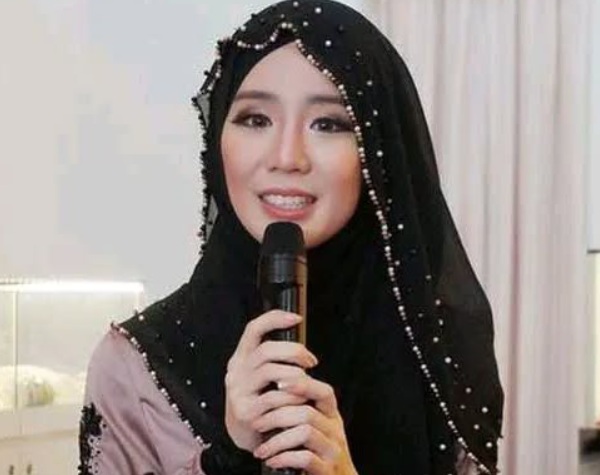
Presented by Zia H Shah MD
Early Life and Modeling Career
Felixia Yeap Chin Yee was born on July 3, 1986, in Kuala Lumpur, Malaysia, and raised in the city of Ipoh in Peraken.wikipedia.orgnairaland.com. Even before fame, she lived a humble life – at one point working as a kindergarten teacher – but she harbored bigger dreamsnairaland.com. In 2005, Felixia entered the modeling world and quickly made a name for herself. She became a finalist in beauty contests and reality modeling shows, and by her early twenties she had earned titles such as first runner-up in Miss Chinese World Malaysia and a finalist spot in Miss Universe Malaysia 2010en.wikipedia.orgen.wikipedia.org. Her career hit an international high when she was selected to work at the Playboy Club in Macau, making her Malaysia’s first (and only) Playboy Bunny – a distinction that brought her significant attentionen.wikipedia.orgnairaland.com. She even appeared (non-nude) in a pictorial for Playboy Philippines in 2013en.wikipedia.org. To many outsiders, Felixia’s life as a model seemed glamorous and enviable, filled with photo shoots, fashion shows, and pageant spotlights. Yet behind the spotlight, she would soon confront a growing sense of dissatisfaction and a longing for something more meaningful.
Questioning the Glamour and Seeking Purpose
As Felixia’s modeling career progressed, she began to feel an unexpected hollowness amidst the glamour. In personal reflections, she admitted feeling that she was often “used” by people who saw only her appearance and not her worth as a personalrasub.com. The constant emphasis on physical beauty and the party lifestyle surrounding the industry left her empty. “I crumbled time after time… I picked myself up just to crumble all over again,” she wrote, describing the emotional toll of being treated as a mere object of fun rather than a person deserving of respectalrasub.com. Many assumed that as a model – especially one who had posed in swimsuits and lingerie – she must be a carefree party-goer, but Felixia insisted that this image was a misconceptionalrasub.com. In truth, she was a young woman searching for greater meaning beyond the catwalk and camera flashes.
This search for self-worth led Felixia to question the value system of the industry she was in. Surrounded by what she later described as a culture of hedonism and materialism, she observed how many peers “judged their happiness” by wild parties, wealthy boyfriends, and the latest luxuriesnairaland.com. Something about that lifestyle felt deeply unfulfilling to her. “Most hungered for wealth and they searched for it without caring for their dignity,” Felixia reflected, noting that material riches and indulgence left her feeling spiritually empty. “For what is the point of being wealthy when your life feels empty, meaningless and drowned in sin. That is not the happiness I seek”nairaland.com. These internal struggles and honest realizations marked a turning point in Felixia’s heart: she knew she was yearning for a different kind of success – one defined not by fame or fortune, but by inner peace, self-respect, and a connection to something sacred.
A Glimpse of Modesty: The Hijab Experiment
An unexpected opportunity would soon illuminate the path Felixia was seeking. In late 2013, she took on a modeling assignment unlike any of her previous gigs – she was asked to model Muslimah clothing, specifically the hijab (the Islamic headscarf)alrasub.comalrasub.com. Stepping in front of the camera draped modestly, Felixia felt something shift inside her. She later described how wearing the hijab for that commercial casting made her feel “liberated” – a profound sense of freedom and dignity that she had not experienced in her usual skimpy outfitsalrasub.com. Instead of feeling constrained, she felt uplifted. “Now, she feels happy, protected and safe every time she dons the hijab,” one report noted of Felixia’s experiencealrasub.com.
Encouraged by that first experience, Felixia embraced more modest modeling opportunities. When another chance came to model festive hijab designs for the upcoming Hari Raya (Eid) celebration, she “seized it without much thought”alrasub.com. She found herself actually looking forward to covering up rather than baring more skin – a stark contrast to her previous work. “I realised that I was looking forward to cover up my body more. When someone grows up they become wiser,” she told a journalist, describing how her perspective on beauty and self-expression had maturedalrasub.com. This was a bold public move for someone who was not a Muslim (at the time she was still officially a free-thinker with no formal religion)alrasub.com. Yet Felixia felt drawn to the values of modesty, self-worth, and respect that the hijab symbolized for her.
By December 2013, Felixia had begun wearing the hijab regularly in her daily life, not just for photo shootsen.wikipedia.org. She even penned a widely shared blog post titled “The Truth Behind My Hijab,” in which she explained why she had adopted the headscarf. “I believe I am worth more than just showing off my body. I am more than this,” Felixia wrote passionatelychristiantoday.com. She expressed that she no longer felt proud of the Playboy-style image she had projected before, especially if it meant being idolized for superficial reasons. “And I don’t feel proud if attention- or fame-seeking model wannabes out there look at me as their idol or role model,” she added, rejecting the idea that her past scantily-clad persona should be emulated by young girlsalrasub.comalrasub.com. These candid confessions revealed a woman in the midst of profound personal growth – someone actively aligning her outer appearance with her inner values. Felixia’s decision to cover herself sparked controversy and curiosity across Malaysia, a multi-ethnic country where a Chinese woman in a hijab is an unusual sighten.wikipedia.org. Fans and critics alike were asking: Was Felixia Yeap on the road to embracing Islam?
Felixia Yeap’s public image underwent a remarkable transformation – from posing as a glamorous Playboy Bunny to appearing in modest hijab attire. This change reflected her inner journey towards valuing dignity and spirituality over fame. It also sparked widespread public discussion, as many wondered if her new look signaled a deeper religious calling.
Exploring Faith: From Church Pews to Temple Courtyards
Long before Felixia ever donned the hijab, she had been quietly searching for spiritual truth. Though born into a Malaysian Chinese family – where Buddhist and traditional Chinese beliefs are common – Felixia did not practice any religion devoutly in her youth. In her 20s, during the height of her modeling days, she began exploring different faiths in hopes of finding the peace and guidance that her glamorous life lacked. “I went to Catholic church every Sunday evening for two years. I’ve tried to understand Christianity,” she revealed of her first foray into organized religionchristiantoday.com. Sitting in the church pews each week gave her a glimpse of the devotion and hope that faith offered to others. Yet, as much as she respected Christianity, Felixia admitted that something still felt missing: “I also tried to adopt Buddhist practices… But my heart never felt close to God. My heart never felt touched”christiantoday.com. In these heartfelt words, she confessed that neither attending Mass nor praying at Buddhist temples had managed to fill the spiritual void inside her.
Felixia’s openness to different religious paths showed her broad-mindedness and sincere yearning for truth. She meditated, visited temples to honor Kuan Yin (a bodhisattva worshipped by many Buddhists and Taoists), and read up on various philosophieschristiantoday.com. There was even a time she described lighting incense and seeking meaning from Chinese folk deities. But despite these efforts, the connection to the Divine that she longed for eluded her. Looking back on those years, Felixia wrote that her soul felt adrift. She believed in God in a general sense, but she hadn’t yet experienced the closeness or sakina (peace) that comes from devoted faith. It was as if she had been wandering through spiritual gardens without finding the one in which she truly blossomed. Little did she know that her encounter with the hijab and the Muslim community would finally lead her to the sense of “home” she had been seeking all along.
Embracing Islam: A Spiritual Rebirth
Felixia’s journey towards Islam was gradual, heartfelt, and not without obstacles. After she started wearing the hijab on her own initiative, she spent about seven months quietly studying Islam – reading, asking questions, and reflecting – before making any formal commitmentnairaland.com. During this time, she kept much of her spiritual quest private, confiding mainly in her mother and a close circle of friends. Her social media posts, however, gave hints of the transformation underway. She spoke about finding solace in new habits like dressing modestly and mentioned being moved by the kindness of Muslim friends. As rumors swirled, Felixia stayed patient and focused. She later shared that from the moment she first pledged to wear the hijab – even before she fully understood the faith – she encountered trials and tests of her resolvenairaland.com. Fans left hurtful comments accusing her of staging a “publicity stunt” or angling to “marry a rich Datuk (dignitary)” because of her wardrobe changenairaland.com. Some long-time followers unfollowed her Facebook page in disappointment when she traded bikinis for headscarvesnairaland.com. And indeed, Felixia was tested internally as well: “I admit, there were times I felt crushed and defeated,” she wrote, describing moments when the negativity and doubt could have derailed hernairaland.com. But her heart was already set on a new direction, and she refused to turn back. “I firmly stood my ground and did not take off my hijab. I continued my struggle,” she declared with the quiet strength that would come to define hernairaland.com.
On July 3, 2014 – her 28th birthday – Felixia Yeap officially embraced Islam, choosing this significant date to symbolize a new beginningchristiantoday.comchristiantoday.com. That day also happened to fall during Ramadan (the holy fasting month) and, as Felixia noted joyfully, it was a Thursday – a day the Prophet Muhammad had favored for extra spiritual actschristiantoday.com. Surrounded by close family and friends, she recited the Shahada, the Muslim declaration of faith, entering the fold of Islam with tearful prayers and heartfelt convictionnairaland.comnairaland.com. “Today is not just my birthday, but also the day that I am born again,” Felixia announced, describing her conversion as a personal rebirthnairaland.com. “The day that I finally return after 28 years of finding the way home,” she said, conveying how Islam felt like a homecoming for her soulnairaland.com. After years of feeling spiritually adrift, she had found the harbor she was looking for. It was an emotional and defining moment – the culmination of an earnest quest for truth.
In embracing Islam, Felixia also adopted a new Muslim name: Raisyyah Rania Yeap, fondly shortened to “Rara.” Yet in a move that highlighted her unique journey, she made it clear she would not be giving up the name her mother gave her at birth. “My Chinese name means tranquility and elegance,” she pointed out, cherishing the heritage embedded in that namenairaland.com. Felixia insisted on keeping “Yeap Jing Yi” (her Chinese name) alongside her new name, proving that her conversion was addition, not subtraction: she had added a beautiful new faith to her life without erasing the culture and family history that shaped her. In fact, she described the dual name as part of her identity – a bridge between her past and future. As she publicly stated on social media not long after, “The best example I am trying to set is to be a Muslim, a Chinese, and a Malaysian”christiantoday.com. With that statement, Felixia – now Raisyyah Rania – positioned herself as a living testament that faith and ethnicity can coexist in harmony.
Challenges, Courage, and Family Support
Taking the leap of faith was not the end of Felixia’s struggles; in some ways, it was just the beginning of a new set of tests. Converts in any society often face scrutiny, and in Malaysia’s context of religious sensitivities, Felixia’s high-profile conversion drew intense public reaction. While many Muslims welcomed her warmly, thrilled that such a prominent figure had “returned” to Islam (often using the term revert in the belief that all souls are born Muslim), others reacted with less enthusiasm. Some in the non-Muslim Chinese community viewed her decision with suspicion or even felt betrayed. Felixia revealed that certain friends “distanced themselves” from her, wrongly assuming that her donning the hijab meant she was trying to “become a Malay” and abandon her Chinese identitynairaland.com. This misunderstanding pained her, but she countered it by emphasizing that her heart was drawn to faith, not to any ethnic or racial conversion. “The fact is I am attracted to Islam,” she asserted, clarifying that she remained proudly Chinese even as she became a devout Muslimnairaland.com. It was a powerful message that one can embrace a new religion without rejecting one’s cultural roots.
From within the Muslim community, too, came some criticism initially. A few vocal individuals questioned her sincerity, calling her hijab-wearing a passing fad or accusing her of seeking attentionworldreligionnews.comworldreligionnews.com. These barbs could have discouraged a lesser resolve, but Felixia’s perseverance only grew. Importantly, she was never alone in her journey – she had the steadfast support of her family, especially her beloved mother. Felixia often speaks of her mother’s reaction as a turning point. When she informed her mom of her desire to study Islam and perhaps convert, her mother did something that moved Felixia to tears: she smiled and gave her blessingsnairaland.comnairaland.com. Despite knowing that some relatives might gossip or disapprove, Felixia’s mother told her in Cantonese, “You are grown up already, more mature… (you’re) a good girl,” conveying both acceptance and pridenairaland.com. This unconditional love from her mother fortified Felixia’s courage to withstand the naysayers. “Many converts are disowned by their families for making the same decision,” Felixia observed, grateful that her own mother stood by her side rather than turning her awaynairaland.com. The sarcasm and insults some extended family members hurled were hurtful, but together mother and daughter endured them with gracenairaland.com. Felixia later credited her mom as the source of her strength: knowing she had her family’s support made every challenge easier to bear.
Indeed, Felixia’s ability to overcome adversity became one of the most inspiring chapters of her story. She confessed that the months leading up to her conversion were filled with “insults, sarcasm, and shunning” from various quartersworldreligionnews.comworldreligionnews.com. Yet for each obstacle, she found a lesson. Each hardship reinforced why she was doing this – to seek truth and inner peace, not public approval. “I admit, there were times I felt crushed,” she wrote, “but I stood my ground… I continued my struggle”nairaland.com. Those words have since inspired many who face trials in living out their beliefs. Felixia’s journey illustrates that faith is not always an easy road, but steadfastness brings sweet rewards. In her case, the reward was a heart finally at peace and a life filled with purpose.
Keeping the Faith and Celebrating Heritage
One remarkable aspect of Felixia’s transformation is how embracing Islam deepened, rather than diminished, her appreciation for her cultural roots. In interviews months after converting, she shared that becoming Muslim had given her a new lens through which to cherish her identity as a Chinese Malaysian. Free from the identity confusion that once plagued her, Felixia felt secure enough in her faith to openly celebrate Chinese traditions as part of her heritage. “Being Muslim, I appreciate my Chinese roots more,” she said – a statement that pleasantly surprised manyhelenang.wordpress.com. For example, when the Lunar New Year arrived in 2015, Felixia joined her family in honoring their familiar customs – from enjoying reunion dinners to wearing a traditional cheongsam dress – all while observing her values as a Muslim. She explained that Islam did not stop her from being a dutiful daughter or participating in cultural festivities; on the contrary, it encouraged her to value family bonds, show respect to elders, and uphold the good in her culture, as long as those practices did not conflict with her religious principles. In her own words, converting to Islam made her feel more connected to her Chinese family and ancestors, not less. It was as if, by finding God, she also found greater love for the people and heritage He had given her at birth.
Felixia’s ability to bridge her past and present identities has made her a unique symbol of unity. In Malaysia, where ethnic Chinese and Muslim Malay communities often lead somewhat separate social lives, Felixia stands as a living bridge between cultures. She proudly uses her Chinese surname Yeap alongside her Muslim name Raisyyah, and sometimes playfully goes by “Rara” – embracing all facets of who she is. By doing so, she sends a message to Muslims and non-Muslims alike: faith is universal. One does not need to change their ethnicity or loyalty to their culture to be a good Muslim; Islam accepts people of all backgrounds. Felixia often cites how figures in Islamic history came from diverse nations, and how being a Muslim is compatible with speaking Chinese, wearing a qipao, or celebrating cultural holidays in a permissible way. Her public persona, which might once have been seen as controversial or atypical, is increasingly seen as an example of Malaysia’s rich multicultural tapestry. Felixia herself says it best: she aims to be “a Muslim, a Chinese and a Malaysian” all at once, modeling a harmonious blend of identities in everything she doeschristiantoday.com.
Life as Raisyyah Rania: Inspiring Others
After her conversion, Felixia Yeap – now known to many as Raisyyah Rania – stepped into a new chapter of life filled with purpose, love, and outreach. In late 2015, she married a Malaysian Muslim man, Rezal Khairi Ahmad, beginning a family life rooted in faith and mutual respecten.wikipedia.org. As she settled into her new roles of wife (and eventually mother), Felixia also continued to nurture her public platform, seeing it as a tool for good. Her social media following, which had swelled to over 800,000 by the time she embraced Islam, only grew further. Rather than sharing racy modeling pictures as she once had, Felixia’s pages became a source of uplifting content: snapshots of her wearing elegant hijab styles, words of encouragement to young women about self-worth, and reflections on Islamic teachings that moved her. She would sometimes post Quranic inspirations or simple explanations about why she found Islam beautiful – a gentle form of dakwah (inviting others to understand faith) aimed not just at non-Muslims but also at Muslims who may need a reminder of their faith’s beauty.
Brands and organizations took notice of Felixia’s positive influence. In 2014, not long after converting, she was chosen to be the ambassador for a new line of halal cosmetics – a role that fit her like a glovelipstiq.comlipstiq.com. Excited to represent products consistent with her values, Felixia said the partnership would be “a good start for [her] to further explore the beauty of Islam” in everyday lifelipstiq.comlipstiq.com. She enthusiastically promoted makeup that was wudu-friendly (permissible to use during ablutions for prayer), explaining to fans how she could now perform her daily prayers without worrying about harsh ingredients on her skinlipstiq.comlipstiq.com. Through ventures like this, Felixia demonstrated that one can still enjoy fashion and beauty in a halal manner – sending the message that practicing Islam doesn’t mean abandoning personal style or career, but rather elevating them with ethical choices.
Crucially, Felixia uses her voice to encourage compassion and understanding across faiths. Knowing firsthand what it’s like to seek and ultimately find one’s spiritual path, she reaches out to those who are curious about Islam or struggling with their identity. “I hope to continue my online subtle dakwah to non-Muslims, especially about the beauty of Islam and modesty,” she said of her future planslipstiq.com. Her approach is gentle and non-judgmental. She often shares that she, too, was once an outsider to Islam who held misconceptions, and it was the patience and kindness of Muslim friends that drew her in. Now, she wants to be that source of guidance for others. Felixia also mentors new converts (reverts) and advocates for the community to be more welcoming towards them. “I wish people would be less harsh on ‘baby Muslimahs’ like me who still have a lot to learn,” she once remarked, urging seasoned Muslims to support rather than scold those who are just beginning their journeylipstiq.com. Her humility and openness about still learning the faith endeared her even more to fans. To many, Felixia is not just a public figure – she’s a sister in faith who understands their doubts and hopes.
Over the years, Felixia has been invited to give talks at universities and women’s events, sharing her story as a testament to the transformative power of faith. She stands there in her modest attire, a picture of poise and contentment, and speaks of how Islam uplifted her as a woman. She often quotes a line from her own blog that encapsulates her motivations: “I believe I am worth more than just showing off my body… And only now do I feel proud to be a role model”christiantoday.comchristiantoday.com. In replacing her former image with a new one grounded in spiritual values, Felixia has indeed become a role model – not just for Muslim women, but for anyone seeking the courage to change course in life for the better. Her social media posts are flooded with comments from people of all faiths thanking her for inspiring them to value themselves, to dress with dignity, or to explore religion without fear. Felixia responds with genuine warmth, often saying “All praise to God” and expressing that she is the one who is grateful – grateful that her personal evolution could touch so many lives.
Bridging Faiths and Inspiring Unity
Felixia Yeap’s life story is more than just a tale of one model’s conversion to Islam; it is a bridge between communities and a beacon of hope for interfaith harmony. Having journeyed through the corridors of Christianity, tasted the teachings of Buddhism, and finally embraced Islam, Felixia holds a unique appreciation for all three traditions. She often notes that her time attending church taught her about love and forgiveness, her exploration of Buddhist mindfulness taught her patience and inner calm, and Islam finally tied all the threads together by providing a direct, personal relationship with God. Far from pitting religions against each other, Felixia’s journey highlights their common aim – to guide humans toward truth and goodness. This is why her story resonates not only with Muslims, but also with open-hearted Christians, Buddhists, and others. She shows that her embrace of Islam was not a rejection of what came before, but the fulfillment of a quest those faiths had set her upon. As she once beautifully wrote, it was like finding the way home after years of searchingnairaland.com.
In multicultural Malaysia and beyond, Felixia Yeap has become a symbol that East and West, and indeed all religions, need not clash within a person’s identity. Who could have imagined that a former Playboy Bunny – a symbol, superficially, of Western secular glamour – would transform into a hijab-clad Muslim motivational figure? Felixia herself jokes about this sometimes, saying she lived two extremes in one lifetime, but it taught her priceless lessons. One lesson is that guidance can come to anyone, anywhere – no one is beyond the reach of God’s mercy. Another is that embracing a new faith does not erase who you were; it refines who you are. Felixia’s Chinese name, her heritage and upbringing, are still very much a part of her – now enriched by the Islamic values of humility, charity, and devotion. She celebrates Lunar New Year with as much zeal as she celebrates Hari Raya Aidilfitri, seeing both as opportunities to thank God and bond with loved ones. Her life embodies the Quranic ideal, “O mankind, indeed We have created you from male and female and made you peoples and tribes that you may know one another” – an affirmation of unity in diversity.
Today, Felixia (Raisyyah Rania) continues to use her platform to spread messages of hope, faith, and unity. Whether it’s through a heartfelt Facebook post or an interview in a magazine, she emphasizes mutual respect between people of different beliefs. She has mentioned that her close friends include Christians, Buddhists, and atheists, and that kindness and integrity are values that transcend religion – values she cherishes from all her life chapters. Felixia’s own transformation has encouraged many to approach Islam with an open mind, seeing it not as a “foreign” religion but as a faith that can beautifully complement one’s identity and values. For those already Muslim, her story is a reminder of the blessings they may take for granted and an encouragement to support others who are discovering Islam’s peace.
Felixia Yeap’s biography is ultimately a story of hope and courage: hope that one can find truth even after feeling lost for years, and courage to change one’s life in pursuit of that truth. It is about a woman who had everything a material world could offer – beauty, fame, success – yet realized that the greatest treasure was waiting in spiritual fulfillment. Her willingness to walk away from the superficial spotlight and into the light of faith has inspired countless individuals. Felixia shows that it is never too late to rewrite your story and align it with your heart’s deepest convictions. Her journey from Christianity’s pews, past Buddhism’s incense-filled temples, and into Islam’s embrace serves as a bridge of understanding between faiths. It teaches us that, at their best, these traditions all guide us toward becoming more compassionate, grateful, and purposeful human beings. Felixia’s life, marked by tranquility and elegance true to her name, shines as an example of how embracing one’s faith can lead not only to personal transformation but also to greater harmony among people of different backgrounds. In sharing her story, Felixia Yeap continues to build bridges – between religions, cultures, and hearts – inspiring us all to seek our own path of truth with an open mind and an open heart.
“Only Allah can repay all those who prayed for my new life,” Felixia once wrote gratefully when describing her conversionchristiantoday.com. In truth, her new life has itself become a gift of inspiration to the world – a living reminder that sincerity, courage, and faith can lead a person from darkness into light, and in doing so, light a lamp for others to find their way too.
Sources: Felixia Yeap’s personal blog posts and social media updates; interviews and news features in The Malaysian Insider, The Star, and Christian Today; and Felixia’s own quoted reflections on her journeychristiantoday.comchristiantoday.comnairaland.comworldreligionnews.com, which together chronicle the remarkable transformation of a woman who found her true worth not on the cover of a magazine, but in the depth of her soul.

 The Glorious Quran and Science
Leave a comment