
Presented by Zia H Shah MD
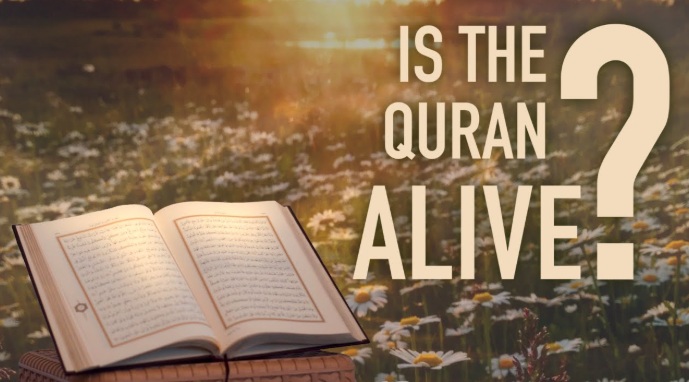
In the quiet dawn, an open Qur’an lies before us, its pages softly illuminated by the first light. We ask, in prayerful reflection: is our Divine Book truly alive in our hearts, or treated as a relic of the past? As Muslims, we believe the Qur’an is mubārak – a blessed Book sent down as ongoing Rahma (mercy) and Noor (light) from Allah quran.com. It calls us to ittibāʿahu wa-ttaqullah – “follow it and be mindful of Allah, so that you may be shown mercy” quran.com. In other words, the Qur’an itself calls us to live by its guidance, not simply admire its ink on the page.
Just as many Americans see their Constitution as a living document – one that “evolves, changes over time, and adapts to new circumstances” law.uchicago.edu – so too must we see the Qur’an’s message as dynamic. A “living Constitution” must adjust with the times or else become “a hindrance, a relic” law.uchicago.edu. Likewise, if the Qur’an were frozen in a single century, it could not be the Rahma for all peoples and ages. Allah’s words are lā rayba fīhi – there is no doubt in this Book – “it is a guide for those who are mindful of God” islamawakened.com. We find serenity (sakīnah) in its verses: “He is the One Who sent down tranquillity into the hearts of the believers so that they may increase even more in their faith” quran.com. This shows the Qur’an speaks to the soul, increasing iman (faith) as life’s challenges change.
The Divine Book of Mercy and Guidance
This Blessed Qur’an is called kitābun anzalnāhu mubārak – “This is a blessed Book We have revealed,” and we are enjoined: ittibāʿūhu wa-ttaqū – “so follow it and be mindful of Allah, that you may be shown mercy” quran.com. In its pages live Allah’s Rahmah and Hikmah. It is not literally alive like a creature, but its message breathes in the conscience of the believer. Every verse is a lantern of Noor lighting our path; it is “the Book in which there is no doubt, a guide for the God-fearing” islamawakened.com.
Islam teaches that Allah’s mercy overwhelms His anger – “when Allah completed the creation… He wrote: ‘Verily, My mercy prevails over My wrath.’” abuaminaelias.com. In that spirit, our approach to the Qur’an should be suffused with compassion and openness. We trust that the Maker of the heavens and earth has equipped His Book with objective guidance that can weather every storm. He commands us: “Indeed, Allah commands you to return trusts to their rightful owners; and when you judge between people, judge with fairness. What a noble commandment from Allah to you!” quran.com. Here ʿadl (justice) and trust are living values, not frozen rules. The Qur’an enjoins equitable judgement and compassionate dealings, and so our interpretations and laws built on it must also seek mercy and fairness, matching Allah’s own beautiful justice.
A Living Text for Changing Times
Consider how the Prophet ﷺ himself taught gradually, revelation by revelation. ʿĀ’ishah (ra) explained that the first verses brought the reality of Paradise and Hellfire, “until people were firmly established upon Islam,” and only later came legal commands abuaminaelias.com. The wisdom (al-ḥikmah) was clear: if the first command had been “do not drink wine,” the early Muslims might have replied, “We will never stop drinking wine!” abuaminaelias.com. By gradual revelation, hearts softened and learning deepened before strict duties. This shows that the Qur’an’s guidance adapts to our capacity – it is dynamic by Divine design.
In the same way, jurists of the American Constitution long debated originalism (a fixed meaning at founding) versus a living Constitution. David Strauss notes: “A living Constitution is one that evolves, changes over time, and adapts to new circumstances” law.uchicago.edu. And without that flexibility, a document written 220 years ago would no longer serve our society law.uchicago.edu law.uchicago.edu. We Muslims can learn: the spirit of Shariah endures, while its detailed application can and must evolve. The great scholars remind us that Islam’s “door of ijtihad” (independent reasoning) must remain open – otherwise we betray the belief that Allah’s message transcends time and placeaboutislam.net. Indeed, to close the door of ijtihad is to say Islam is not for all times, “which is rejected totally”aboutislam.net.
The Qur’an is thus a living wellspring. When Muslim jurists and thinkers debate the ‘letter’ versus the ‘spirit’ of the law, they mirror the originalism/living Constitution debatepapers.ssrn.com. Like American judges balancing text and purpose, Islamic scholars use the Qur’an’s text and its profound wisdom. Imam Malik often admitted, “I do not know” unless he was certain – showing humility that any understanding can be revised under Allah’s guidance. What unites both systems is this: no rigid literalism, no slavish copying of past forms. Rather, we seek to uphold the maqāṣid (objectives) of the Shariah: to preserve faith, life, intellect, progeny, and property, as sources of mercy and welfare.
- Revive Tadabbur: Ponder the Qur’an deeply, not simply recite by rote. The Qur’an itself cries out, “Why do they not then reflect (yata-dabbarūn) on the Quran? Or are there locks upon (their) hearts?”qurangallery.app. It is “not presented as a text to be passively recited, but as a dynamic, living source of wisdom that demands active intellectual and spiritual engagement”qurangallery.app. We unlock the treasure of guidance by Tadabbur: reflection in prayer and study.
- Reopen Ijtihad: Let learned scholars use reason (qiyas), consensus, and insight to apply Qur’anic principles to new realities. Islam’s law grows because people have new problems, and jurists “agree that the more people live, the more new issues and the more we will need new rulings”aboutislam.net. This is not tampering, but trusting Allah’s promise of guidance.
- Embrace Compassionate ʿAdl: As Allah commands justice in Surah An-Nisa (4:58)quran.com, Muslims must pursue ‘adl in every sphere. A living engagement with the Qur’an means our communities answer today’s challenges—poverty, conflict, inequality—with mercy and equity, reflecting the very Rahmah of its revelation.
- Cling to Mercy (Rahmah) and Light (Noor): Remember Allah’s own words that mercy aboundsabuaminaelias.com. Let this humility temper our judgments. The Qur’an is not a static code-book but a healing, living scripture. It is as relevant as the dawn, as timeless as the stars, guiding each generation anew.
Epilogue: A Call to Ijtihad, Tadabbur, and Compassionate Justice
Beloved brothers and sisters, the metaphor of a “living Constitution” invites us to revive our hearts. Let us respond to this spiritual call: turn to the Qur’an with fresh eyes and open chests. Remember that Ijtihad and reflection are not arcane privileges but our sacred duty; by them we seek truth and serve justice. The Messenger ﷺ prayed for guidance, and Allah has given us His Word, preserved and preserved. Yet we must engage it to feel its pulse.
May Allah grant us ḥikmah to draw wisdom from His Book and ḥilm (forbearance) to adapt it with love. May He soften our hearts so there are no “locks” upon themqurangallery.app, but instead, His Noor shining through every verse. Let us uphold taqwa—God-consciousness—as we judge and legislate, fulfilling trusts with justicequran.com.
Insha’Allah, let this be a revival: a resurgence of ijtihad, tadabbur, and compassionate adl in our lives. Let the Qur’an speak in our actions as much as in our tongues. Then our Ummah will be like the living Constitution we imagine: rooted in truth yet vibrant and true to Allah’s timeless guidance.
All praise is due to Allah: He has given us the Qur’an as a living miracle. Let us treat it as such — not dead letter, but divine light, guiding us anew each day.


 The Glorious Quran and Science
Leave a comment