
Presented by Zia H Shah MD
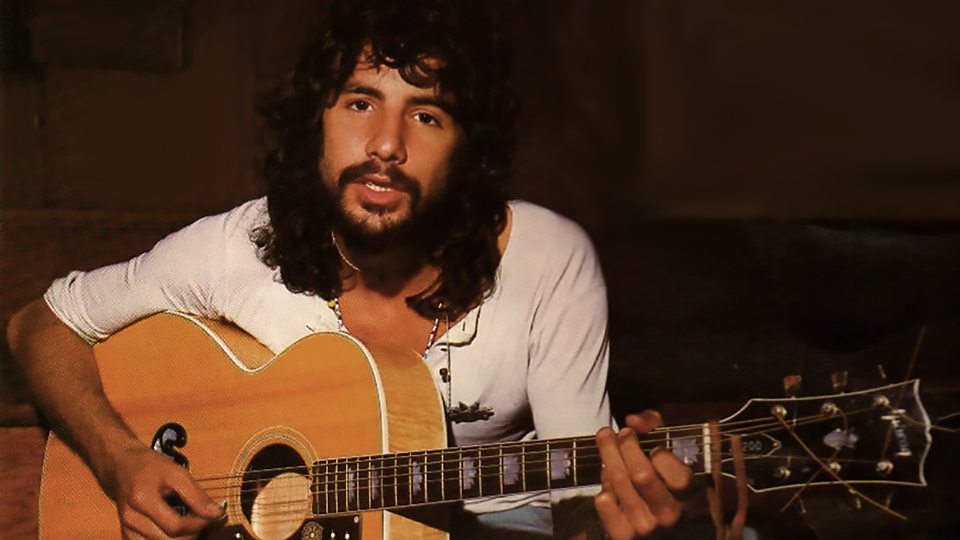
Born Steven Demetre Georgiou on July 21, 1948 in London, Yusuf Islam – better known by his stage name Cat Stevens – grew up with a multicultural background. His father was Greek Orthodox and his mother Swedish Baptist transcripts.cnn.com, and he spent childhood years in London’s West End (near Oxford Street) where his father ran a restaurant transcripts.cnn.com. Music captivated him from an early age. By the mid-1960s he had adopted the stage name Cat Stevens and launched a pop career. He scored his first big hit with “Matthew & Son” (1966) and went on to write or popularize a string of classics: “The First Cut Is the Deepest,” “Wild World,” “Father and Son,” “Peace Train,” “Moonshadow,” “Morning Has Broken,” and many others. Cat Stevens’s gentle songs and folk-rock style made him an international star by the early 1970s.
However, at the height of fame Stevens was also searching for spiritual meaning. In 1969 he was stricken with tuberculosis, an illness that forced him off the road for months. He later said that time in the London clinic was a “hellish three-month…battle for [his] earthly future” that ultimately saved his life people.com. During that period of convalescence he began reading metaphysical books and “looking into [himself] quite deeply,” as one account notes toppermost.co.uk. His songwriting took on more introspective, spiritual themes: he shifted from pop tunes to quieter, folk-influenced music, aligned with the singer-songwriter movement of the era toppermost.co.uk. In interviews he explained, “I was always searching. Ever since I remember I was searching for the meaning to life”. He read widely – exploring Buddhism, Taoism and Eastern mysticism – and even revisited Christianity from the perspective of his Orthodox and Baptist upbringing. As he later told Interview Magazine, “I was confused by many of the spiritual books… The Koran was very clear, especially about the fact that every soul eventually must meet its Maker,” a realization he describes as a wake-up call interviewmagazine.com.
This earnest spiritual quest set the stage for Stevens’s conversion to Islam. The turning point came in 1976, after a near-death experience. While swimming off the coast of Malibu, California, he was caught in heavy waves and feared for his life. In that frightening moment Stevens prayed aloud, “Oh God, if You save me, I’ll work for You!” people.com. A wave then carried him safely to shore. Reflecting later, Yusuf Islam recalled, “I thought I could swim well, but I could not fight… I had only seconds left.” people.com Shaken by his vulnerability, he felt this was a miraculous sign. Shortly thereafter, his brother David – who had visited Jerusalem – returned with a copy of the Qur’an. Stevens began reading it in secret, alone. He later recounted:
“The first thing I got, which I didn’t expect, was the clear declaration in the belief in one God… When I saw the name of Jesus and Moses, Abraham, along with the prophet Mohammed… that was quite startling.” transcripts.cnn.com
This reading awakened something profound. He found the Qur’an’s message clear and universal, not at all alien as he had expected. In his own words on his official website, Yusuf Islam described finding “a most profound spiritual connection… a religion which means to be ‘at peace with God’ – Islam.” He noted the Qur’an’s inclusive vision:
“Far from the foreign, Arab-centric book I expected, the Qur’an presented a belief in absolute, universal human values, without discriminating… The real value of a human being is in their character… So it was not exclusivist, acknowledging natural differences and the vision of cultures and faiths co-existing at the same time. That was certainly news to me!” catstevens.com
In Jerusalem itself, Stevens felt ready to embrace Islam. One account of his conversion story recounts how he sat in a mosque there and declared himself a Muslim – even when the imam was momentarily confused by his surname “Stevens” – before joining the prayer islamawareness.net. Back in London, he attended the New Regent Street Mosque. On a Friday after Jum’ah prayer in 1977 he formally declared the Shahada (the Islamic testimony of faith) to an imam, as he later told Islamic educators: “On a Friday, after Jummah I went to the Imam and declared my faith (the Kalima) at his hands.” islamawareness.net. At that point he considered himself a Muslim.
Shortly afterwards, Stevens made life-altering decisions. He felt compelled to give up his pop-star lifestyle and possessions. As he explained to Larry King, he’d been on the road relentlessly since age 18 and now wanted “to jump off that kind of wagon and see life for real… I wanted to join the human race again. I didn’t want to be a star.” transcripts.cnn.com Although one imam had encouraged him to continue making music, Yusuf recalls that other voices (including doubts about music’s permissibility) led him to play it safe. Ultimately he sold all his guitars and donated the proceeds to charity. In his own words on his website: “When I left the music business, it was due to the miraculous fact that I had found [Islam]… I had been given a copy of the Qur’an… which taught me about faith in the One and only God.” catstevens.com. He adopted the name Yusuf, meaning Joseph, after being moved by the Qur’anic chapter on Joseph; this name change reflected how he felt the prophet’s story “mirrored” something in his own life transcripts.cnn.com. By July 1978, he legally changed his name to Yusuf Islam catstevens.com.
Life After Conversion: Devotion and Activism
After 1977, Yusuf Islam withdrew from the public music scene. He spent the next decades focused on family, faith, and charity. In a 2009 interview he summed up this phase: “He converted to [Islam] in nineteen ninety seven, and shortly thereafter… spent the next 28 years devoting himself to spiritual studies, raising his children, and philanthropic work.” interviewmagazine.com. He and his wife Nafisa had children, and Islam’s priorities shifted to providing for them and serving his community. Importantly, education became a cornerstone of his work. Recognizing the needs of Muslim families in London, he helped found several schools. His official web biography recounts that by the early 1980s he had established three London Islamic schools – starting with a primary school in 1983, then a girls’ secondary and a boys’ secondary school. These institutions followed the British national curriculum and, he noted, often topped the local league tables. He points out with pride that “our primary school… was the first Muslim school to receive [state] status in Great Britain.” catstevens.com. (In later years the Yusuf Islam Foundation – formed from his earlier trusts – would continue this educational mission nationwide yusufislamfoundation.org.)
Yusuf Islam also engaged in numerous humanitarian and interfaith efforts. He co-founded organizations such as Mountain of Light (an Islamic audio-visual charity) and Small Kindness (for orphans and widows) yusufislamfoundation.org. He gave away much of his royalty income to Islamic charities, though he also fought false rumors (at one point even winning a libel case against press reports of his whereabouts) catstevens.com. In 2003 he made a modest return to the music stage for charitable causes: he performed in South Africa at Nelson Mandela’s 46664 AIDS benefit concert, among a few other limited appearances organissimo.org. But he generally refrained from pop fame, preferring to live simply.
Throughout the 1980s and 1990s Yusuf Islam became a prominent voice in British Muslim circles. In public speeches and writings he often emphasized the compatibility of Islamic values with peace, education, and British democracy. For example, he has insisted that Muslim faith can harmonize with free expression. On his website he even addressed the supposed conflict between Islam and “western” freedoms, affirming: “the freedoms given by laws such as the First Amendment are incredibly compatible with Islam and its principles, if they’re not abused.” catstevens.com. In various interviews he stressed Islam’s link with Christianity and Judaism, calling it “one long line of revelation.” He told Interview Magazine: “There’s a misconception… that there’s no link between Islam and Christianity and Judaism. There wouldn’t be Islam if there wasn’t Christianity or Judaism… it’s all one long line of revelation.” interviewmagazine.com. This line of thought – that Islam completes rather than contradicts earlier faiths – he presented as a key takeaway from his own journey.
Despite withdrawing from pop stardom, Yusuf Islam occasionally wrote and recorded music with Islamic themes. In 2006 he released An Other Cup, his first album in decades, blending children’s songs and spiritual themes interviewmagazine.com. He explained in interviews that the themes of his new songs remained continuity from his Cat Stevens era: love, wonder, and a quest for peace were as central as ever interviewmagazine.com. By the late 2000s and 2010s he performed sporadically (notably at U2’s charity concert in 2003 and on occasion in the UK and abroad) and engaged in dialogues about Islam. He spoke at events like TED and interfaith gatherings, conveying a message of universal compassion.
Yusuf Islam’s Testimony on Islam
Yusuf Islam’s own words – from interviews, speeches, and writings – form a testimony about why he embraced Islam and what it means. His narrative is deeply personal but also intended to enlighten his British (and global) audience. For instance, he often recounts how reading the Qur’an resonated so strongly that he kept it secret until he understood it fully. In an interview he remarked, “I was not a Muslim yet, but I felt that the only answer for me was the Qur’an, and God had sent it to me and I kept it a secret… I felt that I was a Muslim, on reading the Qur’an.” islamawareness.net.
He emphasizes the unity of life that Islam offers: “One of the first things I got from Islam… was the aspect of a complete understanding of life, not splitting life into… a religious compartment over here and a social one over there… It kind of all encompasses life as a whole,” he told Larry King transcripts.cnn.com. Similarly, he highlights Islam’s strict monotheism and continuity with Jewish-Christian heritage as profound revelations. After seeing the Prophet Muhammad mentioned alongside Abraham, Moses, and Jesus in the Qur’an, he found it “powerful… startling” and felt his heart opened to Islam transcripts.cnn.com.
Yusuf Islam also often draws on language of realization and gratitude. He has said, “I was like, ‘This is actually it,’” when the message of Islam crystallized for him people.com. He described watching his old song “Peace Train” and witnessing lights in the audience as an elation that foreshadowed his faith journey organissimo.org. In personal testimony, he underscores that Islam answered the questions he had been asking all along. To one interviewer he related that everything he had been writing in his songs “was converging into this one new message” of submission to God people.com.
Throughout his public statements, Yusuf Islam’s tone remains humble and hopeful. He tells British audiences that his conversion was a natural and gradual path – “it wasn’t sudden” – rooted in a lifelong search transcripts.cnn.com. He speaks against misconceptions, for example refuting the idea that Islam seeks to isolate itself from other faiths or from British society. On Islam’s social role, he observes (with humility) that early on his “view was very black-and-white,” but that he has learned “there is a social need within our lives as human beings to have harmony” organissimo.org. He connects Islamic teachings to values familiar in Britain – honesty, charity, the Golden Rule – by citing the Qur’an’s verse “The best of people are the most God-conscious” catstevens.com, implying shared moral ground with Christianity and secular ethics.
Yusuf Islam’s testimony is ultimately one of personal transformation. He frequently recounts his own story as evidence that Islam can offer answers and peace: “This faith made sense to me,” he says. In interviews and speeches he consistently ties his message back to faith in one God, compassion, and unity. As he told the TED/TEDx audience in 2018 (in a discussion with Chris Anderson), his life’s work – from his album for children The Laughing Apple to his charities – is “a message of peace, hope and inclusion.” While he frames his own story as unique, his aim is universal: to convey to others, especially in Britain, what drew him to Islam and why he believes it can enrich lives.
Key Milestones (Yusuf/Cat Stevens):
- 1948: Born Steven Georgiou in London catstevens.com.
- 1960s–1976: Rises to fame as Cat Stevens with hits like “Morning Has Broken” and “Wild World.”
- 1969: Diagnosed with tuberculosis; convalescence leads to spiritual introspection people.com toppermost.co.uk.
- 1976: Nearly drowns in Malibu; prays for God’s help, survives – pivotal moment in his faith journey people.com.
- 1976: Brother David gifts him the Qur’an in London transcripts.cnn.com.
- Dec 1977: Embraces Islam, changes life; two years later quits music to focus on faith and family interviewmagazine.com.
- 1980s: Establishes Islamic schools in London; devotes himself to education and charity catstevens.com.
- 2003: Brief return to stage for Nelson Mandela’s charity concert organissimo.org.
- 2006–present: Returns to music intermittently (albums An Other Cup, Roadsinger); continues interfaith dialogue and philanthropy interviewmagazine.com.
Throughout his life, Yusuf Islam has been guided by the very principles he describes in his testimony: belief in one God, respect for all prophets and peoples, and the pursuit of justice and understanding. His personal story – told in interviews, articles, and now a forthcoming memoir – serves as his living testimony to Islam. As he himself has articulated, every step of his journey felt like “on the road to findout,” and he now uses that platform to help others understand the faith he embracedcatstevens.com.
Sources: Yusuf Islam’s life and reflections are documented in interviews and his own writings transcripts.cnn.com transcripts.cnn.com islamawareness.net people.com interviewmagazine.com catstevens.com catstevens.com catstevens.com, as well as news profiles organissimo.org people.com. These sources include Yusuf’s speeches, interviews, and official accounts, which provide firsthand testimony of his conversion and message. Each quote above is drawn from such public records.

 The Glorious Quran and Science
Leave a comment