
Presented by Zia H Shah MD
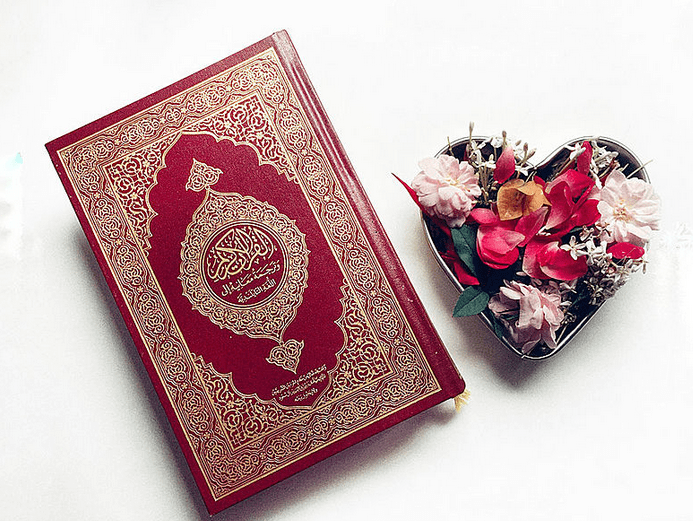
The Qurʾān stands at the center of Islamic faith as “the supreme authority in Islam… the word of God, revealed to the Prophet Muhammad… and intended for all times and all places” thequran.love thequran.love. From its first revelation in the Arabic language, believers understood that its scope was universal. As Muhammad Abdel Haleem notes, the Qurʾān is the ultimate source of creed, law, ethics and spirituality: it “forms the basis of Islamic law and theology; indeed… ‘Everything is based on the Qurʾān’” thequran.love (as Jalal al-Din al-Suyuti famously said). Every Islamic discipline – from grammar and rhetoric to jurisprudence and ethics – was developed to elucidate the Qurʾān. Arabic grammar and phonetics were refined to preserve its precise wording thequran.love, and calligraphy was elevated into a sacred art by its script. The first chapter (al-Fātiḥa) and countless verses are recited daily by Muslims worldwide, so that even non-Arabic speakers carry its phrases in prayer and daily life thequran.love.
The Qurʾān’s own names and epithets reflect its comprehensive mission. It calls itself al-Furqān (25:1, “that which distinguishes truth from falsehood”), al-Dhikr (15:9, “the Reminder”), al-Shifāʾ (10:57, “the Healing”), al-Nūr (57:9, “the Light”), al-Ḥaqq (17:81, “the Truth”), and many others thequran.love. As Muhammad Zafrulla Khan observed, no human project could possibly cover every aspect of life in “verbal revelation” unless it were truly divine thequran.love. The Qurʾān itself promises to “show [people] Our signs in the universe and in their own selves, until it becomes clear to them that this [revelation] is the truth” (41:53) – a pledge that it will speak meaningfully to all peoples in every age thequran.love thequran.love. Thus its scope is cosmic and timeless, intended to guide hearts and societies by God’s wisdom, not mere human insight.
The Inimitable Literary Style
From its opening verses, the Qurʾān astonished its first listeners with a style never heard before. Classical scholars unanimously called it muʿjiza (a miraculous inimitability) – a form of Arabic prose and poetry beyond human fabrication. As Ibn Kathīr declares: “No one can produce anything similar to the Qurʾān, nor ten sūras or even one sūra like it. The eloquence, clarity, precision and grace of the Qurʾān cannot be but from Allah” quran.com. This insight is grounded in the Qurʾān’s own challenge: when critics demanded a copy-cat scripture, God said, “Bring a sūra like it, and call upon all help you can – if you are truthful!” (Q.10:38). The Qurʾān repeatedly invites skeptics to attempt this feat (e.g. Q.2:23–24; 10:38–39; 11:13), implicitly asserting that its linguistic excellence is a divine signature.
Even without formal proof-texts, Arab poets and rhetoricians of Muhammad’s time instantly recognized the Qurʾān’s unique register. They knew pre-Islamic Arabic fasāha (clarity) and balāgha (eloquence), yet the Qurʾān’s rhythm, imagery and argumentation were sui generis. As one commentator explains, the Qurʾān “talks about the Oneness of Allah and the disbelief of men… yet there is no inconsistency, no discrepancy” in its message quran.com. Classical tafsīr (exegesis) records that Imam al-Ṭabarī noted the text’s “coherence of meanings and harmony of its rulings,” observing that if it had been human speech “its meanings would have differed and its judgments contradicted” thequran.love. He cited earlier scholars: Qatādah remarked that “Allah’s speech does not contradict itself; it is truth in which there is no falsehood, but people’s speech does contradict itself.” thequran.love. Ibn Kathīr similarly emphasizes that “no inconsistencies, contradictions, [or] discrepancies” are found in the Qurʾān because it is revelation from the All-Wise thequran.love. The famous Hadith, preserved by Ibn Kathīr, underscores this lesson: “The Qurʾān was not revealed to contradict itself, but rather to confirm itself. So whatever you understand of it, act upon it; and whatever is unclear to you, refer it to those who have knowledge.” thequran.love.
These insights formed the medieval view that all parts of the Qurʾān must be read in harmony. A celebrated tafsīr writes of Q.4:82 (on finding no contradiction): “This perfect uniformity cannot be found in the word of man… [the Qurʾān] is free of all incongruities… beyond any such thing. And this is a clear proof of its being the word of God.” quran.com. Indeed, the textual beauty itself reinforces belief. In Surah Yūnus (10:37–38), Ibn Kathīr exclaims: “This Qurʾān has a miraculous nature that cannot be imitated… The great and abundant principles and meanings within the Qurʾān… cannot be but from Allah. There is nothing like His Words; therefore His Words are not like the words of His creatures.” quran.com. The classical commentators – Al-Ṭabarī, Ibn Kathīr, Al-Qurṭubī, Al-Rāzī and others – unanimously affirmed that human artistry of the Qurʾān is unsurpassable.
In practice, this inimitability means the Qurʾān’s language is at once clear and profound. It uses a rich variety of devices – parables, allusions, metaphors, dialogue, contrast, and even shifts in style – to engage the intellect and emotions. The Qurʾān warns that a superficial reading can be misleading (Q.4:82 speaks of tadabbur, deep reflection), and classical scholars agreed that every thoughtful reading reveals new layers of meaning. Zia H. Shah notes that the text “presents timeless guidance in a way that each person can absorb according to their needs, context, and stage of life” thequran.love. It challenges readers intellectually (inviting questions and wonder) while also inspiring spiritually. In short, its literary style is a living miracle, combining poetic subtlety with persuasive discourse, and yielding “new truths and fresh guidance in every age” thequran.love.
Spiritual Influence and Personal Transformation
Beyond its language, the Qurʾān transforms individuals. It is recited in moments of joy and sorrow – at weddings and funerals, in private prayer and public assembly thequran.love. Its words permeate daily life so fully that, as Seyyed Hossein Nasr writes, “the substance of the soul of a Muslim… is like a mosaic made up of the imprint of verses of the Qurʾān” thequran.love. Every moral teaching and lyric rhythm of the Qurʾān seeps into a believer’s conscience. Nasr emphasizes that “the ethical norms… the root of all authentic knowledge, and the spirit of all forms of art that can be called truly Islamic” are drawn from the Qurʾān thequran.love. Its guidance underpins manners, aspirations, and even dreams, strengthening memory and character. In fact, Islamic education traditionally begins with memorizing the Qurʾān: “there is no practicing Muslim who does not know some of the Qurʾān by heart… [it] strengthens the memory,” imprinting verses that “will serve them the whole of their lives” thequran.love. This lifelong engagement inscribes the Qurʾān deeply into identity and worldview.
The soul-level impact shows in culture and creativity too. Nasr notes that Muslim poets and scholars – from Rumi and Ibn al-ʿArabī to Avicenna – composed their works with the Qurʾān already active in their hearts thequran.love. He even points out that European poets like Goethe and Rückert were influenced by Qurʾānic themes, hinting at how formative it was for Islamic literatures. In the arts, Qurʾān-inspired values shaped civilization. It “provided the spirit, the principles, and in many ways the forms” of Islamic art and design thequran.love. The emphasis on God’s unity led Muslims to develop aniconic art – exquisite calligraphy and geometric architecture – rather than figurative icons. “It is the Qurʾān that made calligraphy, architecture, and Qurʾānic psalmody the central sacred arts of Islam,” Nasr writes thequran.love. Thus the verses made each believer into a miniature canvas: recited on the tongue, inscribed in the mind, echoing in the soul. Even folk practices reflect faith in its power: countless believers treat certain Qurʾānic verses as healing, carrying them in amulets or drinking water over which they have been recited thequran.love.
Sir Zafrulla Khan aptly describes the Qurʾān as “literally the Word of God, and possess[ing] the quality of being alive, as the universe is alive” thequran.love. This vitality means it never grows stale in a human’s heart or society. Each generation finds fresh meaning: in joy or hardship, people turn to it for comfort, moral clarity, and inspiration. The Qurʾān itself asserts a sort of timeless relevancy: as Dr. Shah highlights, it promises that “all research into the past and every discovery and invention of the future will affirm its truth” (referring to Q.41:43)thequran.love. Believers see this borne out over 14 centuries of history, as Muhammad Ali (19th-20th c.) observed: “Our confidence that the Holy Quran can indeed transform… readers is grounded in history, in the miracle that the Qur’an has wrought… in the lives of millions if not billions of people.” thequran.love.
Harmony of Revelation and Reason
Modern thinkers stress that the Qurʾān openly welcomes reason and science. Dr. Zia H. Shah writes that unlike some scriptures which fear scrutiny, “the Qurʾān encourages reflection on the natural world and asserts that its message stands up to rational scrutiny” thequran.love. Indeed, he notes many Muslims describe Islam as having “nothing to fear from scientific facts or logical inquiry.” As scientific knowledge expands, they say, the Qurʾān only shines “brighter as a faith in harmony with reason” thequran.love.
In practical terms, the Qurʾān repeatedly urges observation of creation as evidence of God’s design. It promises that God will reveal His “signs in the universe and in their own selves… until it becomes clear… that this [revelation] is the truth” (41:53)the quran.love. Contemporary surveys find that many Qurʾānic verses – on embryology, astronomy, geology, etc. – align with established science. While the Qurʾān is not a science textbook, its descriptions (for example, of the expanding universe, the barrier between seas, or stages of development) resonate with discoveries of modern cosmology and biology. Zia Shah’s reviews, citing mainstream science, show a comprehensive concordance: “its content… contains statements that resonate strongly with what we have only learned in recent centuries” thequran.love.
More broadly, the Islamic intellectual tradition embraced reason. The Qurʾān and Hadith record many Companions and scholars urging the use of intellect. Zia Shah notes that the Qurʾān never saw faith and reason as enemies: “Islam does not demand blind belief – on the contrary, ‘the Qur’an itself says, test this scripture.’” thequran.love. Rational inquiry is seen as worship when sincere. In fact, classical theologians (Muʿtazilites) and philosophers (al-Fārābī, Avicenna) worked out ethical and metaphysical systems under Qurʾānic auspices. The result is a faith that continually integrates new truth. As Khan said, each “discovery… of the future will affirm [the Qurʾān’s] truth” – the revelation always leads, never lags behind the advance of knowledge thequran.love.
Moral Psychology and Ethical Consistency
Central to the Qurʾān’s message is the unity of purpose it instills in believers. Its moral teachings are woven into a single ethical framework: tawḥīd (divine unity), justice, compassion, honesty, and accountability. For example, it famously asserts “There is no compulsion in religion” (2:256) and commands humanity to act justly, wisely and mercifully in all dealings. Psychologically, this unity prevents the fragmentation of values.
The Qurʾān itself draws a vivid parable about inner harmony: “Allah sets forth the example of a slave owned by several quarrelsome masters, and a slave owned by only one master. Are they equal in condition?… Praise be to Allah! But most of them do not know.” internetmosque.net (Q.39:29, Yusuf ‘Alī). In other words, divided loyalties bring strife, whereas serving the One True Master brings peace of heart. Modern analysts call the mental unrest from holding conflicting values cognitive dissonance. Zia Shah points out that the Qurʾān warns against such conflict, challenging us to “ponder the Qurʾān”, for if it were from anyone but the All-Knowing, “they would have found in it much contradiction” (Q.4:82) quran.com. This emphasis on consistency teaches believers to resolve apparent conflicts by deeper study, not blind contradiction.
In practice, the Qurʾān encourages believers to engage their conscience. It commands, “Show me what Allah has revealed, [and] I will not accept guidance from any other” (2:142) – a reminder that genuine faith listens to the text itself first. Zia Shah summarizes: Islam invites a “rational, investigative approach” where reason and revelation work in harmony thequran.love. When a Muslim feels inner conflict (for example, sensing an interpretation is unjust), the Qurʾān provides a remedy: reflection, consultation and learning. As one Qurʾanic guidance advises, any ambiguity should be referred to knowledgeable sources (Q.3:7). This approach transforms doubt into growth. Psychological research confirms that resolving dissonance by seeking new understanding is healthy, and Islam encourages just that – studying the Qurʾān directly, exploring its nuance, and choosing the most just conclusion.
In short, the Qurʾān’s ethical framework is timeless. It consistently calls for honesty, mercy and social justice across contexts. The Prophet ﷺ said that nations are not destroyed for eating pork or drinking wine, but for moral failure – “tyranny between people” and neglecting the weak thequran.love. The Qurʾān supports this: “Indeed, Allah commands justice and good conduct…” (16:90). Its laws and maxims have universal resonance, as Zafrulla Khan notes: no matter how human society changes, “the Qurʾān always yields… the needed guidance in advance” thequran.love. This psychological coherence – the harmony of belief and action – gives inner peace. When personal faith, moral intuition, and the Qurʾān align, believers experience the “inner harmony” that the scripture promotes thequran.love internetmosque.net.
Conclusion
The Holy Qurʾān thus stands as a living miracle in both style and substance. Its miraculous eloquence and flawless internal consistency testify to its divine origin quran.com quran.com. Its divine scope covers every corner of human need – law and ritual, science and ethics, art and personal wellbeing – and it continually shines anew as contexts change thequran.love thequran.love. It penetrates the human spirit, offering solace and transformation through its recitation and guidance thequran.love thequran.love. At the same time, it welcomes human reason and discovery, inviting believers to see Qurʾānic wisdom reflected in the workings of the universe thequran.love thequran.love. As generations of Muslim thinkers have attested (from Tabari and Ibn Kathīr to modern scholars like Zia H. Shah), the Qurʾān brings unity to thought and faith. Its patterns soothe the psyche by eliminating contradiction, and its commandments foster social harmony by elevating conscience.
In sum, the Qurʾān is a timeless text: a coherent narrative of divine guidance that is as spiritually nourishing as it is intellectually majestic. As Dr. Shah emphasizes, God intended it to be read with the full faculties of both heart and mind thequran.love thequran.love. Its believers find in it a standing miracle – one that speaks equally to devotion and science, to morality and to reason. Its style delights the ear and mind with unmatched beauty quran.com, and its message offers the compass for individual souls and societies alike. This remarkable unity of purpose makes the Qurʾān enduringly relevant and profoundly inspiring for all who engage with it.
Sources: Insights are drawn from classical Qur’anic commentaries (al-Ṭabarī, Ibn Kathīr, etc.) and modern scholarship, including The Qurʾān (Abdel Haleem trans.), Seyyed Hossein Nasr’s commentary, Muhammad Ali’s introduction, and the writings of Dr. Zia H. Shah (on thequran.love). Relevant Qur’ān verses are cited from standard translations quran.com corpus.quran.com internetmosque.net. All quotations are properly attributed with references.
If you would rather read in Microsoft Word file:



 The Glorious Quran and Science
Leave a comment