

Promoted post: Quranic Parallels with Confucius’s Teachings: A Thematic Exploration

Presented by Zia H Shah MD
Introduction
Mainland China’s cultural landscape has been shaped by a rich tapestry of religio-philosophical traditions, alongside a strong modern current of secularism. Historically, the “three teachings” of Confucianism, Taoism, and Buddhism have deeply influenced Chinese society. Most Chinese people do not adhere exclusively to a single organized religion; instead they often practice a syncretic blend of Buddhist and Taoist beliefs with a Confucian ethical worldview, typically classified under the umbrella of Chinese folk religion. In the 20th century, these traditions were challenged by the rise of state-promoted agnosticism and atheism, especially after the Communist Revolution of 1949. Today the People’s Republic of China (PRC) is officially an atheist state that recognizes only five faiths (Buddhism, Taoism, Islam, Catholicism, and Protestantism) and regards Confucianism as part of cultural heritage rather than religion. The result is a society where more than half the population is religiously unaffiliated, yet where the values and practices derived from traditional teachings quietly permeate daily life.
In the sections below, we examine each of the major traditions – Buddhism, Taoism, Confucianism, as well as the modern prevalence of agnosticism/atheism – focusing on their historical development in China, their philosophical teachings and rituals, and their influence on Chinese society past and present. We also provide comparative analysis, including current demographics and overlapping adherence, to understand how these belief systems collectively influence the majority Han Chinese population of mainland China.
Historical Foundations and the Three Teachings
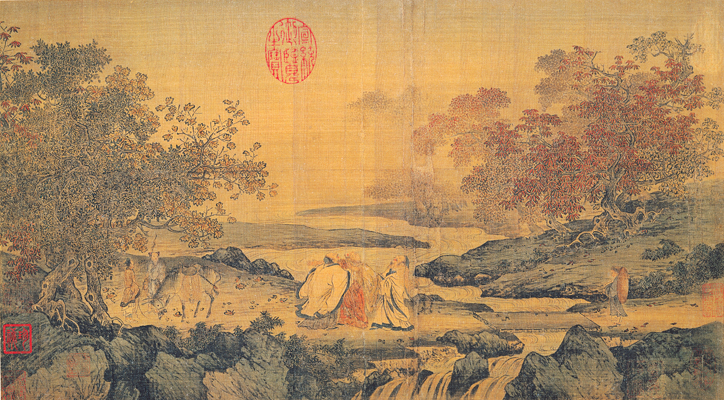
The civilizational foundations of Chinese religion date back to ancient folk beliefs of the Shang and Zhou dynasties (2nd–1st millennium BCE), which featured worship of ancestors and nature spirits (shen) and the concept of Heaven (Tian) as a cosmic moral order. Against this backdrop, Confucianism and Taoism emerged during the late Zhou period as indigenous philosophies – Confucianism emphasizing ethical social order, and Taoism emphasizing harmony with the natural Way. These philosophies took root in the Axial Age (mid-1st millennium BCE) and, over time, developed institutional forms (Confucian academies and Taoist temples) by the early imperial era. Buddhism arrived later, entering China from India via Central Asian trade routes during the Han dynasty (around the 1st century CE). By the Tang dynasty (618–907 CE), all three teachings were firmly established: Buddhism had become widely popular, Taoism had organized sects and state patronage, and Confucianism was the underpinning of the state ideology. Chinese thinkers often stressed the complementarity of the three teachings, epitomized in sayings and art (as in the figure above) that depict Confucian, Taoist, and Buddhist sages in joyful unity. In practice, the common people frequently blended these traditions – for example, a person might follow Confucian ethics in social life, worship Buddha for spiritual salvation, and invoke Taoist deities for health or fortune. There were periods of tension and debate among them, but more often the three coexisted and enriched what became known as Chinese folk religion.
Starting in the early 20th century, this traditional religio-philosophical equilibrium was disrupted. Reformist and revolutionary movements labeled old beliefs as “superstition,” and the newly founded Communist state after 1949 actively promoted atheism. The mid-20th century saw waves of anti-religious campaigns, climaxing in the Cultural Revolution (1966–1976) that sought to eradicate the “Four Olds” (old ideas, culture, customs, and habits) – resulting in widespread destruction of temples, shrines, and Confucian sites, and forcing religious practices underground. After the Cultural Revolution, the government gradually eased its stance, rebuilding many temples in the 1980s and 90s and allowing limited religious revival under strict oversight. Thus, today’s religious landscape is one of revival and resilience of the ancient traditions, tempered by decades of state-imposed secularism. Below, we detail each tradition’s journey and impact.
Buddhism in China
Historical Background
Buddhism (佛教 Fójiào) was introduced to China during the latter Han dynasty, traditionally dated to around 65 CE when the Han emperor reportedly welcomed Indian monks carrying Buddhist sutras. It initially spread along the Silk Road through missionary monks and merchants from Central and South Asia. By the Period of Division (3rd–6th centuries CE), Buddhism had gained a foothold, founding monasteries and attracting converts among the war-torn Chinese states. As it became established, it entered into competition – and dialogue – with indigenous beliefs: Buddhist doctrine challenged Chinese concepts of lineage and afterlife, provoking debates with Confucian and Taoist scholars. Over time, Buddhism adapted to Chinese culture (for example, teaching filial piety through tales of past lives) and was increasingly patronized by rulers.
During the Tang dynasty (618–907 CE), Buddhism reached a golden age in China. Major schools of Mahayana Buddhism flourished, such as Chan (Zen) and Pure Land, and famed monk Xuanzang’s pilgrimage to India (7th century) and subsequent translation of scriptures exemplified the high status of Buddhist scholarship. The Tang imperial family itself honored Buddhism alongside Taoism – until Emperor Wuzong’s brief persecution of 845 CE, when thousands of monasteries were closed to curb their economic power. Buddhism rebounded in the Song dynasty (960–1279) even as Neo-Confucian ideology reasserted dominance in the state. Foreign Tibetan Buddhism also made inroads from the west during later dynasties, and Mongol rulers of the Yuan (1271–1368) favored Tibetan lamas. The Ming (1368–1644) and Qing (1644–1912) dynasties saw Buddhism continue as a popular faith, though closely supervised by the state. By the early 20th century, China had a vast Buddhist monastic network, which was then decimated by war and Communist campaigns. During the Maoist era, many monks were laicized and temples repurposed or destroyed. Since the 1980s, however, there has been a Buddhist revival: countless temples have been restored, and festivals and pilgrimages (for example, to the Four Sacred Mountains of Buddhism) attract many worshippers once again. China today is often said to have the world’s largest Buddhist population, although precise numbers depend on how one defines “Buddhist” (many people practice Buddhism informally).
Philosophical Teachings and Rituals
Chinese Buddhism is predominantly of the Mahayana tradition. Its core teachings are the same as in other Buddhist lands: life is marked by suffering (dukkha) rooted in desire, and through understanding the Four Noble Truths and following the Eightfold Path one can attain liberation (nirvana) from the cycle of rebirth (samsara). Characteristic of Mahayana, Chinese Buddhism emphasizes the role of bodhisattvas – enlightened beings who postpone nirvana to help others – such as Guanyin (Avalokiteśvara), the bodhisattva of compassion who became one of the most beloved figures in Chinese popular worship. In contrast to Confucianism’s this-worldly focus, Buddhism introduced a detailed cosmology of heavens and hells, karma, and rebirth. It taught renunciation of worldly attachments; thousands of Chinese (men and women alike) became monastics, shaving their heads, celibately devoting themselves to chanting sutras, meditation, and charity. This monastic model – people leaving their family to join the “Buddha’s family” – initially clashed with Confucian family values, but over time won respect as monks came to be seen as providers of spiritual merit for the whole society.
Buddhist rituals and practices in China range from monastic disciplines to lay folk customs. Monks and nuns adhere to vinaya rules, perform daily chanting of scriptures (often in temple halls thick with incense smoke), practice meditation (especially in Chan/Zen lineages), and lead ceremonies for the laity. Lay believers engage in devotional practices: they visit temples to burn incense and bow before Buddha images, make offerings of fruit or flowers, consult monks for blessings or advice, and observe holy days (such as the Buddha’s birthday on the lunar calendar). A common ritual is releasing captive animals to earn merit (reflecting the Buddhist ethic of compassion for all life). Chinese Buddhism also integrated with local traditions – for example, the Ghost Festival (中元节 Zhongyuan Jie), on the 15th day of the seventh lunar month, blends Buddhist ideas of saving souls from purgatory with Taoist and folk rites for appeasing spirits. Over the centuries, Buddhism contributed new arts and symbols: the pagoda (a Buddhist stupa’s Chinese form) became a familiar part of Chinese skylines, and Buddhist themes infused Chinese painting, sculpture (e.g. the colossal Buddha statues at Dunhuang and Longmen), and literature (the classic novel Journey to the West is based on Buddhist pilgrimage tales).
Societal Impact and Modern Adherence
Buddhism’s societal impact on China has been profound. It provided ethical concepts like compassion (ci’bei) and philanthropy that supplemented Confucian ethics of duty. Historically, Buddhist monasteries served as centers of learning, hospitals, orphanages, and waystations for travelers, thereby fulfilling important social welfare roles. Emperors at times tapped the moral authority of Buddhism for governance – for instance, by inviting high monks to court as advisors or by sponsoring the mass printing of sutras to legitimize their rule. At the same time, there were periods when the state viewed Buddhism with suspicion (for draining wealth or loyalty); the alternating patronage and suppression of Buddhism is a recurring pattern in Chinese history. On the whole, however, Buddhism became deeply integrated into Chinese daily life: even those who did not formally become Buddhist would participate in Buddhist rites at life events (births, funerals) or during festivals. The Buddhist notion of karmic cause-and-effect has influenced popular morality (many Chinese, even if not observant, might refrain from evil acts for fear of karmic retribution). Concepts of the afterlife in China – such as the ten courts of hell and the cycle of reincarnation – largely stem from Buddhist teachings, blended with earlier folk beliefs.
In contemporary mainland China, Buddhism is experiencing a cautious revival. By official statistics, about 18% of China’s population identifies as Buddhist (this would equate to roughly 250 million people), though other surveys give lower or higher estimates depending on methodology. For example, the U.S. State Department in 2021 estimated ~18.2% Buddhists, while a Pew Research study noted that if one counts loosely affiliated believers and occasional practitioners, up to one-third of Chinese may have some Buddhist orientation. Importantly, these figures often overlap with folk religion – many who light incense to Buddha or recite Buddhist prayers might also venerate ancestors and Taoist gods. Buddhism in China is thus less about exclusive membership and more about cultural influence.
Figure: The Spring Temple Buddha in Henan province, at 128 meters tall, is one of the tallest statues in the world. Completed in 2008, it exemplifies the resurgence of Buddhism in China’s public sphere. China today hosts the world’s largest Buddhist population, with estimates ranging from 185 million to over 300 million adherents (depending on definitions).
In daily life, Buddhism’s influence is evident in the persistence of certain habits and values. Many Chinese households keep a small shrine or alcove with images of Buddhas or bodhisattvas (like Guanyin), where they might pray for blessings, especially during the Lunar New Year and other festivals. Vegetarianism on specific days (such as the first and fifteenth of each lunar month) is practiced by some devout lay Buddhists to accumulate merit. The cultural lexicon is sprinkled with Buddhist-derived terms (e.g. yuanfen 缘分, the idea of fateful affinity, or pu-sa 菩萨, literally “Bodhisattva,” used to praise a kind person). Furthermore, Buddhist temples have become popular destinations for urban Chinese seeking a moment of peace or a way to “pray for good fortune” amidst a high-pressure society – even young professionals who claim no religion might burn incense and bow at a temple before exams or business ventures, reflecting an agnostic approach to belief (doing it “just in case it helps”). All of these underscore Buddhism’s enduring, if often informal, hold on the Chinese imagination. The Chinese government, for its part, officially recognizes Buddhism and has generally treated it more leniently than “foreign” religions. The state-controlled Buddhist Association of China oversees Buddhist activity, and under the banner of “traditional culture,” authorities have even promoted Buddhism’s soft power – for example, supporting Buddhist cultural sites and charities as part of China’s global image. Nonetheless, clergy and temples are closely monitored, and any Buddhist activism that challenges state authority (especially in Tibetan regions) is suppressed. For the majority Han Chinese population, however, Buddhism today is largely apolitical and integrated into everyday cultural practice, coexisting with the officially secular society.
Taoism in China
Historical Background
Taoism (道教 Dàojiào) is China’s indigenous religion-philosophy, whose roots lie in the ancient cosmological ideas of the Tao (Dao, meaning “the Way”) and in shamanistic folk traditions. As a formalized thought system, Taoism traces to the 6th–4th centuries BCE with classical texts like the Tao Te Ching (attributed to Laozi) and the Zhuangzi. These works articulated a philosophy of harmony with the natural Way, valuing simplicity, spontaneity, and wu wei (non-action or effortless action). In its early form, often called philosophical Taoism, it was more an intellectual tradition than a mass religion. By the late Han dynasty (2nd century CE), however, Taoist religious movements had begun to take shape. According to tradition, in 142 CE a visionary named Zhang Daoling claimed a revelation from the deified Laozi and founded the Way of the Celestial Masters (天师道), establishing the first organized Taoist church with hereditary priests, scriptures, and rituals. Around the same time, other popular messianic Taoist-inspired rebellions (like the Yellow Turban Rebellion of 184 CE) emerged, blending Taoist cosmology with promises of a utopian era of Great Peace. Throughout the Three Kingdoms and Jin period (3rd–4th centuries), Taoism developed a canon of texts and practices – including alchemy, meditation, and liturgies – and gained imperial patronage.
The Tang dynasty (618–907) marked a high point for Taoism: the imperial Li family revered Laozi as an ancestor, elevated the Tao Te Ching to scripture status, and sponsored the compilation of the Taoist Canon. Taoist temples and monasteries (often in mountain retreats) proliferated. Competing schools arose, such as Shangqing (Highest Clarity) and Lingbao (Numinous Treasure), which incorporated elements of meditation, ritual, and even Buddhist ideas like universal salvation. In the Song dynasty (960–1279), Taoism continued to thrive and produced new syncretic movements – most notably the Quanzhen School (全真, “Complete Reality”), founded by Wang Chongyang in the 12th century, which embraced monastic celibacy and Chan-Buddhist-like meditation, bridging Taoism and Buddhism. Quanzhen Taoism later became dominant in the north and remains influential (modern Taoist monastics in mainland China often belong to Quanzhen). Meanwhile, folk Taoism remained vibrant among the populace: local sects, temple cults of heroes and immortals, and underground societies with Taoist teachings ebbed and flowed through the late imperial era.
During the Yuan, Ming, and Qing dynasties, Taoism had to share space with Buddhism and Neo-Confucianism, and at times faced crackdowns (for instance, the Qing emperors were wary of sects like the Eight Trigrams, a Taoist-related millenarian group). But overall, Taoist worship of numerous deities and immortals became inseparable from Chinese folk religion. By the early 20th century, Taoism’s institutional structure (temples, priesthoods) was eroded by war and modernization; then the Communist period dealt a severe blow – many Taoist priests fled or were forced to secularize, and rituals were banned as superstition. Most Taoist monasteries were closed during the Cultural Revolution. Since the 1980s, however, Taoism has made a modest comeback. The government officially recognizes Taoism and allowed the re-opening of some temples and the ordination of priests under the state-controlled China Taoist Association. Traditional Taoist sacred mountains (such as Wudangshan, Longhushan, Qingchengshan) have been restored and attract pilgrims and tourists. Still, Taoism today has a lower public profile than Buddhism, in part because its practices are so interwoven with folk customs that many adherents don’t label themselves “Taoist.”
Philosophical Teachings and Rituals
At the heart of Taoism is the concept of the Tao (Dao) – the primordial Way or natural order of the universe. Philosophical Taoism (道家 Daojia) as expounded by Laozi and Zhuangzi teaches that human beings should attune themselves to the Tao by cultivating simplicity, humility, and non-interference with the spontaneous processes of nature. Key principles include wu wei (effortless action), ziran (naturalness), and an appreciation of paradox (the Laozi famously advocates that the soft overcomes the hard, and that yielding leads to strength). Taoist texts often use metaphors from nature – water, the uncarved block – to illustrate living in harmony with the Way. Unlike Confucianism, which stresses social responsibility and ritual propriety, Taoist philosophy tends to be quietist and individualist, sometimes even anarchic (early Taoist writings criticized rigid social conventions and questioned the efficacy of government).
When it comes to Taoist religion, these philosophical tenets blend with a rich tapestry of deities, immortals, and rituals. Over centuries, Taoism developed an elaborate pantheon. At its head is often the Jade Emperor (玉皇大帝), a celestial ruler, and below him a bureaucracy of gods governing aspects of nature and life (thunder gods, stove god, city gods, star deities, etc.), as well as Immortals – enlightened beings who achieved deathless life through Taoist practice. Religious Taoism aims for both spiritual immortality and worldly harmony. Its teachings include concepts like qi (vital energy that pervades everything), and the interaction of yin and yang and the Five Elements – concepts which Taoism systematized and which became fundamental in Chinese cosmology, medicine, and geomancy.
Taoist ritual practices are typically led by ordained priests (道士 daoshi). These range from simple rites of offering and incantation to grand liturgies (jiao) to renew the community’s harmony with the cosmos. Priests perform exorcisms of malevolent spirits, consecrate talismans (符 fu) for healing or protection, and conduct funerals aimed at guiding souls to the afterlife. In a village temple, a Taoist priest might be called to officiate a ceremony to honor the local Earth God or to pray for rain in drought. Taoist festivals dot the lunar calendar – e.g. the Lantern Festival (15th of 1st lunar month) has Taoist associations with the deity of Heaven, and the Double Ninth (9th of 9th lunar month) is linked to Taoist notions of cosmic yang energy. Many festivals involve temple processions, dragon and lion dances, and the lighting of incense and candles in Taoist shrines. Another ubiquitous practice is feng shui (风水), the art of geomancy, rooted in Taoist principles of channeling qi flows in the environment; feng shui has traditionally guided Chinese in everything from locating ancestral graves to designing cities.
Taoism also encompasses various esoteric disciplines. These include internal alchemy (内丹 neidan), a meditation and breathing practice aimed at refining one’s internal energies to prolong life, and external alchemy (外丹), the historic practice of compounding elixirs (some emperors patronized alchemists to seek immortality, often with toxic results from mercury elixirs). Furthermore, Taoism gave rise to martial and health practices like Tai Chi and Qigong, which emphasize balancing yin and yang and cultivating qi for health – such exercises, while not strictly “religious,” are imbued with Taoist concepts and are widely practiced in China (e.g. parks full of retirees doing Tai Chi at dawn).
Societal Impact and Modern Adherence
Taoism’s influence on Chinese society has been deep and multifaceted, though sometimes subtler than that of Confucianism or Buddhism. Culturally, Taoist thought contributed a spirit of naturalism and spontaneity that can be seen in Chinese art and literature – for instance, the flowing brushwork of landscape paintings and calligraphy often drew on Taoist inspiration, as did nature-themed poetry. Taoism also provided a metaphysical underpinning for traditional Chinese science and medicine. The framework of yin-yang and Five Elements, essential to Traditional Chinese Medicine (TCM), astrology, and feng shui, is largely a product of Taoist intellectual synthesis (in dialogue with Confucian cosmology). This means practices like acupuncture, herbal healing, and geomantic site selection, still in use today, owe to Taoist cosmological concepts.
On a social level, Taoism shaped local community life through its temples and rituals. In imperial times, virtually every town had shrines to Taoist deities (from village earth gods up to regional patron gods), and seasonal ceremonies conducted by Taoist functionaries helped reinforce community identity and moral order. The ethics promoted by Taoism – such as wuwei (moderation) and compassion for all beings – complemented Confucian ethics. Moreover, Taoist clergy often served as healers and counselors for the populace, especially in rural areas. For the common folk, the appeal of Taoism lay in its promise of practical benefits: curing illness, averting disasters, and securing blessings for family and harvest. At the same time, Taoism could also be a vehicle for dissent: millenarian sects drawing on Taoist ideas (like the White Lotus movements) led peasant uprisings, suggesting a latent revolutionary undercurrent in its vision of divine order – something that made past authorities alternate between patronage and persecution of certain Taoist groups.
In the modern era, Taoism’s presence is less conspicuous but still significant in daily life and culture. The PRC’s statistics often do not list “Taoists” as a large separate category – for example, in 2021 only about 0.7% of the population was officially categorized as following “other religions” including Taoism. This low figure is misleading because many Chinese engage in Taoist-influenced folk practices without formally identifying as Taoist. In reality, surveys indicate roughly 10% of people practice some form of Taoist or folk religion (and up to 21–22% if broader folk customs are counted). Essentially, tens of millions might visit a Taoist temple or consult a Taoist horoscope, even if they say they have “no religion.” The overlap with Chinese folk religion is very high – Chinese folk religion itself can be seen as largely Taoist in character (mixed with ancestral rites and some Buddhist elements). For instance, during the Lunar New Year, families burn incense to the Kitchen God (a Taoist folk deity) and paste his image in their homes; during the Hungry Ghost month, people make offerings to wandering spirits in line with Taoist-led festival traditions. Such customs remain vibrant in many parts of China, especially the countryside and among older generations.
Figure: A large rock statue of Laozi (Lao Tzu) on Mount Qingyuan in Fujian. Carved over a millennium ago, it stands as a cultural monument to Taoism’s legacy. Even today, Taoist ideas (harmony with nature, the yin-yang balance) and symbols (like Laozi’s figure) persist in Chinese cultural consciousness.
Furthermore, Taoist health practices have seen renewed interest. Qigong exercise regimens became very popular in the 1980s–1990s, and although the government cracked down on groups like Falun Gong (which had quasi-Taoist qigong roots) in 1999, many Chinese still practice tai chi and other qigong for well-being. Traditional Chinese Medicine, now officially supported as part of China’s healthcare system, continues to employ Taoist concepts of qi and balance. Even feng shui, once denounced as superstition, has quietly returned in realms like architecture and interior design (many real estate decisions, from apartment layouts to placement of buildings, are influenced by feng shui advice, albeit sometimes kept discreet to avoid official disapproval).
In everyday moral outlook, Taoism’s stress on living simply and in accordance with nature resonates with modern environmental awareness in China – some intellectuals invoke Taoist philosophy as a resource for addressing ecological issues. Also, popular idioms and stories from Taoism endure: for example, tales of the Eight Immortals or the saying “骑牛找牛” (“riding the ox in search of the ox,” from a Zen/Taoist parable) are known to many.
From the perspective of governance, the contemporary Chinese state tolerates and even carefully encourages Taoism as part of traditional culture. The China Taoist Association oversees official temples (like Beijing’s White Cloud Temple) and has even hosted international Taoist forums, portraying Taoism as a benign cultural heritage. However, any independent sectarian activities are curbed. For the majority of Chinese, Taoism today is not so much an organized religion one formally “converts” to, but a diffuse presence – seen in the incense smoke curling at neighborhood shrines, the fortune-teller’s stall in a market, or the yin-yang emblem decorating a clinic – quietly influencing behaviors and values in tandem with other traditions.
Confucianism in China
Historical Background
Confucianism (儒家思想 Rújiā sīxiǎng) is a homegrown Chinese philosophical and ethical system founded on the teachings of Confucius (孔子 Kǒngzǐ, 551–479 BCE) and his disciples. Unlike Buddhism and Taoism, which involve deities or metaphysical cosmology, Confucianism is often regarded as a humanistic philosophy or a social ideology rather than a religion – it focuses on ethics, proper governance, and social harmony. Confucius lived in the late Spring and Autumn period, a time of political fragmentation and moral crisis. He traveled among states, teaching a code of virtuous conduct rooted in respect for Heaven’s moral law (Tian), reverence for ancestors, and the restoration of societal harmony through righteous rule and personal virtue. After Confucius’s death, his followers, notably Mencius (4th century BCE) and Xunzi (3rd century BCE), elaborated on his ideas. During the early Han dynasty, Confucianism gradually gained influence, and in 136 BCE the Han Emperor Wu officially adopted Confucian doctrine (with scholar Dong Zhongshu’s input) as the guiding state ideologyen.wikipedia.org. From that point through the next two millennia, Confucianism became the orthodoxy of Chinese civilization – providing the ideological foundation for government, education, and social relations.
Under Han and subsequent dynasties, the state established academies to teach Confucian classics (like the Analects, Book of Documents, Book of Rites, etc.). Knowledge of these texts became mandatory for entering the civil service: by the Sui dynasty (6th century) and fully by the Song dynasty (10th century), an Imperial Examination system was in place that required candidates to master Confucian literature. This system persisted (with various reforms) until 1905, ensuring that generations of Chinese elite were steeped in Confucian values. Emperors, though wielding autocratic power, were theoretically bound by the Mandate of Heaven to be just and benevolent – a concept heavily reinforced by Confucian advisors. Emperors also performed Confucian rituals (such as sacrifices to Heaven and Earth, and seasonal rites) to uphold cosmic order, and they honored Confucius himself – by the Tang era, Confucius was posthumously titled a noble lord, and temples of Confucius were built in every prefecture, where officials offered sacrifices to him as the sage of culture.
Throughout imperial history, Confucianism provided social structure: it taught hierarchy but with reciprocal responsibilities (rulers must be benevolent, subjects loyal; parents loving, children filial, etc.). During the Song dynasty, in response to Buddhism and Taoism, scholars like Zhu Xi developed Neo-Confucianism – a refreshed Confucian philosophy integrating some metaphysics (concepts like li (principle) and qi (vital matter), yin-yang cosmology, and a spiritual self-cultivation practice). Neo-Confucianism became the dominant ideology of late imperial China, stressing not only classical texts but also personal moral introspection (e.g. Wang Yangming’s teachings in the Ming). Despite periods where rival ideas (Legalism, Buddhism, etc.) gained ground, Confucian principles remained the backbone of Chinese law and society until the early 20th century.
The fall of the last dynasty (Qing) in 1912 and the tumult of the Republican era saw Confucianism come under attack by progressive intellectuals. The May Fourth Movement of 1919 famously decried Confucian values as impediments to modernization (“Down with Confucius and Sons” became a slogan). Revolutionary leaders blamed Confucian patriarchal norms for China’s weaknesses. Nonetheless, even as formal reverence waned, cultural habits died hard. The Communist regime initially continued the rejection – in the Cultural Revolution, Red Guards vandalized Confucius’s tomb and memorials, and “Criticize Confucius” campaigns equated Confucian ideas with feudal backwardness. After Mao, however, the Chinese government and public gradually rehabilitated Confucianism as a valuable part of national heritage. By the 21st century, Confucius was being cautiously celebrated again: the state established “Confucius Institutes” globally to promote Chinese language and culture (borrowing the sage’s name as a friendly brand), and official speeches began to quote Confucian maxims about harmony and loyalty. Today, while Confucianism is not a formal religion (there are no masses of “Confucian church” members), it functions as a kind of civil religion or guiding philosophy in Chinese society – shaping values, educational curricula, and even some government policies.
Teachings and Rituals
Confucianism centers on ethical principles for proper conduct in personal and public life. The cornerstone is 仁 (rén) – “humaneness” or benevolence, the compassionate concern for others that should guide all relationshipsen.wikipedia.org. This is complemented by other cardinal virtues: 义 (yì) – righteousness, 礼 (lǐ) – propriety/ritual decorum, 智 (zhì) – wisdom, and 信 (xìn) – integrity. Confucius taught that society is like a family writ large, and he defined the Five Key Relationships: ruler-subject, father-son, husband-wife, elder-younger, and friend-friend. Each has its proper conduct – e.g. rulers should be just and caring, subjects loyal; parents loving, children filially pious (*孝 xiào); husbands protective, wives supportive; elders kind, juniors respectful; and friends trustworthy. Filial piety (孝) is especially emphasized – devotion and obedience to one’s parents and ancestors is seen as the root of moral behavior. This ties to Confucianism’s reverence for ancestral rites: Confucius encouraged people to perform ceremonies for their departed to reinforce family continuity and gratitude. These rites – essentially a form of ancestor “worship” involving offerings of food, incense, and bows to ancestral tablets – became a core social ritual in China (though Confucianism frames it as an expression of virtue rather than worship of a deity).
Unlike Buddhism or Taoism, Confucianism does not focus on the supernatural or the afterlife. Confucius famously said regarding spiritual beings, “Respect the ghosts and spirits, but keep your distance” – meaning one should fulfill duties to them (e.g. ancestral rites, acknowledging Heaven) but concentrate on ethical life in this world. The concept of Heaven (天 Tiān) in Confucian thought is more an abstract moral force or order than a personal god; Heaven ordains the moral law and the Mandate by which rulers rule. Thus Confucian “spirituality” is manifest through morality and ritual propriety in everyday life.
Ritual (lǐ) in Confucianism has a very broad meaning: it includes grand state sacrifices as well as the etiquette of daily interactions. Confucius taught that practicing proper rites – from bowing to elders, to mourning rituals, to state ceremonies – cultivates virtue and maintains social harmony. For example, rituals surrounding funerals (elaborate mourning periods and ceremonies for one’s parents) instill the seriousness of filial duty. During imperial times, Confucian ceremonies were formalized: every district had a Confucian Temple where officials would offer sacrifices (such as burnt offerings and genuflections) to Confucius and other sages, particularly on Confucius’s birthday. Scholars would gather at these temples to pray for success in examinations, in effect treating Confucius as a patron spirit of learning. Families, for their part, maintained ancestral halls with tablets listing past generations, before which they would conduct rites especially during festivals like Qingming (Tomb-Sweeping Day) – a practice encouraged by Confucian doctrine of honoring ancestors.
There were also civil rituals influenced by Confucian norms, such as coming-of-age ceremonies (the capping ceremony for males at 20, hair-pinning for females, historically) and weddings. These were not “Confucian rites” per se in a religious sense, but Confucian values imbued the customs: e.g. a wedding involved the bride and groom bowing to Heaven, Earth, and their parents, underscoring that marriage was a union of two families under the Mandate of Heaven and filial continuity. During the imperial era, the Emperor himself performed state rituals codified by Confucian tradition – the most important being the Sacrifice to Heaven at the Temple of Heaven in Beijing, where the Son of Heaven offered prayers for the realm (a solemn ceremony that Confucian court scholars prescribed in detail). Such rituals affirmed the cosmological link between moral governance and the natural order, a hallmark of Confucian statecraft.
Societal Impact and Contemporary Relevance
Confucianism has fundamentally shaped Chinese society’s structure, norms, and worldview. It provided a blueprint for social order: under Confucian influence, Chinese society became family-centric, hierarchical, and education-oriented. The Confucian ideal of the scholar-official (儒生) – a morally cultivated, erudite civil servant – dominated governance. For roughly 2,000 years, government officials were drawn from those who excelled in Confucian classics, creating a meritocratic bureaucracy (at least among males) that prized learning and virtue. This emphasis on education persists today: the almost zealous focus of Chinese families on children’s schooling (and high-stakes exams like the gaokao college entrance exam) is often traced to the Confucian tradition of valuing education as the path to success and honor for the family. The saying “万般皆下品,唯有读书高” (“Of all professions, only scholarship is superior”) encapsulates this enduring mindset.
In daily conduct, Confucian etiquette and values continue to influence behavior. Respect for elders and filial responsibility remain strong social expectations in China’s majority culture. Grown children are typically obliged (morally if not legally) to care for aging parents – a direct legacy of Confucian filial piety. Family decisions often prioritize collective harmony over individual desire, reflecting Confucian emphasis on family as the basic unit of society. Even modern corporations and politics in China can exhibit quasi-familial hierarchies and paternalistic leadership styles resonant of Confucian norms. The Confucian stress on harmony (和) and avoiding public confrontation influences interpersonal communication – many Chinese prefer indirectness and maintaining face, rather than open conflict, which can be seen as striving to uphold social harmony per Confucian etiquette.
Legal and ethical norms also show Confucian imprint. Traditional Chinese law (up to the Qing Code) was heavily influenced by Confucian ethics, favoring mediation and moral education of wrongdoers rather than purely punitive measures. In the contemporary era, the Chinese legal system has been westernized in form, but some Confucian influence lingers in the preference for mediation and the rhetoric of a “harmonious society” (a term explicitly used by recent Chinese leaders). The Communist Party under Xi Jinping has even invoked Confucian concepts in political discourse – Xi has quoted Confucius on topics of governance and integrity, and promoted “socialist core values” that parallel virtues like loyalty, harmony, and sincerity, which dovetail with Confucian morality. Some analysts see this as an attempt to integrate Confucian humanism with socialist ideology, providing a distinctly Chinese ideological legitimacy.
Ritually, while China today is largely secular in public life, there are signs of Confucian ceremonial revivals. In Qufu (Confucius’s hometown), elaborate observances of Confucius’s birthday (September 28) have been reinstated, drawing local officials and scholars who don traditional robes and perform ancient rites at the Confucius Temple – a practice unimaginable during the Mao era. In some schools, children are once again reciting the Analects or practicing bowing to teachers in a throwback to Confucian propriety. Certain communities have resumed clan gatherings at ancestral halls for seasonal offerings, a direct continuation of Confucian family ritual. The government generally promotes these as cultural heritage activities rather than religious events, aligning with a broader effort to harness tradition for national pride.
One of Confucianism’s most pervasive impacts is on the moral psychology of the people. Concepts like 仁 (benevolence) and 礼 (proper behavior) still inform what many Chinese consider “good conduct.” The idea of shame (rather than guilt) as social sanction is deeply Confucian – people are taught to reflect on whether their behavior would bring dishonor to their family or ancestors. Likewise, the value placed on social harmony often leads individuals to temper personal ambitions or expressions if they might disrupt group concord. Critics in modern China sometimes bemoan that certain Confucian legacies – such as deference to authority – can stifle creativity or individual rights. On the other hand, proponents argue Confucianism provides a strong moral fabric and social cohesion that Western individualism lacks.
Notably, while few Chinese today would call themselves “Confucianists” in a religious sense, many in the intellectual and business elites do identify with Confucian philosophy. There is even a movement of “New Confucians” who advocate Confucian ethics as a remedy for modern social ills (corruption, family breakdown, etc.). As one scholar observed, a great many Chinese effectively adhere to Confucianism as a civil creed, participating in its rituals and festivals (like ancestral tomb-sweeping on Qingming) without belonging to any church. In fact, surveys note that a considerable portion of China’s educated class claims a Confucian cultural identity. Some scholars have even argued that Confucianism can be seen as a form of humanism or secular moral philosophyen.wikipedia.org which has contributed to the acceptance of secularism in Chinese society. Indeed, Confucianism’s focus on this-worldly duties and skepticism about divine intervention helped lay a groundwork for modern Chinese secular attitudes. We will explore this further in the context of China’s contemporary agnosticism and atheism.
In summary, Confucianism’s influence on China’s majority population is less about formal worship and more about an ingrained value system. It continues to guide family structure, educational fervor, respect for hierarchy, and the pursuit of social harmony. Even in officially atheist China, Confucius’s voice echoes in sayings taught to children, in the deference a young person shows to an elder, and in the state’s own philosophical messaging. Far from being eliminated by 20th-century revolutions, Confucianism endures as the ethical backbone of Chinese culture, coexisting with the nation’s modern legal-Marxist framework.
Rise of Agnosticism and Atheism in Modern China
Communist Revolution and State Atheism
The early 20th century in China saw a dramatic rise in irreligion – that is, a turning away from traditional religious commitments – driven by both intellectual currents and political movements. Even before the Communists, reformist thinkers of the late Qing and Republican eras criticized religion as superstition hindering progress. The New Culture Movement (1910s–1920s) championed “Mr. Science and Mr. Democracy” in place of Confucian tradition, and many in this movement were agnostic or atheist, embracing secular humanist ideas. This secular trend intensified under the influence of Marxist-Leninist ideology. The Chinese Communist Party (CCP), founded in 1921, was explicitly atheist and materialist in worldview, following Marx’s dictum that religion is the “opium of the people.” When the CCP, led by Mao Zedong, took power in 1949, it set about systematically reshaping Chinese society along socialist, atheist lines.
The PRC is officially atheist, and the CCP has, since its inception, conducted campaigns to weaken the influence of religion. In the 1950s, land reforms and social campaigns undermined the economic base of temples and churches; clergy were persecuted or brought under state-approved “patriotic” associations. Still, in the PRC’s early decades, some accommodation existed – the state recognized certain religions and allowed limited practice under heavy regulation. However, by the Cultural Revolution (1966–1976), the attitude turned to outright militant atheism. Mao and his Red Guards sought to eradicate all religious expression as part of destroying the “olds.” Monasteries and churches were looted or closed, statues smashed, and even Confucian ancestral halls and graves were ravaged by zealous youths. Traditional festival celebrations were banned; showing signs of “feudal superstition” (such as keeping a deity’s altar at home) could lead to punishment. The Cultural Revolution in effect attempted to replace religion with Maoist ideology – Mao was venerated in a cult of personality with quasi-religious fervor (his Little Red Book chanted like scripture, his portrait replacing gods in homes). By the time this period ended, open religious practice had virtually ceased in much of China, and agnosticism or atheism had become the default stance for the majority.
After Mao’s death, China’s government under Deng Xiaoping took a slightly more pragmatic approach. The 1982 State Council document “Circular 19” acknowledged that religion would persist for a long time and called for a policy of “freedom of religious belief” – albeit under CCP supervision. The current Chinese constitution (1982) nominally guarantees freedom to believe or not believe. In practice, this means individuals can privately hold beliefs and worship in state-sanctioned venues, but the CCP and state remain avowedly atheist. Importantly, Party membership and religious belief are deemed incompatible. To this day, the roughly 96–98 million CCP members are prohibited from practicing religion, and those who do face expulsion. This rule has helped ensure that the political, military, and academic elites in China are overwhelmingly atheist in orientation (at least publicly). Moreover, atheist education is part of the curriculum – from a young age, students learn a Marxist-influenced view of history that portrays religion as a stage of societal development that will wither away, and science and materialism as the proper outlook. The CCP’s United Front Work Department and formerly the State Administration for Religious Affairs oversee religious activities to ensure they don’t challenge state ideology. Any religious revival must stay within bounds of “religious sinicization” and loyalty to the Party.
Contemporary Secular Society and Belief Trends
Due to these historical forces, mainland China today has one of the largest irreligious populations in the world. Various surveys and studies illustrate the extent of agnosticism/atheism among Chinese citizens. A 2012 WIN-Gallup International poll found that 47% of Chinese identified as “convinced atheists” – by far the highest proportion in any country surveyed – with an additional 30% identifying as non-religious, and only about 14% saying they were religious. A follow-up poll in 2015 recorded an even higher 61% “convinced atheists” in China (and 29% non-religious), meaning well over 90% of those polled did not affiliate with a religion. Other research by Pew (2018) has suggested that when offered a nuanced choice, about one-third of Chinese explicitly call themselves “atheist” while others simply consider themselves unaffiliated or “nothing in particular”. The CIA World Factbook (2021) likewise estimates that more than half (52.1%) of China’s population is religiously unaffiliated. These figures underscore that the majority of Chinese adults do not identify with any formal religion – a direct outcome of decades of secularization.
However, it’s crucial to note that unaffiliated does not always equal atheist in the strict philosophical sense. Many Chinese could be described as practical agnostics: they do not actively profess belief in deities or doctrines, yet they may engage in certain traditional rites or harbor nebulous beliefs. For example, a factory worker might never pray regularly or go to church/temple, and would tick “no religion” on a survey, but still observe customs like burning joss paper for ancestors, or avoid doing something on an inauspicious date – behaviors rooted in spiritual tradition rather than scientific rationale. Sociologists have remarked that China’s popular religion often survives in cultural guise; people say they have no religion, even as they attend a New Year temple fair or consult a feng shui master. In one scholarly estimate, upwards of 80% of the population practices some form of folk ritual (ancestral, seasonal, etc.) without belonging to a religious institution. This suggests a high degree of agnostic pragmatism – many Chinese neither fully believe nor fully dismiss spiritual ideas. They may consider the existence of gods or spirits as “not proven” but still worth respecting as tradition.
For committed atheists in China, the stance is often grounded in faith in science and Marxist ideology. The education system stresses a materialist worldview – evolution, Big Bang, etc. are taught as facts (as they are globally), and any notion of creationism or divine intervention is absent from official curricula. “Ideological and political education” classes in high school and college explicitly include content on dialectical materialism and atheism. The government periodically runs propaganda highlighting scientific achievements and denouncing “superstition” (for instance, campaigns against fortunetelling or Qigong cults as recently as the 1990s). Among urban, educated Chinese, it is common to state that one “believes in science” (相信科学) rather than religion. This doesn’t necessarily preclude culturally religious acts (they might still join family for a New Year’s Eve incense offering as a custom), but intellectually they lean toward skepticism of supernatural claims.
China’s unique experience with state atheism also means that expressions of religiosity can be sensitive. Many people who privately hold religious beliefs, especially in professional settings, might not openly discuss them to avoid potential career disadvantages. In the Communist Party, religiosity is seen as a lack of ideological commitment, so officials and party members take care to appear secular. In society at large, however, the stigma on religion has lessened somewhat since the 1980s. There has been a modest religious revival in the reform era – Buddhism and Taoism reviving as described, as well as growth in Christianity in some regions – indicating that the population was not uniformly atheist by conviction. Rather, many were indifferent or deprived of exposure to religion, and once restrictions loosened, some explored spirituality anew. Still, relative to its population, China’s overtly religious adherents are a minority. Even with revival, only about 18% are Buddhist, ~5% Christian, ~2% Muslim, and 22% involved in folk religion per official figures. The majority remains outside organized religion.
The overlap of atheism with daily life in China produces some paradoxes. On one hand, secularism is evident: for example, most Chinese weddings are civil or non-religious (often done at a registry or hotel with no mention of God), and most funerals, while they may have ritual elements, are not controlled by a church (families might hire Taoist or Buddhist ritualists, but many just follow local custom). Public holidays (aside from the handful of traditional festivals) are secular commemorations like National Day or Labor Day. The work week has no concession to worship days (Sunday is just another day off for most, not a church day for the majority). On the other hand, traditional festivals with religious origins, like Chinese New Year, Mid-Autumn Festival, or Qingming, have made a strong comeback and are widely celebrated as cultural events. During these times, even the atheist government promotes the festivities as part of heritage – albeit focusing on the non-spiritual aspects (family reunion, gift-giving, etc.). For instance, the state might encourage people to honor ancestors on Qingming as a way to promote filial piety (a Confucian value) without explicitly endorsing belief in ancestral spirits. This reflects a nuanced approach: agnostic respect for tradition.
In recent years, the Chinese government under Xi Jinping has actually sought to harness traditional values (including Confucian and some Taoist/Buddhist elements) to fill a moral void and foster nationalism. Xi has spoken about “traditional Chinese culture” as the soul of the nation, quoting Confucius and mentioning classics in speeches. This is a notable shift from outright rejection to selective embrace. However, the core ideological stance remains that China is a secular socialist state guided by Marxism. Thus, atheism is still promoted as part of “scientific outlook” and party cadres continue to enforce limits on religious growth, especially any foreign or uncontrolled religious influence (e.g. underground churches or Islamic movements seen as separatist). The state runs campaigns to “Sinicize” religion, meaning religions must conform to Chinese socialist values – effectively a project to subordinate spiritual doctrine to nationalism and party ideology.
For the general public, what this means is a pragmatic coexistence of secular and spiritual. Many Chinese might be best described as “culturally religious but practically secular.” They perform certain rites out of tradition, enjoy myths and legends, and may even wear religious symbols as good luck charms, yet when asked, they’ll assert they have no religion and trust science. Agnosticism – a “not sure, but not important” attitude toward metaphysical questions – is widespread. For example, belief in feng shui or astrology is common (a 2016 survey found 44% of Chinese admitted to believing in the Chinese zodiac’s impact on their lives), even among those who laugh it off as just custom. The line between “superstition” and “culture” is blurry, and many Chinese navigate it by outwardly endorsing the modern secular view while privately adhering to certain traditional beliefs “just in case.”
It’s worth highlighting that morality in China has largely been decoupled from theism. Unlike some societies where morality is undergirded by religious commandments, in China moral education historically came from Confucian and socialist teachings. Even atheists often advocate ethical living due to humanistic or societal reasons (e.g. maintaining family honor, contributing to national development) rather than fear of divine judgment. This is a legacy of Confucian humanism – doing good for propriety’s sake and for social harmony, not for heaven or hell – combined with Communist emphasis on collective good. Surveys find many Chinese atheists still believe in certain intangible forces (like fate or karma in a non-religious sense)en.wikipedia.org, but generally distrust organized religion. The traumatic experiences of sectarian violence (Taiping Rebellion in the 19th century, Boxer Rebellion, etc.) and of Cultural Revolution excesses have perhaps bred a cultural wariness of fanatical belief, whether religious or ideological.
In conclusion, the Communist era led to an unparalleled expansion of atheism and agnosticism among China’s majority population. Today, mainland China is one of the most secular countries in terms of self-identification. The majority of Chinese are non-religious, and a significant number are convinced atheists. This has profoundly influenced lifestyles: a generally materialist outlook prevails, with focus on economic and educational pursuits in this life, and relatively less public discourse about spiritual matters. Yet, the old teachings of Buddhism, Taoism, and Confucianism have not vanished – they continue to influence cultural practices and values in subtler ways. The result is a society often described as “spiritually syncretic but institutionally secular.” Mainland Chinese can simultaneously hold atheist convictions and partake in millennia-old rituals, embodying a complex blend of tradition and modernity.
Comparative Analysis and Societal Influence
To understand how these philosophies and orientations – Buddhism, Taoism, Confucianism, agnosticism, and atheism – coexist and influence China’s majority Han population, it is helpful to compare their core teachings, practices, and societal roles side by side. The table below provides a summary of key aspects and estimated current adherence levels:
| Tradition/Belief | Origins in China | Key Focus & Teachings | Rituals/Practices | Estimated Adherence (Mainland China) |
|---|---|---|---|---|
| Confucianism (儒家) – Ethical philosophy, not theistic religion | Indigenous; founded 6th–5th c. BCE by Confucius; adopted as state ideology in Han (~2nd c. BCE)en.wikipedia.org. | Social harmony and virtue. Emphasizes filial piety, humane conduct (仁), righteousness, propriety, loyalty. Focuses on this-worldly duties and moral order under “Heaven’s mandate,” with little emphasis on afterlife. Often viewed as a humanistic or secular ethical systemen.wikipedia.org. | Ritual propriety (礼) governs personal interactions and state ceremonies. Key practices: ancestral rites (honoring ancestors at home and tombs), ceremonies honoring Confucius (in schools or temples), and everyday etiquette (courtesy to elders, observing social roles). No worship of deities – reverence is given to ancestors and esteemed teachers. | Not counted as a “religion” in surveys. Culturally universal among Han Chinese: Confucian values imbedded in education and family life. Many intellectuals and citizens identify with Confucian ethics, though 0% formally “Confucian” by religion. |
| Taoism (道教) – Indigenous religion/philosophy | Indigenous; philosophy codified ~4th c. BCE (Laozi, Zhuangzi). Organized religious sects by late Han (~2nd c. CE); imperial patronage by Tang. | Harmony with the Tao (道). Teaches following the natural Way, cultivating wu wei (non-action) and balance of yin-yang. Religious Taoism adds pursuit of immortality, belief in a pantheon of gods/immortals, and concepts like qi energy. Morality tied to natural order and longevity. | Temples and rituals led by priests: offerings to gods (Jade Emperor, local deities), exorcisms, talismans for healing, feng shui for aligning with qi. Lay practices include fortune-telling, Tai Chi/Qigong exercises, observing Taoist festivals (e.g. Hungry Ghost Festival, Lantern Festival) with incense and paper money offerings. Many practices overlap with folk religion. | Officially ~0.7% (if counting registered Taoists). However, ~10% or more of population engage in Taoist or folk religious practices, and 21.9% are classified under Chinese Folk Religion which is largely Taoist-influenced. De facto, hundreds of millions follow Taoism in folk forms, though few label themselves “Taoist” exclusively. |
| Buddhism (佛教) – Organized religion (foreign origin) | Arrived from India via Silk Road in 1st c. CE (Han); widespread by 4th c. CE; state patronage in various dynasties (e.g. Tang). | Spiritual enlightenment and release from suffering. Teaches Four Noble Truths, Eightfold Path, karma and rebirth. Chinese Buddhism (Mahayana) emphasizes compassion (慈悲) and saving others (bodhisattva ideal). No creator god; veneration of Buddhas/Bodhisattvas (e.g. Amitabha, Guanyin). Offers a path to Nirvana (escape from the cycle of reincarnation). | Temple worship (incense, bowing, offerings to Buddha statues), chanting sutras and meditation (especially in Chan/Zen sect). Monastic life for monks/nuns (celibacy, precepts). Lay people perform merit-making (charity, freeing captive animals), observe vegetarian fasts on holy days, celebrate festivals like Buddha’s Birthday. Funerals often include Buddhist rites to aid the soul’s rebirth. Many Chinese blend Buddhist prayers with Taoist/folk rituals. | Approximately 15–18% identify as Buddhist, making it the largest organized religion in China. (This could represent 185–250 million people.) China has the world’s largest Buddhist population. However, broader surveys suggest up to 33% may hold some Buddhist beliefs or participate occasionally. Overlap with folk religion is significant. |
| Agnosticism / Atheism (无神论) – Secular worldview | Agnostic and atheistic thought has ancient roots (e.g. skeptic philosophers like Xunzi, 3rd c. BCE), but became prominent in 20th c. with introduction of Western science and Marxism. State-atheism enforced since 1949 (Communist era). | Denial or doubt of the existence of deities. Atheism asserts no gods or supernatural realms exist; agnosticism maintains such things are unknown/unknowable. In China, atheism is often tied to Marxist materialism and belief in science. These outlooks focus on human society and the material world, dismissing religious cosmologies. Confucian secularism and Communist ideology together encourage finding meaning through family, work, and nation rather than divine guidance. | No religious rituals (atheism is an absence of belief). Agnostics/atheists partake in secular ceremonies (e.g. civic commemorations) and often in traditional cultural rituals purely as custom (e.g. New Year festivities, ancestral tomb-sweeping) without professing belief. The Communist state established new rituals during Maoism (like loyalty pledges, parades venerating national ideals) that functioned as a civic substitute for religious rites. Today, many secular Chinese mark life events (weddings, funerals) in non-religious or syncretic ways (civil wedding, funeral with optional folk customs). | Majority status: By official count, ~52% of Chinese are unaffiliated with any religion. Polls show ~40–60% are convinced atheists, among the highest in the world. In total, upward of 80–90% of Chinese adults profess no formal religion, making secular/agnostic outlook the norm. Yet, many in this group still observe cultural traditions with religious origins (without formal belief). |
(Sources: CIA World Factbook, national surveys, and scholarly estimates as indicated. Note that categories overlap; e.g. someone may be counted as both unaffiliated and a folk religion practitioner. Taoist practices are often subsumed under folk religion. Confucianism pervades culture but is not enumerated as a religion.)
As the table shows, Confucianism, Taoism, and Buddhism have very different philosophies but in Chinese society they historically complemented each other: Confucianism governed ethics and social life, Taoism tended to health, nature, and local rituals, and Buddhism addressed spiritual salvation and cosmology. It was common for individuals to draw from all three depending on context. For instance, a scholar-official in imperial times would live by Confucian principles at work and home, visit Taoist temples or perform feng shui for matters like healing or choosing burial sites, and turn to Buddhist prayers when confronting questions of death or seeking mercy for a deceased relative. These traditions were not seen as mutually exclusive – a fact encapsulated by the Chinese phrase “三教合一” (sanjiao heyi, “the Three Teachings in harmony”). The image of the Three Laughing Sages (Figure above) is a classic allegory: it depicts representatives of the three teachings finding joy together, symbolizing that Truth in Chinese culture was perceived as multifaceted yet ultimately one.
Philosophically, there are contrasts: Confucianism is humanistic and societal, extolling duty, hierarchy, and virtue in the human realm; it is relatively agnostic about gods (Heaven is an impersonal force) and promises no paradise, focusing on creating harmony on earth. Taoism is naturalistic and mystical, seeking alignment with the cosmos; it has many gods but they are part of nature’s order, and it offers this-worldly benefits (health, longevity) as well as esoteric spiritual goals (immortality, transcendence). Buddhism is soteriological, concerned with liberating sentient beings from suffering through enlightenment; it downplays worldly achievements in favor of spiritual awakening and compassion for all creatures. Despite these differences, in practice Chinese people found them complementary: Confucianism provided the ethical framework and respect for social duties, Taoism provided connection to nature and community rites, and Buddhism provided answers to existential questions and a path to personal solace or salvation. The societal impact of each thus fell in different spheres – Confucianism in family and state structure, Taoism in health, folklore, and local community, Buddhism in charity, intellectual life (many classical Chinese philosophers and poets were influenced by Buddhism), and personal spirituality.
Meanwhile, agnosticism and atheism rose to prominence primarily in the modern era as a reaction to the old traditions and an import from Western thought (science, Enlightenment, Marxism). Atheism did not contribute festivals or art in the traditional sense, but it reoriented societal values towards secularism, modernization, and ideological loyalty to the state. Under Communist influence, religious belief was at times portrayed as backward or even disloyal. This created a population that, for a couple generations, grew up with minimal religious instruction and a strong emphasis on material progress. The result, as described, is a society where most people are not devout in a conventional sense, and many are outright skeptical of religious claims – yet there remains an undercurrent of cultural religiosity. It is common to find families that outwardly claim no religion but still, for example, burn incense on ancestral graves annually, or invite Buddhist monks to perform funeral rites for elders. These actions are often justified culturally (“we do it to honor tradition or comfort the family”) rather than theologically (“we truly believe the ancestors receive these offerings”). Such is the nature of Chinese agnosticism – neither fully believing nor rejecting, but maintaining traditions as a cultural identity.
The role of these systems in daily life, education, and government policy can be summarized as follows:
- Daily Life: Confucianism influences daily life in values and norms – e.g. children are taught to obey parents and excel in studies, marriages still involve paying respects to family (even if ceremony is modern), and maintaining family reputation is critical. Taoism and Buddhism influence daily life in practices and attitudes – people might follow traditional health regimens (herbal medicine, tai chi exercise) and consult the Chinese zodiac or almanac for important dates (showing lingering folk-Taoist influence). In many homes, one might see both a home altar for ancestors/Guanyin and Mao Zedong’s picture on the wall – illustrating the blend of folk religiosity with secular patriotism. Festivals punctuate the year: Chinese New Year is the prime example, where virtually the entire country observes rituals like reunion dinners, red decorations (to scare off evil spirit Nian), giving red envelopes, and visiting temples to pray for a good year – practices rooted in myth and religion yet celebrated by believers and non-believers alike as national culture.
- Cultural Practices: The arts, literature, and public culture in China carry signatures of all these influences. Traditional arts – calligraphy, painting, music – often have themes from Confucian classics, Taoist legends, or Buddhist sutras. Modern pop culture even sometimes revisits these: e.g. TV dramas about ancient immortals (Taoist), or animated films on Buddhist legends (like White Snake). The fact that these resonate with audiences suggests the mythologies remain culturally significant regardless of personal belief. Cultural etiquette like bowing, using honorific language, or concepts of face (mianzi) ties back to Confucian li. At the same time, state-led culture promotes secular nationalism: public museums celebrate scientific achievements and communist heroes, and national holidays (e.g. October 1st National Day) are marked with flag-raisings and patriotic songs rather than prayers – showcasing the secular civic culture overlaying traditional culture.
- Education: Historically, education was virtually defined by Confucian learning. Today’s education is secular and standardized, but there has been a revival of classical studies. Many schools teach excerpts of Confucius’ Analects, either in language classes or as extracurricular “guoxue” (national studies). Moral education textbooks often cite Confucian parables or maxims to instill virtues like honesty and respect. Simultaneously, they teach Marxist theory and scientific outlook, shaping children to be secular patriots. It’s not uncommon for a Chinese student to memorize the Confucian “Disciple’s Regulation” (a classical primer on behaving properly) in childhood, then in high school memorize Marx’s dialectical materialism tenets – reflecting the dual influence. Private institutions and parents sometimes enroll kids in traditional culture classes where they learn calligraphy, Confucian ethics, etc., as a supplement to the hyper-secular public education, showing a grassroots desire to reconnect with heritage. Universities have philosophy and religion departments that study Confucianism, Buddhism, Taoism academically, and there’s been interest in reintroducing some Confucian curriculum officially, though not without controversy.
- Government Policy: The Chinese government’s stance is a carefully calibrated mix. It remains officially atheist and secular, with the Communist Party actively discouraging religion among its cadres. Religious organizations are required to be subordinate to the state and promote loyalty to the Party. For example, Buddhist and Taoist associations are expected to integrate Xi Jinping Thought into their teachings. At the same time, the government increasingly invokes traditional philosophies as part of policy rhetoric. Concepts like “harmonious society” (a slogan under President Hu Jintao) echo Confucian ideals of harmony. Xi Jinping has often referenced “family values” and “moral cultivation”, clearly drawing from Confucian vocabulary. There is even talk of “Chinese-style governance” that implicitly contrasts Western liberal values with Confucian-influenced collectivist, hierarchical values. However, this embrace is strategic and tightly controlled – it does not extend to allowing independent Confucian societies with political clout, for example. The government also supports the preservation of famous temples and heritage sites (for tourism and cultural pride), which indirectly bolsters Buddhism and Taoism, but it has cracked down on groups considered cultish or too independent (e.g. Falun Gong, some Christian house churches). Atheism remains a tacit requirement for top leadership, and the state media sometimes runs pieces debunking fortune-telling or qigong charlatans to maintain a rationalist image.
In essence, mainland China’s majority culture today is a blend: it is Confucian in social ethics, Taoist in habits and folk superstition, Buddhist in occasional spiritual pursuit or worldview (especially regarding death and fortune), and Marxist-atheist in its official ideology and public institutions. The influence of each can be felt in different domains of life, often not seen as contradictory by ordinary people. A person can pay homage to ancestors (Confucian), get a Taoist charm for good luck, chant “Amituofo” (Amitabha Buddha’s name) when facing trouble, and yet think of themselves as having “no religion” and trust only science for understanding the world. This syncretism is a hallmark of Chinese civilizational continuity under a modern secular state.
To conclude, focusing exclusively on mainland China, we observe that the majority Han Chinese population is shaped by all four currents: the moral and social framework from Confucianism, the spiritual and ritual folk life colored by Taoism and Buddhism, and the prevalent secular mindset reinforced by decades of agnosticism and atheism. The relative influence of each has shifted over time – with atheism and secularism becoming very strong in the latter 20th century – but there is a clear resilience of the ancient traditions in private and cultural spheres. The result is a complex identity where a Chinese individual might quote Confucius, visit a temple, and assert an atheist belief all in one day. Mainland China’s story is thus not one of simple replacement of religion with atheism, but rather a layering: the old philosophical traditions still undergird much of society’s values and customs, even as a scientific, secular worldview dominates public life. In modern Chinese governance and daily existence, pragmatism often trumps doctrine – whether religious or atheist – leading to an environment where people navigate between tradition and modernity with great fluidity. This unique blending is a key to understanding China’s social fabric today, where Buddhism, Taoism, Confucianism quietly guide personal and cultural life, and an officially agnostic/atheist ethos steers the state and its public institutions.
Sources: Historical and demographic information has been synthesized from scholarly research and surveys, including data from the CIA World Factbook and Pew Research, as well as analyses by experts on Chinese religion. These illustrate the enduring role of the “three teachings” in Chinese culture and the prominent rise of irreligion in the 20th century. Major surveys confirm China’s high rates of religious unaffiliation and atheism, even as most people still participate in traditional festivals and rites, reflecting the complex interweaving of secular and religious influences in mainland China’s majority population.
 The Glorious Quran and Science
Leave a comment