
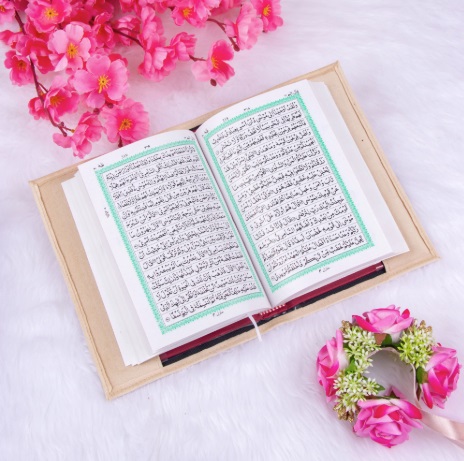
Presented by Zia H Shah MD, Chief Editor of the Muslim Times and the commentator of the Quran in this blog
Quran 4:85 (Arabic): مَّن يَشْفَعْ شَفَـٰعَةً حَسَنَةًۭ يَكُن لَّهُۥ نَصِيبٌۭ مِّنْهَا ۖ وَمَن يَشْفَعْ شَفَـٰعَةًۭ سَيِّئَةًۭ يَكُن لَّهُۥ كِفْلٌۭ مِّنْهَا ۗ وَكَانَ ٱللَّهُ عَلَىٰ كُلِّ شَىْءٍۢ مُّقِيتًۭا al-quran.cc
Translation: Whoever intercedes for a good cause will have a share [in the reward] thereof; and whoever intercedes for an evil cause will share in its burden. And Allah is Ever, over all things, a Keeper al-quran.cc.
Quran 4:86 (Arabic): وَإِذَا حُيِّيتُم بِتَحِيَّةٍ فَحَيُّوا بِأَحْسَنَ مِنْهَا أَوْ رُدُّوهَا ۗ إِنَّ اللَّهَ كَانَ عَلَىٰ كُلِّ شَيْءٍ حَسِيبًا al-quran.cc
Translation: And when you are greeted with a greeting, greet [in return] with one better than it or at least return it equally. Indeed, Allah is Ever, over all things, an Accountant al-quran.cc.
These two verses from Surah An-Nisa establish key ethical principles: responsibility for one’s influence and kindness in social interaction. A comprehensive analysis of these verses must consider psychological motivations, philosophical ethics, sociological impacts, and theological underpinnings. Furthermore, understanding 4:85–86 “in light of all of Quran” requires connecting them especially with verses 55:60, 13:17, 39:27–29, 2:177, and 2:148, which elaborate on reciprocity of goodness, the nature of truth and falsehood, the purpose of parables, the definition of righteousness, and the call to compete in good deeds. By examining these connections – from both Sunni scholarly perspectives and Sufi spiritual insights – we can appreciate how Quranic teaching integrates outward action with inner virtue, aiming to shape a compassionate community grounded in God-consciousness.
Moral Responsibility and the Reciprocity of Good
Verse 4:85 teaches that one who “intercedes” or advocates on behalf of others bears partial responsibility for the outcome al-quran.cc. Psychologically, this underscores individual agency and accountability: our influence on others can propagate good or evil. If we encourage or facilitate a good cause (e.g. helping someone in need, promoting a just solution), we share in the reward of that goodness, reinforcing positive behavior with a sense of personal satisfaction and divine approval. Conversely, if we abet something harmful or unjust, we share the guilt – instilling a healthy sense of moral caution. Islamic philosophy here aligns with a kind of consequentialist ethics tempered by intention: every action or advocacy is seed-like, carrying potential to multiply in effect. This amplifies the Qur’anic ethos that one’s personal virtue is not isolated; it radiates into society. As a hadith succinctly puts it, “Whoever starts a good thing gets the reward of it and all who follow it, and whoever starts an evil thing gets the burden of it and all who follow it.” This idea resonates strongly with 4:85’s promise and warning.
From a sociological perspective, 4:85 fosters a culture of collective responsibility. In a just society, people actively intercede for good – speaking out for justice, mediating conflicts peaceably, recommending the deserving for opportunities – and refrain from promoting harmful schemes. Sunni commentators like Ibn Kathīr note that Allah “watches over all things” (ٱللَّهُ … مُقِيتًا) al-quran.cc, meaning He is witness to every counsel and will requite each person according to their influence. This engenders a communal ethos where each member is his “brother’s keeper” in good conduct. Theologically, God’s oversight (as “Keeper” or Muqīt) assures believers that no effort to encourage good is overlooked, and no complicity in evil is forgotten al-quran.cc. As the Quran elsewhere states: “Whoever does an atom’s weight of good shall see it, and whoever does an atom’s weight of evil shall see it.” (99:7–8). Thus, 4:85 elevates everyday choices – even advice or advocacy – to spiritual significance, a point emphasized in Sunni teachings on amr bil ma’ruf (enjoining right) and nahi ‘anil munkar (forbidding wrong).
Verse 4:86, meanwhile, highlights reciprocity and graciousness in social interactions: if greeted courteously, one should return the greeting in equal or better termsal-quran.cc. At a simple level, this establishes a norm of civility – a psychological incentive to spread goodwill. The Arabic term taḥīya (greeting) here historically alludes to saying “al-salāmu ‘alaykum” (“peace be upon you”). The Quran instructs that the response should be “better” – e.g. “wa ‘alaykum al-salām wa raḥmatullāh” (adding “and the mercy of God”), or at least equalbinbaz.org.sav.corequran.com. This practice encourages an escalation of positivity: each encounter becomes an opportunity to increase compassion. Sociologically, such norms build mutual trust and affection in the community. As one modern commentator notes, Allah effectively “makes His relationship or His Providence to the common man conditional to common human compassion”, meaning those who seek closeness to God must show kindness to peoplethequran.love. A society where everyone greets others with warmth and respect will be one where solidarity and peace flourish.
Philosophically, 4:86 resonates with the Golden Rule found in many traditions – treat others as you wish to be treated. While the Golden Rule implies initiating goodness, this verse explicitly speaks of responding to goodness with equal or greater good. It institutionalizes gratitude and affability: no good act (even as small as a greeting) should go unacknowledged. In fact, one should try to outdo the other in goodness. This ethic of reciprocal benevolence is echoed in Quran 55:60: “Is the reward for goodness anything but goodness?” (هَلْ جَزَآءُ الْإِحْسَـٰنِ إِلَّا الْإِحْسَـٰنُ)quran.comquran.com. The rhetorical question in 55:60 implies a divine law of moral universe: good must be met with goodthequran.love. In everyday terms, if someone offers you kindness, justice and faith demand you return kindness – ideally in greater measure. The theological dimension here is profound: many Islamic scholars note that al-Iḥsān (excellent goodness) in 55:60 also describes God’s own attribute of exceeding mercy. God rewards human righteousness with multifold grace; humans, aspiring to godliness, should likewise respond to each other’s kindness generously. The Sufi interpretation often extends this principle – seeing each encounter with another as an encounter with God’s presence. To a Sufi, when you greet someone with peace or help them in good, you are indirectly greeting or serving the Divine beloved in them. Thus, going “above and beyond” in returning greetings or favors is a way of honoring God in others. Sufi poetry abounds with sentiments that “if you cannot see God in everyone, you cannot see God at all,” leading to the idea that every act of courtesy and compassion is ultimately directed to God. In this light, 4:86 is not merely etiquette but a spiritual practice of Iḥsān (spiritual excellence), aligning with the Prophet’s teaching that “Allah has prescribed excellence in all things”.
Notably, both 4:85 and 4:86 conclude by reminding that Allah is accounting and watching everythingal-quran.cc. God is “Ḥasīb” (ever-taking account) and “Muqīt” (ever-preserving/witnessing). Theologically, this instills reverence (taqwā) – an awareness that one’s hidden intentions in interceding or one’s private response to another’s greeting are all known to God, who will balance the scales justly. A believer, internalizing this, develops what we may call a moral consciousness: a psychological state where doing good becomes almost reflexive, not just to gain human approval but out of certainty that God sees and rewards even the unnoticed good. The second caliph, ʿUmar ibn al-Khaṭṭāb, is reported to have said, “Let not the goodness of anyone towards you be greater than your goodness toward them.” This Caliphal advice parallels 4:86 and 55:60 – urging the faithful to lead in goodness rather than lag. Such teachings cultivated a Muslim society in which gratitude and generosity constantly circulate, preventing cycles of resentment. In modern sociological terms, this creates social capital – a trust network where people expect goodwill and thus are mentally inclined to cooperate and help one another.
The combination of these verses demonstrates a Quranic theory of moral reciprocity: good begets good, both in human relations and by God’s cosmic justice. Even psychologists note that positive reinforcement encourages virtuous cycles; the Quran grounds this in divine justice as well. If someone breaks this chain – e.g. responding to good with indifference or evil – they violate both human ethics and their duty to God. Nevertheless, the Quran also elsewhere urges believers to respond to evil with good, in order to transform enemies into friends (41:34). Thus, while 4:86 speaks of responding to greetings (a good) with better, the broader Quranic spirit even challenges one to respond to bad encounters with forgiveness or kindness. A Sufi anecdote tells of a dervish who was insulted by a stranger; the dervish responded with a prayer of blessing for the insulter. When asked why, the dervish quoted the Qur’an: “Repel [evil] by that which is better” (41:34) and said he wanted to greet the man’s harsh words with something better – much as 4:86 would have him greet a kind word with a kinder one. Such is the lofty spiritual ethos that later Islamic thought (especially in Sufism) drew from these teachings of reciprocal virtue.
Competing in Goodness: Righteousness Beyond Ritual
To fully grasp 4:85–86, Quran 2:148 and 2:177 are pivotal, as they frame what true righteousness (al-Birr) means and direct the community’s moral competition. Verse 2:148 declares:
“Everyone has a direction toward which he turns; so race to [all that is] good. Wherever you may be, Allah will bring you all together. Indeed, Allah is capable of all things.”surahquran.com
In its context, 2:148 addresses disputes about religious orientation (the qiblah direction for prayer), essentially saying that formalities like the precise direction are not the core issue – moral excellence isislamicstudies.info. “Each community has its direction,” an acknowledgment of diversity, “but compete in goodness (al-khayrāt)”surahquran.com. This is a Quranic call for positive rivalry: just as two friends might playfully vie who can say the kindest greeting (echoing 4:86), communities and individuals should strive to outdo each other in charity, justice, and kindness. Philosophically, this shifts the focus from identity markers (like facing East or West) to universal virtues that truly matter. It’s a move from the letter of religion to its spirit. Sociologically, 2:148 establishes common ground for humanity – while our rituals or orientations may differ, virtuous conduct is the arena where all can meet and excel. This verse anticipates a pluralistic ethos: rather than bicker over outward differences, prove your faith’s truth by excelling in benevolence and moral integrity. As one commentator notes, “religion is about leading an honest life of compassion and not about obsession over dogma or ritual or who has religious authority.”thequran.love This captures 2:148’s spirit well.
The theological assurance that “wherever you are, Allah will gather you all” (2:148) reminds believers that God’s judgment ultimately reunites us – a subtle warning that our petty competitions will fade when we stand equal before God, who will ask, “What did you do for good?” According to Sunni exegesis, this verse came when Muslims were debating the new qiblah (direction of prayer); God shifted their attention to ethical actionislamicstudies.info. For Sufis, “racing to good” (sari‘ū ilā l-khayrāt) also has an inner meaning: hasten to purify your soul and adorn it with virtues, not later but now, wherever you find yourself. The Sufi path (ṭarīqa) often uses metaphors of journey and competition – one’s only real competitor is one’s lower self (nafs) and time itself. They urge isti‘jāl al-khayrāt (urgency in good deeds) as a sign of a heart alive to God. Thus 2:148 feeds both the external motivation for social good and the internal quest for personal excellence.
Verse 2:177, sometimes called “Ayat al-Birr” (The Verse of Righteousness), is even more explicit about true virtue. It is a long verse worth quoting in full:
Quran 2:177 (Arabic): لَيْسَ الْبِرَّ أَنْ تُوَلُّوا وُجُوهَكُمْ قِبَلَ الْمَشْرِقِ وَالْمَغْرِبِ وَلَـٰكِنَّ الْبِرَّ مَنْ آمَنَ بِاللَّـهِ وَالْيَوْمِ الْآخِرِ وَالْمَلَائِكَةِ وَالْكِتَابِ وَالنَّبِيِّۦنَ وَآتَى الْمَالَ عَلَىٰ حُبِّهِۦ ذَوِى الْقُرْبَىٰ وَالْيَتَـٰمَىٰ وَالْمَسَـٰكِينَ وَابْنَ السَّبِيلِ وَالسَّآئِلِينَ وَفِى الرِّقَابِ وَأَقَامَ الصَّلَوٰةَ وَآتَى الزَّكَوٰةَ وَالْمُوفُونَ بِعَهْدِهِمْ إِذَا عَـٰهَدُوا وَالصَّـٰبِرِينَ فِى الْبَأْسَآءِ وَالضَّرَّآءِ وَحِينَ الْبَأْسِ ۗ أُولَـٰٓئِكَ الَّذِينَ صَدَقُوا وَأُولَـٰٓئِكَ هُمُ الْمُتَّقُونَinternetmosque.netinternetmosque.net
Translation: Righteousness is not that you turn your faces toward the east or the west, but [true] righteousness is [in] one who believes in Allah, the Last Day, the angels, the Book, and the prophets; and who gives wealth – despite loving it – to relatives, orphans, the needy, the traveler, those who ask [for help], and for freeing captives; and who establishes prayer and gives zakāh (alms); those who fulfill their promises when they promise; and those who are patient in poverty and hardship and in times of stress. These are the ones who have been true, and it is they who are mindful of Allah.internetmosque.netinternetmosque.net
This magnificent verse functions almost as a mini-manifesto of Islamic ethics, weaving together theological creed, social ethics, and personal virtues. It begins by negating a merely formal definition of piety (“not turning faces to East or West”), immediately echoing the theme of 2:148. As Allama Yusuf Ali comments, “It is not righteousness that ye turn your faces East or West” – i.e., not mere compliance with ritual or directioninternetmosque.net. Instead, it enumerates core beliefs (God, Judgment Day, angels, scriptures, prophets) and core ethical acts (charity, prayer, alms, promise-keeping, patience in adversity) as the composite of al-birr (righteousness). Sunni scholars like Imam al-Ṭabarī highlight that this verse was revealed to correct a misunderstanding: some early Muslims thought piety lay solely in prayers and outward devotions, but Allah clarified that true piety integrates faith and actionthequran.love.
Psychologically, 2:177 shifts one’s focus from performative religiosity (simply facing a direction or doing a ritual correctly) to the transformative impact of faith on character. Belief in all those unseen realities (God, angels, etc.) is meant to “jolt our psyche and make our character compassionate, truthful and honest,” as one contemporary scholar put itthequran.love. Indeed, the verse pairs each article of faith with a corresponding virtue or action: belief in God and the Last Day fosters accountability and hope, which manifest in charitable giving (despite love for wealth, implying a real sacrifice of egoistic desire)internetmosque.net. Belief in the revealed Books and prophets entails following their moral guidance – hence establishing regular ṣalāh (prayer) and zakāh (almsgiving) is listed. Deep faith in God’s attributes (like His trustworthiness) should reflect in us fulfilling promises. Knowing this life is a test (Last Day consciousness) engenders ṣabr (patient perseverance) in hardships. In sum, true faith is evidenced by ethical living – a theme that resonates with philosophies of virtue ethics (Aristotelian and others) where virtue is a habit flowing from one’s worldview.
From a sociological angle, note how 2:177’s actions are nearly all other-directed: spending on kin, orphans, the poor, travelers, beggars, freeing slaves – these cover practically the entire spectrum of vulnerable persons in society. The verse is often cited as the Quran’s definition of comprehensive righteousness, clearly prioritizing compassionate livingthequran.lovethequran.love. The inclusion of “freeing those in bondage” (وَفِى الرِّقَابِ) is particularly striking – in 7th-century Arabia, slavery was entrenched, yet the Quran made emancipation a standard of piety, effectively sowing seeds for social reform through personal virtue. This dovetails with modern sociological insight that a society’s greatness is measured by how it treats its weakest members. The Quran made that a measure of one’s personal faithfulness to God. Sufi sages latched onto this aspect strongly: they compiled lists of Qur’an and Hadith teachings emphasizing service to others. For instance, a modern Sufi-influenced compilation notes “two hundred verses about compassionate living in the Quran,” beginning with 2:177 itselfthequran.lovethequran.love. This emphasis suggests that rituals (prayer, fasting, etc.) are means to an end – the end being a heart that’s generous, just, and kind. “If prayer does not make you humble and generous, it’s just an exercise in aerobics,” one might paraphrase a common Sufi sentiment.
Theologically, 2:177 ends by calling such people “the truthful” (صَدَقُوا) and “the God-fearing” (المُتَّقُون)internetmosque.net. There is an implied promise: those who live out their faith in this holistic way attain the reality of ṣidq (truthfulness, authenticity in faith) and the status of taqwā (piety). In other words, God affirms that this integration of belief and action is what makes one truly faithful. Sunni exegesis often remarks that the verse begins with laysa al-birr (“righteousness is not…”) using a noun (suggesting constancy) and ends with hum al-muttaqūn (“they are the God-fearing”), implying these qualities settle in a person as part of their identityinternetmosque.net. The verse thus charts a path of spiritual development: from correct belief to compassionate action to an ingrained state of God-consciousness. Sufi commentators particularly love the nuance that giving money “على حبه” – for love of Him or despite love for it (the Arabic can mean both)internetmosque.netinternetmosque.net – indicates the station of maḥabba (love). One gives charitably out of love for God, even though one naturally loves wealth – thus preferring the Beloved over one’s selfish desires. Some have seen in this a hint that love (of God and His creation) is the driving force of all these virtues. Indeed, the famous Sufi poet Rumi interpreted birr as “love in action.”
When we reflect on 4:85–86 under the illumination of 2:177 and 2:148, a consistent message emerges: ritual alone is empty without ethical excellence and genuine care for others. To intercede effectively for good (4:85), one must be a person of birr (2:177) who cares for others selflessly. To return greetings in the best way (4:86), one must harbor no arrogance or malice – qualities erased by true piety as defined in 2:177. In fact, returning a better greeting may seem a small act, but in the Quran’s moral psychology it is an outflow of the same inner disposition that makes one give charity or free slaves. It springs from a heart oriented toward khayr (goodness), always seeking to increase the net goodness in any exchange. This is why scholars like Zia Shah conclude, “the litmus test for true belief and genuine worship is that it leads to compassionate living”thequran.love. Our dealings with people are the test and proof of our devotion to God.
Truth and Falsehood: The Parable of Lasting Good
Another layer of insight comes from Quran 13:17, which offers a vivid parable about truth versus falsehood:
Quran 13:17: “He sends down rain from the sky, causing the valleys to flow, each according to its capacity. The torrent carries a rising foam, and from that [ore] which they heat in the fire for adornments or utensils comes a similar scum. Thus Allah presents [the example of] truth and falsehood: as for the foam, it vanishes, being cast off; whereas that which benefits people remains on the earth. Thus does Allah set forth parables.”islamawakened.com
This parable, though not explicitly about human ethics at first glance, powerfully reinforces the principle behind verses like 4:85–86 and 2:177. It uses natural imagery: useful water versus useless froth, or pure metal versus dross scum, to symbolize enduring truth/good versus fleeting falsehood/evil. The phrase “that which benefits people remains” (مَا يَنفَعُ النَّاسَ يَمْكُثُ فِي الأَرْضِ) is keyislamawakened.com. In context, it means that truth (God’s guidance) and genuine good works have real substance – they are like water that soaks into the earth giving life, or like purified metal that becomes tools and jewelry. False beliefs and wicked deeds are like foam – flashy or loud perhaps, but ultimately empty and destined to dissipatequran.comquran.com.
Philosophically, this offers a metaphysical justification for the moral law noted earlier: goodness endures because it aligns with ḥaqq (Truth/Reality), while evil is self-defeating and transient. There is almost a law of moral physics: only the beneficial is truly real in the long run. This notion might remind one of Platonic ideals (the Good is real, evil is a deficiency) or of Gandhian thought (“Truth (Satya) is permanent; untruth cannot last”). The Quran through this parable assures believers that however much falsehood (or injustice) foams and froths on the surface of life – making noise or appearing significant – it will wash away, and only genuine benefit (charity, justice, faith, compassion) will have lasting impactislamawakened.comsurahquran.com.
For a psychological perspective, this parable encourages patience and trust: often doing good can feel thankless or overshadowed by those who prosper through selfishness (the foam might seem bigger than the water initially). But God says: persevere – the foam will fade. This can be comforting to one who, say, always responds to others with kindness (4:86) yet faces rudeness in return, or one who advocates for a just cause (4:85) yet sees corrupt people prevailing temporarily. Allah’s parable implies a timing difference: foam appears quickly and abundantly in a flash flood, whereas water quietly absorbs into the soil and nourishes crops much laterquran.com. Similarly, truth and goodness may take time to manifest their results, but they are quietly seeping in to give life. The sociological lesson is that beneficial works create legacy. We still honor and feel the effects of people like Mother Teresa or Abdul Sattar Edhi (noted for serving orphans and the poor, very much living 2:177 values), whereas the braggarts and tyrants of their times – the foam – largely have vanished from influence except as cautionary tales.
From a theological standpoint, 13:17’s concluding “Thus does Allah set forth parables” shows God’s intent to educate human beings through reflection on nature. This connects to 39:27–29, where Allah says He has given many kinds of examples in the Quran so that people might understand, including a parable of a slave with many masters versus one with a single master:
- Quran 39:27: “Indeed We have set forth for people every kind of example in this Quran, so that they may take heed (remember).”quran.comquran.com
- Quran 39:28: “[It is] an Arabic Quran without any deviance (crookedness), so that they may be conscious (of God).”corpus.quran.com
- Quran 39:29: “Allah sets forth the parable of a slave owned by quarreling partners and another slave wholly owned by one master. Are they equal in condition? Praise be to Allah! But most of them do not know.”quran.com
Verse 39:27 reaffirms that the Quran’s method of moral instruction is often via parables and examples, speaking to our imagination and reasonquran.comquran.com. Verse 39:29’s specific parable compares polytheism vs monotheism – a slave trying to serve many bosses versus one serving a single bossquran.com – implying the ease of devotedly serving One God. Yet conceptually it also resonates with serving multiple idols like ego, wealth, social pressure versus singularly serving al-Ḥaqq (The Truth, God). In an extended sense, a person trying to chase every trend, please every crowd (many “masters”) is unstable, whereas one with a clear moral compass (one “master” – God/truth) is at peace. This parable complements 13:17: truth (One God, one clear purpose) yields stability, whereas falsehood (conflicting masters, fragmented aims) yields chaos.
Applying this to our topic: a person grounded in true righteousness (2:177) with God as their ultimate master (39:29) will not be swayed by the “foam” of worldly temptations or the “quarreling partners” of public opinion or selfish impulses. They will intercede for the good even if evil seems momentarily profitable, and they will respond with grace even if others don’t, because their focus is on the One Master’s approval. The one who lacks this grounding might advocate today for a bad cause if it benefits them, tomorrow for another conflicting cause – effectively enslaved by multiple masters, as 39:29 suggests. But the sincere believer has integrity (etymologically, an integer – a whole number, not divided). They advocate consistently for what is right and behave with consistent kindness, because they answer to the One Truth. Hence, the philosophical unity of these Quranic ideas: ethical coherence comes from theological coherence (monotheism in its deepest sense leads to moral consistency).
Sufi teachings often stress this unity: they use the term tawhid (asserting One God) not just as a creed but as a way of life – to “unify” one’s heart and will towards God alone. A unified heart is filled with love of God and love of God’s creation; a divided heart chases worldly vanities and cannot sincerely care for others. So, when a famous Sufi like Bayazid Bastami was asked, “How do you define Islam?” he replied, “Al-Islam huwa al-adab” – “Islam is good manners.” At first that sounds reductionist, but in light of the verses we’ve discussed, it rings true: if one has truly submitted to God (Muslim literally means “one who submits”), the proof is in refined conduct – courtesy, honesty, compassion. Good manners (in the deepest sense of adab, ethical discipline) are the outer garment of inner submission. The Sunni perspective provides the law (fiqh) and guidelines for these manners, while the Sufi perspective emphasizes the love and sincerity that animate them. Both meet in the Quran’s vision of the ideal believer.
Living the Verses: An Integrated Perspective
From the above, we can derive a holistic understanding of Quran 4:85–86, enriched by the related verses and viewpoints:
- Theologically, a believer recognizes Allah as the ultimate witness and judge of all interactions. This God-consciousness (taqwā) motivates them to use their influence only for good and to respond to others with mercy. They understand that God’s reward far exceeds human reward, so they need not worry about “losing out” by being generous or forgiving. As Quran 55:60 and numerous hadith qudsī indicate, Allah returns goodness manifoldquranreflect.com. In Sunni creed, intercession (shafā‘ah) in the Hereafter is a reality – but reserved for the truthful and authorized. Analogously, 4:85 implies that in this life we can all perform a kind of intercession by helping others, and these acts will testify for us before Godal-quran.cc. God’s being “Accountant” (4:86) and “Keeper/Watchful” (4:85) assures that every effort is accounted for – a cornerstone of Islamic theology that supports moral living.
- Philosophically, these teachings advocate a form of virtue ethics wedded to consequential awareness. One is called to cultivate virtues like justice, kindness, and patience as habitual traits (2:177 lists these virtues). At the same time, one is made aware of the consequences – social and spiritual – of one’s actions (sharing in reward or burden per 4:85; earning God’s countenance or displeasure per 4:86). There is also a deep strain of moral realism: Good and evil are not arbitrary; they relate to truth and falsehood (13:17). Good deeds are real accomplishments in the fabric of the world (like nourishing water), whereas evil deeds are ultimately vacuous (froth). This Quranic philosophy counters moral cynicism – the idea that “nice guys finish last” – by revealing the ultimate triumph of good. It aligns with what some philosophers call the “moral order of the universe,” essentially asserting that doing good is in harmony with how reality is structured, leading to long-term benefit, whereas evil is a perversion that will collapse on itselfislamawakened.comislamawakened.com.
- Psychologically, the Quran addresses both intention and behavior. Believers are taught to purify their intentions – interceding selflessly, greeting sincerely – which in turn ennobles their psyche. Modern psychology confirms that acting with gratitude and generosity improves one’s well-being and reduces anxiety. The practice of returning a better greeting (4:86) might seem minor, but it creates a habit of positive thinking: one actively looks for the good to appreciate in someone’s approach and amplifies it. Likewise, stepping up to support good initiatives (4:85) builds one’s identity as a helper rather than a bystander, fostering self-worth and purpose. The Quranic emphasis on patience (2:177) and competing in good (2:148) also cultivates resilience and healthy motivation. Instead of envy or negative competition, one channels ambition into benevolence – a much healthier outlet. Moreover, knowing that “Allah is with those who do good” (as Quran 16:128 and 29:69 promise)thequran.love gives a believer inner confidence and peace. Sufi psychology especially leverages these verses to tame the ego (nafs). For example, when slighted by someone, rather than ego reacting with vengeance, the remembrance of 4:86 and 55:60 can make one smile and think, “Here is a chance to respond better and rise above my ego – and God sees this.” Over time, this practice refines one’s character, which is the essence of Tazkiyat al-Nafs (purification of the self) in Sufism.
- Sociologically, if these Quranic principles are lived, the result is a community characterized by compassionate solidarity and moral vigilance. People stand up for what is right and discourage wrong (4:85), creating a just public sphere. They exchange daily courtesies and kindness (4:86), building an atmosphere of mutual respect. They all participate in welfare – caring for the poor, traveler, orphan, captive (2:177) – rather than leaving it to a few. In such a society, grudges and vendettas have less room to grow, because the ethic of returning good for good (and even good for evil) short-circuits the cycle of retaliation. It is noteworthy that the Qur’an repeatedly links social ethics with faith. For instance, Quran 107 castigates those who pray but neglect to feed the poor – calling their religion a lie. The integration we saw in 2:177 is echoed by Prophet Muhammad ﷺ, who said: “He is not a true believer whose stomach is full while his neighbor goes hungry.” This fusion of faith and neighborly care was vividly realized in the Prophet’s own community in Madinah, where emigrants and helpers shared resources, and later generations revered that model. One could say 4:85–86 and 2:177, taken together, lay the blueprint for what some sociologists term “the compassionate society.” In fact, contemporary Muslim scholars have compiled literally hundreds of Qur’an verses under themes like “compassionate living”thequran.love, “justice and mercy,” etc., showing that these social virtues are not just recommended but central. The Qur’an’s universal parable of truth in 13:17 also implies a measure for social structures: Do they benefit people? If an institution or practice is mere “foam” – flashy but harmful or useless – an Islamic society should reform or discard it. We see early Muslims, guided by these values, abolishing infanticide, emancipating slaves en masse, instituting charity as an obligation, and promoting knowledge – all things that “benefit people and remain.” Sociologically, then, the Quran fosters an ethical community (ummah) that views itself as collectively responsible before God and history for leaving a legacy of good (the “remaining beneficial things” known as al-bāqiyāt al-ṣāliḥāt, cf. 18:46).
- Sunni and Sufi interplay: In classical Sunni tafsirs, verses like 4:85–86 are often discussed in very practical legal terms. For example, jurists note that 4:85 legitimizes the idea of shafā‘ah (mediation) in worldly matters – encouraging one to mediate conflicts or recommend someone for a job, etc., as long as it’s for a just cause. They also caution based on this verse that one who assists in sin (even by a word) carries sin. Tafsir al-Qurtubi mentions that shafā‘ah ḥasana (good intercession) could be as simple as interceding for someone’s forgiveness or helping them out of difficulty, which the Prophet ﷺ said earns reward like the doer’sal-quran.cc. For 4:86, Sunni jurists formulated the rule that returning a greeting is obligatory (wājib), while initiating one is recommended (mustaḥabb), and that saying something even better carries extra reward. They recount hadiths: once a man greeted the Prophet by saying “Al-salāmu ‘alaykum,” the Prophet responded “Wa ‘alaykum al-salām wa raḥmatullāh” (adding “and mercy of Allah”). Another came saying “…and the mercy of Allah,” the Prophet added “…and His blessings.” A third came saying “…and His blessings,” to whom the Prophet simply answered, “Wa ‘alayk” (and upon you), then explained jokingly that the third man had “left no room” for a better greeting so the Prophet returned it in kindbinbaz.org.sa. Such narrations, found in Sunni hadith collections, show the Prophet personally enacting 4:86 and setting a norm of warm civility.
Where Sufism adds is an emphasis on the inner courtesy known as ḥusn al-khulq (beautiful character). Sufis argue that saying “peace be upon you” means nothing if not said with genuine goodwill. They train themselves to internally bless others, not just utter formulas. Al-Ghazali, a Sunni mystic, in his Iḥyā’ ‘Ulūm al-Dīn, devotes sections to the spiritual significance of greetings and helping others – linking these Quranic instructions to purification of the heart from pride (since returning a better greeting requires humility to elevate the other) and envy (since interceding for someone else’s good fortune is the antidote to envy)islamawakened.comislamawakened.com. Thus, Sufis often describe adab (proper etiquette) as the outer expression of maḥabba (love). In the Sufi view, when you lovingly act on verses like these, you are participating in God’s own loving care for creation – a concept encapsulated in the famous ḥadīth qudsī: “My servant draws near to Me with nothing more beloved to Me than what I have obligated (like prayer, charity)… and continues to draw near with extra good deeds until I love him. And when I love him, I become his hearing, his sight, his hand…” – interpreted to mean the saintly person perceives and acts in tune with divine will. We see a reflection: such a person would always “intercede” only in a manner God approves and “greet” others as if seeing the divine light in them. They fulfill the description “those are the truthful, the God-conscious” from 2:177, whom Sufis would call the friends of God (awliyā’).
In conclusion, Quran 4:85–86, illuminated by 55:60, 13:17, 39:27–29, 2:177, and 2:148, presents a rich tapestry of guidance. It calls us to be agents of good, responders with good, and embodiments of good – all for the sake of God who is the source of all Good. It appeals to our reason with parables, to our devotion with promises of divine reward, and to our social nature with pragmatic rules for harmonious living. It balances the vertical dimension of faith (belief in God, prayer) with the horizontal (charity, fairness to others), insisting that neither is complete without the otherthequran.lovethequran.love. From a Sunni perspective, these verses ground moral theology and law in everyday actions. From a Sufi perspective, they invite an interiorization – making one’s heart so full of faith and love that every intercession and greeting naturally exudes mercy. Together, they ensure that a Muslim’s life is characterized not by empty piety or isolated spirituality, but by ethical excellence rooted in spiritual consciousness.
The great Muslim sage Imam Ja‘far al-Ṣādiq was asked to define a true Muslim. He answered simply: “الْمُسْلِمُ مَنْ سَلِمَ النَّاسُ مِنْ لِسَانِهِ وَيَدِهِ” – “A Muslim is one from whose tongue and hand people are safe.” This definition echoes the very ethos we have explored: use your tongue to intercede for good and speak kindly (not for harm), use your hand to greet with peace and help others (not to hurt) – in sum, be a source of salām (peace) and khayr (goodness) wherever you go. That is the Quran’s vision for us. May we take heed of these lessons and embody them, knowing that no act of goodness is ever lost: “فَمَن يَعْمَلْ مِثْقَالَ ذَرَّةٍ خَيْرًا يَرَهُۥ” – “Whoever does an atom’s weight of good shall see it” (99:7), for “Allah does not allow the reward of the righteous to be lost” (11:115). In a world often rife with cynicism and strife, these Quranic principles offer a timeless blueprint for compassionate, conscientious living, at the personal and collective level – a life wherein we seek to “race with one another in all virtues”surahquran.com, returning any goodness we receive with even better, and trusting that all sincere efforts will remain, like pure water, to nourish humanity long after the foam of falsehood has blown awayquran.comislamawakened.com.
Sources:
- The Qur’an, 4:85–86 and commentaryal-quran.ccal-quran.cc; 55:60quran.comquran.com; 13:17islamawakened.com; 39:27–29quran.comquran.com; 2:177internetmosque.netinternetmosque.net; 2:148surahquran.com.
- The Glorious Qur’an – Translation and Commentary, incl. Sahih International and Pickthall translationscorpus.quran.comcorpus.quran.com.
- Zia H. Shah, “Two Hundred Verses about Compassionate Living in the Quran” – The Muslim Times, highlighting Quranic emphasis on compassion over ritualthequran.lovethequran.love.
- Zia H. Shah, “The Quranic Verse Defining Righteousness” – The Muslim Times, on Quran 2:177’s comprehensive definition of pietythequran.lovethequran.love.
- Tafsir Ibn Kathir (Eng. abridged) on Quran 2:148 and 2:177, explaining context of Qiblah change and essence of birrsurahquran.cominternetmosque.net.
- Islamic Studies Info – commentary on Quran 2:177islamicstudies.info.
- IslamAwakened – parallel translations for nuanced understanding of versesislamawakened.comislamawakened.com.
- Quranic Arabic Corpus – morphology and syntax analysis for precise meaningcorpus.quran.comcorpus.quran.com.
- Hadith references: Sahih Bukhari and Muslim (on greeting better; on rewarding one who starts a good practice) as cited in classical tafsirsbinbaz.org.saislamawakened.com.
- Rumi and classical Sufi literature for spiritual reflections (indirectly referenced for interpretive insights on ihsan and love).
al-quran.cc Translation of Quran 4:85, with Arabic text.
al-quran.cc Translation of Quran 4:86, with Arabic text.
quran.comquran.com Quran 55:60 – “Is the reward of goodness anything but goodness?”
thequran.love Commentary: We must return others’ kindness; Quran 55:61 (55:60) as mandate to reciprocate good.
surahquran.com Quran 2:148 – compete in good deeds, God will gather everyone.
internetmosque.netinternetmosque.net Quran 2:177 – full verse in Arabic and English defining righteousness (belief plus ethical action).
islamawakened.com Quran 13:17 – parable of truth and falsehood (foam vs water).
quran.comquran.com Quran 39:27,29 – Quran gives examples; parable of slave with many masters vs one master.
thequran.love Zia Shah: Rituals vs transformative belief; true faith makes character compassionate.
thequran.love Zia Shah: Quran stresses litmus test of belief is compassionate living (citing 2:177).
islamawakened.com Ibn Abbas et al.: Those who rally to benefit others share blessings; rally to injustice share burden (expounding 4:85).



 The Glorious Quran and Science
Leave a comment