
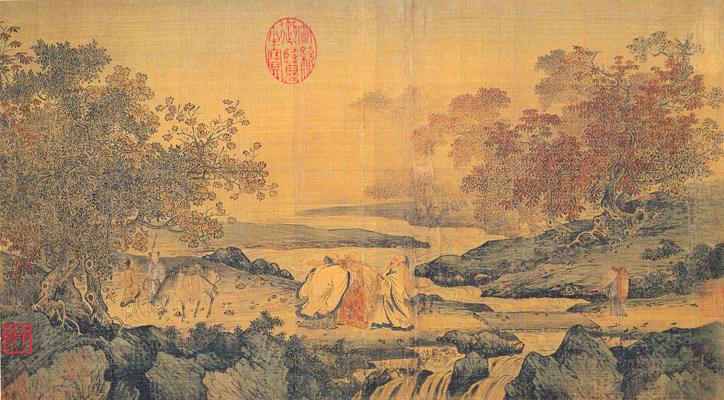

Invitation from Zia H Shah MD, Chief Editor of the Muslim Times and the commentator of the Quran in this blog
Dear Friends,
We write to you with hearts full of respect and goodwill, hoping to share a message that we believe can bring you peace and fulfillment. We know that in today’s mainland Chinese society, many of you embrace a rich tapestry of traditions. You uphold Confucian ethics in family and society, follow Taoist habits and folk superstitions for good fortune, draw occasional spiritual comfort from Buddhist ideas, and in public life you often identify with Marxist or atheist principles – all while proudly declaring you have “no religion” and placing great trust in science and reason. This unique blend of beliefs and practices has been a hallmark of Chinese culture’s continuity under a modern secular state. We admire how you honor ancestors in Confucian fashion, seek harmony with nature as Taoism teaches, invoke “Amituofo” (Amitabha) in difficult times like a Buddhist, yet rely on education and science to understand the world. You may see no contradiction in these different strands of life, and indeed there is a practical harmony in the way ordinary people live these values together.
In this letter, we humbly invite you to consider the faith of Islam – not as something alien or opposed to your cultural values, but as a profound completion of the truths you already hold. We believe Islam can speak to the Confucian in you, to the rational thinker in you, and to the spiritual seeker in you, all at once. The Glorious Quran, which is the holy book of Islam, presents a message of unity: unity of humanity’s moral ideals, unity of truth and reason, and unity of our hearts with our Creator. We hope to show you that embracing Islam does not mean rejecting your heritage; rather, it can illuminate and fulfill the noble principles you cherish – from filial piety and social harmony to love of learning and reverence for Heaven’s guidance – under the light of one Loving God.
Confucius’s legacy towers in Chinese culture—literally, as shown by the 236-foot statue honoring him in Qufu thequran.love. For over two millennia, his wisdom has guided your society, emphasizing virtues like empathy, justice, sincerity, and devotion to family. In Islam, we honor these very same values as gifts of wisdom bestowed by the Divine. The Prophet Muhammad (peace be upon him) taught that “the wise statement is the lost property of the believer; wherever he finds it, he has the most right to it” thequran.love. In this spirit, Muslims see truth and wisdom as universal – we embrace goodness wherever it is found, recognizing it as part of the guidance of God. Indeed, the Quran affirms an inclusive paradigm: God has sent guidance to every nation in forms each culture could understand. “We sent a messenger to every community,” the Quran says (16:36) thequran.love. This means that divine wisdom is not confined to one people or land. The Quran teaches that all enduring wisdom ultimately originates from the Divine, and that “whatever is universally beneficial and true is meant to endure” (Quran 13:17) thequran.love thequran.love. In other words, the moral truths that have stood the test of time in Chinese civilization are cherished in our faith as part of God’s plan. It is our belief that the same Heavenly source who guided the sages of China also sent revelation to the prophets of the Middle East – all reflecting one universal light of Truth.
Consider how Confucian virtues find beautiful parallels in Islamic teachings. One famous example is the principle of empathy and reciprocity. Confucius taught: “Do not do unto others what you do not want done to yourself.” This “Silver Rule” of not harming others is a cornerstone of Confucian ethics thequran.love thequran.love. Islam wholeheartedly upholds the same principle, expressed in a positive form. Prophet Muhammad (peace be on him) said: “None of you truly believes until he loves for his brother what he loves for himself.” thequran.love In another saying he extended this, “until he loves for his neighbor what he loves for himself,” making it clear that our care must extend to all people, not just fellow Muslims thequran.love. The Quran echoes this golden rule in spirit, for instance by praising those who “give others preference over themselves, even when they themselves are in need” (59:9) thequran.love. Both Confucius and Islam teach us to put ourselves in another’s place and to treat others with the fairness and kindness we desire for ourselves. Isn’t it uplifting that across time and cultures, our conscience recognizes this same truth? It suggests, as the Quran says, that such known goodness (in Arabic, maʿrūf) is imprinted on every sound heart as part of the divinely given moral law thequran.love. Muslims therefore see Confucius’s counsel of empathy as part of that “lost property” of universal wisdom – fully harmonious with Islamic teaching thequran.love. Our scholars even note that principles like the Golden Rule are part of the “enduring religion” (dīn al-qayyimah) which the Quran (98:5) says all prophets taught thequran.love. We joyfully recognize that Confucius’s voice and Muhammad’s voice are in chorus on this essential virtue.
Another cherished ideal is filial piety – respect and care for one’s parents and elders. Confucius said, “Filial piety is the root of all virtue.” He taught that serving one’s parents with devotion and reverence is the foundation of a harmonious society. You are familiar with the image of a dutiful child bringing honor to the family – a core teaching of your culture. Islam mirrors this emphasis, perhaps even more strongly. The Quran places kindness to parents immediately after devotion to God Himself: “Your Lord has decreed that you worship none but Him, and that you be kind to parents” (Quran 17:23) thequran.love. It instructs us never to even speak a word of contempt to our aging parents, but to address them with honor and tenderness thequran.love. The Prophet Muhammad (pbuh) said, “Paradise lies under the feet of mothers,” and that the person most worthy of our good conduct is “your mother” – repeated three times – then “your father.” Disobeying or hurting one’s parents is counted among the gravest sins in Islam. Just as Confucius taught that family is the cradle of virtue, Islam teaches that caring for our parents is a sacred duty and the training ground for compassion. A Muslim who has learned to honor parents will naturally be kind to others; as Confucius observed, “the root is filial piety; the fruit is love for fellow men.” Both our traditions link the love in family to love in community thequran.love. How beautifully our values coincide here!
We could speak at length of other virtues. Honesty and sincerity, for example, are fundamental in Confucian teaching (the virtue of chéng, 誠). Islam likewise holds truthfulness as the bedrock of faith; the Quran calls on believers to be truthful and genuine in all dealings, and Prophet Muhammad (pbuh) was renowned as “Al-Amīn,” the Trustworthy. Or consider love of learning and humility in knowledge – Confucius was a great teacher who said, “Is it not a pleasure to learn and to practice what is learned?” He emphasized lifelong learning and humility, admitting when one does not know. Islam transforms seeking knowledge into a sacred duty: the very first Quranic word revealed was “Read!” and the Prophet stated, “Seeking knowledge is obligatory on every Muslim.” Our civilization historically prized education, science, and scholarship for this reason. We are taught to admire wisdom from any source – which is why we can appreciate the Analects of Confucius as much as the sayings of our own prophets. Both Confucianism and Islam prize self-cultivation and education as paths to become better human beings thequran.love thequran.love. And what about justice and social harmony? Confucius envisioned society as an extended family governed by lĭ (ritual propriety) and yì (righteousness). Islam likewise makes justice a central command: “O you who believe, be steadfast in justice, witnesses for God, even against yourselves or your kin…” (Quran 4:135). A just and orderly society, where everyone fulfills their duties and cares for the less fortunate, is a Quranic ideal. We see this also in how both traditions promote charity, good conduct, and moderation. Truly, the ethical teachings of Islam would not feel foreign to a student of Confucius. They would feel like déjà vu – a reaffirmation of truths you already know in your heart.
Dear friends, these profound resonances are not a coincidence. Islam teaches a universalist outlook: that the same God who created all humanity also enlightened all nations with moral guidance. The Quran says: “There never was a people without a warner having lived among them” (35:24) and “We sent a messenger to every community, saying, ‘Worship God and shun false gods.’” (16:36) thequran.love. Over twenty-five prophets are named in the Quran (from Adam and Abraham to Moses, Jesus, and Muhammad), but it acknowledges there were many others unnamed – sages and messengers in far-flung places thequran.love. In line with this, some Muslim thinkers throughout history (including scholars in China and the Subcontinent) have lovingly wondered if figures like Confucius, Laozi, or Buddha might have been among those unmentioned prophets sent by God to guide their people thequran.love. While mainstream Islam stops short of officially calling Confucius a prophet (since we lack clear evidence of him preaching One God), we maintain a respectful openness to the idea that he was a heaven-sent sage who perceived aspects of divine truth thequran.love. After all, the noble impact of his teachings and the pure moral tone of his advice suggest a light from the same Source thequran.love. One modern Muslim writer noted that “Confucianism owes much of its wisdom to revelation, rather than mere human contemplation” thequran.love. This view echoes the Quran’s stance that God’s guidance has reached all peoples, making it very plausible that Confucius’s teachings are a regional reflection of the same God-given values found in the Quran thequran.love. In short, Islam’s universalism allows us to see you not as outsiders to God’s love, but as part of the same family. We believe the virtues that flourish in Chinese tradition came from the very same divine spring as the virtues taught by Islam. Our invitation to you is built on this common ground – we are not asking you to abandon the goodness you have, but to recognize its ultimate Source and to drink more directly from that pure spring of wisdom.
Now, you might wonder: If we already have these values, what more does Islam offer? Why embrace a new faith if we can live ethically without it? These are fair questions for a rational mind. Let us humbly attempt an answer. Islam offers two great treasures that complete the picture: truth in its purest form, and a personal connection with the One who is the source of that truth. It is one thing to have fragmentary bits of a tradition, and another to have the full, coherent guidance of the Almighty. Mainland China’s culture is rich in ethics, but many people feel a spiritual void – as you often say, “we have no religion.” People perform rituals or customs for cultural reasons, yet many do not truly know the One (the Heaven or higher reality) those practices once pointed to. Islam invites you to know and consciously serve the One God who is behind all that is true and good. This is not a call to a blind or foreign worship; it is a call to return to the very Heavenly King that ancient Chinese sages respected (often calling Him “Heaven” or “Shangdi”). It is a call to complete the journey from honoring Heaven’s impersonal will to lovingly knowing the Lord of Heaven as a personal God who cares for you. Think of it as moving from respecting the law of goodness, to forming a relationship with the Law-Giver Himself – a relationship of love, trust, and remembrance that nourishes the soul.
Furthermore, Islam offers a unifying worldview that can harmonize all the disparate pieces of your life into one meaningful whole. Many of you juggle multiple “masters” – tradition, family expectations, modern secular values, scientific materialism, etc. – and you manage it pragmatically. But sometimes, do you not feel pulled in different directions inwardly? Perhaps you have asked yourself: What is the ultimate purpose of it all? Which principle should guide me when values clash? For example, filial piety might conflict with personal ambition, or moral ideals might conflict with the pressure to conform in society. Without a clear higher principle, one can feel uncertain or internally divided. Islam provides that higher principle: the One God who is above all human authorities and desires. The Quran gives a beautiful parable about this:
“Allah sets forth the parable of a man (slave) who has many quarrelsome masters, and a man devoted entirely to one master – are they equal in comparison?” (Quran thirty nine: twenty nine).
This imagery asks us to imagine a servant trying to satisfy several bosses at once versus a servant with just one boss. The one serving many masters is pulled apart by conflicting demands, unable to find peace; the one serving one master can focus and find rest. The Quran uses this to illustrate the human condition: only by devoting ourselves to the One Master (the one true God) do we attain inner harmony thequran.love thequran.love. Dr. Zia H. Shah, a contemporary commentator, notes that the immediate meaning of this parable is about monotheism vs. polytheism, but it also carries a psychological insight: “Worshiping one God leads to a coherent life, whereas serving many masters – whether literal gods or figurative obsessions – leads to chaos within.” thequran.love. In modern terms, trying to appease every ideology, trend, or social pressure can leave a person spiritually exhausted and in conflict with themselves, a state psychologists call cognitive dissonance (the mental strain from holding contradictory values). By contrast, anchoring oneself in the singular Truth of God provides a stable compass to navigate life’s confusions thequran.love. When you have One Divine reference point, you can evaluate all other influences against it and find the strength to resist what is harmful. You become internally centered. As the Quran promises, “God strikes a parable… a man belonging to many partners quarreling, and a man belonging entirely to one [master]. Whose condition is better?” It then says, “Praise be to Allah!” – for indeed, the clarity that comes with serving God alone is a praiseworthy blessing thequran.love. We have witnessed that those who truly live with faith in One God often exhibit a serene, unconflicted demeanor – they are not at the mercy of every passing trend or fear, but are centered and secure in their values thequran.love thequran.love. In short, Islam can free you from the tyranny of the many and give you the peace of the One. It does not erase your love for family, your patriotism, or your appreciation of culture – it prioritizes and elevates them under a clear sky of divine guidance, so that all good things take their proper place without tearing you apart. The Quran puts it succinctly: “Allah has not placed two hearts in any person’s chest” (33:4). We are meant to have one heart, devoted to the One who created it.
Hand in hand with this inner coherence, Islam offers spiritual fulfillment – a direct, living relationship with God that satisfies the heart’s innate longing. Perhaps some of you feel that longing in quiet moments. It’s the feeling that something is missing, that beyond all achievements and pleasures, the soul wants an intimate connection with the source of beauty and meaning. In Chinese culture, there has been a concept of the divine (whether called Heaven, Tian, or Dao), but for many, it has grown distant or abstract. Islam invites you to know God not just as a concept but as a loving, merciful Lord who hears your prayers and cares for you. The Quran tells us that God is near – “closer to you than your jugular vein” – and that He listens when we call upon Him. When you pray in Islam (such as the ritual prayers or even a private whispered supplication), you are directly in communion with the Creator of the universe, the same Creator who fashioned the stars and also knows your every thought. There is a profound comfort in this. The Quran says, “Verily, in the remembrance of Allah do hearts find rest.” (13:28) – a truth that countless believers have experienced thequran.love. When you remember God with sincerity, when you recite His words or reflect on His blessings, an almost unexplainable tranquility descends on the heart. It is as if the heart recognizes it has come home. Many Chinese friends who accepted Islam testify that for the first time they felt a personal closeness to Heaven – as if a gap they always sensed was finally bridged. One might say, metaphorically, that the “Heaven” which Confucius revered now has a name and a voice in their lives. That name is Allah, and that voice is the melodious recitation of the Quran.
And what is the Quran? We should tell you a little about this book at the center of Islam. Muslims believe the Quran is the final revelation from God, sent down in the 7th century to the Prophet Muhammad (peace be upon him) in Arabia. It is not a book he wrote – it is, as we believe, the very speech of God conveyed to him by the Angel Gabriel, preserved word-for-word. The Quran’s message confirms the core truths that were given to earlier prophets (like Abraham, Moses, Jesus, and perhaps, we dare say, the sages of the East), but it also corrects the deviations that may have occurred over time and brings a complete, uncorrupted guidance for all humanity. The Quran describes itself as a “purified scripture, containing everlasting teachings” (98:3–4) – meaning it carries forward all the timeless wisdom that humanity needs thequran.love. It’s as if previous revelations were stars that shone in the night, and the Quran is like the rising sun that gathers their light into one bright source. The Quran assures us that truth stands the test of time: “As for the foam, it vanishes away, but what benefits humanity remains on the earth” (13:17) thequran.love thequran.love. Falsehood is like foam on a river – flashy but fleeting – whereas truth is like the water that sinks in and nourishes. In history, false ideologies fade, but genuine wisdom endures. Confucius’s teachings offer a striking example of such enduring truth: for over 2,500 years, your civilization has preserved and revered his wisdom. Its survival through so many eras suggests an intrinsic benefit in those teachings – “a real substance that mere superstition or error lacks.” Indeed, we Muslims would say this shows God’s hand in preserving what is good. The Quran’s role, then, is to safeguard and affirm all that is true, and to be a criterion to distinguish truth from human additions. Where cultures retained gems of wisdom (like xiào 孝 for parents, or shù 恕 for empathy), the Quran says “yes, this is from God.” Where people fell into superstition or corrupted practices, the Quran gently corrects and lifts them back up to a pure understanding. Embracing the Quran can thus be seen as holding onto a rope that connects you to the very source of the truths you already hold dear, while also receiving new insights that only God’s complete guidance can provide.
One remarkable feature of the Quran is its internal coherence and consistency – something even skeptics are challenged to ponder. The Quran openly invites examination of its own perfection, saying: “Then do they not reflect upon the Quran? Had it been from anyone other than Allah, they would have found in it much contradiction.” (4:82) thequran.love thequran.love. In other words, the Quran presents a test of authenticity: a divine message, unlike human ideas, will be free of inconsistencies. Despite being revealed in parts over 23 years, addressing all manner of situations, the Quran’s message never contradicts itself thequran.love. Its theology, ethics, and worldview form a stunningly coherent whole. This is very different from, say, a collection of folklore or philosophies patched together. Many Chinese friends value logic and consistency, and here the Quran shines: it is deeply rational and self-consistent. It doesn’t ask you to accept logical absurdities; rather it appeals to your mind and common sense. It repeatedly says, “Will you not then reason?” and “Do you not think?” and “Do they not ponder?” thequran.love. One of our scholars, reflecting on this, wrote that the Quran “insists on truth without contradiction”, and that this consistency is therapeutic for the soul thequran.love. When you live by the Quran, you no longer need to live a “double life” or compartmentalize faith versus reason thequran.love thequran.love. Everything integrates. You can be a person of science and a person of faith, with no conflict between the two – for the same God who authored the universe authored the Quran, and truth cannot contradict truth thequran.love. This holistic framework relieves the mental strain of trying to reconcile incompatible worldviews thequran.lovethequran.love. A believing scientist, for instance, studies the laws of nature with enthusiasm, confident that every new discovery will agree with God’s word, since both come from the same source thequran.love thequran.love. History bears this out: it was largely faith in an orderly Creator that inspired the rise of science in the Islamic golden age. Even today, many Muslims find joy in seeing how astronomy, biology, and physics only increase their wonder at the Quran’s insights. Far from experiencing dissonance, they find their spiritual and intellectual lives reinforcing each other thequran.love thequran.love. This is something we sincerely wish for you as well: the contentment of having one clear, consistent lens through which to view all of reality – instead of switching between separate lenses for “science” and “spirit” or “modern life” and “tradition.” The Quran can be that single, unifying lens.
On that note, let us assure you: Islam does not ask you to abandon reason or scientific inquiry – quite the opposite! The Quran relentlessly encourages believers to observe nature, study history, and think critically. It refers to the phenomena of nature as āyāt, which means signs, the same word it uses for its own verses thequran.love thequran.love. In this worldview, studying biology or astronomy is a way of reading the “book of nature” alongside the “book of scripture,” both authored by God thequran.love. The Quran says, for example: “Indeed, in the creation of the heavens and the earth and the alternation of night and day are signs for those of understanding: those who remember God standing, sitting, and lying on their sides and reflect on the creation of the heavens and the earth [saying], ‘Our Lord, You have not created all this without purpose!’” (Quran 3:190–191) thequran.love. Here we see worship and rational reflection entwined – understanding the world leads to appreciating God’s wisdom. Another verse urges: “Travel through the earth and see how He began creation.” (29:20), almost like an encouragement to explore science or archaeology thequran.love. And the Quran peppers its text with questions like, “Do they not look at the camels, how they were created? And the sky, how it is raised?” (88:17–18), prompting us to contemplate the wonders of animals and cosmos thequran.love. Such verses have sparked Muslim thinkers to engage deeply with empirical knowledge. Classical scholars like Al-Tabari or Al-Ghazali affirmed that true understanding requires using both revelation and reason together thequran.love. In modern times, scholars like Muhammad Asad and Zia Shah (the author of The Quran and Science blog) emphasize that Islam is unique in making the pursuit of knowledge a form of piety thequran.love. Dr. Zia Shah notes that the Quran treats the universe as a divine book to be read in harmony with the Quran’s verses thequran.love. He highlights, for example, the Quran’s bold promise: “We shall show them Our signs in the horizons and within themselves, until it becomes clear to them that this [revelation] is the Truth.” (41:53) thequran.love. This can be understood to mean that all reality, from the furthest galaxies to the depths of our psyche, will ultimately testify to the truth of God’s message. Every new scientific discovery, every insight into human nature, in some way points back to the profound wisdom of the Quran – if we reflect deeply. Thus, a Muslim does not fear knowledge; we seek it eagerly, knowing it will only increase our faith.
In fact, we often describe the Quran as “spiritual software” for the human soul, as Dr. Zia H. Shah wonderfully wrote thequran.love. Just like software in a computer gives it operating instructions, the Quran provides operating instructions for our lives – continuously updating our moral and spiritual framework through regular prayer and reflection thequran.love. Engaging with the Quran is meant to foster mental tranquility, emotional regulation, and a sense of purpose thequran.love. Many of us have felt this: when we align ourselves with Quranic guidance, our anxiety reduces, our aims clarify, and we gain inner peace. Modern psychology agrees that having a consistent belief system and practicing mindfulness (which our five daily prayers provide) contributes to mental well-being thequran.love. For example, starting the day with the dawn prayer or ending it with night prayer acts like a daily “reset” – it recenters us, much like meditation, lowering stress and providing calm focus thequran.love. The Quran does not demand unthinking obedience – on the contrary, it invites each person to reflect and internalize its guidance. “Do they not then reflect on the Quran?” (47:24) it asks, making tadabbur (deep contemplation) a personal duty of every believer thequran.love. This means Islam does not want you to have blind faith; it wants you to engage thoughtfully, ask questions, and find conviction. When doubts or confusions arise, the Quran encourages us to seek answers and resolve them, not suppress them thequran.love thequran.love. In one sense, it’s very similar to the scientific method: identify the problem, research, and resolve – but applied to spiritual matters. By continually engaging both heart and mind, a Muslim grows in understanding and in certainty. Over time, as one sees the Quran’s principles proven true in life again and again, one attains what the Quran calls sakīnah or inner tranquility – “a heart at rest” that trusts completely in God’s consistency thequran.love thequran.love.
Dear friends, we have tried to show that Islam is not a stranger to you. It resonates with the moral teachings you revere, and it welcomes the rational outlook you prize. It also offers something deeply spiritual that perhaps you have been missing – a direct connection to the One who created you and an enduring peace that comes from knowing Him. We invite you to explore the Quran with an open heart and mind. Read it as you would read a conversation with Heaven. You will find stories of previous peoples and prophets that may remind you of your own sages. You will find guidance on how to live ethically and in harmony with others – something your society values deeply. You will also find gentle yet profound answers to the big questions: Why are we here? What happens after death? (Islam affirms, as Buddhism and Daoism also hint, that this life is not the end – there is an eternity to prepare for, and justice will ultimately be served.) Most of all, you will find in the Quran a call to Tawḥīd, the oneness of God: the idea that all goodness, truth, and beauty have one supreme source, and that our hearts will remain restless until they rest in Him. This concept is not meant to disrupt your cultural unity, but to complete it. Imagine all the admirable facets of Chinese culture – filial piety, social harmony, respect for education, hard work, discipline – now being illuminated by a Divine purpose and tied together by the love of the One Who gave these blessings. That is what embracing Islam can do: it can provide a unifying purpose to all the good you already do, elevating it from a human level to a sacred level. Serving your parents becomes not just a social duty but an act pleasing to the Creator who commanded it. Seeking knowledge becomes not just a personal ambition but a fulfillment of God’s light in your mind. Helping the poor and maintaining social order become not just for stability, but for earning God’s pleasure and imitating the justice He loves. Life as a whole gains coherence – no part of it is outside the realm of meaning.
We know that ours is a bold invitation. Adopting a new faith, particularly in an environment that prides itself on secularism or traditional philosophies, is not easy. But please understand, we do not ask you to renounce your identity or patriotism. Chinese Muslims have existed for over 1,300 years; they are proud Chinese and devoted Muslims, showing it is indeed possible to be both. If you walk into the historic mosques of Xi’an or Guangzhou, you will see Quranic verses carved in Arabic alongside Chinese calligraphy – a beautiful symbol of Islam taking root in Chinese soil, in harmony with local culture. Islam teaches us to honor local customs and languages as long as they do not conflict with God’s teachings. So, embracing Islam would not make you any less Chinese. In fact, some have noted intriguing parallels between Islamic values and classical Chinese concepts. A recent thematic study found “remarkable resonance” between the Quran and Confucius’s Analects on virtues like justice, compassion, knowledge, sincerity, and filial piety thequran.love thequran.love. It suggests that Confucian ethics align with what the Quran calls “divinely preserved wisdom.” By joining the Muslim community, you would be, in a sense, coming home to a truth that has always gently echoed in your own culture – now made whole and clear. One Chinese Muslim author described his conversion as “realizing that the values I grew up with were already 70% Islamic – I simply needed to accept the Source and complete the remaining 30%.”
Ultimately, faith is a matter of the heart. All the reasoning and comparisons aside, we humbly ask you to listen to your heart. In the quiet of the night, or in the awe of a beautiful sunset, or when you witness an act of kindness – do you not feel the tug of something greater? That is the call of your Creator, who never left you. The Quran proclaims that God is calling to you with a message of peace: “Allah invites [all] to the Home of Peace and guides whom He wills to a straight path.” (10:25). We extend that invitation to you on His behalf. Come to the Home of Peace – Dār al-Salām – which is an abode of spiritual serenity in this life and paradise in the next. Embracing Islam is to step onto the straight path where every aspect of life – your ethics, your reason, your spiritual yearnings – all walk in the same direction toward a noble goal. It is a path walked by countless souls before, including, we believe, the finest of your ancestors who would have accepted the truth had it reached them in its fullness. Now that it has reached you, you have an opportunity to build a bridge between the noble past and a hopeful future.
Should you wish to explore further, we encourage you to obtain a translation of the Quran in Chinese (several good ones are available) and read it with the same openness and curiosity that you apply to a new philosophy or science. Approach it, as one of our scholars says, not through the lens of dogma or prejudice, but “through the open eyes of reflection.” thequran.love Islam does not demand you to abandon critical thinking – it asks you to use it more than ever, but also to be sincere in seeking the truth. As the Quran promises: “Those who strive for Us – We will surely guide them to Our ways” (29:69). If you earnestly seek guidance, God will guide you. Talk to Muslims in your community or online; ask them why they believe and how Islam has improved their lives. You will find stories of people from all backgrounds finding peace, purpose, and dignity in Islam’s embrace – including people like you. And know that if you take a step towards God, He comes running towards you (as the Prophet Muhammad beautifully said in a sacred hadith). Becoming a Muslim is simple – it requires only bearing witness from your heart that there is no God except the One (whom in Arabic we call Allah, the same God of Abraham and of all prophets), and that Muhammad is His messenger. This testimony opens the door. After that, one learns gradually about prayer, charity, fasting, and so on – each a means to deepen that connection with God and polish one’s character. You would instantly gain a global family of brothers and sisters in faith, spanning every ethnicity (including tens of millions of fellow Chinese Muslims). But even more intimately, you gain God’s love. The Quran says that God loves those who turn to Him and submit (the very word “Islam” means submission to God in peace).
Dear friends, we conclude with a reflection and a prayer. In our world today, many feel a crisis of meaning. Technologies advance and economies grow, yet people sometimes feel more empty, anxious, and divided. In such times, returning to God’s guidance is like finding shade under a tree in a desert. It is a sanctuary of certainty and clarity amidst chaos thequran.love. Islam offers that sanctuary – not by negating all the knowledge we have, but by completing it with wisdom from above. It reconciles the mind and soul, the worldly and the spiritual, into a harmonious balance. This balance, we believe, is what your great philosophies have sought but perhaps not fully attained without the key of divine revelation. The Quran provides that key, and it unlocks the hearts to receive inner peace (salām). We invite you, with all the love and respect in our hearts, to unlock your heart and consider this path. May your journey be filled with enlightenment and may it lead you to the truth that gives true peace. In the Quran, God gives a beautiful promise to those who respond to His call: “Whoever does good, whether male or female, and is a believer, We will surely bless them with a good life; and We will certainly reward them according to the best of their deeds.” (16:97). A “good life” – one of purpose, contentment, and moral beauty – this is what we desire for each of you.
Thank you for reading our invitation with an open mind. Even if you do not accept immediately, we hope it sparks a fruitful curiosity in you about Islam and the Quran. We are confident that if you explore sincerely, you will find much that resonates deeply and benefits you. We pray that the same Almighty God – known by many names in history – will guide you to what is best for you. May He bless you and your families, grant harmony and prosperity to your society, and fill your hearts with peace.
With sincere respect and affection,
Your friends in faith, wishing you peace (Salām)
Footnotes & References:
- The Quran’s inclusive view of global prophecy and wisdom thequran.love thequran.love.
- Parallels between Confucian teachings and Islamic teachings on ethics (justice, empathy, filial piety, etc.) thequran.love thequran.love.
- Prophet Muhammad’s sayings echoing Confucius (e.g. the Golden Rule and valuing wisdom from every source) thequran.love thequran.love.
- Quranic verses emphasizing kindness to parents, akin to Confucian filial piety thequran.love.
- Islam’s concept of inner harmony through serving one God (the “one master vs many masters” parable) thequran.love thequran.love.
- The Quran’s encouragement of reason and observation – showing harmony of revelation with science thequran.love thequran.love.
- The Quran’s own claim of consistency and challenge to find contradictions thequran.love thequran.love.
- Modern commentary by Zia H. Shah MD highlighting Quranic coherence, its compatibility with science, and its psychological benefits thequran.love thequran.love.
- The enduring legacy of Confucius’s wisdom viewed through a Quranic lens (truth endures like water, falsehood perishes like foam) thequran.love.
- The spiritual fulfillment and tranquility promised by the Quran to those who remember God (see Quran 13:28) thequran.love thequran.love.
(We have cited classical references and contemporary insights, especially drawing from the works of Zia H. Shah MD on The Quran and Science blog, to illustrate each point.) thequran.love thequran.love
If you would rather read in Microsoft Word file:


 The Glorious Quran and Science
Leave a comment