
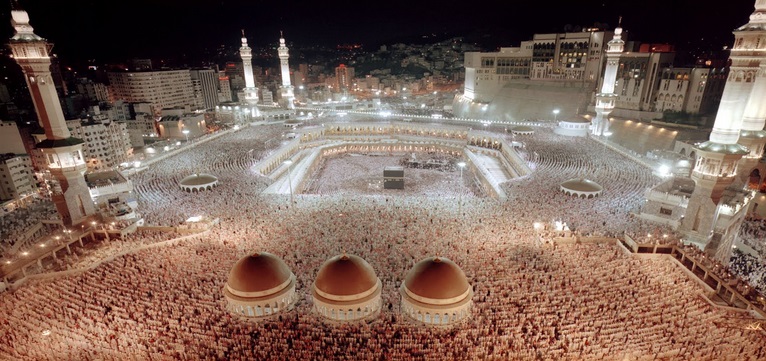
Presented by Zia H Shah MD
Introduction
The global Muslim Ummah (community) today faces both unprecedented opportunities and challenges. With nearly two billion adherents spread across diverse cultures and sects, Muslims share a rich spiritual heritage yet often find themselves divided by sectarian, ethnic, and political differences. The Qur’an and Sunnah emphasize that believers are meant to be one brotherhood, holding fast together and not falling into discord corpus.quran.com. Indeed, the Prophet Muhammad ﷺ likened the believers to a single body – if one part is hurt, the whole body aches whyislam.org. Unity is not a mere idealistic slogan; it is a theological mandate and a pragmatic necessity for the Ummah’s strength and revival. This paper outlines a foundational solution for Muslims to come together as one Ummah, grounded in the Qur’an, Hadith, philosophy, and sociology, while drawing lessons from other faith traditions. It begins by establishing the religious and intellectual basis for unity, then focuses on healing the Sunni–Shia schism as a stepping stone toward broader pan-Islamic solidarity. Finally, it considers pragmatic steps forward – informed by successful examples of unity from Jewish and Christian experiences – to foster a global Muslim brotherhood that includes all who do not willfully exclude themselves.
Quranic and Prophetic Foundations of Unity
Islam’s primary sources provide a clear theological imperative for unity. The Qur’an commands Muslims: “And hold firmly to the rope of Allah all together and do not become divided” corpus.quran.com. This verse (Qur’an 3:103) reminds believers of how God reconciled their hearts when they were enemies, transforming them into brothers by His grace corpus.quran.com. Other verses reinforce that the faithful constitute a single community (ummah wāḥidah) worshipping the One Lord (see Qur’an 21:92, 23:52). The Qur’an also condemns sectarianism, instructing Muslims “not to be divided into sects” (Qur’an 6:159) and to make peace between brethren whenever conflict arises (Qur’an 49:10). This scriptural vision is further illuminated by the Prophet’s sayings. In a famous hadith, the Prophet ﷺ declared: “The parable of the believers in their affection, mercy, and compassion for each other is that of a body. When any limb aches, the whole body reacts with sleeplessness and fever.” abuaminaelias.com By comparing the Ummah to one body, the Prophet taught that Muslims must feel each other’s pain and respond collectively to any part of the community in distress. In another narration, he described the believers as a building with each part reinforcing the others – a vivid image of interdependence and structural unity (reported in Bukhari and Muslim). Furthermore, the Prophet’s Last Sermon stressed the equality and brotherhood of all Muslims (regardless of race or lineage), and warned, “Do not turn back after me as disbelievers, striking the necks of one another.” This prohibition of intra-Muslim violence underscores that divisions and bloodshed among believers contradict the very essence of the faith.
Islamic teachings thus establish unity and brotherhood as sacred obligations. Differences in language, ethnicity, or jurisprudence are meant to enrich the Ummah, not break it apart. Classical scholars often noted that ikhtilāf (juridical disagreement) is a natural phenomenon and, if managed with respect, a source of mercy – provided it does not descend into fitna (strife). The early Muslim community set powerful examples of unity: the Prophet ﷺ forged brotherhood (mu’ākhāh) between the emigrants (Muhājirīn) of Mecca and the helpers (Anṣār) of Medina, creating social solidarity across tribal lines. The Constitution of Medina recognized Muslims (and even allied non-Muslims) as one community with mutual obligations. Such models illustrate that an inclusive Ummah, which transcends parochial loyalties, is not only a Qur’anic ideal but was a lived reality in the Prophet’s era. Muslims today can reclaim this spirit of unity by returning to these foundational principles in the Qur’an and Hadith. Our sacred texts strongly indicate that unity (waḥda) is a blessing to preserve, while division (tafrīqa) is a curse to avoid. Any project for Muslim unity, therefore, stands on firm theological ground.
Philosophical and Sociological Imperatives
Beyond scripture, there are compelling philosophical and sociological reasons for Muslim unity. Philosophically, the oneness of God (tawḥīd) should be reflected in the oneness of the community that worships Him. As the poet-philosopher Muhammad Iqbal and others have argued, Islam binds people through faith rather than race or nationality; nationalism and factionalism, if put above religious bond, contradict the universal fraternity that Islam envisions instagram.com renovatio.zaytuna.edu. Unity is thus not only a religious duty but a rational necessity to fulfill Islam’s ethical and civilizational mission. The 14th-century scholar Ibn Khaldūn highlighted the concept of `asabiyyah (social solidarity) as the glue of successful societies. He observed that strong cohesion and group feeling lead to the rise of civilizations, whereas internal discord heralds decline faisal-amjad.medium.com. In the modern context, the Muslim Ummah’s intellectual and political revival is unlikely unless internal schisms are repaired. Contemporary thinkers echo this: for example, the late Syrian scholar Shaykh Ramadan al-Bouti emphasized that any revival of the Ummah requires setting aside ego and minor quarrels in order to “work together [rather] than [fight] the small battles”, noting that vanity and factional pride have undermined collective progress faisal-amjad.medium.com. Similarly, Pakistani scholar Dr. Israr Ahmad persistently urged Muslims to “eradicate the nationalistic divisions, pool our resources and work together for a cause that transcends all of these differences” faisal-amjad.medium.com. These voices of wisdom reinforce that unity is the prerequisite for regaining the Ummah’s strength and influence.
Sociologically, Muslims worldwide share common core practices (like the five pillars), values, and historical memories that already unite them at a basic level. As one commentator noted, “true unity cannot be found in enforcing political uniformity under a utopian empire… It is already present in our collective adherence to Islam’s core principles, which are inherently universal.” aljazeera.com Despite the lack of a single caliphate or political structure since the Ottoman era, the spiritual and cultural unity of Muslims remains a potent reality aljazeera.com. Wherever Muslims live, they face the Kaaba in prayer, fast in Ramadan, and pronounce the same Shahada – symbols of an underlying unity that colonial borders and sectarian labels have not erased aljazeera.com aljazeera.com. Acknowledging this existing bond is important: by “reframing the narrative to highlight resilience” rather than harping on division, Muslims can leverage their vast common ground as a source of strength aljazeera.com aljazeera.com. Indeed, sociologists would argue that identity narratives shape social cohesion; therefore, highlighting the narrative that all Muslims are one people of faith can itself become a self-fulfilling reality, fostering solidarity. Conversely, perpetuating narratives of irreconcilable division can deepen rifts.
There are also pragmatic sociopolitical reasons to unite. A divided Ummah often falls prey to “divide and conquer” tactics by external powers, as seen in parts of the colonized Muslim world aljazeera.com aljazeera.com. Many conflicts termed “sectarian” are fueled by political grievances or manipulation rather than purely theological differences themaydan.com themaydan.com. By uniting, Muslims can better resist injustice, defend their interests, and support each other in crises. Unity yields tangible benefits: economic cooperation between Muslim-majority countries, knowledge exchange, conflict resolution, and a stronger collective voice on the world stage. In essence, the well-known maxim “United we stand, divided we fall” rings especially true for the Muslim world today. As an Al Jazeera op-ed observed, dwelling on a narrative of “Muslim disunity” breeds despair and paralysis, whereas recognizing and “cherishing the unity” we do have is both a theological duty and a “political act of resistance” against those who wish to keep Muslims weak and fragmented aljazeera.com aljazeera.com. Thus, both reason and social science affirm what revelation already taught: unity is a strength (‘izzah) and mercy, while division is a weakness and punishment.
Healing the Sunni–Shia Divide
The most critical intrafaith rift to address is the Sunni–Shia divide, a historical schism that has often been exacerbated by politics and conflict. Any roadmap to a united Ummah must begin with reconciliation and trust-building between Sunni and Shia Muslims, who together constitute the vast majority of Muslims. Importantly, Sunnis and Shias share the same fundamental beliefs in Allah, the Prophethood of Muhammad ﷺ, the Holy Qur’an, and the Five Pillars of Islam. Classical scholars from both sides have generally recognized each other as fellow Muslims despite jurisprudential and theological differences. The Amman Message of 2004 – a significant initiative led by scholars under the patronage of King Abdullah II of Jordan – reaffirmed this by recognizing the validity of all eight traditional schools of Islamic jurisprudence (including Ja‘fari and Zaidi Shia schools alongside the four Sunni schools and others) and forbidding takfīr (excommunication) of Muslims who follow these schoolsammanmessage.comarabnews.com. Likewise, at a groundbreaking 2006 conference in Mecca, leading Sunni and Shia ulama jointly declared that “The differences between the two schools of thought are merely differences of opinion and interpretation and not essential differences of faith.”arabnews.com They emphasized that anyone who professes the Shahada and accepts the pillars of Islam has inviolable blood and property in the sight of Shariaharabnews.com – in other words, sectarian affiliation does not remove one from Islam. This acknowledgment, grounded in a Prophetic hadith (“Whoever says to his brother, ‘O unbeliever,’ then it returns upon one of them”arabnews.com), undercuts the theological basis for Muslims declaring one another apostate. Simply put, Sunni and Shia are both part of the house of Islam. Differences in historical perspective or ritual practice do not negate the shared creed (aqīdah) that defines a Muslim.
Armed with this understanding, practical steps toward Sunni–Shia rapprochement become feasible. A first step is promoting dialogue and knowledge: Each side should learn about the other’s teachings from authentic sources, rather than through demonizing propaganda. Misconceptions are rife on both sides. For instance, many lay Sunnis have little awareness of what Shias actually believe (and vice versa), making them vulnerable to extremist rhetoric. This can be remedied by including basic introductions to Shia Islam in Sunni religious education and likewise introducing Sunni jurisprudence and hadith sciences in Shia seminaries. Notably, some Shia seminaries (hawzas) in Najaf and Qom already teach Sunni hadith collections and fiqh as part of their curriculum, and classical Sunni scholars like Al-Ghazali and Fakhr al-Din al-Razi engaged deeply with Shia thoughtcrescent.icit-digital.orgcrescent.icit-digital.org. Such intellectual openness needs to be reciprocated by major Sunni institutions. When scholars understand each other’s methodologies and heritage, mutual respect grows and polemical distortions can be corrected. Joint scholarly workshops and exchange programs could be established under organizations like the Organisation of Islamic Cooperation (OIC) or independent foundations, bringing together influential clerics and academics from both sects to discuss differences frankly and seek common ground. Indeed, a recommendation from a Muslim unity think-tank was that “a credible Islamic institution must bring together the [Sunni and Shia] leadership of the Ummah… and chart out a practical unity program that emphasizes similarities and accepts differences.”crescent.icit-digital.org Such a body – independent of political regimes and with representation from across the Muslim world – could issue joint statements on contentious issues, mediate disputes, and serve as a symbolic “Shura council” of the Ummah’s scholars, thereby institutionalizing intra-faith cohesion.
Building trust at the grassroots is equally vital. Community leaders can initiate local efforts for Sunnis and Shias to socialize and pray together. In places like Iraq, Pakistan, and Lebanon where sectarian violence has flared, there have been heartening examples of solidarity – e.g. Sunnis forming human chains to protect Shia processions and Shias guarding Sunni mosques during Friday prayers to prevent terror attackssoundvision.comsoundvision.com. These acts send a powerful message that “your community’s safety is my community’s safety.” They should be publicized and emulated elsewhere. Additionally, mosques and community centers can host exchange programs: scholars from a Sunni background giving the khuṭbah (sermon) at a Shia center and vice versa on occasion. As one analyst suggested, “Sunni and Shi‘i ‘ulama must rotate and deliver Friday khutbahs in each other’s congregations,” tactfully addressing sensitive topics in a spirit of knowledge and unitycrescent.icit-digital.org. The simple experience of praying side by side – say, during a joint prayer for unity or for a common cause like relief efforts – can humanize the “other” sect and remind worshippers of their fundamental fraternity under God. In fact, Sunni and Shia rituals are compatible enough that they have prayed together at sites like the Ka‘bah for centuries. Those logistical differences that exist (such as placement of hands in prayer, or use of a turbah by Shias) are minor and can easily be accommodated with empathy and understandingthemaydan.comthemaydan.com.
Media and rhetoric must also be managed. It is imperative to denounce hate speech and inflammatory sectarian rhetoric unequivocally. Religious authorities on all sides should censure any clerics who use the pulpit to curse or belittle the revered figures of the other sect. Both Sunnis and Shias have historical grievances – but constantly invoking them to stoke anger only perpetuates the cycle of resentment. Instead, emphasis should be placed on the many heroes and saints shared in Islamic history, and the Quranic companions and family of the Prophet whom all Muslims love (the Ahl al-Bayt are honored in Sunni tradition, and the righteous Sahaba are respected by mainstream Shia scholarship when understood properly). Common devotional practices – like love for the Prophet’s household, veneration of saints, celebration of ʿĪd and Mawlid – often cut across sectarian lines and can serve as bridges. For example, both Sunni Sufis and Shias commemorate Imam Husayn’s martyrdom in Muharram (albeit in different ways); such occasions could be used for joint remembrance ceremonies highlighting the universal lessons of sacrifice and justice.
Crucially, political conflicts that aggravate Sunni–Shia tensions need diplomatic resolutions. Geopolitical rivalries (e.g. Saudi Arabia vs. Iran) often masquerade as religious feuds and spill over into sectarian propaganda. The Ummah’s unity would be greatly bolstered if major Muslim powers pursued rapprochement – encouragingly, there have been recent diplomatic thaws in the Middle East aiming to de-escalate sectarian proxy wars. An ecumenical spirit from the top can trickle down. Even without waiting for states, however, ordinary Muslims and civil society can push back against sectarian division by affirming a simple principle: We will include everyone who calls themselves Muslim, and exclude no one except those who self-exclude by insisting on hatred and extremism. In other words, only the extremists who excommunicate others and refuse unity would find themselves isolated. The Makkah Pact of 2006 by Iraqi Sunni and Shia scholars embodied this inclusive principle; it not only forbade inter-sectarian killing but enjoined that “unity, cohesion, cooperation and solidarity in piety and righteousness” should never be forfeited, and urged “vigilance against all attempts to sow division” among Muslimsarabnews.com. By reviving and popularizing such covenants of honor, Sunnis and Shias can turn a new page. The vision is that a future generation of Muslims will identify first and foremost as Muslims, with sectarian labels carrying secondary importance or merely denoting jurisprudential nuances rather than hardened identities. In fact, many communities (especially in the West or in Africa/Asia where sectarianism is not entrenched) already function that way – Sunnis and Shias intermarry, attend each other’s mosques, and celebrate festivals together as one people. These living examples prove that reconciliation is not a utopia but an attainable reality.
Building a Pan-Islamic Ummah Beyond Sects
With Sunni–Shia harmony as a foundation, the next focus is pan-Islamic unity in a broader sense: uniting Muslims across all schools of thought, ethnicities, and regions under the banner of a single global Ummah. Pan-Islamic unity does not imply a uniformity that erases diversity. Rather, it means embracing our differences within a shared framework of faith – much like a mosaic, where each piece retains its uniqueness but contributes to a larger picture. The early Muslim community managed to encompass Arabs and non-Arabs, various tribes and cultures, under one Ummah; likewise today, unity must transcend nationalistic and linguistic divides that are often relics of colonial partition. Global unity requires seeing a Malay, a Turk, a Nigerian, and an Arab (whether Sunni, Shia, or other) all as part of one extended family. As the Qur’an says: “Indeed this Ummah of yours is one Ummah, and I am your Lord, so worship Me.”
A practical vehicle for expressing this unity at the international level is cooperative institutions. The Organisation of Islamic Cooperation (OIC), comprising 57 Muslim-majority nations, is one such body aimed at solidarity. However, its effectiveness has been limited by political disunity. To strengthen it, member states could empower the OIC to take more decisive actions on issues like conflict resolution, media representation, and educational exchange. For instance, the OIC could sponsor a “Muslim Peace Corps” where youth from different countries jointly do humanitarian service, or establish an Islamic Common Market to boost trade and development across the Ummah. A revitalized OIC or a new umbrella organization should also formally include representation from various Islamic sects and minorities (Ibadi, Ismaili, Sufi orders, etc.) to ensure inclusivity. The guiding ethic must be “unity in diversity” – as an Islamic scholar on unity noted, “Differences cannot be the defining aspect … but they cannot be ignored either.”crescent.icit-digital.org In practical terms, this means while internal differences (of fiqh or theology) are respected, they should not obstruct Muslims from presenting a unified stance on major issues such as defending the sanctity of Al-Quds (Jerusalem), aiding communities in crisis (like the Rohingya or Uyghurs), or protecting the environment. Indeed, shared challenges often remind Muslims of their oneness. We see how conflicts in Palestine or tragedies like natural disasters spark an outpouring of concern and charity from Muslims worldwide, regardless of sect or nationality – fulfilling the Prophet’s description of the Ummah as one body that “feels the pain” of any part sufferingwhyislam.org. These moments of spontaneous unity need to be built upon into sustained cooperation.
Another key aspect of pan-Islamic unity is fostering a global Muslim identity that complements local identities. This can be achieved through mass communication and travel. Muslim media (TV channels, online platforms) should highlight stories of Muslim unity and the richness of the global Ummah – for example, documentaries on how Ramadan or Hajj is observed by different cultures, or coverage of inter-community assistance. The annual Hajj in Mecca is the prime symbol of Muslim unity, gathering diverse believers in identical ihram clothes performing the same rites. Pilgrims often recount that seeing “the vastness and diversity of the Muslims in our world today” during Hajj is life-changing, dissolving prejudices and making one feel part of a worldwide familywhyislam.orgwhyislam.org. We can extend that Hajj ethos by supporting more people-to-people exchanges: student scholarship programs between Muslim countries, scholar-in-residence programs swapping imams across continents, and twin-city initiatives linking, say, a mosque in Jakarta with one in Cairo or Chicago. When ordinary Muslims interact across cultural lines, they realize that the ties of faith run deeper than any superficial differences.
Critically, unity is not to be conflated with a single political state. History has seen periods of a unified caliphate, but in modern times Muslims live in many nation-states. The goal is not necessarily to abolish all borders, but to soften those borders through cooperation and empathy so that Muslims support each other as one community despite national boundaries. An insightful observation is that after the abolition of the caliphate in 1924, many Muslims lamented the loss of political unity, yet they may have overlooked the unity that persisted in religion and valuesaljazeera.comaljazeera.com. Today, a Turk, an Egyptian, and an American Muslim might belong to different nations, but all still fast the same Ramadan, recite the same Qur’an, and celebrate the same Eid – their hearts beat to the same spiritual rhythm. Recognizing this existing unity in faith is crucial. A hundred fragmented nation-states do not preclude the formation of a transnational Muslim civil society. In fact, global civil society networks (Muslim NGOs, professional associations, youth movements) are already creating cross-border bonds. For example, relief organizations like Islamic Relief or the Red Crescent coordinate aid from Muslims everywhere to Muslims in need anywhere, be it earthquake victims or war refugees – an embodiment of the Prophet’s teaching of mutual care.
Furthermore, unity must also entail internal justice and inclusion. All ethnic groups and schools within Islam should feel they have a stake in the Ummah. This means confronting racism (such as against Black or indigenous Muslims) and marginalization of certain sects. It may be worthwhile for Muslim-majority countries to legally recognize multiple Islamic traditions within their constitutions or law, rather than privileging one sect as “official” and ignoring others. One scholar of political philosophy argues that the lack of formal recognition of intra-Muslim diversity often leads to minority sects feeling like “second-class Muslims,” which breeds resentmentthemaydan.comthemaydan.com. By contrast, acknowledging the pluralism within Islam – for instance, allowing Shia personal law in a Sunni-majority country or vice versa – can turn diversity into a source of strength rather than discord. The Ottoman Empire’s millet system, and contemporary examples like inclusive constitutional language in countries such as Oman (which accommodates both Ibadis and Sunnis) or Iraq’s post-2005 guarantee of Sunni, Shia, and Kurdish rights, offer models for respecting diversity while maintaining unity. At the societal level, promoting the ethic of ukhuwah islāmīyah (Islamic brotherhood) is paramount, so that a Muslim’s primary loyalty is to the Ummah’s welfare, not to sub-group interests when they conflict with the common good.
Lastly, a global communication platform for the Ummah could amplify unity. The idea of a “Pan-Islamic Congress” or a recurring global assembly of Muslim representatives (religious scholars, community leaders, youth, women, professionals) is worth revisiting – akin to a spiritual United Nations of the Muslim world. This could be convened annually in different countries, fostering dialogue on collective challenges and issuing recommendations. It would symbolize the unity and also hash out differences through face-to-face consultation, reducing misunderstandings. In an age of division, the mere sight of Muslims of all colors, ages, and sects sitting together for shura (consultation) would itself inspire hope.
Lessons from Jewish and Christian Unity Efforts
Muslims can draw valuable inspiration from how other religious communities have maintained or restored unity. The Jewish people offer a poignant example of global cohesion. Despite being dispersed in a far-flung diaspora for millennia, Jews preserved a strong sense of peoplehood and mutual responsibility. A principle from the Talmud, “Kol Yisrael arevim zeh bazeh” – “All of Israel are responsible for one another” – became a bedrock of Jewish communal lifemyjewishlearning.com. It obligates every Jew to care for the welfare of fellow Jews, ensuring that no one’s basic needs go unmet simply because they live in a different landmyjewishlearning.com. This ethos has translated into robust international solidarity. For instance, Jewish communities worldwide routinely mobilize to support each other in times of crisis. Recent events demonstrate this vividly: when conflict erupted in the Middle East, “a resounding wave of solidarity emanated from Jewish populations worldwide, standing firmly united with Israel during its time of adversity.”worldjewishcongress.org From organizing prayers for peace to running hostage awareness campaigns and humanitarian fundraisers, Jews in different countries acted in unison as one peopleworldjewishcongress.org. This cohesive response is born from centuries of nurturing common identity through religious tradition (such as observing the same holidays like Passover and Yom Kippur across the globe) and communal organizations (like the World Jewish Congress, which coordinates diaspora efforts).
For Muslims, the Jewish experience underscores the importance of education and institutions in fostering unity. Jewish religious education consistently emphasizes the shared history (from the Exodus to the Holocaust to the founding of Israel) and common destiny of the Jewish people. In parallel, Muslim curricula could place more emphasis on the concept of the Ummah – teaching children the achievements of a united Muslim civilization and the Quranic stories of unity (e.g. how Ansar and Muhajirun bonded in Medina). Additionally, global Muslim institutions analogous to those in the Jewish world (for example, a World Muslim Congress or better coordination between diasporic Muslim organizations) could strengthen ties between Muslim minorities and majority populations. The Jewish notion of communal responsibility also resonates with the Islamic idea that the Ummah is like one body; Muslims can reinvigorate their own tradition’s call that the “believers are friends and protectors of one another” (Qur’an 9:71) and make it a lived reality through zakat, charitable endowments, and advocacy that target the Ummah’s needs broadly. Notably, the Jewish community’s unity did not mean absence of all internal debate (there are multiple denominations in Judaism), but they managed to maintain overarching solidarity. Likewise, Muslims do not need unanimity on every interpretive detail to stand together – we can agree to disagree on some matters while uniting for our collective wellbeing.
From Christianity, we learn lessons in bridging historic schisms. Christianity split into Catholic, Orthodox, and Protestant branches that often viewed each other with hostility for centuries. Yet, in the past century, there has been a remarkable movement of ecumenism – an effort to reconcile and cooperate across denominations. The Second Vatican Council (1962–65) notably opened the Catholic Church to dialogue with other Christians, acknowledging shared faith in Christ and seeking forgiveness for mutual harms. Dialogues between the Catholic Church and the Eastern Orthodox Church have lifted centuries-old anathemas. Perhaps most striking for Muslims is the recent example of Anglican–Catholic rapprochement. In October 2025, history was made when Britain’s King Charles III (as Supreme Governor of the Church of England) prayed together with Pope Leo XIV in the Vatican’s Sistine Chapel – the first joint prayer between an English monarch and a Pope in nearly 500 years, since the Reformationreuters.com. This act was rich in symbolism: Latin and English prayers echoed under Michelangelo’s frescoes as the King and Pope knelt side by side, healing a rift that began when King Henry VIII broke from Rome in 1534reuters.com. Observers described it as “a kind of healing of history”, noting that such a gesture “would have been impossible just a generation ago” but was made possible by over 60 years of dialogue and improved relationsreuters.com. The “age of mutual suspicion” between Catholics and Anglicans, it was said, “really is now over.”theguardian.com This inspiring development shows that with patience, dialogue, and statesmanship, even the deepest historical wounds can be bound up.
Muslims can take heart from Christian ecumenism in a few ways. First, it underscores the power of high-level dialogue and symbolic acts. When top religious leaders meet amicably or pray together, it sends a powerful message to their followers that reconciliation is both holy and desirable. In the Muslim context, one could envision, for example, the Grand Imam of Al-Azhar and the leading Ayatollahs of the Shia world holding joint prayer or issuing a joint declaration of unity. Such an event would be momentous in reducing distrust. (Encouragingly, there have been precedents – like Sunni and Shia scholars praying side by side at conferences in Amman and Mecca, though these received less media fanfare than they deserved.) Second, Christian unity efforts involved addressing theological disputes through committees and scholarly work. Similarly, Sunni and Shia theologians might form working groups to clarify misconceptions (such as the Shia view on the Sahaba or the Sunni view on the Imamate) and publish findings that highlight compatibility or respectful disagreement. Third, the Christian experience shows the importance of focusing on common ground. Anglicans and Catholics, for instance, found unity in shared concerns like protecting the environment and promoting peaceabc.net.au. Muslims too have enormous common ground – belief in one God and His Messenger, reverence for the Qur’an, and concern for justice and morality. By emphasizing these and jointly working on humanitarian and moral projects, unity grows organically. Finally, Christian ecumenism has been bolstered by praying together – something Muslims should not shy away from. Sunnis and Shias praying in each other’s mosques or attending each other’s Eid and Milaad gatherings can break down psychological barriers, much as a Methodist joining a Catholic in prayer did in Christianity. The sight of King Charles and Pope Leo praying together moved many Christians to tears, as it symbolized centuries of enmity giving way to fellowshiptheguardian.com. One can imagine the similar joy if, say, on a future Ashura or Mawlid, prominent Sunni and Shia leaders could stand together in prayer for the unity of the Ummah. Such images could become defining moments of healing.
In addition, one cannot ignore how the Catholic Church itself maintains unity among diverse cultures. With over a billion adherents worldwide, Catholicism has achieved a balance of central authority and local diversity. The Pope (as a unifying figure) and ecumenical councils help keep doctrine aligned, but local churches worship in their own languages and have patron saints of various ethnicities. The Muslim Ummah has no single “Pope”, but institutions like the proposed Ulama council or even the symbolic role of the Custodian of the Two Holy Mosques can serve to provide focal points of unity. The key is that diversity of jurisprudence or local custom is accommodated within a unified creed – something Islam is inherently equipped to handle, given our concept of ijma‘ (consensus on fundamentals) and ikhtilaf (differences in non-essentials). If Christians can overcome literal wars of religion (e.g. Catholics vs. Protestants) to pray together, Muslims – whose intra-faith differences are arguably smaller in doctrinal terms – certainly can do the same.
Practical Steps and Way Forward
Having laid out the foundations and inspirations, it is essential to chart pragmatic steps to realize Muslim unity. The following are concrete measures that emerge from the above discussion, framed in theological, philosophical, and sociological insight:
- 1. Affirm a Common Creed: The Ummah needs a broadly endorsed declaration that enumerates the core beliefs that unite all Muslims. For example, a document stating that anyone who professes lā ilāha illa Allāh, Muhammad rasūl Allāh (with its implications) is a Muslim, and that the various schools of jurisprudence and theology are valid paths within Islam. The Amman Message and the Mecca Declaration (2006) already serve as templatesarabnews.comarabnews.com. These should be popularized at every level – taught in schools, mentioned in sermons – so that takfīr rhetoric loses all legitimacy. An “Ummah Charter” could be drafted by leading scholars (Sunni, Shia, Ibadi, etc.) updating these points for today’s context and explicitly condemning sectarian hate. This provides a theological baseline for unity.
- 2. Establish an Ummah Council: As recommended by unity advocates, a credible international council of Islamic scholars and thinkers should be formedcrescent.icit-digital.org. Unlike the OIC (which is state-led), this council would be a civil society initiative, perhaps facilitated by institutions like the OIC or Muslim World League but composed of respected independent figures from across the spectrum – grand muftis, senior Ayatollahs, Sufi shaykhs, academics, and community leaders (including women and youth voices). Its mandate: to periodically meet and discuss the state of the Ummah’s unity, issue guidance, and mediate disputes. It could create sub-committees on education, conflict resolution, media, etc., all aimed at strengthening Muslim solidarity. Crucially, it should not be dominated by any one sect or nationality – diversity of membership will ensure all feel represented. Over time, this council could become a sort of moral authority that the average Muslim trusts more than divisive local preachers. Even if it starts as an informal “forum”, it can gain influence by the weight of its wisdom and inclusivity.
- 3. Reform Educational Curricula: Ministries of education and Islamic seminaries should revise curricula to remove derogatory or biased depictions of any Muslim group. History textbooks, for instance, should give a balanced account of early Islamic history, acknowledging both Sunni and Shia perspectives on events like the caliphate, to foster understanding rather than alienation. Theology courses can emphasize `ādāb al-ikhtilāf (the ethics of disagreement) – teaching students how scholars in the past disagreed without hostility. Positive examples of unity (Saladin including both Sunnis and Shias in his administration, or Ottoman-Iran diplomatic exchanges, etc.) should be highlighted. In madrasas, exposure to other madhāhib’s jurisprudence should be encouraged to reduce a fanatical “my way or the highway” attitude. Exchange programs between Sunni and Shia seminaries (even short-term) could be game-changers in shaping future imams who are open-minded and sympathetic to intra-Muslim diversity.
- 4. Control the Narrative – Responsible Media: In the digital age, divisive propaganda spreads quickly on satellite channels and social media. It’s imperative to support responsible Muslim media that promotes unity. A dedicated “Ummah Unity” satellite channel (and YouTube/new media presence) could broadcast content celebrating Muslim diversity and cooperation. Debates between sects should be turned into dialogs – perhaps a show where an imam of one school visits the community of another and they discuss commonalities. At the same time, community pressure and possibly legal measures should be applied to curtail preachers (on all sides) who spew sectarian hate or slander. Just as many countries have laws against hate speech targeting ethnic or religious groups, hate speech against a Muslim sect should be socially taboo and explicitly forbidden in organizational charters of mosques. The Marrakesh Declaration (2016) on minority rights, which was signed by Muslim scholars worldwide, demonstrated that scholars can agree on protecting other faiths; surely they can agree on protecting each other from verbal takfir and incitement. A monitoring group could identify and call out instances of sectarian incitement online, countering them with factual information and Qur’anic reminders of unity.
- 5. Joint Projects and Service: Nothing bonds people like working together for a noble cause. Muslims can initiate joint social projects that involve members of different sects and ethnic groups collaborating. For instance, intra-faith volunteer teams could cooperate on disaster relief, poverty alleviation, or refugee assistance. A mosque from a predominantly Sunni neighborhood and one from a predominantly Shia area might partner for a charity drive or a neighborhood cleanup. Youth camps or inter-mosque sports tournaments mixing teams from various communities can build camaraderie among the younger generation beyond sectarian or ethnic lines. On a larger scale, organizations like Islamic Relief or Muslim Hands might ensure their staff and volunteers include a cross-section of Muslim diversity, demonstrating unity in action. Pilgrimage events like Hajj and ʿUmrah can also be leveraged – organizers could form mixed-group travel packages where, say, Southeast Asian, Middle Eastern, and African Muslims travel together and learn about each other during the journey. Governments hosting the Hajj might facilitate international mixing in housing to avoid people clustering only with their countrymen. The more Muslims experience working, eating, traveling, and praying together in everyday contexts, the more natural unity will feel.
- 6. Shared Worship and Spiritual Exchange: As highlighted, inviting scholars to give Friday sermons in each other’s mosques is one ideacrescent.icit-digital.org. Beyond that, communities could hold periodic “Unity Prayers” – for example, an annual prayer service where Sunni and Shia imams stand side by side and alternate leading portions of the prayer (this has symbolic challenges but could be designed with sensitivity – e.g. use Qur’anic recitations and duʿā’ that both accept). Even simpler: hold duʿā’ (supplication) gatherings where all Muslims come together to collectively pray for the Ummah’s wellbeing, especially in times of crisis (much like how multi-denominational Christian services occur for national tragedies). These should be publicized to reinforce the message. Sufi dhikr sessions or Mawlid celebrations often attract Muslims of various backgrounds; these inclusive spiritual events can be encouraged as neutral ground where unity is felt spiritually, melting doctrinal tensions in the warmth of devotion to God and His Prophet. Ramadan iftars are another golden opportunity – organizing inter-sect iftar dinners (already common in some places) where communities break fast together and share mosques for Tarawih can break down barriers. There have been instances in Western cities where Sunni and Shia communities intentionally alternated hosting inter-community iftars, leading to improved relationships and even coordination of Eid moon-sighting. These are small but powerful initiatives that chip away at ignorance and build friendship.
- 7. Address Grievances and Pursue Justice: Unity cannot be achieved by papering over genuine grievances. In places where one sect or group has faced discrimination or violence (e.g., Shia minorities in some Sunni-majority countries or vice versa), the path to unity includes restorative justice. Acknowledging past wrongs, compensating victims, and assuring non-repetition helps heal wounds. For example, after decades of marginalization of Shia in certain Gulf countries, granting them equal citizenship rights and representation would validate unity in practice. The same goes for ethnic divisions: acknowledging the contributions of, say, Black African Muslims or Berbers or South Asian Muslims in the global story and ensuring they have voice in leadership counters any racial hierarchies impeding unity. Moreover, the Palestinian cause and other issues of justice provide a rallying point that can unify Muslims across sect and race – working jointly on these not only serves justice but unites the servers. When Shias support a cause seen as “Sunni” (like the Rohingya) or Sunnis support a cause seen as “Shia” (like the plight of Shias in a certain area), it builds trust. Therefore, unity work should integrate with human rights and conflict resolution efforts. If a conflict has a sectarian dimension (e.g. Syria, Yemen), peace negotiators should include respected neutral Muslim figures who appeal to the common faith of the parties to cease fratricide. In the long run, preventing political exploitation of sectarian identity (by promoting inclusive governance and denouncing extremists) will remove a major driver of discord.
- 8. Learn and Adapt from Others: As discussed, Muslims can replicate effective strategies from Jewish and Christian unity efforts. The Jewish principle of mutual responsibility can be institutionalized via something like an “Ummah Relief Fund” to which all Muslims (Sunni, Shia, etc.) contribute and which is used to aid any Muslim community in distress, regardless of sect or ethnicity. This would operationalize the one-body ethos in a formal way – much like how Jewish federations pool resources for global Jewish needsworldjewishcongress.org. From Christians, we saw the importance of symbolic reconciliation events – Muslims might hold an annual “Ummah Unity Day” around the Hijri New Year or Prophet’s birthday where leaders exchange well-wishes and perhaps issue a joint khutbah text to be read at mosques worldwide emphasizing brotherhood. Also, creating forums for dialogue similar to the World Council of Churches could be beneficial. In fact, some initiatives exist (like the Doha inter-Islamic dialogue or Tehran’s annual International Islamic Unity Conference), but these should be broadened and made more inclusive. If necessary, neutral countries or institutions (for example, a university like Al-Azhar or the IIIT) could host rotating dialogues focusing on clearing specific misunderstandings each year.
Finally, it must be stressed that unity is a process, not an overnight event. It will require patience, continuous effort, and God’s grace. There may be setbacks – extremists will attempt to sabotage reconciliation, vested interests might resist losing sectarian followings. But with perseverance, the trajectory can be towards greater cohesion. The Islamic concept of barakah (blessing) suggests that Allah’s help comes when we undertake righteous endeavors sincerely. Striving for unity is indeed enjoining good and forbidding evil on a grand scale – the good being brotherhood, the evil being division. If the intention is pure and the approach wise, Allah willing, the hearts of the believers will incline towards each other as He promised in the Qur’an (8:63).
Conclusion
In conclusion, the quest for Muslim unity is both an ethical obligation and a practical imperative. The Qur’an and Hadith provide the vision of an Ummah that is “like one single body”, compassionate and unifiedwhyislam.org. Philosophy and history teach us that unity brings strength and civilizational vitality, whereas fragmentation leaves us vulnerablefaisal-amjad.medium.comaljazeera.com. By healing internal rifts – starting with the Sunni–Shia divide – and embracing an inclusive pan-Islamic identity, Muslims can unlock tremendous potential for peace, knowledge, and development within their societies. Importantly, unity does not mean uniformity: we can celebrate our rich diversity in cultures and schools of thought, just as a garden boasts many flowers but all thrive under the same sun. The experiences of the Jewish diaspora and the reconciliation among Christian denominations show that long-held divisions can be overcome with dialogue, empathy, and a focus on shared valuesmyjewishlearning.comreuters.com. Inspired by these, the Muslim Ummah can renew itself – learning to see fellow Muslims first as brothers and sisters in faith rather than as “others” defined by sect or ethnicity.
The roadmap outlined – from theological reaffirmation and education reform to joint initiatives and representative institutions – is ambitious but achievable. It calls for leaders with vision, communities with openness, and individuals with hearts committed to the Prophetic ideal of brotherhood. In the end, unity is as much a spiritual state as it is a social one; it begins with sincere intentions and prayers for each other. As Muslims stand shoulder to shoulder in prayer, let that physical alignment reflect a deeper alignment of hearts. In a world rife with polarization, a united Ummah would not only uplift Muslims but could also act as a beacon of hope and justice for humanity, exemplifying how faith can bind people together rather than divide them. This is the Qur’anic promise: “And He brought your hearts together, so that by His favor you became brothers”corpus.quran.com. It is a promise we can realize if we hold firmly to the Rope of Allah together and let no wedge of hate sever us. The time for lamenting division has passed; now is the time for actively weaving the bonds of unity – in our mosques, in our schools, in our homes, and across the globe – so that the worldwide Muslim community truly becomes one Ummah, strong, compassionate, and indivisible by the grace of Allah.
Sources:
- Qur’an 3:103 – imperative to remain unitedcorpus.quran.com
- Sahih Muslim Hadith – believers likened to one bodywhyislam.org
- Makkah Declaration (2006) – Sunni & Shia scholars on mutual recognitionarabnews.comarabnews.com
- Al Jazeera Op-Ed on Muslim unity beyond political structurealjazeera.comaljazeera.com
- Crescent International analysis – need for institutionally recognizing differences and emphasizing similaritiescrescent.icit-digital.orgcrescent.icit-digital.org
- Faisal Amjad quoting Al-Bouti & Israr Ahmad on unity vs. ego and nationalismfaisal-amjad.medium.comfaisal-amjad.medium.com
- The Guardian – King Charles III and Pope Leo XIV joint prayer, ending 500-year divisiontheguardian.comtheguardian.com
- Reuters – “healing of history” through Anglican-Catholic rapprochementreuters.com
- World Jewish Congress – global Jewish solidarity in crisis (2023)worldjewishcongress.org
- Talmudic principle of Jewish communal responsibilitymyjewishlearning.com
corpus.quran.com “And hold firmly to the rope of Allah all together and do not become divided…” (Qur’an 3:103)corpus.quran.com
whyislam.org “The Prophet… said, ‘Muslims are like one body… if the eye is sore, the whole body aches, and if the head aches, the whole body aches’ (Sahih Muslim)”whyislam.org
arabnews.com “The differences between the two schools of thought are merely differences of opinion and interpretation and not essential differences of faith.” (Sunni–Shia joint declaration, Mecca 2006)arabnews.com
arabnews.com “Unity, cohesion, cooperation and solidarity in piety and righteousness… should never be forfeited… [Muslims must] adopt caution and vigilance against all attempts to sow division among them, break their ranks, or incite strife and hatred.”arabnews.com
aljazeera.com “True unity cannot be found in the enforcement of political or cultural uniformity under a Utopian empire… It is already present in our collective adherence to Islam’s core principles, which are inherently universal.”aljazeera.com
crescent.icit-digital.org “To achieve unity, a credible Islamic institution must bring together the Islamic leadership of the Ummah… and chart out a practical and specific unity program that… emphasizes similarities and accepts differences.”crescent.icit-digital.org
crescent.icit-digital.org “Another underestimated platform of unity is the Jumu‘ah Salah. Sunni and Shi‘i ulama must rotate and deliver Friday khutbahs in each other’s congregations… There are hundreds of other practical things both sides can do to eliminate sectarianism, but without an institutionalized framework… these endeavors… will have limited impact.”crescent.icit-digital.org
theguardian.com “Almost 500 years after Henry’s breakaway, his successor, King Charles III, has prayed with Pope Leo XIV beneath the sublime frescoes of the Sistine Chapel in an act of rapprochement between the Roman Catholic church and the Church of England.”theguardian.com
reuters.com “There is a strong sense that this moment… offers a kind of healing of history,” said an Anglican theologian. “This would have been impossible just a generation ago… It represents how far our churches have come over the last 60 years of dialogue.”reuters.com
worldjewishcongress.org “In a testament to the global interconnectedness of Jewish communities, a resounding wave of solidarity emanated from Jewish populations worldwide, standing firmly united with Israel during its time of adversity.”worldjewishcongress.org
myjewishlearning.com “The Talmud (Shevuot 39a)… concludes with the phrase Kol yisrael arevim zeh bazeh, meaning all of Israel are responsible for each other. This phrase is the basis of the notion of communal responsibility in Jewish law… simply by virtue of being a Jew one is responsible for the well-being of other Jews, and vice versa.”myjewishlearning.com


 The Glorious Quran and Science
Leave a comment