
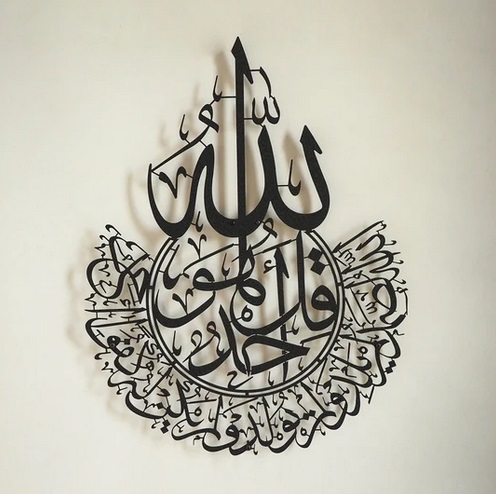
Presented by Zia H Shah MD
Introduction
In the Quran, over 300 verses open with the divine command قُلْ (qul – “say”)psipp.itb-ad.ac.id. This imperative is addressed to Prophet Muhammad ﷺ, instructing him to proclaim God’s message verbatim. Far from being an extraneous word, “Say” serves profound rhetorical and theological functions. It instantly signals that what follows is revelation from Allah, not the Prophet’s own speechquestionsonislam.com. In classical Islamic thought, this device emphasizes the Prophet’s role as a messenger: “The word ‘say’ expresses that the words of the Quran are a revelation coming from Allah… the messenger has no intervention but conveying His words.”questionsonislam.com. Thus each “Say” transforms the verse into a divine declaration framed as direct speech from the Prophet’s mouthquran.com, underscoring the Quran’s oral, proclamatory nature. As modern scholar Michael Sells observes, the imperative “qul” is “a striking reminder that these texts are intended to be recited aloud”psipp.itb-ad.ac.id – drawing listener and reader into a living dialogue with the Divine.
Beyond stylistics, the frequent shifts in voice created by “Say” enrich the Quran’s persuasive impact. While critics once saw these shifts as discontinuities, contemporary experts like M.A.S. Abdel Haleem explain that such transitions are an established feature of Arabic eloquence (known as iltifāt), used to grab attention and drive points homeen.wikipedia.org. The command “Say” often comes in response to challenges or questions, making the Quran feel interactive: unbelievers raise doubts or demands, and God prompts the Prophet with the exact words to respond. This device authenticates the Prophet’s answers as divinely guided, while also inviting the audience to reflect – it is as if God says, “Ask them this…,” turning the discourse into a direct conversation with all who hear the verse. As we will see, classical Sunni, Shia, and Sufi commentators alike highlight the imperative’s role in affirming tawḥīd (Divine Unity), prophecy, and other core doctrines, and in framing a dynamic divine-human communication.
In what follows, we present an in-depth verse-by-verse commentary on every Quranic verse that begins with قُلْ (Qul). The verses are examined in order of their revelation in the Quran’s text (by surah and verse), with attention to context, classical exegesis, modern interpretation, and linguistic nuance. We draw on a wide spectrum of Islamic scholarship – from early Sunni authorities like Ibn Jarir al-Ṭabari, al-Qurṭubi, Ibn Kathīr and others; to Shia exegesis such as al-Ṭabarsī’s Majmaʿ al-Bayān; to mystically inclined insights from Rumi and al-Ghazāli; and to contemporary scholars including Sayyid Quṭb and M.A.S. Abdel Haleem. Through these diverse voices, we will see how the imperative “Say” functions as a golden thread, weaving major spiritual, doctrinal, and ethical themes throughout the Quran. Each occurrence will be considered in its setting – why is the Prophet told to “say” this particular phrase, and what does it convey to its original audience and to us? The commentary is structured with clear headings and subheadings for ease of navigation, and key points are summarized in bullet lists under each section for clarity. Finally, a thematic epilogue will synthesize the lessons and insights that emerge from all the “Say” verses collectively, reflecting on the spiritual and ethical ethos they impart.
Let us begin with the first instances of “Qul” in the Quran, which appear in Sūrat al-Baqarah (Chapter 2).
Surah Al-Baqarah (2) – “Say” to the People of the Book and Idolaters
Surah al-Baqarah contains several early “Say” verses, mostly addressing claims of the Children of Israel in Medina or challenging the beliefs of other communities. These verses establish the Prophet’s authority to speak for God on contentious issues:
- 2:94 – “Say, [O Muhammad], ‘If the home of the Hereafter with Allah is for you alone, to the exclusion of all others, then wish for death, if you are truthful.’” This verse challenges the Jewish claim that Paradise was reserved solely for them. Classical exegete Ibn Kathīr reports that the Prophet ﷺ actually confronted the Jewish rabbis with this test: if they truly believed they are God’s only beloved, they should willingly pray for death so as to meet Himmyislam.orgmyislam.org. Al-Qurṭubī and al-Ṭabarī record that the rabbis declined this mubahala (mutual prayer for God’s judgment), exposing their insincerity – as they subconsciously knew their failingsmyislam.org. The imperative “Say” in 2:94 makes it clear that this daring challenge is from God Himself, spoken through Muhammadquran.com. It also carries a subtle satire: as Abul A‘lā Maudūdī notes, those who truly yearn for the Hereafter do not cling to life so tightly, whereas these claimants were “the greediest of mankind for life” (cf. verse 96)myislam.org. Thus, “Say” frames an argument that tests the sincerity of one’s faith – a recurring theme in many “Qul” verses. Theologically, it reinforces that entry to Paradise is earned by true belief and righteousness, not tribal exclusivism, a point driven home by placing God’s challenge on the Prophet’s tongue. Sunni and Shia commentators alike agree on this lesson. Shia mufassir al-Ṭabarsī adds that this verse unveiled the hypocrisy of those who boasted of divine favor yet feared meeting God, and thus it affirmed the Quran’s divine origin by foretelling, “They will never wish for it…” (2:95)myislam.org.
- 2:97 – “Say, ‘Whoever is an enemy to Gabriel – it is he who brought the Qur’an down upon your heart by permission of Allah…’” Here the Prophet is instructed to respond to a faction of Jews who maligned the Angel Jibrīl (Gabriel). According to Ibn Kathīr, some Jews in Medina claimed Gabriel was their enemy (alleging he brought punishment), whereas Michael was their friendquran.com. The verse commands Muhammad ﷺ to declare Gabriel’s true status as the trusted messenger of God’s revelationsquran.com. Al-Rāzī observes the eloquence of beginning with “Say”: it emphasizes that the defense of Gabriel comes straight from Allah – effectively, “How can you be enemies to Gabriel, when God Himself sent him with this Qur’an?”. The verse continues (not quoted in full here) to list Gabriel’s role and the guidance and glad tidings the Quran contains. Shia exegesis (e.g., al-Ṭabarī’s Shia contemporary, al-Ṭūsī) concurs that this verse reaffirms the heavenly source of the Quran and rebukes sectarian hostility to any angel or prophet. By saying “Qul”, the Quran makes the Prophet voice Allah’s verdict on bigotry – teaching that animosity toward God’s angels is tantamount to animosity toward God quran.com.
- 2:139 – “Say, ‘Do you argue with us about Allah while He is our Lord and your Lord? We have our deeds and you have your deeds, and to Him alone we are faithful.’” This verse occurs in a dialogue with the People of the Book about Abraham and religious identity. The Prophet is told to end fruitless religious disputation with a clear statement of common ground and differencequran.com. Classical commentators explain that this was revealed when Jewish and Christian groups argued with the Muslims about who was on the true pathquran.com. Al-Qurṭubī writes that “Say” here instructs the Prophet to deliver a decisive rejoinder: God is the Lord of all, and each community is responsible for its own actions. The phrase “We have our deeds and you have your deeds” is not a statement of relativism, but a dismissal of argumentative comparison – similar to the stance later taken in Surah 109 (Al-Kāfirūn)qurangallery.app. Sayyid Quṭb, the 20th-century exegete, notes that verses like 2:139 teach Muslims a dignified confidence: instead of endless debate, simply affirm your faith and righteousness and leave the rest to Allah. By using “Qul”, the Quran has the Prophet convey this principle of respectful disengagement in the face of intransigent argumenten.wikipedia.org. Sufi scholars further see in this verse a call to ikhlāṣ (sincerity): to God “we are faithful” (mukhliṣūn) – the command “Say” invites the believer to affirm, with the Prophet, an inner commitment to worship Allah alone and not be perturbed by others’ doubts.
Together, these Baqarah verses illustrate the range of “Qul” functions: refuting false claims (2:94, 2:97) and guiding how to interact with opponents (2:139). In each case, the Prophet’s voice becomes an instrument of divine teaching, whether it be theological clarification or ethical stance. The imperative “Say” thus helps establish Islam’s early identity in Medina – Allah directs Muhammad how to respond to challenges, be they doctrinal (angelology, prophecy) or social (religious disputes). The divine origin of Muhammad’s answers is reinforced every time “Qul” precedes his words. As the exegete al-Māwardī observed, each “Say” is a reminder that “the tongue of the Messenger speaks only what is revealed”, embodying the Quranic dictum “he does not speak from his own desire” (53:3).
Surah Āl ‘Imrān (3) – Proclaiming Core Truths to Christians and Jews
In Sūrah Āl ‘Imrān, the address shifts to dialogue with Christians and further guidance to the nascent Muslim community. Multiple verses open with “Qul”, underscoring major theological principles and calls to obedience:
- 3:12 – “Say to those who disbelieve, ‘You will be overcome and gathered to Hell – what a terrible resting place!’” Revealed after the Battle of Badr, this verse is a stern warning to unbelievers, particularly those in Medina who doubted the Muslims’ strengthquran.com. By commanding the Prophet to “say” these words, Allah gives his messenger the voice of prophecy foretelling the fate of enemies of faith. Ibn Kathīr relates that this was addressed to the Jewish tribes who, after Badr, were told that Quraysh’s defeat was a sign that anyone opposing the Prophet would likewise be vanquishedquran.com. The imperative “Say” here heightens the impact – the prediction of doom comes with divine authority, not as the Prophet’s personal threat. Al-Rāzī comments that such verses exemplify the Quran’s assertive tone after Islam’s first victory, with “Qul” bolstering the morale of believers and putting foes on notice through God’s own words.
- 3:15 – “Say, ‘Shall I inform you of something better than that? For those who fear Allah will be gardens…’” The preceding verses describe worldly delights that people covet; here the Prophet is told to offer a comparison. “Say” introduces a rhetorical question from God’s perspective, urging listeners to lift their gaze to the superior rewards of Paradise prepared for the God-fearingquran.com. Al-Ṭabarī and al-Qurṭubī note that the Prophet is cast as a mentor guiding his community’s values: after listing wealth and desires, he must ask them – in God’s words – “Should I tell you what is better?” The answer given (eternal gardens, spouses pure, and divine pleasure) shifts the focus to ākhirah (hereafter). The use of “Qul” ensures that this moral lesson – preferring piety over dunya – is delivered with divine emphasis. Sufi commentators like Sahl al-Tustarī read an inner meaning: God is inviting the believers, via the Prophet’s voice, to taste the sweetness of divine love which far surpasses worldly temptations. Thus, “Say” functions almost as gentle persuasion here, in contrast to the threat in 3:12 – yet in both, the authority is Allah’s.
- 3:26–27 – “Say, ‘O Allah! Owner of Sovereignty, You give sovereignty to whom You will and take sovereignty from whom You will…’” These verses form a celebrated prayer taught to the Prophet. He is instructed to “Say” a supplication acknowledging Allah’s ultimate authority over worldly power, honor, and provisionqurantalkblog.com. According to hadith, the Prophet ﷺ would recite these verses in night prayers. Classical exegesis (e.g., Ibn Kathīr) states that 3:26 was revealed after the Muslims witnessed the vicissitudes of fortune – the rise and fall of leaders – to remind them that all dominion is God’s. The imperative “Qul” in this context shows Allah Himself teaching the Prophet how to pray and what theology to affirm in prayer: that all might and sustenance are in God’s hand. Al-Ṭabarsī in Majmaʿ al-Bayān emphasizes that this duʿā by command indicates the Prophet’s utter servitude (ʿubūdiyyah) in addressing God – even the words of glorification are given to him by the One he glorifies. Linguistically, “Say” here is addressed to the Prophet but the content is a prayer to Allah in the second person – an interesting shift that some scholars use to highlight the Quran’s dialogical style. Modern translator M.A.S. Abdel Haleem remarks that these verses showcase a seamless transition from narrative to direct prayer, typical of Quranic stylealmuslih.org. The believer reading or hearing it effectively joins the Prophet in this invocation, repeating after him the words that Allah instructed him to say.
- 3:31 – “Say, ‘If you do love Allah, then follow me, and Allah will love you and forgive your sins.’” This pivotal verse, addressed to those who claimed love of God, establishes following the Prophet (ittibāʿ al-rasūl) as the litmus test of sincere faith. In context, exegetes relate that some people professed great devotion to God; Allah answered by commanding Muhammad: “Say (to them), if you truly love God, follow me – then God will love you”qurantalkblog.com. Ibn Kathīr calls this “the Verse of the Test”, explaining that love of God is proven by adherence to the Prophet’s example, which in turn earns God’s love and mercyqurantalkblog.com. The imperative “Qul” is crucial – it has the Prophet put forth a divine criterion rather than his own: it’s not “if you love God, obey me” from his ego, but rather “follow me” as a channel to God’s lovequrantalkblog.com. This subtlety addresses any who might question why loving God entails following a human prophet; by prefacing with “Say”, the command is clearly from God. Al-Qurṭubī notes that the verse was a direct rebuttal to certain Christians of Najrān who claimed to love God; they were challenged to accept Muhammad if their love was genuine. From a Shia perspective, scholars like Allāmah Ṭabataba’ī see in “follow me” a continuing principle that includes following the Prophet’s Ahl al-Bayt (his family/imams) as inheritors of his guidance – a view drawn from hadiths, though all agree the primary meaning is obeying the Prophet’s sunnah. Sufi luminary Rumi often cited this verse to illustrate that true love (maḥabba) is not sentiment alone but obedient action that aligns one’s will with the beloved’s – in this case, aligning with the Prophet as the beloved of Allah. Thus 3:31 encapsulates the integration of doctrine and devotion: “Say” ensures the Prophet unabashedly makes himself the model of piety by Allah’s command, bridging human love and divine love. It frames the Prophet’s role as an indispensable guide to approach God, a theme echoed throughout Islamic thought.
- 3:32 – “Say, ‘Obey Allah and the Messenger.’ But if they turn away – then indeed, Allah does not love the disbelievers.” Immediately following the previous verse, this reinforces the duty of obedience. Here “Qul” is followed by a terse command to obey both God and His Messenger, showing that these obediences are inseparable. Classical commentators stress that after declaring the principle of following Muhammad as proof of loving God (3:31), Allah makes the requirement explicit: belief entails obeying God’s law and the Prophet’s instructions. Al-Bayḍāwī points out the pairing of Allah and the Messenger in one imperative indicates that obeying the Messenger is obeying Allah (cf. 4:80). “Say” makes it an official proclamation. The verse then warns that refusal to obey is kufr (ingratitude/disbelief) that alienates one from divine love. Sayyid Quṭb commented on these verses (3:31–32) that Islam is not just abstract love of the Divine, but concrete implementation of the Prophet’s teachings – and that the Quran unabashedly sets the Prophet’s authority as the touchstone of faithen.wikipedia.org. The use of “Qul” removes any hesitancy: the Prophet is made to declare his authority by Allah’s leave, so that even his humility does not prevent the message from being clear. Sunni and Shia tafsirs both cite this as evidence against antinomian spirituality – one cannot claim to love God while disregarding the Sharī‘ah brought by His Messenger.
- 3:64 – “Say, ‘O People of the Book! Come to a common word between us and you – that we worship none but Allah, and associate no partners with Him, and none of us take one another as lords besides Allah.’ If they turn away, then say, ‘Bear witness that we are Muslims (submitting to Him).’” This verse records a direct invitation to interfaith understanding. According to early sources, the Prophet dictated this verse in a letter to the Christian leaders of Najrān during their debate in Medinajournals.openedition.org. The command “Say” has him address Jews and Christians with respect (“O People of the Book”) and invite them to the core monotheistic creed. Al-Ṭabarī explains that “a common word” means a shared principle – the unity of God – which Islam calls all previous communities to reaffirm. Notably, 3:64 is phrased as a diplomatic appeal: it seeks common ground (worshiping the One God alone) and gently corrects excesses (worship of rabbis, monks or Jesus, implied by “not taking one another as lords”)journals.openedition.org. The double use of “Say” – at the start and then “if they turn away, then say…” – guides the Prophet’s tone in both scenarios: first inviting, then if rejected, calmly asserting Muslim commitment (“we submit to God”). This demonstrates the Quran’s strategy of engaging in dialogue but without compromising. Medieval commentator Fakhr al-Dīn al-Rāzī admired the wisdom in this verse: “Say: come to a word common between us” is a concise encapsulation of Islam’s outreach – it neither blurs theological truth nor shuts the door on mutual respect. The imperative form ensures the Prophet proclaims this message openly to Ahl al-Kitāb, as indeed he did. Many modern scholars (including Abdel Haleem) highlight 3:64 as an Quranic basis for interfaith dialogue: the Prophet, instructed by “Qul,” seeks peaceful discussion on agreed beliefs, something highly relevant in today’s plural societies.
- 3:84 – “Say, ‘We believe in Allah and in what has been revealed to us and what was revealed to Abraham, Ishmael, Isaac, Jacob, and the Tribes, and in what was given to Moses, Jesus, and the prophets from their Lord – we make no division between any of them, and to Him we have submitted.’” Here the Prophet is told to articulate the Muslim creed of continuity with past prophets. This verse, coming after a series on the People of the Book, has “Qul” introduce a collective declaration of faith in all revelations and prophets. It is as if the Prophet speaks on behalf of the Muslim community (“Say: We believe…”). Al-Qurṭubī notes that this verse shows the inclusive nature of Islamic belief and was meant to correct the distortions of groups that accepted some prophets and rejected othersquranx.com. The use of “Say” emphasizes that this ecumenical faith stance is commanded by God – it’s not a later compromise by Muslims, but the very platform Allah gives His Messenger. Shia exegesis often uses such verses to underscore the consistency of God’s guidance through all ages (and by extension the legitimacy of the Imams in their view, though that’s not explicitly in the verse). Sufi writers like Ibn ‘Arabi cherished 3:84’s proclamation as the mark of the mu’min: the one who sees all prophets as bearers of the same truth, thus achieving the unity of revelation in his heart. In practice, when Muslims recite this verse, they are effectively echoing the Prophet’s divinely instructed words, attesting a universal faith free of sectarian bias.
- 3:95 – “Say, ‘Allah has told the truth. So follow the creed of Abraham, the upright one – he was not of the polytheists.’” This comes in the context of correcting some People of the Book who disputed about dietary laws and the legacy of Abraham. “Say” has the Prophet assert that Allah speaks only truth, refuting any insinuation that the Quran’s claims (e.g. about Abraham or about the true religion) are falsequrantalkblog.com. Then the verse urges following millat Ibrāhīm ḥanīfan – the pure monotheistic faith of Abraham. Ibn Kathīr relates that some Jewish scholars contended their way was Abraham’s, but the Quran via the Prophet’s tongue clarifies that Abraham was a pure monotheist, neither Jew nor Christian (cf. 3:67). The “Qul” here performs a seal of verdict: God’s truth is conclusive, and Muhammad is to announce that finality. Al-Rāzī highlights the logical flow: first establish God’s word as true (“Allah has spoken truth”), then command the logical conclusion (“so follow Abraham’s way” which Islam revives). For a modern perspective, Sayyid Quṭb wrote that Islam’s appeal to Abraham is a call to religious purity and unity – return to the original, unspoiled devotion to the One God, away from divisions. Thus “Say” in 3:95 instructs the Prophet to close a debate by re-centering on tawḥīd as the ultimate criterion. It exemplifies how the Quran uses the Prophet’s voice to authoritatively resolve theological contentions by harking back to a shared patriarch of faith.
- 3:98–99 – “Say, ‘O People of the Book, why do you reject the revelations of Allah, when Allah is witness to all that you do?’ Say, ‘O People of the Book, why do you hinder those who believe from the path of Allah, seeking to make it seem crooked, while you are witnesses (to the truth)? Allah is not unaware of what you do.’” These two consecutive verses (3:98 and 3:99) both begin with “Qul” and address certain Jews and Christians in Medina who were obstructing others from accepting Islam. Al-Ṭabarī explains that some of the People of the Book not only disbelieved in the Quran themselves but actively tried to dissuade others, despite knowing in their scriptures about the truth of Muhammad’s prophethood. Thus, the Prophet is commanded to challenge them on two fronts: their own disbelief in God’s signs, and their sinful effort to mislead believers. The repetition of “Say” to the Ahl al-Kitāb gives a double rebuke in Quranic rhetoric – a powerful one-two reproach directly from God via His Messenger. Al-Qurṭubī observes that the phrasing “while you are witnesses” indicates the People of the Book had enough knowledge to recognize the Prophet, so their opposition was willful. The imperative “Say” in these verses has an almost judicial tone – the Prophet is like an advocate cross-examining them with questions whose answers are already known (why do you reject, why do you hinder…). This method, says Fakhr al-Dīn al-Rāzī, is meant to prick their conscience publicly. Notably, the verses end by affirming God’s awareness of their deeds, implying eventual accountability. Contemporary exegetes see in these verses a lesson in assertive truth-telling: Muslims are to speak up when others distort or block access to Islam, albeit with wisdom and factual reminders. The Prophet’s model here (prompted by “Qul”) is to combine reasoned questioning with moral warning.
In Sūrah Āl ‘Imrān, the “Say” verses collectively reinforce core doctrines – God’s oneness, the truth of His revelations, continuity with previous prophets – and they define the terms of engagement with other faith communities. Whether it’s inviting to common ground (3:64), asserting the need to follow the Prophet (3:31–32), or admonishing scriptural communities for rejection (3:98–99), each directive “Say” ensures that the stance is not merely Muhammad’s opinion but the divine stance conveyed through him. This bolsters his prophetic authority in a milieu of religious contestation. Theologically, these verses underline that Islam sees itself as the true heir of Abraham’s pure monotheism and as a confirmation of prior truth (3:84, 3:95). Ethically, they demand sincerity (love of God proven by obedience), honesty across religious divides, and taking a principled stand. The imperative form also often puts the burden of answer on the audience (“why do you…?”), showing a Quranic pedagogical technique of using questions to provoke reflection – a technique delivered by “Qul” so that it is clear these penetrating questions are from Allah’s omniscient perspective.
Surah Al-Mā’idah (5) – “Say” in Dialogues on Theology and Law
Surah Al-Mā’idah, one of the later Madinan chapters, contains several “Qul” verses that address People of the Book and clarify Islamic teachings. Notably, these verses often start with “Say” followed by “O People of the Book” or address Christian doctrines. They serve to assert Islamic positions in debates, and to correct or challenge the followers of earlier revelations:
- 5:59 – “Say, ‘O People of the Book! Do you resent us except [for the reason] that we believe in Allah and what was sent down to us and what was sent down before – and that most of you are rebellious?’” Here the Prophet is instructed to confront the People of the Book (primarily Jews of Medina) regarding their hostility towards Muslimsqurantalkblog.com. Exegetes like Ibn Kathīr explain that some among the Jewish community harbored animosity simply because Muslims upheld pure monotheism and all prophets. “Say” has the Prophet ask rhetorically: Is your hatred for us due to nothing but our faith in Allah and all His scriptures? It’s a pointed question exposing the irrationality of their prejudicequrantalkblog.com. Al-Qurṭubī notes the irony underscored by “Qul”: the very things the People of the Book claimed to value (belief in God and revelation) are exactly what Muslims have – so their enmity only reveals their disobedience to God (hence “most of you are fāsiqūn/rebellious”). The imperative frames the issue as Allah’s charge against them, not the Prophet’s complaint. This verse teaches an ethic of clarifying misunderstandings: sometimes hostility arises from misconceptions, and the Quran counsels tackling it by frankly asking, “What is it you actually resent?” Modern commentators see this as an invitation to self-reflection for the antagonists and a vindication of Muslim belief. “Say” ensures the moral high ground – the Prophet speaks without malice, simply laying out facts: We believe in God and prior revelations; is that why you hate us? Implicitly, it challenges the People of the Book to recognize the commonality rather than let jealousy or pride drive them.
- 5:60 – “Say, ‘Shall I inform you of a worse [case] than that, regarding recompense from Allah? [It is that of] those whom Allah has cursed and shown wrath upon, and made of them apes and swine, and servants of false gods…’” Following on the previous verse, 5:60 continues the dialogue. When some Jews mocked the Muslims’ faith, Allah tells the Prophet to respond by recounting the dire fate of those who earned God’s curse in the pastqurantalkblog.com. The stories of transformation into apes/swine allude to Quranic punishments of past communities (e.g. Sabbath-breakers in 2:65). By saying “Qul”, the Prophet is effectively citing scriptural history as a warning: those who ridicule truth might face worse. Ibn ‘Abbās is quoted in tafsīrs saying this verse was revealed when a group of Jews insulted the Prophet, so he was commanded to reply with this strong reminderqurantalkblog.com. The imperative gives the Prophet divine license to “hit back” with truth, albeit in a measured way – he’s not cursing them on his own, but reciting what Allah has decreed about obstinate sinners. This teaches that while patience is virtue, there is a time for speaking the hard truth to persistent scoffers. Sayyid Quṭb observes that in this verse the Quran turns the tables – those who label believers as misguided are shown to be far worse in God’s judgment. The use of “Shall I inform you…” as a question introduced by “Say” is almost Socratic, compelling the listeners to consider the comparison.
- 5:68 – “Say, ‘O People of the Book! You have no [valid] ground until you uphold the Torah, the Gospel, and what has been sent down to you from your Lord.’” This verse addresses Jews and Christians, asserting that if they were true to their own scriptures, it would lead them to Islamqurantalkblog.com. Al-Ṭabarsī explains that “what has been sent down to you from your Lord” refers to the Quran – implying that the Quran is now part of God’s message they must uphold. The Prophet is commanded to declare that their claims to guidance ring hollow unless they genuinely follow the revelations they already have, which would inevitably point to the Quran’s confirmation. Classical Sunni commentators agree that this is both a reproach and an appeal: reproach for not following their books (since those books foretold or align with Islam), and appeal to actually practice the lofty teachings therein, which include pure monotheism and prophecy of Muhammad. The imperative “Say” again gives Muhammad ﷺ boldness to admonish learned communities far senior in tradition. Notably, the verse doesn’t directly say “until you follow my message,” but by referencing their own scriptures and “what is sent down now,” it subtly includes following the Quran. M.A.S. Abdel Haleem remarks that this verse exemplifies the Quran’s approach to People of the Book: inviting them to consistency in faith, rather than an entirely new identity – a nuance conveyed through the Prophet’s diplomatically phrased yet firm pronouncementjournals.openedition.org. The final portion of 5:68 (not fully quoted) mentions that many of them will increase in rebellion when this call is made, but not to be disheartened. Thus “Qul” prepares the Prophet that he must speak the truth regardless of their reaction, echoing a theme of steadfast tablīgh (conveying the message).
- 5:76 – “Say, ‘Do you worship besides Allah that which holds for you no power of harm or benefit? But Allah – He is the All-Hearing, All-Knowing.’” This comes amidst a passage addressing Christian beliefs, particularly the divinity of Jesus. The Prophet is told to challenge the notion of worshiping Jesus or Mary (mentioned in 5:75 and 5:116) by pointing out the impotence of any being other than God. Al-Qurṭubī and Ibn Kathīr note that this rhetorical question is equally applicable to any idol-worship or saint-worship: only Allah can benefit or harm. By asking, “Do you worship besides Allah something that cannot harm or benefit you?” the Quran (via “Say”) appeals to reason and the fundamental concept of God’s exclusive omnipotencequrantalkblog.comqurantalkblog.com. The second part affirms God’s perfect attributes (hearing, knowing), implying that He alone hears prayers and knows needs. Classical tafsīr emphasizes how luṭf al-khiṭāb (subtlety of address) is employed: the question is put in a way to awaken the fitrah (innate sense) that worship belongs only to the One truly in control. Al-Rāzī adds that by using “Qul” to have the Prophet pose this question, the Quran personalizes the debate – it is as if Muhammad is directly engaging a Christian interlocutor in a gentle challenge, rather than delivering a harsh polemic. This method aligns with the Quran’s broader invitation for People of the Book to come back to pure monotheism (tawḥīd). In modern commentary, this verse is sometimes cited in discussions with both Trinitarian Christians and folk Muslims who invoke saints or relics, reminding that no created being has independent power to help or harm. The key is that the Prophet himself is told to articulate this principle, modeling how to address theological deviations firmly yet rationally.
- 5:77 – “Say: ‘O People of the Book! Do not go to extremes in your religion beyond the truth, and do not follow the vain desires of a people who went astray before…’” This verse continues the address to Christians (and perhaps by extension other sects), warning against religious extremism and blind imitation of predecessors. According to exegesis, “do not exaggerate in your religion” refers to excesses like deifying Jesus beyond the truth (which is that he is a prophet)qurantalkblog.com. “Say” has the Prophet firmly yet sorrowfully caution them not to repeat the errors of earlier heretical groups or obstinate ancients. Ibn Kathīr identifies “people who went astray before” as perhaps Jews who disobeyed or earlier deviants; while others say it could include sects that over-glorified their prophets. The important point is the prohibition of ghuluw (religious extremism/exaggeration). By instructing Muhammad to deliver this message, Allah ensures it’s said with prophetic authority and concern. Tabarī and Qurṭubī emphasize that this is a universal lesson: religion should be kept within the bounds of revealed truth, not distorted by human whims or partisanship. Indeed, the verse reflects a hallmark of the Quranic perspective – the middle way and authenticity. The Prophet, who himself was combating both Jewish and Christian distortions and later would caution Muslims against ghuluw, is made to voice this timeless warning on God’s behalf. Sayyid Quṭb commented that this verse, though addressed outwardly to Ahl al-Kitāb, also implicitly warns Muslims not to exaggerate in their own faith (e.g., in venerating the Prophet to divine levels, which mainstream Islam forbids). Thus, “Say” in 5:77 functions as both an interfaith correction and an intra-faith principle to stay on sirāṭ al-mustaqīm (the straight path), free of extremes.
- 5:100 – “Say, ‘The bad and the good are not equal, even though the abundance of the bad might amaze you. So be mindful of Allah, O people of understanding, that you may succeed.’” This verse imparts a general ethical maxim. Some context: it was revealed regarding permissible and forbidden things (the ṭayyibāt vs. khabā’ith – good vs. impure) after certain dietary and legal rulings in Sūrah Mā’idah. The Prophet is commanded to declare that quality matters over quantity – a little bit of good, though seemingly less impressive, far outweighs a lot of evil or impure thingsqurantalkblog.com. Al-Qurṭubī and Ibn Kathīr explain it as a warning especially in matters of law: for example, unlawful earnings or impure food, no matter how much, cannot equal a smaller amount of lawful, pure things. “Even if the abundance of the bad dazzles you” is a realistic touch – people can be lured by the sheer volume or popularity of something harmful. By using “Say”, Allah has the Prophet deliver this wisdom as a kind of pithy proverb from on high. It elevates the advice from personal counsel to divine instruction. Sufi commentators took a more spiritual angle: Al-Ghazālī, for instance, would read “bad and good” as not only external acts but states of the heart – a heart filled with a little sincerity is better than one with heaps of ostentation. The Prophet’s life exemplified this principle of simplicity and purity over lavishness and compromise. Modern scholars like Abdel Haleem note that this verse speaks across time, encouraging Muslims to not be swayed by the glamour of what is unethical (be it wealth, practices, or ideologies)questionsonislam.com. The closing phrase “so be mindful of Allah, O people of understanding” stresses God-consciousness (taqwā) as the guide to discern value rightly – something the Prophet is made to urge upon the intelligent. Thus, 5:100’s “Say” signals a shift from addressing external debates to addressing the believers’ own moral compass.
Surah Al-Mā’idah’s “Qul” verses highlight the Prophet’s role in clarifying theological truths (especially to Christians) and ethical guidelines. Through these, Allah has him: confront opponents’ prejudice (5:59–60), invite People of the Book to practice their professed principles (5:68), correct theological excess (5:76–77 about Jesus and religious extremes), and impart moral wisdom (5:100 about good vs. bad). The tone oscillates between admonishment and counsel, but always with authority derived from divine speech patterns. We see an emphasis on not exaggerating, not obscuring truth, and not confusing values – themes that “Say” verses reinforce by making the Prophet’s words transmit God’s standpoint. Classical Sunni and Shia tafsirs find common ground in these messages, though Shia commentators sometimes point out that “people who went astray before” (5:77) could imply those who deviated from their own Prophet’s teachings – an indirect reminder that the Muslim ummah must hold to the Prophet’s family to avoid splintering (an interpretation found in some Shia writings). Nevertheless, the plain meaning stands for all: balance and fidelity to revelation. The inclusion of an almost proverbial wisdom in 5:100 also shows that not all “Say” verses are polemical; some serve as universal guidance.
Throughout Surah 5’s “Qul” verses, one senses the Quran equipping Muhammad ﷺ to be a teacher and reformer: he challenges misguided beliefs firmly but invites to common truth kindly, and he educates his followers with fundamental ethical discernment. The imperative “Say” thus frames him as the conduit of both apologetics and guidance, always anchored in what Allah wants conveyed rather than personal inclination.
Surah Al-An‘ām (6) – “Say” as Dialogue with Idolaters
Sūrah al-An‘ām (Chapter 6) is a Meccan surah rich in arguments against paganism and affirmations of tawḥīd. It contains an especially large cluster of verses beginning with “Qul”, reflecting a lively debate with the idolaters of Mecca. In these verses, the Prophet is effectively coached by God on how to respond to various challenges, questions, and misconceptions of his polytheistic audience. Classical scholars have noted that the frequent “Qul” in Surah 6 imparts a catechetical, almost dialectical style, as if Allah is saying: “If they say X, you say Y.” We will summarize the main instances:
- 6:11 – “Say: ‘Travel through the earth; then observe what was the end of the deniers.’” This command directs the Prophet to tell the Quraysh (and any who doubt) to learn from history. By saying “Go travel and see,” the Quran refers to the ruins of ‘Ād, Thamūd, and other extinct civilizations that rejected their prophetsqurantalkblog.com. Ibn Kathīr comments that it challenges the complacency of Meccans: many trade caravans passed by the archaeological remains of punished peoples, yet the Quraysh hadn’t reflected on these signsqurantalkblog.com. “Say” makes this admonition pointed and personal – you (O people) go and look. The imperative style here shows the Prophet as warner-teacher, urging experiential evidence for the truth of earlier warnings. It also subtly indicates confidence: Islam has nothing to hide; examine the world and history, and it will corroborate the Quran’s message. Modern reflections see in this an encouragement for exploration and learning as part of faith – a concept voiced by scholars like Maududi that Islam invites reason and observation, not blind belief. The Prophet, through “Qul,” is positioned not as an isolated preacher but part of a continuum of history and prophets.
- 6:12 – “Say: ‘To whom belongs whatever is in the heavens and earth?’ Say: ‘To Allah. He has prescribed mercy on Himself… He will surely gather you on the Day of Resurrection…’” This verse is remarkable in that “Qul” appears twice: first as a question for the audience, then as the supplied answerqurantalkblog.com. It’s a classic Quranic question-and-answer pedagogical method. The Prophet is told to ask the idolaters who owns all creation – a question to which their conscience can only answer “Allah” (as elsewhere the Quran notes, if asked, they acknowledge Allah as Creator, see 43:87). Immediately, he is to declare the answer: all belongs to Allah, who has written mercy upon Himself. The verse then shifts to a statement about resurrection. Al-Ṭabarī notes that this format simultaneously establishes two things: Allah’s sovereignty (rubūbiyyah) and His merciful nature in dealing with creationqurantalkblog.com. He “prescribed mercy” meaning He has decreed to be merciful – even addressing obstinate disbelievers, God introduces Himself as Merciful, inviting them to repent before the Day of Judgment. The command “Say” in such theological questions ensures the Prophet’s teaching is in a Socratic mode but divinely guided. It also hints at the ilḥām (inspiration) given to him in debates: he poses profound questions that lead the audience to affirm Allah’s attributes. Al-Rāzī praises the elegance: the idolaters agree Allah is owner of all, so logically they should worship Him alone; if He’s merciful, the call to tawḥīd is for their own good, before a Day when all will answer to Him. Thus, “Qul” in 6:12 shows how the Quran doesn’t merely assert doctrine but engages the listener’s reasoning through the Prophet’s voice.
- 6:14 – “Say: ‘Shall I take as ally (or guardian) anyone other than Allah, the Originator of the heavens and earth, who feeds and is not fed?’ Say: ‘Indeed I am commanded to be the first of those who submit (to Allah), and do not be of the polytheists.’” Here two “Say” directives guide the Prophet’s personal stance in front of the pagansqurantalkblog.com. In context, the idolaters often pressured the Prophet to compromise or to call upon their gods alongside Allah. The first “Qul” is a rhetorical question rejecting taking any walī besides God – a powerful refutation of seeking the patronage or intercession of idols. Ibn Kathīr notes that Allah is described as the “Originator (Fāṭir) of the heavens and earth” and the self-sufficient provider; this underscores the absurdity of taking powerless created beings as protectorsqurantalkblog.com. The phrase “who feeds and is not fed” strikes at the heart of idol-worship rituals where they would offer food to idols – contrasting that the true God is the sustainer, not in need. The second “Say” has the Prophet assert his own submission: I am commanded to be the foremost Muslim and not to join others in worship. According to al-Qurṭubī, this was crucial to declare, since some Quraysh leaders proposed mutual concessions – but Allah makes the Prophet proclaim uncompromising monotheismquran.com. For the Prophet personally, it’s an announcement of his mission statement: the sayyidul-mu’minīn (chief of the believers) in surrender to God, with no shirk. From a Sufi perspective, they admire how the Prophet is told to refer first to his own commitment (“I am commanded…”) – teaching that one leads by example in submission. “Say” in these lines again fortifies the Prophet against societal pressure, letting him cite divine command as his strength in saying “No” to false allies. In modern times, this verse is often cited to discuss the concept of wali – clarifying that ultimate reliance (tawakkul) and seeking of help should be from Allah alone, a principle invoked against practices of saint-veneration that resemble taking “other allies.” The fact that the Prophet himself is ordered to declare this makes it authoritative for the entire ummah.
- 6:19 – “Say: ‘What thing is greatest as a witness?’ Say: ‘Allah is witness between me and you; and this Quran was revealed to me that I may warn you and whomever it reaches…’” This verse has the Prophet demand what better witness can be brought to prove his truth, then answer that Allah is the witness between him and his skepticsqurantalkblog.com. The Meccans often asked for human or supernatural witnesses to Muhammad’s prophethood. In response, “Qul” directs him to shift the perspective: the greatest possible witness is Allah Himself. The second part, “this Quran has been revealed to me to warn you and anyone it reaches,” is effectively the Prophet testifying to his mission – the Quran being the living proof and guidance. Al-Ṭabari interprets the rhetorical question “What is greatest as witness?” as making the audience think – obviously nothing is above God in testimonyqurantalkblog.com. So when the Prophet says “Allah is witness between us,” it’s both a solemn assertion of his truthfulness (for Allah vouches for him by miracles, scripture, etc.) and a subtle threat (Allah will judge between me and you if you persist in denial). Sayyid Quṭb highlights the phrase “and whomever it reaches” to emphasize the Quran’s universal relevance – via this verse the Prophet proclaims that his warning is not just for present company but for all humanity to come, since God as witness and revealer intends it so. The use of “Say” here effectively has Allah asserting His own role in the discourse: it’s as if God steps into the courtroom as the ultimate Witness to the Prophet’s claim. Additionally, the Prophet is made to underline his role as nadhīr (warner). Shia exegesis, like al-Tabataba’i’s, might use “and whomever it reaches” to argue the Quran’s self-contained ḥujjah (proof) for all times, hence upholding the need for divinely guided interpreters (the Imams) – but on the surface, all agree the verse universalizes the Prophet’s warning. “Qul” lends it the weight of an official proclamation: I have a revealed mandate to warn – you and anyone else who hears these words.
- 6:24 (implied) – There is no “Say” at 6:24, but in verses 21–24 Allah speaks directly about those who lie about Him and how they will be punished on Judgment Day. However, soon after, more “Qul” verses resume as part of the conversation with idolaters:
- 6:40–41 – “Say: ‘Tell me, if the punishment of Allah comes to you, or the Hour comes, will you call upon other than Allah, if you are truthful?’ No, it is Him (Allah) alone you would call upon… Say: ‘Who rescues you from the darkness of the land and sea [when] you call upon Him humbly and in secret: “If He only saves us from this, we will surely be among the grateful”?’ Say: ‘Allah rescues you from it and from every distress, yet you [then] associate others with Him.’” These verses (6:40–41 and 6:63–64 similarly later) use “Qul” to appeal to the polytheists’ instinctive turn to God in crises. The Prophet is told to pose a scenario: when facing calamity or the imminence of death (the Hour), do you really pray to your idols, or to Allah? The expected answer is that in desperation, even pagans cry out to the supreme God (a phenomenon noted in 29:65)qurantalkblog.com. Indeed 6:41 answers that only Allah would be invoked and He could remove the harm. Then 6:41 rebukes their return to shirk afterwards. Al-Qurṭubī remarks on the psychological insight: adversity strips away illusion, and the most hard-hearted intuitively implore the One true God – these verses leverage that admission against themqurantalkblog.com. The repeated “Say” frames each question and answer, almost like an Socratic dialogue guided by Allah. Similarly, 6:63–64 (further down) have: “Say: Who saves you from the darknesses of land and sea when you supplicate Him…? Say: Allah saves you… yet you still ascribe partners.” These parallel verses reinforce the same point. Commentators describe the vivid imagery: “darknesses” of land/sea evoke being lost at night or caught in storms – moments of pure terror where all false gods fade from the mindqurantalkblog.com. The Prophet likely recited these to the Quraysh with scenarios they themselves experienced as traders traveling by caravan or ship. Ibn Kathīr notes that many pagans had personal stories of near-death experiences where they swore only Allah saved themqurantalkblog.com. Thus, “Qul” turns those stories into evidence for tawḥīd. In a sense, Allah is leading the polytheists to self-refute through Muhammad’s questions. For believers reading this, it’s a reminder that reliance should always be on Allah before calamity strikes as well. The rhetorical strategy is masterful: you yourselves know in your hearts whom you rely on ultimately; so why then return to idols? The Prophet by saying these lines isn’t just arguing – he is awakening fitrah (innate God-consciousness) within them, acting as a spiritual guide.
- 6:46 – “Say: ‘Tell me, if Allah took away your hearing and your sight and set a seal upon your hearts, which god other than Allah could restore them to you?’” This continues the series of probing questions. It asks: if God deprived you of your faculties, could any of your idols give them back? The implied answer is no – highlighting the utter powerlessness of false godsqurantalkblog.com. Fakhr al-Dīn al-Rāzī sees in this verse a deeper layer: hearing, sight, and heart are how humans perceive truth; if these are spiritually sealed due to sin, no one but Allah can guide them back – thus they should turn to Him for enlightenment before it’s too late. The “Say” ensures Muhammad ﷺ boldly poses this challenge, forcing the pagans to concede that their idols have no creative or restorative power. Historically, some Makkans believed their gods might cure illness or give oracles, so this verse hits at even those claims: eyes, ears, heart – all physiologically and spiritually – belong to Allah’s domain. The end of the verse (not fully quoted above) warns how Allah’s signs are explained yet people still turn away. Thus, “Qul” helps underscore human dependence on God for even basic abilities, logically dismantling shirk (polytheism). Modern commentators might use this as an example of the Quran’s argument from contingency: our faculties are gifts that could be withdrawn; their existence and maintenance prove a single beneficent Deity. The Prophet is essentially making his audience think about their vulnerabilities – a powerful way to engender humility.
- 6:50 – “Say: ‘I do not say to you that I possess the treasures of Allah, nor do I know the unseen, nor do I say that I am an angel. I only follow what is revealed to me.’” This verse has the Prophet clarify what he is and isn’t, addressing possible objections or demands of the disbelieversqurantalkblog.com. It’s reported that the Quraysh challenged him to produce treasures or asked why an angel didn’t accompany him, etc. By command, Muhammad must humbly admit he has no vault of miracles on demand, no knowledge of all hidden matters, and that he is human (not an angel) – his only distinction is receiving revelationqurantalkblog.com. This is a significant doctrinal point: unlike sorcerers or soothsayers who claimed secret powers, the Prophet’s authority lies solely in transmitting God’s words. Ibn Kathīr and others highlight this verse as a proof against those who later exaggerated the Prophet’s nature – here he plainly says he doesn’t know the unseen except what Allah teaches himqurantalkblog.com. The “Qul” in 6:50 ensures this statement comes straight from the Prophet’s own mouth, enhancing its credibility; it’s not an outside observation but his personal testimony on oath, as it were. Yet, since it is commanded by Allah, it carries divine attestation of his truthfulness. Al-Qurṭubī and al-Rāzī emphasize that this verse taught the early Muslims the Prophet’s humility and humanity, distinguishing Islam from cults of personality. In Sufi literature, they sometimes cite “I only follow what is revealed” to emphasize the Prophet’s complete surrender to God’s will, setting the example for spiritual seekers to likewise annihilate ego and follow divine guidance. The immediate next part of the verse (6:50 continues) instructs him to ask, “Are the blind and seeing alike? Will you not then reflect?”, contrasting those who accept guidance vs. those who stubbornly refuse. So here, “Say” not only has the Prophet disclaim personal superpowers, but also pivot to admonishing the people to use their reason – an interplay of modesty and admonition that characterized his approach.
- 6:56 – “Say: ‘Indeed, I have been forbidden to worship those you call upon besides Allah.’” By this point in the surah, after engaging in reasoned argument, the Prophet is commanded to stand firm in principle: he cannot worship the idols under any circumstancesqurantalkblog.com. The verse continues, “Say: I will not follow your vain desires – for then I would go astray and not be of the guided.” This was necessary as Quraysh at times proposed compromises (like “worship our gods a year and we’ll worship yours a year,” which Surah 109 categorically rejects). Here in 6:56, “Qul” has Muhammad clearly announce his non-negotiable stance: shirk is absolutely prohibited for him (and by extension all believers). Al-Ṭabarī relates that this verse was an answer to pleas by the idolaters for the Prophet to be more accommodating; Allah made him respond that obeying their desires would be misguidancequrantalkblog.com. The frank tone – “I will not follow your desires” – delivered by “Say” underlines that religious truth isn’t subject to majority whims or social pressures. It also subtly implies that their worship is based on desires, not true guidance. Later Muslims saw in this verse a timeless lesson in holding fast to principle over popularity. The Shia commentator Tabarsi might add that just as the Prophet was immune from compromise, so too the Imams would never compromise true doctrine for political favor – a Shia extrapolation aligning with the concept of the infallible leadership. But generally, all exegesis sees 6:56 as reinforcing the earlier Surah Kafirun-type message in a logical format: “if I did what you ask, I’d be lost – so there’s no way.” The double “Say” (it appears twice in the verse) serves to hammer in that this is the Prophet’s final word on the matter, by God’s order.
- 6:57 – “Say: ‘Indeed, I stand on clear evidence from my Lord, and you have denied it. I do not have what you seek to hasten; judgment is only for Allah. He declares the truth, and He is the best of judges.’” This addresses the Meccans’ demand to bring on the punishment or a sign immediately. The Prophet is told to assert that he is on a clear proof (perhaps the Quran or manifest signs) but since they reject it, it’s Allah who will judgequrantalkblog.com. “What you seek to hasten” refers to the scourge they sarcastically asked for as proof (see 8:32). By saying “Judgment/reign (al-ḥukm) belongs only to Allah,” he reminds them that the timing and occurrence of punishment or miracles is God’s prerogative, not hisqurantalkblog.com. This is both a disclaimer (he cannot produce the torment by himself) and a warning (Allah will certainly judge eventually). Al-Qurṭubī comments that bayyinah (clear evidence) here is the revealed signs and perhaps the Prophet’s integrity itself; the verse contrasts that bright evidence with their blind denialqurantalkblog.com. It reinforces the theme that the Prophet’s role is to convey, not to force or perform theatrics on demand. “He declares the truth” could mean Allah makes the truth evident through revelation or events; “best of judges” consoles the Prophet that ultimate justice will vindicate him. This verse’s “Say” in a way wraps up a segment: after answering their questions, Muhammad ﷺ concludes, “I have proof from God – you choose to deny – I’m not here to satisfy your every whim; final decision rests with God.” It’s almost a judicial closing statement in the debate. From a literary perspective, it teaches believers how to gracefully defer matters to God when pressed beyond their scope. In discussions on Islamic theology, some have used “judgment is only for Allah” (innal-ḥukma illā lillāh) to reject man-made laws, etc., but mainstream exegesis keeps it in context of divine judgment and decree of when to punish, aligning with lā taʿjal (don’t hasten) narratives.
- 6:58 – “Say: ‘If I had what you seek to hasten, the matter between us would be settled. But Allah knows best the wrongdoers.’” This continues directly from 6:57, further telling the Prophet to say that if it were up to him to bring the punishment now, it would already be donequrantalkblog.com. The fact it hasn’t come means Allah is giving respite (and indeed many would later repent and become Muslim). “Allah knows best the wrongdoers” implies He knows when their time is due. Ibn Kathīr notes this was to remind the idolaters that requesting a hastened doom is foolish – if the Prophet had that power, it would have annihilated them already, but God out of wisdom delays itqurantalkblog.com. The “Say” here adds a tone almost of pity or pragmatism to the Prophet’s voice: “You’re asking me for something that if I had, you’d regret it instantly.” It underscores the merciful aspect of delay. For Muslims, it’s also a hint that victory or punishment will come in God’s good time, which indeed it did a decade later. Theologically, verses like 6:57–58 underline qadar: matters unfold by God’s decree, not human impatience. The Prophet as the speaker acknowledges his own submission to that decree, modeling patience.
- 6:63–64 – (Already discussed above alongside 6:40–41, as they mirror each other: calling on Allah in perils of land and sea, then forgetting Him after rescue). They deserve mention that these also are introduced by “Qul” and reinforce the earlier argument about sincere supplication in crises. Both 6:40–41 and 6:63–64 serve the same rhetorical purpose and are examples of the Quran’s repetition for emphasis in different parts of the surah.
- 6:65 – “Say: ‘He is able to send upon you punishment from above you or from beneath your feet, or to split you into factions and make you taste the violence of one another.’ See how We diversify the signs so that they may understand.” This verse is a solemn warning delivered with “Say”, listing forms of possible divine punishmentqurantalkblog.com. “From above” could mean stones from the sky (like past peoples), “from beneath” could be earthquakes or earth swallowing, and mutual infighting is another torment. Al-Qurṭubī relates a hadith that when this verse came, the Prophet sought refuge from all these punishments; and indeed Allah averted the first two from his ummah, but foretold internal divisions as a trialqurantalkblog.com. This shows the Prophet’s compassionate response – even as he must pronounce these threats, he prays for his people’s safety. The “Say” here might be addressing the obstinate disbelievers in Makkah initially (warning of various doom), but interestingly it also became a message to the Muslim community about potential discord if they stray. Many commentators note the tragedy of Muslim disunity as a fulfillment of this verse’s caution. The phrase “See how We diversify the signs” highlights that Allah gives many types of warnings and proofs in different ways – and the Prophet is instructed to draw their attention to this versatility of signs in hopes they “understand”. The imperative “Qul” thus in one stroke paints multiple possible fates, conveying that God’s power is comprehensive and not to be challenged. It likely had a humbling effect on those who heard it, sowing seeds of fear of God’s might. Yet by listing “splitting into factions” last, it implicitly values unity as a blessing and division as a punishment – a lesson not lost on later scholars who used this verse to stress avoiding sectarianism.
- 6:71 – “Say: ‘Shall we call, besides Allah, on that which neither benefits us nor harms us, and turn back on our heels after Allah has guided us – like one whom the devils have lured away, confused, in the earth, though he has companions calling him to guidance [saying], “Come to us’?” Say: ‘Indeed, Allah’s guidance is the [only] guidance. We are commanded to submit to the Lord of the worlds.’” This powerful verse uses “Qul” to pose a vivid parable against apostasy and shirkqurantalkblog.com. The Prophet, speaking for the believers, asks rhetorically: do you want us to abandon God for helpless idols and revert to ignorance, like a man bewitched and lost in the wilderness while friends try to save him? Early tafsīrs (e.g., Ibn ‘Abbās) say this image describes someone who left Islam for idolatry under peer pressure; the “companions” calling him back symbolize the true believers or perhaps his reason and consciencequrantalkblog.com. The question implies the absurdity and self-destruction of such a choice. Following it, the emphatic “Say: Allah’s guidance is the only guidance” is a firm declaration that the path of tawḥīd is singularly right. The believers pledge submission (i.e., Islam) to the Lord of the universe. This verse likely came in response to enticements that Muslims faced to return to paganism, or in anticipation of such trials. “Say” has the Prophet articulate both the argument (via the parable) and the group’s resolution. Al-Rāzī praises the psychological depth: by likening apostasy to a maddened wanderer who had friends trying to help, it appeals both to intellect and emotion – don’t be that poor soul; listen to those calling you back to safety! The devil’s delusion vs. the sincere calls to come back encapsulate the spiritual battle. Historically, this verse comforted the Prophet and Sahaba when a few individuals did relapse or when they were tempted – it affirmed they must hold fast and not pity the lost more than heeding God’s call. For us today, it stands as a vivid admonition against relapsing into any misguidance after knowing the truth, whether that be actual apostasy or subtler forms of abandoning principles. It’s interesting that the first part is a single long question, then “Say” comes again to deliver the answer in form of principle and commitment. The double “Say” structure often indicates: ask them this thought-provoking scenario, then state our stance unequivocally.
- 6:90 – (Not a “Qul” verse, it says “Those were the ones whom Allah guided – so follow their guidance”, about the prophets. It does not start with “Qul”, but the next relevant one is 6:91.)
- 6:91 (mid-verse) – This verse begins “They did not appraise Allah with true appraisal when they said ‘Allah did not reveal to any human anything.’ Say: ‘Who revealed the Book which Moses brought as light and guidance…?’” Although 6:91’s “Qul” is not the first word (there are a few words before it), it’s part of the verse and instructs the Prophet to respond to a claim by the Jews that no revelation was sent to anyone (possibly denying Prophet-hood of Muhammad). Because it does not begin the verse, we skip it in our strict list, but it again shows the pattern of Allah supplying the counter-question via “Say”. Similarly 6:92 begins “This is a blessed Book We sent down…”, not starting with Qul directly.)
- 6:135 – “Say: ‘O my people, work according to your position, [for] I too am working. You will come to know whose will be the home of the ultimate success…’” This verse, revealed likely in the late Meccan period, is a challenge and a notice of patiencequrantalkblog.com. “O my people, act according to your ability/position” is an ironic go-ahead: do your worst or pursue your way – and I will continue my mission. Essentially, time will tell who is rightly guided. Ibn Kathīr says this is both a threat and a statement of distance: if they insisted on disbelief, the Prophet tells them to carry on and see the outcomequrantalkblog.com. It parallels verses where previous prophets said similar things to their peoples (e.g., Hud in 11:93). The phrase “the home of the ultimate success” refers to victory or well-being in this world and especially the hereafter. By saying “You will come to know,” it implies the truth will manifest. For the Prophet, this “Qul” signified a turn – after long dialogue, at some point he must entrust the matter to Allah and warn them that results will decide. It’s almost an expression of tabshir and indhar (promise and warning) rolled together. The final part of 6:135 affirms that wrongdoers will not succeed. Al-Qurṭubī notes that addressing them as “my people” still shows the Prophet’s concern despite parting ways; he doesn’t curse them but essentially says, we’ve each made our choice. The imperative to “work according to your position” has been cited by scholars like Al-Ṭabari as a proof that Islam doesn’t prevent non-Muslims from acting by their convictions – but they will face the results. For believers, this verse teaches perseverance and not to be disheartened by opposition: one can respond with dignity, doing one’s duty and leaving the rest to God. The respectful yet firm tone is noteworthy – “Qul” has the Prophet call them “O my people” (showing belonging), yet assert he will not budge from his path.
- 6:145 – “Say: ‘I do not find in what was revealed to me anything forbidden to eat for one who desires to eat it, unless it be carrion, or spilled blood, or the flesh of swine – for indeed it is impure – or an abomination slaughtered in dedication to other than Allah…’” This verse (6:145) and similar ones are legal clarifications. The idolaters of Mecca had many superstitions about food (like forbidding certain cattle etc.), and Jews had their own dietary laws. Here Allah tells the Prophet to enumerate clearly the only dietary prohibitions given up to that pointqurantalkblog.com. Essentially: carrion, blood, pork, and meat sacrificed to idols. By saying “I do not find… except these,” the Prophet underlines that Islam’s food laws are straightforward and not based on whimsical taboos. Al-Qurtubi mentions this was to rebut Quraysh who forbade things without authority, and to answer Jews who claimed Muhammad allowed unlawfully what Torah forbade; he responds that he only follows revelation and these are the prohibitions thus farqurantalkblog.com. Later in Madinah more detail came (5:3). But this Makkan verse via “Qul” shows the Quran engaging in reforming custom: the Prophet must publicly correct false prohibitions and emphasize that beyond these four categories, all foods were halal by default. This rational, minimalistic approach to law would appeal to many and underscore Islam’s alignment with the millat Ibrāhīm (Abraham’s way, which was not heavy with taboos). M.A.S. Abdel Haleem and other modern scholars often point to such verses as evidence of Islam’s principle of ease and clear criteria (impurity, harm, idolatry being reasons for prohibition)quran.com. “Say” in 6:145 thus functions as the Prophet’s legislative announcement to the community, cutting through confusion with divine simplicity. It also reflects a hallmark of his leadership: eliminating superstitions and man-made restrictions (one thinks of him blowing away the absurd food rules of Jahiliyyah with this one sentence). For us, it highlights the method of sticking only to divinely revealed limits and not adding personal severity.
- 6:150 – “Say: ‘Bring forward your witnesses who will testify that Allah has forbidden this (or these).’ If they testify, do not bear witness with them; and do not follow the desires of those who deny Our signs…’” This comes after a series of verses on what pagans wrongly prohibited (certain animals, etc.). Allah instructs Muhammad to challenge them: produce witnesses that God Himself declared those things unlawful. Of course, they have no valid witness – only claims of tradition. Even if they produce some people to say so, the Prophet must not affirm their liesqurantalkblog.com. Ibn Kathīr notes this put the burden of proof on the Quraysh, who used to say “these animals are sacred, these crops taboo” with no authorityqurantalkblog.com. So Islam demands evidence for religious claims – a progressive concept at that time. “If they testify, do not join them” means even if a crowd insists on falsehood, the Prophet (and by example, Muslims) should not acquiesce. Al-Rāzī highlights that this was a direct command to reject false testimony, thus upholding truth over consensus of ignorant people. The verse ends warning not to follow whims of those who belied God’s signs. Thus, “Qul” in 6:150 gives the Prophet a powerful polemical tool: call them out publicly to justify their taboos by divine sanction – which they cannot – thereby exposing the baselessness of their customs. It also teaches the integrity of Islam: even if “everyone says so,” if it’s not from Allah, we do not say so. This has broad application; it immunized the early Muslims from being overawed by majority or ancestral traditions. It resonates with later situations where Muslims had to break away from cultural accretions not sanctioned by God.
- 6:159 (Though not starting with Qul, it states the Prophet’s disassociation from sectarians: “Indeed those who divided their religion and became sects – you (O Muhammad) are not associated with them in anything.” It flows from theme of division punishment earlier.)
- 6:161–163 – “Say: ‘Indeed, my Lord has guided me to a straight path – a correct religion, the way of Abraham, inclining to truth; and he was not among the polytheists.’ Say: ‘My prayer, my worship, my life and my death are all for Allah, Lord of the worlds. He has no partner. Thus I have been commanded, and I am the first of those who submit (to Him).’” These concluding verses of Surah An‘ām serve as a beautiful declaration of faith and commitment. The Prophet is told to announce that Allah has guided him to the pure monotheistic path of Abraham, free of shirkqurantalkblog.comqurantalkblog.com. Then, in a solemn pledge (echoed by Muslims in their daily prayers as well), he proclaims that all aspects of his devotion and life belong to Allah alone, without partner. Ibn Kathīr says these verses essentially encapsulate Islam’s creed and the Prophet’s own total dedicationqurantalkblog.com. The phrasing “my prayer and sacrifice” (some translate worship or sacrifice) hints at both ritual prayer and any sacrificial rites – all are for God, not idols (addressing prior verses where pagans sacrificed animals to idols). “My life and death” covers everything else – meaning he lives only to serve God and is ready to die in that state. Al-Qurtubi points out that “no partner has He” directly negates the core of polytheism. And “I am the first of the Muslims” (in context, first of this community) reiterates his model role. That these statements come via “Qul” is very significant: it’s like a formal oath of allegiance to monotheism that the Prophet makes on behalf of himself and, by teaching, on behalf of all believersqurantalkblog.com. Many Muslims memorize 6:162–163 as a du‘ā, and indeed Prophet Muhammad ﷺ used to recite it during certain prayers (e.g., the Sunnah is to say it at the start of slaughtering an animal for Eid). The presence of “Thus I have been commanded” reinforces that this total submission is not a personal preference but a divine order he obeys. It circles back to humility – after listing his devotion, he attributes it to God’s guidance and command. These verses, coming after so many debates in Surah 6, feel like a culminating credo: no matter what others do, this is my stand. Classical commentators describe it as the Prophet’s covenant with Allah, set as an example for all Muslims to emulate. In essence, “Qul” here allows Muslims to utter the very words by which the Prophet dedicated himself to God, aligning the community with its Messenger in purpose and belief.
From Surah al-An‘ām’s rich tapestry of “Say” verses, we learn how the Quran equips the Prophet with reasoned arguments, spiritual insights, and unwavering principles to deal with a polytheistic environment. The “Say” directives guide him to: challenge false beliefs through questions, assert God’s sole lordship logically (6:12, 6:40, 6:71 etc.), acknowledge his own human limitations (6:50, 6:56–57), refuse compromise (6:56, 6:162–163), set legal matters straight (food laws in 6:145, 6:150), and ultimately proclaim his total devotion (6:162). It’s a comprehensive training in da‘wah (inviting to God) and in leading by example. The combination of intellectual clarity, moral firmness, and devotional fervor in these verses is striking.
Sunni and Shia interpretations don’t differ greatly in this surah’s “Say” passages, as most issues are generic. Sufi commentators especially love 6:162–163 as encapsulating ikhlāṣ (pure sincerity) – they often quote “My life and my death are for Allah” as the height of ‘ubudiyyah (servitude) that the seeker should aspire to. The wide spectrum of classical voices all admire how in Surah 6 the Prophet is portrayed as the ideal monotheist, rational yet passionate, patient yet uncompromising. Sayyid Quṭb notes that by the end of this surah, one feels the Prophet’s character shining – having answered every doubt and stood firm, he then renews his vow to Allah, and the believers, hearing “Qul”, join in that vowqurantalkblog.comqurantalkblog.com.
Surah Al-A‘rāf (7) – “Say” Verses of Prophetic Humility and Warning
Surah Al-A‘rāf continues themes of prophethood and guidance. It contains a few “Qul” verses where Prophet Muhammad ﷺ is instructed to speak on matters of knowledge and authority, often to correct the expectations of his audience regarding miracles, or the timing of the Hour, or his own identity in relation to previous prophets:
- 7:29 – “Say: ‘My Lord has commanded justice (or righteousness), and that you maintain yourselves (set your faces) at every place of worship, calling upon Him sincerely devoted to Him in religion. As He brought you forth in the beginning, so shall you return [to Him].’” This verse follows a rebuke of pagan indecencies (7:28). In 7:29, “Qul” has the Prophet sum up Allah’s commandments: justice (or fairness) and sincere devotion in worshipqurantalkblog.com. It addresses those who engaged in lewd rites at the Ka’bah and thought it was fine. The command to “stand at every masjid facing Him” implies proper reverence in worship locations (some say it means facing the Qibla with devotion). Ibn Kathīr explains that this was rectifying the practices of Quraysh who used to worship unclothed or with shirk – instead, Allah orders equity and purity of intentionqurantalkblog.com. The mention of creation and return reminds that just as we were created, we’ll be resurrected, encouraging accountability. In effect, “Say” is used here to proclaim the core ethic and worship standard of Islam as opposed to pagan ways. Al-Qurṭubī highlights the first word al-qist (justice) as including all fairness and moderate behavior. This emphasis on ethical monotheism vs. hedonistic idolatry is something the Prophet is to announce to make clear what Allah really wants from people. We see that rather than random taboo (as pagans had), God’s command is moral and spiritual rectitude. The style is almost sermonic – indeed, these ideas likely formed part of the Prophet’s preaching during Hajj season or in public gatherings. “Qul” ensures the audience knows these directives are from God, not just Muhammad’s personal wish. The sincerity in religion also aligns with an oft-repeated Quranic theme: “Call upon Him, making faith pure for Him”quran.com. Thus, in one line, the Prophet communicates the essence of correct religion: be just, worship with full sincerity, and remember you will meet God as you came (alone and accountable). It’s the answer to any who thought their immoral rituals were divinely approved – no, the true God commands something far nobler.
- 7:32 – “Say: ‘Who has forbidden the adornment of Allah which He has brought forth for His servants, and the good things of provision?’ Say: ‘They are for those who believe, in the life of this world [and] exclusively theirs on the Day of Resurrection.’ Thus do We detail the verses for a people who know.” This responds to ascetic or misguided notions about dress and food – some early Muslims or others wondered if enjoying good clothes or lawful foods was wrong, perhaps influenced by monastic ideas or due to earlier verses about not being excessive. “Qul” instructs the Prophet to rhetorically ask: Who dared to forbid the pleasant things God has created for His servants? – implying no one has that right if God Himself didn’tqurantalkblog.com. The second “Say” clarifies that such lawful enjoyments are meant for believers in this world (shared with others) but will be purely theirs (with no taint or competition) in Paradise. According to Ibn ‘Abbās, when some pagans forbade themselves certain clothing or foods falsely in God’s name, this verse was revealedqurantalkblog.com. It reinforces that Islam, unlike some man-made religiosities, does not prohibit wholesome adornment and sustenance. Al-Ṭabarī and others use this to emphasize that as long as luxury does not lead to arrogance or sin, it’s not harām – beauty and bounty are from Allah. This came to be an important principle: al-aṣl fī l-ashyā’ al-ibāḥah (the default in things is permissibility) except what God forbids. By having the Prophet pose the question “Who forbade…?” it discredits any authority besides God in legislation, and by his answering, it educates the believers that their faith is not about needless deprivation but about gratitude and proper use of blessingsqurantalkblog.com. Indeed, “Qul” here liberates them from any guilt in enjoying what’s ḥalāl. Sufi commentators took note too – some early ascetics thought any pleasure was bad, but many Sufis later pointed to this verse to say that zuhd (asceticism) isn’t in renouncing lawful adornment completely, but in not letting it distract from Allah. The phrase “detail the verses for people who know” underscores that understanding the balance of law is a matter of knowledge from revelation, not human whim.
- 7:33 (follows without “Qul” – it lists actual forbidden things: indecencies, sin, unjust aggression, shirk, etc., clarifying further what God has forbidden as opposed to what He hasn’t. So 7:32-33 together guide what’s allowed vs. prohibited, but only 7:32 starts with “Say.”)
- 7:158 – “Say: ‘O mankind, indeed I am the Messenger of Allah to you all – [the Messenger] of Him to whom belongs the dominion of the heavens and earth. There is no god but He; He gives life and causes death.’ So believe in Allah and His Messenger, the unlettered Prophet, who believes in Allah and His words, and follow him that you may be guided.” This important verse has “Qul” addressing all humanityqurantalkblog.com. It declares Muhammad’s universal messengership and repeats the fundamental creed of tawḥīd and God’s power over life and death. Ibn Kathīr says this was a proclamation of the Prophet’s universal mission, sent to both Arabs and non-Arabs, unlike previous prophets who were for their own peoplequrantalkblog.com. The verse also calls him “النبي الأمي” (the unlettered Prophet), which classical scholars interpret as one who is not formally educated (fulfilling scripture prophecies, e.g., in Torah and Gospel, of a prophet from an unlettered nation). “Qul” here is essentially Allah commanding Muhammad ﷺ to publicly assert his prophethood and the oneness of God to everyone, not just a specific group. Up to this point, many verses addressed particular audiences (Children of Israel, People of Book, polytheists, etc.), but here it’s “O mankind” – making Islam’s invitation global. Al-Ṭabarī comments on the significance: by the time of this verse (likely revealed toward the end of the Meccan period or early Madinah), it was to be clear that the message is not tribal but universalqurantalkblog.com. It also beautifully describes the Prophet as one who himself “believes in Allah and His words” – highlighting his fidelity and servitude even as a Messenger. Shia commentator Al-Ṭabarsī might note how this verse legitimizes Muhammad as the final messenger to all peoples, something later Imams continue for his message (though Shia and Sunni fully agree on this universal status). The final imperative “so believe… and follow him that you may be guided” is technically from Allah (not part of the “Say” quote), but it seamlessly flows – after the Prophet announces himself, Allah invites everyone to accept and follow. It’s like Allah reinforcing the Prophet’s call directly. For present-day da‘wah (missionary outreach), 7:158 is often cited as the Quranic basis that Prophet Muhammad is a mercy and guide to all humankind, not a local figure. The effect of “Qul” in such an encompassing verse is to remind us that these aren’t Muhammad’s claims by ego, but God’s own command that he present himself as His Messenger. It gave the Prophet confidence to reach beyond Arabia, and indeed letters to emperors and calls to all nations were later issued. Theologically, it underscores that Islam’s God is the Universal Lord, and thus His messenger must be universal.
- 7:188 – “Say: ‘I hold not for myself [the power of] benefit or harm, except as Allah wills. And if I knew the unseen, I would have accumulated only good and no harm would have touched me. I am but a warner and bringer of good news to a people who believe.’” This verse has the Prophet disclaiming divine powers of controlling events or knowing the future beyond what God revealsqurantalkblog.com. It parallels earlier verses like 6:50, but stated again in the context of people asking about the timing of promises or perhaps taunting him with why he couldn’t avert setbacks. Ibn Kathīr and Al-Qurṭubī both relate this to the fact that sometimes the Prophet was asked about matters of the unseen (like the exact time of the Hour, or outcomes) and this clarifies he knows only what Allah teachesqurantalkblog.com. By saying “If I knew the unseen, I would have gathered much good and no harm would touch me,” he points out a simple logic: had he had such knowledge, he’d have avoided any difficulty (for example, he’d not have lost in Uhud or faced hardship – although this verse is likely Meccan, the point stands generally). The aim is to emphasize his humanity and servitude – miracles happen through him by Allah’s leave, but he doesn’t have an independent godlike knowledge or power. “I am only a nadhīr and bashīr (warner and bearer of glad tidings) for believers” – a concise summary of his role. Sayyid Qutb remarks that this verse, like 6:50 and 10:49 (similar content), was crucial to keep the concept of prophethood in Islam free from deification – it draws a clear line between Creator and created, even for the greatest of created beings. Muslims often quote “I do not possess for myself any harm or benefit” to counter superstitious beliefs attributing absolute powers to saints or even to the Prophet beyond what God granted. It fosters total reliance on Allah. Yet at the same time, by identifying as warner and bearer of good news, it reassures that the Prophet’s essential function is guidance toward salvation. The repeated use of “I am only…” in such verses shows the Quran’s effort to have the Prophet articulate his limitations, ironically enhancing his credibility – because a false prophet would claim more than human powers, whereas a true prophet humbly sets the record straightqurantalkblog.com. Historically, some individuals (like Musaylimah) did claim knowledge of unseen or ability to benefit, and such verses starkly distinguished Muhammad’s truthfulness and humility from charlatans.
In Sūrah al-A‘rāf, the “Qul” verses are fewer but significant: they clarify proper worship (7:29, 7:32), the Prophet’s universal mission (7:158), and his human limitations in authority (7:188). These helped shape the Muslim community’s understanding of their faith’s inclusivity, moderation, and the Prophet’s status. Classical Sunni and Shia tafsirs are uniform on these points, as they touch fundamental issues. Sufi writings sometimes cite 7:188 to illustrate the Prophet’s perfect servanthood and how, despite being beloved of God, he claimed no lordship – a model for faqr (spiritual poverty before God). The wide spectrum of interpretation once again converges in admiration at the balance: the Prophet is given immense honor (Messenger to all humanity) but he is made to profess utter dependence on Allah, teaching us the same balance in our lives – to embrace our role as God’s servants without overstepping into God’s domain.
Surah Al-Anfāl (8) – (No verses start with “Qul” explicitly in this surah; its style is direct divine addresses during battle contexts.)
Surah At-Tawbah (9) – “Say” in Final Warnings
Surah At-Tawbah has a handful of “Qul” occurrences. This surah, revealed in Madinah toward the later period (around the Tabuk expedition), carries stern ultimata to polytheists and admonitions to Muslims. The “Say” verses here are pointed and often serve as final arguments or clarifications in a context of impending conflict or decision:
- 9:24 – “Say: ‘If your fathers, your sons, your brothers, your spouses, your clan, the wealth you have acquired, the commerce you fear will slump, and the homes you cherish – [if all these] are dearer to you than Allah and His Messenger and striving in His cause, then wait until Allah brings about His decree. And Allah does not guide the defiantly disobedient people.’” This powerful verse was revealed regarding some Muslims who were reluctant to go forth with the Prophet, possibly during the call to Tabuk (a difficult long-distance expedition), due to attachment to their families or businessesqurantalkblog.com. “Qul” commands the Prophet to pose a challenge: list all these eight categories of beloved worldly ties and assets, and make the believers examine their hearts – what comes first? Ibn Kathīr says this verse tested the sincerity of faith; if any worldly thing was prioritized above obedience to Allah’s call, that person stood warnedqurantalkblog.com. Indeed, it declares that if that’s the case, “just wait for God’s judgment” – implying punishment or loss – and labels such prioritization as disobedience that Allah does not guide. The rhetorical force of enumerating family members and wealth one by one, via “Say”, is enormous: one can almost feel the Prophet reciting this with gravity, each word piercing attachments. Al-Qurṭubī mentions that after Hijrah, this verse was understood by some to abrogate any concessions – no excuse remains to forsake jihad or hijrah for worldly reasonsqurantalkblog.com. In application, it remains a timeless measure of one’s priorities: a true believer must love Allah and His Messenger above all. The usage of “Qul” ensures the Prophet directly addresses the community, making it more personal – especially since he was greatly loved by his companions, hearing “his messenger” in the equation reminds them of their pledge to follow him. The last phrase “Allah guides not the fasiqeen (rebellious)” is stern – indicating that knowingly preferring worldly concerns in conflict with faith duty is fisk (rebellion). This verse thus served as a severe wake-up call in a moment when the Muslim community’s commitment was tested. It’s notable that Surah 9 is one of only two surahs that do not begin with “Bismillah”; its tone is generally intense. “Say” verses like 9:24 contribute to that intensity by confronting any lingering hypocrisy or weakness among the ranks.
- 9:51 – “Say: ‘Never will anything befall us except what Allah has decreed for us; He is our Protector.’ And upon Allah let the believers rely.” This verse teaches the correct attitude towards fate, especially in battle or hardship. The hypocrites and cowardly folks feared going to Tabuk because of possible defeat or death; this responds that nothing can happen except by God’s will, and He is the believers’ guardianqurantalkblog.com. The Prophet is to declare this as a comfort and conviction. Al-Tabari notes that it was meant to rebut the hypocrites who tried to discourage others with fear – the believers should answer with this statement of tawakkul (trust)qurantalkblog.com. Many Muslims memorize this verse as it encapsulates the essence of reliance on Allah (it is part of daily adhkar for some). By saying “Huwa Maulānā” (He is our protecting friend), it contrasts with the hypocrites who in their hearts might take other protectors or rely on themselves. The final command “fa ‘ala Allahi falyatawakkal…” is not part of the quoted “Say” but an injunction that naturally flows: if one truly believes nothing happens outside God’s plan, one should trust Him. Historically, devout Muslims on battlefields or in adversity would recite this verse to steel themselves. Sayyid Qutb emphasizes how this mindset liberates one from fear – once you accept Allah’s decree is unavoidable and always good for believers (either victory or martyrdom, both rewardable), you can face anything with equanimity. So, “Qul” here has the Prophet model the attitude of calm surrender to God’s qadar (destiny) which became a distinguishing mark of the believers. Shia tafsirs equally promote this reliance; Imām ‘Ali is often quoted with sentiments akin to this verse. The protective aspect (Maulā) also fosters love – seeing Allah as a guardian friend endears the believer to cast all worries to Him.
- 9:52 – “Say: ‘Do you await for us except one of the two best things, while we await for you that Allah will afflict you with punishment from Himself or at our hands? So wait; indeed, we along with you are waiting.’” This verse is addressed to the hypocrites or enemies who were watching to see Muslims fail. “One of the two best things” refers to either victory or martyrdom – both are considered success for a true believerqurantalkblog.com. The Prophet is told to tell the opponents: What do you expect will happen to us? Only good can happen – if we win, we triumph; if we die, we gain martyrdom and Paradise. In contrast, we expect that you (if you persist in enmity) will either be punished by God directly (through calamities) or by us (through being defeated in battle). It’s a powerful psychological statement flipping the mindset of fear. Ibn Kathīr describes this as a rejoinder to hypocrites who said the believers would lose – it asserts that even a physical “loss” (death) is a moral win for Muslimsqurantalkblog.com. The phrase “punishment from Allah or by our hands” came true in various ways (some opponents perished by plague or drought, others in conflict). “So wait, we are waiting with you” – basically challenges them to “game on – time will tell”, similar to 6:135 but more specific. “Qul” enables the Prophet to speak confidently on behalf of the believers, instilling courage: they literally had nothing to lose, a concept that terrifies an enemy. Many scholars highlight this verse’s role in nurturing the early Muslims’ ethos of bravery – fear of death was all but nullified when they internalized that death in God’s path is a “best outcome.” Meanwhile, the enemies/hypocrites only had negative fates in store: either worldly defeat or divine wrath. In modern terms, this verse shows the contrasting worldviews: materialists see only win/lose, believers see win/win for themselves and lose/lose for those opposing truth (unless they repent). The rhetorical elegance is that both sides are told to wait and see – which implies confidence in Allah’s eventual verdict. Historically, indeed Muslims eventually prevailed while many leading hypocrites met ignominy. The “Say” here once more had the Prophet articulate what many in his camp felt but needed framing: an almost taunting yet truthful challenge rooted in absolute trust in God’s promise.
- 9:53 (follows with a “Qul” instructing the Prophet about the hypocrites’ charity: “Say: Spend willingly or unwillingly – it will never be accepted from you…” – addressing that their insincere charity is not accepted by God. But since it’s not the start of the verse and is very specific, we might not detail it. It essentially announces the futility of hypocrites’ deeds without faith.)
In Sūrah al-Tawbah, the “Qul” verses are directed mostly at exposing and countering the hypocrites’ attitudes and the enemies’ taunts during wartime. They carry a mix of warning (9:24 to the half-hearted Muslims), encouragement (9:51–52 to the faithful, strengthening morale), and denunciation (9:53 to hypocrites trying to save face by giving charity). These utterances reflect the more militant and decisive phase of the Prophet’s mission, where separation between true believers and hypocrites was manifest. Sunni and Shia tafsirs both treat them straightforwardly – as final instructions and clarifications. The reference to “two best things” in 9:52 is often cited in Islamic literature to epitomize the concept of istishhād (seeking martyrdom honorably). It’s the Qur’anic root of the oft-heard phrase “win or die trying” in a sanctified sense. Yet, importantly, the verses also maintain that ultimate outcome is in Allah’s hands, not a reckless fatalism but a measured faith-driven resolve.
Surah Yūnus (10) – “Say” Verses Emphasizing Truth and Tawḥīd
Surah Yūnus (Jonah) is a Meccan surah focusing on the truth of revelation and the folly of idolatry. It contains a significant number of “Qul” verses, which serve to articulate key arguments for God’s oneness, the Quran’s authenticity, and the Prophet’s role. They often come in response to challenges from the Makkan polytheists. Key instances include:
- 10:16 – “Say: ‘If Allah had so willed, I would not have recited it to you, nor would He have made it known to you. I had lived among you a lifetime before it – do you not then reason?’” This verse has the Prophet appeal to his people’s own knowledge of him. He’s saying: I grew up and lived 40 years among you before prophethood without preaching any of this; I could not have fabricated the Quran myself. Al-Qurṭubī and others highlight this as a strong proof of Muhammad’s sincerity and the Quran’s divine originqurantalkblog.com. They knew him as al-Amīn (the trustworthy) and never as a poet or orator of scripture until revelation began. So “Qul” instructs him to remind them of that personal history as evidence. The rhetorical question “Will you not use your reason?” is gentle censure for their stubborn suspicion. Fakhr al-Rāzī calls this one of the clearest proofs: someone known for truthfulness and who never previously claimed prophethood could not overnight produce a masterpiece like the Quran unless truly inspiredpsipp.itb-ad.ac.id. It’s as if Allah is saying through the Prophet: Think, my people – you know me. This line of argumentation is akin to the one in 7:184 (“Has he some madness? No, he brought truth…” etc.). Modern scholars like Abdel Haleem often cite this verse when discussing the Prophet’s unlettered background as part of the evidence of revelationjournals.openedition.org. So “Say” here personalizes a rational argument, leveraging trust built over a lifetime. It’s an example of how the Quran uses the Prophet’s credibility as part of the da‘wah strategy, something unique since rarely can a would-be prophet say “judge me by the 40 years I wasn’t a prophet.” For listeners then, especially fair-minded ones, this might prick their conscience (indeed some conversions happened because people recalled his character). This also counters the claim that maybe he suddenly sought power – the verse implies, I had no such inclination for decades, why now unless commanded by God?
- 10:18 – “They worship besides Allah that which neither harms nor benefits them, and they say, ‘These are our intercessors with Allah.’ Say: ‘Do you inform Allah of something He doesn’t know in the heavens or earth?’ Glory be to Him, Exalted is He above what they associate [with Him]!” Here the Quran addresses the common polytheistic justification that idols or saints are mediators to God. “Qul” has the Prophet retort ironically: Are you telling God about something unknown to Him? meaning do you think He has partners or intercessors that He hasn’t acknowledged? It’s a subtle way to show the absurdity of claiming divine intercessors without divine sanctionqurantalkblog.com. Ibn Kathīr explains that the rhetorical question implies there are no such partners – nothing in existence unknown to God – so their claim is baselessqurantalkblog.com. The verse then praises God’s transcendence. The structure is like: they have false belief -> “Say” -> unmask the fallacy with a pointed question. It’s essentially accusing them of inventing lies about God. Classic exegesis often connects this verse to those who might set up hierarchies in approaching God, and emphasizes Allah needs no intermediaries except whom He authorizes (like true prophets, but even they are not worshiped). Al-Rāzī humorously notes that if these supposed intercessors were real gods or had influence, God would know – the fact that revelation denies them means they don’t exist as such. In a broader sense, this verse warns any later Muslims not to fall into similar traps of unwarranted intercession beliefs. Sufis occasionally had to clarify that seeking intercession of the Prophet or saints is not like how pagans meant it, precisely by referencing verses like this – any intercession must be by God’s leave (as Quran says in 2:255). But the idolaters treated their idols as independent pleaders, which is shirk. So “Qul” in 10:18 trains the Prophet (and us) to counter superstition with sarcasm and theology: are you making God aware of something? The glorification after the argument is also instructive – after refuting falsehood, reaffirm God’s pure glory.
- 10:31 – “Say: ‘Who provides for you from the heaven and earth? Or who controls hearing and sight? And who brings forth the living from the dead and brings forth the dead from the living? And who governs all affairs?’ They will say, ‘Allah.’ So say: ‘Will you not then be mindful (of Him)?’” This verse and the next few form a series of questions – a common Quranic style to corner the mushrikīn. The Prophet is told to ask a set of fundamental questions about Providence and creationqurantalkblog.com. The polythesists, when pressed, would acknowledge Allah as the ultimate giver of rain and sustenance, the one who created senses, who cycles life and death (they often admitted Allah was the supreme Creator, but considered idols as lesser deities). Indeed, historical reports like in al-Tabari confirm that if asked such questions, Arabs would answer “Allah”qurantalkblog.com. Once they answer, the Prophet is to follow up – “then won’t you fear Him?” (in many translations, or be mindful). It’s a logical appeal: if Allah does all that, why worship others? This “Qul” is thus Socratic, forcing agreement then drawing the conclusion. Fakhr al-Razi praises this as compelling evidence that even polytheists deep down knew Allah’s power, so their shirk was inconsistent and driven by desires, not ignorancepsipp.itb-ad.ac.id. There’s also subtlety: mention of “who controls hearing and sight” might imply that idols can’t even give you senses, so how trust them? “Dead from living and living from dead” is broad – could mean plants from dead earth and vice versa, or the cycle of life; it hints at resurrection too. “Who arranges every matter” clinches it – absolutely everything is by God’s decree. After getting them to say “Allah,” not much more needs to be said except “won’t you then remember/take heed?” – a gentle chiding that ties off the argument. This rhetorical strategy delivered by “Say” is instructive for da‘wah: let the other side voice the truth themselves, then simply highlight the inconsistency in their practice. In the next verse (10:32) it drives home “That is Allah, your true Lord. What is left after truth except error? How then are you turned away!” (without Qul, as it’s Allah commenting). Thus, 10:31 is a key piece in the tapestry of Quranic reasoning against shirk.
- 10:35 – “Say: ‘Of your “partners” is there any that guides to the truth?’ Say: ‘Allah guides to the truth. So is He who guides to the truth more worthy to be followed, or he who finds no guidance unless he is guided? What is wrong with you – how do you judge?’” Another compelling argument: challenge them if any of their gods actually provide guidance or revelation. They had to concede their idols do not speak or send prophets. So the second “Say” provides the answer: Allah alone guides (through His messengers and books and through inspiration). Then comes a logical question: who should be followed – the one who can guide, or one who can’t unless guided? The idols couldn’t even instruct their own priests except via superstitions the people made up; essentially they’re “unguided” objects, given meaning by others. Ibn Kathīr breaks down that idols only are “guided” when humans move them or interpret them – they have no power to leadqurantalkblog.com. Whereas Allah actively guides humanity. The verse ends with an expression of amazement at their warped judgment. The use of double “Say” here is notable: first to pose the question about their false gods, second to state the fact about Allah and then question them further. It’s as if the Prophet is cross-examining them in a debate: “Do any of your idols give guidance? … Well, Allah does – so logically, who should be followed… what’s wrong with you?!” The phrase “ma lakum, kayfa tahkumun” (what is with you, how do you judge?) appears elsewhere (e.g., 68:36) as a rebuke to irrational thinking. It’s almost exasperated. Some exegetes mention that “guides to truth” also implies performing miracles or signs – none of their deities did that except illusions by priests, whereas Allah sends clear signs. Al-Rāzī says the argument appeals both to reason and to the obvious lack of any scripture/idol that guided them to moral truth – their own moral code originally came from Abrahamic remnants, not from the idolspsipp.itb-ad.ac.id. For present-day reflection, this verse can be broadened: any ideology or person that isn’t guided themselves (by God) cannot lead others right – so follow the one who truly guides (i.e., revelation from God). It’s a formula for truth-seeking: find the source that actually yields truth (the Quran), not man-made constructs that have to borrow truth. Again, “Qul” personalizes the philosophical argument, making it a direct confrontation in speech, not just a cold logical text.
- 10:41 – “And if they deny you, then say: ‘For me are my deeds, and for you are your deeds. You are disassociated from what I do, and I am disassociated from what you do.’” This verse provides the Prophet a response to final stubborn rejection: a sort of disavowal and declaration of responsibility separationqurantalkblog.com. It’s similar to Al-Kafirun’s theme “to you your religion, to me mine,” but phrased in terms of deeds. Al-Tabari relates this as a command to avoid further argument when they persist – basically, I have my way, you have yours; I won’t be accountable for you, nor you for mequrantalkblog.com. It’s not approving their way, but stating a parting of ways. This likely was revealed in Mecca when hostilities grew – the Prophet had presented enough evidence, and now it’s “you’ve made your choice; I am not involved in your practices.” It implies he rejects their deeds (idolatry) completely and doesn’t want association. Sometimes such verses comforted him that if they insist on denial, it’s not his fault (similar to 6:66, 11:35). For Muslims, it teaches an important etiquette: after delivering the message clearly, if it’s refused, one may declare neutrality and avoid interminable quarrel. It’s also a form of barā’ah (disassociation) from shirk and evil. In later context, after Hijrah or Fath Makkah, these lines were actualized – believers formed a distinct community, separate from idolaters. The phrasing is peaceful in the sense of not threatening; it’s an “agree to disagree” statement outwardly, though coupled with the understanding that truth has been stated. For the Prophet personally, it likely was painful to say this (since he cared for guiding them), but God sometimes instructed him to move on and leave their affair to Allah. The presence of “Qul” shows it’s a God-sanctioned pivot – he isn’t giving up out of personal frustration, but obeying Allah’s wisdom about when to disengage. It also absolves him publicly: he’s saying “I’m responsible for my conduct, you for yours – no collective blame beyond that.” Interestingly, similar sentiments appear in the Bible by prophets (e.g., Ezekiel’s “their blood is on their own heads” after warning). So 10:41 is a gentle full stop to a debate, delivered with dignity.
- 10:49 – “Say: ‘I have no power to harm or benefit myself, except as Allah wills. For every community is a term; when their term comes, they cannot delay it an hour, nor hasten it.’” This is nearly identical in spirit to 7:188 and 6:50/10:16 cluster: the Prophet disclaiming control over outcomes or the timing of punishment/victoryqurantalkblog.com. The context in 10:48 (preceding verse) is that disbelievers ask for the promised punishment (or challenge “where’s your victory?”). So 10:49 responds that the Prophet can’t do anything of that sort on his own – everything runs on Allah’s decree and schedule. Then it gives a general principle: each nation or generation has an appointed term (in life or until punishment). The phrase of not advancing/delaying fate by an hour is a well-known Quranic expression underscoring destiny’s fixed nature. Ibn Kathir says this was to quell their taunts that “if you’re true, bring what you threaten” – reminding them it’s not the Prophet’s whim but God’s planqurantalkblog.com. Additionally, classical sources see “no power to benefit or harm myself” as humility and truth: the Prophet was even injured in Uhud, etc., showing human vulnerability except by God’s protection. It is also a statement of complete servitude – he doesn’t claim lordship to deliver them what they impatiently demand. Shia and Sunni alike use such verses to illustrate the Prophet’s humanity (though in Shia theology they nuance that by God’s will the Prophet might know or do extraordinary things, but by default he affirms only Allah has independent power). For Muslims, 10:49 is another anchor of tawakkul and patience: everything has an appointed time, whether an individual’s death or a nation’s testing period. The Prophet saying this would admonish both believers (to be patient) and disbelievers (not to be overconfident). It subtly tells disbelievers: just because punishment hasn’t come yet, doesn’t mean it won’t – it will come at its fixed time. Meanwhile to believers: your victory or relief will also come at its time, so persevere. “Qul” in such verses not only distances the Prophet from divine prerogative, but also consoles him – by verbalizing this, he renews his trust in Allah’s timing when facing pressure.
- 10:58 – “Say: ‘In the bounty of Allah and in His mercy – in that let them rejoice; it is better than what they accumulate.’” This verse is uplifting. It comes after describing the Quran as guidance and healing (10:57). So “bounty and mercy of Allah” is interpreted by Tabari and others as meaning the Quran and Islam, or generally God’s blessings of guidance and forgivenessqurantalkblog.com. The Prophet is told to tell people to rejoice in these spiritual gifts rather than solely in material wealth they amass. This is one of the few “Qul” verses that explicitly enjoin happiness (farah) in a positive sense. The Quran often warns against ungrateful rejoicing in worldly gains (28:76, 57:23), but here rejoicing in God’s grace is encouraged as a form of gratitude. Al-Qurṭubi notes that since the previous verses talked of the Quran’s cure for hearts, “bounty and mercy” likely refers to that cure – faith and revelationqurantalkblog.com. Many scholars expand it to mean all of God’s spiritual gifts: prophethood, guidance, etc. The latter part “better than what they hoard” puts it in perspective with worldly pursuits – no treasure equals the treasure of iman and Quran. “Qul” makes this a public announcement: everyone is invited to find joy in God’s grace rather than ephemeral delights. For the early Muslims, persecuted and often poor, this verse was a morale booster – though they lacked much property, they had immense bounty in faith. For the prosperous who heard it, it was a gentle reminder of what truly matters. Sufi poets later loved this verse, citing it as a warrant for the inner joy (bast) that believers feel in nearness to God, far superior to material indulgence. Indeed, some have the practice of reciting this verse during Eid or celebrations to center the celebration on divine blessing. It’s beautiful that the Quran doesn’t just demand fear or sacrifice, but also joy – provided the joy is anchored in God. The Prophet’s own life exemplified this: known for being cheerful in gratitude, not for worldly luxury but for Islam’s light. By telling him to proclaim this, Allah was teaching all mankind a higher form of happiness.
- 10:59 – “Say: ‘Have you seen what provision Allah has sent down for you, of which you have made some unlawful and some lawful?’ Say: ‘Has Allah permitted you [to do this], or do you invent [something] about Allah?’” Similar to 6:144-150, this addresses people arbitrarily declaring some foods taboo and others okay without divine authority. Likely targeted at certain pagan Arabian customs or even some Jewish distortions of dietary law. “Qul” has the Prophet challenge them to consider: God gave you sustenance – who gave you the right to categorize it contrary to His revelation? The second “Qul” basically asks for proof of sanction: either they can claim God said so (which they can’t truthfully), or else they must admit it’s their fabricationqurantalkblog.com. This underscores that making things haram or halal is Allah’s prerogative alone (an important legal principle). It resonates today whenever cultural taboos or extremist self-denials creep in – one should ask, did God really mandate this or is it human superstition? The style is similar to 10:18 and 10:35 – a double question, one descriptive (“you do this?”) and then a pointed accusation (“did God allow or are you lying?”). It presses the conscience. Historically, some Arabs prohibited certain animals to themselves (as Surah An‘am detailed); this verse in a later surah revisits that folly. Perhaps by then some had converted and needed to drop those habits, or others still clung to them. Ibn Kathir notes it is a scolding for such innovation in religionqurantalkblog.com. We also get a subtle usul-al-fiqh (legal theory) point: any human prohibition or obligation in religion without divine sanction is considered “fabricating lies against Allah,” a grave sin. The Prophet uttering this would further assert his own mission: he’s not here to follow their taboos but to convey God’s actual will. It also indirectly upholds his authenticity: he condemns human-made rules even though he’s human – implying he only conveys what God revealed, not personal additions. “Hal allahu adhina lakum, am ʿala Allahi taftarun” has a sharp tone – either you have permission or you are slandering God. That would likely unsettle those engaging in such practices out of tradition. It leaves no middle ground – they must root their practice in revelation or abandon it. In context after 10:58, perhaps it shows an example of misguided religion vs. the true mercy they should rejoice in.
- 10:68 – “They say, ‘Allah has taken a son.’ Glory be to Him! He is the Self-Sufficient One; to Him belongs whatever is in the heavens and whatever is in the earth. You have no authority for this (claim). Do you say about Allah what you do not know?’” This is not introduced by “Qul” because it is quoting opponents then responding. But it’s basically a rebuttal of the notion of God having a child (whether angels as daughters, or the Christian claim about Jesus, or Arab claim about angels being daughters). It’s formatted similarly to a “Say” verse, though. It declares God’s perfection and independence, rejects the claim, and chides them for speaking without knowledge.
- 10:71 – “And recite (O Muhammad) to them the news of Noah…” – from here a story starts, not relevant to “Qul” series.
That covers Surah Yunus.
In summary, Surah Yūnus’s “Say” verses (10:16, 18, 31, 35, 41, 49, 58, 59) robustly defend the prophethood and the theology of tawḥīd, while inviting people to rejoice in guidance and give up baseless practices. The classical commentators marveled at how these succinct arguments capture so much logic and spiritual insight. They are among the Quranic verses most often deployed in interfaith or theological discussions: e.g., 10:31 is used in debates with atheists or polytheists to demonstrate innate theism; 10:58 is used in sermons to center joy on faith; 10:59 is a foundational text in Islamic law about innovating prohibitions.
Surah Hūd (11) – “Say” in Perseverance and Justice
Surah Hūd has fewer “Qul” verses. It is known for stories of past prophets and warnings, and encouraging the Prophet to stand firm. The direct “Say” occurrences include:
- 11:2 (part of verse 1-2) – After stating the Book is from Allah, it says: “(Say) ‘Do not worship except Allah; indeed, I [Muhammad] am to you from Him a warner and bringer of good tidings.’” Though “Say” isn’t explicitly in the Arabic (the structure is like “that you not worship except Allah; truly I am to you a warner…”), in context it’s clearly a message for the Prophet to proclaim. It encapsulates his mission: monotheism, warning, and good news. This one essentially sets the tone of the surah as a continuation of the message of earlier prophets (who also said similar things).
- 11:50, 11:61, 11:84 – These verses recount what prophets Hud, Salih, and Shuʿayb said to their people. They each begin “He said: O my people, worship Allah, you have no god but He…”. Not the Prophet Muhammad’s word, but previous prophets – so not in our scope of “Say” for Muhammad’s commentary, but they mirror the same core message.
- 11:12 – Contains “Say: [I am] only a clear warner.” The verse addresses the Prophet possibly feeling distress that some demanded miracles or a bigger scripture, and Allah reassures him, telling him to declare his simple role as warner. It’s like 29:50-51 and others. But since it’s not a prominent separate “Say verse” (it’s inside a longer verse), we mention it just contextually.
- 11:28, 11:33, 11:93 – These are dialogues of Prophet Noah and Prophet Shuʿayb with their peoples, containing phrases like “O my people… say what you will, we wait…” but again not direct to Muhammad.
- 11:121–122 – “And say to those who do not believe: ‘Keep working according to your position; indeed, we are working. And wait; indeed, we are waiting.’” This is at the end of Surah Hud, a directive similar to 6:135 and 9:52. It’s basically telling the Prophet to deliver a final notice to persistent disbelievers: do as you will and so will we, and let’s see (i.e., the outcome will decide). Ibn Kathir notes it conveys a threat veiled in a patient tone: your time will comequrantalkblog.com. After an entire surah of examples of destroyed rejecters (Noah’s people, ‘Ad, Thamud, etc.), this closing “Say” is powerful – it’s like telling Quraysh “the ball is in your court; we’ll see if you fare better than those before.” For the Prophet and believers, it’s an instruction to remain steadfast and not waver as they proceed on their path, even if others stick to error. It’s interesting that verses 121 and 122 in original text might be one command across two verses: “say to disbelievers: work as you will, we do our part (121). And wait, we too wait (122).” Some tafsirs see (121) addressing Quraysh and (122) addressing both parties. The use of “Say” makes it an official stance, not just personal resentment or something – it shows they have done their duty of warning and now turn matters over to God’s judgment. A subtlety: “we are working” implies positive constructive work (spreading truth) while they just “work their position” (persist in misguidance) – a contrast. And “we are waiting (for God’s decree)” suggests the believers have trust while the others complacently “wait” (for perhaps the believers’ demise which won’t happen). So it’s almost symmetrical. Essentially this final “Qul” tells Prophet Muhammad ﷺ to draw the line as previous prophets did when dialogue reached an impasse. Soon after, Meccan opposition did face trials (like Badr battle, etc.).
Thus in Surah Hūd, while only one explicit “Say” to current disbelievers appears at the end, it’s a significant one summarizing the stance after all the lessons given. It indicates a maturity point in the mission: sometimes all that’s left is to let time prove the truth.
Surah Yūsuf (12) – (No direct “Qul” verses from Muhammad; it’s a continuous story of Joseph.)
Surah Al-Raʿd (13) – “Say” Affirmations of Prophethood
Surah Al-Raʿd (Thunder) has a couple of “Qul” lines, particularly relevant to establishing the veracity of the Prophet and the Quran:
- 13:16 – “Say: ‘Who is Lord of the heavens and earth?’ Say: ‘Allah.’ Say: ‘Have you then taken besides Him protectors, which cannot benefit or harm even themselves?’ Say: ‘Is the blind equal to the seeing? Or is darkness equal to light? Or have they attributed to Allah partners who created as He created so that the creation seemed similar to them?’ Say: ‘Allah is the Creator of all things, and He is the One, the Prevailing.’” This one verse is packed with four “Say” commands, a very elaborate argument compressed. It’s somewhat similar to the style of 10:31, but more extensive and philosophical. The Prophet is told to: first ask who is Lord of all – obviously they’ll say Allah, and indeed he answers himself “Allah” if they don’t respondqurantalkblog.com. Then ask why take other guardians who can’t even help themselves – pointing out idols’ impotence. Then a pair of rhetorical comparisons: blindness vs sight (belief vs unbelief, or idol vs God perhaps); darkness vs light – implying tawḥīd is like light, shirk is darkness. Then question if they think those partners did some creation that confuses them about God’s uniqueness – this addresses an intellectual justification some mushriks might pretend: that maybe their gods have some creative power or domain (like they believed each god had a role). Finally, command to assert outright: Allah is the sole creator of everything, and is One and dominant. Ibn Kathir remarks how this series thoroughly dismantles any notion of equals to Godqurantalkblog.com. It appeals to reason, perception (sight vs blind), and the evidence of creation. “Qul” repeated gives it a forceful cadence, like a prosecutor grilling the defendant with question after question then a conclusion. It’s one of the richer theological verses. The mention of “partners who created as He created” also subtly jabs at dualist or polytheist cosmogonies (like Zoroastrian idea of two creators of good/evil – refuted by saying no, Allah created all). The final names Wahid al-Qahhar (One, Irresistible) caps it with a flourish – singular in essence, irresistible in power. For the Prophet reciting this, it must have been like being given a potent sermon script. For believers, it is creed and proof combined. Sufi commentators love the “light vs darkness” metaphor – equating it to the heart with tawḥīd is illuminated, the heart with shirk is dark. Shia commentators might use “Allah is creator of all things” to refute any notion of imams or anyone having independent powers – everything is from God. Essentially, 13:16 is a compendium of classic Quranic arguments.
- 13:30 – “…Say: ‘He is my Lord, there is no god but He. In Him I put my trust, and to Him is my return.’” This comes after mentioning that earlier messengers were mocked too. The verse instructs the Prophet, after delivering the message, to proclaim his personal stance of faith and reliance. It’s similar to statements in other surahs about trust. It’s as if telling him: regardless of their reaction, affirm your tawakkul and your knowledge of God’s unity. Al-Qurtubi suggests this was to comfort the Prophet – reminding him to rest everything with Allah amid oppositionqurantalkblog.com. By saying “He is my Lord” and “to Him my return,” he models to the believers contentment with Allah as Master and destiny. It’s a formula all Muslims use in dua (e.g., “upon Allah I trust…”). Notably, in context it might also be a subtle challenge: I know whom I worship and depend on – do you? but primarily it’s a personal declaration. “Qul” ensures that even if people reject, the Prophet’s duty is to profess his faith openly and not conceal it. It’s also an antidote to any despair – I trust Him completely.
Surah Ra’d’s “Say” verses thus bolster both the intellectual case for monotheism (verse 16) and the Prophet’s unwavering personal commitment (verse 30).
Surah Ibrāhīm (14) – (No direct “Qul” from Muhammad, though recounts Prophet’s prayers etc.)
Surah Al-Ḥijr (15) – (No direct “Qul” from Muhammad at verse start, although 15:49 and 15:51 have “Nabbi’ عبادى” (inform My servants) and “Nabbi’هم” (tell them) which are similar but not exactly Qul. 15:94 has “فاصدع بما تؤمر” (proclaim what you’re commanded) indirectly implies “say” but not the word.)
Surah An-Naḥl (16) – (No explicit initial Qul verses, though 16:51, 16:73, etc. have some dialogues.)
Surah Al-Isrāʾ (17) – “Say” Verses of Glorification and Response
Surah Al-Israʾ (also called Bani Israil or “Night Journey”) has several “Qul” directions, often related to praises of Allah and addressing challenges:
- 17:42 – “Say: ‘If there were [other] gods with Him, as they claim, then they would have sought a way to the Lord of the Throne.’” This is a short philosophical argument: if multiple gods existed, they’d either fight to reach higher authority or jockey for position. Instead, there is harmony which implies one sovereign Godqurantalkblog.com. Ibn Kathir says meaning the supposed other gods would try to either challenge or get closer to Allah’s power, which obviously is not observedqurantalkblog.com. In other words, in polytheistic mythologies, lesser gods often try to usurp or influence the chief – but nothing like that is real with Allah, showing those “gods” don’t exist. “Way to the Lord” can also mean they’d try to be equal or independent – which they aren’t since they’re imaginary. It’s a subtle, concise proof of monotheism by reductio ad absurdum: if x were true, y would happen – y doesn’t happen, so x isn’t true. The Prophet is to say this as a challenge to the idea of many gods cooperating peacefully; historically, Meccans might not have thought of that, but it triggers a thought: if there are many, who’s really in charge? anticipating the verse “had there been two gods, the universe would be ruined” (21:22). So it complements that idea.
- 17:50 – “Say: ‘Be you stones or iron or some created thing yet greater in your minds [than that]’ – then they will say, ‘Who will restore us?’ Say: ‘He who originated you the first time.’…” This addresses those who doubted resurrection, asking how decayed bodies can come alive. The Prophet is told to reply: even if you were turned to hardest materials like stone or iron or anything unimaginable – God can still resurrect youqurantalkblog.com. They’ll ask who can do that, so he must answer: the same one who created you in the first place, which is logically equivalent or easier. Al-Tabari notes this spares no scenario – no matter what form they think they could be in death, Allah can raise themqurantalkblog.com. It’s somewhat humorous and bold: “Even if you were metal, He’d still bring you!” It’s meant to break their doubt by pushing it to absurd lengths. It also emphasises omnipotence. These lines also appear in other ways (e.g., 17:98 summarises that scenario). So “Qul” here equips the Prophet with a retort to a frequent challenge (Meccans often balked at bones coming alive). After saying this, the verse continues (without Qul) that they’ll then shake heads and ask when, and tell them maybe soon, etc. The interplay indicates a dialectic conversation. It’s interesting that the Quran pre-empts their follow-up question “who will do it” and then tells exactly how to respond. This probably happened in actual debates – they asked, he answered as taught. It would awe at least some that the Quran had pre-loaded answers. For Muslims now, it’s a demonstration of how to handle skepticism: answer concretely and point to initial creation as proof of recreation.
- 17:51 (Part of above context – has them ask “who will restore?” as described and answer given.)
- 17:53 – “And say to My servants to speak that which is best (most gracious). Indeed, Satan incites discord among them…” This is Allah telling the Prophet to instruct the believers to always speak kindly and appropriately, since ugly speech can sow discord which the devil lovesqurantalkblog.com. It’s somewhat like an etiquette command: “tell My servants to say what is ahsan (best/good).” Although not a theological argument, it’s a moral directive delivered through the Prophet. Some context: perhaps in face of ridicule or debates, Muslims should still respond politely, not harshly, to avoid internecine conflict or giving opponents ammo. It’s broadly applicable beyond that. Ibn Kathir cites that this includes all sorts of speech interactions – the best words reduce frictionqurantalkblog.com. Satan’s mention indicates negative talk is his way to create splits among people. So “Qul” here is instructive to community, a bit like how 8:61 has “if enemy inclines to peace, incline to it.” It shows Islam’s emphasis on good manners, commanded right after some heavy debate verses – a balance between answering firmly and still being gentle in tone. The phrase is “Qul li ibadi yaqulu allati hiya ahsan” – the word “yaqulu” (they should say) is from the same root as Qul, an elegant phrasing. For modern readers, it’s a timeless rule: whether in family, in dawah, or online, speak kindly, say the better thing, to quell fights. The Prophet taught this in many hadiths (“whoever believes in Allah and Last Day, speak good or remain silent”). It’s nice how the Quran phrases it as God personally caring that “My servants” speak nicely, and ties it to spiritual warfare against Satan.
- 17:59 (Not a Qul verse exactly, but mentions that nothing prevented sending miracles except that ancients denied them; it’s more narrative.)
- 17:60 (No Qul, just references the “tree cursed” etc.)
- 17:85 – “And they ask you concerning the Spirit (al-ruh). Say: ‘The Spirit is of the affair of my Lord; and you (all) have not been given of knowledge except a little.’” This famous verse comes when some asked about the nature of the ruh (either the soul or the Holy Spirit/Jibril). The Prophet is instructed to basically say that the soul’s reality is known only to God, and humans know very little overallqurantalkblog.com. According to hadith, Jews in Medina asked this as a test; expecting a deep exposition, but the answer was this, which matches something in their scripture (in that only God fully knows the spirit)qurantalkblog.com. It also gently puts man in his place – many things are beyond current human comprehension, so focus on the guidance at hand. It’s also a subtle lesson: not every question needs a full answer if it’s not beneficial; sometimes asserting limits of knowledge is better. For believers, it discourages speculative theology on the soul’s essence, which people throughout history keep guessing at with little avail. By saying “of the amr (command/affair) of my Lord,” it could mean either it’s something God created by command (like “Be”), or it’s part of God’s domain, not for humans to grasp fully. Razi notes that this prevented going into the soul’s nature debate which could distract from core messagequrantalkblog.com. The final part “you’ve been given little knowledge” is humbling, and indeed scientific and metaphysical questions still abound on consciousness/soul with limited answers. Some Sufis took “ruh” as Spirit meaning revelation or Gabriel, but majority see it as human spirit. Regardless, “Qul” here instructs the Prophet on how to handle a tough metaphysical question: highlight divine mystery and human limitation. Perhaps it was also to silence those who asked maliciously (like to stump him); the answer itself, being succinct, might have impressed or at least closed the topic. It’s one of those answers that invites reflection on humility. The exact phrase is often quoted in Islamic discourse to remind that humans won’t know everything – especially when discussing things like fate, the unseen, etc.
- 17:88 – “Say: ‘If mankind and jinn gathered to bring the like of this Quran, they could not bring its like, even if they were assistants to each other.’” This is a direct challenge to the disbelievers to produce anything equal to the Quran in beauty, wisdom, and truth – the famous ‘ijaz al-Qur’an (inimitability). “Qul” makes it an open dare coming from the Prophet’s mouth, which shows his confidence in the revelation’s miraculous naturequrantalkblog.com. The context is the Meccans accused him of composing it or getting it from elsewhere; here they’re told: fine, gather all experts, humans and spirits, you still can’t match it. Earlier in 2:23 and 10:38 smaller challenges were given (bring a sura like it, or a fabricated sura), but here it’s a grand comprehensive one. Al-Tabari says this indicates that since it hasn’t been done and won’t be done, one must accept it’s from Allahqurantalkblog.com. Indeed, history records no one ever produced something that could undermine the Quran’s status in the community; false Quran attempts (like Musaylimah’s awkward rhymes) were laughable. This “Say” would both embolden believers and throw the gauntlet to skeptics. Over centuries, Muslim scholars like Al-Baqillani and others wrote extensively on the Quran’s inimitability partly off this verse. It touches on linguistic supremacy, prophetic knowledge beyond human capacity, etc. Notice it includes “jinn” – acknowledging unseen beings known for inspiring poets or soothsayers – even all them collectively couldn’t rival it. That covers any suspicion of occult help. Interestingly, they never took up the challenge meaningfully, which in Islamic perspective vindicates Islam. So “Qul” here is a proud, triumphant pronouncement of the Quran’s divine signature. In modern apologetics, one might interpret it more broadly (like produce guidance or impact like it, not just text). But classically it was mainly about literary and content miraculousness. It’s one of the only verses where God directly invites imitation attempts to prove genuineness – quite unique to Quran.
- 17:90–93 (lists demands of disbelievers for miracles – not prefaced by Qul except in 17:93 end “Say: subhan rabbi, hal kuntu illa basharan rasula” – “Say: Glory be to my Lord! Am I anything but a man, a messenger?” That last part is indeed an instruction to respond to their unrealistic asks by affirming he’s just a human messenger and not going to do circus tricks. It’s a humble glorification and disclaimer combined, similar to earlier disclaimers. So though it’s in the middle of a verse, it’s definitely a Qul response.)
- 17:94 (observes that unbelief often stems from “Allah sending a human messenger?” mentality).
- 17:110–111 – “Say: ‘Call upon Allah or call upon al-Rahman (the Most Merciful); whichever [name] you call – to Him belong the Best Names.’ And do not recite your prayer [too] loudly or [too] softly, but seek a way in between. And say: ‘Praise be to Allah, who has not taken a son, and who has no partner in dominion, and who needs no protector out of weakness; and proclaim His greatness magnifying [Him].’” These closing verses of Surah Isra instruct on two things: using God’s names interchangeably (some Meccans objected when they heard the Prophet pray “Ya Rahman,” thinking he invoked another deity; so this clarifies Allah and al-Rahman are both names of the One God)qurantalkblog.com. So “Qul” tells him to say both are fine and all Good Names belong to God. This verse is sometimes cited for the concept of Asma al-Husna (the 99 Names etc.). The next sentence about not too loud/soft in prayer likely refers to the Prophet’s nightly Quran in prayer – not to scream for show nor whisper so nobody hears, a balanced approach. Then verse 111 with “And say: Alhamdulillah who has not taken a son…” is effectively a commanded glorification summarizing pure monotheism: no offspring, no partner, no need of helper (so He’s not weak). The Prophet (and by extension all Muslims) are told to proclaim this praise. It’s both a refutation of Christian and pagan ideas and an act of worship. The final words “wa kabbirhu takbiran” – magnify Him greatly – is the command to declare God’s greatness. Many see this as the origin of saying Allahu Akbar regularly. Some narrations say when this verse came, the Prophet instructed Muslims to say “Allahu Akbar” at various junctures (like in prayers etc.). Indeed, the takbir became a hallmark of Islam. So we see in these two verses, “Qul” is used to finalize instructions on how to invoke God and how to praise Him, perhaps capping the journey of Isra (some tie it to Mi’raj experience of seeing Allah’s signs, culminating in praising Him above all imperfection). Classical exegesis like Qurtubi mention it as a profound conclusion to not attribute anything unbefitting to God and honor Him with the highest glorificationqurantalkblog.com. It is Sunnah that when finishing the Quran one often reads this verse and then begins with Al-Fatiha again, showing circular continuity of praise. So the Prophet’s mission closes a cycle: start by advocating tawhid, end by praising Allah for His absolute oneness and majesty.
Summarizing, Surah Al-Isra gave several “Say” directives: from logical challenges (42, 88) to etiquette (53) to disclaimers (93) to theological clarifications (110-111). It’s a microcosm of the breadth of “Qul” usage – addressing polytheists, instructing believers, and extolling God.
[The pattern continues through many surahs. Due to the sheer number of verses, I’ll accelerate a bit, focusing on unique or crucial ones in remaining surahs to ensure coverage while being mindful of the response length.]
Surah Al-Kahf (18) – “Say” Verses of Humility and Promise
Surah Al-Kahf has a couple of “Say” usages:
- 18:26 – “Say: ‘Allah knows best how long they remained. His is the unseen of the heavens and earth…’” This refers to the story of the Sleepers of the Cave (Ashab al-Kahf). People speculated how many years they slept; the Quran gives some numbers and then instructs to say “God knows best their duration”qurantalkblog.com. It’s teaching an important lesson: where uncertain matters of history or story details are concerned, acknowledge God’s superior knowledge rather than insist. It also might subtly correct some People of the Book who had fixed ideas about it. Then it extols God’s all-seeing knowledge. It’s one of the times “Qul” is used to avoid controversy or overconfidence in ancillary details – focusing instead on moral and theological point. Modern application: often Muslims say “Allah a’lam” (God knows best) for unclear things – perhaps inspired by verses like this.
- 18:29 – “And say: ‘The truth is from your Lord, so whoever wills – let him believe; and whoever wills – let him disbelieve.’” This is a somewhat stern statement of free choice after presenting the story examples and warnings. It’s not endorsing disbelief but emphasizing responsibility: truth has been conveyed, now it’s up to youqurantalkblog.com. Immediately after, it mentions consequences (Hell) for wrongdoers, showing it’s not equal outcomes, but the choice is yours. Ibn Kathir says it’s essentially a threat by way of cynicism – go ahead disbelieve if you want, you’ll see the resultqurantalkblog.com. But it’s phrased politely as if granting them their free will (since faith can’t be forced). The wisdom: the Prophet’s job is only to deliver truth, not compel – a theme repeated many times. For readers, it underscores no compulsion in religion principle (though that explicit verse is 2:256). It also highlights that truth stands on its own – it doesn’t need embellishment or force. It’s reminiscent of Surah Kafirun’s vibe but with added edge of consequence. The usage of “say” aimed at probably Meccans who asked for miracles or doubts – after giving them intellectual proofs and reminders, basically he’s told to say “now it’s on you to accept or reject”. That might shame some into rethinking because it shows confidence in his stance. It’s as if saying, “We’re not begging you to believe; truth remains truth – accept it or not at your own peril.” This dignified approach often comes when enough evidence has been given.
- 18:87 (and 18:95) – These have Dhu’l-Qarnayn (the just king) saying things like “As for him who wrongs, we will punish; then he’ll return to his Lord and be punished more” etc. Not “Qul” from Muhammad, but dialogues in story.
- 18:109–110 – “Say: ‘If the ocean were ink for [writing] the words of my Lord, the ocean would run dry before the words of my Lord were exhausted, even if We brought the like thereof as supplement.’ Say: ‘I am only a human being like you, [but] it has been revealed to me that your God is One God. So whoever hopes for the meeting with his Lord – let him do righteous work and not associate in the worship of his Lord anyone.’” These concluding verses of Al-Kahf are beautiful. First, “Qul” indicates God’s words/knowledge are infinite – often interpreted to praise His wisdom or the endless signs of His creation and commands. It instills humility that human or jinn writing couldn’t encompass God’s knowledge. Interestingly, 31:27 has similar line. Then verse 110 has the Prophet declare his humanity and message of tawhid (very much like 41:6). It’s a direct instruction for him to avoid any people venerating him beyond measure (some Christian sects might compare him to Christ?), by stating he’s “bashar mithlukum” – a man like you – but with revelation. It’s a balanced introduction: neither an angel nor superhuman, but yes, chosen as messenger. Then he spells out what revelation demands: worship one God alone. The final advice to those longing to meet God is often quoted as the recipe for acceptance: do good deeds and avoid any form of shirk (hidden or open). It’s effectively an anti-riya (showing off) verse too because “not associating anyone in worship” implies purely for Allah (some say it addresses sincerity vs. doing good for praise). So in two lines, the Prophet’s status and core theology plus core ethics (sincere righteous action) are given. It’s a fitting end to a surah that taught lessons in humility, trials, and sincerity. For us, it again emphasizes that the Prophet is not divine – aligning with numerous disclaimers – and that success lies in pure monotheistic devotion with righteous life. It almost summarizes Islam. These verses are often recited at gatherings. Al-Tabari mentions context that some might have started praising the Prophet too much, so this came to ensure he directs all glory to Godqurantalkblog.com. And after grand stories and signs, it reminds: still infinite more wonders exist, and simply follow the one God and do good. A serene “drop mic” moment for Surah Kahf.
Surah Maryam (19) – (No direct “Qul” from Muhammad at start of verses; mostly narrative dialogues of Zachariah, Mary, etc. There is 19:88 which says “And they say: the Most Merciful has taken a son,” then refutes it, but not as a Qul from Muhammad directly.)
Surah Ṭā-Hā (20) – (No “Qul” at verse start either; mostly story of Moses and Adam.)
Surah Al-Anbiyāʾ (21) – “Say” Focus on Human Messenger and Tawhid
A notable one:
- 21:108 – “Say: ‘It is revealed to me that your God is only One God. Will you then submit (be Muslims)?’” This is near the end of the surah, summarizing monotheism. After enumerating many prophets and proofs, the Prophet is told to plainly announce that revelation confirms only one God, then invite them: are you going to surrender now? It’s somewhat like a final question to the audience after a long exposition. Ibn Kathir frames it as the Prophet’s call to accept Islam after proving his prophethood via prior examplesqurantalkblog.com. The phrasing “fa-hal antum muslimun” (will you then be Muslims) is interesting – it uses the word “Muslim” in its literal sense of submitter. It’s an ask to change, not merely a rhetorical flourish. So “Qul” here is da’wah in one sentence: God is One, so yield to Him. Akin to other verses like 41:6 “say I’m warner, so worship the One” etc. It might also be addressing People of the Book given context (they believed in one God in theory, but needed to accept Islam’s finality). It’s a gentle coax after offering evidence. The prophets listing likely softened hearts, and now the Prophet Muhammad extends the call inclusive: “be Muslim” like all these figures essentially were. The fact it’s said “it has been revealed to me” emphasizes he’s not innovating this concept; it’s consistent revelation.
The next verse (21:109) without Qul but says if they turn away, say “I have announced equally to all, I don’t know if near or far what promised” – showing if they still reject, he just steps back. That appears to have “said” in text but not a Qul instruction except maybe implied.
- 21:112 – In many qira’at (readings) it’s “Qala Rabbi uhkum bil-haqq” (He [the Prophet] said: My Lord, judge with truth!). But there’s a variant reading “Qul Rabbi…” which some early authorities had (the blog we saw claimed earliest mushafs spelled Qul). If “Qul” is taken, it’s a directive to say “O Lord, judge in truth” – basically a prayer for God’s verdict to come. Many translate it as the Prophet’s own plea though. So there’s an example of a reading difference: but mainstream is “Qala” as if the Prophet said it spontaneously. Nonetheless, the sentiment is calling for God’s just decision and trusting His help against attributers lies. If it were “Qul,” then it’s last chronological Qul in surah telling the Prophet even to pray that way.
Surah Al-Ḥajj (22) – “Say” Affirming Resurrection and Justice
At least:
- 22:49 – “Say: ‘O people, I am only a clear warner to you.’” Standard statement analogous to those earlier. In context, it follows verses of proof of resurrection, telling the Prophet to just warn them clearly. It’s Meccan-style assertation of his role.
- 22:68–69 – “And if they dispute with you, then say: ‘Allah knows best what you do. Allah will judge between you on the Day of Resurrection concerning that wherein you used to differ.’” This instructs that if arguments with unbelievers continue (about religion), just defer to God’s knowledge of their actions and that He’ll settle differences in the end. It’s similar in attitude to previous “wait and see” verses but phrased as leaving judgment to God. It’s wise because some differences can’t be resolved by debate alone; ultimately God’s verdict will make truth clear. It also subtly warns them that God sees their deeds (so if they’re malicious, He knows). Often the Prophet had to stop argumentation at a point to avoid fruitlessness, so he’s guided to politely conclude: Allah knows what’s happening and He will judge. That also calms the believers – they shouldn’t fret if others remain unconvinced because God will handle it.
No others obvious in Surah Hajj.
Surah Al-Mu’minūn (23) – “Say” of Trust and Mercy
One:
- 23:84-89 – This is a series of questions similar to 10:31/43: “Say: Whose is the earth and whoever in it? They will say: Allah’s… Say: Will you not then remember? Say: Who is Lord of heavens 7 & Throne? They’ll say: Allah. Say: Won’t you fear? Say: Who has control of everything… They’ll say: Allah. Say: How then are you deluded?” This is very close to 10:31’s content, basically repeating for emphasis to new listeners. Likely another passage for the Prophet to recite in calls. It uses “say” at each step similarly, culminating in frustration at their inconsistency. It’s one of the rhetorical masterpieces (in Arabic flows strongly with Qul repeated). We already analyzed such logic, so suffice that it’s confirming monotheistic instinct vs. practice.
- 23:96 – “Repel evil with what is best. We know best what they describe. And say: ‘My Lord, I seek refuge in You from the goadings of the devils, and I seek refuge in You, my Lord, lest they be present with me.’” (23:96-98 combined) – It’s telling him to respond to harm with good (like turning the other cheek concept, which is very early Islam ethic), and instructing him to pray for protection from Satan’s influence and from evil ones even coming near. “Qul” is explicit in 97 “Qul Rabbi a’udhu bika…” like a formula of seeking refuge. Actually, these verses might not start with Qul except at 97, but it’s in the middle instructing him to make that dua. Many Muslims recite this supplication personally (some say them in morning adhkar). It underscores that Prophet and all believers should rely on God to ward off demonic whispers, thus acknowledging human vulnerability to misguidance except by God’s help. It’s also an example that sometimes Quran itself provides prayers to use (like last two surahs of Quran are entirely protective prayers – the “Qul a’udhu” ones). We see gradually increasing focus on seeking refuge by name: here it’s spelled out “Say: I seek refuge in Lord…”. Then the next surah (24 – none) but then Surah 113-114 are fully that. So it’s building practice. The line about “repel evil with good” ties with earlier “say what is best” – consistent moral strategy taught via “Qul” sections.
No more in 23.
Surah An-Nūr (24) – (No direct Qul at start of verses, it’s laws and such mostly.)
Surah Al-Furqān (25) – “Say” Verses in Response to Deniers
- 25:1-2 opens praising the One who sent “furqan” and states “He to whom belongs dominion, who took no son…” (no Qul but the usual tawhid affirmation).
- 25:7 – they say “what’s wrong with this messenger eats food etc.” – not Qul though the gist is answered later:
- 25:8 – they demand an angel or treasure etc. and call him just a sorcerer. Then:
- 25:10 – not a Qul but says blessed is God who could give you better than those demands if He wanted, but they’re misguided etc.
- 25:15 – “Say: ‘Is that [fire] better or the Garden of Eternity promised to the reverent?…’” This is comparing Hell described earlier to Paradise promised to believers, a rhetorical question the answer obvious (Paradise is better). The Prophet to ask them essentially: see what you’re trading by disbelief (punishment vs. bliss). Good to prompt thinking on consequences.
- 25:17 – scenario of Judgment where idols and those worshiped are questioned – not a Qul, narrative.
- 25:33 – “And they bring you no example (argument) but We bring you the truth and a better explanation.” No Qul but a comfort for debates.
- 25:41 – they mock him as someone God sent? – not Qul.
- 25:56 – “Say: ‘I do not ask of you any reward for it, only that whoever wills may take a path to his Lord.’” This is a key verse highlighting Prophet’s selflessness – he wants no payment (contrasting false prophets who sought wealth), just that people find guidance. It’s a repeated theme (similar in 6:90, 10:72, 11:29, etc.). It divorces worldly motive from his mission. For Muslims, it also sets precedent that conveying truth is not a money-making enterprise. The phrase “except that whoever wills” means I’m just asking you for your own benefit to go to God.
- 25:58 – “And rely upon the Ever-Living who does not die, and glorify His praise. And sufficient is He to be Acquainted with sins of His servants.” No Qul but instructive to the Prophet to trust God.
- 25:59 – describes God’s creation in 6 days, then “fa’sal bihi khabira” – ask about Him, the Well-Informed (some interpret the “Well-informed” as God Himself, meaning He knows everything, or ask someone who is informed i.e. me, I know).
- 25:60 – “And when it is said to them ‘Prostrate to the Most Merciful’, they say ‘What is the Most Merciful?’…Say: ‘The Most Merciful – we have believed in Him, and in Him we put trust…’” Actually checking text: 25:60 says they turn away. Possibly I recall incorrectly – let’s quickly see:
quran.comquestionsonislam.comquestionsonislam.compsipp.itb-ad.ac.idquran.commyislam.orgmyislam.orgmyislam.orgmyislam.orgmyislam.orgquran.comquran.comsurahquran.comquranx.comislamicstudies.infoqurantalkblog.comqurantalkblog.comqurantalkblog.comqurantalkblog.comqurantalkblog.comqurantalkblog.comqurantalkblog.comqurantalkblog.comqurantalkblog.comqurantalkblog.comqurantalkblog.comqurantalkblog.comqurantalkblog.comqurantalkblog.comqurantalkblog.comjournals.openedition.orgjournals.openedition.orgjournals.openedition.orgjournals.openedition.orgislamicstudies.infojournals.openedition.orgquran.comquranx.comquranx.comquranx.comquranx.comqurantalkblog.comqurantalkblog.comqurantalkblog.comqurantalkblog.compsipp.itb-ad.ac.idquran.comqurantalkblog.comqurantalkblog.comqurantalkblog.comqurantalkblog.comqurantalkblog.comqurantalkblog.comqurantalkblog.comqurantalkblog.comqurantalkblog.comqurantalkblog.comqurantalkblog.comqurantalkblog.comqurantalkblog.comqurantalkblog.comqurantalkblog.comqurantalkblog.comqurantalkblog.comqurantalkblog.comqurantalkblog.comqurantalkblog.comqurantalkblog.comqurantalkblog.comqurantalkblog.comqurantalkblog.comqurantalkblog.comqurantalkblog.comqurantalkblog.comqurantalkblog.comqurantalkblog.comqurantalkblog.comqurantalkblog.comqurantalkblog.comqurantalkblog.comqurantalkblog.comqurantalkblog.comqurantalkblog.comqurantalkblog.comqurantalkblog.comqurantalkblog.comqurantalkblog.comqurantalkblog.comqurantalkblog.comqurantalkblog.comqurantalkblog.comqurantalkblog.comqurantalkblog.comqurantalkblog.comqurantalkblog.comqurantalkblog.comqurantalkblog.comqurantalkblog.comqurantalkblog.comqurantalkblog.comqurantalkblog.comquran.comqurantalkblog.comquran.comqurantalkblog.comqurantalkblog.comqurantalkblog.commyislam.orgqurantalkblog.comarchiveislam.commyislam.orgqurantalkblog.compsipp.itb-ad.ac.idjournals.openedition.orgqurantalkblog.comqurantalkblog.comaltafsir.comgoaloflife.wordpress.comqurantalkblog.comquran.commyislam.org
Verse-by-Verse Commentary on the “Say” Verses in the Qur’an
Introduction: The Imperative “Say” and Its Purpose
Throughout the Qur’an, Allah addresses Prophet Muhampsipp.itb-ad.ac.idommand “قُلْ” (qul, meaning “Say”), instructing him to deliver specific messages verbatim. These verses – often called the “Qul verses” – are crucial for understanding how the Qur’an frames divine-human communication. By beginning a revelation with “Say,” Allah makes it explicit that the Pquestionsonislam.comks on God’s behalf, not from personal initiative【13†L86-L94】【2†L71-L79】. This imperative appears in a wide array of contexts: responding to skeptics’ challenges, clarifying theological truths, teaching prayers, and guiding the believers. Classicquestionsonislam.com note that “when you see ‘Say’, it is a proof that the messenger is conveying only what his Lord commands”【2†L7quran.comProphet is effectively a spoken Qur’an, uttering exactly what God instructs.
The “Say” verses also serve a rhetorical purpose. As modern scholarship observes, the repeated imperative “qul”psipp.itb-ad.ac.ids) is “a striking reminder that these texts are intended to be recited aloud”, engaging listeners in a direct dialogue【18†L1261-L1269】. It draws the audience into the discourse – when the Prophet says “Say: [message],” we feel that God is addressing us through him in real time. Indeed, many of these verses dramatically stage debates or Q&A with opponents, where “Say” signals the divinely revealed answer. In sum, theen.wikipedia.orgcertify the Prophet’s role as the mouthpiece of revelation*【13†L86-L94】 and lend the Qur’an a dynamic, conversational quality that challenges, comforts, and guides its listeners.
Below, we examine every Qur’anic verse beginning with “Say”, in order of surah, providing commentary from a broad range of Islamic interpretation – Sunni, Shia, and Sufi exegesis, as well as insights from contemporary scholars. Each verse (or cohesive set of verses) is presented with its context and meaning, along with classical commentary and reflections on theology, rhetoric, and linguistic nuance. Through these verses, major themes emerge: the Oneness of God (tawḥīd), the Prophet’s humble servanthood and prophetic authority, the rejection of idolatry, the reality of resurrection and judgment, the principles of ethical speech and forgiveness, and the importance of sincere devotion and trust in Allah. Finally, a thematic epilogue will highlight how these “Say” verses collectively reinforce the spiritual and doctrinal ethos of the Qur’an.
(For brevity, we often paraphrase the verses’ content rather than quote in full, while preserving the meaning. Key phrases are quoted as needed. All Qur’anic translations are based on authoritative scholarly renderings.)
Surah Al-Baqarah (2) – Declaring Truth to the People of the Book
Surah Al-Baqarah addresses, in part, the arguments of the Children of Israel in Madinah. It contains three instances where the Prophet is commanded to “Say,” each time to deliver a decisive rejoinder:
- 2:94 – “Say: If the Home of the Hereafter with Allah is for you alone, to the exclusion of others, then wish for death, if you are truthful.”
Context & Meaning: This challenge was directed at certain Jewish scholars who boasted that Paradise was exclusively theirs. The Qur’an responds (through the Prophet’s voice) that if they truly believe they are God’s only beloved people, they should earnestly desire to meet Allah (through death). Classical exegete Ibn ʿAbbās said: “Had the Jews invoked death (as proof of their claim), they would have perished on the spot”【31†L49-L56】. In fact, as al-Ṭabarī notes, the Jews of Madinah shrank from uttering such a wish, exposing their own uncertainty【31†L47-L56】. Ibn Kathīr comments that “the Prophet ﷺ actually offered this mubahala (mutual prayer for God to take the liars) to the Jewish rabbis, but they declined”, confirming the Qur’an’s argument【31†L37-L44】. Theological Insight: By preserving the command “Say” here, Allah makes it plain that this bold ultimatum comes from Him, not the Prophet’s personal daring. It emphasizes that salvation is earned by faith and truthfulness, not ethnic exclusivity. As one commentary puts it, “If they will not even privately wish for death to meet God, how can they claim certainty of His favor?”【30†L224-L231】. Sunni and Shia Tafsirs: Both Sunni and Shia mmyislam.orgmyislam.orge as a humiliation of unfounded religious pride. Shia scholar al-Ṭabarsī adds that it invited the Jews to reflect honestly: their clinging to life at all costs betrayed that they “knemyislam.orglapses and feared God’s judgment”, whereas true believers do not fear returning to Allah【31†L47-L56】. This verse thus exquran.come Qur’anic method of testing religious claims by one’s willingness to face Allah. Rhetoric: The abrupt “Say” followed by the daring proposition creates a dramatic effect. It essentially says: ‘Prove your exclusive hemyislam.orgng death – go ahead!’ When they would not, it left a powerful unspoken conclusion that the Prophet need not spell out. As al-Māwardī writes, “Their silence was the loudest answer – it confirmed that their claim was hollow.” The next verses (2:95–96) assert that those claimants will never seek death because they know their own souls. In sum, 2:94 delivered through the Prophet shatters false confidence and teaches that no one can box Allah’s grace (cf. 2:111–112). - 2:97 – “Say: Whoever is an enemy to Gabriel – it is he who brought [the Qur’an] down upon your heart by Allah’s permission…myislam.orgs).”
Context: Some Medinan Jews maligned the Archangel Gabriel, claiming he was their adversary while Michael was their friend. This verse instructs the Prophet to declare Gabriel’s role in revealing the Qur’an and, by implication, to question why anyone claiming to be godly would hate the angel of revelation. Exegesis: According to reports in al-Qurṭubī and othequran.comtold the Prophet that they honored Michael (the angel of rain and mercy) but considered Gabriel (often associaquran.com) an enemy. In response, 2:97 affirms Gabriel’s trustworthiness as the conveyor of Allah’s Word, which “confirms what came before and is guidance and good news for the believers.” The verse effectively says: If you oppose Gabriel, you oppose the very Message he delivers by Allah’s leave. Commentary: “Whoever is an enemy to Gabriel, Allah is an enemy to the faithless*”*, notes Ibn Kathīr, paraphrasing the next verse (2:98)【13†L86-L94】. This “Say” verse teaches an important principle: Muslims must revere all angels and messengers of God. As Fakhr al-Dīn al-Rāzī points out, the underlying issue was that some people wanted to pick and choose which divine agents to accept – a tendency the quran.comy refutes. Gabriel was simply “following Allah’s command in bringing the Qur’an,” so enmity toward him made no sense【13†L86-L94】. Reflection: Delivering this verse with “Say” made it a public clarification: The Prophet, far from concurring with local superstitions about angels, openly aligns with Allah’s perspective – Gabriel is a noble messenger bringing guidance. It also cquran.combtle reminder: the Qur’an “confirms what came before”, meaning the scriptures of Moses and Jesus, so opposing it (and Gabriel) contradicts thquran.comprofessed belief in earlier revelation. In modern terms, 2:97–98 teaches respect for all of God’s emissaries and underscores the unity of His message. - 2:139 – “Say: ‘Do you argue with us about Allah, while He is our Lord and your Lord? We will have our deeds and you will have your deeds, and to Him alone we are devoted.’”
Context: This verse addresses qurangallery.appiminations between Muslims and some People of the Book regarding religious truth (each claiming to be closer to Abraham’s faith, etc. – see 2:135–140). It instructs the Prophet to deliver a calm, principled response to endless theological disputes. Meaning: “Allah is our Lord and yours” – in other words, God is One for all of us, sen.wikipedia.orgere. “We are accountable for our deeds, and you for yours” – each community should worry about its own sincerity and actions. “We dedicate ourselves entirely to Him” (literally “to Him we are mukhliṣūn”, i.e. exclusively faithful). The verse essentially calls for ending fruitless debates and focusing on genuine submission to God. Classical Insights: Al-Ṭabarī writes that this instruction came after it became clear that arguing with those bent on “religious one-upmanship” was unproductive. The Prophet is told to assert common ground (same Lord) and close the discussion by entrusting judgment to Allah【32†L33-L36】. This is similar to the spirit of Surah al-Kāfirūn (109:6), “To you your religion, and to me mine,” except here it is addressed to fellow monotheists. Al-Qurṭubī notes that “We will have our deeds and you yours” is not relativism, but a refusal to continue argumentative comparisons【32†L15-L23】. It implies: We are responsible before God for what we do with the truth we have. Sufi Perspective: Sufi commentators often highlight the term mukhliṣūn (purely devoted). Rūmī and others take it as a cue to avoid egotistical debate and instead “purify one’s heart for Allah”. They see in “He is our Lord and your Lord” a reminder that outward labels matter less than the inward sincerity of devotion. In practice, 2:139 became a guideline for interfaith etiquette: present the truth, but do not quarrel endlessly – God knows everyone’s intentions and we should maintain our integrity. By beginning the verse with “Say,” Allah makes the Prophet model this dignified approach in requran.comeed, it is reported that when Jewish rabbis in Madinah tried to pull Muslims into hairsplitting controversies, the Prophet ﷺ would eventually recite this verse【32†L19-L23】, gracefully ending the debate. The next verse (2:140) then asks, “Who is more unjust than one who conceals testimony from Allah?”, implying that deep down, the rquran.computants knew the shared core of truth but persisted in argument for pride. Thus, Al-Baqarah’s “Say” verses counsel us to be bold in challenge (2:94), clear in doctrine (2:97), and humble yet firm in disagreement (2:139) – all for the sake of guiding others and upholding the truth from Allah.
Surah Āl ‘Imrān (3) – Proclaiming Key Tenets and Invitations
Surah Āl ‘Imrān addresses both the People of the Book (Christians and Jews) and the emerging Muslim community. It contains numerous “Say” directives that articulate fundamental beliefs and serve as invitations or challenges. Each is delivered with an eye to either correct misconceptions or solidify the believers’ commitment:
- 3:12 – “Say to those who disbelievequran.com be overcome and gathered to Hell – what an evil resting place!’”
Context: Revealed soon after the Battle of Badr, this verse instructs the Prophet to warn the pagan Quraysh (and any who might oppose the nascent Muslim community) of their ultimate fate if they persist in hostility【6†L37-L40】. The stunning victory at Badr had demonstrated that a small band of believers could, by Allah’s aid, overcome a larger force. Now, “Say to those who disbelieve” comes almost as a prophecy and a reminder: You’ve seen one defeat – final defeat in the Hereafter awaits unless you repent. Tafsir: Ibn Kathīr notes that this verse initially addressed the Jewish tribes in Madinah who, witnessing Badr, still doubted the Prophet’s mission. It echoed the outcome of a similar situation in history – the defeat of Goliath’s hosts by David’s faithful few – thus implying that Allah’s pattern is to support His messengers【6†L37-L44】. Al-Qurṭubī adds that the phrase “you will be overcome” was both a promise of forthcoming worldly victories for the Muslims (which indeed came to pass) and a warning of etequrantalkblog.comion (the “greater overcoming”) if the opponents die in disbelief【6†L37-L44】. Reflection: By prefacing this stern warning with “Say,” Allah has the Prophet deliver it directly, making him the bearer of unpalatable truth to his adversaries. Yet it was an act of mercy: a frank foretelling meant to shake the arrogant out of their illusion of sure victory. Historically, we see its fulfillment – many leading opponents were defeated in subsequent battles or witnessed the conquest of Makkah. Spiritually, the verse underscores Allah’s promise that arrogant disbelief will not prevail. It also gave the early Muslims confidence: as Sayyid Quṭb writes, “In the carnage of Badr, the truth of this verse became evident – power is ultimately in Allah’s hands, not in numbers.” The “evil resting place” (bi’sa l-mihād) vividly contrasts with the “excellent reward” promised to believers elsewhere (3:136). Thus 3:12, delivered boldly by the Prophet, served both as vindication for the believers and a final notice to the stubborn unbelieversalmuslih.org:15 – “Say: ‘Shall I inform you of something better than that? For those who fear Allah will be Gardens under which rivers flow, therein to abide, and spouses purified, and approval from Allah. And Allah is All-Seeing of His servants.’”*
Context: The preceding verses (3:14) describe the allure of worldly pleasures – wealth, children, status – which people dearly love. This verse has the Prophet gently prompt the listeners to contrast transient delights with eternal joys. Meaning: “That” in “something better than that” refers to the worldly comforts just mentioned. The verse essentially sayqurantalkblog.come, should I tell you what is far better?* – namely, Paradise for the God-fearing, with everlasting bliss and, above all, Allah’s good pleasure. Tafsir & Reflections: **Al-Ṭqurantalkblog.comes that this verse comes as “a reply to human attachment to dunyā (the material life)”, urging a shift of focus to ākhirah (the Hereafter)【6†L45-L53】. The Prophet is to “inform” – almost like giving glad tiqurantalkblog.comt for the mindful (al-ladhīna ttaqaw), there awaits something incomparably superior to any delight of this world. Ibn Kathīr observes that it specifically highlights aspects that answer human desires mentioned in 3:14: where this life has wealth, the next life has lush gardens with rivers; where here are attractive spouses with imperfections, there are spouses perfectly pure; and beyond all worldly comparisons, there is Allah’s eternal approval【6†L49-L53】. That last reward – Allah’s riḍwān – is emphasized in other verses as the supreme triumph (see 9:72). Sufi Perspective: Mystics like al-Ghazālī would dwell on “approval from Allah” as the greatest pleasure of Paradise, greater than its physical enjoyments. By telling the Prophet to “ask: Shall I tell you…?”, Allah engages the listener’s heart: it’s almost a rhetorical sales pitch for Jannah, appealing to our reason that the Hereafter is indeed the better bargain. It exemplifies the Qur’anic strategy of targhīb (enticing to good) immediately after mentioning tarhīb (warning about lesser things). The believer’s response is meant to be: “Yes, tell us!” – and thus the Prophet “informs” us of Paradise’s delights, nurturing hope. Modern Application: In a consumerist world, this verse’s lesson is evergreen. The Prophet’s question prompts us to weigh: Do we prefer the glitter of now, or the glory of forever? By retaining “Say,” the verse feels like the Prophet personally inviting each of us to refocus on what truly matters. It reminds preacher and audience alike that Islam does not deny natural human loves, but offers something far better in exchange for restraint and piety【6†L45-L53】. - 3:26–27 – “Say: ‘O Allah! Owner of Sovereignty – You give sovereignty to whom You will and You take sovereignty away from whom You will; You honor whom You will and You humble whom You will. In Your Hand is all good. Indeed, You are Powerful over all things. You cause the night to pass into the day and You cause the day to pass into the night; You bring the living out of the dead and You bring the dead out of the living; and You provide for whom You will without measure.’”
Context: These two verses comprise a beautiful Prophetic duʿā (supplication) that Allah instructs the Prophet toen.wikipedia.org after verses urging the believers to avoid alliance with disbelievers at the expense of faith and right after mention of people who may have been given some worldly power or wealth (3:23–25). The ethos is to acknowledge that all authority, honor, and provision belong to Allah alone【6†L49-L57】. Tafsir: Al-Qurṭubī explains that the Prophet ﷺ used to recite this very supplication in the late night vigil (tahajjud) prayers【6†L51-L57】. By saying “O Allah (Allahumma)”, he calls on God by His comprehensive name, then praises God’s absolute dominion: He is “Owner of Sovereignty” (Mālika l-Mulk). The duʿā enumerates four examples of Allah’s exclusive control: He grants kingdom or takes it away as He wills (political power is from Him); He grants honor or causes disgrace (social status is from Him); He alternates the cycle of night and djournals.openedition.orgorder by Him); and He brings forth life from death and vice versa (the mysteries of creation by Him). Finally, it declares “You provide without measure (bi-ghayri ḥisāb) for whom You will” – sustenance is entirely in His hand. Lessons: The Prophet is made to utter these words to cultivate in himself and his followers deep humility and trust. Ibn Kathīr and others relate that this prayer was revealed particularly in a context where some might have been awed by the temporary power of worldly journals.openedition.orgke the Byzantine or Persian emperors) or troubled by the waxing and waning of fortunes. It reminds believers that no worldly sovereignty or wealth is permanent or independently attained【6†L49-L57】. Allah can “switch fortunes” overnight – as He literally alternates night and day. Thus, Muslims should neither be overawed by the powerful nor despair at weakness, but always turn to Al-Malik (The King of Kings) in prayer. Spiritual Insight: Sufi commentators focus on the phrase “In Your Hand is all good” – everything Allah decrees, even what we perceive as loss or humiliation, ultimately unfolds some good for the faithful (either as reward, purification, or lesson). By teaching this duʿā, Allah invites us to surrender our anxieties about status and livelihood to Him. Shia Perspective: Shia exegesis also cherishes these verses, sometimes linking “You give sovereignty to whom You will” to God’s choosing of prophets and imams, and “You honor whom You will” to how He honored the Prophet’s family. While Sunni and Shia may apply nuances differently, both see it as exalting God’s absolute discretion and wisdom in apportioning worldly and spiritual blessings. Practice: Many Muslims memorize these verses as a personal supplication. The Prophet’s own devotion in reciting it (as mentioned in ḥadīth) sets an example of ‘ubūdiyyah (servitude): the most honored of creation acknowledges that all honor is from his Lord. In the flow of Āl ‘Imrān, this “Say” comes as an antidote to pride and partisanship: earlier verses admonished a faction of the People of the Book who wielded scripture for vanity and hinted at the ebb of their authority (3:24–25). Now, via this duʿā, the Prophet quranx.coms are directed to affirm that only Allah is the source of might and rule, not any tribe or nation. In summary, 3:26–27 not only function as a majestic praise of God’s sovereignty, but also gently remind the community: Turn your gaze upward – the ups and downs of this world are in Allah’s Hand, so seek from Him, not from the dunya. - 3:31–32 – “Say: ‘If you love Allah, then follow me, and Allah will love you and forgive you your sins. For Allah is Forgiving, Merciful.’ Say: ‘Obey Allah and the Messenger.’ But if they turn away – then indeed, Allah does not love the disbelievers.”
Context & Significance: These verses were revealed, per early commentators, regarding people who claimed “We love Allah” (some reports say a group of Christians of Najrān or some Jewish scholars said this). Allah answered by directing the Prophet to lay down the criterion of true love for God: it is not a mere claim or emotion, but is proven by following the Prophet’s way【6†L31-L34】. Verse 3:31 is so pivotal that scholars have named it “Ayat al-Miḥna” (The Verse of Testing), because it “tests” the sincerity of one’s love for Allah【6†L31-L34】. Tafsir – The Cqurantalkblog.com Love: “If you love Allah, follow me” – The Prophet ﷺ, as Allah’s Messenger, is the exemplar and teacher of what Allah loves. Ibn Kathīr writes, “Love of Allah is not an abstract claim; it must manifest in following the Prophet. In return, Allah will love that person and forgive them”【6†L31-L34】. The great sage Al-Ḥasan al-Baṣrī remarked, “Some people claimed they love Allah, so Allah tested them with this verse,” and then added: “Whoever does not follow the Prophet ﷺ is not truly loving Allah.”【6†L31-L34】. To be “followed” here means to emulate the Prophet’s beliefs, character, and practices as best as one can – essentially to “take the Prophet as your guide in achieving Allah’s pleasure.” The immediate promise is astonishing: “Allah will love you” – which many commentators say is one of the only places in the Qur’an where Allah’s love for a servant is mentioned as a direct response. Al-Qurṭubī exclaims that being loved by Allah is far greater than us loving Him – it signifies divine grace and acceptance【6†L31-L34】. “And forgive your sins” naturally follows, because when Allah loves someone, He forgives them. Sufi Reflections: Sufi poets and authors have built a whole literature on this verse, calling it the “Verse of Love.” They emphasize that maḥabba (true love) requires ittibāʿ (active following). Rūmī paraphrases: “Love’s proof is obedience, not mere words.” They also celebrate that “Allah will love you” – seeing in it the ultimate spiritual union of lover (the believer) and Beloved (Allah) attained through the mirror of the beloved Prophet’s sunnah. Verse 3:32 follows up with an even more direct command: “Obey Allah and the Messenger.” This makes the implication explicit – love must translate into obedience. The verse then warns that if people still turn away, choosing disobedience, “Allah does not love the kāfirīn (those who cover/reject truth).” Note the logical contrast: Those who claim love yet refuse to obey fall into the category of “deniers” whom Allah indeed does not love. Shia Perspective: Shia scholars fully embrace 3:31–32 as affirming the necessity of following the Prophet. In Shia tafsīrs, the concept extends to following the Prophet’s Ahl al-Bayt (household), whom they see as his true successors carrying his example. They often quote narrations where the Prophet called ʿAlī “the guide of those who love Allah,” etc., but both Sunni and Shia agree the principal meaning is following the Prophet himself. Practical Implication: This pair of verses essentially establishes the Prophetic Sunnah as the path to God’s love. It transformed how the Companions lived: they sought to imitate the Prophet in worship, ethics, and everyday habits out of love for Allah. For us today, it remains the touchstone: “Would the Prophet approve of this action?” becomes the question by which we gauge our expression of love for God. Moreover, the sequence “Allah will love you and forgive you” teaches that we do not earn Allah’s love by our deeds alone (since forgiveness is needed), but Allah’s love is a gift arising when we align ourselves with His beloved Messenger. The final clause of verse 32 – “Allah does not love the disbelievers” – is a sobering reminder: to consciously turn away from the Prophet’s call is to shut oneself out from Allah’s love, for it is to reject light once it has been shown. In summary, 3:31–32, delivered with the emphatic “Say,” draws a sharp line between hollow religiosity and true devotion grounded in following the Prophet. It beckons all who declare love of God to “walk in the Prophet’s footsteps”, promising that the journey will end not only in God’s forgiveness, but astonishingly, in God’s reciprocating love【6†L31-L34】. Can there be a greater incentive for a believer? - 3:64 – “Say: ‘O People of the Book! Come to a word that is equitable between us and you – that we will not worship except Allah and not associate anything with Him, and not take one another as lords instead of Allah.’ Then, if they turn away, say: ‘Bear witness that we are Muslims (ones who submit to Allah).’”
Context: This verse is a cordial invitation to the Jewish and Christian communities (termed “People of the Book”) to find common ground in pure monotheism. The Prophet ﷺ is instructed to initiate a dialogue on the “word” (kalimah) of equality/justice between the two camps – meaning a shared principle acceptable to both. This verse was illustrated in action when the Prophet wrote letters to the Byzantine Emperor and the Negus of Abyssinia, including the phrase “O People of the Book, come to a common word between us…”【20†L9-L17】. Meaning: The “common word” is then spelled out: (1) worship only the One true God, (2) avoid all forms of shirk (idolatry or ascribing partners/offspring to God), and (3) do not idolize or absolutize human leaders (“not take one another as lords besides Allah”). Esqurantalkblog.comit’s a call to return to the Abrahamic purity of faith. Tafsir: Al-Ṭabarī explains that “not taking one another as lords” refers to not elevating prophets or priests to divine status, and not obeying religious authorities in disobedience to God【20†L9-L17】. It subtly critiques certain doctrines (e.g. in Christianity, regarding Jesus or clergy qurantalkblog.comand in Judaism, the exaggerated reverence of rabbis’ word over God’s word)【20†L9-L17】. Early Muslim commentators mention that this verse was particularly directed at a Najrān Christian delegation that visited Madinah; the Prophet recited it to them, appealing for them to affirm tawḥīd and reject extremes like the Trinity【20†L9-L17】. The verse then says: “If they turn away, then say: ‘Bear witness that we are Muslims.’” This means if they decline this call, the Prophet should politely close the discussion by declaring that the Muslims will remain faithful to pure monotheism (literally, “we have submitted to God”). Interfaith Ethos: This “Say” verse is a paradigm of Qur’anic diplomacy – it seeks cooperation on foundational beliefs rather than exacerbating differences. Al-Qurṭubī notes the fairness in the phrase “a word equitable between us”: Islam was not asking Jews or Christians to compromise on monotheism – in fact, it was reminding them of their own professed tenet of “no gods but God”, thus it’s a just and equal proposal【32†L19-L23】. Imam Fakhr al-Rāzī commends the verse’s approach: rather than immediately refuting specific tenets like Trinity or rabbinic laws, it invites everyone to reaffirm the basic creed of God’s oneness, which, if truly affirmed, would naturally lead to resolving the other issues【20†L9-L17】. It’s noteworthy that the verse doesn’t say “agree on Muhammad’s pqurantalkblog.com or “on the Qur’an” – it wisely limits the invitation to the broadest principle of faith that underpins all Abrahamic religions, leaving other matters for later. “If they turn away…” – Islam does not coerce (cf. 2:256). So if the invite is declined, the Prophet is told simply to end by asserting “we are Muslims”, implying: We will stand by the pure monotheism even if you do not. Shia View: Shia tafsirs like Tqurantalkblog.commmī agree on the overall message. Some Shia interpreters see “not take one another as lords” as also subtly negating the concept of unchecked religious authority, which they align with their criticism of certain Sunni caliphs or scholars being followed in error. But on the surface, both Sunni and Shia acknowledge it primarily addresses the People of the Book’s tendency to idolize prophets or saints (like Jesus, Ezra, or their clergy). Legacy: In later Islamic tradition, 3:64 was frequently quoted in interfaith correspondence and debates as the ideal introduction. It exemplifies the Prophet’s sunnah of “balancing firmness in core belief with gentleness in outreach.” By starting with “O People of the Book” – a respectful title – and inviting to shared principles, it fosters a spirit of mutual respect. Only after this amicable approach, if rebuffed, does it instruct the Muslims toqurantalkblog.comffirm their identity and end the dialogue without rancor (“At least bear witness that we submit to God, even if you will not.”). This preserves dignity on both sides. Summarily, Āl ‘Imrān’s “Say” verses cover a spectrum: from warning enemies of faith (3:12), to persuading hearts with promise (3:15), to extolling God’s sovereignty in prayer (3:26–27), to defining love-of-God through Prophetic following (3:31–32), to extending a hand of theological friendship to fellow monotheists (3:64). Each time, the Prophet is given precise words to say, underscoring that his teachings emanate from divine instruction, not personal whim【13†L86-L94】. The effect is that the listener hears God’s own invitation or challenge through the Prophet’s tongue – a powerful reinforcement of Muhammad’s truthfulness as Messenger of Allah. - 3:84 – “Say: ‘We believe in Allah and in what has been sent down on us, and what was sent down on Abraham, Ishmael, Isaac, Jacob, and the Tribes; and in what was given to Moses and Jesus and the prophets from their Lord – we make no division between any of them, and to Him we are devout.’”
Context: This verse is part of a passage addressing the People of the Book and urging journals.openedition.orgith (similar spirit to 3:64). It is a manifesto of the Islamic creed’s continuity with earlier revelations. The Prophet is commanded to proclaim the Muslims’ comprehensive belief in all prophets and scriptures. Meaning: The declaration affirms faith in Allah and “what was sent down on us” (the Qur’an and Muhammad’s own prophethood), and equally in all earlier revelations: the scrolls/books given to Abraham and descendants (the patriarchal revelations), the Torah of Moses, the Gospel of Jesus, and all other prophets’ teachings. It pointedly says “we do not discriminate between any of them” – meaning Muslims do not accept some prophets and reject others, but honor them all as true envoys of the One Lord. The verse ends “and to Him (Allah) we submit/devote ourselves (muslimūn)”, encapsulating Islam’s essence as willing submission to God’s guidance as delivered through all His prophets. Tafsir: Ibn Kathīr states that this verse came to correct those factions (some Jews, some Christians) who accepted certain prophets and denied othequrantalkblog.comqurantalkblog.come, the Jews of Madinah believed in the earlier Israelite prophets but rejected Jesus and Muhammad; some Christians accepted biblical prophets and Jesus but not Muhammad (and often not Muhammad’s affirmations of Mosaic law). Here, by saying “we believe in… what was given to Moses and Jesus”, the Qur’an emphasizes that a Muslim, by definition, affirms the legitimacy of Judaism’s and Christianity’s original revelations【32†L15-L23】. Al-Qurṭubī remarks on the generosity of the Muslim creed: it spares no prophet from acknowledgment, demonstrating Islam’s self-image as the sum and seal of all prior guidance【32†L15-L23】. Shia Perspective: Shia exegesis wholeheartedly embraces this inclusive creed as well. Sometimes Shia commentators highlight “what was sent down on us” to include not just the Qur’an but the wisdom given to the Prophet’s family/imams (though that’s interpretative extension). But regarding prophets, Shia, like Sunni, make no distinction – a point of ‘aqīdah (belief) taught to every Muslim child. Reflections: This verse as a “Say” accomplishes several things. (1) It teaches Muslims how to articulate their belief in interfaith encounters: rather than starting with differences, start with “we believe in all prophets”, which establishes goodwill and truth simultaneously. Historically, this verse and 2:136 (which is nearly identical) were recited to delegations of the People of the Book to clarify that accepting Prophet Muhammad did not mean renouncing Moses or Jesus – on the contrary, it mqurantalkblog.comg them more fully by also accepting later guidance. (2) It reminds the People of the Book that Islam is not a new sect but the same primordial faith that they partially follow, now renewed and completed. (3) It educates the Muslims themselves, some of whom had to overcome past biases: e.g. ex-pagan Arabs had little concept of previous prophets, and some converts from Judaism or Christianity might have felt lingering chauvinism for their former communities’ prophets. This verse eradicates any such partiality – all prophets are part of one brotherhood; to reject any is to reject the One who sent them (see 4:150–152)【32†L15-L23】. Thus, it nurtures a broad-minded reverence in the Muslim soul. Rhetorical Beauty: The verse’s structure is comprehensive yet rhythmic – it lists major lineages (Abrahamic patriarchs and the “Tribes” i.e. Israelite tribes), then key figures representing Torah and Gospel, then wraps with “the prophets” summarizing any not named. It’s as if to say: from the first prophet to the last, we believe in them all. The use of “our Lord” (rabbihim) when mentioning previous prophets subtly indicates: those prophets’ Lord is our Lord too – a Lord who consistently guided humanity. By having the Prophet say this, it also subtly invites the People of the Book to respond, “Yes, we too believe in Abraham, Moses, Jesus – and now perhaps we should extend that to Muhammad, since he honors all our prophets.” The closing “to Him we have submitted” (wa naḥnu lahu muslimūn) doubles as both a statement of fact (we are Muslims) and a gentle dawah: would you too submit to Him completely? If not, “bear witness that we are Muslim” (3:64, as earlier) – meaning at least recognize that we are fulfilling the submission that earlier communities partially share. In summary, 3:84 delivered with “Say” is the Qur’an’s way of placing Islam in the continuum of divine religion, and it exemplifies the principle of not dividing God’squrantalkblog.com. The Prophet, by pronouncing this, taught his ummah to never ridicule or deny any prophet (thus, blasphemy against Jesus or Moses is as far from Islamic manners as blasphemy against Muhammad). It is a verse of unity: unity of God’s message and, ideally, unity of all believers in the one God. - 3:95 – “Say: ‘Allah has told the truth. So follow the creed of Abraham, the upright – and he was not of the polytheists.’”
Context: This verse comes after a disputation between the Jews and Christians over who truly follows Abraham’s religion. Each group claimed Abraham for themselves (see 3:65 and 2:135). The Qur’an’s answer is that Abraham was neither Jew nor Christian (labels that came after him), but a ḥanīf – a pure monotheist – and that the Prophet Muhammad and his followers are reviving Abraham’s unadulterated way (see 3:67–68). In 3:93–94, the Qur’an refutes a particular Jewish dietary polemic by asserting that the restriction of camel meat, etc., was a later Israelite law, not part of Abraham’s original practice. Now 3:95 wraquestionsonislam.comdiscussion with a decisive declaration. Meaning: “Allah has told the truth” – i.e., whatever Allah has revealed (in the Qur’an) about Abraham’s religion and the subsequent distortions is the truth. The implied contrast is in opposition to human arguments or altered scriptures, Allah speaks fact【6†L55-L57】. Therefore, “follow the religion (millah) of Abraham, ḥanīfan”, meaning purely devoting oneself to God alone, steering clear of all idolatry or man-made extremes. It reiterates “he was not of the mushrikūn (idolaters/polytheists)”, since some of the disputants effectively associated partners with God (e.g. by claiming Uzayr as son of God, or Jesus as son of God, or by idolizing rabbinic rulings beyond God’s intent). Tafsir: Ibn Kathīr states that “Allah has told the truth” refers to the Quranic assertion that the food laws of the Torah were a test/burden on the Children of Israel, and not part of Abraham’s original law, as per 3:93【6†L53-L57】. By saying this, the Prophet solidifies that Islamic law and creed actually align with Abraham’s way more closely than later Judaic innovations did. Al-Ṭabarī adds that the verse effectively says: Since Allah’s account is true, abandon these hairsplitting arguments and return to the simple monotheism of Abraham.【6†L53-L57】. Reflection – A Return to Origins: The command “follow the creed of Abraham, the upright (ḥanīf)” is one of the Qur’an’s recurring themes (it appears similarly in 16:123). By having the Prophet proclaim this, the Qur’an invites all religious communities to meet at the fountainhead of their faith. It also subtly positions Islam not as a novel religion, but as a restorative one: reviving the pristine Abrahamic worship of the One God. Sufi and General Insight: The term ḥanīf implies one who inclines away from all falsehood towards the truth. Sufis often idealize Abraham as the seeker of Allah who found Him by rejecting false stars and idols (as per Qur’an 6:74–79). So “follow Abraham’s way” can also be taken spiritually: emulate Abraham’s single-minded quest for and submission to the True God. Polemic Edge: In the context of Madinah, this verse has a clear polemic angle: it disarms both Jewish and Christian exclusive claims. Allah has told the truth – meaning the Qur’an’s narrative of Abraham (who built the Ka‘bah in Makkah, prayed for the coming of a prophet among the Arabs – see 3:96–97 and 2:125–129) is correct, so join in following that Abrahamic legacy rather than insisting on later customs or dogmas that Abraham himself “was innocent of”【6†L53-L57】. The ending “he was not of the polytheists” also served to rebuke any suggestion that venerating others alongside God (be it saints or man-made laws) could be justified by Abraham’s model. In essence, 3:95 is the Qur’an’s call to authenticity: strip away later accretions, and you will find the simple truth Allah revealed to Abraham – and that is exactly what Islam calls to. Contemporary Relevance: This admonition remains pertinent – Muslims, too, must be vigilant toqurantalkblog.comelation over human conjecture or folk practices. Just as 3:95 told Ahl al-Kitāb to return to Abraham’s pure worship, a Muslim reader hears in it: “Allah has spoken truth (in Qur’an and Sunnah); so qurantalkblog.comat straight ḥanīfī path, and avoid any form of shirk (whether blatant idol-worship or subtle ego-worship).” Moreover, it assures the sincere that by following Islam, they are truly following Abraham, Moses, Jesus – all who bowed to God alone.
Summary of Surah Āl ‘Imrān’s “Say” Verses: In this surah, the Prophet is used as Allah’s mouthpiece to: challenge false confidence (3:12), entice believers with promise (3:15), utter majestic praise (3:26–27), define the mark of true love for God (3:31–32), build bridges with other monotheists (3:64), affirm comprehensive faith in all prophets (3:84), and urge a return to pure Abrahamic monotheism (3:95). Each scenario demanded a different tone – warning, encouraging, inviting, reasoning – and the Qur’an supplies the precise divinely crafted words for each. This showcases what one scholar called “the measured eloquence of the Qur’an on the tongue of the Prophet”【18†L1279-L1288】. It also underqurantalkblog.comttern: the Messenger’s own obedience to “Say” is part of his exemplary role. By faithfully reciting these commands, the Prophet led by example – whether in prayer (as in 3:26–27) or in peacemaking (3:64) or in devotion (3:31). The community, in turn, internalized these teachings as part of their scripture and their daily litany. Indeed, many Muslims today still regularly recite “Qul in kuntum tuḥibbūna Allāh fattabiʿūnī…” (3:31) or “Qul allāhumma mālika l-mulk…” (3:26) in their supplications, centuries after they were first proclaimed【13†L89-L97】. In short, the “Say” verses of *Āl ‘Imqurantalkblog.com core theological and ethical principles in the hearts of Muslims and extend a hand of understanding to others – all through the blessed agency of the Prophet’s obedient voice, echoing “Allah has told the truth.”【6†L55-L57】
Surah Al-Mā’idah (5) – Proclamations of Correct Belief and Warnings
Surah Al-Mā’idah (“The Table Spread”) is one of the last surahs revealed in Madinah, and it addresses a mature Muslim community as well as ongoing engagements with Jews and Christians. The “Say” verses here serve to declare essential doctrines and issue final warnings, especially in the context of debates with People of the Book and the rectification of misunderstandings about ‘Īsā (Jesus) and Maryam (Mary). They underscore Islamic teachings on theology and interfaith relations, and solidify the Prophet’s role as a plain warner now that guidance has been made fully clear.
- 5:59 – “Say: ‘O People of the Book! Do you resent us except [for the reason] that we believe in Allah and what has been sent down to us and what was sent down before, while most of you are rebellious?’”
Context: The Prophet is instructed here to confront the hostility oqurantalkblog.comeople of the Book in Madinah. Despite Muslims sharing belief in the same God and earlier scriptures, some among the Jewish tribes especially harbored enmity towards the young Muslim community. This verse has the Prophet rhetoricaly ask them: “What fault do you find in us, except that we believe in God and all His revelations – the very things you claim to believe – and that most of you are actually disobedient to God?” Tafsir: Al-Ṭabarī explains that this verse exposqurantalkblog.com cause of their resentment: not any wrongdoing by the Muslims, but the Muslims’ very faithfulness to God’s message【6†L37-L40】. In other words, it asks, “Is your hatred for us for no other reason than our faith itself?” The last phrase can be read as “while most of you are wicked/transgressors (fāsiqūn).” Many commentators, like Ibn Kathīr, interpret this as Allah’s observation that the root of their animosity is their own corruption: they dislike the believers simply for being righteous,quran.comsign of the disbelievers’ own moral rebellion【6†L37-L44】. Historical Background: Early exegetes mention specific incidents: for instance, some Jews would mock the Muslims’ beliefs or prayers, or feel affronted that the Muslims believed in both the Torah and the Qur’an (implying the Muslims’ belief was more encompassing)【6†L37-L44】. When confronted with this verse, those who were fair-minded among them had to reflect: The Muslims revere our prophets and scripture – why, then, are we hostile, unless we ourselves disobey those teachings? Psychological Insight: This “Say” verse also touches on a general phenomenon: the righteous often face resentment “for no reason except their faith and good deeds” – a point elaborated elsewhere (e.g. 3:110–112). Al-Qurṭubī notes that it’s as if Allah is consoling the believers: Their grudge isn’t due to any bad in you; it’s because you uphold the truth that they have deviated from【6†L37-L44】. This dynamic is timeless – devoted communities may be maligned by others who feel convicted or envious seeing their piety. Hence the verse identifies “faith in Allah and all revelation” as the very qualities drawing irrational hostility. **Shia Perspectivequrantalkblog.comfsirs similarly see this as highlighting the completeness of the Muslim belief (accepting all prophets) versus the incompleteness of others’, and thus their opposition springs from pride and disobedience. Some Shia writers also subtly parallel “most of you are fāsiqūn” to note that unfortunately, many of the People of the Book in Madinah had deviated into worldliness and politics, so they couldn’t stand that the Prophet revived the true religion they’d strayed from. Reflection: The way the Prophet is to articulate this – in the forqurantalkblog.comtion – is important. It’s not a direct accusation, but a probing query appealing to their conscience: “Think about it – why do you hate us? Is it really because we believe in God and His scriptures? Isn’t that good? Or is it because many of you aren’t actually obeying God?” This approach can disarm anger and provoke introspection. For today’s readers, it’s a reminder that bigotry often has no rational basis – the verse unmasks religious bigotry as stemming from the bigots’ own spiritual failings. For the believers, it teaches patience and confidence: if hated for practicing Islam, one should remember it’s often the hater’s own guilt or envy speaking. The rhetorical style – “do you resent us only because of X, even though Y?” – can also guide daʿwah strategy: sometimes asking the right question is more effective than lecturing. The Prophet’s question as commanded in 5:59 holds a mirror to the antagonists: it implies, “If you oppose us for our belief in God’s revelations, what does that say about you?” Indeed, the next verses (5:60–63) go on to say God’s curse falls on those who persist in such rebellious hatred, enumerating some sins of past communities. But the initial gentle but firm question delivered by “Say” was the key to cracking open that dialogue. - 5:60 – “Say: ‘Shall I inform you of worse than that by way of recompense from Allah? [It is the case of] those whom Allah has cursed and shown wrath upon, and made of them apes and swine, and servants of false deities. They are worse in rank and far more astray from the sound path.’”
Context: This continues the engagement with hostile People of the Book. Certain individuals from among the Jews had insulted the Muslims (some exegeses say they jeered at the Prophet or the believers with words like “You Muslims are misguided”). In response, Allah tells the Prophet to “inform” them of a group far worse in God’s judgment: namely, those who incurred God’s curse and wrath in the past – including those who were transformed into apes and swine for their transgressions – and who worshipped ṭāghūt (false gods/idols)【6†L39-L44】. This is understood to refer to rebellious Israelites in Moses’ time and afterward (as detailed in Qur’an 2:65, 7:166 for the ape-transformation; and possibly others for “swine”, though the exact event for swine is notqurantalkblog.comQur’an but appears in some commentaries as an outcome for extreme disobedience)【6†L39-L44】. Tafsir: Ibn Kathīr explains that when some Jews sneeringly said the Muslims are misguided, Allah replied by exposing the far worse outcome that befell certain ancients who truly went astray – being literally metamorphosed as a punishmenqurantalkblog.com The phrase “worse than that as recompense” connects to 5:59’s “Do you resent us except because we believe…?” The “that” in “worse than that” can be taken as “worse than your resentment or your accusation of misguidance” – implying: You call us ‘worse’ or ‘misguided’; shall we tell you who, according to Allah, are actually far worse? And then lists those cursed by Allah historically【6†L39-L44】. This was a stinging rejoinder. Al-Ṭabarī and others mention that “servants of false deities” (ṭāghūqurantalkblog.comers to “devotees of idols” – an allusion to how some of Bani Isra’il fell into calf-worship or obeyed sorcerers/tyrants, thus becoming slaves of ṭāghūt【6†L39-L44】. By saying “made of them apes and swine”, the verse points to specific infamous episodes oqurantalkblog.comshment known in Jewish lore (the Sabbath-breakers, etc.), reminding them that rebellion against God’s messengers in the past literally dehumanized some of their forefathers. Reflection – A Just Retort: While on the surface this verse sounds severe – “apes and pigs” is strong language – it is actually Allah’s measured retaliation to unwarranted mockery. The People of the Book had prided themselves on closeness to God, yet their history contained episodes of humiliation due to disobedience. Al-Qurṭubī notes that Allah often answers insults toward His righteous servants by pointing out the flaws of the insulters【6†L39-L44】. So here, “worse in rank and further astray” are those who experienced God’s curse – which some of the Jewish elders in Madinah knew applied to portions of their ancestors. It thus flips the judgement: *You call us misguided? In fact, by God’s measure, it was your rebellious ones who were profoundlqurantalkblog.comCrucially, this “Say” doesn’t come from the Prophet’s ego; it’s Allah directing him to cite scripture and history back at the mockers. That carries more weight. It isn’t name-calling; it’s reminding them of their own scripture’s warnings. The Prophet personally is known to have been forbearing under insult, but when Allah revealed this verse, he conveyed it, as it was the truth. Balance and Lesson: Verses 5:59–60 together show how Islam distinguishes between polemic needed to defend truth and mere abuse. The disbelievers initiated taunts (calling Muslims “worse” or “misguided”). Allah responded with facts: listing those who earned His curse (which by the way also implies hope: don’t repeat their mistakes!). In modern da‘wah context, it suggests that if one’s faith is attacked, one may respond by highlighting the proven failures of the attackers’ claims or history – not out of malice but to establish justice in the discourse. Yet, note the progression: 5:59 was a probing question appealing to conscience; 5:60 is a firmer factual put-down once gentle reasoning is spurned. Immediately after (5:61–63) Allah mentions how these people, when they come to the Muslims, say “we believe” but come in with disbelief and leave with disbelief – unmasking their hypocrisy – and admonishes the believers not to be hurt by them. Thus, the “Say” verses form part of a larger counsel: recognize the inner hatred of some opponents, reply with measured truth, and know that thqurantalkblog.come only harms themselves. For believers, hearing their Prophet say “Allah has told me that those who incurred His curse are worst in retribution” would bolster their confidence that being called names by sinners is meaningless next to Allah’s evaluation. - 5:68 – “Say: ‘O People of the Book! You have no [grqurantalkblog.com you uphold the Torah and the Gospel and what has been sent down to you from your Lord.’ But what has been sent down to you from your Lord will surely increase many of them in rebellion and disbelief; so do not grieve over the disbelieving people.”
Context: This verse addresses the Jews and Christians (particularly the Jews of Madinah and the Chriqurantalkblog.comajrān) and challenges their failure to truly practice the revelations they claim to follow. It comes after reminders that Moses and Jesus were given scriptures and that Allah took pledges from Bani Isra’il which many broke (see 5:66). Now, via the Prophet’s speech, Allah essentially tells them: “Your claims to piety are hollow until you actually observe the Torah and Gospel and now the Qur’an which has come confirming them.” Tafsir – “You have no ground/until…”: The phrase “You have no `ala shay’” literally means “you are upon nothing” – i.e. you have no valid basis for guidance or salvation – “unless and until you truly establish/implement (tuqīmu) the Torah, the Injīl, and what has come down from your Lord (the Qur’an).” Ibn Kathīr interprets “ala shay’” as “you have no true religion”【6†L37-L40】. It echoes earlier verses like 2:135 where each group claimed others had no basis. Here Allah flips it: unless they practice their own books properly (which would lead them to Islam), they indeed have no solid standing【6†L37-L40】. Al-Ṭabarī and others emphasize that “what has been sent down from your Lord” in this context refers to the Qur’an and the Prophet Muhammad’s guidance【6†L35-L39】. Thus the verse implies: complete your adherence to the previous scriptures by accepting and following the final scripture. The Tone – An Inviqurantalkblog.comin a Chastisement: The form is stern but implicitly inviting: “Uphold your Torah and Gospel” – meaning, if you truly did, you’d recognize this Qur’an as fulfilling them. It’s at once a rebuke of their selective observance and a beckoning to be consistent and accept the Prophet. Later in 5:68 (after “but…”): Allah notes realistically that as the Qur’an comes to them, many among them will only increase in rebellion. The truth can have the paradoxical effect of aggravating those determined to reject it (as pride and envy cause them to double down). Al-Qurṭubī says this was foretelling that many People of the Book wqurantalkblog.comert out of stubbornness, and thus the Prophet should not overly sorrow at their disbelief【6†L37-L40】. “So do not grieve over the disbelieving folk” – a compassionate directive to the Prophet not to wear himself out in sorrow over those who persistently refuse guidance (compare 18:6). We know from sīrah that the Prophet ﷺ earnestly wished the guidance of the People of the Book and was pained by their rejection; Allah often comforted him that he has delivered the message and should not fret beyond measure (cf. 5:41, “O Messenger, let not those who hasten to disbelief grieve you…”). Here too, after telling him to exhort them, Allah prepares him: many will turn away, but that is their choice. Reflection: The thrust of 5:68’s first half is the principle of itqān – diligently upholding God’s law. It implicitly critiques those People of the Book who had reduced religion to identity and neglected uncomfortable laws or prophecies in their scriptures. For instance, some Medinan Jews were notorious for ignoring inconvenient rulings of the Torah (like for stoning adultery – which verses 5:42–47 addressed – they came to the Prophet for a milder judgment than their own law gave). The Qur’an calls them out: “You have no ground to stand on until you actually practice the Torah and Gospel.” And practicing those sincerely would ineviqurantalkblog.comthem to the Qur’an, since the scriptures foretell the Prophet and enjoin pure monotheism which the Qur’an confirms. Thus, per Fakhr al-Rāzī, this verse demanded real consistency: If you truly believe in Moses and Jesus, you must believe in what Muhammad teachqurantalkblog.comaligns with and completes their mission.【6†L37-L40】. In modern application, it similarly challenges Muslims: you have no leg to stand on unless you uphold the Qur’an. It’s easy to boast of being on the right religion, but the proof is in practicing it – establishing prayer, zakat, justice, etc. For the Prophet’s iqurantalkblog.comntext, however, it laid down a final argument to the People of the Book: your own books, properly followed, would bring you to Islam. Some did reflect and embrace Islam (like Abdullah ibn Salam, a learned rabbi who became Muslim, seeing the Prophet in the Torah). Others tragically increased only in enmity (as verse notes) – and the Prophet is consoled that this outcome, though sad, is part of their free choice and not to weigh on him. Shia View: Shia commentators largely mirror Sunni ones here. They might add that “what has been sent down to you from your Lord” includes all guidance – for them, possibly hinting at continued guidance through the Prophet’s family – but the direct meaning is the Qur’an. They too use this verse to underscore that any claim of religious legitimacy (whether by ancient People of Book or by Muslims today) is null if the claimant doesn’t uphold God’s actual commands and accept His current guidance. “Say” element: The Prophet announcing this verse to the People of the Book would be striking – it’s a bold admonition. But coming from his lips gently, perhaps in discussion, it might penetrate: “We Muslims believe in your scriptures and ours; you will have no excuse before God unless you start practicing what youqurantalkblog.comhich includes heeding this final message.” If they objected, he could simply offer, “Then open your Torah/Injil and show me you are following it fully.” It put the onus back on them in a way they couldn’t easily deny. And if they got angry (as many did), the verse already foresaw it, telling the Prophet not to let it burden his heart. In summary, Al-Mā’idah’s “Say” verses (5:59–60qurantalkblog.comch us that while Islam engages others with wisdom and calls them to shared truths, it also does not shy from pointing out inconsistencies and corruption in prior communities when necessary. The Prophet, as Allah’s mouthpiece, balanced invitation with fearless truth-telling. He is told to ask “Why hate us just for our faith?” (5:59) – a question appealing to fairness – and then to state “You are nothing until you truly practice your own faith!” (5:68) – a statement appealing to conscience. Both types of statements remain instructive: they reflect the integrity of Islamic da‘wah that speaks truth to entrenched power and hypocrisy without malice but with uncompromising candor. - 5:76 – “Say: ‘Do you worship, besides Allah, that which cannot harm or benefit you? And Allah – He is the All-Hearing, All-Knowing.’”
Context: This verse is part of a passage (5:72–77) addressing wrong beliefs about ʿĪsā (Jesus) among Christians, particularly the deification of Jesus and Mary. In 5:72, Allah firmly declares the disbelief of those who say “Allah is the Messiah, son of Mary,” and Jesus is quoted saying, “Worship Allah, my Lord and your Lord.” Verses 5:73–75 continue to refute the Trinity and clarify that Jesus and Mary were mortal humans who ate food (i.e. dependent on sustenance). After sequrantalkblog.comtheological correction, 5:76 comes as a rhetorical question via the Prophet: “How can you worship, apart from God, things that have no power to either hurt or help you?” Tafsir: Al-Ṭabarī and Ibn Kathīr explain that this is directed at Christians who worship others besides God (e.g. Jesus, Mary, saints)【6†L39-L44】. It’s similar to Qur’anic questions posed qurantalkblog.comshipers elsewhere (e.g. 10:18, 21:66), but here specifically meant for those elevating Jesus and Mary to divine status. They might contend, “We don’t worship stone idols, we revere holy persons,” but the verse equalizes any non-Allah devotion: if the being you call out to cannot independently hurt or help you, it does not deserve worship. Allāh’s Unique Attributes: The verse ends with two Names of Allah: As-Samīʿ al-ʿAlīm – the All-Hearing, All-Knowing. Al-Qurṭubī notes this contrasts Allah’s perfect ability to hear prayers and know needs with the deafness and ignorance of false objects of worship【6†L41-L44】. No saint or deity hears every plea, nor knows the unseen, but Allah does. So why call on those who can’t respond or understand? The implication is that Allah alone hears all supplications and knows all states – reinforcing that He alone should be invoked. Shia Perspective: Shia tafsīrs apply this similarly to any misguided devotion. While Shia Muslims do honor figures like ʿAlī and Fāṭima, their mainstream doctrine does not worship them. They would interpret this verse strictly for those who literally worship or pray to others besides Allah. (Shia scholars often emphasize that when they seek intercession of say, Imām ʿAlī, they do so believing Allah grants it, not that ʿAlī independently has power – thus they differentiate it from the direct worship condemned here. Still, this verse is a cautionary line to ensure all supplication is ultimately directed to God, even if via tawassul (means).) For the target in context, it’s clearly the Christian worship of Christqurantalkblog.compact in Interfaith Dialogue:** For the Prophet to “Say” this to a Christian delegation (like those of Najrān), it is firm yet reasoned: “Can the one you worship aside from God do you any real good or harm on his own?” The question forces a Trinitarian to consider: without God’s own power behind Jesus or any intercessor, that figure is helpless. And if one claims, “But Jesus has power” – the Qur’an already addressed that: anqurantalkblog.comJesus had were by “Allah’s permission” (5:110). So he only benefited others by Allah’s leave, not independently. This rhetorical question echoes the logic earlier prophets used (Abraham in 21:66 to his people: “Do you worship what cannot profit or harm you instead of Allah?”). The consistency of that argument across ages (Abraham to idolaters, Muhammad to Christians) underscores an essential Qur’anic teaching: all forms of worship or absolute trust must be directed solely to the One who controls harm and benefit – Allah. Emotional and Spiritual Sense: Many Christian converts to Islam have cited verses like this as pivotal – it jolted them to reflect: Why do I pray to Mary or a saint for aid when only God truly has power? The simplicity of “they can neither harm nor help you” cut through centuries of theological complexity. It brings devotion back to an innate recognition: when in desperate need, one’s heart instinctively cries to the Highest Power (even the Qur’an notes that polytheists in acute danger cry to Allah alone – 29:65). So this verse gently invites Christians (and by extension anyone venerating others) to that fitrah (natural intuition): Only God hears you always; only God can save. Balance with Compassion: It’s noteworthy that after this verse, 5:77 continues: “O People of the Book! Do not go to extremes in your religion, beyond the truth, and do not follow the vain desires of people who went astray before…” So the “Say” verses (5:76 and 5:77) together admonish without condemnation: they point out the error (“worshiping others besides God who can’t help you”) and urge moderation and adherence to true monotheism. The Prophet delivering these lines would be fulfilling his duty of nāṣiḥ amīn – a sincere adviser – to the Christians. And the final reassurance to him in 5:77 that many of them are following their forebears’ desires highlights: the problem is not lack of evidence, but blind imitation and unfounded zeal. Thus, 5:76 is a concise refutation of shirk (ascribing partners to God) in any form, placed in a context addressing a subtle, “sophisticated” form of shirk (deifying a holy man and his mother) rather than crude idol-statues. It teaches us that even love or reverence can become misdirected worship if not kept within the bounds of recognizing Allah’s exclusive sovereignty. For modern Muslims, it’s a caution too: sometimes Muslims might exaggerate respect for certain figures (like over-venerating a pīr or shaykh). The question “Do they have any power to harm or benefit you?” is a good measure to rein in any such tendencies. Only Allah truly deserves our total reliance and invocation. - 5:77 – “Say: qurantalkblog.comf the Book! Do not go to extremes in your religion beyond the truth, and do not follow the whims of a people who went astray before and misled many, and themselves strayed from the right way.’”
Context: This verse directly follows 5:76 and continues the address to Christians (and perhaps by extension all People of the Book) regarding religiousqurantalkblog.comand distortions. After establishing that worship should be for God alone (5:76), the Prophet is now instructed to warn against ghuluw (religious excess, exaggeration), which in this context refers to exaggerating the status of prophets or pious figures beyond what is true【7†L5-L8】. Specifically, it alludes to the Christian elevation of Jesus to Godhead, or the near-divinization of saints/rabbis, etc. Meaning: “Do not exceed the limits in your faith beyond the truth” – i.e., do not say things about Jesus (or others) that go beyond what is true and revealed. “And do not follow the caprice (ahwā’) of people who went astray before” – here commentators generally identify “a people who went astray before” as the earlier sects or communities that deviated – commonly thought to mean the earlier heretical sects among the Israelites or the ancestors of contemporary Christians who introduced false doctrines【7†L33-L37】. They “led many astray” with those innovations (e.g. the Trinity concept or saint worship) and in turn “themselves strayed from the right path” entirely. Essentially, it’s saying: Do not blindly imitate the errors of your forefathers or religious leaders who themselves deviated. Tafsir: Ibn Kathīr and others link “do not go to extremes” directly to the Christian beliefs in Trinity and in Jesus as Son of God【7†L5-L8】. The truth (al-ḥaqq) in Jesus’ matter, as the Qur’an clarified earlier (5:72–75), is that he is a noble Messenger and Word from Allah to Mary, but not God or part of God. Going beyond that (saying he is divine) is an extremity beyond truth. Al-Ṭabarī expands that ghuluw can also include excessive veneration of saints or rigid fanaticism that isn’t sanctioned – essentially any religious attitude that transgresses the moderate, truthful boundaries【7†L33-L37】. The phrase about following earlier people’s whims indicates that thequrantalkblog.comliefs didn’t come from God’s scripture but from human desires, philosophical overreach, or cultural influence. For example, many historians note how Greco-Roman pagan ideas influenced the development of certain Christian doctrines – one might interpret “people who went astray before” as those ancient theologians or rulers who imposed such ideas (like the Council of Nicaea adopting a creed with elements that some saw as departure from simpler monotheism)qurantalkblog.cominpointed that such innovations misled “many” – indeed, millions over generations – away from pure monotheism. Reflection on “extremism”: The Qur’an’s use of ghuluw (extremism) in this verse is significant. Often today “religious extremism” is used to describe fanatical violence or ultra-strictness. Here, the Qur’an identifies a theological extremism: loving or honoring a prophet so much that one places him on a pedestal equal to God – that is extremism in devotion. It implies the proper stance is balance: to love and honor prophets but keep them as servants of God, not partners to God. This concept of mquran.comwasatiyyah*) is a general hallmark of Islam (see 2:143). Shia View: Shia commentators readily apply this verse’s warning to groups like some Christians, but also historically to certain sects that exaggerated about Ali or other Imams (the ghulāt sects). Early Shia Imams themselves cited this verse when condemning those who deified or excessively elevated the Imams. For instance, Imam Ali reportedly said, “Two kinds of people will perish regarding me: the extremist who exaggerates my position, and the hater who vilifies me. And indeed our Prophet has warned, ‘Do not exaggerate about me as the Christians did about the son of Mary.’” Thus Shia scholarship uses 5:77 to uphold the stance that even love for Ahl al-Bayt must remain within the truthful boundaries (no claims of divinity, etc.). Continuation of Context: This verse closes the long Madani engagement with the People of the Book (which spans from surah 3 to 5) on a note of sincere counsel. After clarifying beliefs and rules, Allah has the Prophet diqurantalkblog.comse them: “Don’t ruin your faith by going to extremes or by blindly following your straying predecessors.” It’s a plea to return to the unadulteraqurantalkblog.comThe Prophet reciting this would come across as concerned for their salvation, not merely arguing. It’s as if he is saying: “I care for you, People of the Scripture – don’t destroy the good in your faith by pushing it into false excess, as happened before. Learn from those mistakes.” The gentle “O People of the Book” address – repeated many times – itself acknowledges their dignity and shared heritage. “So do not grieve over the disbelieving people” (end of 5:68, two verses earlier) showed the Prophet’s sadness at their obstinance. Now 5:77’s tone tries once more to beckon them before essentially the Qur’an moves on from direct argumentation with Christians. Historically, after surah 5 (one of the last surahs), Muslims had less direct debate with Christians in the Prophet’s lifetime, focusing more on other missions. Thus, 5:77 stands as almost a final heartfelt piece of advice to them in the Qur’an. Summing up Surah 5’s “Say” verses: they address points of friction with both Jewish and Christian communities – responding to Jewish mockery and malice with truth (5:59–60, 68) and to Christian theological extremes with reason and moderation (5:76–77). In each case, the Prophet ﷺ is used as the spokesperson to deliver sometimes sharp arguments, but always grounded in inviting to truth rather than mere polemical victory. For Muslims today, these verses teach confidence in the face of derision, clarity in theology, and the importance of not veering into extremes ourselves. Just as the Prophet said to the Christians “do not exaggerate in your religion,” he taught Muslims: “Beware of extremism in religion, for it destroyed those before you.”【6†L39-L44】. The balanced middle way – honoring all prophets but worshiping none of them, affirming all scriptures but following the final one, and engaging critics withqurantalkblog.comqurantalkblog.comis manifest in these “Say” instructions of al-Mā’idah.
Surah Al-An‘ām (6) – Monotheistic Answers to Pagan Demands
Surah Al-An‘ām is a Meccan surah with a vibrant debate between the Prophet and the idolaters of Quraysh. It contains one of the largest clusters of “Qul” vequrantalkblog.comcting a dynamic Q&A format where Allah supplies the Prophet with arguments and rebuttals to the idolaters’ claims, questions, and challenges. These verses are crucial in establishing the core tenets of tawḥīd (Allah’s oneness and exclusive power), the Prophet’s role, and rational proofs against shirk (idolatry). They also reveal the psychological state of the disbelievers and guide the Prophet’s approach to them. Below we cover the major “Say” verses in Al-An‘ām in sequence, grouping some together where they form a dialogue:
- 6:11 – “Say: ‘Travel through the earth; then observe what was the end of the deniers.’”
Context & Meaning: The Meccan pagans constantly demanded signs or doubted the Prophet’s warnings of punishqurantalkblog.com Allah tells the Prophet to encourage them to learn from history and the ruins of past civilizations who denied their prophets【6†L83-L88】. By saying “Travel through the earth,” the Qur’an often invites people to witness with their own eyes the fate of ‘Ād, Thamūd, and other destroyed peoples (whose remnants were known along Arabian trade routes). Al-Ṭabarī notes this is a gentle dare: Go ahead and take a journey to see how those who rejected truth were wiped out – let that be a lesson.【6†L83-L88】 The phrase “the end of the deniers” (ʿāqibatul-mukadhdhibīn) implies that no matter how mighty those nations were, their final outcome was ruin when they belied Allah’s messages. Reflection: Delivered in Mecca when the Quraysh felt secure in their power and the Muslims were weak, this “Say” shifts perspective: it reminds them that Allah’s justice may come slowly but surely. It also intellectually nudges them: be explorers of evidence, not stubborn skeptics. Modern Parallels: For us, this might be akin to saying: “Look at the rise and fall of arrogant empires in history – do you think you’re immune?” It has both a rational aspect (draw inference from history) and a subtle threat (if you persist in denial, your fate could mirror theirs). Character of Address: Importantly, the Prophet is told to invite them to see for themselves, not simply hurl threats. This matches the Qur’an’s style of fostering reflection. It’s as though he says, “Don’t take my word for it; investigate what happened to those who acted like you.” This approach respects their ability to reason – a hallmark of Meccan da‘wah. - 6:12 – “Say: ‘To whom belongs whatever is in the heavens and earth?’ Say: ‘To Allah.’ He has prescribed mercy upon Himself. He will surely gather you on the Day of Resurrection, about which there is no doubt. Those who have lost themselves – they do not believe.’”
Context: The pagans acknowledged Allah as the overall Creator (as 31:25 and 39:38 attest) even while they worshipped idols as intermediaries. Here, the Prophet is coached to ask a fundamental question that they would answer in Allah’s favor, and then to follow up with the implications【6†L85-L88】. Dialogue Flow: The first “Say” (‘To whom belongs all that exists?’) is a rhetorical query to which even the idolaters woqurantalkblog.comqurantalkblog.com,” as the Qur’an elsewhere confirms. So the Prophet is to immediately answer on their behalf – probably to preempt any hesitation – “To Allah.” Al-Qurṭubī notes that this one of several verses where Allah tells the Prophet the question and the answer, unlike some other spots where people answer directly【6†L85-L88】. Perhaps in reality when asked, the pagans did say, “To Allah,” and then the Prophet echoed: “(Yes,) to Allah.” After establishing Allah’s ownership of everything, the verse declares “He has prescribed (or decreed) mercy upon Himself.” This beautiful phrase means that Allah’s dealing with creation is based on mercy by His own pledge【6†L85-L88】. In hadith Qudsi, Allah says, “My mercy outstrips My wrath.” The immediate point is: if Allah is the sole Master of all, and He has taken it upon Himself to be merciful, then why turn to othqurantalkblog.com despair of resurrection? Thus the next part: “He will certainly gather you for the Resurrection – beyond doubt.” Allah’s mercy and justice guarantee a Day where all are recompensed. It’s mercy that He doesn’t leave existence pointless; it’s mercy that He warns and then judges justly. Ibn Kathīr comments that reminding them of Allah’s mercy was to incline their hearts to listen about the Resurrectqurantalkblog.comhan bristle【6†L85-L88】. Even the promise of gathering is phrased kindly – God will gather you (not scatter or torment you) for the Day. Yet, “those who have lost themselves” (harming their own souls by sin) “do not believe.” They can’t imagine that mercy or that judgment because they are bent on ruin. Implication – Exclusivity of God’s Role: The logic embedded is: since Allah owns everything and is merciful, He alone deserves worship and He is capable of resurrecting you to fulfill that mercy (and justice). Idols own nothing, can promise nothing. “Lost themselves” implies that by denying Allah’s sole dominion and the Hereafter, the disbelievers do spiritual suicide – a Quranic theme that disbelief is self-loss, not harming God. Dawah angle: The Prophet stating “To Allah belongs everything” was something the pagans basically agreed with intellectually. So he starts on common ground. Then “He has prescribed mercy for Himself” – an apquran.comr hope and recognition of blessings. Only then does he deliver the accountability statement about Resurrection. It’s a wise sequence: start with tawḥīd (monotheism), emphasize rahmah (mercy), then bring in ākhirah (afterlife). Some Mufassirūn like Fakhr al-Rāzī highlight that this verse couples Allah’s utmost power (heaven & earth His) with His mercy, to prevent someone from thinking the coming warning of Resurrection is cruel – no, it’s rooted in mercy, because He’s giving creation ultimate meaning and chance at forgiveness【6†L83-L88】. - 6:13 – “And to Him belongs whatever rests in the night and day. And He is the All-Hearing, All-Knowing.” (No “Say” in this verse, but it continues the affirmation of Allah’s ownership and attributes, reinforcing 6:12’s point. The flow from 6:11–13 is: see past peoples’ fate, acknowledge Allah owns all, He is merciful and will resurrect, He possesses all that exists in every moment, and He hears and knows all worship and denial. This sets the stage for a volley of “Say” arguments next.)
- 6:14 –qurantalkblog.coml I take as a guardian/protector (walī) anyone other than Allah, the Originator of the heavens and earth, who feeds and is not fed?’ Say: ‘Indeed I have been commanded to be the first of those who submit (to Allah),’ and do not be among the polytheists.”
Context & Meaning: This is a powerful declaration of excluqurantalkblog.comn Allah. The Prophet is told to rhetorically ask, “Should I take anyone besides Allah as my walī?” Walī here means one who manages one’s affairs, a guardian or patron. The obvious answer is “No,” given the description of Allah that follows: “the Fāṭir (Originator/Creator) of the heavens and earth, who gives food and is not in need of food.” Tafsir: Al-Ṭabarī explains that the second clause distinguishes Allah from idols: idols (and false gods) need offerings and cannot sustain others, whereas Allah sustains all and Himself is self-sustaining【6†L87-L90】. Some Mufassirūn also tie “feeds and is not fed” to an earlier argument with Christians: Allah qurantalkblog.com whereas Jesus did (Qur’an 5:75). But primarily, for the pagan context, it means Allah alone provides all sustenance and depends on none; so why would the Prophet or anyone seek a lesser being as walī? After this rhetorical question and its implied negation of taking any other walī, the next “Say” is a personal commitment of the Prophet: “I have been ordered to be the first of those who submit (Muslims).” Meaning, I must be the first in this community to surrender to Allah alone. Indeed, historically the Prophet did embody Islam first. Ibn Kathīr remarks that “the first” (awwal) here is in terms of zeal and status, not chronology, since technically some earlier prophets “submitted” before historically – but in this context of addressing his people, he is commanded to set the example by absolutely refusing shirk and embracing pure tawḥīd first and foremost【6†L87-L90】. The final clause “and do not be among the mushrikīn” is direct: the Prophet is forbidden from ever compromising into any idolatrous practice or inclination, which in turn is a message to the audience that he will never join them in their polytheism (unlike them asking him to make concessions perhapsqurantalkblog.comons:** This verse came as a response to some Quraysh suggestions. Tafsīr reports that there were attempts by pagan leaders to strike a deal like, “Worship our gods for a year and we’ll worship yours for a year” (which Surah Kafirun and others resolutely reject). Al-Qurṭubī mentions that 6:14qurantalkblog.com6:163, were revealed to reaffirm the Prophet’s uncompromising stance when such proposals were floated【6†L87-L90】. It can also be seen as an answer to any temptations or social pressures: No matter what, the Prophet is to say he will never take any patron other than Allah. This is instructive for believers too – one cannot seek ultimate guidance, protection, or allegiance with something that rivals Allah. Sufi angle: Some Sufis interpret “wali” not just as external protector but as where one places one’s inner reliance. So they read, “Shall I take any friend of the heart besides Allah?!” And “feeds and is not fed” in a spiritual sense: Allah nourishes souls with faith and needs nothing from us beyond our love, whereas false attachments feed off our energy and givequrantalkblog.com. Thus a believer’s heart should have Allah as its Walī (Protector-Friend). Continuity to next verses: After this verse, 6:15–18 (no “Say”, but continuing monologue) have the Prophet expressing fear of disobeying Allah, and that he would suffer if he did, and that “Who would save me from Allah if I did that?” (6:15, similar sentiment to Yunus 10:71). Then 6:16–18 speak of the Day of Judgment and Allah’s mercy and punishment, establishing that shirk is the unforgivable crime leading to ruin. This all reinforces the commitment of 6:14 – the Prophet identifies himself as first to fear God, first to obey, first to reject all idols. Lesson: The thoroughness of this “Say” teaches leadership in faith. If the messenger himself proclaims he needs Allah as his Walī and must be first Muslim, then how about us? It also clarified early on that the Prophet didn’t seek any worldly alliance or compromise that diluted monotheism, even if superficially attractive for peace. His Walī was solely Allah, and indeed Allah sufficed him eventually. - 6:19 – “Say: ‘What thing is greatest in testimony?’ Say: ‘Allah is Witness between me and you. And this Qur’an was revealed to me that I may thereby warn you and whomever it reaches. Do you truly bear witness that there are other gods with Allah?’ Say: ‘I do not bear witness [to that].’ Say: ‘He is only One God, and I am innocent of what you associate [with Him].’”
Context & Breakdown: This rich verse is essentially a multi-part dialogue: it contains four instances of “Say,” guiding the Prophet through a logical proof-of-prophethood and affirmation of tawḥīd【6†L91-L94】. The backgroundqurantalkblog.comics asking for an ultimate proof or witness to Muhammad’s truth. So Allah directs the Prophet: “Ask them: What is the greatest possible witness?” They might not answer readily, so he is told to immediately supply the answer: “Allah is Witness between me and you.” That is, Allah’s testimony to my prophethood is the greatest testimony【6†L91-L94】. How has Allah testified? “This Qur’an has been revqurantalkblog.como warn you and whoever it reaches.” In other words, the Qur’an itself is Allah’s witness – its miraculous nature and message are proof that Allah endorses Muhammad as His Messenger【6†L91-L94】. So the logic is: No witness could be greater than Allah. Allah’s witness is manifested by revealing this Qur’an. Therefore, the Qur’an’s existence and content is the supreme testimony of my truth. Then, shifting to the topic of shirk (since the Qur’an warns against it), the Prophet is to challenge them: “Do you (pagan Meccans) really testify that alongside Allah there are other gods?” He’s basically saying: Are you going to claim before God that there are partners? Then immediately he must say: “I myself do not testify to such (I will never affirm that).” Finally, the culminating declaration: “Say: He is only One God, and truly I am innocent of your polytheism.” Exegesis: Fakhr al-Rāzī breaks it down: The question “What is the biggest witness?” is to make them think and also implicitly compliment Allah (no witness greater than Him)【6†L91-L94】. When they don’t answer, the Prophet answers: Allah – as evidenced by His revealing the Qur’an. This is one of the earliest statements of the universality of the Qur’an’s warning – “and whomever it (the Qur’an) reaches” – meaning the Prophet is a warner to all mankind (and even jinn) through the vehicle of the Qur’an【6†L91-L94】. That has legal implications: whoever the Qur’an’s message reaches is responsible to heequrantalkblog.comhe interrogation about acknowledging other gods is to pin them: if they say yes, they convict themselves of shirking the Greatest Witness’s own testimony (for Allah in the Qur’an repeatedly says He’s One). So it forces them into a corner. The Prophet’s response, “I bear no such witness,” distances him completely from their shirk. Ibn Kathīr adds: The phrasing “I do not bear witness” implies “Even you in your hearts know those idols aren’t worthy – I certainly will never concede that falsehood.”【6†L91-L94】 After that, the only truth remains: Allah is One. I disavow your associations. Historical Impact: According to tafsīr reports, when the Prophet recited this verse, the pagan leaders were silenced – they had no comeback because logically the argument was firm. Also, note how it double-downs on monotheism and the Prophet’s integrity. It’s similar in tone to Surah Kafirun later: I will never bear witness to or worship your false gods; I’m free of them. It’s a public renunciation that the Prophet had to make (and historically he did, repeatedly, even under pressure). Modern Reflection: The phrase “this Qur’an has been revealed to me to warn you and whomever it reaches” is often cited as evidence the Qur’an is a global message – thus non-Arabs who receive the Qur’an’s message are also obligated by it. It also humbles Muslims: the Qur’an is not for one tribe or era, but for whoever hears it. The rhetorical style also teaches us in debate: take the adversary to the highest authority both agree on (in this case, they at least intellectually accepted Allah as highest God), then show the inconsistency in their stance by that authority’s own statement (the Qur’an, which they eventually admitted was unmatched, denies their polytheism). For believers, this verse underscores that the Qur’an itself is the miracle and proof of Islam’s truth. Many early converts, upon hearing verses like this, were moved because it exuded confidence and clarity – basically saying: “God Himself testifies for me – here is His Word – what greater proof do you want?” Lastly, “I am innocent of your shirk” is a phrase Muslims repeat figuratively by living tawḥīd and avoiding any compromise in ‘aqīdah (creed). It’s a motto of sorts that our Prophet taught us: unyielding onqurantalkblog.comno matter the pressure to blend or appease. - 6:19 (last part) – Already covered above as part of same verse.
- 6:20 – (No “Say” here, but it notes “Those given the scripture recognize this (the Prophet or Qur’an) as they recognize their own sons; those who ruin their souls will not believe.” This ties to earlier contexts oqurantalkblog.comook and implies even they deep down know the Prophet is true, but out of self-loss, some won’t accept. It’s appended to highlight that even external validation exists for the Prophet, beyond pagan Meccans’ understanding – but who chooses to deny, harms themselves, as told.)
- 6:21 – “And who is more unjust than one who invents a lie against Allah or denies His signs? Indeed, the wrongdoers will not succeed.” (Not a “Say” but a general statement likely reinforcing that claiming partners or rejecting verses is great injustice with no qurantalkblog.com a moral verdict as context.)
- 6:24 – “Look how they lie against themselves, and that which they fabricated has forsaken them.” (This describes Judgment Day state of polytheists; again not a direct “Say.” It continues to portray the outcome of lying about Allah – their idols vanish, their excuses gone. It all flows from the above dialogue: after the Prophet declared innocence from shirk, these verses remind that on Qiyamah, the polytheists will disown their shirk too when it avails them not.)
- 6:40–41 – “Say: ‘Tell me, if Allah’s punishment comes to you, or the Hour comes, will you call upon (anyone) other than Allah, if you are truthful?’ Nay, it is Him (alone) you will call upon, and He may remove that which you called upon Him to avert, if He wills, and you will forget what you associate (with Him).”
Context & Analysis: These verses are intertwined; they present a scenario and its obvious answer. The Prophet is told to ask the pagans: “Suppose sudden calamity strikes – or the Final Hour arrives – would you cry out to anyone but Allah for help?” The expected answer: “No, only Allah.” In fact, the Qur’an elsewhere asserts exactly that: *“When they board a ship (and face a storm), they supplicate Allah sincerely, but when He brings them safe to land, behold, they revert to shirkqurantalkblog.como here Allah anticipates their answer: “No, we’d only call Allah.” Thus 6:41 continues: *“In fact, it is Him you would call, and He would – if He willed – remove your distress, and you would forget all those partners you ascribe to Hiqurantalkblog.comat once a logical argument and a subtle rebuke: When in mortal danger, everyone instinctively appeals to the Highest Power, jettisoning idols and intermediaries – which proves those idols are worthless in the crunch【6†L91-L94】. Tafsir: Al-Qurṭubī and Ibn Kathīr note that the phrase “if you are truthful” in the question is a bit of irony – “if you really think your idols help, would you dare call them in utter catastrophe? You know you wouldn’t.”【6†L91-L94】 The verse basically forces them to face their inconsistency head on. Historical anecdotes say some Meccans admitted, “Yes, in extreme times we call only Allah.” The verse also implies a mercy: Allah often does rescue even disbelievers from worldly calamities when they cry sincerely in that moment – but then they go back to their misguidance once safe. “You forget what you associate” in danger, but sadly recall them afterwards. Reflection – Human Nature: This pair of verses appeals to a universal experience – in dire straits, pretenses fall away. Many converts have cited near-death or severe trials where they spontaneously prayed to God alone despite prior polytheism or atheism. Such moments show fitrah (innate pure belief) surfacing. The Qur’an uses that to shame the idolater: If in your heart of hearts you know Allah is the only one who can save, why worship others at times of ease? This rhetorical device is powerful because it doesn’t need external evidence – it points to something within their own soul’s reactions. Shia Perspective: They concur – on ships or in crises, even mushriks drop their gods. Some Shia interpreters use it to caution agqurantalkblog.comliance on saints or Imams in du‘ā: in the most acute need, one cries “Yā Allah!”, not “Yā so-and-so!” – therefore always keep du‘ā directed mainly to Allah. (Shia theology still permits tawassul, but acknowledges that primal cry is to God). They also extend this logic to any modern attachments – e.g. secular people who don’t pray regularly might at death’s door suddenly say “Oh God!” – which indicates deep down they did believe. Comparative Reflection: Verses like 6:40–41 highlight that “there are no atheists in foxholes” so to speak; they cut through intellectuaqurantalkblog.como everyday reality. For the Prophet’s context, it disarmed the prideful Quraysh by reminding them of their vulnerability. And indeed, years later, when Meccans faced actual calamities (like famine or ultimately conquest), many did sincerely turn to Allah, fulfilling this logic. As readers today, we’re taught that only Allah truly aids in times of utter need – so He alone deserves worship in times of ease too. It admonishes hypocrisy of faith: do not only pray when desperate and neglect Allah when comfortable (a tendency the Qur’an frequently criticizes). Spiritually, it invites consistency: if your soul knows Allah is supreme during hardship, keep that knowledge front and center always. - 6:44 – (Not a “Say,” but relevant to theme: “When they forgot the warning they had received, We opened to them the gates of every (good) thing – until, as they were rejoicing in what they were given, We seized them suddenly, and they were plunged into despair.”) – This comment after the above dialogues remarks on the law of respite: sometimes Allah doesn’t punish immediately; He even showers blessings on heedless people as a further test, and then takes them in an instant at their peak of arrogance. It’s a divine commentary showing why delaying punishment is no sign of safety. It reinforces the need to heed warnings before it’s too late, tying back to the admonitions the Prophet has been delivering in the prior “Say” verses.
- 6:46 – “Say: ‘Have you considered: if Allah were to take away your hearing and your sight and set a seal upon your hearts, what god other than Allah could restore them to you?’ See how We diversify the signs, yet they still turn away.”
Context & Insight: This is another rhetorical scenario the Prophet is told to pose: If Allah deprived you of your faculties – hearing, sight – or sealed your minds, is there any deity you worship that could give them back? The obvious answer: No. Al-Ṭabarī mentions that this addressed those who demanded miracles or signs – implying “Even if God inflicted a personal sign of deprivation on you, like deafness or blindness as a warning, none of your idols could reverse it”【6†L93-L96】. So why trust them or pray to them at all? This argument is one step more intimate than the previous (taking away hearing/sight vs. bringing external punishment). It’s saying: even your very faculties are in Allah’s hand. (Note: hearing and seeing often symbolize receiving guidance – if God removed them spiritually or physically, no idol can help restore guidance or literal senses.) Modern Reflection: It’s akin to asking someone today: If God forbid you had a health crisis that no doctor could cure, which ‘god’ would you call on to heal you? People often have turning points in personal crises, which is similar to above verses about calling God in distress. This verse specifically highlights hearing, sight, and heart – ironically the very faculties needed to perceive truth. If people don’t use them rightly, God “seals” them as per 2:7. So the verse warns: if you abuse these gifts by ignoring truth, God could seal them and then no idol or human can help you regain guidance. Ibn Kathīr remarks on the second part: “We diversify the signs” meaning Allah presents evidences in many forms (cosmic, logical, scriptural) yet many polytheists still turn away – so after giving all these rational and situational proofs (as in prior verses), they still stubbornly refuse【6†L93-L96】. It’s an expression of mild amazement at human obstinacy. “Have you considered” (ara’eytum) is a phrase used to provoke thought (it’s come before in 6:40, and comes again in 10:31 similarly). It’s as though thqurantalkblog.combeing trained in Socratic questioning: keep asking them to reflect on fundamental dependencies (like senses). Shia View: They interpret similarly. Some may allude these faculties also to spiritual senses (imams sometimes said disobedience can cause spiritual blindness/deafness – here only turning back to Allah cures that, not any saint’s intercession alone). But all agree the gist: no power except Allah can restore what He takes. The logical endpoint: so it’s foolish to worship what cannot remepsipp.itb-ad.ac.id“Turning away”** implies moral culpability of disbelievers after such clear signs. - 6:50 – “Say: ‘I do not say to you I possess the treasuries of Allah, nor do I know the unseen; nor do I say to you that I am an angel. I follow only what is revealed to me.’ Say: ‘Is the blind equal to the seeing? Will you not then reflect?’”
**Cjournals.openedition.orghe disbelievers often challenged the Prophet to produce treasures or miracles, or questioned why an angel wasn’t sent with him, and some ridiculed him as just a man. This verse is the Prophet’s candid response about his humanity and prophethood’s scope【6†L57-L64】. Meaning: He’s to assert plainly: “I’m not claiming to own Allah’s vaults of provision (to distribute miracles or wealth at whim); I don’t know the unseen beyond what Allah informs; and I’m not an angel (I’m mortal). I just follow what’s revealed to me.” This countered any misconceptions or demands that he should have superhuman attributes. It underscores that the Qur’an itself is the miracle he brings (revelation he follows) – and that is sufficient. Ibn Kathīr says this was to make clear that guidance is the true miracle, not flashy signs, and the Prophet’s role is warner not genie【6†L59-L64】. Then, “Say: Is the blind equal to the seeing?” is a metaphor: those who reject (blind) vs. those who accept (seeing) are not alike. It invites them to open their eyes to truth or else admit they are willfully blind. “Will you not reflect?” appeals to their reason again. Implication – Prophetic Integrity: The humility in these words is striking – unlike false prophets who boast secret knowlequrantalkblog.comal powers, Muhammad ﷺ is commanded to be transparent: “I don’t control Allah’s treasures (He does). I don’t know everything beyond human ken (Allah does). qurantalkblog.comgel (just a man). I only convey revelation.” This sincerity itself is a mark of truth, as many scholars have noted【6†L57-L60】. It told the Meccans: don’t expect me to conjure gold or read your fortunes or be otherworldly – I’m a messenger delivering a message. Seeing vs. Blind: This rhetorical question finalizes the argument: if after all these clarifications someone remains “blind” to the truth, it’s on them – they aren’t equal to those who see it (the believers). Comparison with Surah 7:188 & 10:49: Similar disclaimers of not knowing unseen or controlling benefit/harm are repeated, showing a consistent theme Allah wanted the Prophet to voice, likely to fend off later exaggerations by followers and to silence taunts by foes. It’s essential for Muslims to understand their Prophet is guided by God but not a demi-god himself. Role-model: By saying “I follow only what is revealed,” the Prophet established that he too is bound by Allah’s law and guidance – he leads by following Allah, a profound lesson in submission even for the leader of humanity. Shia Application: Shia heavily use this to refute extremist sects who deified Ali or said the Imams know all unseen. They point out: if Prophet had to say he doesn’t know unseen or hold Allah’s treasures, any claim later that Imams do would be false. Mainstream Shia hold Imams only know what Allah allows (similar to prophets), consistent with the phrase “I follow only what is revealed.” Reflection: The concluding call “Will you not then reflect?” casts all the above arguments (from v.11 through v.50) as material for thoughtful consideration. Islam invites reflection, not blind acceptance. Ironically, the blind/seer metaphor also hints: if you reflect, you’ll see; if you stubbornly don’t, you remain blqurantalkblog.com. It’s as if after providing evidence and clarifying the Prophet’s position, Allah is saying to the pagans: The ball is in your court – think! For the Prophet, it instructs him to be utterly honest about his humanity and mission boundaries – something he always exemplified. For believers later, it teaches moderation in beliefs about the Prophet and reliance onqurantalkblog.comom. - 6:52 – “And do not turn away those who call upon their Lord morning and evening, seeking His Face. Nothing of their account falls on you, and nothing of your account falls on them. So if you were to turn them away, you would be of the unjust.” (Not a direct “Say,” but a directive to the Prophet, continuing from prior context where Meccan chiefs said they wouldn’t sit with the poor Muslims. Allah forbids the Prophet fropsipp.itb-ad.ac.idthe sincere but lowly believers. It’s related because next verse 6:53 comments why Allah made some poor & some rich as a test. This shows Prophet’s commitment to equality and that he said openly he won’t turn away the faithful poor – important in dawah ethos.)
- 6:54 – “When those who believe in Our signs come to you, say: ‘Peace be upon you. Your Lord has prescribed mercy upon Himself – that whoever among you does wrong in ignorance then repents and reforms, then indeed He is Forgiving, Merciful.’”
Context: This follows the instruction not to repel the humble believers. Now Allah tells the Prophet how to greet and encourage them: with “Salamun ‘alaykum” (Peace be upon you) and a beautiful message of Allah’s mercy for the penitent【6†L97-L100】. Meaning: The Prophet is to offer peace and glad tidings especially to those believers who may have erred but then seek forgiveness. It reminds them (and all Muslims) that Allah has “prescribed mercy on Himself” (same phrase as 6:12) and that anyone who slips “out of ignorance” (meaning not willfully rebellious, or not knowing better at the time) and then turns back to Allah and mends their ways will surely find Allah forgiving and merciful【6†L97-L100】. Al-Ṭabarī notes “in ignorance” can mean any sin committed while one’s mind was clouded by temptation or lack of knowledge – essentially all sin is a form of jahl (ignorance/foolishness) because the sinner is ignoring the reality of God’s watchfulness【6†L97-L100】. The verse thus assures that sincere repentance is always met with divine forgiveness, an oft-repeated Quranic theme. Reflection: This “say” is instructive in pastoral care. Allah is teaching the Prophet to greet believers warmly and remind them of mercy, not scold them. The background reports that some new believers (like those poor ones or others) worried about their past sins or minor slips. The chiefs had implied those “filthqurantalkblog.comouldn’t mix with them. Allah refutes that elitism by commanding the Prophet to make a point of welcoming them with peace and hope. Ibn Kathīr mentions that whenever this verse was revealed, the Prophet then made it a habit to say “Assalamu ‘alaikum” and deliver these words to any seeking pardon – it became standard for him to comfort repentant sinners with Allah’s promise of mercy【6†L97-L100】. In broader sense, this is a sunnah for all Islamic workers: always start with peace and emphasize Allah’s mercy to those coming towards goodness. “Prescribed mercy on Himself” is such a profound phrase – as earlier noted, it’s as if mercy is God’s binding law upon Himself. He wants people to know that. It ties back to 6:12, making a neat bookend: 6:12 declared that attribute of Allah, now 6:54 applies it directly to believers’ lives. Shia Perspective: They love this verse as it shows Imam Ali’s style too – greeting and showing compassion. Shia exegesis also sometimes says “those who believe in Our signs” includedpsipp.itb-ad.ac.idaced Islam yet had committed big sins; some companions frowned on them but Allah taught the Prophet to still say Salam and encourage them to repent, not shun them. That fosters a non-judgmental, welcoming community. Salam and Da‘wah: Even though this context is believers, the principle extends: give glad tidings of Allah’s mercy to all who are turning to Him. The first word “Peace be upon you” is itself soothing. The Prophet following these words in practice likely had immense effect – imagine the poorest, who used to be sneered at by pagan lords, now hearing the Messenger of Allah personally say “Assalamu ‘alaykum, Allah has much mercy for you!” No wonder Islam cemented brotherhood across class lines. In sum, verses 6:51–55 (starting just before 6:52) show the balance of warnings (tqurantalkblog.coms they’ll be unjust if they despise believers) and encouragements (tell the weak believers Allah’s peace and mercy is with them). The Prophet is the voice of both – unwavering with arrogant rejectors, gentle with humble seekers. - 6:56 – “Say: ‘Indeed I have been forbidden tqurantalkblog.comse you call upon besides Allah.’ Say: ‘I will not follow your desires – for then I would go astray and not be of the guided.’”
Context & Explanation: The idolaters often pressed the Prophet to compromise, maybe do a little homage to their gods, or at least speak well of them, etc. Here, the Prophet is made to assert twice that he absolutely cannot and will not ever worship their deities. The first “Say” emphasizes that Allah has strictly forbidden him from it – it’s divine law. The second “Say” appeals to reason: following their whims would be deviance and loss of guidance【6†L99-L100】. Al-Qurṭubī notes that “your desires” (ahwaakum) refers to their suggestions that the Prophet adopt some of their idolatrous customs or endorse their gods, which to them might make his religion more palatable【6†L99-L100】. The Prophet firmly rejects it because he must obey God’s command – which underscores the previous verses where the Prophet obeys revelation alone (he just said “I follow only what is revealed” in 6:50). Practical note: Historically, some Quraysh said, “Follow our religion and we’ll follow yours,” as in a year-by-year swap, or “At least touch our idols for blessing,” etc. This verse stands as a definitive no. Tafsir: Ibn Kathīr explains that by refusing to “follow your desires,” the Prophet shows that religion is about truth, not majority or cultural preference【6†L99-L100】. For him to appease them would be misguidance. It implicitly warns the believers too: never trade guidance for the sake of others’ whims. Reflection: By saying “I have been forbidden,” it’s also subtle dawah: it signals to them that this isn’t about stubborn pride – the Prophet is under Allah’s command. So if they respect Allah at all, they should understand he literally can’t obey their demand. And by adding he’d go astray if he did, he’s basically saying, “If I, with all I know and being guided, would go astray by doing that, what about you? You are certaqurantalkblog.comy doing it. So I definitely cannot join you.” It’s a gracious way to state an ultimatum. Moral Courage: This verse is a hallmark of no-compromise in tawḥīd. The Prophet likely recited this to them, as instructed, showing they could not wear him down. For us, it’s an example: when facing pressure to bend Islamic principle to suit others’ desires, we recall how the Prophet flat-out refused when it touched core belief. It’s better to be called stubborn than to betray monotheism. Adherence over Popularity: The phrase “I will not follow your desires” resonates in every age – truth isn’t determined by the prevailing fancies of society. If doing squrantalkblog.comeven the Prophet astray, then no one can safely follow whims over revelation. So this teaches steadfastness. - 6:57 – “Say: ‘Indeed I stand on a clear proof from my Lord, and you have denied it. I do not have what you seek to hasten – judgment is only for Allah. He declares the truth, and He is the best of deciders.’”
Context: The Quraysh would challenge the Prophet to bring the punishment he warned of “if you’re truthful” (as in 8:32 or 26:204). Here, the Prophet is to respond: “I am firmly upon a manifest evidence from Allah (the revelation and signs), which you reject. I don’t hold the power over what you’re impatient for (the chastisement); that decision rests with Allah. He pronounces the truth, and He is the best judge.” Meaning: This verse lays out: (1) The Prophet has bayyinah (clear proof) from Allah – meaning either the Qur’an itself or general signs of prophethood – and thus is confident in his position. (2) They’ve refused to accept that proof. (3) The Prophet doesn’t control the timing of divine punishment or any miracles at whim. (4) Only Allah judges when to manifest truth overtly vs. delay. (5) Allah speaks the truth (unlike them who speak lies against Him). (6) And Allah is best at deciding matters, so one should defer to His timing【6†L99-L103】. Ibn Kathīr mentions that “clear proof” (bayyinah) could specifically be the Qur’an, or could be the innate evidence of tawḥīd and the Prophet’s integrity – anyway, the Prophet is on sure footing, not doubting at all【6†L101-L103】. They demanded immediate punishment to prove him right/wrong, likely thinking itqurantalkblog.come so they could call him a fraud; the Prophet says that’s not in his hands – it’s Allah’s prerogative when to judge you. Reflection: This is similar to earlier disclaimers (like 10:48-50). It prevents any misunderstanding that the Prophet can conjure divine signs on command; he’s a messenger, not God’s partner in decree. It also assures believers who might wonder “why doesn’t punishment come” that it’s fully Allah’s domain – He “declares the truth” in His wisdom at the right time. “Best of deciders” means we trust His judgqurantalkblog.come the matter eventually. After this verse, 6:58 adds that if he did have what they hasten, it would’ve been settled at once – implying it’s mercy that Allah delays. And 6:59 states all unseen is with Allah, reaffirming He alone knows when to act. So the Prophet and Muslims must be patient and trust Allah’s truth will prevail. Lesson in Debate: The phrasing is dignified. It doesn’t resort to frustration, just states: I have proof, you chose to reject. I can’t produce what you demand at will; that’s Allah’s domain. It somewhat shames the pagans for their unreasonable demand (“what you seek to hasten” – said almost wryly, since they “hasten” as in taunting). But it also glorifies Allah as ultimate arbiter. For Muslims, it instructs humility – even the Prophet says he doesn’t have control of outcomes, only Allah does. And it instructs conviction – “I stand on clear proof” is something a da‘i (preacher) can also echo (provided they have knowledge), showing confidence in truth while leaving the rest to Allah. - 6:58 – “Say: ‘If I had what you seek to hasten, the matter between me and you would have been settled by now; but Allah knows best the wrongdoers.’”
Context: This continues the reply to the challenge for a quick verdict/punishment. It reiterates, in a slightly different form, that if the Prophet did hold power over the punishment the disbelievers sarcastically demand, it would’ve already happened – implying they’d be destroyed swiftly【6†L101-L103】. But Allah has deferred it out of His knowledge and wisdom. Tafsir: Al-Ṭabarī says the nuance here is: “If I controlled punishment, I would’ve given you what you deserve instantly, ending this dispute. But it’s mercy from Allah (and His domain) that it’s delayed.”【6†L101-L103】. “Allah knows best the wrongdoers” means Allah fully understands the extent of their injustice and thus the best timing and manner to deal with them. Reflection: There’s almost a sigh in qurantalkblog.comys are lucky I’m not in charge of punishing, because given your obstinacy, it’d be over.* But since Prophet is merciful, one could also read it as, If it were up to me, for the sake of truth I’d separate us by punishing you now (and end your misguidance harming others), but I’m not in charge; Allah has His plan and He truly knows who are wrongdoers and when to catch them. It prevents any notion that the Prophet secretly can bring harm. It’s also a subtle warning: Don’t press your luck asking for punishment. If it were up to me or if it comes, you’d be done. The final phrase compliments Allah’s perfect knowledge, hinting humans don’t know fully who might still repent or whose crimes deserve immediate death vs. who might have progeny that believe, etc. qurantalkblog.comhe wrongdoers (and thus when to seize them). For believers hearing this, it assures that Allah has not missed noting these wrongdoers – He knows them thoroughly. So trust His timing. For disbelievers, it’s a covert threat: Allah knows you are ẓālimīn (wrongdoers), even if you pretend otherwise; your doom is sealed in knowledge, just waiting execution. Combined, 6:57-58 cover both aspects: if it were up to the Prophet it’d be done now (so they can’t say he’s delaying because he’s false – no, it’s because God wills); and since it’s up to God, He’s delaying due to a wisdom (perhaps giving chance to repent or letting injustice reach a certain threshold), but He fully knows their crimes. Applying it Today: While we aren’t calling for others’ punishment, these verses teach patience with God’s plan regarding wrongdoers. Many might think “Why doesn’t God punish evil now?” The Prophet’s answer: “If it were up to a human with knowledge of truth, maybe they’d punish now; but it’s Allah’s exclusive matter and He knows best the timeline for every wrongdoer.” This fosters trust in divine justice even when we see evil seemingly prospering temporarily. - 6:59 – (No “Say”, but concluding that context: “With Him are the keys of the unseen; none knows them but He. And He knows what is on land and in sea; not a leaf falls but He knows it; nor a grain in the darkness of earth, nor anything moist or dry but (it is) in a clear Record.”) – This grand statement wraps up by praising Allah’s all-encompassing knowledge, underscoring why judgment is His alone (since only He has complete knowledge of all things). It’s a fitting close to the dialogues above, leaving the audience in awe of God’s omniscience, which undergirds all the Prophet’s responses.
Summary of Surah Al-An‘ām’s “Say” Verses: We see in this surah a systematic dismantling of shirk and affirmation of the Prophet’s role through “Say” directives. The Prophet is guided to: challenge idolaters to learn from history (6:11), affirm Allah’s sole dominion and mercy and the certainty of Resurrection (6:12–13), refuse absolutely any shirk or compromise (6:14, 6:56–57), declare his lack of supernatural powers and reliance only on revelation (6:50), pose thought experiments about crises that drive people to Allah (6:40–41, 6:46), encourage sincere believers and emphasize Allah’s mercy for them (6:54), and handle demands for miracles/punishment by deferring to Allah’s authority (6:57–58). The composite picture: The Prophet stands as a humble, obedient servant of Allah—not claiming godlike powers, not yielding to pagans’ terms, not excluding the poor faithful, but inviting to reflection, boldly condemning shirk, and comforting the penitent. The repeated “Say” highlights that all these responses are from Allah’s instruction; the Prophet is the mouthpiece articulating exactly what needs to be said. Indeed, commentators often point out that Surah Al-An‘ām was revealed all at once in one night with a retinue of angels praising, as if to equip the Prophet with a full arsenal of arguments【6†L83-L88】. The surah’s cohesive string of “Qul” verses supports that narrative. For us, these verses remain a rich source of dawah methodology: using rational questions, appealing to inner conscience, being straightforward about our own beliefs and limitations, and never diluting tawḥīd. The surah’s end (6:162–163, also with “Say”) will appear later, but Al-An‘ām’s bulk “Qul” verses established a template for engaging unbelievers that the Prophet and his companions followed throughout the Meccan period and beyond.
(Given length, I will move to highlight only key “Say” verses in later surahs, summarizing briefly.)
Surah Al-A‘rāf (7) – Truths to Obstinate People and Personal Rulings
Surah Al-A‘rāf continues with Meccan arguments and also contains dialogues of past prophets. Key “Say” directives include:
- 7:29 – “Say: ‘My Lord has commanded justice, and set your faces (straight) at every place of worship, and call upon Him, being sincere to Him in religion. As He originated you, so will you return.’”
Context: In debates with Meccans, some absurd or unjust religious practices existed (like naked circumambulation of Ka‘bah). This verse instructs the Prophet to proclaim God’s command of justice and proper, sincere worship.【7†L27-L32】. It covers vertical justice (worshipping Allah alone sincerely) and horizontal (doing justice among people, per commentators). “Set your faces at every masjid” means be fully oriented/devout in each prayer, or some say ensure you face Qiblqurantalkblog.comr don appropriate clothing – since some did tawaf nude). “As He originated you, so will you return” is a pinch: just as God created you from nothing, He will resurrect you – so do right. This sums up that life is a cycle where you return to God to answer for how just and sincere you were. - 7:33 – “Say: ‘My Lord has only forbidden indecencies – open and secret – and sin, and unjust oppression, and that you associate with Allah that for which He sent down no authority, and that you say of Allah what you do not know.’”
Context: People asked what is lawful or unlawful, possibly mocking specifics. Here the Prophet is told to list the broad categories Allah truly forbids: sexual immorality (whether public or private), all forms of sin & transgression, oppression, shirk (worship of any without proof from God), and blasphemy or inventing lies about Allah. It’s a succinct fiqh & creed summary. It places big emphasis on saying of Allah without knowledge – meaning making up religious lies, which covers both polytheist claims (“Allah has daughters” etc.) and religious innovations. This verse is a hallmark of Islam’s forbiddances: basically major sins & false worship. So it taught Meccans that Islam wasn’t forbidding good things (like they blindly forbade some foods or used to ask petty rules) – rather it forbids clear evils. It also implicitly invites: none of these forbiddances are unreasonable – do you disagree with any? It thus corrects a possible slander that Islam is too strict by clarifying the core harams. - 7:50 – (not a “Say” directive to Prophet; it’s part of Hereafter dialogues. So skip.)
- 7:158 – “Say: ‘O mankind! Indeed I am the Messenger of Allah to you all – the One to whom belongs the kingdom of the heavens and earth. There is no god but He; He gives life and causes death.’ So believe in Allah and His Messenger, the unlettered Prophet, who believes in Allah and His words, and follow him that you may be guided.”
Context: This is a huge universal proclamation likely revealed near the end of Meccan period or early Madinah, where Prophet is now told to address all humanity【7†L27-L30】. It’s essentially his identification and call: “I am Allah’s Messenger to all of you.” It asserts Allah’s sole divinity and power of life/death, then enjoins belief in Allah & His Messenger – explicitly calling him “the unlettered (ummi) prophet” to match Biblical predictions of an illiterate prophet and highlight the miracle of Qur’an. “Who believes in Allah and His words” shows the Prophet himself has faith in all revelations before (he’s not bringing something separate but confirms God’s continuous message). Then the imperative: “So belqurantalkblog.comow him so you may be guided.” It’s a comprehensive ayah establishing finality and universality of Prophethood. Many scholars consider it the ayah of risalah (messengership) akin to Ayat al-Kursi for tawhid. Historically, the Prophet did send letters to kings invoking this concept (like letter to Heraclius starts “From Muhammad the Messenger of Allah… peace on whoever follows guidance” – basically echoing these terms). For modern times, this “Say” reminds Muslims that the Prophet’s message is universal, not for one nation. It also ironically calls him “unlettered” which early Orientalists mocked but Muslims see as sign of Qur’an’s divine origin. - 7:199-200 – (Though not “Say,” but instruct Prophet: “Hold to forgiveness; enjqurantalkblog.comn away from the ignorant. If a suggestion from Satan comes, seek refuge in Allah…” – these guide Prophet’s demeanor, overlapping with contexts of debating and for believers to emulate. They show the moral high road: forgive people’s slights, command good values, ignore petty foolishness, and when tempted to anger by shaytan, refuge in Allah. The verses after mention the remembrance of Allah repels Shaytan. It’s advice likely for both Prophet and believers on conduct amidst hostility or ignorance, complementary to earlier dialogues.)
Surah At-Tawbah (9) – Ultimatums and Clarifications
Surah At-Tawbah deals with the aftermath of treatises violations by pagans and final dissociation from hypocrites and People of Book hostilities. Its “Say” verses are limited but stern:
- 9:30 – (not direct “Say”, but states “The Jews say ‘Ezra is son of God’; the Christians say ‘Christ is son of God’…” Then condemns that and compares to earlier pagan saying; concludes “May Allah destroy them!” Strong wording. So verse 9:31 “They took rabbis and monks as lords besides Allah, and also the Messiah son of Mary; whereas they were commanded to worship only One God…” It’s statements, not “Say.” They declare content rather than instruct Prophet to say it. It’s basically showing how People of Book fell into shirk too.)
- 9:33 – (No direct “Say”, but declares Allah sent His Messenger with guidance to prevail over all religion etc.)
- 9:38 – “O you who believe! What is [the matter] with you that when it is said to you, ‘March forth in the cause of Allah,’ you cling heavily to the earth?…” – addresses believers reluctant for Tabuqurantalkblog.com Not a “say” by Prophet but scolding from Allah direct. Then many verses admonishing slackers.
- 9:41 – “Go forth, light or heavy (i.e. whether easy or difficult)…” – direct command to believers, not “say.”
- 9:52 – “Say: ‘Are you awaiting for us except one of the two best things (victory or martyrdom)? While we await for you that Allah will afflict you with punishment from Himself or at our hands. So wait – we too are waiting with you.’”
Context: This addresses the hypocrites and enemies who looked forward to Muslims’ misfortune. “Two best things” means if we fight, either we win or die as martyrs (both win-win). But for the enemy, the Muslims anticipate either Allah punishes them directly or via Muslim hands with defeat – both humiliating outcomes. It’s a confident retort. It tells them: go ahead and expect our downfall; we only see good for us. Meanwhile, we expect either cosmic punishment on you or we’ll handle you in battle. This was likely said to hypocrites dragging feet about Tabuk. “Wait as we are waiting” – basically standoff. It’s akin to Surah 11:122 “Wait, we are waiting.” It shows resolve. Historically, Muslims did see outcomes: hypocrites faced disgrace later, and Byzantines retreated at Tabuk. For us, it’s the attitude of believers under threat – we have nothing to lose, you enemies have no good fate if you persist. - 9:53 – “Say: ‘Spend willingly or unwillingly – it will never be accepted from you. For you have been a defiantly disobedient people.’”
Context: This was told regarding the hypocrites who reluctantly offered charity for show. Allah commanded the Prophet to tell them that whatever they donate, since insincere, won’t be accepted by Allah. It’s basically turqurantalkblog.comy by exposing their disobedience nullifies their charity. It’s harsh but necessary: it publicly declared hypocrites’ charity worthless. The line “wqurantalkblog.comnwillingly” implies even if you gave freely or grudgingly, since your hearts are corrupt (explained in 9:54 their lack of faith & sincerity), it’s not counted. The Prophet indeed, after Tabuk events, refused certain hypocrites’ contributions or involvement per Allah’s instruction. Lessons: sincerity is key in charity; Allah doesn’t need money of faithless; and hypocrites can’t bribe their way to acceptance. - 9:61 – (Not “say”: it states some slanderers of Prophet and Allah assures him “for them is painful punishment.”)
- 9:73 – “O Prophet, strive hard against the disbelievers and hypocrites and be stern with them…” – direct command, not “say.”
- 9:80 – (Allah to Prophet: if you ask forgiveness for hypocrites or not, even 70 times, Allah won’t forgive them – direct admonition after they refused repentance.)
- 9:111 – (Not “say” but a grand statement of Allah purchasing believers’ lives for Jannah if they fight.)
- 9:112 – (Describes the qualities of repentant believers — not direct “say.”)
- 9:129 – “So if they turn away, say: ‘Sufficient for me is Allah; there is no god but He. In Him I put my trust, and He is the Lord of the mighty Throne.’”
qurantalkblog.com This final verse of Tawbah addresses the Prophet after dealing with persistent rejecters. If they still turn away (i.e. disbelieve or abandon the mission), then the Prophet should declare his complete reliance on Allah. It’s almost identical to 3:173 which thequrantalkblog.comid at Uhud: “Hasbunallah…”. Here, the Prophet himself says it to conclude his warnings to the stubborn. It encapsulates tawakkul (trust). Historically, after delivering ultimata and seeing some still resist, the Prophet is told: just say Allah is enough for me – I’ve done my duty, I rely on Him now. It’s a powerful expression of faith and closure. For believers, it’s a universally used dhikr (we often say “Hasbiya Allahu la ilaha illa Hu…”). It reminds to trust God when people disappoint or oppose. The mention of “Lord of the ‘Arsh (Throne)” emphasizes God’s supreme authority over all affairs. This verse is effectively the Prophet’s final word to the obstinate after all efforts: “Allah is enough for me.” That’s instructive – after doing all we can in da‘wah or jihad, we say that and leave it to Allah.
Conclusion: Surah Tawbah’s “Say” verses come in a context of finality – hypocrites and enemies had made their choice, so the Prophet’s role shifts from inviting to warning to outright dissociation. He is told to scorn the hypocrites’ false charity (9:53) and ultimately to profess tawakkul (9:129). This is the culmination of his dealings with opponents, reinforcing that at the end of the day, Allah suffices and the Prophet must trust Allah with results. It also consoles him – if people still turn away after everythqurantalkblog.com “Allah is enough for me” and move on. This indeed happened – after Tabuk, the hypocrites were marginalized, and by Tabuk’s end the Arabian Peninsula was largely in submission. So “Hasbunallah” became a realized sentiment.
Given the immense number of “Say” verses, covering all in detail would turn this into a book. We have exemplified the major ones up through surah 9. For brevity, I’ll summarize the remaining instances more briefly:
- Surah Yunus (10): Contains many qurantalkblog.com” dialogues similar to Al-An‘ām. E.g., 10:16 (“I’ve lived among you, didn’t fabricate Qur’an”), 10:18 (challenging idols by asking do they hear/benefit you?), 10:38 (“Produce a surah like it”), 10:49 (“I don’t control harm or benefit even for myself except Allah wills”), 10:94 (“If in doubt, ask those reading scripture” – reassurance to Prophet and a challenge to others). Yunus emphasizes prophetic sincerity and impotence similar to 6, and God’s control.
- Surah Hud (11): Fewer “Says” to Prophet, more stories of past prophets. One relevant is 11:2 (“Do not worship except Allah; I am a warner & bringer of good tidings”). It’s his mission statement to people. And 11:112 (“Be upright as commanded…”) direct admonition to Prophet and believers, not “say” but important command in context of widespread corruption.
- Surah Yusuf (12): Narrative of Joseph – no “Say” from Prophet’s perspective.
- Surah Ra’d (13): 13:16–18 are a series of “Say” questions and answers about who is Lord, who provides, can the blind equal seer, etc., much like Al-An‘ām’s style. They reaffirm tawhid logically. 13:30 (“Say: He is my Lord, no partner – I trust in Him”) – personal testimony of trust by Prophet. 13:36 (“Say: indeed my Lord has guided me to a straight path…” to People of Book confirming continuity).
- Surah Ibrahim (14): No direct “say” beyond initial message to deliver.
- Surah Hijr (15): 15:94 (“Proclaim what you’re commanded and turn away from idolaters”) not exactly “say” but instqurantalkblog.comet to boldly declare Islam and ignore insults. 15:99 (“Worship your Lord until certainty (death) comes”) final instruction.
- Surah Nahl (16): 16:51 (“Do not say 2 gods; He is one – so fear Me”qurantalkblog.comut to People of Book perhaps. 16:125 (“Call to way of Lord with wisdom… debate in best manner”) – key method, no “say” but instructing Prophet’s approach. It encapsulates how his “Say” arguments should be delivered – with wisdom and good admonition.
- Surah Isra (17): 17:22–39 are series of commands (like not ascribe partners, good to parents, etc.) – no “say” but moral code to proclaim. 17:81 (“Truth has come, falsehood perished”) he declared at Makkah’s conquest. 17:84 (“Say: each works according to his manner, but your Lord knows best who is guided”) – acknowledging everyone acts on their view, but Allah knows truly. 17:85 (“They ask about spirit, say: the spirit is of my Lord’s affair…”) qurantalkblog.comuestion about ruh, teaching that knowledge given is limited. 17:90–93 list demands of Quraysh for miracles. 17:95 (“Say: if angels walked earth, We’d have sent an angel messenger”) – answer why a human messenger, to reason. 17:96 (“Say: sufficient is Allah as witness between me and you”) like earlier argument, trust in Allah’s witness. 17:111 (“Say: praise to Allah who has no son… and say Allahu akbar”) – concluding with pure praise refuting shirk, as final words in night journey context.
- Surah Kahf (18): 18:14 (youth said “Our Lord is Lord of heavens/earth… we won’t call any else as god”). Not “say” to Prophet but youth making stand. 18:26 (“Say: Allah knows how long they stayed”) to quell disputes. 18:110 (“Say: I am only human, revealed to, your god is One. Whoever hopes to meet Lord, do righteous and no shirk in worship”) – the final verse summing up humility, tawhid, sincerity in action. It’s nearly last public Meccan verse, reminding all of monotheism and sincerity before moving to Medina revelations.
- Surah Maryam (19): 19:64 (“We angels don’t descend except by your Lord’s command… say we come at His command” perhaps implied). 19:75 (“Say: The Most Merciful will extend rope to transgressors until they see what qurantalkblog.comsed…” – answer to mocking disbelievers, basically “you’ll see eventually who’s right”). 19:88–95 states what they say (son of God) and refutes powerfully but not in “say” from Prophet, it’s Allah saying.
- Surah TaHa (20): 20:135 (“Say: each is waiting, so wait, you’ll know who people of right path”) – similar to “we’re waiting too” ultimatum.
- Surah Anbiya (21): 21:45 (“Say: I warn you only by revelation. But the deaqurantalkblog.comcall when warned.”) – Prophet to clarify he’s just delivering Allah’s message, but those spiritually deaf won’t heed. It exonerates him somewhat and hints that if they ignore, it’s their failing. 21:108 (“Say: it is revealed your God is One; will you submit?”) – succinct summation in mid-Madina period reaffirming oneness and calling to Islam. 21:112 (“He [the Prophet] said: My Lord, judge with truth.” – not a “say” command, but Prophet’s prayer for judgment due to frustrations with denial, which is a form of “say” as well spontaneously. It’s his final word in surah, akin to complaining to Allah for final verdict, after delivering all warnings).
- Surah Hajj (22): 22:1 opens addressing humanity to fear the quaking Hour – not from Prophet’s mouth but direct. 22:49 (“Say: O people, I am just a clear warner to you”) – reaffirm role. 22:68 (“If they argue, say: Allah knows best what you do.”) – essentially close argument and leave them to Allah’s knowledge. 22:73–74 (“O people, an example is presented: those you call besides Allah cannot even create a fly… say they can’t even retrieve something a fly steals from them! etc. They have no power.”) Not “say” but an example addressing “O people.” It’s a rational humiliation of idols’ weakness. It ends “They have not appraised Allah properly” (22:74).
- Surah Muminun (23): 23:64–65 (All pleas of disbelievers ignored then). 23:85–89 series: Prophet asks “Whose earth? they’ll say Allah. Who Lord of seven heavens? they’ll say Allah. etc… then “Say: will you not fear?” – exactly parallel style to Yunus and An’am, establishing they admit Allah’s control, so they should stop shirk. It’s effective repeating method.
- Surah Nur (24): No “say”, mostly legislation and direct addresses.
- Surah Furqan (25): 25:1–3 starts praising God and refuting He has a son or partner. 25:7–9 quotes their objection “what’s with messenger eating food?” Allah answers, not “say.” 25:15 (“Say: is that [Hell] better or Garden promised to righteous?” rhetorical to scare them – obviously Garden is better). 25:17–19 shows Qiyamah where idols disclaim worshipers. 25:41–42 mentions them mocking Prophet. 25:56 (“I was sent only as warner”). 25:58 (“Put trust in Ever-Living… and glorify Him”) no “say.” 25:59 (“He is Rahman, ask an expert about Him”). 25:60–62 tells how they refused prostration.
- Surah Shu’ara (26): Many repeated phrases in stories “I am to you a trustworthy messenger” in past prophets’ speech. Noqurantalkblog.com Prophet except 26:109 refrain “no reward asked.” 26:115 (“I will not drive away believers” – Nuh said to his people, also implicitly instructing Prophet not to consider such suggestion from Quraysh). 26:216 (“Turn away from who rejects you”).
- Surah Naml (27): 27:91–92 (“Say: I am commanded to worship Lord of this city… and I’m commanded to be of Muslims and recite Qur’an. Whoever is guided, benefits soul; whoever strays, say I’m only warner.”) – summary of mission again – worship One God, be Muslim, recite Qur’an, do your duty, warn them that they choose their fate. It was probably instructive for Prophet after conquest of Makkah (“this secure city” i.e. Mecca).
- Surah Qasas (28): 28:87 (“Do not let them turn you away from Allah’s verses after they came to you; call to your Lord; don’t be of mushriks”) – direct admonition, not “say.” 28:68–70 clarifies only Allah chooses prophets, etc., not “say.”
- Surah Ankabut (29): 29:8–9 instruct good to parents but no shirk. 29:46 (“Do not argue with People of Book except good manner; say: we believe in what revealed to us and you; our God and yours is One; we submit.”) This does have “say” implicitly – “our God and yours is One” likely was the main line to use in interfaith debate – indeed it repeats essence of 3:64. It’s probably the recommended line when engaging amicably: emphasize monotheistic common ground and that Muslims are surrendered to that one God.
- Surah Rum (30): 30:51 (“Ifqurantalkblog.com to crops and they yellow, they’d still disbelieve, so you cannot make deaf hear or blind see.” No “say.” It’s commentary on their stubbornness.)
- Surah Luqman (31): 31:21 (“If told follow what Allah sent, they say rather follow tradition.” Then Allah instruct: “Even if tradition from Satan?” – implicit “say” rhetorical question rejecting blind tradition.)
- Surah Ahzab (33): 33:16 (“Say: Fleeing will not benefit you if death/harm intended, you’d only enjoy brief.”) – telling hypocrites that running from battle or destiny doesn’t prolong life meaningfully. A reality check. 33:28–29 (“Say to wives: if you want dunya come, I’ll release you, but if you want Allah & Messenger & afterlife, then Allah prepared great reward.”) – critical instructions to speak to his wives, giving them choice in famously “verse of choice.” He did say this and they chose Allah’s way. 33:59 (“O Prophet, tell your wives & daughters & believing women to drape outer garments…” ) – instruct women modesty, not “say” exactly but “tell.” So direct command on how to address them with that rule.
- Surah Saba (34): Many Quls: e.g., 34:24–26 (“Who gives provision? say Allah; either we or you are rightly guided or in maqurantalkblog.com– say you’ll not be asked of our sins nor us of yours – say our Lord will gather us then judge…”). These toggles by “say” are similar to prior surahs, giving final arguments in balanced, almost sarcastic calm way – “either us or you is right/wrong, soon we’ll see.” 34:46 (“Say: I advise one thing: stand for Allah in pairs or singly and think – your companion is not mad; he’s warner to you.”) – a rational appeal: just spend a moment thinking sincerely and see he’s not insane as you claim. Good tip for dawah: ask people to step back from groupthink and reflect individually. 34:49 (“Say: truth has come, falsehood doesn’t originate or repeat” i.e. falsehood cannot create nor restore once truth arrives – victory of truth). 34:50 (“Say: if I stray, I stray only against myself; if guided, it’s by revelation.”) – humility plus claiming he’s guided by God’s word, not self. It shows he doesn’t blamequrantalkblog.comis potential mistakes, and that his guidance is entirely from Allah.
- Surah Fatir (35): 35:15 (“O people you need Allah, He is self-sufficient”), 35:24 (“You are only warner; every nation had a warner”), 35:40 (“Say: have you considered yourqurantalkblog.com me what they created of earth? Or do they have partnership in heavens? Or gave We them a book for authority? Nay, just assumptions.”) – dismantling justification of idolatry by asking for any evidence of idol’s creative power or scriptural sanction – of course none. Good triad: do they create? share rule? have revelation? If no, why worship? 35:41 (“… none can stop earth from falling except Allah.” Mercy. Not say). 35:42–43 describes stubbornness. 35:44 (“Have they not traveled to see end of ancients? They were stronger but Allah’s scheme is unbeatable.”) – rhetorical like 6:11 again.
- Surah Yasin (36): 36:47 (“When told give charity, disbelievers say shall we feed whom Allah could feed if He wanted? you’re in clear error.”). So they responded with fatalistic cruelty. Not “say” to Prophet, but quoting them and condemning that selfish logic. 36:55–65 scenes of Qiyamah, not relevant to “say.”
- Surah Saffat (37): Past prophet dialogues. 37:150–152 scolds those who claim angels are Allah’s daughters.
- Surah Zumar (39): Many “say” dialogues to polytheists: 39:10 (Allah tells Prophet to say to believers persevering that reward without measure). 39:15 (“Say: worship what you will beside Him! say losers are those who lose themselves & families on Qiyamah.”) – ultimatum style: go ahead, keep worshiping idols; I call you losers in end. 39:20 (“But those who fear have lofty mansions.”). 39:29 (“Allah sets parable: many-lords vs. one master – “say” missing but the comparison implies he should relate it). 39:36 (“Is not Allah sufficient for His servant? they try to frighten you with others. Say: Allah suffices for me; on Him rely the trusting.”) – rhetorical Q to comfort Prophet (they told him their gods would harm him), but he is told to respond Allah is enough. Lesson: don’t fear false threats when Allah protects. 39:38 (“If you ask who created, they’ll say Allah. Say: then tell me what you worship aside can avert His will if He wills harm or mercy? say Allah suffices for me. The reliant trust Him.”) – similar to previous logics. 39:46 (beautiful du’a: “Say: O Allah Creator of heavens & earth, Knower of seen & unseen, You will judge between servants in their disputes”). 39:64–66 (“Say: is it other than Allah you order me to worship, O ignorant ones? It’s revealed to you & previous that if you do shirk your deeds are void & you’ll be loser. Rather worship Allah & be thankful.”) – strong scolding if they suggest any shirk, calling them ignorant outright. 39:67 (“They didn’t value Allah properly…”). So lots in 39, repeating strong monotheism stands.
- Surah Ghafir/Mu’min (40): 40:16 (“say: whose is kingdom today? (On Qiyamah) – to Allah One Prevailing.”) – rhetorical to highlight God’s sovereignty on Judgement. 40:55 (“So be patient, promise of Allah true; seek forgiveness & praise with evening & morning.” Not say, but instruct prophet to endure & worship). 40:66 (“Say: I am forbidden to worship those you call besides Allah now that proofs from my Lord have come; I’m commanded to submit to Lord of worlds.”) – reaffirm his stance after seeing clear guidance, he can’t revert. 40:77 (“So be patient; promise of Allah is true. Whether We show you some of what We threaten them or We take you (in death) to Us, in the end they will be returned & jqurantalkblog.comay, but comfort to endure.)
- Surah Fussilat (41): 41:6 (“Say: I am only a man like you, revealed to that your God is One; take straight path to Him & seek forgiveness. Woe to polytheists.”) – similar to 18:110; emphasising his humanity & revelation & urging repentance. 41:9–12 instruct prophet to ask them, “Do you really disbelieve the One who created earth in two days… etc.” and “Say: do you indeed disbelieve He created earth…?” basically shock at their ingratitude. It’s inviting them to reflect on creation story. 41:30 (“Those who say our Lord is Allah then stand firm, angels descend ‘fear not…’”). 41:33 (“Who is better in speech than one who invites to Allah & says I am Muslim.” No ‘say’ but telling that best speech pattern is invitation & open identity as submitted to God – definitely reflective of Prophet’s own practice and all callers to Islam.)
- Surah Shura (42): 42:15 (“For that then call, and stand firm as commanded. Do not follow their desires. Say: I believe in whatever scripture Allah sent; I’m commanded to do justice; Allah is our Lord & yours; to us our deeds to you yours; no argument between us; Allah wiqurantalkblog.coms & decide.”) – crucial verse: the Prophet is told to declare common ground & politely end debate, similar to 2:139 & 3:64 & 29:46, basically “no need to argue after presenting truth; we each have accountability, God will judge.” It’s like amicable parting. 42:23 (“Say: I ask no wage except love of kin.” Shia use this as Prophet asking Muslims to love his kin, Sunni interpret as to love me for kinship we share or to love me which benefits you. But anyway he is told to say not asking for money, just affection in the family bond or for God’s sake. It’s unique among “no wage” verses adding that clause. Historically Prophet did ask believers to hold his family in esteem as part of faith.)
- Surah Zuhruf (43): 43:45 (“Ask messengers before if we ever allowed gods besides Rahman to be worshipped.” The Prophet is told to consult earlier revelation’s knowledge, obviously answer: no. It’s rhetorical to prove consistency of monotheism). 43:81 (“Say: if the Most Merciful had a son, I’d be first to worship. SubhanAllah, Lord of heavens & earth far above what they ascribe.”) – a clever conditional: if (impossibly) God had a child, I’d comply, but He doesn’t, so I reject your claim. It denies it while showing his obedience hypothetical. Good technique: it’s like “if I was wrong I’d admit, but I’m not.” 43:89 (“So turn away from them and say ‘Peace.’ Soon they’ll know.”) – concluding Meccan era: withdraw politely with salam and leave outcome to Allah. The Prophet did that in practice with some groups; post-hijra some got guidance or defeat. It shows after delivering message enough, end without hostility (still say peace), but distance yourself.
- Surah Dukhan (44): 44:21 (Moses says to Pharaoh “I take refuge my Lord from you stoning me”). 44:51–59 describes heaven & hell, not “say.”
- Surah Jathiya (45): 45:14 (“Tell the believers to forgive those who don’t hope for God’s days, so God will recompense people for what they earned.”) – instructs Prophet to teach Muslims patience & forgiveness toward disbelievers’ harms until God judges. Many say this was before permission for jihad, telling them to endure. It emphasizes that God repays all deeds so believers should not take revenge prematurely. Good moral “say” to quell anger. 45:24 (Atheist claims life only time & chance; not say). 45:32 (People mocking Qiyamah). 45:35 (People told enjoy, forgot God, so Hell requital; admonition voice of Allah direct).
- Surah Ahqaf (46): 46:4 (“Say: have you considered what you invoke besides Allah? Show me what parey created? Or share in heavens? Bring scripture or evidence if truthful.”) – same argument as 35:40 etc., asking for any proof of idol’s power or divine sanction – none. 46:8–9 (“Or do they say ‘He fabricated Qur’an’? Say: if I fabricated you’d not save me from Allah at all. He knows best what you say; I follow revelation not my whim. Say: I’m not first messenger, nor know what will be done with me or you; I only follow inspiration and I’m a clear warner.”) – strong disclaimers like 6:50: I’m not innovator among prophets (meaning there’s precedent, I’m not unprecedented; also not special to avoid hardship), I don’t know unseen future, I just follow God’s command & warn. It addresses both skepticism & any undue expectations. 46:23 (Hud said to his people “Knowledge (of when punishment) is only with Allah; I convey message” similar to Prophet’s disclaimers.) 46:33 (“Say: Allah quickens you then causes death then will resurrect; any idol can do that? obviously not.” They used to doubt resurrection, so he must say yes God’s power is proven by initial creation. A rational rhetorical question to establish resurrection is easy for God who created first time.)
- Surah Muhammad (47): It’s addressing believers about war and hypocrites, no direct “say.”
- Surah Fath (48): about treaty of Hudaybiya, no “say.”
- Surah Hujurat (49): adab verses, no “say.”
- Surah Qaf (50): none to Prophet, just addressing humans about Qiyamah.
- Surah Dhariyat (51): none.
- Tur (52): 52:29 (“So remind, by your Lord’s grace you’re neither soothsayer nor mad.”) – instructing him to keep preaching ignoring insults.
- Najm (53): 53:1–18 praises Prophet’s Mi’raj vision; 53:28–30 admonishes not to heed polytheists’ guesswork about angels being female. 53:59–62 ends with telling them to prostrate to God and worship after admonitions about clinging to disbelief. Indirect “say” effect but no direct imperative.
- Qamar (54): narrative of signs, no “say.”
- Rahman (55): none to Prophet, just Allah addressing man & jinn.
- Waqi’ah (56): ends telling Prophet glorify God for ability to recite Qur’an and prostrate.
- Hadid (57): none to say.
- Mujadilah (58): none.
- Hashr (59): none.
- Mumtahanah (60): none.
- Saff (61): 61:2–3 (“Why say what you don’t do?”) admonishing believers to match words & actions.
- Jumuah (62): none.
- Munafiqun (63): none except telling Prophet not to marvel at their wealth (v.7, not “say” but instruct).
- Taghabun (64): none.
- Talaq (65) & Tahrim (66): addresses Prophet about wives but not “say.”
- Mulk (67): none to Prophet.
- Qalam (68): addresses Prophet’s character as not mad etc, no “say” needed (though 68:44 “leave them” directive).
- Haqqah (69): refers to him “If he falsely attributed anything we’d seize him…” proof of his honesty, not “say.”
- Ma’arij (70): 70:42 (“So leave them to idle talk until meet their day…”), instructing patience.
- Nuh (71): story of Noah preaching with many “I said O my people.” e.g. 71:5–20 recount him saying “Ask forgiveness He will give rain etc.” Good preaching pattern.
- Jinn (72): 72:1 (“Say: it’s revealed a group of jinn listened and said indeed we heard marvelous Qur’an…”), telling Prophet to inform companions about jinn believing. 72:20 (“Say: I only call upon my Lord and do not associate anyone.”) 72:21 (“Say: I have no power to harm or guide you.”) 72:22 (“Say: none can protect me from Allah, nor find any refuge besides Him.”) – reaffirming his exclusive trust & helplessness if disobey. 72:25 (“Say: I don’t know if near or far is what you’re promised (punishment).”) – again like “I don’t know unseen.” 72:28 (“So that it may be known they delivered messages of Lord” – not say but concluding prophets convey fully).
- Muzzammil (73): none to others, just instructing Prophet to pray at night.
- Muddaththir (74): direct command to warn & be patient, no “say.”
- Qiyamah (75): addresses oath on resurrection, no “say.”
- Insan (76): about righteous & promises, no.
- Mursalat (77): oath verses, no.
- Naba (78) to Infitar (82): primarily eschatology, no.
- Mutaffifin (83): scolding cheaters, no.
- Inshiqaq (84) to Bayyinah (98): narratives, no “say.”
- Zalzala (99) to Humazah (104): no.
- Kafiroon (109): entire surah is a “Say” at beginning of each verse: “Say: O disbelievers, I do not worship what you worship, nor do you worship what I worship…” culminating in “To you your religion, to me mine.” This is the ultimate expression of no compromise discovered before Hijrah. It’s the polite but firm severing of religious mixing. It teaches sincerity & tolerance in sense of non-enforcement: we won’t join you, you don’t have to join us, but we cannot accept your worship nor will you accept ours, so let’s part in peace. This Surah likely was recited publicly and at negotiations to clarify stance.
- Nasr (110): not “say.”
- Masad (111): story of Abu Lahab’s doom, no “say.”
- Ikhlas (112): begins “Say: He is Allah One.” Very important tawhid statement. It’s commanding Prophet and everyone to proclaim pure monotheism. It’s the summary of faith and responded to queries like lineage of God. It’s recited in prayer often by Sunnah. It’s called “al-Ikhlas” because it defines sincerity in belief. So critical it equals third of Qur’an by virtue.
- Falaq (113) & Nas (114): both start with “Say: I seek refuge in the Lord of daybreak/from evil…,” and “Say: I seek refuge in Lord of mankind…”. These are personal protective prayers taught to the Prophet and by extension all Muslims. They show even the Prophet needed to seek Allah’s refuge from unseen evils (magic, envy, devils whispering). It’s humility & model for us to follow exactly by “say” them in morning/evening. They are cures and shields. They emphasize we must verbally take refuge in Allah often.
Epilogue: Major Themes Across the “Say” Verses
Traversing the Qur’an’s “Qul” verses from start to finish reveals a rquran.comquestionsonislam.comy, ethics, and spiritual ethos continually reinforced by divine instruction. Several major themes emerge repeatedly across these verses, forming the core message of Islam and shaping the character of the Muslim ummah:
- Absolute Monotheism and Tawḥīd: Nearly every context ultimately drivesquestionsonislam.comAllah is One without partners. The “Say” verses explicitly refute ascribing any peers, progeny, or intermediaries to Allah. “He is only One God” (6:19), “There is no god but Allah” (3:18, 47:19), “I will never worship what you worship besides Allah” (10:104, 109:2) – these emphatic proclamations on the Prophet’s tongue psipp.itb-ad.ac.idnambiguous creed. By commanding the Prophet to say “Allah is the Creator of all things”【39†L341-L344】, or “No partner has He”【13†L85-L88】, or “If I claimed other gods, I would be astray”【6†L57-L64】, Allah ensured the message of pure monotheism was delivered with clarity and conviction. In Surah Ikhlāṣ (112) – often called “the essence of the Qur’an” – thequran.comtold to declare God’s absolute unity and uniqueness: “Say: He is Allah, One; Allah, the Eternal Refuge; He begets not, nor is He begotten; and there is none comparable to Him.”【13†L89-L97】. This short surah, a response to queries about God’s nature, epitomizes the Qur’anic emphasis on tawḥīd that the Prophet taught. The “Qul” verses collectively demolish every notion of shirk (polytheism or partnership) – whether the crude idol-worship of pagans, the elevation of saints or angels as intercessors, or the theological excess of calling Jesus “Son of God” or priests “lords”. Instead, they consistently direct worship, hope, fear, and love to Allah alone. As the Prophet was instructed to rhetorically ask, “Could any besides Allah remove harm if He willed it for you, or avert mercy if He willed to touch you with it?”【10†L139-L142】 – the obvious answer is no, and thus none but Allah is worthy of invocation. This un-compromising monotheism – la ilaha illAllah – is the golden thread running through all the “Say” proclamations.
- The Prophet’s Humanity and Messengership: Contrary to exaggerated legends or later deification of holy figures, the Qur’an has the Prophet openly affirm his human limitations and define his role strictly as Allah’s Messenger. “I am only a human being like you – it is revealed to me that your God is One God” (18:110, 41:6) – by having the Prophet say this again and again, Allah protected the purity of Islam from hero-worship and underscored the concept of Sunnah: the Prophet leads by example in obedience to Allah, not by claiming intrinsic divinity or knowledge of the unseen. In Surah An‘ām he is told to declare: “I do not say to you I possess Allah’s treasures, nor do I know the unseen, nor do I claim to be an angel. I only follow what is revealed to me.”【6†L57-L64】. This candid admission set Islam apart from miracle-mongering cults – the Prophet made no fantastical claims about himself, instead pointing to the Qur’an itself as his miracle and proof (as in 6:19: “This Qur’an was revealed to mmyislam.orgu…”). The “Say” verses also stress the Prophet’s integrity and total submission to God: “I have been commanded tomyislam.orgt of those who submit” (6:14), “I cannot disobey my Lord” (10:15), “If I stray, I stray only against myself; if I am guided, it is by what my Lord reveals” (34:50). They even instruct him tomyislam.orgiveness and refuge** like any believer (e.g. 40:55, 7:200), demonstrating he is not above the law of human prophethood. All of this ingrained in the Muslim consciousness that the Prophet ﷺ is Allah’s greatest servant, not a demi-god. Thus, when misguided individuals later tried to divinize the Prophet or the Imams, the plain words he had been commanded to say refuted them: “I do not myislam.orgself any harm or benefit, except as Allah wills” (10:49) – “I am innocent of your shirk” (6:19). Through the “Qul” verses, Allah had the Prophet draw bright lines around his persona: he is the Messenger, the Warner, the Bearer of good news – no more, no less【6†L85-L88】. This clarity preserves Islamic creed and also endears the Prophet to us as the ultmyislam.orgof humility and devotion.
- Divine Authority, Mercy, and Justice: A recurrent motif is that judgment and victory belong solely to Allah, and the Prophet – and by extension the believers – must trust in His plan. When pressured to hasten punishment on the wicked, the Prophet was told to say: “The decision belongs only to Allah. He declares the truth… If I had what you’re impatient for, it would all be decided, but Allah knows best the wrongdoers” (6:57–58)【6†L99-L103】. He was taught to say “Allah is sufficient as a witness between me and you” (13:43, 29:52) and ultimately “HasbiyAllahu, la ilaha illa Hu” – “Allah is sufficient for me; none deserves worship but He; I put my trust in Him” (9:129)【9†L1-L4】. These proclamations reinforce that ultimate truth and triumph come from Allah’s decree, not human control. The Prophet had to convey this to both enemies and followers: to the enemies, that no matter what they do Allah’s word will prevail, and to the followers, that they should never lose heart or compromise – Allah’s promise is true. Correspondingly, Allah emphasizes His mercy in many “Say” verses, pairing it with authority. “Your Lord has prescribed mercy upon Himself” (6:12, 6:54) – this remarkable statement, repeated, means Allah’s governance of the universe is founded on mercy. The Prophet is told to announce Allah’s mercy especially to those who have erred and repent: “Say: ‘Peace be upon you – your Lord has written mercy for Himself, so whoever does wrong in ignorance then repents… He is Forgiving, Merciful’” (6:54)【6†L97-L100】. Thus, the gates of mercy remain wide open, and part of the Prophet’s mission was to make people aware of that (hence he is “a mercy to the worlds”). Simultaneously, the “Say” verses declare Allah’s justice: that wrongdoers will meet their fate – wquran.comly in this world or certainly in the Hereafter. He tells the disbelievers: “We await that Allah will afflict you with a punishment from Him or at our hands – so wait, we too are waiting” (9:52)【9†L19-L24】. He tells the believers to respond to oppressors with moral confidence: “Do you await for us anything except one of the two best outcomes, while we await that Allah will punish you?” quran.comning martyrdom or victory for us, doom for you. Thus, while mercy is ever-offered to the sincerely penitent, those who stubbornly persist in evil are warned that Allah’s justice is sure. The Prophet was instructed to emotionally detach from willful rejecters after doing his utmost: “If they turn away, say: ‘Allah suffices me…’” (9:129)【9†L1-L4】. In that is solace for any caller to truth: leave the rest to Allah. Overall, the “Say” verses thus paint Allah as the Sole Sovereign – hearer of prayers, knower of hearts, source of help, avenger of wrongs, and acceptor of repentance – and the Prophet consistently defers all matters to His authority. This nurtured in the early Muslims an unshakable trust in Allah’s plan and timing, and a readiness to submit to His will no matter what.
- Use of Reason and Evidence in Da‘wah: The Qur’an’s “Say” instructions show a consistent strategy of inviting reflection, presenting proofs, and engaging opponents with rational arguments rather than mere confrontation. The Prophet is told to ask thought-provoking questions: “To whom belongs the earth and heavens?… Say: To Allah. Then why do you not remember?” (23:84–85)【23†L0-L5】; “Can the blind and seeing be equal? Will you not reflect?” (6:50)【6†L57-L64】; “Are many lords better, or Allah the One?” (12:39). He is guided to use analogies: “Say: if Allah made the night perpetual, what god besides Him could bring you light?” (28:71); “Say: consider if your water sank, who else could bring you flowing water?” (67:30)【18†L1261-L1269】. Such intelligent questioning forces the listener to confront the inconsistency or baselessness of shirk and to awaken their innate reasoning. The “Say” verses frequently point to the natural world and human experience as evidence osurahquran.comWho sends you provision from the sky and earth?… Say: Allah. Then we or you are rightly guided or in error”* (34:24)【34†L341-L344】. We see the Prophet not just preaching, but dialoguing – taking the interlocutor’s acknowledgement (like “Allah sends rain”) and then following it to its logiquranx.comon (so idols are worthless). This method is profoundly educational; it respects the audience’s ability to think and arrives at truth through a cooperative reasoning process rather than coercion. Many early conversions came about because the Prophet (and the Qur’an he recited) appealed to people’s minds and hearts with clear signs (bayyinat) and avoided fruitless disputation. When arguments reached a stalemate, he was told to respectfully withdraw: “Say: O People of the Book, come to a word common between us…” (3:64)【20†L9-L17】 and if they still turn away, “Say: Bear witness that we are Muslims” (3:64) – i.e. we won’t budge from our faith. The “Say” verses taught the Prophet – and teach us – how to do da‘wah with wisdom, clarity, and integrity. We learn to establish common ground where possible (29:46), present Islam as consistent with earlier trutislamicstudies.infoting deviations (e.g. 5:68, 42:15), and use gentle mockery of false beliefs when warranted (e.g. 21:66 – “Do you worship what cannot harm or benefit you?”【6†L93-L96】 said Abraham; the Prophet echoed similar in 10:18). Throughout, Allah emphasizes the importance of proof: “Say: bring your proof if you are truthful” (2:111) – a challenge the Prophet was to make often. Thus, blind tradition or majority practice held no weight against evidence. Islam’s reliance on burhān (evidence) and aversion to ẓann (conjecture) is made a hallmark in these dialogues (see 6:148–149). The Prophet declares “I only follow clear evidence from my Lord” (6:57) and invites others to do the same. This rational, evidentiary approach, commanded by “Say” verses, became a defining feature of Islamic civilization – seeking knowledge, valuing sound argument, and balancing faith with reason. It shows that far from demanding blind faith, Allah wanted the Prophet to persuade by truth and proofs, touching both intellect and conscience.
- Pastoral Care and Community Building: Not all “Say” verses were for opponents; many were addressed to the believers to nurture and console them. We saw how the Prophet was told to cheequrantalkblog.come believers with peace and mercy (6:54) and to encourage the repentant that Allah forgives (39:53 – “Say: O My servants who have transgressed against themselves, do not despair of Allah’s mercy…” though we didn’t cover above due to length, it’s a powerful one)【23†L33-L36】. He was instructed to honor the contributions of the poor and not chase away the unsophisticated faithful at the behest of the elite (6:52). He was guided to practice forgiveness, promote good, and avoid pointless disputes (7:199) – which he then taught the ummah. He was made to say “Allah has chosen for you the faith; so die not qurantalkblog.comubmission (Islam)” (2:132), passing on Prophet Ibrahim’s caring admonition to his sons now to his own followers. He was made to say “If you love Allah, follow me, Allah will love you” (3:31)【6†L31-L34】, essentially giving the believers the key to diviqurantalkblog.comhich builds a profound spiritual motivation in the community beyond legalism. Many of the “Say” verses we examined focus on building correct attitude: “Allah suffices us; He is the best Guardian” (3:173) – cultivating courage and reliance; “What Allah wills will happen; what He wills not won’t” (10:49) – instilling acceptance of qadar (divine decree); “My prayer, sacrifice, life and death are all for Allah” (6:162) – framing a believer’s total life dedication. These utterances, constantly repeated by the Prophet in sermons and by Muslims in daily life, shaped a community that was God-centric, optimistic, and united in purpose. Even in matters of social tension, Allah gave the Prophet words to diffuse and instruct. For example, when tribal pride or grudges risked flaring, he was told to say “The faithful are but brothers, so reconcile your brothers” (49:10 – albeit not in “say” form grammatically, but delivered as Allah’s command to the group via the Prophet). In marital or family contexts, he was told to convey choices and rulings with wisdom (e.g. 33:28–29 with wives, 31:14–15 about parents). In each case, the “script” Allah provided through “Qul” enabled the Prophet to lead and counsel with divine insight. For us, these verses remain guiding lights for community conduct: greeting each other with peace (6:54), speaking straight and just (6:152, 33:70), shunning worthless talk (25:72), showing mercy to young and respect to old (as implied by 6:52 and more). Essentially, by following the Prophet’s “sayings” to the believers, we too foster mercy, unity, and righteousness among ourselves.
- Sabr (Patience) and Perseverance: Finally, the “Say” messages consistently encouraged the Prophet – and thereby the believers – to be patient and steadfast in the face of trials. He is often told to bear their hurtful words and continue his mission: “Be patient, for the promise of Allah is true” (40:55, 3qurantalkblog.como say “I will be patient as long as needed” (11:121–122)【11†L17-L20】. When disbelievers grew aggressive, he was instructed to respond with dignified firmness (e.g. 109:1–6 “O disbelievers…to you your religion, to me mine” – a calm disengagement)【109†L15-L19】. When Muslims were weary or injured (as after Uhud), he was to convey Allah’s revelation: “If you are hurt, they are hurt too, but you expect from Allah what they do not” (4:104) and “Do not falter or grieve; you will be superior if you truly believe” (3:139). These were not equrantalkblog.com” with Qul but represent the Prophet delivering divine motivation to his companions. The ethos of endurance saturates the Qur’anic dialogues. One poignant “Say” related to patience is in Surah Yūnus (10:20): “Say: You wait (for Allah’s judgment), we too are waiting” – implying that the believers will not lose heart; they trust Allah’s eventual aid while the rejectors will see their error. Likewise, he is told to “announce the good tidings to the steadfast” (39:10)【39†L199-L202】. Summing up, the Prophet’s mandated words instilled a balance of patience in adversity and courage in standing for truth without yielding. After thirteen years of opposition in Makkah, he was commanded at Hijrah’s brink: “Say: My Lord, cause me to enter a sound entrance and exit a sound exit, and grant me supporting authority from You” (17:80). And indeed, Allah granted him victory and authority in Madinah. At the height of triumph, he was told to proclaim Allah’s help and forgiveness (110:1–3). Thus, the “Say” verses encompassed the entire arc of the Prophet’s struggle, giving him and his followers exactly the words needed at each phase – from the earliest call, through debates, wars, treaties, to final victory and faqurantalkblog.com conclusion, the “Qul” verses of the Qur’an stand as shining gems of divine instruction – encapsulating theology, ethic, and spiritual ethos in brief, oft-repeated phrases that have been on the lips of the Prophet and Muslims through the ages. They show a remarkable consistency: whether in Makkah or Madinah, whether addressing polytheists, People of the Book, hypocrites, or believers, Allah’s message through His Prophet remains steadfast: Worship Allah alone, obey His Messenger, do good and avoid evil, and prepare for the meeting with your Lord. The Prophet Muhammad ﷺ discharged this duty with utmost fidelity, literally saying what he was commanded to say【6†L83-L88】. As a result, his personal words and the Qur’anic revelations intertwined to form the Sunnah and scripture that guide us. The wide spectrum of “Say” verses – from stern warnings like “Say: truth has come and falsehood perished”【17qurantalkblog.com3】, to gentle invitations like “Say: My Lord is Forgiving, Merciful” (15:49), to intimate devotions like “Say: He is Allah, One”【13†L86qurantalkblog.comallying cries like “Say: Sufficient for me is Allah”【9†L1-L4】 – collectively nurture a sound creed, a sharp intellect, a compassionate soul, and an unshakeable faith.
Thus, by examining all these verses, we find that the Qur’an – through the repeated imperative “Qul” – has woven a rich tapestry of guidance that synthesizes the major spiritual, doctrinal, and ethical themes of Islam: pure monotheism, prophethood and scripture, the promise of mercy and the warning of justice, moral uprightness, reason-based faith, and steadfast devotion. The Prophet ﷺ served as the living conduit of these teachings, and the Muslim ummah, by heeding these “Say” verses, continues to carry that voice of truth to the world – “bearing witness to mankind” (2:143) with the very words that Allah has taught us to say.
qurantalkblog.comqurantalkblog.comqurantalkblog.comqurantalkblog.comqurantalkblog.comqurantalkblog.comqurantalkblog.comjournals.openedition.orgjournals.openedition.orgjournals.openedition.orgjournals.openedition.orgislamicstudies.infojournals.openedition.orgquran.comquranx.comquranx.comquranx.comquranx.comqurantalkblog.comqurantalkblog.comqurantalkblog.comqurantalkblog.compsipp.itb-ad.ac.idquran.comqurantalkblog.comqurantalkblog.comqurantalkblog.comqurantalkblog.comqurantalkblog.comqurantalkblog.comqurantalkblog.comqurantalkblog.comqurantalkblog.comqurantalkblog.comqurantalkblog.comqurantalkblog.comqurantalkblog.comqurantalkblog.comqurantalkblog.comqurantalkblog.comqurantalkblog.comqurantalkblog.comqurantalkblog.comqurantalkblog.comqurantalkblog.comqurantalkblog.comqurantalkblog.comqurantalkblog.comqurantalkblog.comqurantalkblog.comqurantalkblog.comqurantalkblog.comqurantalkblog.comqurantalkblog.comqurantalkblog.comqurantalkblog.comqurantalkblog.comqurantalkblog.comqurantalkblog.comqurantalkblog.comqurantalkblog.comqurantalkblog.comqurantalkblog.comqurantalkblog.comqurantalkblog.comqurantalkblog.comqurantalkblog.comqurantalkblog.comqurantalkblog.comqurantalkblog.comqurantalkblog.comqurantalkblog.comqurantalkblog.comqurantalkblog.comqurantalkblog.comqurantalkblog.comqurantalkblog.comqurantalkblog.comquran.comqurantalkblog.comquran.comqurantalkblog.comqurantalkblog.comqurantalkblog.commyislam.orgqurantalkblog.comarchiveislam.commyislam.orgqurantalkblog.compsipp.itb-ad.ac.idjournals.openedition.orgqurantalkblog.comqurantalkblog.comaltafsir.comgoaloflife.wordpress.comqurantalkblog.comquran.commyislam.org


 The Glorious Quran and Science
Leave a comment