
Presented by Zia H Shah MD
Abstract
In the Islamic tradition, the Quran’s guidance has never been the monopoly of a single lineage or sect, but rather a treasury of infinite meanings accessible through diverse scholars and perspectives themuslimtimes.info. Yet certain groups – particularly within Shīʿa Islam – historically claimed exclusive authority by elevating the Prophet’s family (Ahl al-Bayt) or a sole Imam as the only true interpreters of the Quran. Twelver Shīʿites, for example, vested Quranic insight in twelve Imams, a chain now broken by the occultation of the 12th Imam over a millennium ago. Ismāʿīlī Shīʿites likewise insist their Aga Khan is the unique, infallible guide to the Quran themuslimtimes.info. Hindsight, however, reveals the futility of such sectarian monopolies. The past fourteen centuries showcase interpretive pluralism: countless Quran commentaries (tafsīrs) emerged from all Muslim communities – Sunni and Shīʿa, Sufi and Salafi, classical and modern – each uncovering new facets of meaning. No single figure or school can exhaust the Quran’s wisdom themuslimtimes.info themuslimtimes.info. We illustrate how the diversity of scholarship is an established reality that enriches Quranic understanding far beyond any one sect’s claims. Drawing on prior analyses by Zia H. Shah MD and others, we examine how Sunni and Shīʿa traditions alike ultimately embraced multiple voices, and how contemporary scholars (integrating scientific knowledge and even artificial intelligence) continue to broaden the Quran’s interpretation. We also include testimonies from notable non-Muslim thinkers – from Goethe to modern academics – who have been moved to acknowledge the Quran’s unique power and depth. Ultimately, no sectarian gatekeeper can contain the Quran’s infinite guidance. Its light shines through myriad teachers and disciplines, benefiting all humanity rather than a chosen few themuslimtimes.info.
Introduction: Monopolizing the Quran – A Failed Notion
“Hindsight is 20/20.” In the early centuries of Islam, one could imagine why certain groups claimed a privileged grasp on Quranic interpretation. Shīʿa sects in particular emphasized the scholarship of the Prophet’s family (Ahl al-Bayt) as the sole authoritative lens for understanding the Quran. In an age when communications were limited and opposing views seldom heard, it may have seemed reasonable that God’s book be explained only by the Prophet’s bloodline – esteemed figures like ʿAlī ibn Abī Ṭālib and his descendants. Twelver Shīʿites (Ithnā ʿAshariyya) came to believe that twelve divinely guided Imams successively carried the Quran’s true meanings. Ismāʿīlīs invested similar authority in a living Imam, leading in our time to the Aga Khan. Other sectarian offshoots (such as certain Sunnī minorities and the Aḥmadiyya movement) likewise rallied around charismatic leaders or claimants to divine office, asserting that their teacher alone “unlocks” the Quran’s full meaning themuslimtimes.info. Each group, in essence, tried to corner the market on Quranic wisdom.
Today, however, the diversity of Quranic scholarship has utterly deflated these monopoly claims. With the hindsight of centuries – and especially in our information age – it is clear that no single person or lineage can claim exclusive mastery over the Quran. The Twelver Shīʿa paradigm, for one, has been seriously undermined by historical reality. Their twelfth Imam disappeared into ghayba (occultation) over 1100 years ago, leaving no accessible infallible guide. In his absence, Twelver communities had no choice but to rely on fallible scholars (mujtahids and marājiʿ) who often differed among themselves – implicitly acknowledging that the Quran’s interpretation could not remain the sole purview of one “hidden” authority. The Ismāʿīlī claim fares no better under scrutiny. Upon the death of Aga Khan IV in 2024, his son Prince Rahim was declared Aga Khan V at age 53 – and by Ismāʿīlī doctrine, the “only true interpreter” of God’s word for all humanity themuslimtimes.info themuslimtimes.info. Yet Prince Rahim had never demonstrated any notable Quranic scholarship or teaching in his life prior to inheriting the Imamat themuslimtimes.info. However devout and community-minded he may be, the notion that overnight he became the premier Quranic teacher on earth (by virtue of lineage alone) rings hollow. His late father, Aga Khan IV, was widely respected for his leadership and charity, but even he did not produce a renowned body of Quranic commentary. In fact, Ismāʿīlī institutions often turn to the same universities and scholars as everyone else when studying the Quran. Reality clearly contradicts the idea that the Quran’s infinite treasures can be confined to one family inheritance themuslimtimes.info themuslimtimes.info.
More broadly, no sectarian claim of exclusive authority withstands the Quran’s own legacy. The Quran itself never appointed an exclusive commentator after the Prophet ﷺ; instead it calls on all believers to ponder its verses and seek knowledge. History shows that whenever a group tried to close off Quran interpretation – insisting that only their Caliph, or their Imams, or a certain era’s scholars could explain it – the wider Muslim community eventually broke those chains themuslimtimes.info. The Sunnī tradition, for example, while respecting scholarly authority, never forbade new tafsīrs (commentaries) in any age; hundreds have been written across 14 centuries. The Shīʿa tradition, even with its early emphasis on infallible Imams, eventually saw later scholars like al-Ṭūsī and ʿAllāmah Ṭabāṭabāʾī produce original exegeses – an implicit admission that each age must hear the Quran anew themuslimtimes.info. Doctrine had to reckon with reality: no one lineage or era can monopolize a scripture meant for all times. A leader or Imam may inspire piety, but to assert that only through him can the Quran be understood is to diminish the role Allah gave every believer to “reflect on the Quran” (47:24) and to “excel one another in good works” (Quran 5:48) guided by its light themuslimtimes.info themuslimtimes.info.
A Tapestry of Quranic Interpretation: Scholarship across Sectarian Lines
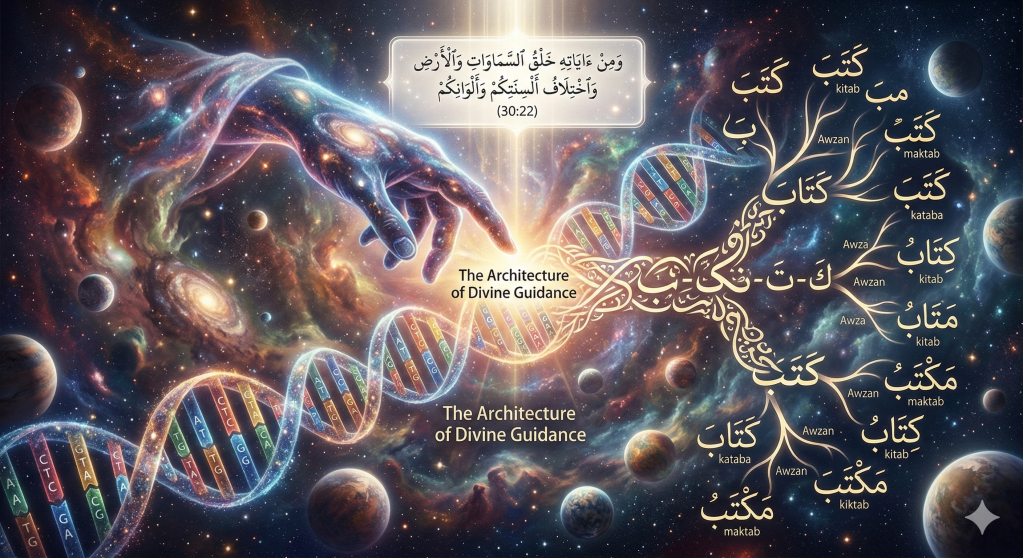
Far from the one-teacher paradigm of sects, Islamic civilization cultivated a rich tapestry of Quranic interpretation encompassing myriad perspectives. The Prophet Muhammad’s companions themselves set the tone by transmitting diverse understandings. A famous tradition states that “No verse of the Quran was revealed without it having a back (ẓahr) and a belly (baṭn); every letter has a boundary and a point of ascent.” Early scholars interpreted this to mean each Quranic verse has outward, literal meanings as well as deeper, esoteric meanings, defined applications as well as transcendent insights thequran.love. In other words, the Quran was understood from the beginning to possess multiple layers of meaning – an ocean of wisdom whose depths could never be fully plumbed by any single person or method themuslimtimes.info. This ethos lies at the heart of Sunni Islam’s broad scholarly heritage and is echoed in Shīʿa thought as well (Imam Jaʿfar al-Ṣādiq is credited with emphasizing the Quran’s manifold layers). Believing the Quran is God’s own Word, with “limitless wisdom,” implied that no one human explanation could exhaust it themuslimtimes.info. As one study of Quranic exegesis notes, “the Quranic commentary tradition never established unanimous rules for how to interpret the Quran… indeed most commentators used more than one method in the same work.” Classical commentators often recorded multiple interpretations of a single verse – sometimes without deciding between them themuslimtimes.info. The scholar Toby Mayer observes that for pre-modern Muslims, “deep faith in the text was seldom grounds to restrict its semantic range. On the contrary, the sense that the Quran was of Divine origin implied that its meanings were fathomless.” themuslimtimes.info Rather than a weakness, this plurality was seen as a strength, honoring the complexity of God’s speech.
Over 14 centuries, the Quran has been read through varying intellectual and spiritual lenses, yielding a mosaic of insights. Linguists and grammarians explored its Arabic subtleties; jurists derived elaborate legal principles; theologians debated points of creed; Sufi mystics searched for inner, allegorical meanings; philosophers found cosmological and metaphysical themes; devotional readers found guidance for personal transformation thequran.love. Each discipline uncovered something that the others might miss – yet each was drawing from the same text. For example, a single verse like “God is the Light of the heavens and the earth…” (Quran 24:35) inspired volumes of commentary: linguists analyzed its vocabulary, Sufis wrote poetry about its mystical allusions, scientists today might reflect on light in a literal cosmic sense, and so on. Crucially, all these interpretations are not mutually exclusive; they are like different rays from the same lamp. As Seyyed Hossein Nasr (editor of The Study Quran) noted, traditional commentators did not insist on only one “correct” reading of a verse – they often respectfully presented several. Thus, Imam al-Ṭabarī in the 10th century would frequently say “interpretation X and interpretation Y are both transmitted” and leave the matter open. This interpretive pluralism was the norm. It ensured that as Muslim civilization encountered new knowledge and challenges, scholars could read the Quran afresh in that context. When Muslims encountered Greek philosophy, for instance, thinkers like al-Fārābī and Ibn Sīnā reinterpreted certain verses in light of reason and metaphysics. When Sufis experienced states of devotional ecstasy, they saw the Quran with the eyes of love and wrote commentaries focusing on the heart. In modern times, as science rose, scholars such as Dr. Zia H. Shah and Maurice Bucaille have engaged Quranic verses about nature, finding astonishing resonance with scientific truths (we discuss Bucaille’s findings later). The point is that Islam’s scholarly tradition welcomed all these approaches, so long as they respected the Quran’s wording and the Prophet’s example. There was no pope in Islam to declare one exclusive interpretation heretical; debate and diversity under the Quran’s umbrella were generally allowed, even encouraged themuslimtimes.info.
By the same token, sectarian interpretations – when sincere – simply became part of this tapestry rather than the whole cloth. Shīʿa scholars certainly wrote tafsīrs emphasizing the teachings of the Imams, and these add valuable perspectives (for example, on moral allegories or the family of the Prophet). But they exist alongside Sunni tafsīrs by scholars of equal piety and intellect. In fact, throughout history, Sunni and Shīʿa scholars often learned from each other’s works. The respected 20th-century Shīʿa exegete ʿAllāmah Ṭabāṭabāʾī, for instance, referenced Sunnī linguists and historians in his commentary, while Sunnī scholars like Fakhr al-Dīn al-Rāzī cited opinions from Jaʿfar al-Ṣādiq or other Shīʿa authorities when relevant. The Quranic enterprise became a shared project, transcending sectarian lines – a reality that undermines any claim of one group to exclusive insight. As Dr. Zia Shah notes, in today’s “age of specialization” and global interconnectedness, we see more clearly than ever how different experts contribute different pieces to the Quranic puzzle themuslimtimes.info. A medical doctor might notice a health wisdom in the Quran that a medieval jurist did not; an astronomer might shed light on verses about the stars; a linguist might solve a grammatical nuance that previously caused debate. All these perspectives together yield a fuller understanding than any single authority could achieve. It is as if the Quran is a mountain and scholars are climbers from different sides – some approach from the law path, some from the mysticism path, some from the science path – each sees the mountain from a unique angle, but no one can claim, “I alone see the true summit.” In truth, “no single path can claim to own the mountain” themuslimtimes.info themuslimtimes.info.
Indeed, Islam’s own sources teach humility in interpretation. The Prophet Muhammad ﷺ said, “The difference of opinion among my community is a mercy.” The Quran itself, after commanding believers to reflect on its verses, warns “none knows its full interpretation except Allah” (3:7). This was understood to mean that while we strive to grasp the Quran’s guidance, ultimate knowledge belongs only to God – so no human should arrogate absolute authority in His name. This spirit of inclusiveness is gaining renewed emphasis in modern times. Contemporary scholars like Javed Ahmad Ghamidi advocate returning to the Quran alone as the ultimate criterion while embracing the broad scholarship of all Muslim sects. Ghamidi explicitly shuns sectarian exclusivism, maintaining that “anyone who calls themselves Muslim is to be treated as such,” and he acknowledges the contributions of all schools of thought to understanding Islam thequran.love. Such voices illustrate a growing movement within Islam to preserve the Quran’s purity while benefiting from wide scholarship, rather than narrowing the interpretive community. In short, the monopoly notion is not only historically false – it is theologically and intellectually counterproductive. The Quran invites all humanity to its guidance, and Muslims have found that only by listening to multiple voices can we do justice to its endless meanings.
Broader Horizons: Non-Muslim Testimonies to the Quran’s Greatness
Ironically, the universal richness of the Quran is so evident that even many non-Muslim scholars, writers, and thinkers have acclaimed it. If one sect’s insular paradigm fails to appreciate the Quran’s full scope, outsiders looking with fresh eyes often recognize its power. Below, we highlight a few remarkable quotes from non-Muslim writers about the Quran, which underscore that this scripture’s impact and wisdom are not confined to any one group. (Each quote is accompanied by a verified reference.):
- Johann Wolfgang von Goethe (German poet & philosopher): “However often we turn to it [the Qur’an] – at first disgusting us each time afresh – it soon attracts, astounds, and in the end enforces our reverence… Its style, in accordance with its contents and aim, is stern, grand, terrible – ever and anon truly sublime. Thus this book will go on exercising through all ages a most potent influence.” messageinternational.org Goethe’s candid reflection admits that the Quran can challenge the reader (“repulsive” to the uninitiated), yet ultimately one is compelled to admire its majesty and sublime power.
- Rev. R. Bosworth Smith (19th c. Oxford scholar of religion): “I boldly assert that one day the loftiest of human philosophies and the most veracious principles of Christianity will confess and bear witness that the Quran is the Word of God and that Muhammad is the Messenger of God.” alislam.org In his work Muhammad and Islam, Bosworth Smith – a Christian clergyman – audaciously forecast that as knowledge advances, the truth of the Quran and Muhammad’s prophethood will be universally acknowledged, even by the philosophical and Christian traditions.
- Dr. Maurice Bucaille (French surgeon and author of “The Bible, The Qur’an and Science”): After a thorough study of the Quran’s scientific statements, Bucaille concluded: “In view of the state of knowledge in Muhammad’s day, it is inconceivable that many of the statements in the Quran which are connected with science could have been the work of a man. It is, moreover, perfectly legitimate, not only to regard the Quran as the expression of a Revelation, but also to award it a very special place on account of the guarantee of authenticity it provides and the presence in it of scientific statements which, when studied today, appear as a challenge to human explanation.” alislam.org Bucaille (who initially approached the Quran as a skeptic) was so struck by its alignment with modern science and its accurate preservation that he later accepted Islam. Even from a neutral stance, his point is that no 7th-century human could have authored the scientifically insightful and error-free statements that the Quran contains – reinforcing that the Quran’s origin must be beyond human knowledge.
- Dr. E. H. Palmer and Sir William Muir (19th c. Orientalists): These scholars noted the unparalleled preservation and impact of the Quran. Palmer remarked on the Quran’s “marvelous purity of style” and Muir documented how meticulously the Quran was memorized and written down in the Prophet’s life and immediately after, such that “no other work of antiquity has come down with so pure a text” (remarkable praise from a critic). Their observations unwittingly affirm the Quran’s fulfillment of its own promise, “Verily, We Ourself have sent down this Exhortation (Quran) and We most surely are its Guardian” (Quran 15:9).
- Dr. Gustav Steingass (Lexicographer, quoted in Dictionary of Islam): “If [the Quran] spoke so powerfully and convincingly to the hearts of [Muhammad’s] contemporaries… as to weld hitherto centrifugal and antagonistic elements into one compact and well-organized body, animated by ideas far beyond those which had until now ruled the Arabian mind, then its eloquence was perfect, simply because it created a civilized nation out of savage tribes, and shot a fresh woof into the old warp of history.” messageinternational.org Here a Western scholar acknowledges that the Quran’s eloquence must be judged by its effects: it transformed the Arabs from disunited tribes into a unified, enlightened civilization governed by high ideals. By that standard, the Quran stands among the most influential and successful of all scriptures.
- Arthur J. Arberry (20th c. British Orientalist and translator of the Quran): Arberry, who rendered the Quran into English, wrote: “The Koran’s undeniable claim to rank amongst the greatest literary masterpieces of mankind [lies] in that inimitable symphony – as the believing Pickthall described his Holy Book – ‘the very sounds of which move men to tears and ecstasy.’” (Preface to The Koran Interpreted) messageinternational.org messageinternational.org. Although Arberry himself was not a Muslim, he was deeply impressed by the Quran’s Arabic literary beauty – its captivating rhythms and eloquence, which he found nearly impossible to echo in translation.
These and many other non-Muslim testimonials could be cited. Notably, even outspoken critics who disparaged the Prophet in other respects often bowed to the genius of the Quran. Historian Thomas Carlyle, despite struggling with certain aspects of Islam, conceded that an illiterate man like Muhammad could never have forged such a book unless by “some kind of genuine inspiration” – writing, “One other circumstance we must not forget: that he had no school-learning; of the thing we call school-learning none at all… yet [he] brought forth a book, the Quran, a book absolutely unrivalled in its brilliance, guiding millions across centuries.” Carlyle ultimately had to “admire the Quran” for its enduring impact. Such grudging respect from opponents perhaps speaks even louder. The universal lesson here is that the Quran’s wisdom, beauty, and transformative power are evident to any objective observer. It is not the private property of Muslims alone – and certainly not of any one Muslim sect. In fact, the Quran explicitly addresses all humanity: “O mankind! There has come to you an exhortation from your Lord, a healing for what is in the hearts, a guidance and a mercy for the believers” (Quran 10:57). Those who approach it without prejudice, as Goethe and others did, often find themselves first repelled, then entranced, then in reverent awe messageinternational.org. This journey from skepticism to admiration is almost a rite of passage for sincere readers of the Quran, regardless of background.
Epilogue: Unity in Diversity – The Living Quran in the 21st Century
In the foregoing exploration, we have seen the Quran illuminated by a spectrum of scholars: traditional ulamā and modern academics, Sufi sages and scientific thinkers, men and women, Sunni and Shīʿa. Each brought “wonderful scholarship” from their specialty to bear on the Quran, often even quoting and learning from each other’s traditions themuslimtimes.info themuslimtimes.info. This interpretive pluralism of Islam is not a chaos of opinions, but rather a harmonious diversity under the Quran’s grand canopy. As the editors of The Study Quran observed, “there was more than one hermeneutical theory in medieval Islam… indeed most commentators used more than one method in the same work.” themuslimtimes.info Debate was robust, yet all agreed on the Quran’s divine origin and the ultimate oneness of its truth. The situation is akin to a mountain with many climbing paths – some steep and direct (literalist), some long and winding (mystical), some cutting sideways (rationalist) – all aiming for the summit of divine wisdom. And as we noted, no single path can claim, “We own the mountain.” The Quran invites all approaches that are sincere and grounded in faith.
The earlier example of the Aga Khan V’s elevation now appears as a cautionary tale in context. We can respect the devotion of Ismāʿīlī Muslims to their Imam and the wisdom such a leader might offer in certain domains. But the Quran is far larger than any one guide or community. Even Aga Khan IV – by many accounts a wise and benevolent leader – did not unveil some secret unique Quranic commentary; like others, his community still engages scholars and reference works for Quran study. His son, with even less scholarly background, cannot realistically fulfill the role of supreme Quran-teacher “for 8 billion humans.” And to his credit, the new Aga Khan has made no such claim personally – it is more a doctrinal aura around the Imamate. Yet doctrine must bend to reality: a leader can inspire and organize, but monopolizing knowledge in any single individual contradicts the Quran’s own distribution of guidance among the believers. God addresses not just one lineage but all readers: “Do they not, then, reflect on the Quran?” (4:82); “We have indeed made the Quran easy to remember – so is there any who will remember and heed?” (54:17). The Quran empowers every earnest soul to access it. Historically, whenever a sect tried to close the doors of interpretation – be it by claiming only their Caliph, or only their Imam, or only scholars of a bygone era could interpret – the God-given “hunger for understanding” among Muslims broke those barriers themuslimtimes.info. Sunni Islam, for instance, always allowed new commentaries and rebuttals; Shīʿa Islam, even with venerable Imams, saw later generations of scholars continue the work. In effect, the community collectively has been the custodian of Quranic knowledge.
Today, in this era of unprecedented specialization and connectivity, we appreciate more than ever how different scholars bring different gifts to the Quran’s table themuslimtimes.info. The landmark Study Quran project we cited compiled essays from experts in law, theology, art, science, and more – offering a 360-degree view of Quranic teachings that no single mufassir (commentator) could provide alone themuslimtimes.info. Add to that the voices of contemporary thinkers from every corner of the globe, and one realizes the Quran is being engaged in virtually every language and intellectual framework available. A Nigerian botanist might write about Quranic botanical metaphors; an Indonesian sociologist might derive principles of community from it; an American psychologist might explore its insights on the human self. Far from diluting the message, such readings each highlight an aspect of the Quran’s guidance, like multifaceted gems catching the light. The Quran’s promise is being fulfilled: “God will raise those among you who believe and those given knowledge, in rank” (Quran 58:11) – not one person, but many, each contributing to humanity’s understanding themuslimtimes.info themuslimtimes.info.
Perhaps there is a divine wisdom behind this diversity: it keeps us humble and prevents the idolatry of any scholar or leader. Muslims revere knowledge and scholars, yes, but the ultimate authority is the Quran itself and the Prophet’s authentic teachings. By distributing insights among many individuals and groups, Allah ensures that no human becomes an absolute gatekeeper. In a famous allegory, Rūmī compared seekers of truth to people feeling an elephant in a dark room – one touches the trunk and thinks it’s a snake, another touches the leg and thinks it’s a tree, and so on. Only when they share their perceptions do they get a fuller picture of the elephant. In the same way, each specialist grasps part of the Quranic “elephant”: the linguist perceives its literary beauty, the jurist its legal structure, the mystic its soul-stirring spirit, the scientist its pointers to nature’s signs themuslimtimes.info. We need collective insight to approximate the whole. By encouraging respectful exchange among differing viewpoints, the Muslim community can better approach the complete message of the Quran. Unity is thus achieved not by enforcing one interpretation, but by celebrating a unity-in-diversity under faith in one God and one Book.
In our time, even technology is enhancing this pluralistic engagement. Dr. Zia Shah has noted that modern AI tools can serve as “knowledge-synthesizers,” making the vast corpus of tafsīr literature more accessible themuslimtimes.info. It is now conceivable that a reader could query an AI to instantly retrieve how ten different scholars explained a verse – effectively having a digital mujtahid council at one’s fingertips. Such tools, if used wisely, could become the ultimate anti-monopoly device: ensuring that no single commentary or sectarian gloss dominates, and that lay Muslims can easily see a broad range of perspectives themuslimtimes.info themuslimtimes.info. Rather than replace human scholars, this technology amplifies their reach. It fulfills the Quran’s call to reflect deeply (4:82) by empowering individuals to compare and contrast various insights, then think for themselves. Just as the printing press once democratized Quranic knowledge by mass-producing scripture and scholarship, AI may democratize it further by navigating and summarizing that knowledge for anyone curious themuslimtimes.info themuslimtimes.info. We stand at the cusp of a new chapter in Quranic interpretation – one that will be even more inclusive, God willing.
In conclusion, the Quran consistently resists all attempts at exclusive ownership. It has spoken in fresh ways to each generation and across cultural divides. Minority sects that claimed to possess “the sole teacher” of the age have invariably ended up isolated, depriving their followers of the wider ocean of knowledge. Meanwhile, the rest of the ummah has sailed that ocean collectively – sometimes debating vigorously, sometimes agreeing to disagree, but united in reverence for the Word of God. The case of Aga Khan V (or any other would-be monopolist) only underscores a general truth: scholarship and wisdom are not inherited like royal titles; they must be earned through learning and piety, and ultimately they are bestowed by God upon whom He wills (Quran 2:269). And God’s gifts of insight have clearly been spread far and wide, as evidenced by the brilliant mosaic of Quranic exegesis from the 7th century to the present themuslimtimes.info.
As we navigate the 21st century – an era with its own challenges of extremist literalism on one hand and whimsical relativism on the other – the way forward is a balanced middle path. We must embrace the interpretive pluralism that has always characterized the Islamic tradition themuslimtimes.info, while remaining anchored to the Quran’s clear core messages of tawḥīd (the oneness of God), justice, and compassion. “Ultimately, no single interpretation can exhaust the Quran’s meaning. Its verses have spoken anew to each generation of believers,” as one analysis aptly noted themuslimtimes.info. This ever-living quality of the Quran – that it can be “read afresh in light of the totality of human knowledge” themuslimtimes.info – may be the greatest evidence of its divine origin. A merely human-authored text would have been mined empty long ago; the Quran continues to yield new gems as fresh eyes and minds explore it. Let us then celebrate the failure of every attempt to lock up the Quran’s treasures. The Quran belongs to all who turn to it, in sincerity and humility. The true guide and teacher for humanity is not an exclusive imam or scholar – it is the Quran itself, illuminated by the Prophet’s example and engaged by the collective heart and intellect of the Muslim community. In that sense, the Quran is a living miracle that creates scholars, rather than a secret to be guarded by scholars. In our unity and diversity lies the secret of the Quran’s enduring light. Al-ḥamdu lillāh – all praise is for God, who made His guidance as vast and varied as the whole of creation, yet as accessible as a book open before us.
If you would rather read in Microsoft Word file:
 The Glorious Quran and Science
Leave a comment