
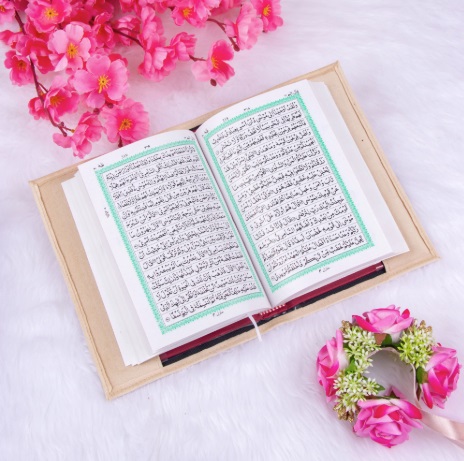
Presented by Zia H Shah MD
“If We had sent down this Qur’an on a mountain, thou wouldst certainly have seen it humbled and rent asunder for fear of Allah.” (Qur’an 59:21) These powerful words from the Quran itself paint a vivid picture of the sacred weight and awe that Muslims associate with their holy scripture. For Muslims, the Qur’an – often called al-Qur’ān al-Majīd (the Glorious Quran) – is nothing less than the verbatim Word of God revealed to Prophet Muhammad ﷺ. Every verse, word, and even letter is revered as holy. The Quran’s revelation in 7th-century Arabia and its preservation across the centuries form the spiritual and intellectual bedrock of Islam. In Islamic belief, it is the central theophany – God’s direct self-disclosure in text – and the “basic source and root of all that is authentically Islamic, from metaphysics, angelology, and cosmology to law and ethics”, inspiring Islamic art, science, and society. It is both scripture and spiritual presence: a guide in life’s every arena and a companion in every moment of a Muslim’s journey. This comprehensive article will explore the Islamic view of the Glorious Quran – its divine nature, its function as guidance and healing, its unique style and miraculous qualities, and its role as a living source of devotion in personal, communal, and intellectual life.
Revelation and Compilation of the Quran
According to tradition, the Qur’an was revealed to Prophet Muhammad ﷺ over a period of 23 years, beginning in the year 610 CE when he was 40 years old. Before prophethood Muhammad was known as a monotheist (ḥanīf) who worshipped the one God of Abraham and often retreated to meditate in the cave of Hira outside Mecca. It was during one of these retreats that the Archangel Gabriel (Jibrīl) appeared and inaugurated the revelation. In a night forever honored as the beginning of prophethood, Gabriel commanded Muhammad “Recite!” – to which Muhammad, who was ummī (unlettered), humbly responded that he could not read. The angel repeated the command, pressing him, until Muhammad finally received and recited the first words of Quranic revelation:
اقْرَأْ بِاسْمِ رَبِّكَ الَّذِي خَلَقَ خَلَقَ الْإِنْسَانَ مِنْ عَلَقٍ اقْرَأْ وَرَبُّكَ الْأَكْرَمُ الَّذِي عَلَّمَ بِالْقَلَمِ عَلَّمَ الْإِنْسَانَ مَا لَمْ يَعْلَمْ
“Recite in the Name of thy Lord Who created, created man from a clot of blood. Recite! Thy Lord is Most Noble, who taught by the Pen, taught man what he knew not.” (Qur’an 96:1–5)
These first verses of Surah Al-`Alaq mark the historic moment of the Qur’an’s descent (tanzīl). From that night forward until the end of the Prophet’s life, “the Quran was continuously revealed to him bit by bit, often in response to circumstances and conditions” of the emerging Muslim community. The piecemeal revelation allowed the message to gradually transform hearts and society. Muslims believe that the revelations were not in random order, but that the Prophet himself, under divine guidance, instructed his scribes and followers how to arrange the verses and chapters (sūrahs) of the Qur’an. Thus, the Quran’s internal ordering is considered an integral part of the revelation, even though it is not chronological. By the end of the 23-year prophetic mission, the Quran comprised 114 surahs ranging from long chapters to very short ones. Many companions of the Prophet had memorized the entire Quran (becoming ḥuffāẓ, guardians of scripture), and it was also preserved in writing on various materials of the time (parchment, bones, leather, etc.).
After the Prophet’s passing in 632 CE, the young Muslim community took great care to compile the Quran in book form (muṣḥaf). The first Caliph, Abu Bakr, oversaw a collection of the Quranic revelations with Zayd ibn Thabit (the Prophet’s scribe) leading the effort, gathering the written fragments and cross-checking them with the memories of reliable reciters. This compiled copy was kept in the custody of Hafsa (the Prophet’s widow and Caliph Umar’s daughter). A short time later, during the Caliphate of Uthman (the third Caliph, around 650 CE), the need arose to standardize the Quranic text for the expanding Muslim world. Uthman commissioned Zayd and other scholars to prepare a definitive text from the earlier compilation, and made copies for the major centers of the Caliphate. As historical records state, “a second collection was ordered by ʿUthmān… under the direction of Zayd ibn Thābit. This text, known as the ʿUthmānic codex, came to constitute what Uthmān had scribes copy; copies were then sent to the four major cities of the Islamic world… These five texts then became the basis of the written Quran that we have today.” All other personal copies were respectfully disposed of to eliminate discrepancies, and thus the Uthmanic codex ensured that a single, uniform text of the Quran spread everywhere. To this day, every Qur’an in print or manuscript form corresponds to that Uthmanic text. As Seyyed Hossein Nasr and colleagues note, “The structure of the Quran is for all practical purposes one and immutable. It has undergone no changes over the ages, and Sunnis, Shiites, and Kharijites all accept the same text as the final revelation of God to humanity.” In other words, Muslims across all schools of thought and in all centuries have been united on the same Arabic Quranic text, which they regard as the unchanged Speech of God – a fulfillment of God’s promise in the Quran: “Indeed, it is We who sent down the Quran, and indeed, We will be its guardian.” (Qur’an 15:9)themuslimtimes.info.
This belief in perfect preservation is a great source of pride and confidence for Muslims. Renowned scholar Muhammad Mustafa al-Aʿẓamī writes that not only was the Quran protected through oral and written means from the start, but its ordering and arrangement was directly instructed by the Prophet under divine revelation. Devout Muslims view the Quran’s preservation as part of its miracle, and contrast it with the fragmentation or textual evolution seen in other ancient scriptures. For them, the Quran today is the very Quran as heard from the Prophet’s own lips – the living legacy of the Night of Power when it first descended.
Sacred and Miraculous Nature of the Quran
From the Islamic perspective, the Quran is not merely a book of doctrines or stories – it is the living speech of God (kalām Allāh) and thus inherently sacred and miraculous. In the words of a classical tradition, “the best among you is the one who learns the Qur’an and teaches it.” Love and reverence for the Quran run so deep that Muslims handle the physical mus·ḥaf with immense respect – often perfuming it, wrapping it in fine covers, and keeping it on a high shelf. They strive to be in a state of purity (through ablution) when touching or reciting it, reflecting the Quran’s own teaching that “none touch it except the purified” (56:79). This reverence stems from the conviction that every letter is divinely placed and full of blessing. As the Study Quran’s introduction notes, “The meaning, the language, and every word and letter in the Quran, its sound when recited, and its text written upon various physical surfaces are all considered sacred.”
One hallmark of the Quran’s miraculous nature is its inimitable linguistic style, known in Arabic as i‘jāz al-Qur’ān. The Quran refers to itself as a unique revelation that cannot be replicated by human or jinn, challenging skeptics to “produce even a chapter like it” (Qur’an 2:23, 17:88). In one verse it boldly declares: “Even if all mankind and jinn came together to produce the like of this Qur’an, they could not produce anything like it, however much they helped each other.” (Qur’an 17:88)themuslimtimes.info. This challenge of inimitability has stood for over 1400 years. Classical scholars note that the Quran’s eloquence, unparalleled Arabic rhetoric, and transformative power on listeners are beyond the capacity of any created being to reproduce. The 20th-century philosopher Frithjof Schuon captured this mystical quality in a beautiful analogy:
“The Quran is, like the world, at the same time one and multiple. The world is a multiplicity which disperses and divides; the Quran is a multiplicity which draws together and leads to Unity. The multiplicity of the holy Book – the diversity of its words, sentences, pictures, and stories – fills the soul and then absorbs it and imperceptibly transposes it into the climate of serenity and immutability by a sort of divine ‘cunning.’ The soul, which is accustomed to the flux of phenomena, yields to this flux without resistance… The revealed Discourse has the virtue that it accepts this tendency while at the same time reversing the movement, thanks to the celestial nature of the content and the language, so that the fishes of the soul swim… into the divine net.”
In Schuon’s poetic observation, we sense how the Qur’an’s shifting kaleidoscope of themes actually leads the soul toward inner unity and transcendence. The text’s unusual style – with its mix of narratives, parables, legal verses, moral exhortations, and vivid descriptions of nature, heaven and hell – confounded the Prophet’s contemporaries at first. It was neither poetry nor prose as they knew it; it did not follow a linear story or single subject per chapter. Yet this very quality is seen as deliberate and miraculous: it engages different parts of the mind and soul, ultimately “drawing them together to Unity.” Believers find that the Quran, when approached with an open heart, has a way of entering one’s soul, calming it, and elevating it towards God’s presence. Countless people over centuries have reported that even hearing the Quran recited in Arabic – even without understanding the words – moves them to tears or sends shivers through them. The Quran’s rhythmic cadence and majestic tone are part of this miracle.
Importantly, Muslims hold that the Quran’s full power is inseparable from its Arabic form. Translations can convey meaning but not the unique fusion of sound and meaning that defines Quranic revelation. “From an Islamic perspective, [the Quran] cannot be fully rendered into a language other than the sacred language of Arabic, chosen by God,” writes one scholar, noting that any translation is inevitably an interpretation. The Arabic Quran’s precision and eloquence – its use of classical Arabic at the highest level – is itself seen as a sign of divine origin, given that the Prophet Muhammad ﷺ, an unlettered man, suddenly began uttering discourse of unmatched literary excellence. The linguistic miracle is such that even the placement of a word or the choice of a plural vs. singular is laden with meaning that scholars of Arabic eloquence spend lifetimes studying. As one introduction states: “the science of Arabic rhetoric was developed in order to describe the features of the inimitable style of the Qur’an,” and “the art of Arabic calligraphy was cultivated through writing down the Qur’an.”thequran.lovethequran.love In other words, the Quran’s miraculous style gave birth to new sciences and arts in the Muslim world – all aimed at preserving and honoring the Word of God.
Another facet of the Quran’s miraculous nature is its effect on those who sincerely ponder it. The Quran itself says: “Had it been from anyone other than God, they would have found much contradiction therein” (4:82). Muslims often point to the internal consistency of a text revealed over two decades in various contexts as a subtle miracle. Modern commentators also note that the Quran has verses that anticipated scientific or historical knowledge not known at the time, though Muslims caution that its primary purpose is guidance, not science. Ultimately, the greatest miracle of the Quran, from the Islamic point of view, is the Qur’an itself – its ability to transform individuals and societies. The Prophet Muhammad ﷺ is reported to have said, “Every prophet was given miracles such that people believed by seeing them. I have been given the Revelation (Qur’an) as my miracle, and I hope therefore that I will have the most followers on the Day of Judgment.” The Quran is thus understood as the enduring miracle of Islam, one that people can experience anew in every age by reading and listening to it.
The Quran as Guidance, Light, and Criterion
The Qur’an describes itself in numerous ways, emphasizing its function as a guide and a clear standard for humanity. In fact, one of its names is al-Hudā – “the Guidance.” At the opening of the second chapter, the Quran proclaims:
ذَٰلِكَ الْكِتَابُ لَا رَيْبَ ۛ فِيهِ ۛ هُدًى لِّلْمُتَّقِينَ
“This is the Book about which there is no doubt, a guidance for those conscious of Allah.” (Qur’an 2:2)themuslimtimes.info
From the Islamic perspective, the Quran is the ultimate guidebook for mankind, setting forth the straight path to God. It is, in the words of Abdel Haleem, “the fundamental and paramount source of the creed, rituals, ethics, and laws of the Islamic religion.”thequran.love Another title the Quran gives itself is al-Furqān – “the Criterion” – because it distinguishes right from wrong. “Blessed is He who sent down the Criterion upon His servant, that he may be a warner to the worlds,” says Surah Al-Furqan (25:1)themuslimtimes.info. By this title, Muslims understand that the Quran provides an ethical and moral compass, allowing believers to measure their actions and values against divine revelation. Modern Muslims often turn to the Quran for guidance on contemporary issues as well; as one scholar notes, “nowadays, when the Muslim world is dealing with such universal issues as globalization, the environment, terrorism, medical ethics, and feminism, evidence to support the various arguments is sought in the Qur’an.”thequran.love This attests to the Quran’s status as the supreme authority in Islam, “intended for all times and all places,” offering principles that transcend any erathequran.love.
The Quran also calls itself “a clear light” (nūran mubīnan). In one verse addressed to all people, it declares:
يَا أَيُّهَا النَّاسُ قَدْ جَاءَكُمْ بُرْهَانٌ مِنْ رَبِّكُمْ وَأَنْزَلْنَا إِلَيْكُمْ نُورًا مُبِينًا
“O mankind! There has come to you a conclusive proof from your Lord, and We have sent down to you a clear light.” (Qur’an 4:174)themuslimtimes.info
Here the Quran positions itself as an illumination for the human mind and soul, dispelling the darkness of ignorance and doubt. It shines with clarity (mubīn), enabling people to see reality as it truly is – including the reality of God’s oneness and our moral responsibilities. Similarly, the Quran addresses the Prophet in Surah Ibrahim with a mission statement about the scripture’s purpose:
كِتَابٌ أَنْزَلْنَاهُ إِلَيْكَ لِتُخْرِجَ النَّاسَ مِنَ الظُّلُمَاتِ إِلَى النُّورِ…
“This is a Book We have sent down to you [O Prophet] so that you may bring people out of the depths of darkness into light, by the permission of their Lord, to the path of the Almighty, the Praiseworthy.” (Qur’an 14:1-2)themuslimtimes.info
Muslims frequently quote this verse to describe the Quran’s civilizing and uplifting impact: it leads humanity from the **“darknesses” of disbelief, confusion, and immorality **into the singular light of faith and righteousness. Indeed, Islamic history credits the Quran with transforming the Arabian Peninsula’s warring tribes into a united community with refined ethical and spiritual values – an example of the Quran’s guiding light in action.
To elaborate on the Quran’s self-descriptions, we can summarize some of its key roles as understood in Islamic tradition:
- Guidance (Hudā) – a roadmap for personal conduct, spiritual growth, and salvationthemuslimtimes.info. The Quran guides to what is most upright (17:9) and “guides to that which is most just and right” (17:9, another translation).
- Light (Nūr) – an illumination for hearts and minds, bringing clarity and wisdomthemuslimtimes.info.
- Criterion (Furqān) – a distinguisher between truth and falsehood, right and wrongthemuslimtimes.info.
- Mercy (Raḥmah) – a source of divine mercy and benevolence for believers.
- Reminder (Dhikr) – a reminder of spiritual truths, meant to admonish and recall people to God.
- Clarification (Tibyān) – an explanation of all things needed for guidance (see 16:89: “We have sent down to you the Book as a clarification for all things…”themuslimtimes.info).
- Healing (Shifā’) – a healer of spiritual diseases and doubts. As will be seen, the Quran describes itself as healing for hearts.
- Arabic Qur’an (Qur’ān ‘Arabī) – the Quran emphasizes it is in clear Arabic, without crookedness or distortion, facilitating understandingthemuslimtimes.infothemuslimtimes.info.
- Tanzīl (Descent) – a book sent down from on high, emphasizing its divine origin.
Each of these aspects is rooted in Quranic verses and has been expanded upon by classical commentators. For example, Imam al-Ṭabarī said that calling the Quran “guidance for the God-fearing” means that while its guidance is available to all, only those with an attitude of reverence (taqwā) truly benefit from it. Likewise, the Quran being “a mercy” means it softens hearts and leads to God’s forgiveness.
Muslims often marvel at how the Quran seems to speak to every situation with wisdom. One modern commentator, Zia H. Shah, remarks that the Quran “delineates its role as a comprehensive guide for humanity, a source of clear evidence, and a criterion for moral discernment”themuslimtimes.infothemuslimtimes.info. Whether one is seeking guidance in personal ethics, family matters, community governance, or inner spiritual life, Muslims turn to the Quran as the first and ultimate source. It is not a narrow “religious” scripture in the modern sense; it integrates guidance for both spiritual and practical life, which is why, for instance, Quranic verses might be invoked in contexts as diverse as marriage ceremonies, business ethics, scientific inquiry, or social justice. This aligns with the statement of the 15th-century scholar Jalaluddin al-Suyuti that “everything is based on the Qur’an.”thequran.lovethequran.love In Muslim belief, all true knowledge harmonizes with the Quran, and any worthwhile endeavor can be illuminated by its teachings.
A Source of Healing and Mercy
One of the most cherished attributes Muslims find in the Quran is its quality as a spiritual healing and mercy from God. The Quran consoles the troubled heart, heals spiritual ailments (such as doubt, despair, arrogance), and brings inner peace. The Qur’an explicitly states this function in a beautiful verse of Surah Al-Isra’:
وَنُنَزِّلُ مِنَ الْقُرْآنِ مَا هُوَ شِفَاءٌ وَرَحْمَةٌ لِّلْمُؤْمِنِينَ
“We send down of the Qur’an that which is healing and mercy for those who believe.” (Qur’an 17:82)themuslimtimes.info
Muslim commentators explain that the Quran heals by reminding us of our purpose, curing the diseases of the heart like envy and hatred, and alleviating anxiety by instilling trust in God’s plan. It is notable that this verse says the Quran is healing for believers – meaning its healing power is unlocked when one approaches it with faith and sincerity. To the cynical or unbelieving, the same verse continues, the Quran “only increases loss,” since they reject its guidancethemuslimtimes.info. Countless Muslims can attest to the experience of turning to Quranic recitation or reflection in times of grief, confusion, or depression and finding relief. Even the sound of the Quran recited can have a soothing, therapeutic effect – a fact now being studied by psychologists. Zia Shah, in a psychological commentary on this verse, likened the Quran to “spiritual software” that reprograms a believer’s mindset positively, especially when engaged during the quiet hours of dawn and night as the Quran itself prescribes (17:78–79)thequran.love. Just as software systematically refines a computer’s operation, the regular recitation and contemplation of the Quran refines the soul’s operation, aligning one’s thoughts and emotions with divine wisdom.
Furthermore, the Quran provides solace by acknowledging human struggles and offering hope. In the same passage of Surah Al-Isra, after describing the Quran as healing, the verses empathize with human nature: “When We favor man he turns away and distances himself, but when evil touches him, he is in despair” (17:83). The Quran then offers perspective against this fickleness, culminating in an invitation to recognize the truth of revelation. Thus the Quran heals not by empty platitudes, but by diagnosing our spiritual states and guiding us through them.
Another verse that illustrates the Quran’s merciful role is in Surah Yunus:
يَا أَيُّهَا النَّاسُ قَدْ جَاءَتْكُم مَوْعِظَةٌ مِّن رَّبِّكُمْ وَشِفَاءٌ لِّمَا فِي الصُّدُورِ** وَهُدًى وَرَحْمَةٌ لِّلْمُؤْمِنِينَ**
“O mankind! There has come to you an admonition from your Lord, and a healing for what is in the breasts, and guidance and mercy for the believers.” (Qur’an 10:57)
Here the Quran is described as mawʿiẓah – a heartfelt counsel or admonition – that heals the ṣudūr (the breasts/hearts). Muslim exegesis often comments that the Quran heals both intellectual doubts and moral depravity. For example, if one is troubled by confusion about faith, the Quran’s clarifications restore sound belief; if one is burning with anger or hatred, the Quran’s moral teachings of forgiveness and compassion can heal that wound. Notably, the verse addresses all humanity (“O mankind!”), implying that anyone who listens with an open heart can find the Quran touching their soul.
The merciful aspect of the Quran is also evident in how it brings joy and hope. Surah Yunus continues in the next verse: “Say: In the bounty of God and His mercy – in that let them rejoice” (10:58). The Prophet Muhammad ﷺ himself and his companions would experience intense joy when certain verses were revealed that promised God’s forgiveness or paradise. Even today, Muslims rejoice in the verses of mercy (such as “My mercy encompasses all things” (7:156)) and find hope to carry on. The entire Quran begins with the phrase Bismillāh al-Raḥmān al-Raḥīm (“In the name of God, the Most Merciful, the Compassionate”), underscoring that the context of the revelation is divine mercy.
There is also a deeply personal form of healing that Muslims derive from the Quran: a direct sense of God’s presence and communication. When a believer recites or hears the Quran, it is understood that God is speaking to him or her, here and now. This awareness can heal the ache of loneliness or the burden of feeling misunderstood by others. In the stillness of dawn, when the Quran enjoins believers to pray and recite (see 17:78-79), one experiences an intimate dialogue with one’s Creator. The Quran says, “Truly, by the remembrance of God do hearts find rest” (13:28). And what remembrance (dhikr) could be greater than the Quran itself, which Islamic tradition calls “the best form of remembrance” (afdhal adh-dhikr)?
Zia Shah, in his commentary “The Quran as Spiritual Software,” notes that the times of prayer mentioned in Quran 17:78–82 (from dawn till night) correspond to key psychological cycles in our daythequran.love. Starting the day with Quranic recitation sets a positive, centered tone – essentially “programming” the believer with patience, trust in God, and purpose – much like installing software that protects against spiritual viruses (negative influences). Then, ending the day with Quranic remembrance (through the night prayer or reflection on verses) clears the heart before sleep, akin to logging off in a state of peace. In this way, regular Quranic engagement is deeply therapeutic. It is no surprise that the Prophet Muhammad ﷺ used to call the Quran “a rope of Allah extended from heaven to earth” – a lifeline that we can hold onto for support and ascend towards God.
The Quran’s Impact on the Soul
Muslims believe the Quran not only guides and heals but actually transforms the soul of a person who internalizes it. It cultivates an inner state of faith (īmān), tranquility (sakīnah), and certitude (yaqīn) that becomes the core of one’s identity. A famous hadith illustrates this by describing the Prophet’s own character as the living embodiment of the Quran: when asked about the Prophet’s conduct, his wife Aisha replied, “His character was the Qur’an.” He was, in a sense, a “walking Quran” – his manners, priorities, and reactions all shaped by the revelation he had absorbed. While the Prophet is unique, every Muslim aspires to let the Quran sink into their being to a similar effect.
Inner peace vs. inner conflict: One of the Quran’s recurring themes is that true peace and wholeness in the soul come from recognizing the One God (tawḥīd), whereas polytheism or devotion to worldly false gods leads to inner turmoil. The Quran provides a memorable parable of this in Surah Al-Zumar:
ضَرَبَ اللَّهُ مَثَلًا رَجُلًا فِيهِ شُرَكَاءُ مُتَشَاكِسُونَ وَرَجُلًا سَلَمًا لِّرَجُلٍ ۖ هَلْ يَسْتَوِيَانِ مَثَلًا
“God strikes a parable: a man owned by many quarrelsome masters, and a man wholly devoted to one master – are the two equal in comparison?” (Qur’an 39:29)
This verse vividly compares the state of one who has multiple lords (serving many agendas, desires, or deities) to one who serves one Lord wholeheartedly. The former is torn in different directions (experiencing inner conflict and anxiety), while the latter enjoys unity of purpose and inner harmony. As one commentary puts it, the person with one master has “inner harmony through unity,” whereas the other suffers “inner conflict through disunity.”thequran.love For Muslims, this parable speaks to the soul’s condition: only by worshiping the One God can a person resolve the inner cacophony of competing impulses and attain sakīnah (tranquility). The Quran, being the embodiment of tawḥīd (pure monotheism), aligns the soul with its Creator and thus brings about an inner integration and peace that nothing else can. Many converts to Islam have described their experience of first reading the Quran as a feeling of “coming home” or a sudden centering of their life – as if disparate puzzle pieces of their worldview fell into place under the light of the Quran’s unitary message.
Emotional impact: The Quran also deeply moves those who approach it without bias. It states that “Those who were given knowledge before, when it is recited to them, fall down upon their faces in prostration, saying: ‘Glory be to our Lord! The promise of our Lord is fulfilled.’ They fall upon their faces weeping, and it increases them in humility.” (Qur’an 17:107-109)themuslimtimes.info. This describes the reaction of sincere Christians or Jews at the Prophet’s time who, upon recognizing the Quran’s truth, were overcome with tears and reverence. The image of learned monks weeping at hearing the Quran was noted even by the Negus (King) of Abyssinia when Muslim refugees recited to him. In today’s context, we see this phenomenon whenever the Quran is recited with beautiful melodiousness – it is common to find Muslims in prayer softly crying, their hearts stirred by verses of God’s majesty or mercy. The Quran has a remarkable way of piercing veils of hardness around the heart. As the Qur’an itself says, “Allah has sent down the best message, a Book of perfect consistency and repeated lessons, at which the skins of those who fear their Lord tremble, then their skins and hearts soften at the remembrance of Allah.” (39:23). Indeed, part of a believer’s spiritual experience is feeling these words in one’s very skin and soul – an experience that reinforces faith in the Quran’s divine origin.
Memory and intellect: The Quran doesn’t only affect emotions; it also sharpens the mind. Traditional Islamic education begins in childhood by memorizing portions of the Quran (some children memorize all 114 surahs, becoming ḥāfiẓ). This is not mere rote learning – it is believed that “the Quran itself strengthens the memory”thequran.love and imparts an intellectual subtlety to those who study it. Historically, even scientists and philosophers in Islamic civilization were often ḥuffāẓ or at least very conversant with Quranic verses. The Study Quran notes that Avicenna (Ibn Sīnā), while writing his medical encyclopedia, had his memory “filled with Quranic verses, which affected his whole attitude toward knowledge and science”thequran.lovethequran.love. In other words, by living in the mental world of the Quran, scholars approached every discipline with a sense of divine order and ethics. The Quranic imprint on the psyche can thus inspire creativity, insight, and wisdom. The great Sufi poets like Rumi and Hafez did not deliberately quote the Quran in every line, but their imaginations were so thoroughly marinated in the Quran’s language and symbols that their poetry naturally flowed from that sourcethequran.love. This is why one might find subtle Quranic allusions in Muslim art, literature, and even everyday proverbs – the Quran has saturated the Muslim consciousness.
In summary, the Quran molds the inner life of the believer. It develops God-conscious personalities characterized by humility, patience, trust, and a constant sense of divine presence. It teaches one to restrain anger, forgive others, speak truth, and remember the afterlife – all of which contribute to a tranquil conscience. The 9th-century sage Sahl al-Tustari advised, “Let the Quran be your companion in this world. For it shall lead you to the presence of God.” Many Muslims thus strive to “live with the Quran” – reading a portion each day, pondering its meanings, and applying it. In doing so, they attest to the Quran’s almost alchemical effect on the soul: “The Quran…fills the soul and then absorbs it…transmuting the fragmented human soul until the relative becomes a reflection of the Absolute.” In Islamic spirituality, this is the ultimate transformation – to align the human self (nafs) with the will of God as revealed in the Quran, achieving what is called nafs al-muṭmaʾinnah, the “soul at peace” (89:27)thequran.love.
Devotion to the Quran in Muslim Life
It would be difficult to overstate how central the Quran is in the daily life of a Muslim. From the cradle to the grave, the Quran accompanies believers as a source of blessing, guidance, and comfort. Seyyed Hossein Nasr eloquently observes: “The Quran is the constant companion of Muslims in the journey of life. Its verses are the first sounds recited into the ear of the newborn child… It is recited during the marriage ceremony, and its verses are usually the last words that a Muslim hears upon the approach of death.”. This description is not poetic exaggeration – it is literal. It is customary that when a baby is born, the father or imam will gently recite the ādhān (call to prayer, which consists of Quranic phrases) in the infant’s right ear, so that the first thing a Muslim child hears in the world is the mention of God’s Oneness and the Messenger. Throughout childhood, Muslim kids are taught short surahs to recite in daily prayers. At weddings, verses about love and compassion (e.g. 30:21) are often recited as a benediction. When someone is on their deathbed, family members gather to recite YāSīn (Chapter 36) or other comforting passages by their side. And when a Muslim dies, the funeral service includes Quranic readings reminding of the afterlife. In essence, “the Quran is present in the soul and mind of believers during every moment of life,” from joyful celebrations to moments of strugglethequran.love.
The act of recitation (tilāwah) of the Quran is itself one of the most meritorious devotions in Islam. In the ritual prayers (ṣalāh) performed five times a day, substantial portions of the Quran are recited from memory. The first chapter, Al-Fātiḥah, is required in each unit of prayer, making it the most frequently recited piece of scripture in the world. Muslims of all linguistic backgrounds memorize Al-Fātiḥah in Arabic, as well as many other short chapters, because “the first section of the Qur’an, al-Fātiḥah… is learned and read in Arabic by Muslims in all parts of the world.”thequran.lovethequran.love In mosques, one often sees children in circles learning to recite under a teacher’s guidance, a scene that has continued for centuries. Traditional Muslim pedagogy emphasizes memorization because, as the Study Quran notes, “no practicing Muslim fails to know some of the Quran by heart” and these memorized portions “will serve them their whole lives.”thequran.love This memorization isn’t about mindless rote – it’s about imprinting the Quran on the heart. A person who has memorized the entire Quran (a Ḥāfiẓ al-Qur’ān) holds a very honored status in Muslim communities. Such a person is seen as a walking repository of the Quran, and often leads prayers or is consulted for correct recitation.
Daily life and etiquette: Beyond formal worship, Muslims integrate the Quran into many daily practices. Morning and evening times are often dedicated to personal Quran reading (even if a few verses). There is a strong tradition of reading Surah Al-Kahf (Chapter 18) on Fridays, or Surah YāSīn regularly for blessings. Some pious individuals complete the entire Quran (khatm al-Qur’ān) on a weekly or monthly cycle. During the holy month of Ramadan, the engagement with Quran reaches its peak: Muslims believe the Quran was first sent down in Ramadan, and they honor that by intensifying recitation. In Tarāwīḥ nightly prayers, Muslims gather in mosques and the imam recites a portion of the Quran each night so that by month’s end the entire Quran is recited in congregation. Many also try to complete at least one personal reading of the whole Quran during Ramadan. This annual immersion has a profound effect on the spiritual atmosphere; as the saying goes, Ramadan is springtime for the Quran in the heart of a believer.
The Quran is also central in seeking spiritual protection and blessings. Muslims often recite certain verses as prayers for safety or relief. For example, Ayat al-Kursī (2:255, the Verse of the Throne) is recited for protection, and the last two surahs (113 and 114, the Muʿawwidhatayn) are recited to ward off evil influences – a practice taught by the Prophet himself. It is common to decorate homes with calligraphy of Quranic verses (like Surah Al-Ikhlāṣ or the Throne Verse), believing they bring barakah (divine grace). Many Muslims begin any significant task by reciting Bismillāh (In the name of God) or other verses, linking the mundane with the sacred. Even the art of calligraphy in Islam is essentially Quranic art – beautifully rendered verses used to adorn architecture and objects – which is a way of honoring the Quran visually and keeping its remembrance everywhere. As Seyyed Hossein Nasr notes, “It is the Quran that made calligraphy, architecture, and Quranic psalmody the central sacred arts of Islam.”thequran.love
Communal life: Qur’anic recitation is often a community affair. In many Muslim cultures, people gather in halqahs (circles) to recite the Quran together, especially on special occasions or to commemorate a deceased loved one by collectively reading the entire Book (this is called a khatm ceremony). Children’s graduation from reciting the whole Quran (called “ʿAshrā” or “Khatam”) is celebrated with feasts – reflecting that learning the Quran is a milestone worthy of honor. Public Quran competitions and recitals showcase the best reciters, sometimes drawing large audiences who are moved to tears by the beauty of God’s words recited flawlessly. The Quran’s melodic cadence (tajwīd) is itself an art and act of devotion; famous reciters like Abdul Basit or Minshawi are revered almost like musicians in other cultures, except what they “perform” is sacred. Listening to a heart-touching Quran recitation is, for many Muslims, a deeply emotional spiritual experience that they seek regularly.
Ethics and behavior: Muslims strive to “adorn themselves with the morals of the Quran.” As the Study Quran describes, “the Quran, complemented by the Prophetic wont (Sunnah), even affects in a subtle manner all aspects of comportment (adab)… not only thoughts, speech, and actions, but also bodily postures and physical faculties – how traditional Muslims carry themselves… or greeting others.”thequran.love In other words, living with the Quran shapes one’s etiquette and courtesy. For example, because the Quran says “lower your wing of humility to your parents” (17:24), a culture of gentle respect to elders prevails. Because the Quran says “speak kindly to people” (2:83), politeness is highly valued. Muslims often quote Quranic advice in daily conversations – such as reminding each other “Indeed, Allah is with the patient” (2:153) if someone is going through hardship. In times of dispute or uncertainty, the faithful will say, “Let’s see what the Quran says,” and proceed to find guidance in its verses or the Prophetic explanations of them. The entire rhythm of life in Muslim societies traditionally had Quran at its core: the day would start with the Fajr (dawn) prayer and Quran recitation, business transactions would open with God’s name, courts of law would refer to Quranic injunctions, and even the marketplace might have a ḥāfiẓ reciting at a corner. While modern lifestyles have changed some patterns, the ideal of saturating life with the Quran remains.
Joy and Love for the Quran: Devotion to the Quran is not burdensome in the eyes of believers – it is a labor of love. Many Muslims speak of the sweetness (ḥalāwah) of reciting the Quran, especially in the quiet of the night, as one of the greatest pleasures in life. It is common to see someone kissing the mus·ḥaf after finishing their reading, out of love and reverence. Parents sing soothing Quranic lullabies to infants. Travelers play Quran recitations on long drives for solace. When a Muslim is sad or indecisive, the oft-repeated advice is: “Open the Quran and read – you will find an answer or comfort.” The belief that God speaks to each person through the Quran makes its verses deeply personal. There are anecdotes of saints who, being troubled by something, randomly opened the mus·ḥaf and found a verse that uncannily addressed their issue – which they attribute to Allah’s guidance through His Book.
In the words of the Quran itself, “Allah has sent down the best of speech, a scripture consistent and reiterative, at which the skins of those who fear their Lord tremble, then their skins and hearts soften to the remembrance of Allah.” (39:23). This verse encapsulates the almost physical impact of Quranic devotion – trembling in awe, then softening in love and remembrance. Truly, as one modern writer expressed, “our confidence that the holy Quran can indeed transform readers is grounded in the miracle it has wrought in the last 14 centuries in the lives of millions if not billions of people.”thequran.love
The Quran in Community and Scholarship
Beyond the individual, the Quran has been the driving force of Islamic civilization’s intellectual and social development. It is remarkable that a single Book not only created a spiritual community (ummah) but also stimulated advancements in fields as diverse as linguistics, law, theology, philosophy, art, and science. As Muhammad Abdel Haleem observed, “The Qur’an was the starting point for all the Islamic sciences: Arabic grammar was developed to serve the Qur’an… the study of Arabic phonetics was pursued to determine the exact pronunciation of Qur’anic words… the Quran is the basis of Islamic law and theology… The entire religious life of the Muslim world is built around the text of the Qur’an.”thequran.lovethequran.love.
Language and literature: Before Islam, Arabic was primarily an oral language of poetry and tribal discourse. The coming of the Quran elevated Arabic to a language of scripture and scholarship. The need to preserve the Quran’s text and meaning led early Muslims to compile Arabic lexicons, formalize grammar rules, and study nuances of rhetoric. The first Arabic dictionary and grammar treatises were by scholars who wanted non-Arabs in the growing Muslim empire to accurately understand the Quran. The richness of Quranic vocabulary and styles gave immense fodder to poets and writers. Over time, as Islam spread, the Quran (in Arabic) also influenced other languages: Persian, Urdu, Turkish, Swahili, Malay – all these languages absorbed Quranic loan-words and idioms. The Quran’s translations and exegeses in local languages often became the first major prose works in those tongues. For example, when Persians embraced Islam, they began composing tafsīr (Quran commentary) in Persian, which helped crystallize Persian as a literary language. A similar effect happened in Malay and Urdu. Hence, the Quran was a catalyst for linguistic blossoming across culturesthequran.lovethequran.love.
Education and scholarship: Traditionally, education in Muslim societies started with the Quran. Children’s first school (kuttāb or maktab) taught them Quran recitation and memorization. This early imprint of Quranic verses trained their memories and introduced moral concepts, which later informed all fields of study. Because the Quran encouraged reflection on nature (with verses about stars, mountains, life and death), many early Muslim scholars saw no conflict between studying scripture and studying the natural world – in fact, they viewed the latter as exploring God’s signs (āyāt) in creation, complementary to the āyāt in the Quran. This worldview, rooted in Quranic inspiration, contributed to the flourishing of science in the Golden Age of Islam. Renowned scientists like Ibn al-Haytham or Al-Biruni frequently prefaced their works with Quranic references, harmonizing empirical observation with faith.
Law and governance: The Quran is the primary source of Sharī‘ah (Islamic law). It contains specific legislation on matters like inheritance, marriage, fasting, and justice, as well as general principles of equity and compassion. Generations of jurists developed an expansive legal tradition by extrapolating from Quranic injunctions and the Prophetic Sunnah. The fact that Muslims from Morocco to Indonesia – incredibly diverse cultures – for centuries shared a broad common legal and ethical framework is largely due to their shared reference to the Quran. It provided a unifying blueprint for social ethics (honesty in trade, care for orphans, rights of neighbors, etc.). Even today, in many Muslim-majority societies, constitutions and national laws pay homage to the Quran as a guiding source. At the grassroots level, community elders resolving disputes will often recall Quranic teachings such as “Reconciliation is best” (4:128) or “Let not hatred of a people lead you to injustice” (5:8).
Arts: It might seem counter-intuitive, but the Quran – a text – lies behind much of Islamic art. Since Islam discouraged idolatry and human images in religious contexts, Muslim creativity was channeled into calligraphy and architecture that honor the Quran. Master calligraphers throughout history devoted themselves to copying the Quran in ever more exquisite scripts, considering this work a pious devotion. The beautiful arabesque patterns and geometric designs in mosques often incorporate subtle Quranic calligraphy or are inspired by the Quran’s emphasis on balance and order. Even music in the Islamic tradition finds its highest form in the art of Quranic recitation (tajwīd and maqāmāt for reciters), which follows complex rules to render the verses in melodious tones – effectively a form of sacred music. Some of the deepest emotions that believers feel – akin to what a Western listener might feel in a moving symphony – are felt when a skilled reciter chants, for example, Surah Maryam or Surah Ar-Rahman. The collective experience of tarāwīḥ prayers, with hundreds moved by the rhythm of the Quran, is an artistic-spiritual experience unique to Islam.
Intellectual culture: The Quran also fostered a tradition of debate and inquiry. Muslim theologians argued over the meanings of verses, producing voluminous tafsīr (commentary) literature. Philosophers like Al-Farabi or Ibn Rushd engaged with Quranic concepts of reason and revelation. Mystics like Ibn ‘Arabi wrote esoteric commentaries finding layers of inner meaning in Quranic stories. This dynamic engagement was driven by the conviction that the Quran is an ocean of wisdom – as one hadith says, “Its wonders never cease and its sweetness never cloys.” There was (and is) a sense that no matter how much one studies, the Quran will always yield new insights appropriate to new times. This has kept Islamic intellectual life vibrant. In contemporary times, scholars discuss topics like Quran and modern science, Quran and gender justice, or Quranic ethics in a pluralistic world, continuing the tradition of seeking guidance from the Quran for fresh challenges.
It is worth noting that the Quran also inspired interfaith curiosity. Historical accounts show figures like the Emperor of Ethiopia (Negus) or the Byzantine King Heraclius showing interest in hearing the Quran. In the modern era, famous poets and thinkers outside Islam (Goethe, for example) were fascinated by the Quran’s imagery and philosophythequran.love. The spread of Quran translations has made it one of the most read religious texts globally, influencing people of other faiths and philosophies. The Quran’s teachings on the oneness of God, human accountability, charity, and justice have had an impact far beyond the boundaries of the Muslim community, contributing to the moral discourse of humanity at large.
In summary, the Quran’s role in community and scholarship has been that of a foundation and a springboard. It provided the foundation – a common language of faith and values – that knit together diverse peoples into a civilization. And it was a springboard launching intellectual quests, artistic expressions, and social reforms, all aimed at seeking to better understand or implement the divine message. As one modern scholar aptly concluded: “No matter how much one writes about the role of the Quran in Muslim life, it is impossible to exhaust the subject, for the Quran affects every aspect of a Muslim’s existence – from the body, to the psyche and inner faculties, to the mind, intellect, and spirit.”thequran.lovethequran.love
Conclusion: Living by the Glorious Quran
For Muslims, the Qur’an is not just a scripture to be read in solitude or a historical document to be critiqued; it is the living, vibrant Word of God that speaks to every generation and situates itself at the center of life. In a very real sense, the Qur’an lives in the heart of the Muslim community – guiding, healing, and uniting. It is the rope that links them to the Divine, the light that illuminates their path, and the criterion by which they measure themselves. In a devotional sense, Muslims celebrate the Quran as a miracle they can continually experience. Unlike the miracles of previous prophets which were time-bound (like Moses parting the sea or Jesus healing the blind), the Quran’s wonder is accessible anew to anyone who opens its cover and sincerely listens. Its verses are the same ones that moved the Prophet’s companions to tears, yet they move people to tears today, in dozens of languages and lands far beyond Arabia – a fulfillment of the Quran’s role as a guidance “for all times and all places”thequran.love.
Muslim piety towards the Quran manifests in profound love and veneration. They address it by honorifics: “Al-Qur’ān al-Karīm” (the Noble Quran), “Kalamullah” (Speech of God), “Al-Dhikr” (the Remembrance). It is common to hear a Muslim say, “The Quran says…” with ultimate authority in any discussion of values. The reverence even extends to refraining from placing another book on top of the Quran, or avoiding turning one’s back to it when it is being recited. Such etiquette (adab) reflects not merely formality but deep belief in the Quran’s sanctity. The spiritual impact of this is that the Quran becomes the prism through which Muslims view the world. They strive to internalize its teachings so deeply that, as one Quranic verse states, “the people of the Quran” become, in their character and dealings, representatives of the Quran’s mercy and justice.
A traditional supplication captures the devotional attitude: “O Allah, make the Quran the spring of my heart, the light of my chest, the remover of my sadness and the repeller of my anxiety.” Muslims pray for the Quran to blossom within them and lighten every darkness. Those who memorize it wear it as an inner garment of honor; those who implement it in character are considered the true faithful. The Prophet ﷺ said, “The Quran is an intercessor whose intercession shall be accepted… Whoever puts it in front of him, it will lead him to Paradise.” In Islamic belief, on the Day of Judgment the Quran will appear in defense of those who recited and lived by itthequran.love.
In a world of flux and uncertainty, Muslims find in the Quran an unchanging anchor. Its verses provide the same solace and direction today as they did to a small band of believers in Mecca over fourteen centuries ago. This timeless relevance, Muslims argue, is itself proof that the Quran is al-Haqq (the Truth) – an emanation from the Eternal. Zia Shah writes that reflecting on the Quran’s perfect consistency and harmony “helps overcome inner conflicts,” for one realizes that aligning with the Quran is aligning with the deeper reality God wove into the universethequran.love. The Quran invites all humanity: “Will they not then contemplate the Quran?” (47:24). The Muslim community, in its ideal form, is a community that contemplates and implements the Quran wholeheartedly.
In closing, the Islamic view of the Glorious Quran can be summed up in a celebratory tone: It is God’s greatest gift and miracle to humanity – “a guidance and mercy for those who believe”themuslimtimes.info, “the supreme authority” and criterionthequran.love in matters of faith and life, beautiful in language and profound in meaning, capable of lifting hearts from earth to heaven. It lies at the center of the Islamic tradition, as the spiritual heartbeat of Muslim devotion. Muslims rejoice in it, live by it, and rely on it to lead them to success in this world and salvation in the next. In the words of the Quran itself: “This Quran is not such as could ever be produced by anyone other than God” (10:37), and so Muslims proclaim it to be “the unassailable, resplendent word of our Lord, full of wisdom and praise.” May they ever be, as the Prophet described, “the people of the Qur’an… who are truly God’s people and closest to Him.”



 The Glorious Quran and Science
Leave a comment