
Presented by Zia H Shah MD
Introduction: The Quran emphasizes that Allah’s creation is neither random nor imperfect. Surah As-Sajdah 32:7 declares “[He] perfected everything which He created”myislam.org. This implies that every creature and aspect of nature was crafted with purpose, balance, and wisdom. Islamic scripture – both the Quran and Hadith (Prophetic traditions) from Sunni and Shia sources – repeatedly draw attention to the divine design, perfection, and wisdom in all forms of life. From humans to animals, plants to planets, nothing exists in vain or without careful measure. Below, we explore Quranic verses and Hadiths grouped by theme, highlighting how each reflects the theme of God’s perfect creation and wisdom.
Perfection and Purpose in God’s Creation
The Quran teaches that creation is deliberate and flawless, refuting the idea of a haphazard universe:
- “No Flaw in His Creation: The Quran invites skeptics to scan the cosmos for any defect. “[He] created seven heavens in layers. You do not see in the creation of the Most Merciful any inconsistency – so look again: do you see any flaw?”myislam.org. Again it says, “Look again… your sight will return humbled, having found no crack” (67:3–4). This affirms that from grand galaxies down to microscopic life, “there is nothing disjointed or out of proportion” in the worldmyislam.org.
- All Creation Made “Good”: Expounding 32:7, commentators note that none of God’s works are ugly or purposeless: “He has created countless things, but none of them is ill-shaped; everything is proportionate and suited to its purpose… No one can point out any defect or flaw in the design of anything made by God”myislam.org. The Quran states “He made all things good which He created”myislam.org – every limb, organ, ecosystem, or element is optimally formed. For example, eyes and ears are perfectly designed for seeing and hearing, air and water have the exact properties needed to sustain lifemyislam.org. Such perfection reflects divine wisdom.
- Not Created in Vain: The Quran underscores that creation has a profound purpose. “We did not create heaven and earth and all between them aimlessly (in vain)” (38:27), for “that is the assumption of disbelievers.” Those of understanding declare, “Our Lord, You did not create all this without purpose – Glory be to You!”myislam.org. In other words, everything in nature – from the cycle of day and night to the intricate anatomy of living beings – points to intentional design, not chance. Allah “created the heavens and earth in truth”, so that each soul may be tested and realize His wisdom (45:22).
- Divine Wisdom in Design: The Prophet Muhammad ﷺ advised believers to contemplate creation in order to appreciate Allah’s greatness: “Reflect upon the acts of creation, but do not reflect upon the essence of the Creator”abuaminaelias.com. This Hadith teaches that by pondering the marvels of nature one recognizes God’s attributes (while God’s own essence is beyond our scope). Islamic tradition holds that God has “ordained all things with excellence”, meaning everything is created in the best way. Imam ‘Ali (ʿa), the first Shia Imam, eloquently said: “Allah has provided wonderful creations… clear proofs of His delicate creative power and great might”sibtayn.com. He described even a peacock as “the most amazing in its creation, which Allah has created in the most symmetrical dimensions and arranged its hues in the best composition”sibtayn.com – highlighting beauty and balance as products of divine intent.
Diversity of Life as a Sign of Divine Wisdom
Nature’s astonishing biodiversity is a recurring theme in Islamic texts, presented as a sign of God’s wise design rather than unguided randomness. The Quran often draws attention to the variety of creatures as evidence of purposeful creation:
- All Life from Water: “Allah has created every living creature from water. Of them are those that crawl on their bellies, some that walk on two legs, and some on four. Allah creates whatever He wills. Indeed, Allah is Most Capable”myislam.org. This verse (24:45) not only notes a common origin of life (water) but also the divergence of species (invertebrates, bipeds, quadrupeds, etc.), each suited to its mode of movement – an indicator of design and intent. Similarly, the Quran states that the heavens and earth were once joined and Allah split them, “and made from water every living thing”myislam.org (21:30). Modern science confirms water as essential to life, and the verse prompts reflection: “Then will they not believe?”
- Countless Creatures, Each a Community: The Quran remarkably acknowledges that animals and birds form communities: “There is no creature on earth nor bird flying with its wings except that they are communities like you”quran.com. They too are part of God’s plan, “left nothing out of the Record”, and “to their Lord they will be gathered”quran.com. This verse (6:38) implies that every species – however many millions – has value and purpose before God. Human beings are not the sole focus of creation; rather, all species are integrated into the divine scheme.
- “He Creates What You Do Not Know”: Over 1,400 years ago, the Quran hinted at the vast unknown biota on earth. After mentioning domesticated horses, mules, and donkeys, it adds: “And He creates that which you do not know.”myislam.org (16:8). This open-ended phrase encompasses the uncounted organisms and perhaps future discoveries. Today, scientists estimate over 8.7 million animal and plant species exist on earth (with millions more microorganisms) – truly “limitless in number”. As one Islamic text by Imam Jaʿfar al-Sadiq (ʿa) marvels: “Look at the diversity of the animals, the aquatic life, and the different species of fish… They are limitless in number and all of their merits can never be known”durrenajaf.com. Such diversity, beyond human knowledge, is seen as a direct reflection of Allah’s “vast wisdom” in creationdurrenajaf.com.
- Each Species Uniquely Designed: Islamic scholars have argued that the great multitude of life forms is a sign of intentional design rather than random evolution. In other words, the immense variety and complexity in the living world testify to a single intelligent Creator behind it all, as opposed to unguided chance. The Quran invites us to see these diverse life forms as “signs for people who are certain in faith”myislam.org.
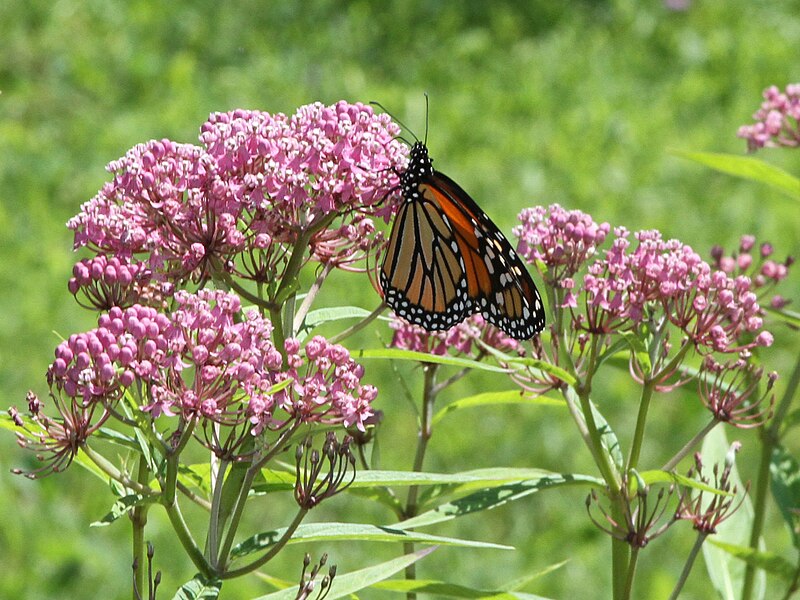
- Beauty and Symmetry in Nature: The Quran frequently points to the beauty in nature as intentional. It mentions how rain brings forth fruits of varying colors, and mountains have streaks of diverse hues, and even animals and humans come in different shades – concluding, “Only those who know Allah fear Him [as they see His signs]” (Quran 35:27–28). Imam ‘Ali (ʿa) describes how birds are “set in different colors by His exquisite power”sibtayn.com, again emphasizing intentional artistry. From the vibrant patterns on a butterfly’s wing to the striped coat of a zebra, Muslims see aesthetic harmony as a deliberate mark of the Musawwir (The Fashioner).
Reflection on Nature and Recognition of God’s Wisdom
Islamic scripture urges believers not to passively observe nature, but to reflect deeply on it, thereby recognizing the Creator’s wisdom and greatness:
- Invitation to Observe: “Do they not look at the camels – how they were created? And at the sky – how it is raised?” (Quran 88:17–18). Such verses prompt us to examine the structure of a camel (perfectly adapted for desert life), or the vastness of the heavens, as a means to appreciate Allah’s design. Similarly, “Say: Observe what is in the heavens and the earth” (10:101) – a direct Quranic command to study the natural world as a religious contemplation. Those who ponder creation conclude, “Lord, You have not created this in vain!”myislam.org, and it deepens their faith.
- Signs in All Aspects of Nature: The Quran’s examples span the spectrum of life and environment. It speaks of how cattle give milk as a pure nourishment “from between excretions and blood” – a sign for those who reflect (16:66). It describes the inspiration God gave the bee to pollinate and produce honey, “a drink of varying colors, in which there is healing for people. Surely in that is a sign for those who think.” (16:68–69). Every natural phenomenon – the alternation of night and day, the sailing of ships on the sea, the rain reviving dead land and “dispersion of every kind of creature therein” – is described as “ayat” (signs) for people of understandingmyislam.orgmyislam.org. In verse 2:164, this long list of natural wonders ends with “surely in these are signs for those who use reason”myislam.org. Thus, scientific inquiry and spiritual insight go hand-in-hand in Islam; studying biology, geology, or astronomy can be acts of devotion leading to awe of the Creator.
- Prophetic Teachings on Reflection: Prophet Muhammad ﷺ continually directed attention to nature as a means to know God. He reportedly said, “Think about the wonders of creation, not about Allah’s essence”abuaminaelias.com – meaning one should use creation as a mirror to understand Allah’s attributes (His power, knowledge, beneficence), while accepting that God Himself is beyond full human comprehension. The Prophet also warned against heedlessness, encouraging that one’s heart should be soft and humble upon witnessing Allah’s signs in the world (Quran 57:16). Many chapters of the Quran are named after natural entities – e.g. Al-Nahl (The Bee), Al-An‘am (The Cattle), An-Naml (The Ant), Al-‘Ankabut (The Spider), Al-Fil (The Elephant) – subtly indicating that these creatures embody lessons and signs worth pondering.
- Nature as a Path to God: Islamic sages often took to contemplation of nature to strengthen their faith. One hadith states that in the early morning the Prophet would recite verses about the creation of the heavens and earth (3:190–191) and then supplicate, “O Allah, surely in these creations there is a sign of Your Glory, so protect us from the Fire…”. By reflecting on the majesty of creation, a believer’s heart fills with reverence (khushu’). The aim of such reflection is gratitude and recognition of Tawhid (the oneness of God), as creation leads one to the Creator. Imam Jaʿfar al-Sadiq (ʿa) in his discourse Tawḥīd al-Mufaḍḍal systematically pointed out the wisdom in everything: from the instincts of animals to the growth of plants to the cycles of weather, concluding that none of it could be purposeless. He stressed that every creature has been given the suitable tools and faculties for its divinely intended role – “both kinds of animals are gifted with exactly the things appropriate to their needs… therein lies their survival”durrenajaf.comdurrenajaf.com. Such observations were meant to lead one to glorify Allah’s knowledge and wisdom.
All Creatures Glorify and Obey God
In Islamic belief, not only is every creature made with wisdom, but every creature also acknowledges the Creator in its own way and fits into the cosmic order:
- Universal Praise of Allah: The Quran states: “The seven heavens and the earth and all within them extol His glory; there is not a thing except that it glorifies His praise, but you do not understand their glorification” (Quran 17:44). This profound verse teaches that every aspect of creation – animals, plants, even rocks and stars – is in a state of worship and submission to God, even if humans cannot perceive it. Likewise, “Do you not see that to Allah prostrates whoever is in the heavens and on the earth – the sun, the moon, the stars, the mountains, the trees, the moving creatures, and many of mankind…?” (22:18). In other words, all of nature is Muslim (in the literal sense of “submitting to God’s will”). Birds are mentioned as “celebrating His praises in the skies”, each knowing its manner of prayer (24:41). This worldview imbues sanctity and purpose in every living being: they are fellow servants of God.
- Hadith of the Ants: A famous story in the Hadith illustrates the inviolability of creatures that glorify God. The Prophet ﷺ said, “An ant bit a prophet from the previous nations, and that prophet ordered the ant colony to be burned. Allah revealed to him: ‘Because one ant bit you, you have destroyed a whole nation that glorified Me?’”sunnah.com. This narration (found in Bukhari and Muslim) teaches that even the lowly ant has a form of tasbīḥ (glorification of Allah), and it was unjust to wipe out the entire colony. The underlying message is that no creature is worthless – each is part of an “ummah” (community) singing God’s praises. Humans must recognize other species as nations in their own right, living according to God’s plan.
- Accountability Regarding Animals: On the Day of Judgment, Islamic sources indicate that animals too will be dealt with justly (even to the point of a hornless goat being avenged against a horned goat that butted it, per a Hadith in Muslim). In a striking Hadith, the Prophet said: “Whoever kills a small bird for no reason, it will come on the Day of Resurrection crying out: ‘O Lord, so-and-so killed me in vain, not for any beneficial purpose!’”sunnah.com. This teaches that wanton cruelty towards any living being is a sin that will be exposed, because that creature’s existence was not in vain. It had a God-given life and role, and taking its life frivolously is an offense in Allah’s sightsunnah.com. The Prophet even forbade using living creatures as mere targets for sport. All of this underscores that animals are not just resources; they are honored creations of Allah that deserve compassion.
- Each Follows Divine Guidance: The Quran hints that every creature is guided by Allah’s wisdom: “Our Lord is He who gave everything its form and then guided it” (20:50). Birds know how to migrate, bees how to build hives, spiders how to weave webs – these instinctual behaviors are seen as ilhām (Divine inspiration). In Surat Al-Aʿlā, Allah is described as “He who created and proportioned, and who destined and guided” (87:2–3). Thus every living thing, by following its nature, is fulfilling God’s plan. Predators keep ecosystems in balance, worms aerate soil, bees pollinate plants – none of these tasks are random; they are part of an intricate design. Imam ‘Ali (ʿa) said about birds: “He shaped them with joints and bones covered in flesh… prevented some from flying due to heavy bodies, allowing them only a near-ground flutter. He set them in different colors by His delicate might and exquisite power”sibtayn.comsibtayn.com. Each specification – physical build, ability, habitat – is intentional. In Islamic understanding, when creatures live and function as intended, they are obeying Allah’s amr (command).
Stewardship and Compassion for All Creatures
Acknowledging the perfection and purpose in all creation leads to an important corollary: humans are called to honor and care for the natural world as trustees (khalīfa) of God on earth.
- The World: A Green Trust: Prophet Muhammad ﷺ beautifully said: “The world is green and sweet, and Allah has appointed you as stewards (vicegerents) over it in order to see how you act.”sunnah.com. This Hadith (Sahih Muslim) portrays the earth as a lush, appealing garden given to humankind as an amanah (trust). We are tested on how we treat this trust. Rather than seeing nature as random matter to exploit, believers see it as Allah’s property full of signs, which we must manage with justice and gratitude. The Quran echoes this by calling humans “successors on earth” and warning us “not to spread corruption therein” (Quran 2:30, 7:56). Environmental consciousness in Islam flows directly from recognizing divine wisdom in nature’s design – harming that design is like vandalizing God’s work.
- Kindness to Animals: Numerous Hadiths reinforce mercy toward living beings. The Prophet ﷺ told of a man who gave water to a desperately thirsty dog by climbing into a well and filling his shoe with water. Because of this single act of compassion, Allah forgave the man’s sins. Upon hearing this story, the Companions asked, “O Messenger of Allah, is there reward for us in caring for animals?” He replied: “Yes. There is reward for kindness to every living creature.”sunnah.com. This profound statement – “fī kulli kabidin raṭbah ajr” – elevates caring for any creature (even a stray dog) to an act of charity rewarded by Godsunnah.com. Conversely, the Prophet warned of a woman who earned divine punishment because she cruelly confined a cat without feeding it or letting it hunt, causing the cat’s death (Sahih Bukhari). In Islamic teachings, every animal matters: each is part of the perfect creation, and thus harming them unjustly is a sin, while showing mercy is a virtue.
- Balance and No Excess: The Quranic concept of mīzān (balance) in nature (55:7–10) teaches that all components of creation are in a measured equilibrium. Humans must not upset this balance through greed or waste. “Eat and drink but do not be excessive; He (Allah) does not love the wasteful” (7:31). Protecting species from extinction, preserving water and soil, and maintaining biodiversity align with the Islamic duty to uphold the balance Allah embedded in creation. In fact, classical jurists even forbade cutting down fruit-bearing trees in war and cautioned against unnecessary killing of even harmful animals if they are not posing a direct threat.
- All Major Schools Emphasize Mercy: Both Sunni and Shia sources stress compassion for nature. Imam Ali (ʿa) in Nahjul Balagha advised kindness even to beasts of burden, and Imam Jaʿfar al-Sadiq (ʿa) is narrated to have told his followers to be like “the friendly earth” – providing benefit to all without expecting reward. A Shia Hadith states that “Allah rewards a person who removes a harm from the road of Muslims, even a stone or thorn”, which by extension includes cleaning environmental harm. Sunnis narrate that the Prophet ﷺ forbade killing birds or animals for sport, and even cursed those who mutilate trees without cause. This unity of teachings across Islamic tradition underscores that respecting God’s creation is a shared ethic.
Conclusion: In Islam, the natural world is a tapestry of signs (ayat) woven by the All-Wise. Every organism, from the tiniest ant to the mightiest whale, from the simplest weed to the tallest mountain, reflects Allah’s perfect design and serves a purpose in His plan. Quranic verses affirm that nothing was created carelessly – “not in vain” – and Hadith literature echoes that wisdom, encouraging humans to marvel, learn, and show reverence. The divine design is evident in the order, beauty, and purposefulness observed throughout the universe. By pondering these verses and narrations, one is inspired to glorify the Creator just as the creation itself does. Ultimately, recognizing Allah’s wisdom and perfection in all life nurtures a sense of responsibility in the believer: a duty to protect, cherish, and live harmoniously with the rest of creation, as humble guardians of this magnificent trust.
Sources:
- The Holy Quran – e.g. Surah As-Sajdah 32:7myislam.org, Surah Al-Mulk 67:3-4myislam.org, Surah Al-An‘am 6:38quran.com, Surah An-Nur 24:45myislam.org, Surah Al-Anbiya 21:30myislam.org, Surah An-Nahl 16:8myislam.org, Surah Al-Jathiya 45:3-4myislam.org, Surah Ali ‘Imran 3:191myislam.org, etc.
- Tafsir and Scholarly Commentary – e.g. Maududi’s Tafsir on 32:7 (creation made optimal)myislam.org and on the variety of life forms (note on 27:64)myislam.orgmyislam.org.
- Prophet Muhammad’s Hadith: Sahih Muslim 2742 (“The world is green and beautiful…”)sunnah.com; Sahih Bukhari 6009/Sahih Muslim – kindness to a dog and “reward for serving any living being”sunnah.com; Sunan an-Nasa’i 4446 – sparrow complaining of being killed in vainsunnah.com; Sahih Muslim 2241a – story of the ant colony that “glorified Allah”sunnah.com; Ibn Abbas’s report (graded Hasan) encouraging reflection on creationabuaminaelias.com.
- Shia Teachings: Nahj al-Balāghah, Sermon 165 of Imam ‘Alisibtayn.comsibtayn.com, describing the peacock and birds as exemplars of Allah’s creative artistry; Tawḥīd al-Mufaḍḍal (tradition of Imam Jaʿfar al-Sadiq as narrated to Mufaḍḍal) emphasizing the “vast wisdom of the Almighty” in the diversity of animals and the adaptations of each speciesdurrenajaf.com. These and other sources collectively illuminate Islam’s perspective on the natural world as a reflection of divine perfection and wisdom.
 The Glorious Quran and Science
Leave a comment