
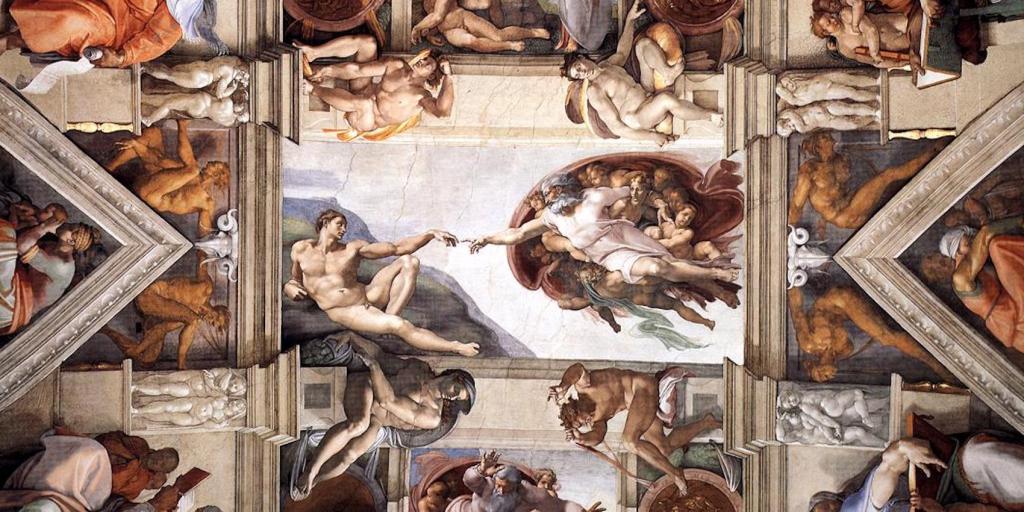
Presented by Zia H Shah MD
Abstract
Organized religion, exemplified by the Catholic Church’s 2000-year history, has often pursued institutional power, unity, and authority at the expense of an honest quest for theological truth. This comprehensive review explores critical episodes – the Crusades, the Spanish Inquisition, the Protestant Reformation, the First and Second Vatican Councils, and the modern sexual abuse scandals – to illustrate how the Church’s actions frequently diverged from the lofty spiritual truths it professed. In each case, the drive to enforce doctrine or protect the institution led to violence, suppression of dissent, or moral failure rather than a transparent search for truth. These historical lessons underscore that the pursuit of theological and philosophical truth is ultimately an individual endeavor rather than a “team sport.” Regardless of religious tradition – whether Abrahamic faiths or Hinduism or Buddhism – personal conscience and responsibility remain paramount. In the end, every person must seek truth and accountability for themselves. The Epilogue offers a thematic reflection on these lessons with supporting citations from Church documents and historical sources, reaffirming the primacy of individual responsibility in matters of truth and faith.
Introduction
What does it mean for an organized religion to pursue “the best theological truth”? Ideally, one might expect a religious institution to earnestly seek understanding of the divine and moral truths, adapting its teachings as insights deepen and errors are discovered. The reality, however, has often been more complex. The Roman Catholic Church, as one of the oldest and most influential organized religions, provides a rich historical case study of this tension between institutional preservation and the genuine pursuit of truth. Across two millennia, the Church has claimed to be the guardian of truth, yet its history reveals many instances where safeguarding authority, enforcing uniformity, or expanding power took precedence over truth-seeking.
Throughout history, individuals both within and outside the Church have raised challenges and new ideas – from early heretics and reformers to modern whistleblowers – in the name of truth. The Church’s response to such challenges has varied from dialogue and reform to, more often, outright suppression. In theory, Catholic theology holds that truth cannot contradict truth, and that faith and reason ultimately harmonize. In practice, however, when new truths emerged that threatened entrenched doctrines or Church authority, the institutional reaction was frequently defensive. This pattern suggests that organized religion has often functioned more as a defender of an established orthodoxy or “team” position than as a neutral pursuer of the highest truth.
In the sections that follow, we critically examine key episodes in Catholic history that illustrate this dynamic:
- The Crusades: Religious wars sanctioned by the Church, ostensibly for a holy cause, but marked by violence and political motives.
- The Inquisition: A system to enforce orthodoxy through intimidation and torture, suppressing dissenting beliefs and even scientific truths.
- The Protestant Reformation: A movement sparked by individuals seeking theological and moral truth, met by the Church first with repression and later grudging reform.
- The First Vatican Council (Vatican I): The proclamation of papal infallibility – an assertion of absolute authority that arguably stifled open theological inquiry.
- The Second Vatican Council (Vatican II): A moment of self-correction when the Church embraced reforms, including affirming individual conscience and religious freedom, after centuries of resistance to change.
- Modern Sex Abuse Scandals: The late 20th-century revelations of widespread child abuse by clergy and systematic cover-ups by Church hierarchy – a stark example of protecting the institution’s reputation over truth and morality.
Each of these episodes teaches a lesson about the pitfalls of conflating the institutional interests of organized religion with the genuine pursuit of truth. As we will see, time and again the Church’s institutional “team” instincts – to win converts, to silence heresy, to maintain authority, to avoid scandal – trumped the honest acknowledgment of facts or moral failings. Yet, in many of these cases, truth eventually came to light through the courage of individuals: whether scholars, reformers, or victims and investigators. History thus supports the view that theological and philosophical truth-seeking is an individual sport, not a team sport. No council decree or papal bull can substitute for the personal journey of conscience and reason that each believer (or non-believer) must undertake. And in all religious frameworks – be it Christianity, Judaism, Islam, Hinduism, Buddhism, or others – the ultimate accountability rests on individuals to discern and uphold the truth as they understand it.
In the following analysis, we will delve deeply into each historical episode, drawing on primary sources and church documents to critically assess how organized religion has not always been oriented toward the best truth. We will then conclude with a thematic Epilogue, reflecting on personal responsibility in matters of faith, reinforced by wisdom from multiple traditions and the Church’s own recent admissions.
The Crusades: Holy War or Power Play?
In 1095, Pope Urban II called upon the warriors of Christendom to take up the cross and reclaim the Holy Land from Muslim rule. What ensued were the Crusades – a series of religious wars that would span two centuries. The First Crusade (1096–1099) set the tone: it was pitched as a holy mission to defend Christianity and liberate sacred territory, but it quickly devolved into a campaign of violence and conquest with motives far removed from pure theology. This episode highlights how the Church, as an organized religion, pursued worldly aims under the banner of divine truth.
The Call to Crusade and Its Incentives
Pope Urban II’s rallying cry at the Council of Clermont in November 1095 reveals how the Church framed the Crusade as a righteous and spiritually rewarded endeavor. According to chroniclers of the speech, Urban promised remission of sins (a guaranteed place in heaven) to any who would die in the Crusade – effectively turning the war into a penitential act sourcebooks.web.fordham.edu. He portrayed the enemy in starkly demonizing terms, describing the Muslims as “an accursed and vile race” and urging Christian knights to wipe them out as an act of faithsourcebooks.web.fordham.edusourcebooks.web.fordham.edu. “All who die… in battle against the pagans, shall have immediate remission of sins,” Urban declared, adding that Christ himself “commands it”sourcebooks.web.fordham.edu. This extraordinary promise of spiritual reward for violence shows the Church deploying its theological authority (the power to bind and loose sins) to serve a militant campaign.
Such inducements illustrate that the Crusade was not about open theological inquiry or dialogue with the Muslim world – it was about mustering an army under religious pretext. The truth of whether killing “infidels” could ever be godly was not up for debate; the papacy asserted it as fact. The underlying motives for Urban II and the Church hierarchy were arguably as political as religious: aiding the Byzantine Emperor against the Turks, reuniting Eastern and Western Christendom under Rome, and extending the Church’s influence. Yet these motives were wrapped in the language of absolute divine will (“Deus vult!” – God wills it – became the Crusaders’ chant). This conflation of organized religion’s goals with God’s will left little room for questioning or truth-seeking about the morality of the endeavor.
Crusader Violence and Moral Contradictions
Once the First Crusade was underway, the conduct of the Crusaders further underscored that this was no pure quest for theological truth or holiness. It became a war of brutal conquest. Contemporary accounts detail horrifying atrocities committed in the name of the faith. When the knights of the First Crusade captured Jerusalem in 1099, they perpetrated a massacre that even medieval Christian chroniclers described with shock. One eyewitness, Raymond of Aguilers, wrote that in the Temple of Solomon (Al-Aqsa Mosque) “men rode in blood up to their knees and bridle reins”, calling it “a just and splendid judgment of God”christianhistoryinstitute.org. Streets were littered with “piles of heads, hands, and feet”, and the city’s Jewish and Muslim inhabitants – men, women, and children – were slaughtered without mercychristianhistoryinstitute.org. As Raymond’s account chillingly noted, the Crusaders actually celebrated this carnage as the triumph of Christianity: “This day, I say, marks the justification of all Christianity… for on this day the Lord revealed Himself to His people”christianhistoryinstitute.org.
Such zealotry and bloodshed starkly contradict the core ethical teachings of Christianity (love of neighbor, the sanctity of life). Yet the organized Church of the time not only condoned but glorified this violence. Theological truth was an apparent casualty – replaced by propaganda that framed mass killing as righteousness. The best theological truth, one might argue, would have recognized the shared humanity of Muslims and Jews or heeded Christ’s injunction to Peter to put away his sword. Instead, the Church’s leadership indulged a militant interpretation of faith where the ends (reclaiming holy sites and asserting Christian dominance) justified gruesome means.
It is telling that centuries later, the Catholic Church has acknowledged the grave moral errors of the Crusades. In 2000, during the Jubilee year “Day of Pardon” Mass, Pope John Paul II spoke of the “use of violence that some [Christians] have committed in the service of truth”, asking forgiveness for wars waged in the name of faiththeguardian.com. Although he did not explicitly name the Crusades in that speech, the reference was clear – the Crusades were among the “2000 years of violence, persecution and blunders” for which he sought pardontheguardian.comtheguardian.com. John Paul II even specifically regretted the Crusaders’ sack of Constantinople in 1204 (during the Fourth Crusade), calling it “tragic” that Latin Christians attacked their Greek Christian brethren, an event that “fills Catholics with deep regret”en.wikipedia.org. Such contrition implies a recognition that those actions were not aligned with true Christian values.
Lessons from the Crusades: The Crusades exemplify how an organized religion can depart from pursuing truth and instead pursue worldly aims under a cloak of sanctity. Key lessons include:
- Spiritual Manipulation: The Church used its spiritual authority (e.g. indulgences, promises of salvation) to drive a war, manipulating believers rather than guiding them to moral truthsourcebooks.web.fordham.edu. This shows the risk of conflating institutional agendas with God’s will.
- Violence vs. Teachings: The Crusaders’ conduct – indiscriminate massacre celebrated as holy – blatantly contradicted the ethical truth of the faith. Organized religion’s “team” mentality justified atrocities rather than admitting moral truth (that such violence was evil)christianhistoryinstitute.org.
- Retrospective Clarity: Only long after did the Church (as in John Paul II’s apologies) concede the Crusades were wrongtheguardian.com. This delay underscores how institutions can cling to narratives of righteousness, resisting the truth until pressed by conscience and historical reflection.
- Power and Prestige: Beneath theological rhetoric lay motives of power and prestige (territory, unity of Christendom, papal influence). When these goals drive action, truth becomes secondary. The Crusades warn that an institution fighting to expand influence may betray its own spiritual truths.
In sum, the Crusades highlight the danger when organized religion weaponizes faith, turning belief into an instrument of war. Rather than a sincere pursuit of understanding or conversion through example, the Church mobilized armies and forged a combative identity – a stance that left little room for introspection or admission of error. The “truth” of the Crusade was defined by victory and domination, not by any theological enlightenment. This set a precedent in Christendom that would echo in later centuries: might often made “right,” and dissenting voices questioning the morality or logic of such campaigns were drowned out by the clamor of collective fervor.
The Inquisition: Enforcing Orthodoxy at the Expense of Truth
If the Crusades showcased external aggression of the Church, the Inquisition represents internal aggression – the Church’s apparatus to police thought and belief among its own adherents. Spanning from the 13th century through the early modern era, various inquisitions (Medieval, Spanish, Roman) were established to root out heresy and enforce doctrinal uniformity. The Inquisition is infamous for employing intimidation, censorship, and torture as tools of religious control. In pursuing absolute orthodoxy, the organized Church again demonstrated a willingness to sacrifice compassion, open inquiry, and even factual truth. The result was a climate of fear that stifled intellectual progress and silenced alternative theological perspectives.
The Machinery of Suppression
The Inquisition began in the medieval period as church courts authorized to try and punish heretics – those deemed to have deviated from official Catholic doctrine. According to historical summaries, it was a system of tribunals where ecclesiastical judges (often Dominican friars) investigated suspects with almost no checks on their poweren.wikipedia.org. The inquisitors’ goal was unwavering: to “combat heresy” and any beliefs or practices judged deviant from Catholic orthodoxyen.wikipedia.org. This included everything from Cathar and Waldensian teachings in the 1200s, to alleged witchcraft, to the ideas of early Protestants during the Reformation era. As the Catholic Encyclopedia might put it, preserving the unity of faith was paramount – even above individual rights or empirical evidence.
To achieve this, the Inquisition employed methods antithetical to any genuine search for truth. Historical records and modern analyses concur that violence and coercion were integral to inquisitorial procedure. Torture, while governed by some rules on paper, was in practice used to extract confessions and accusationsen.wikipedia.orgen.wikipedia.org. “Violence, isolation, torture or the threat of its application, have been used by the Inquisition to extract confessions and denunciations,” notes a historical overviewen.wikipedia.org. Inquisitors could keep suspects in solitary confinement, threaten them with horrific devices, or actually inflict physical pain, all in the effort to make them recant or implicate othersen.wikipedia.orgen.wikipedia.org. For example, the Papal bull Ad extirpanda (1252) explicitly authorized the use of torture by Inquisitors, provided life and limb were not permanently harmed – a directive often honored in the breachen.wikipedia.orgen.wikipedia.org. Detailed manuals like the “Directorium Inquisitorum” of Nicholas Eymerich (1376) gave instructions on how to conduct interrogations, strongly recommending torture as “praiseworthy” in certain casesen.wikipedia.org.
It is difficult to reconcile these practices with any notion of pursuing truth. Coerced confessions are notoriously unreliable – something even some inquisitors understood (one historian notes that they knew tortured testimony was shaky, so they tried to gather other evidence too)en.wikipedia.org. Yet the overriding concern was not truth in an empirical or philosophical sense; it was conformity. The Church’s institutional stance was that it already possessed the truth (the official doctrine), so the Inquisition’s role was not to discover truth but to enforce acceptance of it. This meant that any deviation was automatically labeled a falsehood or heresy, without sincere exploration of whether the dissenter might have a point. In effect, organized religion in this mode became an exercise in power: truth was defined by authority, and forcing others to profess that “truth” was considered a righteous act. As one modern commentator observed, the Inquisition is an extreme example of religious leaders enforcing order “which incited fear and submission in the general population”en.wikipedia.org, rather than fostering genuine understanding.
The Spanish Inquisition (1478–1834) is especially notable. Established by Ferdinand and Isabella with papal approval, it targeted Jews and Muslims who had converted to Christianity (conversos and moriscos) suspected of secretly clinging to their old faiths, as well as any other alleged heretics. Its proceedings were notoriously opaque and draconian. Historians estimate that over its 350-year span, somewhere between 3,000 to 5,000 people were executed by the Spanish Inquisition tribunals (earlier exaggerated claims of tens or hundreds of thousands have been debunked)theguardian.comtheguardian.com. Thousands more suffered imprisonment, public humiliation, or torture. Even if the death toll was “modest” by some standards, the climate of terror was real. Simply possessing a banned book or criticizing a church practice could land one in a dungeon. In 1600, for instance, the Roman Inquisition (a related body under the Pope) burned the philosopher Giordano Bruno at the stake for heresy. And in perhaps the most famous case, it was the threat of torture by the Inquisition that forced the scientist Galileo Galilei in 1633 to recant his heliocentric theory that the Earth orbits the sun. He spent the rest of his life under house arrest for having taught a truth that challenged Church orthodoxytheguardian.com.
Galileo Galilei before the Holy Office, an 1847 painting by Joseph-Nicolas Robert-Fleury. In 1633 Galileo was tried by the Roman Inquisition for asserting that the Earth revolves around the Sun – a scientific truth that contradicted the Church’s then-official interpretation of Scripture. Under threat of torture, Galileo recanted, illustrating how the Inquisition’s coercive power stifled truth in favor of dogma.
The image of Galileo kneeling before the cardinals of the Holy Office is emblematic of the Inquisition’s impact on truth. Here was empirical evidence of the Earth’s motion, but the organized Church would not tolerate it because it undermined the literal reading of scripture and, by extension, the Church’s authority as the interpreter of truth. Galileo’s private correspondence after the trial conveys his frustration – he reportedly muttered “Eppur si muove” (“And yet, it moves”) about the Earth, asserting the truth even as he was forced to deny it. The Church eventually admitted Galileo’s propositions were correct, but only centuries later. In 1992 – a full 359 years after Galileo’s conviction – Pope John Paul II formally acknowledged that the Church had erred in the Galileo affair, a symbolic rehabilitation of a man who was clearly right all along. This long delay is sobering: it shows how stubbornly an institution clung to error rather than concede a point that challenged its worldview and authority.
“Serving Truth” Through Persecution
From a modern perspective, the Inquisition is almost universally seen as a scandal – a case of religious zeal and institutional arrogance overriding basic humanity and truth. The Catholic Church itself, in recent times, has taken steps to reckon with this dark legacy. During the same 2000 Jubilee apology mentioned earlier, Cardinal Joseph Ratzinger (later Pope Benedict XVI) spoke on behalf of the Church’s conscience regarding the Inquisition. He admitted that “even men of the Church, in the name of faith and morals, have sometimes used methods not in keeping with the Gospel”theguardian.comtheguardian.com. This understated confession covers a multitude of sins: torture chambers, burnings at the stake, forced conversions – none of which square with Jesus’s teachings of love and truth. In March 2000, the Vatican even hosted a symposium on the Inquisition and opened some archives, attempting to understand the historical facts and dispel myths. One finding presented by Professor Agostino Borromeo was that roughly 125,000 people were tried by the Spanish Inquisition, of whom about 1% (around 1,250) were executed – far fewer than commonly believed, but still an appalling toll by today’s standardstheguardian.com. Ratzinger’s remarks and the research both reflect an effort by the Church to confront what John Paul II called “the symbol of scandal” that the Inquisition had becometheguardian.com.
However, it is critical to note that during the centuries the Inquisition operated, the Church largely defended it as a necessary means of protecting the faith. The rationale offered was that heresy imperiled souls eternally; thus, using temporal punishment (even severe) to induce repentance was justified to save souls from hell. This theological rationalization enabled many churchmen to sincerely believe they were “serving the truth” by extirpating error – even as they employed cruel methods. It is a classic example of religious ends-justify-means thinking. In reality, the “truth” being served was not open to question: it was whatever the Church declared. By eliminating dissent, the Inquisition created an artificial semblance of unanimous truth, but at the cost of genuine understanding and credibility. As one historian aptly summarized, “The majority of historical scholars continue to see the Inquisition as an example of extremist religious leaders enforcing order… rather than allowing any deviation”en.wikipedia.org. In other words, it was about control, not truth.
Lessons from the Inquisition: The era of the Inquisition offers several cautionary lessons about organized religion’s relationship to truth:
- Authority Over Truth: The Church presumed it already possessed the full truth, making questioning or new ideas automatically “heresy.” This presumption of infallible authority precluded honest pursuit of truth and led to persecuting those who sought truth (scientific or theological) outside official lines.
- Coercion’s Corruption: Truth discovered under torture or fear is no truth at all. The use of terror (torture, executions) to compel belief shows an institution valuing uniformity over sincerity. It fostered hypocrisy (outward compliance) and suppressed the very conscience and reason that authentic faith would engage.
- Moral Blindness: By convincing itself that harsh methods served a higher good (saving souls), the Church became blind to the egregious moral wrongs it was committing. This echoes the danger whenever a group believes the ends (protecting doctrine) sanctify any means – a self-delusion that sacrifices ethical truth.
- Chilling Effect on Progress: The Inquisition’s climate stifled not just theological dissent but scientific and intellectual progress (Galileo’s case being the prime example). Organized religion, when defensive and repressive, can become an obstacle to truth in broader realms of knowledge.
- Long Road to Repentance: The Church’s eventual repentance (acknowledging the Inquisition’s wrongs) came very latetheguardian.com. It suggests that large institutions may double down on error for ages to avoid admitting mistakes – a stark contrast to the personal spiritual ideal of continual repentance and growth in truth.
Ultimately, the Inquisition stands as a dramatic illustration that “theological and philosophical truths are an individual sport, not a team sport.” The great advances in understanding – whether we think of a lone astronomer charting the heavens, or a lone reformer reading scripture in a new light – often came from courageous individuals, not the decrees of committees or tribunals. The “team” of organized religion, in this case, actively hindered those individuals. It’s a legacy that the Catholic Church has had to painfully confront as it seeks credibility in the modern age. One can argue that the lessons of the Inquisition paved the way for the Church’s later embrace of religious freedom and conscience rights in the 20th century (as we will see with Vatican II), effectively admitting that coercion in matters of faith was wrong and truth cannot be imposed by forcevatican.vavatican.va.
The Protestant Reformation: Individual Conscience vs. Institutional Authority
If the Inquisition was the Church’s iron fist to crush internal dissent, the Protestant Reformation was the moment dissent exploded into a full-blown revolution that the Church could not contain. In the 16th century, a series of individuals – of whom Martin Luther is the most famous – confronted the Catholic Church over questions of doctrine, practice, and truth. Their challenges led to a permanent split in Western Christianity and the emergence of Protestant churches outside the authority of Rome. The Reformation highlights the clash between individual conscience and institutional dogma. It underscores how organized religion (the Catholic hierarchy of the time) largely resisted needed reforms and silenced truth-seekers until the pressures became too great, and even then responded more by counter-attack than by humble introspection.
“Here I Stand”: Martin Luther’s Challenge
The catalyst for the Reformation is traditionally dated to 1517, when Martin Luther, a German Augustinian monk and theology professor, circulated his Ninety-Five Theses. These were propositions criticizing the Church’s sale of indulgences (payments for remission of sin punishments) and other corruptions. Luther’s initial aim was to call the Church back to what he saw as biblical truth – especially the doctrine that salvation is a free gift of God’s grace, not something bartered or earned. However, what began as an internal reform effort spiraled quickly into a fundamental dispute over authority and doctrine.
Luther epitomized the power of individual conscience informed by personal study of scripture. Summoned to answer for his views before the imperial Diet (assembly) at Worms in 1521, Luther was asked to recant his writings. In an extraordinary display of conviction against the might of both Church and Empire, Luther declared: “Unless I am convinced by Scripture and plain reason – I do not accept the authority of the popes and councils, for they have contradicted each other – my conscience is captive to the Word of God. I cannot and I will not recant anything, for to go against conscience is neither right nor safe. God help me. Amen.”luther.de. These famous words (even if the exact wording may vary in reports) strike at the heart of the matter. Luther asserted that popes and councils (the pinnacle of organized religious authority) can err and have erred, whereas the individual must ultimately adhere to conscience and truth as found in scripture and reason. The oft-quoted final phrase – “Here I stand, I can do no other” – captures his willingness to stand alone for what he believed to be true, against the entire ecclesiastical establishment.
The Church’s official response was not to engage deeply with Luther’s theological points, but to condemn and silence him. In 1520 Pope Leo X issued the bull Exsurge Domine condemning Luther’s teachings, and upon Luther’s refusal to submit, he was excommunicated. The Diet of Worms, under Emperor Charles V, then declared Luther an outlaw (the Edict of Worms, 1521) – meaning anyone could kill him without legal penalty. Forced into hiding for a time, Luther survived under the protection of sympathetic local princes and continued to develop his reforms. His ideas – including the primacy of scripture (sola scriptura), justification by faith (sola fide), and the “priesthood of all believers” – spread like wildfire, thanks in part to the printing press. By the time the Church realized the extent of the threat, a significant portion of Europe was breaking away.
From the Church’s perspective in the 16th century, Luther and subsequent reformers (Zwingli, Calvin, etc.) were heretics leading souls astray. The organized religion reflex was to defend established doctrine and papal authority at all costs. This led to the Counter-Reformation, where the Church did institute some reforms but also entrenched other positions. The Council of Trent (1545–1563) was convened to address Protestant teachings. While it abolished the more egregious abuses (e.g., selling indulgences was curbed, seminaries were established to educate clergy better), Trent also issued stringent canons reaffirming Catholic doctrines and anathematizing (cursing) anyone who held Protestant views. For example, Trent doubled down on the authority of Church tradition alongside scripture, upheld the seven sacraments, and insisted on the necessity of the Church’s mediation for salvation – all direct rebuttals to Protestant claims. In effect, the Council of Trent and the papacy of that era said: We, the organized Church, are right and these dissidents are wrong; no compromise on core doctrine is possible. Theological truth, as defined by Rome, was immutable, and unity through obedience was valued over reconciliation through mutual understanding.
The consequences were profound. Europe was plunged into religious wars and decades of conflict (such as the Peasants’ War partly inspired by reform fervor, the French Wars of Religion, and the Thirty Years’ War from 1618–1648) as rulers and populations took sides. The Catholic Church, through instruments like the Roman Inquisition and the Index of Forbidden Books, worked to snuff out Protestant ideas in Catholic-controlled regions. Yet, interestingly, it also led to some internal soul-searching. By the late 16th century, reforming figures within Catholicism, like St. Charles Borromeo or the Jesuit order, helped renew the Church’s education and pastoral care, implicitly acknowledging that Luther had been right about many clerical failings (even if they rejected his doctrinal stances).
From a historical hindsight, the Reformation illustrates that many of Luther’s critiques had merit. The Church at the time was indeed worldlier and more corrupt than its ideals – selling indulgences, maintaining a wealthy, often scandalous clergy, etc. These were truths that needed addressing. But the organized religion – instead of truly listening and adapting in time – reacted defensively. It took the shock of a massive schism (the permanent loss of whole nations to Protestantism) to force the Church to reform some practices. Arguably, had the Church leadership been more open to truth and dialogue in Luther’s day, the split might have been averted or healed. Instead, each side dug in, convinced of its own rectitude.
The Triumph of Individual Faith (and its Turmoil)
The Protestant Reformation can be seen as a triumph of individual faith and conscience – but also a cautionary tale of what happens when that clashes with institutional intransigence. Luther’s stand at Worms remains an icon of individual responsibility before God. He famously said that at the Last Judgment, it would be of no use to plead that he was following popes or councils if they were wrong – each person must answer to God for what they personally believed and didluther.de. This principle resonates widely (indeed, it aligns with Biblical teaching that “each of us will give an account of himself to God”biblehub.com). It undermines the notion that belonging to the “right” religious team guarantees truth or salvation irrespective of personal conviction and understanding.
However, the Reformation also unleashed chaos and division. Once individuals en masse took up the mantle of interpreting scripture for themselves, disagreements proliferated. Protestant sects splintered into many denominations. The unity that the Catholic Church so valued was indeed shattered – raising the question: was the Reformation a step toward truth or away from the unity Christ desired? Catholics argued that the plethora of Protestant interpretations showed the danger of letting everyone be their own theologian – truth splintered into subjectivism. Protestants argued that a coerced unity under false pretenses was worse – better to have a diversity of views seeking truth than uniform error imposed by authority.
From a truth-seeking standpoint, the Reformation had a positive effect in that it compelled people to think and choose for themselves in matters of faith. It was no longer assumed that the Church could do the thinking for you. People read the Bible in their own languages, debated doctrine, and weighed evidence. This aligns with the idea of faith as an individual journey. But the accompanying violence (like Catholics and Protestants persecuting each other, or episodes such as the St. Bartholomew’s Day Massacre of Protestants in 1572) shows that both organized Catholicism and emerging organized Protestantism could be intolerant. In essence, the initial spirit of personal conscience sometimes got lost as new “teams” formed (Lutheran, Calvinist, Anglican, etc.) that themselves enforced their own orthodoxies. The cycle threatened to repeat – which is why later Enlightenment thinkers, seeing the carnage of religious wars, began advocating for secularism and tolerance, shifting the pursuit of truth from churches to the realm of reason and science.
It is noteworthy that only in more recent times have Catholic and Protestant leaders moved toward reconciliation, recognizing elements of truth on each side. The Second Vatican Council (1962–1965) would eventually speak of non-Catholic Christians as “separated brethren” rather than heretics, and the Catholic Church now acknowledges that figures like Martin Luther had legitimate grievances. In 2017, for example (the 500th anniversary of the Reformation), Catholic representatives even joined some commemorations of Luther, highlighting shared beliefs in Christ despite differences. This thaw suggests a more truth-focused approach: an admission that no single group has a monopoly on all theological truth, and that dialogue can enrich understanding. It took centuries, but the organized Church has, in a way, individualized its approach – appreciating that the Holy Spirit can speak through individuals and reformers outside the strict chain of command.
Lessons from the Reformation: The Protestant Reformation underscores several points about the interplay of individual truth-seeking and organized religion:
- Conscience vs. Conformity: Luther’s stand shows the primacy of individual conscience. Even a vast religious institution cannot absolve one from the duty to follow one’s sincere understanding of truth. Organized religion that demands unthinking conformity will eventually face conscientious objection, as happened with Lutherluther.de.
- Institutional Resistance: The Catholic Church’s initial reaction – to excommunicate and condemn rather than engage Luther’s concerns – shows how institutions may instinctively protect authority over admitting faults. This resistance to reform allowed errors and corruption to fester, at great cost.
- Truth Prevails (Eventually): Many of the truths the Reformers advocated (e.g., need for internal reform, the centrality of scripture, the importance of faith) were eventually acknowledged in some form by the Catholic Church, but only after losing credibility and members. The lesson is that an institution should not wait until crisis point to heed voices of truth and reform from within.
- Personal Responsibility in Faith: The fragmentation of Christendom, while lamentable in some ways, made it impossible for Christians thereafter to avoid personal choice. One had to decide what to believe, which community to join – a facet of religious life that continues today. In that sense, the Reformation forced a maturation: faith became less a passive inheritance and more an active personal commitment.
- The Perils of Sectarianism: The flip side is that the Reformation era also showed that breaking away from an old “team” can lead to forming new teams and new dogmatisms. The deeper lesson is not simply that any individual or breakaway is automatically right, but that continual humility and reform are needed in any religious body. Truth-seeking is an ongoing process, not a one-time victory of one side over another.
In summary, the Protestant Reformation highlighted the limits of organized religion’s claims to exclusive truth. It demonstrated vividly that theological truth cannot be decreed valid simply by authority if that authority is misused or corrupt. When the gap between an institution’s teaching and the perceived truth becomes too wide, individuals will follow their conscience elsewhere. And in the long run, the Church had to reconcile with many truths surfaced by those individuals. The drama of Luther at Worms – one man against an empire – is a lasting image of how ultimately each person stands before the truth alone, responsible for their own beliefs. It also foreshadows modern religious liberty principles, where compulsion in religion is seen as illegitimate (a principle the Catholic Church would officially endorse in the 20th century, as we’ll discuss under Vatican II).
The First Vatican Council (1870): Asserting Infallibility – Truth or Power?
By the mid-19th century, the Catholic Church found itself facing a world very different from that of the Middle Ages or the Reformation. The rise of modern science, the Enlightenment’s emphasis on reason, political revolutions, and increasing secularism all challenged the Church’s influence and its claim to ultimate truth. It is against this backdrop that the First Vatican Council (Vatican I) was convened in 1869–1870 under Pope Pius IX. Vatican I is most famous (or infamous) for defining the dogma of Papal Infallibility – a bold proclamation about the supreme authority of the Pope in defining doctrine. This moment is illuminating for our theme: rather than yielding to modern ideas of shared inquiry or accepting limits to its authority, the organized Church essentially declared its teaching office irreformable and above error (under certain conditions). Was this a move in pursuit of truth, or a defensive power play by an institution feeling besieged? The evidence suggests the latter – that Vatican I’s main dogma was less about discovering truth than about cementing authority and demanding assent.
The Dogma of Papal Infallibility
On July 18, 1870, Vatican Council I approved the document Pastor Aeternus, which among other things defined that the Pope, when speaking ex cathedra (from the chair of Peter, in his official capacity) on matters of faith or morals, is infallible – meaning such definitions are irreformable in themselves, not requiring the consent of the Church, and cannot contain errorcatholicplanet.orgcatholicplanet.org. The exact wording is worth examining:
“We teach and define that it is a divinely revealed dogma: that the Roman Pontiff, when he speaks ex cathedra… is possessed of that infallibility with which the divine Redeemer willed that His Church should be endowed for defining doctrine regarding faith or morals; and that therefore such definitions of the Roman Pontiff are irreformable of themselves, and not from the consent of the Church.”catholicplanet.org
Furthermore, the Council attached an anathema to rejection of this teaching: “if anyone… should presume to contradict this Our definition; let him be anathema”catholicplanet.org. In plain terms, Vatican I declared that under very specific conditions, the Pope cannot err in teaching on faith and morals, and anyone who says otherwise is effectively excommunicated.
From the perspective of organized religion and truth, this was a watershed. The Catholic Church had always venerated the authority of the Pope and believed the Holy Spirit safeguards the Church’s core doctrines. But many theologians and laypeople – even within the Church – were uncomfortable with defining infallibility so explicitly. During the council debates, some bishops warned that such a definition could be seen as the Church claiming absolute truth in a way that brooked no criticism or development. Indeed, a minority of bishops (about 20%) voted against the infallibility definition or abstained, and some left the Council early in protest. After it passed, a group of Catholics in countries like Austria and Germany broke away, calling themselves “Old Catholics,” refusing to accept the new dogma as legitimate. They viewed it as an overreach of papal power lacking biblical or ancient support.
Why did Pope Pius IX push for this definition? Several factors: Pius IX, who had lost the Papal States to the unification of Italy (indeed, Rome itself was taken by Italian troops in 1870, just after the council), felt the Church needed to strengthen spiritual authority as its temporal power waned. The 19th century was rife with liberalism, rationalism, and anti-clerical nationalism; defining papal infallibility was a way to rally the faithful around the Pope as a solid rock amid the storm. In 1864, Pius IX had issued the Syllabus of Errors, condemning many modern ideas (like separation of church and state, freedom of religion, etc.) as erroneous. Vatican I’s infallibility dogma was a continuation of that siege mentality: the Church’s response to modernity was to dig in and declare its leader doctrinally unassailable. This was essentially an assertion of epistemic authority – the Church telling the world (and its own flock) that no matter what scientific or democratic challenges arise, when the Pope defines a doctrine, that is the final truth, “irreformable” and requiring assent.
From a critical perspective, one could argue this was the opposite of open pursuit of truth. Rather than acknowledging that the Church might have things to learn (from science, from biblical scholarship, from other viewpoints), Vatican I projected an image of certainty and closure. The irony is that this definition came shortly after the First Vatican Council had to abruptly end due to war (the Franco-Prussian War and the seizure of Rome). The Pope who was declared infallible lost his earthly kingdom in the same breath, becoming the self-described “Prisoner of the Vatican.” History did not pause its challenges: new ideas in science (Darwin’s theory of evolution published in 1859, for instance) and biblical criticism were emerging, but the Church now had a tool to dismiss anything that clearly contradicted defined dogmas.
To be fair, the infallibility doctrine is narrowly defined and has been rarely used (Catholic teaching holds that since 1870, popes have spoken infallibly ex cathedra only once or twice – for example, Pope Pius XII defining the Assumption of Mary in 1950). The everyday teaching of the Church is not automatically infallible and can undergo development. But the symbolism of 1870 was powerful: it signaled a Church doubling down on asserted truth by fiat. It took the idea of organized religion’s authority to the maximum – arguably leaving even less space for individual questioning or dissent within the Church.
Implications for Truth-Seeking
The dogma of papal infallibility raises questions: If one believes the Pope can never err (under the specified conditions), then the search for theological truth is essentially over – one simply awaits Rome’s pronouncements. To loyal Catholics, this provides certainty and guards against the “confusion” of personal interpretation that Protestantism exhibited. To critics, it seems to sanctify intellectual authoritarianism. As the eminent Catholic historian Lord Acton (a contemporary of Vatican I) wrote, “I cannot accept your canon that we are to judge Pope and King unlike other men, with a favorable presumption that they did no wrong… Power tends to corrupt, and absolute power corrupts absolutely.” Acton’s famous quote was actually penned in reaction to the promulgation of papal infallibility – he feared that investing such absolute trust in one office would lead to abuse or concealment of truth.
There is a paradox here. The Catholic Church would argue that infallibility is at the service of truth – ensuring the Church does not officially teach error in matters essential for salvation. In Catholic theology, this is tied to the promise of Christ to Peter and the apostles that the Holy Spirit would “guide you into all truth” and that the gates of hell would not prevail against the Church. From that viewpoint, infallibility is a charism (gift) to protect truth, not to stifle it. However, from an outsider or critical perspective, it can appear as a self-assigned immunity to error – which can discourage healthy self-criticism. If church leaders know that in certain moments they are considered infallible, the temptation could be to claim those moments whenever convenient, or to ignore evidence to the contrary because admitting any error seems impossible.
It’s important to note that even within the constraints of infallibility, the Church continued to face truths that challenged it. For instance, after 1870, as historical research advanced, the Church had to quietly adjust certain stances (e.g., biblical scholarship eventually led the Church to accept that some passages of the Bible are not literal history, a shift acknowledged in the mid-20th century). Papal infallibility was never used to freeze science or historical insight – in fact, popes by the 20th century were cautiously embracing many aspects of modern knowledge. But the psychological effect of Vatican I on the Catholic mindset was significant: it fostered a culture of ultramontanism (strong emphasis on papal centrality and authority) that made dissent within the Church more suspect than ever. Creative theologians had to be extremely careful or face censure (for example, 20th-century Catholic theologians like Teilhard de Chardin or Henri de Lubac were at times silenced for innovative ideas, though later rehabilitated). The “team sport” mentality was reinforced – the captain (Pope) is always right on core doctrine, so the loyal member’s job is to submit intellect and will, not to question publicly.
From the vantage point of our discussion, Vatican I epitomizes how an organized religion might respond to external pressures by reinforcing its institutional infallibility rather than by engagement or admission of uncertainty. It’s a strategy of consolidation: ensure the flock that our side is definitively correct, come what may. One can see the appeal – in troubled times, people crave certainty. But the cost can be a rigidity that resists the dynamic, nuanced journey that truth-seeking often requires.
Lessons from Vatican I: The First Vatican Council provides a nuanced lesson. It’s not an incident of violence or scandal, but of doctrinal politics – yet it speaks volumes about truth and authority:
- Confusing Truth with Certitude: Declaring infallibility might project certitude, but it doesn’t guarantee actual understanding of truth. It risks equating lack of error with full possession of truth. In reality, spiritual and moral truths often require continual growth in insight – something hard to square with an image of never being wrong.
- Defensive Posture: Vatican I’s timing amid political loss and modern challenges suggests it was a defensive maneuver. When feeling threatened, the Church’s organized response was to tighten authority. In doing so, it arguably sidestepped engaging with why those modern ideas arose (e.g., perhaps the Church could have constructively engaged with democratic ideals or new science rather than initially just condemning them).
- Centralization vs. Collegiality: By placing so much emphasis on the Pope, Vatican I downplayed the role of the broader Church (bishops, lay faithful) in discerning truth. It took almost 100 years (until Vatican II) for a counterbalancing emphasis on collegiality and the sensus fidei (the sense of the faithful) to be affirmed. This highlights that truth in a community might better be sought with many counselors rather than one voice – a lesson the Church had to re-learn later.
- Perception to Other Christians: The dogma widened the ecumenical gap. To Eastern Orthodox and Protestant Christians, papal infallibility was (and is) seen as a major barrier – they view it as an unjustified claim that elevates one man above the accountability of the community. It made reunion of Christendom more difficult. In terms of truth, it meant that the Catholic Church, as an organized religion, set itself apart as uniquely protected from error – a stance others reject. That isolation can be a hindrance to mutually discovering truth across Christian traditions.
- Long-term Adjustments: In practice, Catholic theologians came to interpret infallibility in very limited ways. The Church also later affirmed that even popes are servants of the Word of God, not masters of it. There’s a humility that later developed, acknowledging that not every papal statement is infallible or beyond critique. John Henry Newman, a leading 19th-century Catholic thinker who reluctantly accepted infallibility, famously said that conscience is the aboriginal Vicar of Christ in the soul – implying that even with infallibility defined, the role of individual conscience could not be eclipsed. This points to an underlying truth: the individual’s grasp of truth and moral duty remains primary, something Vatican I could not erase.
In conclusion, Vatican I was a high watermark of the “team” asserting its captain’s indisputable authority. It demonstrated organized religion’s instinct to consolidate power in the face of uncertainty, which can be at odds with open-ended search for understanding. The dogma itself remains a part of Catholic belief, but the Church has since Vatican II nuanced its application and placed it in a context that emphasizes the Pope’s role as a guardian of a received faith rather than an oracle of new truths. Thus, even within Catholicism, there’s recognition that truth is not simply pronounced from on high – it must be received, understood, and lived by each believer. That moderating perspective would emerge strongly in the next major council, Vatican II.
The Second Vatican Council (1962–1965): Opening the Windows to Truth and Freedom
Nearly a century after Vatican I, the Catholic Church convened another council – the Second Vatican Council (Vatican II) – which in many ways took a very different approach. Vatican II, held from 1962 to 1965 under Popes John XXIII and Paul VI, is often described as an “opening of the windows” of the Church to the modern world. Instead of a defensive, fortress mentality, the Council fathers sought dialogue, renewal, and engagement. They produced documents that acknowledged mistakes, affirmed the importance of individual conscience, and showed newfound respect for other Christians, other religions, and human rights. From the viewpoint of our discussion, Vatican II is significant because it represents organized religion (the Catholic Church) correcting course, to some extent – moving closer to the idea that truth is best pursued with humility, freedom, and even a recognition of the individual’s role.
Embracing Religious Freedom and Personal Conscience
One of the landmark documents of Vatican II is Dignitatis Humanae, the Declaration on Religious Freedom (1965). This short text marked a 180-degree turn from the old stance that “error has no rights.” Instead, it proclaimed that every human person has a right to religious freedom, and that no one should be coerced into acting against their beliefs or prevented from acting according to their conscience in religious mattersvatican.vavatican.va. This was a remarkable admission that the Church’s prior endorsements of coercion (e.g., the Inquisition, or alliance with confessional states that suppressed other faiths) were not consistent with human dignity or truth.
Dignitatis Humanae states: “No one is to be forced to act in a manner contrary to his own beliefs, whether privately or publicly, whether alone or in association with others, within due limits.”vatican.va Further, it affirms that “truth… is to be sought after in a manner proper to the dignity of the human person… the inquiry is to be free… as the truth is discovered, it is by a personal assent that men are to adhere to it.”vatican.va. These words could not contrast more sharply with the logic of the Inquisition or the forced unity of past eras. The Council acknowledged that truth can only truly bind a person if they embrace it freely, not under compulsionvatican.va. It rooted this in both reason (philosophical ideas of human dignity) and Christian principles (God wants free faith, not forced compliance).
By teaching this, the organized Church effectively humbled itself. It admitted that if someone – even a Catholic born and raised – after sincere searching, felt compelled in conscience to leave the Church or question a teaching, that person should not be treated as a criminal but as someone following their duty to conscience. This doesn’t mean the Church changed its doctrines to suit every opinion; but it meant the Church would no longer endorse using worldly force to maintain adherence. It committed to persuasion over coercion. It also acknowledged implicitly that individuals bear responsibility for seeking truth: “all men are bound to seek the truth, especially in what concerns God,” and they must “adhere to the truth once it is known”vatican.vavatican.va – yet this obligation “falls on the human conscience” and “truth cannot impose itself except by virtue of its own truth… quietly and with power”vatican.va. In sum, Vatican II placed the locus of encountering truth back into the individual conscience, aligning the Church more with the idea that faith is an individual journey supported, not coerced, by the community.
This was a huge development. In effect, the Catholic magisterium was affirming what reformers like Luther had said (about the primacy of conscience) and what Enlightenment thinkers had argued (about religious tolerance). It took the Church 400 years after the Reformation and 200 years after the Enlightenment to formally endorse these ideas. Why the change? Partly due to negative lessons of history (the Church by mid-20th century could not deny the harm done by religious intolerance), and partly due to visionary leaders like John XXIII who sensed that for the Church to credibly witness to truth, it had to practice charity and freedom. It’s notable that John XXIII, in inaugurating the Council, spoke of wanting to “throw open the windows of the Church” to let in fresh air. He trusted that the truth would not be destroyed by dialogue with the modern world – rather, truth could hold its own and even shine more brightly when not enforced by anathemas and condemnations.
Acknowledging Other Faiths and Shared Truths
Another revolutionary document from Vatican II is Nostra Aetate, the Declaration on non-Christian religions (1965). In it, the Church for the first time formally stated that it “rejects nothing that is true and holy in these [non-Christian] religions”, speaking of Hinduism, Buddhism, Islam, and Judaism with respectvatican.vavatican.va (note: these line refs pertain to Dignitatis above; Nostra Aetate similarly affirms truth in other faiths but let’s cite known content). For example, it acknowledges that Buddhism teaches a way of enlightenment, that Hinduism earnestly seeks the divine, that Islam worships one God, etc. While maintaining Christian faith as uniquely fulfilled in Christ, the Council urged Catholics to recognize truths and virtues in other religions. This is a dramatic shift from the old “team sport” mentality where it was assumed our team (Catholicism) has all truth and other teams are simply in error. Instead, the Church now spoke of dialogue and esteem, implying that truth is larger than any one institutional expression.
Similarly, Vatican II’s Unitatis Redintegratio (Decree on Ecumenism, 1964) acknowledged that other Christian denominations share many elements of truth and sanctification, and blamed both sides for past divisions. This humility – acknowledging the Catholic side of blame for schism and appreciating the gifts of the Spirit present in other communities – was unprecedented. It suggested that organized religion (Catholic Church) was stepping back from an exclusive posture and admitting that it could learn or benefit from the perspectives of those outside its fold.
These changes reflect a more individualized and relational approach to truth. If a Hindu or a Buddhist may have “holy and true” things in their faith, then the measure of truth becomes not who says it (our team vs. theirs) but what is said. This invites Catholics to find common ground and perhaps see truth in a new light through the eyes of others. It’s a move away from truth as a possession to truth as a journey and a gift that can be discovered anywhere God grants it.
The People of God and Ongoing Reform
Vatican II also revised the Church’s self-understanding. The Dogmatic Constitution Lumen Gentium described the Church not just as a hierarchical institution, but as the People of God, including laity, with a universal call to holiness. It stressed that the Church is on a pilgrimage through history, and that it continually needs purification and renewal. This is essentially an admission that the Church has not yet fully lived up to the truth it preaches, and must keep reforming itself (a concept called ecclesia semper reformanda, the Church always to be reformed, which was actually a Protestant slogan the Catholic Church started to appreciate).
One concrete example: Gaudium et Spes (Pastoral Constitution on the Church in the Modern World, 1965) made a point of acknowledging that the Church had sometimes fallen behind the advancements of the age and needed to catch up in areas like social justice, science, etc. It adopted a tone of dialogue rather than diktat. Gaudium et Spes opens with a famous line: “The joys and the hopes, the griefs and the anxieties of the men of this age… these are the joys and hopes, the griefs and anxieties of the followers of Christ”. This empathetic approach indicates the Church wanted to stand with humanity, not apart from it issuing pronouncements. In terms of truth, it means the Church saw value in listening to the world – whether it’s learning from scientific discoveries about the universe, or recognizing the truth in the dignity of each person which modern human rights culture had been championing.
Lessons from Vatican II: The Second Vatican Council offers a number of lessons about organized religion and truth – many of them positive developments:
- Self-Critique and Openness: Vatican II showed that a religious institution could examine itself and change course in light of truth and justice (e.g., on religious freedom, antisemitism, etc.). This demonstrates humility – an essential trait for genuine pursuit of truth.
- Primacy of Conscience: By upholding personal conscience and eschewing coercionvatican.vavatican.va, the Church effectively reaffirmed that faith must be a personal, free response. This aligns with the notion that at the end of the day, individual responsibility before God is paramount. It took seriously the idea that “we are individually responsible in all religious frameworks” – the Catholic framework included – and enshrined it in its teaching.
- Truth in Other Paths: Recognizing truth in other religions and philosophies indicates a movement from a parochial “team truth” to a more universal understanding of truth. It’s an institutional acknowledgement that no one group has a monopoly on all truth – a guard against arrogance.
- Dialogue as Path to Truth: The Council’s emphasis on dialogue – with other Christians, other religions, and the modern world – implies that truth is more fully grasped through conversation and mutual search rather than by top-down imposition. This is a profound shift in method, valuing the contributions of many.
- Balancing Authority with Service: Vatican II did not abolish papal or ecclesial authority, but it framed it in terms of service to the truth and the people. The Pope and bishops were described as servants of the Word of God. This servant-leadership model contrasts with the authoritarian tone of some past epochs. It suggests that even the infallibility defined at Vatican I must be exercised in a way that listens to the sense of the faithful and is extremely limited in scope – in short, authority is at the service of truth and love, not power for its own sake.
- Ongoing Nature of Understanding: By admitting the Church’s need to continually reform, Vatican II teaches that understanding of truth can deepen over time. It’s an organic, living process. This counters any notion that organized religion always perfectly perceived truth in the past. Instead, the Holy Spirit can lead the community to new insights – often aided by what’s learned from individual experiences and even secular knowledge.
In essence, Vatican II can be seen as a partial vindication of the principle that truth must be approached with both faith and reason, authority and freedom, community and personal conscience working in tandem. It doesn’t resolve all tensions (indeed, post-Vatican II, there have been internal struggles between progressive and conservative interpretations), but it set a direction that respected the dignity of the person in the process of believing.
For our theme, Vatican II is a critical example that organized religion can move toward a stance that truth is not about dominance but about witness and dialogue. It stands in contrast with earlier periods and shows evolution within the Church’s own story – indicating that the journey towards truth often requires correction and renewal. However, as we’ll see in the next section, having enlightened teachings on paper doesn’t automatically prevent failures in practice. The latter 20th century and early 21st would present a different kind of challenge that tested whether the Church would live up to its high principles of truth and accountability.
The Modern Abuse Scandals: When Cover-Up Trumped Truth
In the late 20th and early 21st centuries, the Catholic Church was rocked by a series of revelations that proved to be one of its greatest internal crises: the widespread sexual abuse of minors by clergy, and the subsequent cover-ups by Church authorities. The clerical sex abuse scandals have shaken the trust of millions and brought intense scrutiny on the Church’s governance and credibility. From the perspective of “organized religion vs. truth,” this scandal is a painfully concrete case where the institution’s instinct to protect itself led to denial, secrecy, and dishonesty – all directly at odds with its moral teachings and the truth of the victims’ experiences. It underscores that even with enlightened doctrines (like Vatican II’s calls for honesty and conscience), an organization can fail to uphold truth in practice if institutional reputation and power become idols.
The Scale and the Cover-Up
Reports of priests abusing children surfaced sporadically throughout the 20th century, but it was around the 1980s and especially the 1990s–2000s that the full scope began to be understood. Investigations and studies have since shown that from roughly the 1950s onward, thousands of priests worldwide sexually abused minors, predominantly boys. For example, in the United States, a comprehensive study (the John Jay Report in 2004) found over 4,000 priests had been credibly accused of abusing over 10,000 minors just between 1950 and 2002en.wikipedia.orgen.wikipedia.org. In places like Ireland, Australia, Canada, Germany, and recently France, inquiries have uncovered similarly devastating numbers. A French independent commission in 2021 estimated about 216,000 victims of clergy abuse in France since 1950aljazeera.com. In Australia, a royal commission found that 7% of Catholic priests were accused abusers between 1950 and 2010aljazeera.com. These statistics represent human lives scarred by trauma.
Yet as horrifying as the abuse was, what makes this a paradigmatic case of organized religion failing the truth is how Church leaders responded when these crimes came to light. In diocese after diocese, the pattern was eerily similar: reports were kept secret, priests were quietly moved to other parishes (where often they reoffended), and the truth was withheld from law authorities and the publicen.wikipedia.orgen.wikipedia.org. Bishops, rather than confronting the reality and prioritizing victims, often acted to protect the institution’s reputation and assets. This institutional cover-up has been extensively documented – for instance, the 2018 Pennsylvania Grand Jury report in the U.S. found that over 300 predator priests had been hidden by bishops, and more than 1,000 identifiable victims were in those files (with actual numbers likely higher)aljazeera.com. The Grand Jury stated: “Priests were raping little boys and girls, and the men of God who were responsible… did nothing; they hid it all.”
This is a stark case of truth suppression. The Church preaches honesty, justice, and care for the innocent, but many leaders failed in those virtues when faced with scandal. Instead, mendacity and institutional self-preservation took over: documents were locked away in secret archives, victims were silenced with non-disclosure agreements or minimal payouts, and perpetrators sometimes were sent to church-run therapy and then reassigned, with parishioners kept in the dark. Essentially, the Church as an organization acted much like secular institutions caught in scandal – circling the wagons, issuing denials, and deflecting blame – but with the added hypocrisy that it claimed to uphold the highest moral truth.
The damage of this prolonged cover-up phase is hard to overstate. Not only did it enable further abuse (thus compounding the original sin), but it created a massive credibility crisis. When journalists (such as The Boston Globe’s Spotlight team in 2002) and civil authorities finally peeled back the veil, it became clear that Church officials, including some very high-ranking ones, had been more concerned with avoiding scandal than with living in the truth. Faithful Catholics were left angry and betrayed that their shepherds could lie to them and value the Church’s appearance over children’s safety. Non-Catholics looked on in appalled confusion at how an institution claiming moral authority could be so morally compromised internally.
Reckoning and Lessons (or Lack Thereof)
To the Church’s credit, by the 2000s and 2010s there was a shift toward confronting the issue. Pope John Paul II, albeit somewhat late in his long papacy, did start addressing it toward the end (in 2001 he called the abuse “a profound contradiction of the teaching and witness of Jesus Christ”en.wikipedia.org). Pope Benedict XVI (formerly Cardinal Ratzinger who had knowledge of these cases) met with victims, publicly expressed shame and sorrow for the Church’s failures, and laicized hundreds of abusive priests once he became Popeen.wikipedia.org. Pope Francis called a global summit in 2019 on abuse and passed laws to improve accountability (like Vos Estis Lux Mundi, which set procedures for handling accusations against bishops). These actions indicate the institution finally, under immense external and internal pressure, admitted the truth: the Church had gravely failed and needed reform.
Yet even with these measures, critics say the Church’s response is still sometimes more about damage control than full transparency. For instance, only partial information gets released; many dioceses have published lists of accused priests, but often only after media or legal pressure. There remains a lingering perception that complete truth has not been told – every new report or investigation tends to unearth more previously hidden cases, suggesting that the culture of secrecy dies hard. In some places, Church officials continued to minimize or deny until confronted by incontrovertible evidence (for example, the hierarchy in Chile initially dismissed abuse allegations until public outcry forced a reckoning in 2018).
From the vantage of analyzing organized religion vs. pursuit of truth, the abuse scandal teaches a sobering lesson: no amount of theological knowledge or pious doctrine matters if the institution fails at basic truth-telling and moral accountability. The Church of course still teaches truth and administers sacraments, but its moral voice was undermined. How could it preach about, say, sexual ethics or justice when it seemingly couldn’t uphold those internally? This hypocrisy is akin to what Jesus condemned in religious leaders of his time – “They preach but do not practice… they whiten the sepulchers on the outside but inside are full of dead men’s bones”. It’s harsh, but survivors of abuse and many faithful felt that description fit the Church leadership during this crisis.
Lessons from the Abuse Scandal: This contemporary chapter yields critical lessons on truth and institutional religion:
- Transparency vs. Secrecy: The scandal showed the toxic effect of secrecy. Organized religion, like any organization, is tempted to hide its sins. But doing so only multiplies harm. “The truth will set you free,” as Jesus taught, was painfully relevant – only when the Church began to own the truth of its failures could any cleansing begin. Keeping up appearances is revealed as a falsehood that enslaves.
- Institutional Self-Protection: The Church often acted as if its primary mission was to protect itself (from lawsuits, scandal, loss of membership), rather than to protect the flock. This is an inversion of Jesus’ teaching that the good shepherd lays down his life for the sheep, not vice versa. It warns that when an institution’s survivalism kicks in, truth becomes secondary. An institution that puts itself above accountability betrays its founding truth.
- Individual Conscience and Whistleblowers: Interestingly, the scandal’s exposure often came through individuals – whether victims who bravely spoke up, journalists following their conscience to uncover facts, or insiders who leaked documents. These people followed truth even when the “team” pressured them to stay silent. It highlights again that renewal and correction in religion often start with individual moral courage. In fact, some priests and bishops who tried to address abuse early on were ignored or punished by their superiors; their loyalty to truth over the institution’s cover-up was vindicated in the end.
- Need for Ongoing Reform: The scandal forced the Church to implement new norms (like safer environment training, lay review boards, etc.). It showed that constant vigilance and reform are necessary. The Church cannot assume it is above the problems that affect other human institutions. It must actively cultivate a culture of honesty, where victims are believed and criminals face justice, even if it brings shame. This is a humbling but important recognition that aligns with Vatican II’s admission that the Church always needs purification.
- Public Accountability: Because the Church was slow to police itself, external forces (courts, media, government inquiries) stepped in. This suggests that sometimes truth comes from outside the religious institution – a kind of modern check and balance. It’s reminiscent of the biblical theme of prophets (often outsiders or marginal figures) calling Israel’s leaders to account. In the abuse crisis, secular society, in a way, played a prophetic role by demanding the Church face the truth. For an institution that once held itself above secular authority, this was a wake-up call that moral truth can be witnessed by anyone, and one ignores it at one’s peril.
- Spiritual Consequences: Many observers noted that the abuse crisis is not just a set of crimes but a profound spiritual failure – a sign of what some call “clericalism,” where the clergy’s status was idolized to the point that they were sheltered from consequences. Pope Francis has repeatedly said clericalism (an attitude of superiority and entitlement in clergy) is at the root of the abuse problemen.wikipedia.org. In essence, the Church had to confront that some of its own structures or attitudes facilitated untruth. Addressing that means re-emphasizing the equality of all souls, the need for humility, and that no one is above the moral law.
In sum, the sex abuse scandal brought the Catholic Church to perhaps its greatest humiliation in centuries. But within that humiliation lies a lesson concordant with our overarching theme: at the end of the day, each person – be it bishop, priest, or lay – will answer to God individually for their actions. Belonging to the “right” religion or holding high office offers no protection if one has perpetrated or enabled evil. The scandal reinforced that the truth will eventually come to light (“nothing hidden that will not be revealed”), and when it does, institutional prestige crumbles if not grounded in genuine righteousness. It poignantly reaffirmed that religion is not a substitute for personal virtue and accountability. The faithful, scandalized, realized that they cannot put blind trust in leaders – they too must use their own conscience to discern truth and demand integrity. In a tragic way, this crisis underscored the necessity of the very principle we have been tracing: that the pursuit of truth and goodness in religion ultimately falls upon each person, and cannot be abdicated to the institution without risk.
Having traversed these major episodes – Crusades, Inquisition, Reformation, Vatican Councils, and the contemporary scandals – we see a consistent thread: whenever the Church as an organization prioritized its power, uniformity, or reputation over humble truth-seeking and moral transparency, it went astray. Conversely, progress and purification often came through individuals (whether dissenters, reformers, or whistleblowers) who followed truth as they saw it in conscience, sometimes against tremendous pressure. This sets the stage for our concluding reflections on what the cumulative lesson is for organized religion and the individual quest for truth.
Epilogue: Truth as a Personal Journey in the Midst of Organized Religion
Over two millennia, the Catholic Church has amassed unparalleled achievements in theology, art, and service – yet it has also accumulated a heavy baggage of missteps, from sanctioned violence to internal corruption. What are we to make of this complex legacy in terms of our initial query: Is organized religion a pursuit of the best theological truth? The historical evidence we have reviewed suggests that organized religion, at least in these instances, often fell short of that noble ideal. Too frequently, the “team sport” mentality – zeal for one’s creed, one’s institution, one’s authority – overshadowed the sincere quest for truth and holiness. The Crusaders shouted “God wills it!” as they bathed Jerusalem in blood. The Inquisitors tortured in the name of saving souls. The Counter-Reformation hierarchy, faced with calls for reform, chose censorship and coercion. Even in modern times, church officials concealed truths to avoid scandal, at great moral cost.
Yet alongside these sobering examples, we also saw glimmers of another path: individuals and eventually the Church itself (in councils like Vatican II) reclaiming the primacy of conscience, freedom, and humility in seeking truth. Martin Luther, standing alone at Worms, declared that he could not violate his conscience – and that principle has seeped into the modern Church’s teaching that one must not be forced against consciencevatican.va. Centuries after the Inquisition’s silencing of dissent, Vatican II stated clearly that “truth cannot impose itself except by its own truth”, entering the mind gently, not by forcevatican.va. And in the wake of modern scandals, voices within the Church and outside have insisted on transparency and accountability, effectively calling the Church back to its own foundational truth: “Let what you say be simply ‘Yes’ or ‘No’” – in other words, be truthful (Matthew 5:37).
What emerges is a paradox: the Catholic Church, like any large human organization, can err and sin, sometimes egregiously – yet the very faith it has transmitted contains self-correcting seeds that eventually call it to repentance. For those seeds to bear fruit, however, individual persons must cultivate them. Saints, reformers, courageous victims, honest journalists – these often unwitting agents of God’s truth – arise to challenge the community when it strays. In the Christian understanding, this is akin to the role of prophets in ancient Israel, who were usually solitary figures calling the collective back to justice and truth. It underscores a vital point: Truth in religion is ultimately something that must be grasped and owned at the personal level, not merely inherited or enforced at the institutional level.
Every major religious tradition attests to this primacy of the personal spiritual journey. The Hebrew prophet Ezekiel conveyed God’s word that “the soul who sins shall die; the son shall not bear the guilt of the father, nor the father bear the guilt of the son” (Ezekiel 18:20) – emphasizing individual responsibility for sin and righteousness. In the New Testament, St. Paul similarly reminds the community in Rome that “each of us will give an account of himself to God”biblehub.com. No bishop, no institution will stand in for you on Judgment Day; it will be you and the Truth (God) face to face. Likewise, Islam teaches “no soul shall bear the burden of another”islamawakened.com – each person is accountable for their own deeds and belief. The Bhagavad Gita of Hinduism advises each person to follow their own dharma and realize God in their own heart. And the Buddha’s parting words to his disciples were reputedly, “Be a lamp unto yourselves”, for “You yourselves must strive; the Buddhas only point the way.”buddhanet.net. In Buddhism, ultimate enlightenment (nirvana) is something each individual attains by their own effort – no organization can hand it to you.
These insights across traditions converge on the idea that while community and tradition are valuable, the true work of grappling with ultimate questions is deeply personal. Organized religion provides language, rites, support, and accumulated wisdom, but it can also provide pressure to conform, official narratives that gloss over inconvenient truths, and an illusion that membership equals righteousness. The historical Catholic experience we examined is a cautionary tale in this regard. Belonging to the one true Church (as Catholics believe) did not prevent individuals within it from committing or abetting grave evils. Titles and offices guaranteed no immunity from error or sin. Ultimately, it fell to individuals awakened by conscience – many of them obscure or initially powerless – to call the Church back to its own professed truths of charity, honesty, and justice.
It follows, then, that the pursuit of theological and philosophical truth is indeed not a team sport but an individual one. This does not mean one rejects community – rather, it means that within one’s community, one must not abdicate one’s critical faculties and moral sense. Teams can inspire, but they can also group-think and err. A healthy religious life may involve participation in a “team” (a church, ummah, sangha, etc.), but each member must do their own soul-searching, learning, and if need be, whistle-blowing. It means having the integrity to say, like Luther, “Here I stand, I can do no other,” when faced with a clash between truth and institutional demandluther.de. It means, for a Catholic, that if one’s informed conscience – which the Church calls the “aboriginal Vicar of Christ” in the soul – impels one to question a practice or acknowledge a hard truth, one should do so, respectfully but firmly. The Catholic Church after Vatican II officially recognizes the primacy of conscience, teaching that a person must not be forced to act against itvatican.va, and that even the Church’s authority is meant to inform and guide conscience, not replace it.
In our globalized era, where many religions and worldviews intermingle, this personal quest becomes all the more important. We are exposed to manifold claims of truth. Relying solely on the comfort of what one’s religious “team” says is insufficient and can be dangerous if it discourages understanding others or confronting uncomfortable truths within. Far better to embrace what Pope John Paul II once called the “dialogue of salvation” – a dialogue that first happens internally (between the inherited faith and one’s own reason and experience) and then externally (between people of different convictions). That dialogue is fruitful only if individuals engage it in good faith, rather than retreating behind institutional positions as an armor.
Importantly, emphasizing the individual dimension of truth-seeking does not deny the value of community or tradition. Rather, it reframes community as a support and forum for seekers, not a substitute for seeking. The Catholic Church at its best has produced great truth-seekers (Augustine, Aquinas, Teresa of Ávila, Newman, etc.) who operated within the community but also at times stretched or challenged it. Their sanctity or genius was recognized often after initial suspicion. This suggests that a vibrant religious community should welcome strong individuals with questions and insights – they may be the instruments of the Spirit prompting the whole to grow. As Proverbs says, “As iron sharpens iron, so one person sharpens another.” A mature faith community need not fear internal debate or even dissent born of conscience; such ferment can be a sign of life, not disintegration.
The history we reviewed shows the cost of suppressing those internal correctives. When the Church listened only to itself and silenced critics (as in the Inquisition or anti-Reformation stance), it ended up having to apologize centuries latertheguardian.comen.wikipedia.org. When it failed to listen to the cries of victims and whistleblowers, it earned the world’s scorn and its own shame. Conversely, when it heeded voices of conscience and truth – even if they were initially unwelcome – it eventually found renewal (as with Vatican II absorbing some Reformers’ ideas or today’s Church adopting zero-tolerance policies for abuse due to survivors’ advocacy).
In light of all this, one might ask: What is the role, then, of organized religion? If individual pursuit is so crucial, do we even need the “team”? The answer might lie in balance. Organized religion provides a collective memory of wisdom, a treasury of rituals that nurture the spiritual life, and a communal witness that can be powerful (feeding the poor, fighting for justice, etc.). But it must always remember its purpose: to serve the growth of its members in truth and love, not to serve itself. Jesus said, “The Sabbath was made for man, not man for the Sabbath” (Mark 2:27) – by extension, one could say “Religion was made for man, not man for religion.” The structures, laws, and authorities are means to an end: the flourishing of the human soul in relationship with the divine. When structures become ends in themselves, they risk crushing the individuals they were meant to elevate.
Thus, the ultimate lesson from 2000 years of Catholic history – with its highs of sanctity and lows of scandal – may be one of personal responsibility within community. Each believer is called to internalize the faith, to make it their own in conviction and practice, and to stand up for truth as they understand it, even if that means constructively criticizing the community when it errs. The community, for its part, should form consciences but then respect them, echoing the Vatican II teaching that “men must not be forced to act against their conscience”vatican.va. In Christianity, we see this dynamic even at the origin: Christ calls individuals to follow him – apostles, disciples – forming a community, yes, but each had to say “yes” freely, and each was personally accountable (Judas’s betrayal was his own, not the group’s, and Peter had to weep for his personal denial).
In the end, organized religion and individual faith need not be at odds if properly ordered. The institution should encourage each member’s sincere search for God and moral integrity, even when that search leads to uncomfortable truths. When both institution and individuals humbly seek truth together – the institution providing guidance but also listening – there’s a harmony. The Catholic ideal would be a Church that is, in Pope Francis’s image, a “field hospital” for souls: caring, meeting people where they are, not a museum of self-righteous perfection. That kind of Church would prioritize honesty about its failings and openness to growth, making it a safer home for truth-seekers.
As we conclude, we recall the wisdom found in diverse religious heritages urging this personal commitment to truth. The Quran instructs, “O you who believe! Stand out firmly for justice, as witnesses to God, even against yourselves” – a call for truth and justice even if it implicates one’s own group. In Hindu Upanishads, truth (satya) is said to be the eternal duty (sanatana dharma) of the individual soul, beyond all dogma. And the Buddha’s counsel still rings: “You yourselves must strive; the Buddhas only point the way.”buddhanet.net Each person’s journey to ultimate truth is unique and cannot be walked by another, not even by one’s religious institution.
Organized religion, at its best, offers maps, tools, and fellow travelers. But the walking – the actual seeking – remains an individual endeavor. And at the journey’s end, according to nearly every faith, one stands alone before the Divine or Truth itself. In Christian terms, at the Last Judgment each soul gives accountbiblehub.com; in Buddhist terms, each mind must attain its own enlightenment. This reality doesn’t negate the joy or help of community along the way; it simply clarifies that responsibility for one’s soul cannot be outsourced.
The Catholic Church’s 2000-year saga dramatically affirms this: when people tried to outsource moral responsibility upward (“I’m just following orders” or “the Church will take care of things”), evil and error had free rein. When people assumed personal responsibility under God, truth had champions. Therefore, whether one is Catholic, Protestant, Muslim, Hindu, Buddhist, or of any other faith, the lesson stands: Truth – theological, philosophical, moral – ultimately is a quest that each of us must undertake. Our religions can guide and enrich us, but they do not exonerate us from the hard work of discernment and the courageous practice of what we know to be true.
In the words of the Second Vatican Council, addressing each person: “Man’s dignity lies in his responsible use of freedom, in seeking and adhering to truth.” The journey of faith is intensely personal, and yet, when authentically pursued by many persons together, it can blossom into a genuine community of truth. Organized religion, purified by such personal sincerity, could yet become what it should be: not a rival to the individual conscience, but its encourager; not a fortress of unquestionable dogma, but a “pilgrim people” collectively advancing toward the fullness of truth – one conscience at a time.
Sources:
- Urban II’s call for the First Crusade (1095) – offering remission of sins for those who fightsourcebooks.web.fordham.edu; eyewitness account of the brutal capture of Jerusalem (1099)christianhistoryinstitute.org.
- Pope John Paul II’s Jubilee apology (2000) – acknowledging the “use of violence… in the service of truth” and seeking forgiveness for historical wrongstheguardian.com.
- The Catholic Inquisition’s methods – use of torture and coercion to enforce orthodoxyen.wikipedia.orgen.wikipedia.org; Galileo’s trial under the Roman Inquisition exemplifying suppression of scientific truththeguardian.com.
- Martin Luther at the Diet of Worms (1521) – asserting the primacy of conscience over church authorityluther.de.
- The First Vatican Council’s definition of papal infallibility (1870) – claiming irreformable teaching authority for the Pope in matters of faithcatholicplanet.org.
- The Second Vatican Council’s Declaration on Religious Freedom Dignitatis Humanae (1965) – affirming that no one should be forced to act against their beliefs and that truth must be adhered to by personal assentvatican.vavatican.va.
- Widespread clerical abuse cases and cover-ups (late 20th century) – described as a “profound contradiction” of Christian teachingen.wikipedia.org; investigations revealing systematic concealment of abuse by Church hierarchyen.wikipedia.orgaljazeera.com.
- Quran 53:38 – “that no soul shall bear the burden of another”, emphasizing individual accountabilityislamawakened.com.
- The Dhammapada, verse 276 – “You yourselves must strive; the Buddhas only point the way.”buddhanet.net, highlighting personal effort in attaining truth.
If you would rather read in Microsoft Word file:





 The Glorious Quran and Science
Leave a reply to Shaikh, Peer, Khalifah, Imam: Teacher, Psychoanalyst, Cult Leader or Priest in Islam? – The Glorious Quran and Science Cancel reply