
Presented by Zia H Shah MD
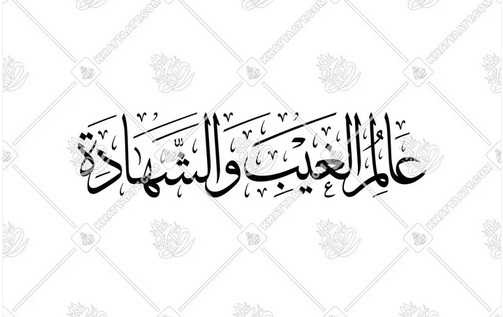
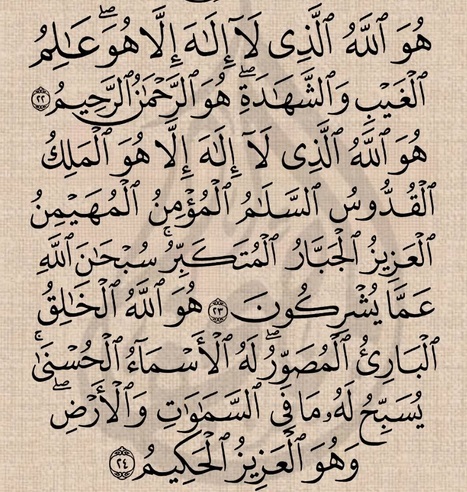
In Surah Al-Hashr, Allah describes Himself with a series of profound names and attributes, including “Knower of the unseen and the seen.” The verse proclaims: «هُوَ اللَّهُ الَّذِي لَا إِلَـٰهَ إِلَّا هُوَۖ عَالِمُ الْغَيْبِ وَالشَّهَادَةِۖ هُوَ الرَّحْمٰنُ الرَّحِيمُ» (Quran 59:22), which means, “He is Allah—there is no god except Him. [He is] the Knower of the unseen and the seen. He is the Most Compassionate, Most Merciful” myislam.org. This divine attribute affirms God’s omniscience – His perfect knowledge of all that is hidden (غيب ghayb) and all that is manifest (شهادة shahāda). In Islamic theology, such an affirmation immediately reminds us that we are dealing not with an ordinary being, but with the Almighty who knows everything beyond human perception and everything observable myislam.org. Below, we explore this attribute from scientific, philosophical, and theological perspectives, and discuss how understanding it can inspire humility, knowledge, and mercy in our lives (as guided by Quran 35:28 and exemplified in Quran 25:63).
Scientific Reflections: The Unseen in the Light of Knowledge
Modern science continually uncovers aspects of the world that were once “unseen” – from microscopic organisms to distant galaxies. With each discovery, we are reminded of how much more remains beyond our current sight. Even the great scientist Isaac Newton compared himself to a child picking up shells on the shore “whilst the great ocean of truth lay all undiscovered before me” brainyquote.com. In other words, no matter how far human knowledge advances, it only scratches the surface of reality’s vast ocean. The Qur’an itself humbles humanity on this point: “And of knowledge, you ˹O humanity˺ have been given but little” (Quran 17:85)quran.com.
From a scientific perspective, the title “Knower of the unseen and the seen” implies that Allah’s knowledge encompasses all realms – including those truths not yet discovered or accessible by empirical methods. The Quran emphasizes that “With Him are the keys of the unseen – no one knows them except Him”, and that “not even a leaf falls without His knowledge” quran.com. Such verses align with the idea that everything in the universe, from the tiniest particle to the farthest star, is known completely to God. While science can investigate the seen universe and gradually unveil some of its hidden layers, Allah’s knowledge is absolute and all-encompassing, covering realities science may never reach thequran.love. This understanding encourages a Muslim scientist (and indeed any seeker of knowledge) to approach the study of nature with humility: every new fact learned is a testament to the far greater knowledge of the Creator. As one philosopher beautifully put it, “All I have seen teaches me to trust the Creator for all I have not seen.” – our observed knowledge of the world is enough to trust God regarding the vast unseen beyond our grasp quotationspage.com.
Philosophical Reflections: Omniscience and Wisdom Beyond Time
Philosophically, God’s attribute as the Knower of all unseen and seen raises profound implications about time, knowledge, and reality. Unlike human beings who acquire knowledge sequentially and often by trial and error, Allah’s knowledge is immediate, timeless, and direct. In Islamic thought, God is not bound by time – past, present, and future are all “seen” by Him in one complete picture. As the commentary on Quran 59:22 explains, “He knows whatever is hidden from the creatures as well as whatever is known and visible to them. Nothing of this universe is unknown to Him. He directly knows whatever has happened in the past, whatever exists at present, and whatever will happen in the future. He does not stand in need of any means or medium of knowledge.”myislam.org. This means that from the grandest cosmic events to the innermost thoughts in a person’s heart, all truth is fully known to Allah at all times.
Such omniscience provides a foundation for ultimate wisdom and justice. Because God knows everything, including aspects we cannot see, believers trust that every event has divine wisdom behind it, even if it’s not immediately obvious. In philosophy of religion, this is often invoked when grappling with life’s mysteries or hardships – human perspective is limited to the “seen,” but God’s knowledge covers the bigger picture in the “unseen.” Thus, faith in Al-‘Alīm (the All-Knowing) encourages us to cultivate trust in God’s plan. We may not understand every occurrence, but we find comfort that no secret is hidden from Allah’s sight and no question is beyond His knowledge thequran.love. This trust is not blind; it is rooted in the reflection that all our experiences (all we have “seen”) point to a Creator who is wise and capable, so we rely on Him for what lies beyond our sight quotationspage.com. In practical terms, this means we strive to do what is right while resting assured that God understands our intentions and circumstances perfectly – a reassurance that every sincere effort and every injustice will be accounted for by the One who knows all. It also prompts deep intellectual humility: recognizing the limits of human reason and the supremacy of divine knowledge can prevent arrogance and foster a sincere search for truth.
Theological Insights: Omniscience in Islamic Belief
In Islamic theology, “Knower of the unseen and the seen” is a direct affirmation of Allah’s omniscience, one of His essential attributes. No knowledge is absent from God – be it the mysteries of the unseen realms (such as the hereafter, angels, or simply things unknown to any creature) or the details of the visible world. The Qur’an frequently reminds believers that no atom’s weight in the heavens or earth escapes God’s knowledge (cf. Quran 10:61), and that even things we conceal in our hearts are fully known to Him. A classic verse highlighting this is: “Not a leaf falls but He knows it” quran.com. Such descriptions underscore that Allah’s knowledge is total and intimate – encompassing the grand design of the cosmos as well as the smallest happenings in nature.
Importantly, affirming Allah’s all-encompassing knowledge also reinforces the Quranic theme of Tawhid (the oneness of God). He alone has this perfect knowledge; no other being shares in it. Thus, none but Allah is worthy of absolute trust and worship. The verse 59:22 itself begins by negating all false deities (“there is no god except Him”) before mentioning His knowledge of unseen and seen myislam.org. The theological message is clear: because God’s knowledge and power are beyond comparison, one should rely on Him fully and obey His guidance, for His commands are based on what He knows to be best for us. Human knowledge, by contrast, is limited and prone to error, so we are encouraged to seek Allah’s guidance in all matters.
The attribute also carries a moral dimension in theology: knowing that Allah knows everything we do – openly or secretly – instills a sense of accountability and sincerity. A believer internalizes that no deed is truly “invisible”; even if done in solitude or darkness, it is seen by the All-Knowing. This awareness (called murāqabah, God-consciousness) motivates believers to maintain integrity in private and public alike. It also offers comfort to the oppressed or to those wronged in secret, that Allah is a witness to their plight and will deliver justice with His full knowledge of the facts. In short, Allah’s omniscience is both a warning and a solace: nothing can be hidden from Him myislam.org, and by the same token, nothing good we do is ever lost or forgotten by Him.
Knowledge and Reverence: Living with the Awareness of Allah’s Omniscience (Quran 35:28)
Understanding Allah as the Knower of unseen and seen is not merely a theoretical idea – it deeply influences how a believer lives and pursues knowledge. The Qur’an highlights that true knowledge of God naturally breeds humility and reverence. In fact, those who know more about Allah are marked by a greater awe of Him. The Qur’an states: «إِنَّمَا يَخْشَى اللَّهَ مِنْ عِبَادِهِ الْعُلَمَاءُ» (Quran 35:28), meaning “Only those of His servants who have knowledge truly fear Allah.” quran.com. Here al-‘ulamā’ (the knowledgeable ones) does not refer merely to scholars of books, but to anyone who deeply understands God’s greatness and attributes. Their awareness of Allah’s omniscience, power, and mercy makes them humble and God-fearing.
Islamic commentators note that people possess varying degrees of reverence (khashyah) proportionate to their knowledge of Allah: “Whoever has a certain degree of knowledge will have a corresponding degree of the awe or fear of Allah.”quran.com. In other words, the more we recognize the vastness of Allah’s knowledge (and our own relative ignorance), the more we are humbled in front of Him. This humility has practical manifestations: we become more careful in our actions, knowing Allah sees even the “unseen” intentions behind them; we become more patient in adversity, trusting Allah’s wisdom; and we remain modest about our achievements, aware that all knowledge and success we have is by His grace. The Prophet ﷺ said, “Truly, I am most knowing of Allah and most fearful of Him” – teaching us that the pinnacle of knowledge is to develop a deep reverence that leads to obedience and ethical living.
To “apply this commentary in our lives” means striving to be among those who learn and then respond with piety. For example, when one learns of Allah’s attribute of omniscience, one should cultivate sincerity (ikhlāṣ) – doing good even when no one else witnesses it – because the All-Seeing appreciates it. When one learns of Allah’s total awareness, one should avoid wrong even in private, realizing that no secret is secret before God. Furthermore, true knowledge should dispel any false sense of self-importance. A brilliant scientist, a wise philosopher, or a religious scholar – all should remain humble, for all human knowledge combined is still “only a little” compared to the infinite knowledge of Allahquran.com. This humility before God also translates into gentleness and modesty with others, as arrogance is often born of forgetting one’s own limitations. In short, living with awareness of Allah’s knowledge shapes a person who is both intellectually humble and spiritually mindful, always seeking knowledge that benefits and using it in service of truth.
Embodying the Mercy of Ar‑Raḥmān: Knowledge Paired with Compassion (Quran 25:63)
Interestingly, the verse of Allah’s all-knowing attribute (59:22) ends by reminding us that He is also “the Most Compassionate, the Most Merciful” (ar-Raḥmān ar-Raḥīm)myislam.org. In Islam, knowledge and mercy are meant to go hand in hand. As we gain knowledge and awe of Allah, we are also called to emulate His beautiful attributes in our own character – within the scope of our human ability. One of the greatest attributes of Allah repeatedly emphasized in the Qur’an is His mercy. In fact, those who truly serve Allah are described in the Qur’an as “‘Ibād ar-Raḥmān” – servants of the Most Merciful.
Allah illustrates this in Surah Al-Furqan (25:63), where He describes the qualities of the faithful: «وَعِبَادُ الرَّحْمٰنِ الَّذِينَ يَمْشُونَ عَلَى الْأَرْضِ هَوْنًا وَإِذَا خَاطَبَهُمُ الْجَاهِلُونَ قَالُوا سَلَامًا», meaning “The true servants of the Most Merciful are those who walk on the earth humbly, and when the foolish address them harshly, they reply with peace.”quran.com. Here we see that knowing Allah as ar-Raḥmān (the All-Merciful) inspires the believers to embody mercy and humility in daily life. Just as Allah’s knowledge leads us to humble reverence, His mercy leads us to compassionate action. The Quranic ideal is a person who has both – a heart enlightened by knowledge of God, and manners softened by the remembrance of God’s mercy.
In practical terms, “embodying the mercy of ar-Raḥmān” means striving to reflect something of Allah’s compassionate qualities in our own behavior. A hadith of the Prophet ﷺ states: “Be merciful to those on earth and the One above the heavens will have mercy on you.” Thus, a true knower of God is also gentle and kind with Allah’s creation. Scholars note that as the servants of the Most Merciful **“embody the ‘ethics of God,’ their every action and behavior exudes gentleness, compassion, mercy, and kindness.”*fountainmagazine.com. For example, they remain calm and courteous even when provoked by ignorance or anger (as the verse 25:63 highlights), choosing gracious forbearance over retaliation. They “walk humbly,” not with arrogance or pride, which ties back to the earlier point that knowledge of God removes pride. Indeed, the more one recognizes Allah’s greatness, the more one feels small and gentle in dealings with others. In this way, Islamic piety is a balance: intense God-consciousness (taqwā) on one hand, and gracious character (akhlaq) on the other.
By learning about Allah’s names – Al-‘Alīm (The All-Knowing) and Ar-Raḥmān (The Most Merciful) – and applying their lessons, a believer cultivates both mind and heart. Scientifically and intellectually, we remain curious and humble, knowing that God’s creation always has more to teach us about His wisdom. Philosophically, we trust in the Unseen knowing that the One who sees it all guides our path. Theologically, we stand in awe of Allah’s perfect knowledge, yielding in obedience to His command. And on the level of character, we show mercy and humility to others, aspiring to be counted among “the servants of the Most Merciful.” In summary, Quran 59:22’s declaration of Allah as Knower of unseen and seen is not just about God’s knowledge in isolation – it is embedded in a verse that also celebrates His compassion. We are called to recognize our Lord’s infinite knowledge and mercy, and thereby to increase in reverence, seek beneficial knowledge, and practice compassion in our lives. This holistic understanding transforms the way we live: we become, in a small yet meaningful way, reflections of the divine attributes – ever learning, ever humble, and ever merciful to those around us.
Sources:
- The Quran, 59:22 – “He is Allah… Knower of the unseen and the seen…”myislam.org
- Tafsir al-Maududi on 59:22 – Explanation that God’s knowledge covers all that is hidden and visible, past, present, and futuremyislam.org.
- The Quran, 6:59 – “Not even a leaf falls without His knowledge…” (illustrating Allah’s all-encompassing awareness)quran.com.
- “The Quran emphasizes that Allah’s knowledge is absolute and all-encompassing. Many verses declare that nothing is hidden from God.”thequran.love.
- Tafsir on Quran 35:28 – Only the knowledgeable truly fear Allah; “whoever has a certain degree of knowledge will have a corresponding degree of the awe or fear of Allah”quran.com.
- The Quran, 35:28 – “Only those of His servants who have knowledge are in true awe of Him.”quran.com.
- The Quran, 25:63 – “The servants of the Most Merciful are those who walk humbly on the earth…”quran.com.
- Commentary on embodying divine ethics – “their every action and behavior exudes gentleness, compassion, mercy, and kindness.”fountainmagazine.com.
- Isaac Newton, on human knowledge vs. the ocean of truth (illustrative of our limited knowledge)brainyquote.com.
- Ralph Waldo Emerson, on trusting the Creator for what we haven’t seen (the wisdom of faith in the unseen)quotationspage.com.
If you want to read in Microsoft Word file instead:



 The Glorious Quran and Science
Leave a comment