
Written and collected by Zia H Shah MD
Abstract
Islam is understood by Muslims to be the final divine religion for humanity, with the Qur’an as its last revealed scripture and Prophet Muhammad ﷺ as the last prophet. A core tenet in Islamic belief is that Allah Himself safeguards this final message – a promise reflected in the miraculous preservation of the Qur’an’s text and teachings across centuriescall-to-monotheism.com. In contrast, Shi’ite Islam places theological emphasis on the Prophet’s family (Ahl al-Bayt) and the institution of Imamate, asserting that a lineage of divinely guided, infallible Imams was appointed to lead and interpret the faith. These Shi’ite claims – especially among Twelver and Ismaʿili sub-sects – posit an infallible human authority in each era. However, Sunni Muslims (and other non-Shi’a) view all post-prophetic leaders as fallible and do not accept that Imams enjoy any divine protection from error or sin. Historically, the Shi’ite Imamate lineages have faced discontinuities (such as the Twelver Imam’s “Occultation”) and internal schisms, raising questions about their role in preserving Islam’s guidance. This article explores Islam’s promise of preservation through the Qur’an, examines the Shi’ite concept of Imamate and its challenges, and contrasts Sunni, Sufi, and Shi’ite understandings of the Qur’an. The discussion draws on Islamic texts and scholarly perspectives from both Sunni and Shia traditions. It argues that the ultimate guarantor of Islam’s integrity is the preserved Qur’an itself, not an unbroken chain of protected individuals – a view that calls into question the Shi’ite notion of divinely safeguarded Imams. A demographic and theological overview of the major Shia sects (Twelvers, Ismaʿilis, Zaydis) is provided, along with their approaches to the Qur’an. In closing, a thematic epilogue reflects on how the unity of Muslims can be strengthened by focusing on the universally preserved message of the Qur’an, transcending sectarian claims.
Islam as the Final Religion and the Preserved Scripture
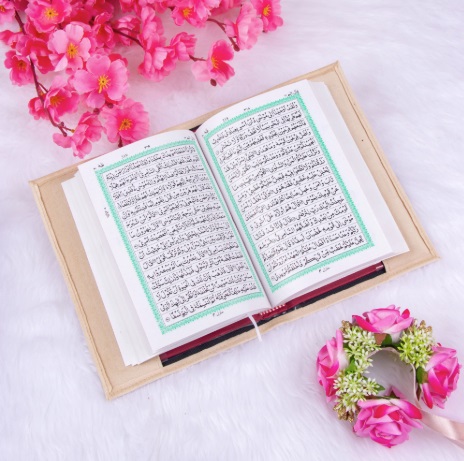
Muslims believe that with the prophethood of Muhammad ﷺ, the cycle of divine revelation reached its culmination. The Qur’an declares the Prophet to be “the seal of the prophets” (Khatam al-Nabiyyin, Quran 33:40), indicating that no new prophet or scripture will come after him. Consequently, Islam’s teachings must remain intact to guide humanity for all time. The Qur’an itself contains a divine promise of preservation: “It is certainly We Who have revealed the Reminder (the Qur’an), and it is certainly We Who will preserve it”thequran.love. This verse (Quran 15:9) has been universally understood to mean that Allah will protect the Qur’anic revelation from loss, corruption, or distortion. Indeed, Islamic scholars note that this is a unique guarantee not given to earlier scripturescall-to-monotheism.com. History bears out this promise – over fourteen centuries, the Qur’an’s text has remained unchanged in its original Arabic, memorized and written down by the Prophet’s companions and succeeding generations. Today, all Muslim sects – Sunni and Shia alike – use the same Arabic Qur’an text, with no surah or verse exclusive to one groupen.wikipedia.orgen.wikipedia.org. This textual uniformity, despite Islam’s spread across diverse cultures and the emergence of sectarian differences, testifies to the fulfilment of Allah’s pledge to preserve the Qur’an’s integrity.
Importantly, mainstream Islamic theology holds that Allah’s protection extends to the message of Islam as a whole, not necessarily to every individual or community. Muslims view the Qur’an (along with the Prophet’s authentic Sunnah) as the perfected, self-sufficient guidance for humanity – “Today I have perfected for you your religion… and have chosen for you Islam as your religion” (Quran 5:3). With the final scripture in place and divinely guarded, no new prophet or infallible guide is deemed necessary to introduce new teachings. Instead, the understanding and implementation of Islam were to be carried on by the Prophet’s companions, the scholarly consensus of the Muslim community (ummah), and the efforts of sincere scholars and spiritual leaders over time. While human scholars can differ and even err, Sunni tradition holds that the Muslim ummah as a whole will not agree on misguidance; prophetic traditions imply that collective guidance and truth will be preserved within the community. Thus, for Sunnis the protection of Islam comes primarily through the preserved Qur’anic text and the Prophet’s example, combined with the community’s endeavors – not through any continuously sinless human authority after the Prophet. Sunni scholar Imam Malik famously said, “The latter part of this ummah will only be reformed by that which reformed its earliest part,” underscoring the reliance on the original scripture and Prophetic model rather than new doctrines.
From a philosophical standpoint, the finality of Islam implies a shift from prophet-centric guidance to scripture-centric guidance. The Qur’an encourages all believers to read, understand, and ponder its verses (“Will they not then reflect on the Qur’an?”) and promises guidance to those of sincere heart and open mind. This universal accessibility of guidance through the Qur’an contrasts with systems that would require the presence of a particular lineage or person to dispense the truth. In Sunni thought, no mortal after Muhammad ﷺ is considered infallible; even the most pious caliphs or learned imams are human and subject to mistake. Thus, no guarantee of ‘ismah (protection from error) is accorded to caliphal or scholarly leadership. As we shall see, this is a key divergence from Shi’ite theology.
Ahl al-Bayt and the Shi’ite Imamate Doctrine
Shi’a Islam developed a distinct doctrine of spiritual and temporal leadership centered on the Prophet’s family (the Ahl al-Bayt). All Shi’ite sects agree that Imam ʿAli ibn Abi Talib – the Prophet’s cousin and son-in-law – was designated as the Prophet’s immediate successor, and that leadership (Imamate) should remain vested in ʿAli’s descendants. While Sunnis honor ʿAli and the Prophet’s household, they do not accept that the Prophet explicitly appointed ʿAli as successor in a binding way. This early dispute led to a political and theological schism. Over time, Shia scholars articulated the concept that the Imams from the Prophet’s lineage are not only rightful leaders but also divinely guided and preserved from sin and error (maʿṣūm). In other words, Imams in major Shia traditions are believed to be infallible interpreters of faith, akin to how prophets are infallible in conveying God’s messagethemuslimtimes.infothemuslimtimes.info. Twelver Shia and Ismaʿili Shia in particular developed this doctrine of ‘iṣmah (infallibility or “Divine protection” of the Imams) as a cornerstone of their theologythemuslimtimes.infothemuslimtimes.info.
Twelver Shia (Ithnā ʿAshariyyah)
Twelver Shi’ism is the largest Shia sect (comprising 80–85% of all Shia Muslims, or roughly 10–12% of Muslims worldwide)en.wikipedia.org. Twelvers recognize a line of Twelve Imams after Prophet Muhammad ﷺ, starting with Imam ʿAli (1st Imam), then his sons Imam Ḥasan and Imam Ḥusayn, and continuing through nine further descendants. The twelfth and final Imam, Muhammad al-Mahdi, is believed by Twelvers to have gone into occultation (hidden existence) in the 9th century and remains miraculously alive until he will reappear as the Mahdi (Messiah) at the end of timethemuslimtimes.infothemuslimtimes.info. During this Greater Occultation (since 941 CE), no one occupies the infallible Imam’s seat on earth. Twelver doctrine holds that all twelve Imams were sinless and divinely protected from error in understanding or implementing religionthemuslimtimes.infothemuslimtimes.info. They are often referred to, along with Prophet Muhammad and Lady Fatimah, as the “Fourteen Infallibles” in Shia pietythemuslimtimes.info. Shia theologians argue that God would only command obedience to leaders who are free from error; hence they reason the Imams must have been endowed with ‘ismah so that following them would never lead one astraythemuslimtimes.info. They cite Quranic verses such as the “Verse of Purification” (Quran 33:33) – “Indeed God only wills to keep away impurity from you O People of the House (Ahl al-Bayt), and to purify you thoroughly” – as hinting at the spiritual purification of the Prophet’s familythemuslimtimes.info. Twelver traditions hold that each Imam possessed profound knowledge of the Qur’an’s zahir (apparent meaning) and batin (inner secrets), inheriting the Prophet’s knowledge and guided by the Holy Spirit in their judgmentsthemuslimtimes.info. In Shia lore, the Imams are “the Proof of God (Hujjat Allah) to His creation” – living proof and guiding lights for humanitythemuslimtimes.info.
Crucially, Twelver Shia maintain that no new scripture or shari’ah is brought by the Imams; rather, their role is to guard, interpret, and exemplify the Prophet’s Islam without errorthemuslimtimes.info. However, the historical reality is that these revered Imams, from ʿAli to Ḥasan al-ʿAskari (the 11th Imam), lived under often difficult circumstances – most were opposed by contemporary rulers, and many died by martyrdom (through battle or poisoning) according to Shia historical accounts. For example, ʿAli was assassinated, Ḥusayn was killed tragically at Karbala, and several later Imams were reportedly poisoned while under house arrest by caliphs. The twelfth Imam’s disappearance in the 9th century left the community without a visible, accessible Imam to consult. This event, known as the Occultation, effectively meant the Imam’s chain of public leadership was cut off – a divinely guided Imam still exists (in Twelver belief) but is concealed from the worldthemuslimtimes.info. In the absence of their Imam, Twelver Shias turned to learned scholars (mujtahids and marājiʿ) for religious guidance, acknowledging these scholars are fallible. No Ayatollah or jurist, however eminent (even the Supreme Leader in an Iranian context), is considered inerrant; their fatwas are respected but understood as human interpretations subject to revisionthemuslimtimes.infothemuslimtimes.info. Only the Mahdi’s eventual return is expected to restore infallible leadership for Twelversthemuslimtimes.infothemuslimtimes.info. This means that for over a millennium, Twelver Shias have lived in practice much like Sunnis – relying on fallible religious scholars and personal reasoning, though always with the theological hope of the hidden Imam’s guidance from afar. As one Shi’a commentator puts it, in the Imam’s occultation “the sharia is based on interpretation of laws by fallible scholars… so these laws can be reviewed, annulled or adjusted”themuslimtimes.infothemuslimtimes.info. This admission underscores that, in practical terms, no guaranteed error-free authority is guiding the community today – a reality that calls into question whether such infallibility was ever meant to be the mechanism for preserving Islam’s message.
Ismaʿili Shia
Ismaʿili Shi’ism is the second-largest Shi’a branch, though much smaller in number than Twelvers (forming only a few percent of Shias). Ismaʿilis share the early Imam lineage with Twelvers up to the 6th Imam, Jaʿfar al-Sadiq. The groups split when Imam Jaʿfar died: Twelvers followed his younger son Mūsā al-Kāẓim, whereas Ismaʿilis followed his elder son Ismaʿil ibn Jaʿfar (or Ismaʿil’s son) as the rightful next Imam. This led to a separate line of Imams that eventually established the Fatimid Caliphate in North Africa (909–1171 CE). The Ismaʿili line continued through the Fatimid Imam-Caliphs and beyondthemuslimtimes.infothemuslimtimes.info. Notably, Ismaʿilis reject the idea of a long-term hidden Imam: they assert that the Imamate is continuous and present in every generationthemuslimtimes.info. In the Nizārī Ismaʿili branch (the largest Ismaʿili subgroup), the Imams descended from the Fatimids survive to this day in an unbroken chain – the current Imam is Aga Khan IV, the 49th Imam by their countthemuslimtimes.info. This means Nizārī Ismaʿilis today have a living, accessible Imam whom they regard as the supreme spiritual authority.
The Ismaʿili doctrine of Imamate is in many respects similar to the Twelver doctrine, with an even stronger emphasis on the Imam’s role as the living guide and interpreter of God’s word. The Imam is often called the “nāṭiq al-Qur’ān” – the one who speaks the Qur’an, i.e. the living Qur’an in each agethemuslimtimes.info. Just as Twelvers, Ismaʿilis attribute ‘ismah to their Imams: the Aga Khan is believed to be divinely inspired and protected from error in guiding the communitythemuslimtimes.infothemuslimtimes.info. One scholarly summary confirms that both Twelver and Ismaʿili Shi‘a “attribute ʿiṣmah (infallibility) to the Imams”themuslimtimes.info. Ismaʿili theology describes the Imam as the bearer of the “Light of Imamate,” a spiritual knowledge passed down from Imam to Imam, which gives him true understanding of both the outward text and inner meaning of scripturethemuslimtimes.infothemuslimtimes.info. The Imam’s teachings (called taʿlīm) are considered authoritative and cannot lead the believers astraythemuslimtimes.infothemuslimtimes.info. In fact, the community’s entire cohesion is built around absolute trust in the Imam’s guidancethemuslimtimes.info. In 1986, the Aga Khan IV promulgated a formal Ismaili Constitution reinforcing that the Imam’s authority in all religious and community matters is supreme and finalthemuslimtimes.infothemuslimtimes.info. Unlike in Sunni systems where scholars or councils might provide checks, in Ismaʿilism the Imam’s word is theoretically unchallengeable – tempered only by his own consultation processes. Ismaʿilis often quote a famous hadith of the Prophet: “Whoever dies without recognizing the Imam of his time dies the death of ignorance.”themuslimtimes.info For them, recognition of the present Imam is essential for true guidance – an idea that Sunnis and others do not share.
Historically, the Ismaʿili Imams also faced severe challenges. The Fatimid dynasty eventually fell, leading to periods of concealment for Ismaʿili Imams. The Ismaʿili community itself split further: e.g., the Mustaʿli Ismaʿilis (Bohras) went into their own occultation in the 12th century when their 21st Imam, al-Tayyib, allegedly went into hiding – since then they follow appointed deputies (Dāʿīs). The Nizārī Ismaʿilis had Imams who survived through perilous times (the legendary “Assassin” stronghold of Alamut in Persia was led by Nizārī Ismaʿili Imams). Many Nizārī Imams were assassinated or executed during the Medieval period, especially when the Mongols destroyed their fortresses in 1256 CE. It is often noted that a great number of the Imams in Shia history met martyrdom – by some counts, on the order of twenty Imams in various Shia lineages were killed for their stance, starting from ʿAli and Husayn down to later figures. While martyrdom is a badge of honor, it also highlights that the Imams were not protected from physical harm; they suffered the fate of fallible men in history. The Ismaʿili Imams eventually resurfaced in relatively stable conditions and, in modern times, the Aga Khans have been influential philanthropists and community leaders. But the Ismaʿili population remains a small fraction of the Muslim world (estimated 15 million or less, concentrated in South Asia, Central Asia, and East Africa).
Zaydi Shia
Zaydī Shi’ism (often called “Fiver” Shia) is another branch, today found mainly in Yemen. Zaydis diverged earlier in Shia history – after Imam Husayn’s line, they upheld that any qualified descendant of ʿAli and Fatimah who strives to fight injustice can be Imamthemuslimtimes.infothemuslimtimes.info. This led to a more pluralistic and less absolutist leadership model: at times multiple Zaydi imams arose in different regions, more akin to rival caliphs. Crucially, Zaydis explicitly reject infallibility of Imamsthemuslimtimes.info. They admire ʿAli and the Prophet’s family but consider their Imams as fallible, pious leaders – “imams of justice” – not divinely perfect saintsthemuslimtimes.infothemuslimtimes.info. Early Zaydi scholars were influenced by the rationalist Muʿtazilite theology, emphasizing God’s justice and human free willthemuslimtimes.info. They did not accept the notion (held by Twelvers/Ismaʿilis) that each Imam is explicitly designated by the previous one through divine ordinance (naṣṣ)themuslimtimes.info. Instead, a Zaydi Imam earns leadership by knowledge and righteous revolt against tyrannythemuslimtimes.infothemuslimtimes.info. Historically, the Zaydi Imamate in Yemen functioned much like a Sunni caliphate or sultanate, with imams who were sometimes scholars, sometimes warriors – respected, even venerated, but not immune to criticism or replacementthemuslimtimes.infothemuslimtimes.info. Zaydi thought even allowed that if an Imam was unjust or another more qualified claimant arose, the latter could legitimately be followedthemuslimtimes.infothemuslimtimes.info. In terms of jurisprudence and Qur’anic interpretation, Zaydis are closest to Sunnis. They developed a school of law similar to Sunni legal methodology and often accepted the validity of the early caliphs (Abu Bakr and Umar) to a greater extent than other Shia didthemuslimtimes.infothemuslimtimes.info. In essence, a Zaydi Imam is akin to a righteous Sunni ruler from the Prophet’s lineage, and Zaydis do not attribute any supernatural knowledge or ‘ismah to their imamsthemuslimtimes.infothemuslimtimes.info. Today, Zaydis form about 40–45% of Yemen’s population (several million people) and have had significant political influence there (the current Houthi movement in Yemen is rooted in Zaydi revivalism).
Other Shi’a Offshoots
There are a few smaller offshoots sometimes associated with Shi’ism, though they form distinct religions or heterodox movements – for example, the Druze, who broke off from Ismaʿilism in the 11th century and hold esoteric beliefs (including deification of Imam al-Hakim). The Druze no longer adhere to the Islamic law or mainstream Qur’an interpretation, so they are usually not counted as Muslims. Similarly, the Alawites (Nuṣayrīs) of Syria revere Imam ʿAli to the extent of divinizing him and mix Islamic ideas with gnostic concepts; their practices diverge widely from orthodox Islam. These groups illustrate the extreme end of elevating the Imams, but they lie outside the fold of both Sunni and mainstream Shia Islam. Mainstream Shia sects (Twelver, Ismaʿili, Zaydi), despite their differences, all hold the Qur’an in profound reverence and share the same Qur’anic texten.wikipedia.org – their differences lie in interpretation and authority, not in having a different Quran.
Understanding the Qur’an: Sunni, Shia, and Sufi Perspectives
All Muslims agree the Qur’an is the central, revealed word of God – “a guidance for all humankind.” Yet, how they approach interpreting the Qur’an can vary among traditions:
- Sunni Approach: In Sunni Islam, the Qur’an is usually interpreted through a combination of its literal wording, the context of revelation (asbab al-nuzul), and the explanatory Hadith and Sunnah of the Prophet. Classical Sunni scholars established principles of tafsir (exegesis) that rely on transmitting commentary from the Prophet’s companions and early authorities, as well as Arabic linguistics and context. While Sunnis acknowledge that some verses have metaphorical or deeper meanings, they caution against highly speculative interpretations. The Sunni tradition developed madhhabs (schools of jurisprudence) which, although differing on legal details, share a common respect for the apparent meanings of the Qur’an and Hadith. Sunni interpreters, especially of the orthodox Ashʿari and Maturidi theological schools, often emphasized unity and consistency of meaning – the Qur’an was believed to convey a coherent message that could be understood by scholars using reason and transmitted knowledge. Importantly, no Sunni scholar’s interpretation is considered infallible; scholarly disagreement is normal. Over time, Sunnis compiled voluminous commentaries, but always with the understanding that these were human efforts to understand divine speech. A hadith states: “Difference of opinion among my community is a mercy” – reflecting the Sunni ethos that multiple interpretations can coexist as long as they stay within the broad framework of Quranic and prophetic teachings. That said, Sunnis historically resisted any suggestion that the Qur’an has hidden codes only accessible to a few. Anyone with requisite knowledge and piety could, in theory, derive lessons from the Qur’an – this democratization of exegesis (within scholarly bounds) differs from the Shia model that centers authority in Imams.
- Shi’ite Approach: Shi’a Muslims, especially in Twelver and Ismaʿili thought, supplement the above methods with the interpretations of their Imams. In Twelver Shi’ism, many Qur’anic verses are explained via narrations from the Imams found in Shia hadith collections. Shi’a tafsirs often preserve sayings like “We (the Imams) are the face of God, we are the hand of God” or interpret verses about authority, light, guidance, etc., as allusions to the Imams. A classical example is Quran 5:55, “Your ally is only Allah, His Messenger, and those who believe, who establish prayer and give alms while bowing down” – Sunni exegesis sees general believers, whereas Shia exegesis (based on hadith of ʿAli giving charity in rukuʿ) sees it as praising ʿAli in particular. Shi’a scholars also engage in ijtihad and rational interpretation, and contemporary Twelver jurists produce Qur’anic commentaries much like Sunni ones. However, an underlying theological difference is that, ultimately, only the infallible Imam is considered to have definitive understanding of the Qur’an’s full depththemuslimtimes.info. Shi’a doctrine holds that “in Shiʿa doctrine, only an infallible Imam could claim definitive understanding of the Quran; all other scholars exercise ẓann (informed conjecture)”themuslimtimes.info. This engenders a certain humility among current Shia scholars: they give fatwas but acknowledge that, absent the Imam, their conclusions are probable, not absolutethemuslimtimes.infothemuslimtimes.info. Interpretive pluralism is therefore accepted in Twelver Shia practice – with multiple Marjaʿ scholars offering differing rulings, none able to claim exclusive authority since the living Imam is not accessiblethemuslimtimes.infothemuslimtimes.info. On some level, this Shia reality mirrors the Sunni scenario of fallible scholarly interpretation. The difference is more theoretical: Shias believe the potential for perfect understanding exists (in the Imam), whereas Sunnis believe the Prophet’s conveyed message is clear enough that no perpetual infallible interpreter is necessary. Additionally, Shia traditions, especially Ismaʿili and certain Twelver strains, embrace esoteric (bāṭin) exegesis more readily. They hold that many Quranic passages have layers of hidden meaning that the uninitiated might miss. For instance, Shia commentators (like Ali ibn Ibrahim al-Qummi) would allegorically interpret terms in the Qur’an – e.g., taking “Bani Israel” (Children of Israel) not only as the historical Israelites but as a code for the Ahl al-Bayt or the Shia community in an esoteric senseen.wikipedia.org. Such allegorical moves are less common in mainstream Sunni tafsir. Ismaʿili teachings especially were known for bold esoteric interpretations: Quranic rituals and stories could be seen as symbols of philosophical or spiritual truths. For example, some Ismaʿili texts interpreted the resurrection not as a physical event but as the unveiling of the Imam’s true esoteric message. While those interpretations are beyond standard Islam, they illustrate the Ismaʿili view that the Imam of the time unlocks the Qur’an’s inner reality. Even Twelver scholars have a saying: “The Qur’an has an outer meaning and an inner meaning, and the inner has inner up to seven depths.”en.wikipedia.orgen.wikipedia.org. All Shia sects share with Sufis an openness to the idea of bāṭin (hidden) meanings of the Qur’an, though bounded by what their Imams or trusted scholars have indicated.
- Sufi Approach: Sufism is the mystical dimension of Islam, found across Sunni and Shia lines, which emphasizes personal spiritual experience of God. Sufi scholars and saints often read the Qur’an with an eye to metaphor and inward lessons. They fully accept the outward shari’ah meaning, but they believe every verse also speaks to the soul’s journey. For instance, when the Qur’an speaks of Moses’s struggle against Pharaoh, a Sufi might reflect that Pharaoh represents the ego within each person that must be tamed; the “Promised Land” becomes a metaphor for enlightenment or closeness to Allah. Sufis frequently quote the verse, “None touch it (the scripture) except the purified” (Quran 56:79), interpreting “touch” as comprehending and “purified” as those purified of ego and sin. This implies true understanding requires spiritual purity. Many Sufi commentators posited that as one purifies the heart through dhikr (remembrance of God), asceticism, and love of God, the Qur’an’s deeper wisdom unveils itself by God’s grace. There are famous Sufi tafsirs (e.g., Tafsir al-Tustari, the commentaries of Ibn Arabi, Rumi’s Mathnawi as an imaginative reinterpretation of Quranic themes, etc.) which read the Qur’an at multiple levels – legal, ethical, allegorical, and mystical. Sufi interpretations are often “allusions” rather than straightforward explanationsen.wikipedia.org; they seek to inspire an intimate relationship with the divine text. For example, the Light Verse (Quran 24:35) – “Allah is the Light of the heavens and earth…” – is taken by Sufis to map out the stages of enlightenment in the heart of the believer, not just a statement about God’s attribute. While a non-Sufi exegete might focus on legal and doctrinal points, the Sufi focuses on transforming the inner self through the Qur’an. It should be noted that Sufism doesn’t claim infallibility for any sheikh or saint in understanding the Qur’an; rather, it claims illumination (kashf) – a divine opening of understanding granted to the sincere. This illumination, however, is personal and not binding on others like an Imam’s pronouncement would be in Shia belief. Throughout Islamic history, many Sunni scholars were also Sufis, so the mystical interpretations usually ran in parallel to the conventional ones. For instance, Imam al-Ghazali, a great Sunni theologian and Sufi, held that multiple layers of Quranic meaning enrich one’s faith, but the outer law must never be denied. Sufi, Shia, and Sunni scholars alike have acknowledged that the Qur’an is a multi-layered miracle that addresses all levels of intellect and spiriten.wikipedia.orgen.wikipedia.org. What differs is how much authority is given to uncover those layers (an ordained Imam vs. any seeker of God) and the extent to which allegorical interpretation is pursued.
In summary, Sunni exegesis tends toward a sober, textually and contextually grounded approach, Shi’ite exegesis adds a strong authoritative interpretive lens via Imamate and often engages allegory related to Ahl al-Bayt, and Sufi exegesis looks beyond the literal to find universal spiritual truths applicable to one’s soul. Modern Islamic scholarship increasingly encourages learning from all these approaches: for example, a project like The Study Quran (2015) compiles Sunni, Shia, and Sufi commentary to provide a holistic view, and writers like Zia Shah (the Chief Editor of The Muslim Times) advocate that “no single group has a monopoly on Quranic wisdom”thequran.love, emphasizing humility and openness in interpretation. Such initiatives echo the Qur’anic sentiment that “truth stands out clear” for any sincere heart – one must neither confine the Qur’an to one sectarian reading nor forsake the rich insights offered by the various traditions in Islam.
Preservation of the Qur’an vs. Claims of Infallible Imams – A Critical Analysis
The contrast between Sunni and Shi’ite paradigms often boils down to this question: How did Allah intend to preserve the guidance of Islam – through a book, or through a lineage of individuals (or both)? The Sunni answer is that Allah perfected the religion through the Prophet Muhammad ﷺ and secured it in the form of the Qur’an and the Prophet’s exemplary Sunnah. By protecting the Qur’an’s text from error, Allah ensured that the source of guidance remains always available and reliablecall-to-monotheism.com. The role of the community and its scholars is to continually turn back to that pure source, apply it, and clarify it for new circumstances. While errors can occur in interpretation, the corrective is always the fixed text of the Qur’an and the rigorous methods of authentication and scholarly consensus developed in Islam. There is a well-known concept in Sunni tradition that the Muslim Ummah will not unite upon misguidance – meaning there will always be a group upholding true teachings, and false innovations will never overrun the entire community. In other words, divine Providence works through the collective and through the enduring scripture, not necessarily through an uninterrupted single-person office after prophethood.
The Shi’ite answer (particularly in Imamī theology) is that Allah provided two weights (thaqalayn) for guidance: the Qur’an and the Prophet’s progeny (as per a hadith favored in Shia sources: “I leave behind me two weighty things: the Book of Allah and my Ahl al-Bayt; if you hold fast to both, you will never go astray.”). In this view, the Qur’an alone is not enough, because it requires authoritative interpretation – a role fulfilled by the Imams. They argue that differences and sectarianism in the Muslim world resulted from people not following the designated Imams, whereas had everyone adhered to ʿAli and his successors, Muslims would have remained doctrinally unified. The claim of infallibility is central here: if indeed an Imam is protected from error, then logically his interpretation of Islam would be perfectly preserved and would prevent misguidance. This is a compelling idea – if one accepts that such protection was granted. But is there evidence that Allah granted perpetual ‘ismah to Imams, analogous to how He granted preservation to the Qur’an? Sunni scholars respond with a firm “no.” They point out that the Qur’an explicitly announces its own protectionthequran.love, but nowhere does it similarly announce that “there will be sinless Imams after the Prophet to guide you.” In fact, verses like “Obey Allah and obey the Messenger and those in authority among you” (Quran 4:59) are understood by Sunnis to refer to fallible authorities (whether government or scholars); obedience to them is conditional on their obedience to Allah and His Messenger. There is no unconditional obedience to any post-prophetic figure in Sunni doctrine – Abu Bakr, the first caliph, said in his inaugural address: “Obey me as long as I obey Allah and His Messenger; if I disobey them, I have no right to your obedience.” This encapsulates the Sunni ethos: all human leadership is judged against the higher criterion of Qur’an and Sunnah, which are preserved by God.
Philosophically, one can argue that investing infallibility in individuals after the final Prophet may undermine the finality. If an Imam’s guidance is as protected from error as a prophet’s would be, then in effect the Imam becomes a figure whose commands and teachings carry a divine guarantee. Twelver and Ismaʿili sources do describe Imams in exalted terms – almost as extensions of the prophetic light. For example, Twelvers say the Imams receive knowledge via the Nur Muhammadi (Prophetic Light) and an angelic presence that is with them (somewhat analogously to the Holy Spirit with Jesus in Christian thought)themuslimtimes.info. Sunnis contend that no Qur’anic evidence confirms such an ongoing transmission of divine guidance to chosen individuals outside prophethood. On the contrary, the Qur’an refers to Muhammad ﷺ plainly as “the Messenger of Allah and the Seal of Prophets” – conveying finality. And while the Prophet’s family is highly honored in Sunni hadith (e.g. he taught love for Ahl al-Bayt), they were never presented as impeccably infallible leaders of all Muslims in Sunni understanding. History also complicates the Shi’ite claim: if Allah intended for infallible Imams to be the vehicles of preservation, why did He allow the Imamate to become nearly invisible for long periods (as with the 12th Imam), or the community to splinter into rival Imam lineages (as happened with multiple Shia sects)? Each Shia sect claims its line is the correct one, implying the others followed false Imams – which in turn means, from a neutral perspective, that even sincere Shia Muslims ended up following what others consider illegitimate Imams. For instance, from a Twelver view the Ismaʿilis have been following the “wrong” Imam since the 8th century, and vice versa from the Ismaʿili view. If recognizing the true Imam is so paramount to guidance (as per the hadith cited in Shia sources), this poses a dilemma: large numbers of devoted Shia through history must then have “died the death of ignorance” by following a wrong Imam unknowingly. It begs the question of why Allah’s plan for guidance would be so arcane that only a minority of Muslims at any given time would be on the right track – whereas the Qur’an describes itself as a clear light and guidance for all mankind.
The martyrdom of the Imams also suggests a lack of divine temporal protection for them. They were not shielded from the political turmoils and violence of their times. One could argue that their worldly failure to unite the ummah (through no fault of their own, perhaps, but due to opposition) indicates that the preservation of Islam was not tied to their worldly success. Instead, it was the Qur’an that united the Muslims, even those who fought each other. Indeed, ironically, the parties that opposed the Imams also cherished the Qur’an and helped propagate it widely. The Umayyad and Abbasid caliphs who thwarted or oppressed the Ahl al-Bayt also sponsored the mass copying of the Qur’an, its transmission to far lands, and the development of Arabic grammar and Quranic sciences. This is not to morally justify those rulers, but to illustrate how, in the big picture, Allah’s promise to preserve the Qur’an was carried out through the very unfolding of history – independent of the success or failure of any particular faction. The net result today is that a poor Muslim farmer in Indonesia and a Muslim scholar in France have exactly the same Qur’an in their hands, but one might be Sunni and the other Shia with starkly different views on Imams. The common guidance they share is the Qur’anic text, not the allegiance to an Imam.
Sunni theologians also note that if Allah had willed the Imamate to be the safeguarded institution for guidance, the Qur’an should have unambiguously mentioned it. Sunni-Shia polemics often revolve around interpretation of certain verses (like 5:55, 4:59, 33:33, etc.), but none of these explicitly enumerate “twelve Imams” or “infallible successors from ʿAli’s line”. Shia scholars rely on hadith to substantiate Imamate (e.g., the Ghadir Khumm incident where the Prophet said of ʿAli: “For whomever I am master, ʿAli is his master” – Sunnis accept the statement but differ on its implications). If Imamate were as crucial as prophethood for the survival of religion, Sunnis ask, why would the Qur’an not define it clearly just as it defines the Prophet’s role? The ambiguity and subsequent disagreement suggest that following the Prophet’s death, Allah left the Muslim community to manage its affairs through shura (consultation) and ijtihad, rather than through a miraculously maintained dynasty. In fact, early historical reality – the election of Abu Bakr by consultation at Saqifa, the consensus on the first four caliphs (whom Sunnis call Rashidun, “Rightly Guided” but not infallible) – indicates a model where fallible humans did their best and, in Sunni view, were largely successful in keeping Islam intact. The caliphs were never free from criticism or error: ʿUmar famously said, “If I deviate, correct me,” inviting accountability. This ethos kept the focus on the Qur’an and Sunnah as the standard, rather than any caliph’s personal perfection.
From the Shia perspective, of course, Sunni history is seen as a deviation – a failure to follow the designated Imams. Yet, consider the outcome: despite political fracturing and the absence of a single Imam for the Sunni majority, the core teachings of Islam (tawhid, salah, zakat, fasting, hajj, basic moral principles) continued to be transmitted with remarkable fidelity among Sunnis. There have been differences in law and theology, but these differences are minor compared to the vast shared creed and practice. Sunnis would argue this is evidence that Allah’s preservation of Islam was effective through the Qur’an and the collective efforts of the ummah, without need for an infallible Imam at the helm. The existence of many righteous scholars, saints, and reformers in Sunni history (the likes of Imam al-Ghazali, Salahuddin Ayyubi, the various mujaddids at the turn of each century as foretold in hadith) shows that guidance did not disappear. Meanwhile, within Shia history, the concept of an always-available infallible guide did not materialize: the Twelvers went without one for 1100+ years and had to create a system of fallible substitutes (Marjaʿiyya); the Ismaʿilis had living Imams but at times the Imams were in hiding or the community was small and isolated; the Zaydis had multiple imams and even acknowledged non-divine leadership. In practice, then, both Sunni and Shia communities have relied on human scholarly interpretation – fallible by nature – to carry on. The difference is Sunnis see this as expected and sufficiently guided by the preserved Qur’an and Sunnah, whereas Shias view it as an unfortunate necessity until the return of their Imam.
It is also worth noting the demographic reality: Shia Muslims today are a minority (10–15% of Muslims)en.wikipedia.org, with Sunnis being the vast majority. If recognizing and following the Imam were the divinely mandated path, then by sheer numbers one might question why the majority of Muslims throughout history were not guided to it. Shias might respond that truth is not determined by majority and that many failed the test of loyalty to the Ahl al-Bayt. Sunnis retort that it is unlikely that Allah’s final religion – meant to be universal – would hinge on a nuanced allegiance that the majority would misunderstand, especially when that majority included esteemed companions of the Prophet and early generations praised by him. Instead, the Sunni narrative is that differences in political loyalty did not compromise the fundamentals of faith which Allah safeguarded through the Qur’an and the Prophet’s teachings. Even within Shia scholarship, there is an emerging recognition that the Qur’an’s clarity and accessibility play a unifying role. Some Twelver scholars emphasize that during the occultation, the Qur’an remains the ultimate guide and reference, with scholars doing their best to derive rulings from itthemuslimtimes.infothemuslimtimes.info. In essence, when the infallible Imam is absent, the Qur’an’s preserved message fills the gap – which is precisely the Sunni principle from the start.
Finally, a theological argument often cited by Sunni apologists is that Allah’s justice and wisdom would not leave the correct understanding of Islam contingent on factors so prone to ambiguity and dispute. The Qur’an calls itself “bayyinat” – clear verses – and Islam “nur” – light. For its guidance to require an additional “light” of Imamate that itself became obscured (as in Twelver occultation) or available only to a few (as in Ismaʿilism) seems inconsistent. Instead, Allah’s preservation of the Qur’an ensured that any earnest seeker, Shia or Sunni or otherwise, can grasp Islam’s essential guidance directly. Indeed, all sects draw their proof-texts from the same Qur’an – they differ in extra-scriptural authority. But if one brackets those later authorities and looks at the Qur’an alone, its thrust is to worship One God, do righteous deeds, follow the Messenger’s example, and prepare for the Hereafter. These core messages shine through unaltered and are upheld by all Muslims. Therefore, one can argue that the protection of the Qur’an has been sufficient to maintain Islam’s core identity, whereas the competing Shi’ite claims of divinely protected Imams have not achieved a clear, unified continuity that could serve the same function.
This is not to dismiss the immense spiritual legacy of the Prophet’s family. Sunni Islam still reveres Ali, Hasan, Husayn, Fatimah, and the Imams as great saints and sources of wisdom – just not as flawless or exclusive guides. Many Sunni Sufi lineages trace their spiritual knowledge to the Ahl al-Bayt (for example, the Qadiriyya traces to Imam Ali). The difference is one of exclusivity and necessity: Sunnis see Ahl al-Bayt as one source of guidance among others (albeit a blessed one), whereas Shi’ites see them as the only legitimate source of leadership. Sunnis critique that exclusivity by pointing out that it inadvertently limits Allah’s grace to one bloodline, whereas the Qur’an asserts the Prophet Muhammad was sent as a mercy to all the worlds and that this guidance would spread through many peoples – which it did, often under non-Hashemite leadership (e.g., Umar, Saladin, Ottoman scholars, etc.) who still upheld Islam successfully by Qur’anic guidance.
In conclusion of this critical analysis, the preservation of the Qur’an’s text and message stands as the central pillar of Islam’s durability. The Shi’ite concept of divinely guarded Imams, while theologically profound, did not manifest in history in a way that clearly supersedes the Qur’anic preservation. The Qur’an remains, in practice, the common protected denominator that all Muslims return to for revival and reform. The myriad sects and imams have come and gone or fragmented, but the Qur’an abides, uncorrupted, memorized in the hearts of even children. As one modern scholar aptly put it: The Qur’an is the rope of Allah that will never break; those who hold fast to it are never lost. In the spirit of intellectual humility, one must acknowledge – as many contemporary thinkers do – that human understandings will differ, but the truth of the Qur’an does not change. And whenever Muslims have strayed, it has been the Qur’an that corrects them, whether read directly or through the teachings of a reformer who reminds people of what the scripture actually says. In contrast, claims of continuous infallible guidance have themselves required the corrective of history and debate to sift through. Thus, a strong case emerges that Allah’s promise of preservation applies to His Book and core message, not to an uncontested perpetual office of Imam. The diversity and disagreements among Muslims about Imams, contrasted with unanimity on the Qur’an, bolster this view. Ultimately, the path to Islamic unity and fidelity lies in holding firm to the clear, preserved revelation – a rope that all can grasp – while respecting the family of the Prophet and all the noble scholars and saints who have illuminated aspects of the faith, within the fallible human sphere.
Demographic and Sectarian Landscape of Shi’ism (Overview)
To put the theological discussion in context, it is helpful to have a brief demographic and historical overview of the major Shi’a sects and their relationship with the Qur’an:
- Twelver Shia (Jafari Imamiyyah): By far the largest Shia sect, Twelvers number around 150–200 million todayen.wikipedia.org. They form the majority in Iran and Iraq and large communities in Lebanon, Azerbaijan, and the Gulf. The Twelver school has a rich tradition of Qur’anic commentary often citing the Imams’ explanations. However, Twelvers use the same Qur’anic text as Sunnis and officially reject any suggestion of tahrif (alteration) of the Qur’anen.wikipedia.orgen.wikipedia.org. In practice, Twelver scholars have produced works of tafsir that are not drastically different in method from Sunni tafsirs, except for greater inclusion of hadith from the Ahl al-Bayt and sometimes allegorical interpretations that support Shia theology (e.g., interpreting certain stories or terms as references to the Imams). Twelver seminaries (hawzas) in Najaf and Qom teach both classical exegesis and principles of jurisprudence with the understanding that multiple interpretations can coexist until the Imam returnsthemuslimtimes.infothemuslimtimes.info. The Twelver community’s devotion to the Qur’an is exemplified in their rituals – for instance, during Ramadan, they host Qur’an recitation sessions (often one juz’ per night), and during Muharram gatherings, verses relating to sacrifice and justice are frequently recited. While some Sunni polemicists historically accused Shias of having a different mushaf (like a “Mushaf Fatimah”), mainstream Twelver authorities vehemently deny this and affirm that the Qur’an we have, compiled under Caliph Uthman’s direction, is complete and unaltered – even if early Shia figures speculated about lost verses, that view is deemed heterodox nowen.wikipedia.orgen.wikipedia.org. In summary, Twelvers completely share the preserved Qur’an and focus their distinct identity on how to interpret it and who holds authority to interpret it.
- Ismaʿili Shia: Numbering perhaps 15 million globally, Ismaʿilis are divided mainly into Nizārīs (led by the Aga Khan) and Mustaʿli (Bohra) sub-sects. Nizārī Ismaʿilis have a unique religious practice where the Imam’s farmans (decrees) and guidance often take precedence in communal life, and less emphasis may be placed on personal Qur’an study among the laypeople compared to other Muslims. Nonetheless, the Ismaʿili tradition historically produced fascinating Qur’anic interpretations. Ismaʿili esoteric philosophers like Nasir Khusraw wrote tafsirs that unveil symbolic meanings – for example, the five daily prayers might be linked to the five members of the Prophet’s household, or Qur’anic cosmology read in neoplatonic terms. In everyday worship, Nizārīs assemble in Jamatkhanas where they pray with dua compositions from the Imams rather than performing the standard Salah ritual; they also have devotional literature (ginans) that convey Quranic ethics in vernacular poetry. Still, the Qur’an in Arabic is honored – excerpts are recited on special occasions, and Ismaʿili students do study it, especially those training in religious sciences. The Bohras, on the other hand, closely resemble Sunnis in practice (praying Salah, etc.) and place great emphasis on memorizing the Qur’an and its correct recitation (tajwid). The Bohra Dawoodi community often prides itself on produce huffaz (memorizers of Qur’an) and having beautiful reciters. They follow a living Dāʿī (missionary-leader) who represents their hidden Imam, but doctrinally they too assert the Imam’s ultimate authority on Qur’anic meaning. Across Ismaʿili sub-sects, one finds a spectrum: some very liberal interpretations due to the Imam’s adaptation to modern contexts (Aga Khan, for instance, emphasizes ethical spirit over literal law), and some very conservative (Bohras adhere to strict ritual purity, likely influenced by their esoteric belief that purity has inner effects). In any case, Ismaʿilis do not claim any alternate Qur’an – they simply stress that the true understanding of it lies with the Imam. A point worth noting demographically: Ismaʿilis, by keeping a present Imam, avoided the Twelver problem of a missing leader, but in doing so they diverged more sharply from mainstream Islam in certain practices. This has limited their appeal; they remain an insular community, whereas Twelvers, who share more in practice with Sunnis (praying similarly, etc.), grew larger and can integrate better in majority-Muslim societies. One could argue that the Ismaʿili approach, while spiritually rich, made the Imam almost overshadow the Qur’an for the laity – something critics say is at odds with Islam’s core tenet of not associating any partner or intermediary in devotion to God’s word.
- Zaydi Shia: Estimated perhaps 5–10 million, mainly in Yemen. Zaydis today often consider themselves ahl al-sunnah in terms of law – they follow a jurisprudence similar to the Hanafi Sunni school on many points. They have great love for the Prophet’s family but their view of the Qur’an is practically identical to Sunnis: it’s complete, clear, and the primary source of law. Zaydi exegesis was traditionally rational and focused on legal and moral teachings rather than esoteric ones. In modern Yemeni schooling, a Zaydi child learns to recite the Qur’an just like a Sunni child would. The recent Zaydi scholars even engage with the broader Sunni scholarly world; for example, the late Imam Badruddin al-Houthi wrote a Qur’an commentary that draws from classical Sunni works as well. Theologically, Zaydis being Muʿtazilite-influenced meant they interpreted some Qur’anic concepts (like God’s attributes, human free will) in line with reason and justice, occasionally differing with Sunni Ashʿari interpretations. But these differences are subtle and more philosophical. What stands out is Zaydis do not have extra Quranic verses or chapters, but they do sometimes claim certain verses support ʿAli’s cause more strongly than Sunnis admit. However, by and large Zaydis present themselves as a reformist, justice-oriented movement within Islam – in fact, Zaydism historically viewed itself not as a separate religion but as “true Sunni Islam with ʿAli’s family in charge.” That is why Zaydis were more willing to coexist with Sunnis; they even prayed behind Sunni imams and vice versa at times. Their imams were leaders, but as said, more akin to political-religious chiefs than sources of new doctrine. As a result, Zaydism’s survival and guidance relied straightforwardly on the Qur’an and Hadith without needing arcane interpretation. This reinforces the idea that the closer a sect stays to just the Qur’an and verifiable Hadith, the less sectarian deviation one sees – Zaydis didn’t stray far from Sunnis except in political theory of leadership.
- Sunni and Sufi demographics: Sunnis compose the majority (85–90% of Muslims). Within Sunnism there is immense diversity – from very scripturalist Salafi movements to more mystical Sufi orders – but none of these propose additional texts or imams. Even extremist or fringe Sunni groups, for all their faults, still refer back to the same Qur’an. Sufi orders span the Sunni world and also parts of Shia world (there are Twelver Shia Sufis in Iran, for example). Sufis contributed greatly to Quranic commentary emphasizing inner meanings, and their reach among masses sometimes did more to preserve Islam in hearts than formal scholarship did. For instance, in the Indian subcontinent, Sufi saints taught Islam’s message of love and compassion through Quranic stories and parables, which helped convert and retain millions of Muslims. They often taught the Qur’an in local languages through poetry and parables, thus preserving the message if not the exact letter, among populations that couldn’t access formal Arabic learning. This inculturation of Quranic values via Sufi tradition is another facet of preservation – showing that Allah’s promise to keep the guidance could work not just through literal memorization, but through ensuring its essence is never lost in the spiritual conscience of the community. Sunnis generally admire this but caution to always cross-check Sufi ideas with the Qur’an’s explicit teachings, to avoid excess. When occasional deviant ideas arose in Sufi circles (like pantheistic interpretations), mainstream scholars used the Qur’an’s clear verses to correct them. So again, the Qur’an functioned as the ultimate criterion.
In all, the demographic reality underscores that Muslims, despite sectarian divides, are united by the Qur’an. A Sunni from Malaysia and a Shia from Iran might differ on Imams, but if they sit down to discuss faith, both will quote the same Qur’anic verses to encourage patience, charity, prayer, etc. A poignant example is during Ramadan in mixed communities, Sunnis and Shias alike turn to the Qur’an, reciting it in full in mosques (Sunnis in Tarawih prayers, Shias in nightly sessions). It is not uncommon to see Sunni and Shia scholars jointly affirming that the Qur’an they recite is one and unites themen.wikipedia.org. In contrast, hadith collections and Imam-specific teachings differ – those are not recited in unison. This practical unity around the Qur’an suggests that Allah’s wisdom in preserving the text created an anchor that no sectarian storm could tear away. Indeed, when faced with external challenges (like criticisms of Islam by non-Muslims or the task of translating the Qur’an to new languages), Sunni and Shia experts often collaborate. The King Fahd Complex in Saudi Arabia has printed Qur’ans used by Shias; Shia publishers in Iran have produced Qur’an translations used by Sunnis. There is virtually no dispute on the content of the Qur’an itself – a fact almost unique in religious history (compare with the multiple Bibles of different Christian sects). This is a powerful testament to the Qur’an’s divine preservation and arguably a subtle divine rebuttal to anyone who would claim that God’s guidance could be lost or accessible only through a secret channel. The presence of multiple thriving interpretations all drawing from one scripture highlights the Qur’an’s miraculous capacity to speak to different minds and times while remaining unchanged.
Epilogue – The Unifying Light of the Final Message
In the grand scheme of history, the saga of Islam has been one of unity of purpose amid diversity of interpretation. The Qur’an – the final testament – shines at the center, like a brilliant light surrounded by many mirrors. Each sect, school, and individual may be a mirror angled a bit differently, reflecting that light in its own hue; but the light itself is one. Islam being the final religion means that its core guidance must transcend the limitations of personality, geography, and era. Personalities have clashed, empires have risen and fallen, and communities have diverged in understanding – yet the Qur’an’s words still echo in billions of hearts, comforting, guiding, and challenging the human soul to rise above. Allah’s promise to preserve this Reminder (dhikr) was not in vain: it ensured that no distortion could ever snuff out the light of Tawhid and the Prophet’s legacy.
The Shi’ite devotion to the Prophet’s family reminds the Muslim world of the profound virtues of those closest to the Prophet – their courage, knowledge, and sanctity. The Sunni focus on the Prophet’s broader community highlights the role of consensus, scholarship and the universality of leadership. The Sufi emphasis on the spirit prevents the law from becoming a dry shell. In a sense, each tradition has protected an aspect of Islam: the Shia protected love for Prophet’s holy family and the principle of righteous leadership; the Sunnis preserved the normative teachings and social cohesion of the ummah; the Sufis preserved the inner warmth and Ihsan (spiritual excellence). Yet, none of these aspects alone suffices as guidance – and excessive zeal in one can lead to imbalance. The Qur’an, unchanged and protected, is the criterion (al-Furqan) that governs them all. It corrects the course if love of Imams becomes veneration beyond bounds, for it says “exalt not personalities unjustly as the People of the Book did.” It corrects Sunnis if they become lax in justice, reminding them of the ordeals of earlier communities who strayed. It guides Sufis that ecstasy must not break Shari’ah, for “no one can change the words of Allah”call-to-monotheism.com. Thus the Qur’an is like the polestar in the night sky: various ships (sects) sail in different directions, but all navigate by that same star to avoid getting lost at sea.
In our times, when the Muslim world faces renewed challenges of sectarian tension and external scrutiny, perhaps the most powerful path forward is to double down on the Qur’anic message itself – the message of mercy, justice, and monotheism – and to recognize it as our common heritage. Philosophically and theologically, the case built on Qur’anic preservation and the absence of any promised human impeccability after the Prophet invites us to reflect: maybe Allah intended to elevate principles over persons. Personalities, no matter how revered, would inevitably be points of contention (as history painfully showed). But principles derived from a clear text can be shared. We may never agree on whether this or that Imam was divinely chosen – but we can agree on “Allah is One and justice is good.” We may differ on the status of Abu Bakr or ʿAli, but we nod together when hearing “Establish prayer and give charity”. The Qur’an is the common language in which Allah still speaks to all of us – Sunnis, Shias, Sufis, and even non-Muslims who approach it. In it we find the family of the Prophet (Ahl al-Bayt) praised for their purity and patience, and we also find the Muhajirun and Ansar praised for their faith and brotherhood. In it the Prophet’s own authority is upheld (“Obey the Messenger…”), and simultaneously the limits of human authority are set (“no compulsion in religion…”). In it, knowledge is commended – “Ask those who know” – which Shias may apply to Imams and Sunnis to scholars. And ignorance is condemned – “Do not follow conjecture.” In essence, the Qur’an provides a tapestry broad enough to cover the entire ummah if we hold it up high, rather than tearing at its corners.
As general readers and believers seeking the truth, we can appreciate the Shi’ite narratives of sacrifice – the image of Imam Husayn standing for truth against a tyrant moves any Muslim’s heart. We can equally appreciate the Sunni stress on unity and continuity – how the faith spread and flourished in many lands under many leaders. We can be inspired by the Sufi tales of saints who illuminated Quranic love in practice. All these threads weave into the beautiful tapestry of Islam’s story. But the golden thread running through, keeping the tapestry from unraveling, is the Qur’an. Allah wanted Islam to be preserved, and so it is – in every mosque bookshelf, every Ramadan gathering, every call to prayer that includes Qur’an verses, every legal ruling that cites the Qur’an first and foremost.
In closing, it is fitting to recall the Qur’anic verse: “Hold fast, all together, to the rope of Allah and be not divided” (3:103). Classical scholars identified “the rope of Allah” as the Qur’anen.wikipedia.org. It is a rope that emanates from heaven to earth, unbreakable, so that all who grasp it are in connection with the Divine. One rope – not multiple ropes. The imagery reminds us that while groups might form around different teachers or imams, ultimately all can grasp the same rope. The rope does not tangle; rather, we tangle ourselves when we let go of it and pull in our own directions. If Islam is the final lifeline for humanity, then the Qur’an is that lifeline, held by Allah’s hand. The debate about infallible Imams does not diminish the fact that each Imam’s legitimacy would anyway hinge on conformity to the Qur’an. Infallibility claims aside, when a Shia or Sunni wants to persuade the other, they both quote the Qur’an – tacitly acknowledging its higher authority. Perhaps therein lies a divine wisdom: that in the end, even if we disagree on secondary matters, the primary reference brings us back to common ground.
May the ummah find healing in returning to the Qur’an’s unifying guidance, and may we honor the legacy of the Prophet’s family and companions in the balanced way the Qur’an itself does – with love, but without exaggeration; with respect, but without risking the integrity of our monotheism and scriptural clarity. Islam, the final religion, shines brightest when the Qur’an’s light is allowed to illuminate all equally, not filtered through exclusive claims. In that universal light, the legacy of all righteous souls – be they Imam ʿAli or Caliph Umar, Sayyida Fatimah or ʿA’isha, Bayazid the Sufi or Shah Waliullah the scholar – converges into a single radiance of la ilaha illa Allah, Muhammadun rasul Allah.
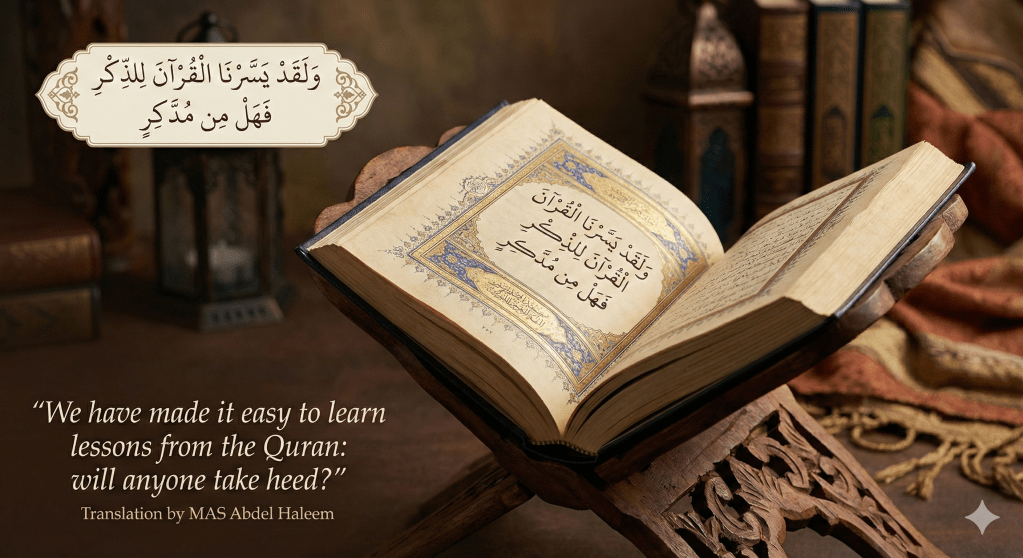
The final religion’s miracle is not just that its text is preserved, but that its message transforms anyone who sincerely engages it. As the Qur’an promises, “We have indeed made the Qur’an easy to remember and understand – so is there any who will take heed?” Let us be among those who take heed, and in doing so, rise above our divisions. For in the end, when we stand before Allah, He will ask about how closely we followed His Book and His Prophet’s way, not about what faction we belonged to. And Allah knows best – wallahu ʿalam.
Sources:
- Quranic verse on preservationcall-to-monotheism.com;
- Shia doctrines of Imamate and infallibilitythemuslimtimes.infothemuslimtimes.infothemuslimtimes.info;
- Twelver and Ismaʿili historical notesthemuslimtimes.infothemuslimtimes.info;
- Zaydi stance on fallibilitythemuslimtimes.info;
- Sunni vs. Shia interpretive approachesen.wikipedia.orgthemuslimtimes.info;
- Modern scholarly perspective on shared Quranic wisdomthequran.love;
- Demographic data on Shia branchesen.wikipedia.org;
- Preservation of Quran as unique promisecall-to-monotheism.com;
- Role of Shia marjaʿ during occultationthemuslimtimes.infothemuslimtimes.info;
- Ismaʿili doctrine summarizedthemuslimtimes.infothemuslimtimes.info;
- Zaydi doctrine summarizedthemuslimtimes.infothemuslimtimes.info;
- Sufi/Sunni/Shia esoteric interpretation contexten.wikipedia.orgen.wikipedia.org;
- Unity of Quranic text among sectsen.wikipedia.org.
If you want to read in the Microsoft Word file:
 The Glorious Quran and Science
Leave a comment