
Presented by Zia H Shah MD
Abstract
In the contemporary Muslim world, sectarian divisions have created a mutually assured destructive cold war in which each sect regards the others as fundamentally misguided and even destined for hell, despite all professing Islam. This paper documents how Sunni, Shī‘a (including Ismā‘īlī sub-sects), and Ahmadiyya Muslims often accept each other nominally as fellow Muslims yet simultaneously condemn one another as deviant or unbelievers. Drawing on explicit quotes from scholars and sources of various sects, we illustrate this tragic intra-faith impasse. We examine how each sect justifies its exclusivity by citing prophetic hadith – whether about the “saved sect,” the Imam of the Age, the Mahdi or Messiah, or a uniquely “guided” group – thereby attributing their myopic sectarianism to the Prophet Muhammad himself. In contrast, we highlight how Christians have largely moved past their historical sectarian conflicts: for example, a recent prayer by Pope Leo XIV and King Charles III together in the Sistine Chapel – a Catholic and a Protestant leader – symbolizes healing of a 500-year rift. Most Christians today scarcely remember the theological disputes that once divided them. Finally, this paper explores solutions for Muslims: chief among them, the creation of an inter-sectarian seminary in the West that brings together Sunni, Shia, Ahmadi, and other scholars under visionary non-sectarian leadership. Such an institution, enriched by non-Muslim and secular experts (philosophers, historians, conflict resolution specialists), could foster mutual understanding and pluralism. The essay concludes with a reflection (epilogue) on the unifying symbols of Islam – especially the Kaaba in Mecca that all Muslims revere – and how a renewed focus on shared fundamentals can help end the sectarian cold war.
Introduction: Islam’s Sectarian Cold War
Nearly 1,400 years after the Prophet Muhammad’s time, the Muslim ummah (global community) is starkly divided into sects that often view each other with suspicion or outright takfīr (excommunication). The two largest branches, Sunni and Shī‘a, split in the earliest days of Islam over leadership, and further subdivisions have proliferated over the centuries. Today there are dozens of sects and schools – Twelver Shia, Ismaili Shia, Zaydi, Sunni of various madhhabs (schools), Sufi orders, Salafis, Ahmadis, and more – each convinced of its own correctness. As one commentator observes, “Almost every sect in Islam, historically, has declared every other as Kafir (infidel) and non-Muslim.” In other words, Muslims have not hesitated to denounce other Muslims who differ in doctrine. Yet this practice blatantly contradicts the Prophet’s explicit warning: “If a man says to his brother, ‘O disbeliever (kāfir),’ then surely one of them is [indeed] a kāfir” – cautioning that one who unjustly accuses a fellow Muslim of disbelief will bear the very label he imposes. While outright pronouncements of takfīr are somewhat less common in polite discourse today, the underlying attitude remains: most sects “have not clearly distanced themselves from their past history” of mutual condemnation.
This state of intra-faith hostility can be described as a “mutually assured destructive Cold War.” Much like geopolitical Cold War adversaries locked in stalemate by the threat of mutual destruction, the Islamic sects are locked in a war of words and ideologies. They stop short of annihilating each other physically (most of the time), yet they relentlessly undermine each other’s legitimacy and spiritual credibility. Each side is confident that deviating from its own creed courts eternal damnation. Publicly, sect leaders may pay lip service to the idea of Muslim unity – acknowledging the Islamic identity of others – but privately or doctrinally, they often consign one another to error, heresy, or hellfire. This creates a toxic paradox: all groups claim to follow the same Qur’an and Prophet, and sometimes even recognize “the Islam” of the others, yet in the next breath they declare the others misguided and hell-bound. As Dr. Zia H. Shah notes, many sects save “the worst condemnation for those closest in belief to them” – perhaps viewing rival sects as more dangerous than entirely different religions.
To ground this reality, we will document sectarian rhetoric from a variety of Islamic sects, showing how each regards the other as deviants. We will then analyze how these attitudes are often buttressed by hadith (Prophetic sayings) that each sect interprets as exclusive divine endorsement of their faction. Finally, we will pivot to consider how Christian sects overcame similar internecine strife, and propose concrete steps – notably an inter-sectarian seminary and educational reform – that could help Muslims exit this destructive paradigm.
Mutual Accusations: Sects Calling Each Other Misguided
Sectarian polemics in Islam spare no group. Historical records and contemporary fatwas reveal a pattern of reciprocal denunciation. Below, we present quotes and examples from several major sects – Sunni, Shia, Ismaili, and Ahmadiyya – demonstrating how each views the others as seriously astray in faith:
Sunni Perspectives: In mainstream Sunni thought, the idea that only one sect will be saved is widely cited. A famous hadith states: “My Ummah will be divided into seventy-three sects, one of which will be in Paradise and seventy-two will be in the Fire.” When asked who the saved group is, the Prophet replied: “al-Jamā‘ah” (the main community). Sunnis generally identify themselves as that “main community.” For example, an orthodox Sunni fatwa site declares that all other sects fall into error: “The Jews were divided… the Christians were divided… and my Ummah will be divided into seventy-three sects, one… in Paradise and seventy-two in the Fire.” The “al-Jamā‘ah” is then defined as those who follow the Prophet and Companions. By implication, Muslims who deviate from Sunni orthodoxy (as defined by the Companions’ example) are bound for hellfire. Sunni scholars often enumerate the doctrinal failings of other sects: some “misguided with regard to the Unity of Allah” (an allusion to mystical pantheist interpretations), others misguided about faith and deeds, others about the status of grave sinners, etc. Notably, in a direct reference to Shia, Sunni jurists condemn “others [who] are misguided with regard to the Sahabah (Companions), whom they revile and denounce as kafirs,” stating that such people “deviated from the path of Islam.” This is aimed at Shī‘a groups that criticize certain Companions – Sunnis treat this as blasphemous deviation. In sum, Sunni doctrine typically paints Shia, Ismailis, Ahmadis, and various “heretical” fringe groups as misguided innovators at best, or outright non-Muslims at worst. Classic Sunni scholarship even coined derogatory labels: for instance, Shia were called “Rāfiḍah” (rejectors), implying rejection of true Islam. While today many Sunnis won’t openly say “Shias are non-Muslim,” it is common to hear that Shias are on a wrong path, guilty of bid‘ah (innovation in religion) and thus not among the saved group.
Shī‘a Perspectives: The Shī‘a branch (particularly Twelver Shi‘ism, the largest Shia sect) has its own exclusive claims. Twelver Shias believe that after the Prophet, ‘Ali and eleven successive Imams were the only legitimate leaders, divinely guided and infallible. From this view, Sunnis who did not follow those Imams have strayed from the Prophet’s appointed path. Shia teachings often cite a Prophetic hadith: “Whoever dies without recognizing the Imam of his time, dies the death of ignorance (Jāhiliyyah).” This stark saying – recorded in both Shia and many Sunni collections – is used by Shia scholars to stress that acknowledging the current Imam is essential for salvation. A Shia commentary explains: “This hadith and other proofs are solid evidence for the necessity of knowing the Imam… in order to survive deviation and find salvation. Whosoever does not get to know his Imam… will die in ignorance.” In Shia theology, “the only way to salvation is the promised Mahdi” – referring to the hidden Twelfth Imam who will one day reappear. Consequently, Shias implicitly regard Sunnis as misguided for failing to recognize the Imams, especially the Mahdi. Classical Shia texts are candid on this point: to die “in ignorance” (not knowing the Imam) is interpreted as dying outside true Islam. In practice, many Shias may not call individual Sunnis “kafir,” but they often pity them as lacking the full guidance (walāyah) that comes from the Imam. Extremist Shia views historically went further – for example, some Shia factions deemed the first Sunni caliphs usurpers and thereby outside the faith. Even if moderate Shias today refrain from blanket takfīr, the belief lingers that Sunni Islam is incomplete and misguided. The Shia also have sub-sects (e.g. Ismā‘īlīs, Bohras, Alevis), and each claims a different line of Imams; naturally, they view each other as mistaken as well.
An Ismā‘īlī Muslim follows the Aga Khan (a living Imam) and holds that allegiance to him is the guarantee of true guidance – implying that those who do not (including Twelver Shia and Sunnis) lack divine guidance. In Ismaili literature, the endurance of their Imamate through history, despite persecution, is seen as “a proof of the Imamat’s legitimacy and divine inspiration.” Those outside this fold are simply not under the Imam’s guidance. Thus, whether Twelver or Ismā‘īlī, Shī‘a Muslims believe they alone have remained faithful to the Prophet’s family (Ahl al-Bayt) and the divinely guided leaders of the age, and other Muslims are tragically off-course.
Ahmadiyya Perspectives: The Ahmadiyya Muslim Community, founded in 19th-century India by Mirza Ghulam Ahmad, adds another layer to this sectarian mosaic. Ahmadis consider Mirza Ghulam Ahmad to be Islam’s Promised Messiah and Mahdi, whose advent was foretold by the Prophet. This belief has led mainstream Muslims (Sunni and Shia alike) to excommunicate Ahmadis – for example, Pakistan’s constitution infamously declares Ahmadis to be non-Muslims. Ahmadis, for their part, generally refrain from calling other Muslims non-Muslim, but they do consider them gravely misguided for rejecting God’s Messiah. Mirza Ghulam Ahmad himself wrote: “Since the beginning, it has been my belief that rejecting my claims does not make a person Kafir or Dajjal. However, he is misguided and has deviated from the right path.” Here, the Ahmadi founder explicitly says Muslims who refuse to accept him are not unbelievers in the strict sense (since they may still recite the Kalima and follow Islam as they know it), but they are in error. Later Ahmadiyya writings clarify that such a person remains part of the Muslim Ummah, yet has left “the pale of true Islam” by denying the Promised Messiah. In Ahmadi terminology, non-Ahmadi Muslims are “Muslim” but not on the path of true Islam until they accept Mirza Ghulam Ahmad. This subtly mirrors the attitudes of other sects: an Ahmadi will politely call a Sunni or Shia a fellow Muslim, but internally believes that person is missing an “essential aspect of faith.” Meanwhile, Sunni clerics label Ahmadis as heretics (or worse) – a 1974 World Muslim League fatwā, for example, urged all Islamic nations to consider “Qādianis (Ahmadis) a non-Muslim minority” and to bar them from influential posts. In everyday life in some Muslim countries, calling someone an “Ahmadi” is itself a slur, and Ahmadis have been jailed merely for calling their worship places “mosques.” This is sectarian cold war at its bleakest: each side sees the other as effectively outside the fold of true Islam.
Other Sects: The pattern continues across smaller sects and movements. Ibadi Muslims (a minority sect mainly in Oman) historically viewed both Sunnis and Shias as having deviated (though Ibadis are relatively moderate today). Certain Salafi or ultra-conservative groups consider even minor differences (like celebrating the Prophet’s birthday or revering Sufi saints) as deviance that could lead to hellfire. In turn, more mystically inclined Muslims (Sufis) sometimes view the hardline Salafis as spiritually bereft. Each sect or school, to justify its exclusivity, cultivates a sense that it has grasped the “inner truth” or correct understanding of Islam, while others are blind or obstinate. This absolutism may be toned down in inter-sectarian gatherings, but it emerges in religious sermons, books, and private discussions. It is not uncommon to hear phrases like “Those people’s Islam is just cultural, they don’t have the real Islam,” or more ominously, “Anyone who believes X (a doctrine of another sect) will end up in Jahannam (Hell) unless they repent.” In short, the Muslim world’s sects remain locked in a tense standoff – a cold war of doctrine – where each is convinced the other’s path leads to ruin.
Shared Fundamentals: The Basis for Muslim Unity
Despite these seemingly irreconcilable divisions, Islam’s sacred scripture and the Prophet’s teachings place enormous emphasis on the unity and brotherhood of all Muslims. The Qur’an calls the believers “one Ummah” (one community) united under one God, and commands them: “Hold firmly to the rope of Allah all together and do not become divided”. It also condemns those who break their religion into sects, declaring that the Prophet has nothing to do with them. In other words, to fracture the Muslim community is to disobey explicit divine instructions.
The Prophet Muhammad (ﷺ) likewise stressed that the faithful are one community bonded by compassion. He said: “The parable of the believers in their affection, mercy, and compassion for each other is that of a body. When any limb aches, the whole body reacts with sleeplessness and fever.” In this spirit, all believers are meant to feel each other’s pain and support one another, as if they were limbs of a single body. There is no room in this vision for Muslims to hate, hurt, or excommunicate each other.
Common Ground Across All Sects: For all their disputes, Muslims across every sect still share the same fundamental tenets of faith and practice – a powerful basis for unity:
- One Creed (Shahādah): Every Muslim, whether Sunni, Shī‘a, or otherwise, proclaims the same declaration of faith: “There is no god except Allah, and Muhammad is the Messenger of Allah.” This kalimah (creed) is the cornerstone of Islam and is universally affirmed across sects.
- One Scripture: All sects equally revere the Qur’an as the literal word of God. Critically, they share exactly the same Arabic Qur’ān text — unlike other faiths which may have multiple versions of scripture — even if they differ on interpretation. Every Muslim regards the Qur’an as their ultimate holy book.
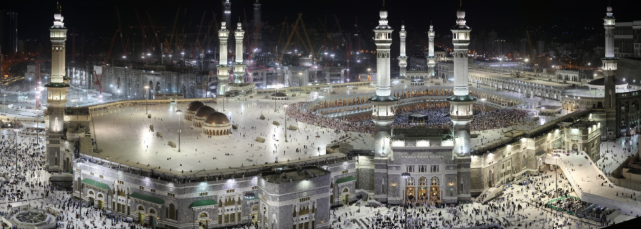
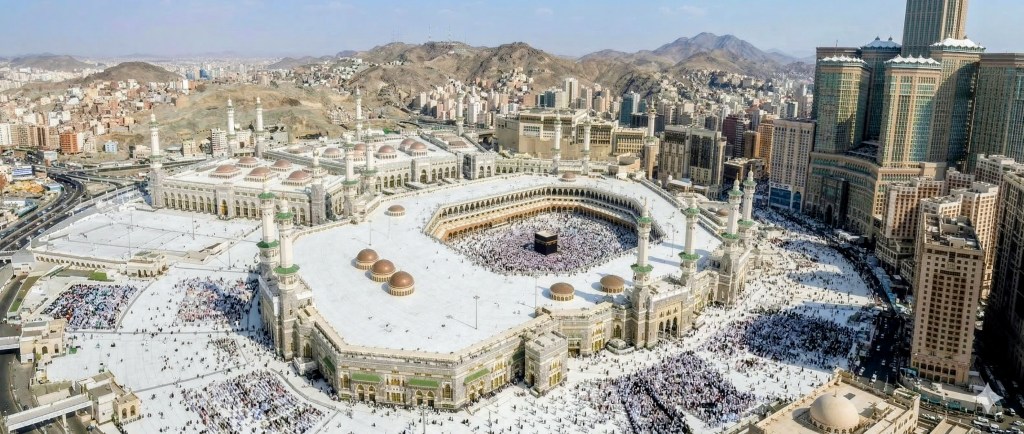
- One Qiblah (Direction of Prayer): Five times a day, Muslims of all sects direct their prayers toward the same Kaaba in Mecca. This unified qiblah symbolizes a common spiritual orientation. All perform the core prayer rituals in largely the same manner (with only minor juristic variations). As one scholar observes, “Every time we visit Mecca or look at a picture of the Kaaba or face towards it for ṣalāt (prayer), it should remind us of this fundamental non-sectarian teaching,” reinforcing that the Kaaba is meant to unite, not divide.
- Shared Rituals: Beyond prayer, all Muslims observe the same essential pillars of worship: fasting together in the month of Ramadan, giving the prescribed alms (zakāt), and, if able, performing the Hajj pilgrimage. During the Hajj, Sunnī and Shī‘a pilgrims (and members of other sects) stand shoulder to shoulder in identical white garments, circling the Kaaba and supplicating as one, indistinguishable in their devotion. Such scenes — millions of believers united in ritual despite minor creed differences — embody the intrinsic unity of the ummah.
These profound commonalities provide a bedrock for Muslim solidarity, far outweighing any secondary sectarian disagreements. Indeed, Muslim leaders and scholars throughout history have often reminded the ummah of this shared identity. In 2005, over 200 prominent scholars from across the Islamic world endorsed the Amman Declaration, which recognized eight traditional schools of Islamic thought (four Sunnī, two Shī‘a, the Ibadi, and the Ẓāhirī) and forbade declaring any adherents of these schools to be unbelievers. Such initiatives echo the Prophetic teaching that anyone who professes the one God and Prophet of Islam is a Muslim, and that intra-faith diversity must not lead to excommunication or hatred.
However, despite these unifying fundamentals and ideals, many Muslims still view those of other sects with mistrust or disdain. Part of the reason lies in how certain prophetic traditions have been interpreted (or misinterpreted) to elevate one group over others. These narrations are often invoked to give sectarian partisanship an aura of divine sanction, as the next section will examine.
Hadith as Weapons: Justifying Exclusivity through Prophecy
At the heart of this sectarian myopia is the conviction that the Prophet Muhammad himself foretold and validated it. Each sect marshals certain hadith (reports of the Prophet’s words) as proof-texts that their rivalry with other Muslims is not only justified but divinely ordained. This section examines a few of the most cited prophetic traditions that underpin the mindset of “we are right and saved; everyone else is wrong and doomed.” Ironically, these hadith were likely intended as warnings against splintering the faith, but in sectarian hands they have become weapons to sanctify division.
The “73 Sects” Hadith: Perhaps the single most polarizing prophecy is the hadith already mentioned in the Sunni perspective above: that Muslims would fragment into 73 sects and only one would enter Paradise. This narration appears with minor variations in several collections (Sunan Abī Dāwūd, al-Tirmidhī, Ibn Mājah, etc.), lending it currency among many Muslims. Sunnis usually interpret “the saved sect” as those adhering to “what I and my Companions are upon” – in other words, orthodox Sunnism tracing its lineage to the Prophet’s companions. Shias sometimes re-interpret this hadith to claim they are the saved one, often by identifying “the group” with the followers of Imam ‘Ali (the Prophet’s family). Regardless of who claims the mantle, the effect of the hadith is to render Muslim sectarianism a zero-sum game: if one group alone is saved, all others are, by implication, on a path to hellfire. Extremists in various sects have gleefully expanded on this. For example, medieval polemicists would enumerate sects they despised – naming rival groups – to fill up the “72 doomed sects” list and make their own group the sole survivor. In modern times, literature on “Firqat un-Nājiyah” (the Saved Sect) abounds, each author naturally identifying their in-group as that sect. An Islamic fatwa site vividly concludes: “each of [the deviant sects] rejoices in what they have, but they have followed the ways of Shayṭān… We ask Allah to make us among the followers of the Sunnah who will be saved from the Fire.” The hadith of 73 sects thus functions as a self-fulfilling prophecy: Muslims divided into sects use it to validate the very divisions it warns of, each certain that “all will be in Hell apart from us.”
Hadith of the “Victorious Group”: Closely related is another oft-quoted prophecy: “A group (ṭā’ifa) of my Ummah will continue to remain on the truth (or victorious), unharmed by those who oppose them, until the Hour (Judgment Day).” This narration (found in sources like Ṣaḥīḥ Muslim) is frequently invoked in tandem with the 73-sects hadith. It gives comfort that, no matter how bad things get, one faction of Muslims will always carry the torch of true Islam. Naturally, every sect insists they are this “victorious group on the truth.” For example, Salafī-Wahhābī circles often publish tracts identifying themselves – followers of pure Tawḥīd and Sunnah – as that evergreen group. Shia also sometimes claim that despite being a minority persecuted for centuries, their community has preserved true Islam as the Prophet promised a group would. In both cases, the hadith fosters a kind of spiritual arrogance: if we are the eternally victorious group, why compromise with others? It also ties into messianic expectations: each sect awaits a Mahdi or Messiah who will vindicate them and defeat others. Sunnis anticipate a future Imam Mahdi (from the Prophet’s lineage) and the return of Jesus (ʿĪsā) to restore the true faith – some Sunni extremists have even labeled opponents as “Antichrist (Dajjāl) sects.” Shias await the 12th Imam (Mahdi) to emerge from occultation and recognize only those who upheld his ancestors’ cause. Ahmadis believe the Messiah & Mahdi has come (in Mirza Ghulam Ahmad) and that eventually the world will accept him and unite under true Islam. These prophetic narratives differ in content but serve a similar psychological purpose: legitimizing one’s own sect as the exclusive repository of truth fated to triumph, while rivals are cast as the “inevitable 72 false sects” or the supporters of antichrist-like figures. In effect, hadith are used as weapons in a cold war, each sect cherry-picking sayings that foretold their rise and others’ fall.
Imam of the Age and the Mahdī: The Shī‘a hadith mentioned earlier – “Who dies without knowing the Imam of his time dies in ignorance” – is a cornerstone of Shia exclusivism. Twelver Shia interpret this to mean acceptance of the current Imam (the Mahdi in occultation) is mandatory for being truly guided. Shia scholars assert that this and “tens of other proofs” make it “obligatory” to follow the Imam to “survive deviation and find salvation.” On the flip side, Sunni hadith collections contain warnings against illegitimate leaders (e.g., “If you see no caliph and there is no jama’ah, separate yourself from all those sects”, etc.), which Sunnis sometimes use to reject Shia claims. The concept of Imam/Mahdi/Messiah thus heavily influences sectarian identity: each sect either identifies their leader as the authentic Imam/Mahdi/Messiah, or they delegitimize the others’ leaders as false claimants. For instance, Sunnis in the Sudan who followed the self-proclaimed Mahdi in the 1880s were declared heretics by other Sunnis; Shias consider the Sunni caliphs who weren’t Imams to be leaders in “ignorance,” and Sunnis view Shia Imams (after ʿAlī) as self-appointed and unrecognized by the wider community. The Ahmadiyya take on hadith is particularly interesting: they cite the same prophecies about a latter-day Messiah and Mahdi, but claim these were fulfilled by Mirza Ghulam Ahmad around 1900. Thus, when mainstream Muslims continue to await a future Mahdi, Ahmadis believe those Muslims are going against the Prophet’s intent by denying the Mahdi who already came. The Ahmadiyya literature gently chastises others for this: rejecting the Promised Messiah is seen as a grave error – a “form of kufr” (disbelief), though not one that expels them completely from Islam. In all these cases, the Prophet’s name is invoked to authorize narrow partisanship. Sincere believers, wishing to be faithful to Muhammad’s teachings, end up locked in a circular logic: “The Prophet said only one sect is right; our scholars prove that we are that sect; therefore, to truly follow the Prophet, we must oppose and refute other sects.” What gets lost is the Quranic ethos of unity and not dividing into factions – an ethos the Qur’an explicitly commands (e.g., “Hold fast all together to the rope of Allah and be not divided” – Qur’an 3:103). Tragically, the hadith that could have been warnings against division have been weaponized to entrench division, each sect insisting it has prophetic sanction to view the others as apostates, innovators, or deviant minorities.
In summary, the sectarian Cold War mentality among Muslims feeds on a selective reading of scripture and hadith. The Prophet Muhammad, who came to unite the tribes under one God, is effectively claimed as an ally by every sectarian faction. They attribute their divisive stance – calling others misguided – to him, asserting “he told us this would happen, and he told us we’re the ones on the right path.” This theological justification makes sectarian prejudice far more entrenched, since it carries the aura of divine approval.
Re-examining Sectarian Hadiths: Notably, many Islamic scholars – classical and contemporary – urge caution in how such narrations are understood. The 73-sects hadith, for example, has been criticized in authenticity: the 11th-century scholar Imam Ibn Hazm argued it was not reliable and observed that neither Imām al-Bukhārī nor Imām Muslim included it in their authoritative collections. Likewise, the Yemeni hadith expert Ibn al-Wazīr (d.1436) pointed out contradictions in the various versions of this report and deemed it untrustworthy. More recently, Shaykh Muhammad al-Ninowy – a modern Sunni theologian – has flatly labeled the 73-sect tradition as weak or even fabricated. These scholars remind us that no ambiguous or isolated hadith should ever supersede the Qur’an’s unequivocal calls to unity and mercy. The Prophet’s warnings about future sects were likely meant to urge Muslims to avoid fragmenting as past nations did – not to endorse a self-righteous mentality that each sect alone will be saved.
Any solution to Muslim disunity, therefore, must grapple with these deeply held beliefs and interpretations.
Can Muslims be convinced that maybe the Prophet’s intent was to urge unity rather than give us license to damn each other? Other religious communities have faced similar scriptural traps – and many have succeeded in overcoming them. The next section looks at how Christians, in particular, moved past bitter sectarian divisions, and what Muslims might learn from that experience.
Solutions: Towards Intra-Muslim Reconciliation and Pluralism
Overcoming fourteen centuries of ingrained sectarian distrust is no easy task. However, practical steps can be taken to dismantle the walls between Muslim sects and build a future where doctrinal diversity is accommodated within an overarching unity of the Ummah. Below are some proposed solutions, culminating in the idea of a groundbreaking Inter-Sectarian Seminary. This is followed by discussion on educational and structural reforms needed, drawing inspiration from pluralist thinkers like Zia H. Shah and lessons from conflict resolution experts. The focus is especially on locating such efforts in environments where they can thrive free from sectarian state interference – notably, the Western world, as opposed to being dominated by any one “so-called Muslim country” or its majority sect.
1. Establish an Inter-Sectarian Islamic Seminary (in the West): One bold proposal is to create a multidenominational Islamic seminary or institute of higher learning, analogous to an ecumenical Christian seminary but for intra-Islamic denominations. The seminary would be a place where Sunni, Twelver Shia, Ismaili, Ahmadiyya, and other sect scholars teach side by side, and where students from all those communities can study Islam together. Such a seminary should ideally be located in a neutral, pluralistic environment – for example, in Western Europe or North America – specifically to avoid the dominance or pressure of any one sect’s government or majority. In a Western setting, there is generally freedom of religion and academic freedom that might be lacking in, say, Saudi Arabia (which is Sunni-Wahhabi dominated) or Iran (Shia dominated) or Pakistan (Sunni with anti-Ahmadi laws). A Western host country would not have a stake in promoting one sect over another, allowing the seminary to operate with true parity among sects.
The curriculum of this dar-ul-taqrib (house of rapprochement) would include each tradition’s theology and legal methodology, taught by qualified scholars of that tradition. Students would thus gain literacy in all major interpretations of Islam, rather than being siloed in their own. Joint classes could cover Islamic history, ethics, Qur’anic exegesis, and Prophetic sīrah (biography) from multiple sectarian perspectives. Over time, this cross-pollination can breed understanding and respect. Crucially, the seminary would not aim to blend sects into one, but to normalize co-existence – graduating leaders who are deeply rooted in their own faith and deeply respectful of others’. An inter-sectarian council of scholars could oversee the institution to ensure balance and prevent any one sect from dominating the narrative. By producing a generation of imams and scholars accustomed to working and debating in a pluralistic setting, such a seminary could gradually erode the “us vs. them” mindset.
2. Develop a Shared Intra-Faith Curriculum: Hand-in-hand with a seminary, we need educational reform at the grassroots. Madrassahs and Islamic universities in the Muslim world (and weekend schools in the West) typically teach only their sect’s viewpoint. Introducing comparative fiqh and theology courses – even at a basic level – can open young minds to the breadth of Islamic thought. Historical modules should acknowledge the contributions of various sects and the context of their disagreements, rather than demonizing them. For example, a Sunni syllabus might include a respectful overview of Shia history and vice versa. There is precedent: in 1959, Al-Azhar University’s Shaykh Mahmood Shaltut famously recognized the Shia Ja‘fari school as valid in Islam, encouraging its study. Modern curricula could build on such inclusivity. Textbooks and teachers should emphasize Qur’anic verses about unity and mercy, and the Prophet’s insistence on avoiding discord. Education ministries and boards in countries like Pakistan, Iran, Saudi Arabia, and Iraq could sanction such curricula, though political obstacles abound. Where state schools falter, private initiatives (NGOs, online courses, exchange programs between seminaries) can fill the gap. The key is to raise a generation of Muslims who, even if staunch in their own creed, do not view ikhtilāf (differences) as khaṭar (danger). Instead, they would see fellow Muslims first, and sectarian labels second.
3. Foster Intersectarian Engagement and Dialogue: Beyond formal education, the barriers of mistrust break down when human beings actually meet and interact. Communities that never mingle easily demonize each other. Thus, facilitating regular encounters is vital. This can range from simple local initiatives – e.g. inter-mosque visits, joint prayer services or inter-madhhab iftars during Ramadan – to larger conferences and dialogs. For instance, scholars from different sects could hold public panel discussions on common theological themes (prophethood, mahdi, qadr, etc.), highlighting both differences and shared beliefs. Such forums must be conducted with adab (etiquette) – no polemics or proselytizing, but a genuine effort to understand. Internationally, organizations like the Muslim Council of Elders and the Organisation of Islamic Cooperation (OIC) could sponsor annual “Unity Summits” that bring together representatives of all sects. Even if resolutions passed are symbolic, the very optics of Sunni and Shia and others sitting together send a powerful message. On a grassroots level, youth exchange programs (akin to sister-city initiatives) could allow young Muslims to spend time in regions or communities of another sect, living with host families. Internet forums and social media campaigns can also be harnessed: for example, a hashtag like #OneUmmah trending with stories of inter-sect friendship and support. Over time, personal bonds forged through such engagement make it harder to maintain blanket hatred – the Shia is no longer an abstract enemy, but Ali or Fatima whom one has met, shared a meal with, and found commonality with.
4. Promote a Culture of Pluralism and Tolerance from the Pulpit: Imams, khatibs (preachers), and local scholars wield great influence over the attitudes of their congregations. A concerted effort is needed to have these religious leaders preach messages of unity and tolerance. This might entail workshops or refresher courses for imams that equip them with Qur’anic and Prophetic examples of pluralism. Key points to instill: the Prophet’s lifelong effort to unite Muslims, his anger at intra-Muslim fighting, his forgiveness of those who erred. Imams can remind congregants that the Companions themselves had differences in understanding, yet remained one ummah. If every Friday khutbah for a year included a dua for Muslim unity and a reminder not to denounce fellow believers, it could gradually shift the communal ethos. Certain hateful practices must also be curbed – e.g. derogatory remarks against Sahabah or the Prophet’s wives (which offend Sunnis), or the routine cursing of historical figures revered by another sect. Scholars from each sect can issue guidelines to avoid inflammatory language. In recent times, for example, Grand Ayatollah Ali Sistani (a leading Shia marja‘) has forbidden curses against Sunni symbols. Similar fatwas from Sunni authorities condemning anti-Shia slogans or attacks on Ahmadi beliefs would set a tone. Ultimately, a “Live and Let Live” philosophy should be promoted: leave judgement of beliefs to Allah, and focus on displaying the ethical and spiritual beauty of Islam.
5. Emphasize Universal Islamic Values and Shared Identity: A long-term solution lies in re-centering our identity on the core of Islam, instead of peripheral differences. Initiatives in this regard can be intellectual and cultural. On the intellectual side, scholars and thought leaders need to re-emphasize Quranic values – taqwā (God-consciousness), raḥmah (mercy), ‘adl (justice), etc. – as the true measures of faithfulness, not one’s sectarian affiliation. For example, a hadith states that “Allah does not look at your outward forms, but at your hearts and your deeds.” This ethos runs contrary to sectarians judging others solely by sect labels. Publications, journals, and YouTube lectures can propagate the idea that what will save us is not the name of our group, but our sincerity, ethics, and obedience to Allah. Concurrently, culturally, we can celebrate symbols that unite all Muslims. Foremost among these is the Holy Kaaba in Mecca – the iconic cube that every single Muslim on Earth faces in prayer. Documentaries, art exhibits, and social media content can highlight how a Bilal in Nigeria, a Khadija in Pakistan, an Hasan in Iran, and a Fatimah in Indonesia all prostrate toward this same Kaaba daily. It is a moving symbol of unity: “No matter our sect, we bow toward the same Kaaba and prostrate before the same Lord”. The annual Hajj pilgrimage, too, is a live tableau of Muslim unity in diversity – an event where petty differences fade amid the overwhelming sense of oneness. Schools and parents should share stories of Hajj and perhaps arrange local “unity days” replicating its spirit. Another unifying practice is the Ramadan fast: all Muslims fast the same month and break fast with the same dates and water, across continents. Emphasizing these shared experiences can shift focus away from doctrinal quarrels to the fact that in practice we are already one community in so many ways.
Finally, the Kaaba’s unifying role should be actively promoted. Perhaps the inter-sect seminary could sponsor a “Unity Hajj” – arranging for a delegation of Sunni, Shia, Ahmadi, etc. students and scholars to perform Hajj together (if possible, given political constraints). Even symbolically, they could do a joint ‘umrah or host a conference near Mecca where they collectively face the Kaaba in prayer. “The Hajj is a symbol of universal brotherhood,” as Zia Shah reminds us, and facing the Kaaba should “remind us of fundamental non-sectarian teaching”. All Muslims turning toward one cubic building, circumambulating it as one body during ṭawāf – this is the Qur’an’s own illustration that the faithful are one people worshiping One God. We must drive home the point: no matter our sect, we bow toward the same Kaaba and prostrate before the same Lord. The psychological impact of that realization can melt sectarian hardness. Indeed, during the actual Hajj, one sees Sunni and Shia pilgrims indistinguishable in ihram (white garments), saying the same talbiyah chant. If they can stand side by side at ‘Arafāt, why not in everyday mosque life back home?
Epilogue: One Ummah Reborn
As the Muslim world stands at a crossroads in the 21st century, burdened by old animosities yet yearning for unity, we are reminded of the Qur’anic plea: “And hold fast, all together, to the rope of Allah, and be not divided” (3:103). The “rope of Allah” – variously interpreted as the Qur’an, or the covenant of faith – was meant to bind us as one community (Ummah). Instead, we have frayed that rope into strands, each sect grasping its own strand and claiming it alone is the rope of Allah. The task before us is to re-twine those strands into a strong cord of unity, without erasing their distinct colors. Unity in Islam need not mean uniformity or the capitulation of one sect to another; it means finding strength in diversity, just as a cable is strongest when multiple strands support each other.
The journey of Christian reconciliation shows that today’s enemies can become tomorrow’s brothers in faith. It was heartening to see Pope Leo XIV and King Charles III praying together, demonstrating that time and goodwill can heal even centuries-old schisms. We envision a day when a similarly poignant scene might unfold in the Muslim world: a Sunni Grand Imam of al-Azhar praying shoulder to shoulder with a Shia Grand Ayatollah in the Grand Mosque of Mecca, joined by the Ismaili Aga Khan and the Ahmadiyya Caliph, all proclaiming “Allāhu Akbar” in unison. It may seem utopian, but it is no more fanciful than imagining, in 1525, that a King of England would ever kneel in reverence next to a Pope. Stranger things have happened by God’s grace.
Education and empathy are the bridges that will get us there. The proposed inter-sectarian seminary is one bold step; even bolder will be the everyday decisions by imams, clerics, and lay Muslims to open their hearts and mosques to those who differ. Perhaps a Sunni mosque in London might invite a Shia preacher to share the pulpit one Friday, or a Shia center in Houston host a Sunni Qur’an circle. Perhaps Sunni and Ahmadi neighbors in a city will jointly celebrate the Prophet’s birthday in a community center, focusing on his message of mercy rather than the differences in belief about the Mahdi. These small acts, repeated across continents, amount to a grassroots peace process in the sectarian cold war.
We must also candidly repent for how we have attributed our own intolerance to the Blessed Prophet. It is unthinkable that the man who forgave his worst enemies at the conquest of Mecca would approve of Muslims calling each other kafir so readily. The Prophet’s hadith about sects were likely warnings to avoid the fate of past nations, not a mandate to imitate them. In an often-quoted narration, when some Companions asked who the saved sect would be, he replied: “those who follow my way and my Companions’ way.” Let us observe: his Companions included a spectrum of personalities – strict ones like ‘Umar, gentle ones like Abu Dharr, scholarly ones like ‘Ā’ishah, contemplative ones like Abu Hurairah, activist ones like ‘Alī. They disagreed at times among themselves, yet the Prophet encompassed them all and praised them all. Following the Prophet and Companions’ way, then, could mean embracing a broad, compassionate understanding of Islam. The “Jamā‘ah” (community) the Prophet spoke of was, in spirit, the united community of Muslims, not a narrow sect claiming the title. It is high time we reclaim that spirit. As one hadith states, “The believers are like one body; if one limb hurts, the whole body reacts with fever and sleeplessness.” By that measure, when Shia and Sunni hurt each other, the whole body of Islam is ailing.
Dr. Zia H. Shah, who proudly says “I am a Jew, a Catholic, a Christian and a Muslim… for I have drunk from every and all wells,” serves as an example of the kind of inclusive identity modern Muslims can adopt. He does not mean he literally changes religion; he means he has allowed himself to learn from the goodness in every tradition, knowing that truth is not the monopoly of one sect or even one religion. A Sunni can admire the devotion of a Shia without becoming one; a Shia can respect the zeal of a Salafi without agreeing with him. We can learn from anyone who has sincerity and love of God, even if their path diverges from ours.
If we do so, perhaps one day the term “sectarianism” will become a historical curiosity for Muslims, as it largely has for modern Christians. They have not resolved all doctrinal disputes – Catholics, Protestants, Orthodox still differ – but they no longer define each other by those differences. Most Christians today simply call themselves “Christian,” not “Lutheran” or “Catholic” in ordinary life, and they join hands on social and moral causes. We Muslims, too, could achieve that if we choose to. The Qur’an tells us “Verily, this ummah of yours is one ummah, and I am your Lord, so worship Me” – and warns us not to be like those who “tore their unity wide asunder”. In our age of unprecedented global challenges – moral decline, climate change, geopolitical turmoil – can we afford to remain splintered and feuding? The enemies of Islam certainly prefer to see us divided. The time has come to end the mutually assured sectarian cold war. Let us honor the rope of Allah that binds us, celebrate the Kaaba that centers us, and revive the Prophet’s vision of one ummah – diverse in our understandings, but united in our submission to the One God and our love for His Messenger.
The believers are but a single brotherhood. (Qur’an 49:10) – May we live to see that brotherhood realized.
Sources Cited
- Shah, Zia H. “Who is a Muslim? Time to learn from the Christians.” Muslim Times, 2019.
- Catholic News Service. “Pope Leo XIV, King Charles III share historic prayer in Sistine Chapel.” The Catholic Register, Oct. 23, 2025.
- The Amman Message (Official Text), 2005. (Scholarly consensus on Islamic unity and prohibition of takfīr)
For details of references please go to the following file:


 The Glorious Quran and Science
Leave a comment