
Epigraph:
And they ask you concerning the soul. Say, ‘The soul is by the command of my Lord; and of the knowledge thereof you have been given but a little.’ (Al Quran 17:85)
Presented by Zia H Shah MD with help of ChatGPT
Introduction
Is it possible that consciousness, memory, or personal identity could exist independently of the physical brain? A growing body of scientific theories, philosophical arguments, and speculative models suggests the mind might not be entirely confined to brain activity. Some hypotheses invoke quantum physics or extra spatial dimensions, while others draw on neuroscience anomalies, near-death experiences, and even reincarnation research. This report surveys published ideas supporting the notion that consciousness may extend beyond the brain – potentially surviving bodily death – and examines how such mechanisms could allow awareness to persist or reemerge. The discussion spans physics (e.g. quantum mind and multidimensional space), neuroscience and psychology (brain “filter” models and anomalies), metaphysics (dualism and idealism), and empirical findings from near-death experience (NDE) studies and reincarnation research. Relevant evidence and key proponents are cited throughout, followed by a summary table of main ideas, supporting evidence, and notable theorists.
Brain as a Filter or Receiver of a Greater Mind
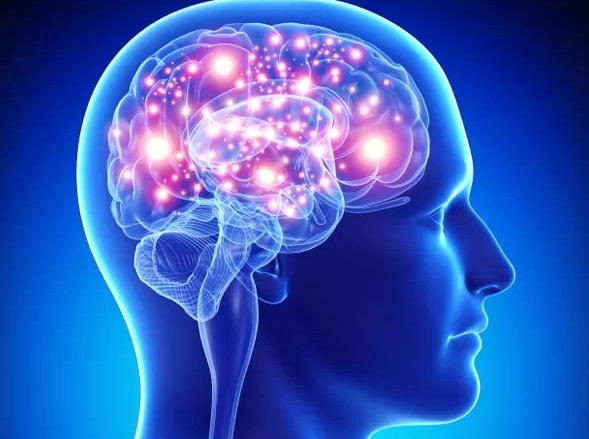
One longstanding idea is that the brain does not produce consciousness on its own, but rather acts as a filter or transmitter of mind from a larger reality. This transmission model, championed by William James, Henri Bergson, and others, holds that the brain channels a pre-existing field of consciousness, much like a radio receiver tuning into a broadcastiai.tviai.tv. In this view, neural activity normally constrains or “reduces” a broader mind, focusing us on the physical world. Consciousness itself might be a fundamental, non-material aspect of reality – sometimes called a “hidden field” or reservoir of consciousness – from which our ordinary awareness is derivediai.tviai.tv. The operative terms are filter, transmit, permit, channel – not “produce or create”iai.tviai.tv.
- Historical Support: William James in 1898 proposed the brain’s role is “transmissive” (permissive) rather than productive, allowing a broader consciousness to manifest in limited formiai.tv. Similarly, Bergson likened the brain to a reducing valve that ordinarily limits our conscious experience to what’s biologically useful. This perspective was partly inspired by phenomena like multiple personality and savant abilities, which hinted at mind beyond what the damaged brain should manageiai.tviai.tv.
- Modern Endorsement: Contemporary scholars have revived filter theory as an alternative to strict materialism. Philosopher Paul Marshall notes that whereas brain injury or drugs alter consciousness, dependence “is not the same as production” – just as a radio can be damaged and distort sound without generating the music itselfiai.tviai.tv. The brain may draw upon pre-existing consciousness, regulating and limiting an expansive mind to fit our physical realityiai.tv. This model could explain why extraordinary states (mystical experiences, psychedelic visions, etc.) sometimes feel “more real” – perhaps the filter is temporarily opened wider, letting in a greater range of mind.
- Empirical Clues: Certain clinical observations are consistent with a transmission model. Terminal lucidity is one example: in the hours before death, some patients with severe brain damage or dementia suddenly regain clear memory and personality. This unexpected lucidity “presents a significant challenge to physicalist assumptions” because the self seems intact despite a failing brainresearchgate.netresearchgate.net. The “sudden return of awareness” in someone with irreversible brain degeneration “raises the possibility that consciousness… could operate independently of the brain”, suggesting the person’s mind was present but unable to shine through until the very endresearchgate.net. Such cases align with the notion that the brain normally constrains the mind, and when the constraint loosens (even due to dying), the underlying personhood manifests briefly.
- Related Concepts: Neurologist John Eccles (Nobel laureate) also argued for a dualistic interaction, with the mind as a nonphysical element interacting with brain micro-structures. More recently, neuroscientists are exploring the brain’s electromagnetic fields as carriers of consciousness – e.g. the “CEMI” theory (conscious electromagnetic information) – which portrays the brain as a transceiver of field information rather than a closed computer. While these models remain unproven, they challenge the assumption that memory and awareness must be encoded entirely in synapses. In fact, despite decades of research, brain science has not pinpointed a single “engram” (memory trace) for episodic memories; this leaves open the speculation that memory could be a field phenomenon accessed by the brainsheldrake.org.
Nonlocal Mind and Field Theories: Expanding on the filter idea, biologist Rupert Sheldrake proposes that memory and mind exist in morphic fields that extend beyond the brain. On this view, brains are more like TV receivers than video recorders – they tune into influences from the past and into collective memory fields, rather than store all memories internallysheldrake.org. Each species inherits a collective memory (a “habit” of nature) via morphic resonancesheldrake.orgsheldrake.org. Such theories are admittedly speculative, but they attempt to explain puzzling phenomena like telepathy or a pet “knowing” when its owner is coming home (as Sheldrake has experimentally investigated). The extended mind hypothesis – that mental fields “are both within brains and extend far beyond them, just as the field of a magnet extends beyond the magnet” – would mean an individual’s consciousness is not bounded by the skullsheldrake.orgsheldrake.org. If true, this could allow part of one’s identity or information to persist in the field after death, potentially accessible under the right conditions.
Quantum Theories and Extra Dimensions of Consciousness
Modern physics offers intriguing (if controversial) avenues to place consciousness beyond the confines of neurons. These approaches suggest the mind may be rooted in quantum processes or higher-dimensional structures that transcend the familiar four dimensions of spacetime.
- Orch-OR and Quantum Mind: Perhaps the best-known scientific theory is the Orchestrated Objective Reduction (Orch OR) model by physicist Sir Roger Penrose and anesthesiologist Stuart Hameroff. They postulate that consciousness arises from quantum-level computations in microtubules (protein lattices) inside neuronspopularmechanics.compopularmechanics.com. In their 1990s papers, Penrose and Hameroff even suggested “consciousness may operate as a quantum wave passing through the brain’s microtubules”popularmechanics.compopularmechanics.com, undergoing wave-function collapse to produce moments of conscious awarenesspopularmechanics.com. If the mind is fundamentally a quantum process, it could possess non-local properties – meaning elements of consciousness might not be strictly localized to one place in space or time. Penrose hypothesized that each quantum collapse in the brain corresponds to a “moment” of awarenesspopularmechanics.com. One radical implication is that, at the quantum level, consciousness “can exist everywhere simultaneously”, potentially entangling with particles across the universepopularmechanics.com. In other words, our individual consciousness might connect into a deeper universal quantum fieldpopularmechanics.com. This recalls physicist Erwin Schrödinger’s view that consciousness is a singular, unified field with plural individual expressions.
- Hameroff on Afterlife: Hameroff has speculated on what Orch-OR could mean for survival of consciousness. In one interview he suggested that quantum information in the brain’s microtubules isn’t destroyed at death, but disperses into the universe at large – possibly allowing a continuation of consciousness in some form if the information later reconvergespimvanlommel.nlpimvanlommel.nl. While this idea is not universally accepted (and Orch OR itself is debated), it offers a mechanism whereby an “individual” mind’s quantum state might persist as a pattern in the fabric of spacetime. Notably, recent experiments in quantum biology give some support to the plausibility of warm quantum coherence in microtubulespopularmechanics.com, and anesthetic studies in 2024 showed microtubule stability correlating with consciousness in ratspopularmechanics.compopularmechanics.com. These findings keep the quantum mind hypothesis alive, suggesting our brains might indeed tap into physics beyond classical neurochemistry.
- Higher-Dimensional Space: Another set of theories posits that consciousness resides in extra spatial dimensions or a higher-dimensional “brane” (membrane) apart from the familiar 3D world. Dr. Michael Pravica, a physicist at UNLV, recently proposed that human consciousness might originate from “hidden dimensions of the universe rather than solely from brain activity”economictimes.indiatimes.com. In moments of creativity, insight, or dreaming, our awareness could be transcending 4D spacetime and synchronizing with these higher planeseconomictimes.indiatimes.comeconomictimes.indiatimes.com. Pravica’s hyperdimensional theory draws an analogy: just as a 2D being cannot comprehend a 3D object passing through its plane, humans may normally be oblivious to higher dimensions overlapping our owneconomictimes.indiatimes.com. But exceptional mental states might allow fleeting access to those realms, explaining bursts of inspiration or transcendental experienceseconomictimes.indiatimes.comeconomictimes.indiatimes.com. He even speculates that spiritual figures (e.g. Jesus) could be hyperdimensional entities – a provocative blending of physics and spiritualityeconomictimes.indiatimes.comeconomictimes.indiatimes.com. Mainstream scientists remain highly skeptical of these claims (criticizing them as bordering on science fiction without evidence)economictimes.indiatimes.comeconomictimes.indiatimes.com. Still, the hypothesis underscores a recurring theme: maybe consciousness is fundamental to the cosmos and rooted in structure we have yet to detect.
- Brane Cosmology and “Mental Dimensions”: The idea of extra dimensions is also explored by Professor Bernard Carr, a cosmologist who has written extensively on consciousness and physics. Carr suggests that a full theory of consciousness might require new dimensions of time or space to accommodate mindphilarchive.org. He argues that our 4D world may be a “brane” embedded in a higher-dimensional bulk, and that mind/consciousness could inhabit those higher dimensions, interfacing with the brainessentiafoundation.org. In one model, Carr and colleagues (drawing on earlier ideas of C.D. Broad and H.H. Price) propose a 5th dimension for consciousness (“mental space-time”) that might explain phenomena like telepathy or precognition, which seem non-localphilarchive.org. “There could even be a hierarchy of levels of consciousness, associated with a hierarchy of extra dimensions,” Carr writesphilarchive.org. In an interview, he stated it is “completely reasonable to argue that consciousness relates to a higher dimension from which spacetime emerges”essentiafoundation.org. Such a framework could integrate paranormal or spiritual experiences into physics, by positing that those experiences are interactions with a higher-dimensional reality. It aligns with philosophical objective idealism (the notion that physical reality is grounded in a universal mind)essentiafoundation.orgessentiafoundation.org. While speculative, this gives a conceptual pathway for individual identity to exist independent of the 3D brain: the true “self” might occupy a higher-dimensional form (a kind of “subtle body” in metaphysical terms), which survives bodily death.
- Material Dualism – Another “Brane” for Mind: Neuropsychologist John Smythies has similarly advanced a theory of “extended material dualism.” He and co-authors propose that mind is a second material domain, spatial but in a separate 4D brane parallel to ours. The conscious mind interacts with the brain across a dimensional interface (possibly at the quantum level). This resurrects Cartesian dualism in modern physics clothing: instead of an immaterial soul, they suggest a second space where consciousness resides, obeying its own physics. Some testable ideas emerge – for instance, Smythies noted that if NDE reports of seeing the world from a 5D perspective are valid, that hints the mind may perceive in higher spatial dimensionsnewdualism.orgnewdualism.org. Material dualism is yet unproven, but it exemplifies how scientists are exploring n-dimensional models to explain mind-brain relations.
- Holographic and Field Approaches: The holographic paradigm of physicist David Bohm and neuroscientist Karl Pribram is another framework that, while not explicitly about life after death, supports non-local mind. Bohm’s theory of the Implicate Order describes the universe as an undivided whole in which space and time are secondary; both matter and consciousness are enfolded in a deeper orderscienceandnonduality.comscienceandnonduality.com. Bohm suggested that the brain might work like a hologram, decoding implicate information into the explicate perceptionsscienceandnonduality.comscienceandnonduality.com. In a hologram, each piece contains the information of the whole – analogously, “every part of the brain may contain the whole of memory”, explaining why memories aren’t neatly localizedscienceandnonduality.comscienceandnonduality.com. If the mind is a holographic field phenomenon, it might extend beyond the brain and survive as part of the broader “holomovement” of realityscienceandnonduality.com. Bohm himself hinted that when the physical brain dies, consciousness (as an implicate order process) may simply revert to the deeper order instead of vanishing. The non-local storage of information in holographic theory aligns with reports of veridical NDE perceptions (people seeing details from outside their body) – the information might be “out there” in the field, accessible to a mind not strictly inside the skull.
In summary, quantum and extra-dimensional theories provide possible mechanisms for consciousness independent of brains: if mind is a quantum process, it may not be bound by one brain’s life (quantum information could persist or rejoin a larger quantum field); if consciousness inhabits higher dimensions or a universal field, our brains might just interface with it temporarily, and death would “disconnect the receiver” but not destroy the signal. These ideas remain speculative and often face skepticism, yet they strive to bridge hard science and the mystery of consciousness. As Pravica remarked, such efforts seek to “uncover the mysteries of consciousness and its potential connections to the universe’s hidden dimension”economictimes.indiatimes.com.
Near-Death Experiences: Consciousness Beyond Clinical Death
Among the most compelling phenomena suggesting an independent consciousness are Near-Death Experiences (NDEs) – lucid episodes reported by people revived from clinical death or close to dying. NDEs often include an out-of-body experience, clear thinking at a time when the brain is highly impaired, and verifiable observations of events during unconsciousness. Researchers have documented common elements: a sense of leaving the body, viewing one’s resuscitation, traveling through a tunnel or light, encountering deceased relatives or beings, and a panoramic life review, followed by a decision or need to return to the bodyresearchgate.netresearchgate.net. Amazingly, “a subset of individuals reports accurate perceptions of events that occurred around them during periods of apparent unconsciousness”researchgate.net – for example, describing specific details of their surgery or conversation between doctors while the person had no heartbeat or brainwaves. Such veridical NDEs directly challenge the assumption that mind = brain, since the mind was evidently active and forming memories while the brain was offlineresearchgate.netresearchgate.net.
- Scientific Studies: Cardiologist Dr. Pim van Lommel led one of the first prospective NDE studies (published in The Lancet, 2001). He found that 12–18% of cardiac arrest survivors reported an NDE, and that neither oxygen deprivation nor drug effects could explain who had these experiencespimvanlommel.nlpimvanlommel.nl. Van Lommel noted the “paradoxical occurrence of enhanced consciousness… with lucid thoughts, emotions, self-identity and memories – even “extrasensory” perceptions – during a period of clinical unconsciousness (cardiac arrest)”pimvanlommel.nlpimvanlommel.nl. In follow-ups, those who had NDEs often exhibited permanent personality changes: greater spirituality, less fear of death, and a sense that consciousness is more than the bodyresearchgate.netresearchgate.net. According to van Lommel and others, current materialist models are “too restricted” to account for NDEspimvanlommel.nlpimvanlommel.nl. The fact that clear, structured experience can occur in the absence of measurable brain function suggests mind and brain can separate. Van Lommel concluded that “our consciousness does not always coincide with brain functioning… consciousness can be experienced separate from the body”, leading him to view the brain as a facilitator, not producer, of consciousnesspimvanlommel.nlpimvanlommel.nl. He argues consciousness may be non-local and ubiquitous – existing like a field that the brain accesses – which naturally implies continuity after deathpimvanlommel.nlpimvanlommel.nl.
- Case Examples: Many NDE cases are striking. For instance, Pam Reynolds (a famous case in 1991) had a documented standstill operation (EEG silence) yet later described the surgical tools and conversations accurately. In research by Janice Holden, 92% of NDE reports that contained verifiable observations were completely accurateresearchgate.netresearchgate.net. These suggest the “observing self” can function apart from the body. Additionally, NDE life reviews sometimes include witnessing events from the perspective of others involved, as if the consciousness temporarily tapped into a broader mind (or a higher dimension where all lives are recorded).
- Consciousness at Death’s Door: NDEs are part of a larger category of End-of-Life Experiences (ELEs) that support mind beyond brain. Hospice workers often report dying patients having deathbed visions – seeing deceased relatives or spiritual beings, often leading to peace and acceptance. Such visions occur in clear sensorium and are distinct from hallucinationsresearchgate.netresearchgate.net. After-Death Communications (ADCs), where bereaved individuals sense contact from a deceased loved one, are also widely reported (in some surveys, 50% of widows experience this) and typically bring comfortresearchgate.netresearchgate.net. While skeptics call these grief-induced imaginings, the consistent patterns across cultures hint at an objective aspect. For example, clocks stopping at the moment of death, or animals behaving oddly, have been anecdotally recorded around deathsresearchgate.net. Perhaps most intriguing, as mentioned earlier, is terminal lucidity: patients with destroyed brains (from Alzheimer’s, tumors, etc.) becoming fully coherent right before deathresearchgate.netresearchgate.net. This phenomenon “strongly suggests that the Self – the person – is ‘still there’ even after massive brain degeneration”researchgate.net. It’s as if the mind was never lost, only unable to manifest through the damaged brain, until something about the dying process briefly lifted the neural “fog”researchgate.net. Taken together, these end-of-life phenomena offer a compelling basis to consider survival of consciousness beyond bodily death as a rational, scientifically grounded possibilityresearchgate.net. They “open space for reconsidering questions about the Self… and continuity beyond bodily death” in a rigorous wayresearchgate.netresearchgate.net.
- Research and Skepticism: Mainstream science is still grappling with NDEs. Dr. Bruce Greyson at the University of Virginia and Dr. Sam Parnia in New York have both led hospital studies on cardiac arrest patients. Parnia’s “Aware” studies placed hidden targets in ER rooms to see if out-of-body NDEs could observe them – results so far are inconclusive (very few OBEs occurred in verifiable settings). However, Parnia has documented that conscious awareness can persist for up to minutes after clinical death in some cases, based on cerebral oximetry and patient reportsnews.uchicago.edupmc.ncbi.nlm.nih.gov. Critics argue NDEs are hallucinations in a rebooting brain, but the key counterpoint is timing: many NDEs occur when the brain is physiologically incapable of complex experience, implying consciousness might be operating in some kind of “standalone” mode. As cardiologist Michael Sabom said, “If you didn’t know better, you’d think there’s a soul independent of the body.”
In sum, NDEs and related experiences suggest the mind’s apparent independence at the edge of death. They provide experiential evidence that’s hard to square with a strictly brain-based consciousness. If the mind can separate and later reintegrate with the brain (when the person is revived), it’s conceivable that it might also separate permanently at death – continuing on in another mode of existence. Some theorists liken this to a quantum state change: the pattern of consciousness decoheres from the body at death but remains encoded in an underlying field or dimension (much as quantum information might not be lost). The next sections explore whether any such continued existence has been observed in a more long-term way – for example, via reincarnation.
Reincarnation and the Continuity of Identity
Research into past-life memories in young children provides another line of evidence for consciousness beyond one lifetime. Since the 1960s, scientists at the University of Virginia (Division of Perceptual Studies) have investigated cases where very young children spontaneously recall details of a previous life. Often these children (aged 2–6) speak of a past family, name, or manner of death that upon verification corresponds to someone who died years before the child was born – usually in another town or even country. Dr. Ian Stevenson documented ~2,500 such cases over several decades, and his successor Dr. Jim Tucker continues this work todaymed.virginia.edumed.virginia.edu.
- Characteristics of Cases: Typically the child starts speaking of a past life almost as soon as they can talk, insisting “I’m someone else” or “I used to live in X town”med.virginia.edu. They may show behaviors or phobias that are unusual for their family but fit the past personality’s life (e.g. a child born into a non-smoking family showing habitual pretend-smoking, and the previous person was a smoker). In ~30% of cases, the children have birthmarks or birth defects that match injuries or wounds on the deceased person they claim to have beenmed.virginia.edu. For example, a boy in Thailand born with stubs for fingers precisely matched a man who blew his fingers off in an accident – and the child had detailed memories of that man’s life. Such physical correspondences were rigorously reported by Stevenson in dozens of casesmed.virginia.edumed.virginia.edu. The children’s statements (names, places, events) are often far too specific to be chance and are later verified against actual records of the deceased individual. In Stevenson’s cases, the median time between the previous person’s death and the child’s birth was about 16 months.
- Notable Examples: One famous American case is James Leininger, a toddler who had nightmares about crashing in a plane. He gave the name of a ship (“Natoma”) and a buddy “Jack Larsen.” Research confirmed there was indeed a WWII pilot James Huston Jr. who died in a crash off the Natoma Bay aircraft carrier, and Jack Larson was a squadron mate who survivedmed.virginia.edu. Little James knew extraordinary details of this pilot’s life and death, beyond what a 2-year-old could reasonably have been exposed to. Another case: Ryan Hammons, who from age 4 described a past life in 1940s Hollywood, including 50+ specific facts that matched a minor actor/agent named Marty Martyn – a man completely unrelated to Ryan’s familymed.virginia.edu. Ryan recognized people from old Hollywood photos and remembered events that were later verified in Marty’s daughter’s family history. These cases go beyond random memory: they strongly suggest some transfer or persistence of an individual’s memories and personality beyond death.
- Scientific Approach: Researchers like Tucker approach these cases open-mindedly yet critically. Normal explanations (parents coaching, fraud, cryptomnesia, etc.) are ruled out as much as possible. Many cases occur in cultures with a belief in reincarnation (South Asia, for example), but a significant number have also been documented in the West where no such cultural reinforcement exists. In the UVA database, about 70% of the children’s reported past lives ended in unnatural or early death. This could indicate that when death is sudden, whatever process normally erases past-life memories (if reincarnation is real) is less effective. Tucker has even ventured hypotheses like quantum information or entangled consciousness might carry over from one life to the next. Another idea is a form of “morphic resonance” – the child’s brain tuning into a previous individual’s mind-pattern if there’s some resonance (perhaps explaining why many such children are born with birthmarks or carry-over traits as if influenced by the prior life’s “field”).
- Implications: Reincarnation research is controversial, but if even one case is genuine, it implies memory and personality can survive bodily death and later attach to a new brain. Essentially, the identity “pattern” might persist in an intermediate state (what some call the “intermission” between lives)uvamagazine.org. Indeed, about 20% of children in these studies recall the between-life period, often describing it as a transient spiritual existence or watching their future parents from “somewhere”uvamagazine.org. These accounts resonate with metaphysical descriptions of an afterlife dimension or “bardo.” The key point is that something of the person – memories, skills, emotional inclinations – is not lost at death but can later influence or manifest in another life, even providing veridical data about a deceased individual.
While mainstream science hasn’t accepted reincarnation, the published case reports (many in peer-reviewed psychiatry journals) provide evidence that begs an explanation. If the data are taken at face value, a possible mechanism could be that consciousness (or subconscious memory) exists as an informational field that normally aligns with one organism, but after death can “interface” with another developing brain. Perhaps most brains aren’t tuned to past information, but in rare instances (especially young children’s brains, which may be more malleable) the field-imprint of a deceased person “locks onto” a new host. This is speculative, but it aligns with the filter/transmission idea: the brain does not create the information, it receives and expresses it. It also aligns with quantum mind ideas – one could imagine that consciousness-as-quantum-information might re-collapse into a new living system if conditions allow.
Metaphysical Perspectives and Synthesis
Beyond specific scientific theories, many philosophical and metaphysical traditions have long asserted that consciousness is not produced by the brain alone. Dualism (Descartes and beyond) posits a soul or mind-substance distinct from matter. Idealism goes further, claiming consciousness is fundamental and the material world is emergent from mind (thus our brains are in consciousness, not vice-versa). Modern proponents like Bernardo Kastrup, Donald Hoffman, and others argue that if consciousness is primary, then it is inherently independent of any particular brain – the brain is more like an icon on a desktop, a user interface representation, while the “data” of experience lives in a deeper realm of mind. Under analytic idealism, what we call a person’s consciousness could be a dissociated “alters” of a universal consciousness. Death would then be the ending of the dissociation, potentially meaning the individual mind reintegrates with a larger mind or could perhaps form a new dissociation (a bit like a whirlpool in a stream that comes to an end, the water returning to the flow, maybe later forming a new whirlpool downstream). This provides a conceptual framework for rebirth or afterlife that is not in conflict with physics, since physics is just the rulebook of the observable “icons” (the empirical regularities of the interface), while consciousness exists at a deeper level of reality.
Several cutting-edge thinkers have attempted to bridge science and these metaphysical ideas:
- Cognitive scientist Donald Hoffman suggests our everyday world is a “user interface” shaped by evolution – we don’t see reality as it is; space-time and objects (including brains) are simply how consciousness symbolizes interactions. He theorizes a network of “conscious agents” as the fundamental reality. In this view, your brain is the icon of your consciousness in the interface. If the brain icon disappears (dies), the consciousness still exists in the network, just no longer represented in the physical interface. This is a sophisticated spin on an old idea that the physical plane is one layer of reality and mind exists on another layer.
- Eastern philosophies (Hinduism, Buddhism) have long described consciousness surviving death through reincarnation or entering other realms (astral planes). Interestingly, some of these traditions explicitly speak of multiple bodies: e.g. a gross physical body, a subtle body, and a causal body. The subtle body corresponds to mind and can detach from the physical (as in NDEs or astral projection) and carry on until it takes a new physical form. While this is often considered unscientific, the aforementioned research (NDEs, past-life memories) is bringing empirical grounding to these ancient ideas.
- Panpsychism, the idea that consciousness is a universal feature even of elementary particles, has gained renewed attention in philosophy of mind. Though panpsychism doesn’t directly address survival of personhood, it sets a backdrop where human consciousness could be a compound of many conscious entities (like neurons or fields), and perhaps death is a reconfiguration rather than annihilation of those conscious aspects. Some panpsychists entertain that information could be preserved and recombined.
Finally, quantum cosmology offers the mind-bending notion of a “quantum immortality” in the multiverse. According to the Everett many-worlds interpretation, for every quantum event where you might die, there are always other branches where you survive. From the first-person perspective, you’d only ever find yourself in a branch where you’re still alive – meaning subjectively one could never experience one’s own death (there would always be a continuity of consciousness in some branch of the universe). This is a highly theoretical thought experiment, not a proven reality, but it shows how even within a physicalist multiverse one can argue that in a sense awareness never ceases – it just continues in alternate histories. While this doesn’t imply a stable afterlife or reunions with loved ones (since the survival is in a diverging universe), it’s another way in which modern physics blurs the line between life and death when it comes to the flow of consciousness.
Conclusion
Across disciplines – neuroscience, physics, psychology, and metaphysics – there are converging hints that consciousness might be more than an emergent brain process. From the filter model and non-local mind fields, to quantum coherence and higher-dimensional theories, to the empirical anomalies of NDEs and past-life memories, a common theme arises: the mind may be a fundamental aspect of reality, one that can exist independent of the body and the 3D space-time limits. While no single piece of evidence is definitive, collectively they paint a portrait of consciousness as something like a signal rather than a generator, with the brain as a receiver/modulator. In such a scenario, death may not be the end of the “signal” – the awareness could persist in a different domain (whether one calls it a quantum state, a soul, or a continuum of consciousness in a dimensional space).
It’s important to emphasize these ideas are at the frontier of science and often controversial. Materialist skeptics rightly point out that extraordinary claims require extraordinary evidence. However, the converse is also true: extraordinary experiences (like veridical NDEs or detailed past-life recalls) require extraordinary explanations. Traditional brain-only models are strained by these data, which is why serious researchers are exploring new paradigms. Future work in this area includes: rigorous NDE monitoring during cardiac arrest (e.g. using EEG or fMRI at death to see if spikes of activity correspond to NDE reports), quantum neuroscience experiments to test for entanglement or non-local effects in neural processing, and further documentation of reincarnation cases including possibly technological verification (imagine an AI pattern-matching children’s statements to historical records). On the theoretical side, advances in cosmology (unifying quantum theory and gravity) might reveal whether space-time itself emerges from a deeper informational or conscious substrate – lending credence to the idea that what we call “mind” is a basic feature of the universe.
In summary, the possibility that memory, identity, and conscious awareness could persist beyond death is supported by a tapestry of interdisciplinary insights. This challenges our conventional understanding of life and suggests we may be – in the words of one quantum physicist – “not physical beings having conscious experiences, but conscious beings having a physical experience.” The table below summarizes the main ideas, evidence, and proponents of theories that point toward consciousness transcending the brain.
Summary Table: Theories of Consciousness Beyond the Brain
| Theory / Concept | Key Idea | Evidence / Supporting Observations | Notable Proponents |
|---|---|---|---|
| Brain as Filter/Transmitter | Brain filters or channels a pre-existing, non-local consciousness; does not produce mind de novo. | – Analogy of radio/TV: damage to receiver alters output but signal exists independentlyiai.tviai.tv. – Terminal lucidity: clear consciousness despite severe brain damage (suggests mind intact beyond brainresearchgate.net). – Psychedelic/mystical experiences: feeling of “expanded” mind when filter loosened (Huxley’s Mind at Large). | William James (1890s)iai.tv; Henri Bergson; Aldous Huxley; F.C. Myers (SPR); Modern: Edward Kelly (UVA), Paul Marshalliai.tv, Pim van Lommelpimvanlommel.nl. |
| Quantum Consciousness | Consciousness arises from quantum processes; may be non-local and exist in quantum realm beyond brain. | – Orch-OR theory: quantum coherence in microtubules gives rise to moments of awarenesspopularmechanics.compopularmechanics.com. – Anesthetic studies: microtubule stabilization delays loss of consciousnesspopularmechanics.compopularmechanics.com. – If mind is quantum information, it might persist after death (quantum info can’t be destroyed, per physics). Hameroff suggests quantum “soul” dispersal into universe on deathpimvanlommel.nlpimvanlommel.nl. – Non-local entanglement: brain’s myelin may support quantum entangled statespopularmechanics.compopularmechanics.com (consciousness “everywhere at once” ideapopularmechanics.com). | Sir Roger Penrose; Stuart Hameroff (anesthesiologist)popularmechanics.com; Henry Stapp (quantum physicist); Matthew Fisher (quantum biologist); Deepak Chopra (popular advocate, speculative). |
| Higher-Dimensional Models | Consciousness resides in extra dimensions or a parallel realm (“brane”) and interfaces with the 4D brain. | – Hyperdimensional theory: Mind originates in hidden dimensions of the universeeconomictimes.indiatimes.com. Heightened creativity or NDEs = accessing these realmseconomictimes.indiatimes.comeconomictimes.indiatimes.com. – 5-D space-time: Proposed “mental time” dimension to account for subjective time flow and unity of consciousnessphilarchive.org. – Apparitions/OBEs might be explained as 4D consciousness partially in 3D (e.g. NDE out-of-body viewing from above, as if extra spatial degree of freedom). – The specious present (approx. 0.1s of experienced “now”) could be linked to a higher-dimensional thickness of timeessentiafoundation.org, allowing multiple consciousness levels (faster/slower timeframes). | Bernard Carr (cosmologist): 5D “psychic” dimensionphilarchive.org, links to string theoryessentiafoundation.org. John Smythies (neuropsych.): material dualism – mind in a parallel space. Michael Pravica (physicist): hyperdimensional consciousnesseconomictimes.indiatimes.com. Andrei Linde (cosmologist) – consciousness as fundamental, maybe another “field”. |
| Non-Local Mind / Field Theories | Mind and memory are fields extending beyond the brain; brain is a receiver or modulator. | – Morphic resonance: brains “tune in” to collective memory fields; evidence from animal behavior, telepathy experimentssheldrake.org. Notably, no definite memory trace found in brain tissue for many forms of memory (holographic distribution suggests field storagescienceandnonduality.comscienceandnonduality.com). – Extended mind experiments: feeling of being stared at (above chance), twin telepathy anecdotes – imply information transfer without direct brain-to-brain contact.sheldrake.orgsheldrake.org – Global consciousness effects (e.g. random number generator deviations during major events) hypothesized to reflect a field of consciousness. | Rupert Sheldrake (biologist): morphic fields for memorysheldrake.org and mental connection. Helmholtz & Maxwell (1800s) – early ideas of mind as electromagnetic field. William Tiller (Stanford) – “subtle energies” in higher spacetime. Dean Radin (noetic science) – consciousness field affecting random systems. |
| Near-Death Experience Findings | Conscious awareness can operate independent of a functional brain, indicating the mind’s separability and survival potential. | – Verified perceptions during NDE: e.g. describing events or objects while EEG flatlinedresearchgate.net. Pam Reynolds case (saw surgical tools while brain cooled to 16°C). – Clear consciousness with no measurable brain activity (clinical death for several minutes)pimvanlommel.nlpimvanlommel.nl. NDErs often report hyper-real cognition, memories of early life, etc., during cardiac arrestpimvanlommel.nlpimvanlommel.nl – impossible under an off-brain unless mind had autonomy. – Consistent cross-cultural features: tunnel, beings of light, deceased relatives, etc., suggest an objective process rather than random hallucinationresearchgate.netresearchgate.net. – Aftereffects: personality transformations and reduced fear of death, as if they know consciousness continuesresearchgate.netresearchgate.net. | Pim van Lommel, M.D.: nonlocal consciousness hypothesis from NDEspimvanlommel.nl. Bruce Greyson, M.D.: 50+ years NDE research (Greyson scale). Kenneth Ring, PhD; Sam Parnia, M.D.: AWARE studies (NDE during CPR). Raymond Moody, PhD: coined “NDE”, afterlife philosopher. |
| Reincarnation Research | An individual’s consciousness or memories can reappear in another life, implying continuity of self beyond death. | – Children with past-life memories: over 2,500 cases studied. Child reports often match a deceased person’s life details (names, places, manner of death) with high specificitymed.virginia.edu. Example: child recalls being pilot shot down in WWII, verified by historical records (James Leininger case)med.virginia.edu. – Birthmarks & defects: ~30% of cases have physical traits corresponding to wounds of the claimed past lifemed.virginia.edu, suggestive of a carry-over effect to a new body. – Psychological continuity: children show emotions/habits appropriate to former personality (e.g., phobias of water if previous person drowned). These usually fade by age ~7med.virginia.edu, aligning with brain development taking over. – Some cases documented in cultures that do not endorse reincarnation, reducing the chance of cultural fantasy. | Ian Stevenson, M.D.: 50+ years documenting past-life cases (University of Virginia)med.virginia.edu. Jim Tucker, M.D.: current lead at UVA, applying statistical analysis. Satwant Pasricha, PhD (India): cross-cultural studies. Erlendur Haraldsson, PhD: cases in Lebanon & Iceland. |
| Philosophical Idealism & Panpsychism | Reality is fundamentally mental; the physical brain is an appearance, so consciousness isn’t produced by it (rather, brain is within consciousness). | – Hard problem: materialist neuroscience cannot explain subjective experience (qualia), whereas idealism posits consciousness as primary, so qualia are fundamental. – Quantum observer: Some interpretations of quantum mechanics (Wigner, von Neumann) give mind a fundamental role in “collapse” of reality. If consciousness is outside physics, it might not be bound by physical death. – Reports of mediums or mystics: often claim communication with discarnate minds; while not scientifically verified, such reports are consistent over millennia. Idealism would consider these as interactions within a mental plane of reality. – Mind without brain scenarios: e.g., people with minimal brain tissue (hydrocephalus cases) sometimes have near-normal intellect – anecdotally cited as suggesting brain is not the sole locus of mind. | Philosophers: Bernardo Kastrup, PhD (analytic idealism proponent); David Chalmers (“naturalistic dualism” – consciousness as fundamental property). Physicists: Max Planck (“I regard consciousness as fundamental”); Eugene Wigner (observer consciousness in quantum). Neurosci.: Karl Popper & John Eccles (dualist interactionism, The Self and Its Brain, 1977). Others: Donald Hoffman (conscious agents, interface theory). |




 The Glorious Quran and Science
Leave a comment