
Written and collected by Zia H Shah MD
Introduction: The Question of the Ark’s Return
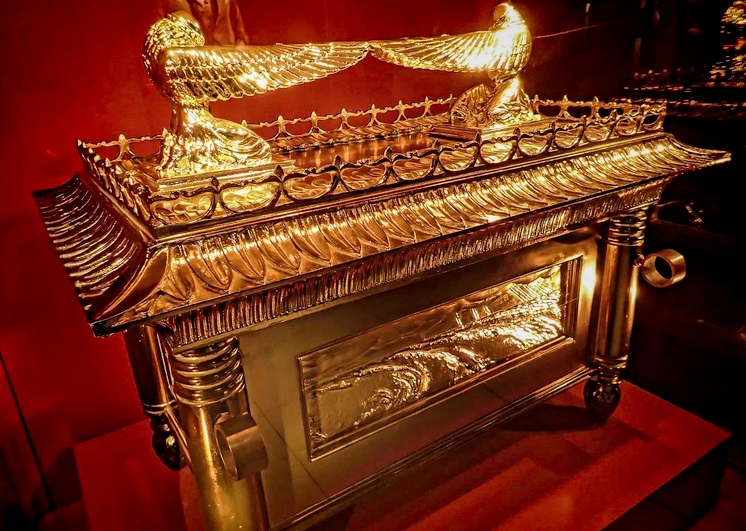
The fate of the Ark of the Covenant during the turbulent transition from Israel’s judges to its first kings is a subject of rich historical and religious debate. One key question is when the Ark was restored to the Israelites’ control and central worship. The Qur’an’s narrative in Surah 2:246–250 asserts that the Ark was miraculously returned as a divine sign during the time of Saul (Talut) islamawakened.com islamawakened.com. In contrast, the Hebrew Bible (Old Testament) and Jewish tradition typically place the Ark’s restoration and prominent reappearance in the era of King David or later chabad.org. This essay undertakes a historical-critical analysis comparing the Qur’anic account with these opposing views. We will examine the Qur’an’s portrayal of the Ark’s return under Saul, the Biblical accounts (primarily in 1 Samuel and 2 Samuel), and relevant Talmudic/Midrashic passages. Finally, we will present arguments in support of the Qur’anic timeline, drawing on close readings of the Biblical text, rabbinic literature, and modern scholarly research (textual, archaeological, and historical commentary).
The Quranic Account: The Ark’s Return as a Sign in Saul’s Time
In Surah al-Baqarah (2:246–250), the Qur’an recounts how the Israelites demanded a king to lead them in battle after the time of Prophet Moses. God appointed Saul (Talut) as that king, which the people initially questioned due to his humble status. Their prophet (identified in Islamic tradition as Prophet Samuel, though not named in the Qur’an) then announced a divine sign to validate Saul’s kingship: the return of the Ark of the Covenant. The Qur’an describes this event in verse 2:248:
“Their prophet further informed them, ‘The sign of his kingship is that the Ark will come to you – carried by the angels – containing tranquility from your Lord and relics left behind by the house of Moses and the house of Aaron. Verily in that is a sign for you, if you are believers.’” islamawakened.comislamawakened.com
According to this account, during Saul’s reign God caused the Tabut e-Sakina (Ark of Tranquility) to be miraculously delivered back to the Israelites as a reassurance (sakīnah) of divine support. The Ark is said to have sacred relics of Moses and Aaron and to be borne by angels islamawakened.com islamawakened.com. Islamic exegesis emphasizes the Ark’s role as a source of peace, divine presence, and legitimacy: its return galvanized the Israelites’ faith and confirmed Saul as God’s chosen leader seekerspathway.com seekerspathway.com. In the Qur’anic narrative, this miraculous restoration occurs prior to the battle in which Saul’s forces, including the young David (Dawud), defeat Goliath (Jalut) (2:249–251). Thus, the Qur’an firmly places the Ark’s return in Saul’s time, framing it as a miraculous divine sign of kingship and victory.
It is noteworthy that the Qur’an’s version does not detail the Ark’s earlier loss or the human role of the Philistines; instead, it focuses on the Ark’s providential return. This account stands in contrast to the Biblical storyline, which we will outline next. Before turning to the Bible’s chronology, however, we should note that the Qur’an’s portrayal aligns with the concept of the Ark as a vessel of divine favor (Sakina/Shekhinah), echoing the Israelite belief that the Ark’s presence ensured guidance and triumph seekerspathway.com seekerspathway.com. In sum, the Qur’anic timeline asserts that as soon as Saul rose to leadership, the Ark of the Covenant was restored to the Israelite community, marking a new era of divine sanction for their monarchy.
Read further in the Microsoft Word file:

 The Glorious Quran and Science
Leave a comment