

Written and collected by Zia H Shah MD
Abstract
This commentary examines four Quranic verses – 15:29, 32:9, 38:72, and 66:12 – which describe God “breathing” His Spirit into human beings, and explores their meaning from scientific, philosophical, and theological perspectives. We contrast classical Islamic interpretations (which often view these verses as literal accounts of a special creation of Adam and the miraculous conception of Jesus) with contemporary interpretations that align with guided evolution and the emergence of consciousness. Drawing on modern commentators like Zia H Shah MD and philosophical arguments from consciousness, we argue that life and consciousness are not products of a “dead” universe but rather signs of a guiding divine Consciousness. In this view, the Quran’s metaphor of the divine breath can be understood as a profound insight: human consciousness – the very quality that sets us apart – reflects the infusion of God’s command and conscious will into the evolving fabric of life. This interpretation harmonizes scripture with science, suggesting that evolution was guided with purposeful intent. We also discuss how the argument from consciousness bolsters the case for God’s existence, asserting that mere matter cannot produce mind without an ultimate Mind. In sum, the Quranic motif of God’s “Spirit” breathed into humans is seen as a symbolic narrative compatible with evolutionary biology and as evidence that consciousness in the universe points to a conscious Creator.
Introduction
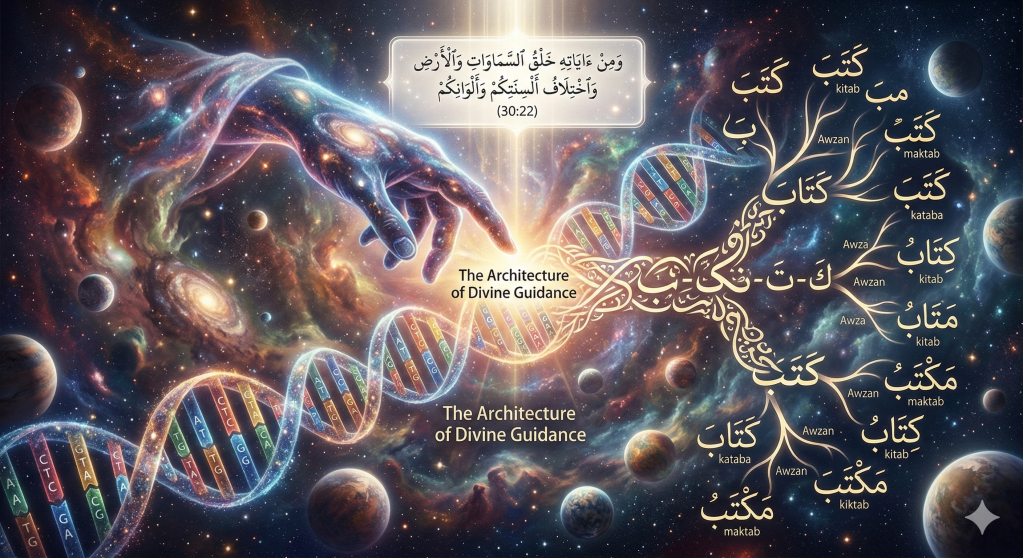
The Quranic verses in question paint a vivid scene of human origins and divine involvement. In Surah Al-Ḥijr 15:29, God says: “So when I have fashioned him and breathed into him of My Spirit, fall ye down in submission to him.” thequran.love. Similarly, Surah Al-Sajdah 32:9 states: “Then He fashioned him and breathed into him of His spirit. And He has given you ears, and eyes, and hearts. But little thanks do you give!” thequran.love. Again, Surah Ṣād 38:72 repeats: “And so when I have fashioned him in perfection and have breathed into him of My Spirit, fall ye down in submission to him.” thequran.love. All three verses refer to the creation of the first human (Adam) – describing God shaping him and then animating him with a special spirit. In Surah Al-Taḥrīm 66:12, a related expression appears in the context of Jesus’s conception: “And Mary, the daughter of ʿImrān, who guarded her chastity; and We breathed into her of Our spirit…” iqbalcyberlibrary.net. Taken together, these verses emphasize that human life, especially human conscious life, originates by God’s direct command or “breath.” But how should we understand these verses in light of modern knowledge? Are they purely metaphorical, or do they describe a literal event? And what do they imply about the origin of consciousness?
The traditional understanding in Islam is that these verses refer to unique acts of creation. Classical scholars saw Adam as formed miraculously from clay and then given a soul by God, and Mary’s conceiving of Jesus as another miracle of God’s creative word. However, many modern Muslim thinkers – who accept the scientific evidence for evolution – approach these verses differently. They propose that the Quran’s language here is metaphorical or phenomenological, aimed at imparting spiritual truths rather than detailing biology. This modern perspective is often termed “guided evolution” or theistic evolution: it accepts that humans share common ancestry with other life forms, yet maintains that the evolutionary process was under divine guidance and that at a decisive stage God endowed humans with a special consciousness or soul. Proponents of this view (such as Zia H Shah MD) argue that there was no separate spontaneous creation ex nihilo for humans in a way that contradicts evolution; instead, the Quranic story of Adam conveys moral and spiritual lessons to seventh-century listeners and beyond, using the imagery of direct creation thequran.love. In this commentary, we will first review classical interpretations of the verses, then explore contemporary insights that reconcile them with evolution and the nature of consciousness. Finally, we will delve into the philosophical argument from consciousness – the idea that the existence of our conscious minds is itself evidence of a conscious Creator – linking this argument to the Quranic notion of God’s “breath” as the origin of the human soul.
Read further in Microsoft Word file:



 The Glorious Quran and Science
Leave a comment