
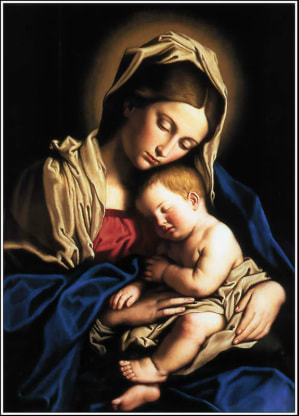

Written and collected by Zia H Shah MD
Abstract
Qur’an 5:116–118 presents a dramatic eschatological dialogue in which God questions Jesus about claims of his and Mary’s divinity. This commentary examines these verses in their historical, theological, and literary context. It analyzes the Qur’anic text’s rhetorical structure and key terms, highlighting its emphatic affirmation of tawḥīd (divine unity) and the prophetic mission of Jesus. In parallel, the Christian doctrine of Theotokos (“God-bearer” or “Mother of God”) – as crystallized at the Council of Ephesus (431 A.D.) – is critically engaged. We contrast the Islamic view of God’s transcendence and the honored but strictly human status of prophets with the Christian doctrines of the Incarnation (God becoming man in Christ) and Mary’s role as Theotokos. Drawing on Qur’anic verses and academic sources, the discussion explores how the Qur’an addresses what it perceives as theological exaggeration, correcting excesses in veneration by reasserting God’s oneness. The analysis is supported with references to early Church history (e.g. Ephesus 431), authoritative Christian teachings, and Qur’anic exegesis. A thematic epilogue concludes the commentary, reflecting on divine transcendence and the Qur’anic defense of tawḥīd.
Introduction
Surah al-Mā’ida (Qur’an 5) concludes with a profound interrogation set on the Day of Judgment, where Jesus is asked by God whether he had ever urged people to worship himself and his mother Mary as deities besides God thequran.love. These verses – Qur’an 5:116–118 – serve as a capstone to a section of the Qur’an addressing Christian beliefs. Earlier in the same surah, the Qur’an firmly rejects the divinity of Christ and any notion of God being “one of three” (a reference to Trinitarian doctrine) en.wikipedia.org. It also reminds readers that Jesus and Mary were mortals who “both used to eat food” al-islam.org, underlining their human needs. By the surah’s end, the Qur’an returns to this theme with a vivid scene: God’s question to Jesus and Jesus’ emphatic denial of any claim to divinity or partnership with God. In this commentary, we will delve into these verses’ literary structure and theological implications, situating them against the backdrop of Christian doctrine and early Church history. This involves examining the Christian title “Mother of God” (Theotokos) – a dogma formalized in the 5th century – and contrasting it with the Qur’an’s insistence on God’s absolute oneness and transcendence. By exploring both Christian and Islamic perspectives, we gain a clearer understanding of how Qur’an 5:116–118 functions as a polemical yet reverent dialogue: polemical in correcting what Islam sees as excesses in Christian theology, yet reverent in defending the honor of Jesus and Mary as devout servants of God. The stage is thus set for a comprehensive analysis of these verses, informed by scripture, history, and scholarly insights.
Read further in Microsoft Word file:

 The Glorious Quran and Science
Leave a comment