

Epigraph:
الَّذِي خَلَقَ سَبْعَ سَمَاوَاتٍ طِبَاقًا ۖ مَّا تَرَىٰ فِي خَلْقِ الرَّحْمَٰنِ مِن تَفَاوُتٍ ۖ فَارْجِعِ الْبَصَرَ هَلْ تَرَىٰ مِن فُطُورٍ
ثُمَّ ارْجِعِ الْبَصَرَ كَرَّتَيْنِ يَنقَلِبْ إِلَيْكَ الْبَصَرُ خَاسِئًا وَهُوَ حَسِيرٌ
He is the Mighty, the Forgiving; Who created the seven heavens, one above the other. You will not see any flaw in what the Lord of Mercy creates. Look again! Can you see any flaws? Look again! And again! Your sight will turn back to you, weak and defeated. (Al Quran 67:3-4)
Written and collected by Zia H Shah MD, Chief Editor of the Muslim Times
The observable universe is approximately 93 billion light-years in diameter. Encyclopaedia Britannica This measurement accounts for the universe’s expansion over time. It’s important to note that the observable universe encompasses only the portion of the entire universe from which light has had time to reach us since the Big Bang, about 13.8 billion years ago. The total size of the universe beyond the observable region remains unknown and could be significantly larger, potentially infinite.
The observable universe is centered around the observer, meaning that observers in different galaxies would have their own observable universes, which may overlap with ours but also include regions we cannot see. This vast expanse contains an estimated 2 trillion galaxies, each with millions or billions of stars, highlighting the immense scale of the cosmos.
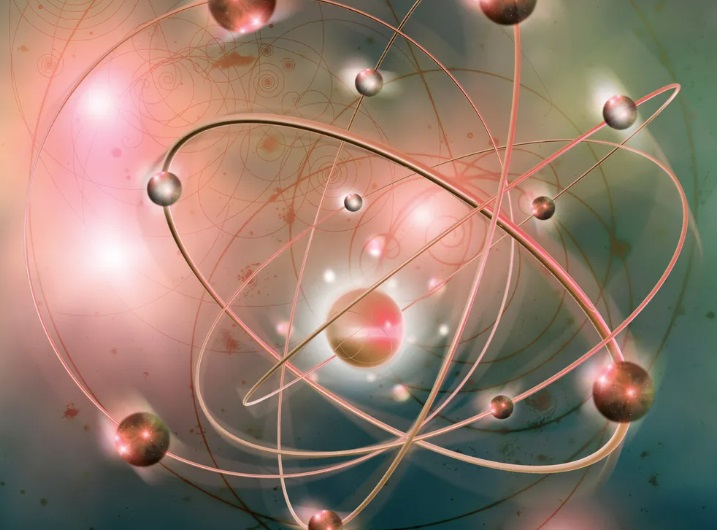
Our universe and all it contains is made of 17 elementary particles, categorized into fermions and bosons. There are 12 different types of fermions and 5 different bosons.
The Standard Model of particle physics is a comprehensive framework that describes the fundamental particles constituting matter and the forces through which they interact, excluding gravity. It categorizes elementary particles into fermions and bosons, each with distinct properties such as electric charge, mass, and spin.
The Seventeen Fundamental Particles
Fermions
Fermions are the building blocks of matter and possess half-integer spin. They are divided into two categories: quarks and leptons, six of each.
Quarks
Quarks combine to form protons, neutrons, and other hadrons. There are six flavors of quarks, each with corresponding properties:
| Flavor | Symbol | Electric Charge | Approximate Mass (MeV/c²) |
|---|---|---|---|
| Up | u | +⅔ | 2.2 |
| Down | d | –⅓ | 4.7 |
| Charm | c | +⅔ | 1,280 |
| Strange | s | –⅓ | 96 |
| Top | t | +⅔ | 173,100 |
| Bottom | b | –⅓ | 4,180 |
Each quark has a corresponding antiquark with the same mass and spin but opposite electric charge.
Leptons
Leptons are elementary particles that do not experience the strong nuclear force. There are six leptons: three charged and three neutral neutrinos:
| Lepton | Symbol | Electric Charge | Mass (MeV/c²) |
|---|---|---|---|
| Electron | e⁻ | –1 | 0.511 |
| Electron Neutrino | νₑ | 0 | < 0.0000022 |
| Muon | μ⁻ | –1 | 105.7 |
| Muon Neutrino | ν_μ | 0 | < 0.17 |
| Tau | τ⁻ | –1 | 1,776.86 |
| Tau Neutrino | ν_τ | 0 | < 18.2 |
Each lepton has a corresponding antiparticle with identical mass and spin but opposite electric charge.
Bosons
Bosons are force-carrier particles with integer spin, mediating the fundamental forces of nature. There are five of those:
| Boson | Symbol | Electric Charge | Mass (GeV/c²) | Force Mediated |
|---|---|---|---|---|
| Photon | γ | 0 | 0 | Electromagnetic |
| W Boson | W⁺/W⁻ | ±1 | 80.379 | Weak |
| Z Boson | Z⁰ | 0 | 91.1876 | Weak |
| Gluon | g | 0 | 0 | Strong |
| Higgs Boson | H⁰ | 0 | 125.1 | Mass Generation |
The photon mediates electromagnetic interactions, the W and Z bosons mediate weak interactions, gluons mediate the strong interaction, and the Higgs boson is associated with the mechanism that gives mass to particles.
Antiparticles
Each particle in the Standard Model has a corresponding antiparticle with the same mass and spin but opposite electric charge and other quantum numbers. For example, the positron is the antiparticle of the electron, possessing a charge of +1e.
The Standard Model provides a detailed classification of elementary particles, specifying their intrinsic properties such as electric charge, mass, and spin. This framework has been extensively validated through experimental observations and continues to be a cornerstone of modern physics.
Our Periodic Table in Chemistry
The periodic table currently includes 118 confirmed elements, organized by increasing atomic number from hydrogen (atomic number 1) to oganesson (atomic number 118).
Of these, the first 94 occur naturally, while the remaining 24 have been synthesized in laboratories or nuclear reactors.
The periodic table is a fundamental tool in chemistry, providing a structured arrangement of elements that reveals periodic trends and facilitates the prediction of chemical behavior.
For a comprehensive list of all 118 elements, including their names, symbols, and atomic numbers, you can refer to resources like the American Chemical Society’s periodic table.
All these 118 elements are built from the 17 elementary particles described above. How does it happen? This brings us the two magical wands of weak and strong emergence.
The Two Magical Wands: Weak and Strong emergence
Weak Emergence
Weak emergence occurs when higher-level properties arise from the interactions of lower-level components, and while these emergent properties are unexpected, they are theoretically predictable through simulation or analysis of the underlying processes. In this context, the emergent behavior is not readily apparent from the individual parts but can be understood by examining the system as a whole. An example of weak emergence is the formation of traffic jams: individual driver behaviors lead to collective patterns that can be simulated and studied, even though the traffic jam itself is not an inherent property of any single vehicle.
Strong Emergence
Strong emergence refers to situations where higher-level properties arise that are not only unexpected but also irreducible and unpredictable, even with complete knowledge of the system’s lower-level components. These emergent properties cannot be deduced from the properties of the parts alone and often involve novel causal powers. Consciousness is frequently cited as an example of strong emergence; despite extensive understanding of neural processes, the subjective experience of consciousness cannot be fully explained by the physical interactions of neurons.
Distinguishing Between Weak and Strong Emergence
The key distinction between weak and strong emergence lies in predictability and reducibility:
- Predictability: Weakly emergent properties can, in principle, be predicted through detailed analysis or simulation of the system’s components. Strongly emergent properties, however, are inherently unpredictable from the lower-level information.
- Reducibility: Weak emergence aligns with reductionist approaches, where higher-level behaviors can be explained by the interactions of lower-level parts. Strong emergence challenges reductionism, suggesting that new, irreducible properties manifest at higher levels of complexity.
Implications in Science
Understanding the distinction between weak and strong emergence has significant implications across various scientific disciplines:
- Physics: In condensed matter physics, phenomena like superconductivity are considered emergent properties of interacting particles. Determining whether such phenomena are weakly or strongly emergent influences theoretical approaches and experimental methodologies.
- Biology: The emergence of life from non-living matter involves complex biochemical interactions. Identifying whether life’s properties are weakly or strongly emergent affects research in fields like synthetic biology and the study of consciousness.
- Cognitive Science: The study of consciousness and cognitive functions involves exploring whether mental states can be fully explained by neural processes (weak emergence) or if they possess irreducible qualities (strong emergence).
In summary, the concepts of weak and strong emergence provide valuable frameworks for understanding how complex behaviors and properties arise in natural and artificial systems. Recognizing the type of emergence at play aids in developing appropriate scientific models and explanations for the phenomena observed.
The Nine Million Extant Species on Planet Earth
Estimating the total number of extant species on Earth is a complex and ongoing scientific endeavor. Recent studies suggest that there are approximately 8.7 million eukaryotic species globally, with a margin of error of ±1.3 million. This estimate includes about 6.5 million species on land and 2.2 million in oceanic environments.
Despite these estimates, only a fraction of Earth’s species have been formally described and cataloged. As of 2024, over 2.1 million species have been scientifically identified, indicating that a significant majority remain undiscovered or undocumented.
The distribution of species across different taxonomic groups is highly uneven. Insects represent the most diverse group, accounting for approximately one million known species. In contrast, vertebrate animals, including mammals, birds, reptiles, amphibians, and fish, comprise over 66,000 identified species, with mammals alone numbering around 5,500 species.
It’s important to note that these figures are subject to change as taxonomic research progresses and new species are discovered. Advancements in molecular techniques and increased exploration of previously under-studied habitats continue to refine our understanding of Earth’s biodiversity.
In summary, while estimates suggest there are approximately 8.7 million extant eukaryotic species on Earth, the exact number remains uncertain. Ongoing scientific efforts aim to catalog and understand the full extent of biodiversity, which is crucial for conservation and ecological studies.
How are these millions of species built from the same 17 fundamental particles and 118 elements? Through the magical wands of weak and strong emergence. Scientists do not know any more than this. This is the limit of human knowledge.
The Search for Extraterrestrial Intelligence (SETI)
The Quran says that God has created innumerable earths just like innumerable stars:
Allah is He, Who created seven heavens and of the earth a similar number. (Al Quran 65:12)
The Search for Extraterrestrial Intelligence (SETI) encompasses scientific efforts to detect signs of intelligent life beyond Earth. By monitoring electromagnetic signals, particularly in the radio and optical spectra, SETI aims to identify non-random patterns that may indicate technological civilizations elsewhere in the universe. Encyclopaedia Britannica
Historical Background
The modern SETI initiative began with Project Ozma in 1960, led by astronomer Frank Drake. Utilizing a radio telescope in Green Bank, West Virginia, Drake targeted nearby stars to detect potential interstellar communications. Encyclopaedia Britannica
Methods and Strategies
SETI employs various techniques to search for extraterrestrial intelligence:
- Radio Searches: Monitoring radio frequencies for signals that differ from natural cosmic background noise.
- Optical Searches: Scanning for brief flashes of light or laser pulses that could signify intentional communication.
- Artifact Searches: Looking for physical evidence, such as probes or megastructures, that may indicate advanced civilizations.
These methods involve both passive listening and active messaging, though the latter is more controversial due to concerns about revealing humanity’s presence.
Technological Advances
Advancements in technology have significantly enhanced SETI’s capabilities:
- Radio Telescopes: Instruments like the Five-hundred-meter Aperture Spherical radio Telescope (FAST) in China offer unprecedented sensitivity for detecting potential signals. arXiv
- Data Processing: Improved computational power enables the analysis of vast datasets, increasing the likelihood of identifying potential extraterrestrial communications.
Challenges and Considerations
SETI faces several challenges:
- Signal Ambiguity: Differentiating between potential extraterrestrial signals and human-made interference is complex.
- Funding and Support: Securing consistent funding has been difficult, with public and private sources varying over time.
- Philosophical Implications: The search raises questions about humanity’s place in the universe and the potential consequences of contact with extraterrestrial intelligence.
Current Status and Future Prospects
As of 2024, SETI continues to expand its search parameters, utilizing global networks of observatories and engaging in international collaborations. The development of new technologies and methodologies holds promise for enhancing the search’s effectiveness. While no definitive evidence of extraterrestrial intelligence has been found, the quest persists, driven by humanity’s enduring curiosity about its place in the cosmos.
When humanity will discover extraterrestrial life, be it carbon based or based on silicone, it too will be made of the 17 fundamental particles mentioned above and of course through the magical wands of weak and strong emergence.
The holy Quran has almost guaranteed the success of SETI. It says:
And among His Signs is the creation of the heavens and the earth, and whatever living creatures He has spread in both of them and He has the power to gather them together, when He will so please. (Al Quran 42:29)
The Third Magical Wand Gravity
All the above discussions about the standard model had excluded gravity intentionally, which is one of the four basic known forces in our universe. It catapults the mystery further and thickens the plot.
Gravity, the force that governs the motion of celestial bodies and the behavior of objects on Earth, remains one of the most profound mysteries in physics. Despite its omnipresence, our understanding of gravity’s fundamental nature is incomplete, especially when attempting to reconcile it with the principles of quantum mechanics.
Classical Understanding of Gravity
In the 17th century, Sir Isaac Newton formulated the law of universal gravitation, describing gravity as an attractive force between two masses. This law accurately predicts the motion of planets and the behavior of falling objects, providing a foundation for classical mechanics.
Einstein’s General Relativity
Albert Einstein revolutionized our understanding of gravity with his general theory of relativity, proposing that gravity is not a force but a curvature of spacetime caused by mass and energy. This theory has been confirmed through numerous experiments and observations, such as the bending of light by gravity and the precise orbit of Mercury.
The Quantum Gravity Conundrum
While general relativity explains gravity on a macroscopic scale, it is incompatible with quantum mechanics, which governs the subatomic realm. This discrepancy poses a significant challenge: developing a theory of quantum gravity that unifies these two fundamental frameworks. Various approaches, including string theory and loop quantum gravity, have been proposed, but a complete theory remains elusive.
Recent Developments
Recent research has explored the possibility that gravity may be an emergent phenomenon arising from more fundamental quantum processes. For instance, some physicists suggest that gravity could result from the entanglement of quantum information, though this idea is still under investigation.
Ongoing Mysteries
Several aspects of gravity continue to perplex scientists:
- Weakness Relative to Other Forces: Gravity is significantly weaker than the other fundamental forces, such as electromagnetism and the strong nuclear force. The reason for this disparity remains unknown.
- Dark Matter and Dark Energy: Observations of galactic rotations and the universe’s accelerated expansion suggest the presence of dark matter and dark energy, which interact gravitationally but remain undetected through other means. Understanding these components is crucial for a complete theory of gravity.
Conclusion
Gravity, though a familiar force, conceals deep mysteries that challenge our comprehension of the universe. Ongoing research in theoretical physics and cosmology aims to unravel these enigmas, striving toward a unified understanding of nature’s fundamental forces.
For a more in-depth exploration of gravity’s mysteries, you may find the following video insightful:


 The Glorious Quran and Science
Leave a comment