

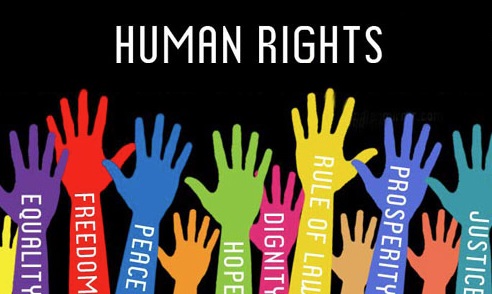
Written and collected by Zia H Shah MD
Abstract: Human dignity and liberty are at the heart of both Islam and the Universal Declaration of Human Rights (UDHR). This summary explores the uplifting message that every human being is born free and equal – a truth championed in the UDHR and deeply rooted in Islamic teachings. Drawing inspiration from the Holy Qur’an and the practices of Prophet Muhammad, it highlights how each article of the UDHR finds resonance in Islam’s principles of justice, compassion, and universal brotherhood. The result is an inspiring tapestry of spiritual and moral insights affirming that Islam not only aligns with universal human rights but in many ways anticipated and elevates them, offering a divine foundation for the rights and freedoms of all humanity.
Article 1
Article 1. All human beings are born free and equal in dignity and rights. They are endowed with reason and conscience and should act towards one another in a spirit of brotherhood.
Islamic Support: Islam wholeheartedly embraces the principle of innate human equality and brotherhood. The Qur’an teaches that all people originate from a single pair (Adam and Eve), negating any notion of inherent superiority of one race or group over another. In his Farewell Sermon, Prophet Muhammad (peace be upon him) proclaimed, “You are all brothers and are all equal. None of you can claim any privilege or any superiority over any other. An Arab is not to be preferred to a non-Arab, nor is a non-Arab to be preferred to an Arab; nor is a white man to be preferred to a colored one, or a colored one to a white, except on the basis of righteousness”. This eloquent teaching mirrors the UDHR’s call to act “in a spirit of brotherhood.” Islam establishes a universal brotherhood of mankind: the Qur’an stresses that humans, endowed with conscience, are “all equally creatures and servants of God”, and that true honor in the sight of God is attained only through righteousness and good conduct. The Holy Qur’an captures this spirit in the verse: “O mankind! We have created you from a male and a female, and We have made you into tribes and sub-tribes that you may recognize one another. Verily, the most honorable among you, in the sight of Allah, is the most righteous among you.” themuslimtimes.info This fundamental Islamic value of equality and moral conscience directly upholds Article 1’s ideal of equal dignity and brotherhood for all humanity.
Article 2
Article 2. Everyone is entitled to all the rights and freedoms set forth in this Declaration, without distinction of any kind, such as race, colour, sex, language, religion, political or other opinion, national or social origin, property, birth or other status.
Islamic Support: Islam strongly affirms the equal entitlement of all people to human rights and dignity, rejecting all forms of discrimination without distinction of race, color, or status. The Qur’an’s message is universal – addressed to “O mankind” – and it emphasizes that distinctions of tribe, race, or nationality are only for identification, not grounds for superiority. In fact, Islam was revolutionary in its promotion of racial equality and social justice in a 7th-century context. The Prophet Muhammad appointed Bilal, a former African slave, as one of the earliest and most respected callers to prayer, signaling that piety and merit – not race or class – define a person’s worth. The Qur’anic vision of humanity recognizes no privileged caste or ethnicity: all members of the “progeny of Adam” are brethren. As one hadith (saying of the Prophet) beautifully states, “The whole of mankind is the family of God. The most beloved of people to God is the one who is kindest to His family” themuslimtimes.info. This inclusive outlook means that rights are to be afforded to everyone, regardless of gender or background. For example, Islamic law gave women the right to own property and receive inheritances in an age when such rights were unheard of, reflecting no distinction based on sex or birth. Likewise, Islam’s protection extends to non-Muslims living in Islamic society (dhimmis), who are to enjoy safety and freedom of religion. In short, Islam’s scripture and early history illustrate a deep commitment to egalitarian principles that match Article 2’s ban on discrimination. Every person – rich or poor, male or female, Muslim or non-Muslim – is to be respected and guaranteed fundamental rights under Islamic ethics. Any violations of this (such as racism, sexism or other bigotry) are considered sins against the oneness of humanity that Islam upholds.
Article 3
Article 3. Everyone has the right to life, liberty and security of person.
Islamic Support: The right to life and personal security is inviolable in Islam. The Qur’an declares the sanctity of human life, equating the unjust killing of a single person with killing all of humanity, and saving one life with saving all humanity (Qur’an 5:32). This powerful analogy underscores how precious each life is in God’s sight. Murder, terrorism, and any unjust violence are absolutely forbidden in Islamic law; life can only be lawfully taken through due process in extreme cases (such as self-defense or judicial punishment for the most serious crimes), and even then with great reluctance. The Prophet Muhammad said, “Do not kill women or children or non-combatants” even in warfare, emphasizing protection of innocents. Furthermore, Islam upholds liberty of person – no one may be taken or imprisoned arbitrarily. Oppression (zulm) is condemned; a famous hadith Qudsi (divine saying) quotes God as saying, “O My servants, I have forbidden oppression for Myself and have made it forbidden among you”. Islam’s legal system introduced the notion that a person is innocent until proven guilty (a concept we will see echoed in Article 11), which protects individual liberty from capricious arrest. As for security of person, Islamic governance historically provided police and military functions to secure people’s lives and property, and the shariah imposes severe penalties on crimes like murder, assault, or highway robbery to ensure public safety. The Qur’an also stresses that creating “disorder in the land” or causing social insecurity is a grave sin. In essence, Islam provides a divine guarantee of life and personal security as fundamental rights: individuals must be free from fear of unlawful harm. Any infringement of these rights is seen as a crime not just against the person but against God’s justice. Thus, Article 3’s guarantee of life, liberty and security finds a clear and fervent voice in Islamic teachings.
Read further in Microsoft Word file:


 The Glorious Quran and Science
Leave a comment