
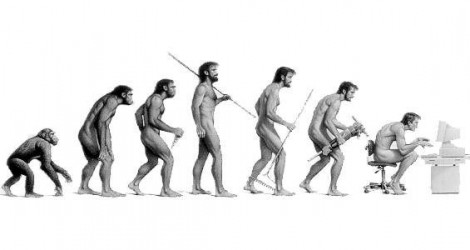
Written and collected by Zia H Shah MD
Abstract
Homo sapiens has a deep history extending back approximately 300,000 years, as evidenced by a convergence of findings from paleoanthropology, archaeology, genetics, and geology. This essay reviews the multidisciplinary evidence for the antiquity of our species. Fossil discoveries across Africa – from the early Middle Stone Age remains at Jebel Irhoud (~315 ka) to Omo Kibish and Herto in Ethiopia (~195–160 ka) – demonstrate that anatomically modern humans had emerged by the mid-Middle Pleistocene sci.newsen.wikipedia.org. Archaeological records reveal early technological innovations and symbolic behaviors accompanying our origins, while genetic studies (including ancient DNA) indicate deep population divergences on the order of 300,000 years ago sciencedaily.com. Geological dating methods, from volcanic ash chronologies to thermoluminescence, underpin these timelines with robust age estimates. We synthesize these lines of evidence into a coherent timeline of Homo sapiens evolution. In conclusion, a thematic epilogue reflects on how these deep origins – a story of a pan-African evolutionary heritage, survival through dramatic Pleistocene environmental changes, and interactions with other human lineages – inform our understanding of human identity and evolution.
Introduction
When and where did Homo sapiens first appear? This question has long been central to human evolutionary studies. For decades, the consensus placed the origin of our species at roughly 200,000 years ago in East Africa leakeyfoundation.org. This view was based on the oldest known fossils (from Omo Kibish and Herto, Ethiopia) and genetic estimates from modern humans. However, recent discoveries have pushed the timeline of H. sapiens further back and broadened its geographic scope. In 2017, fossils from Jebel Irhoud in Morocco were dated to about 315,000 years ago, extending our species’ origins by over 100,000 years leakeyfoundation.org. These Moroccan remains, exhibiting a mix of modern and archaic traits, suggest that Homo sapiens did not arise overnight in a single “cradle” but rather through a more prolonged, possibly pan-African process pubmed.ncbi.nlm.nih.gov sci.news. In tandem, advances in archaeogenetics and geology have provided independent lines of evidence for a deeper antiquity of modern humans sciencedaily.comsci.news. This essay integrates fossil, archaeological, genetic, and geological evidence to chart how long Homo sapiens have existed, and concludes by reflecting on what these findings imply for our understanding of human identity and evolution.
Read further in Microsoft Word file:


 The Glorious Quran and Science
Leave a comment