
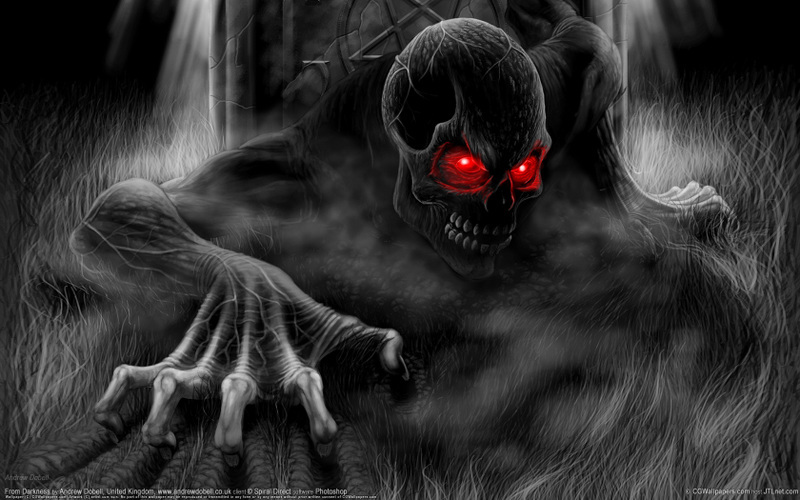
Written and collected by Zia H Shah MD
Introduction: Exorcism is commonly defined as a ritual act of driving out or expelling evil spirits or demons believed to have possessed a person, place, or object history.com en.wikipedia.org. Nearly every culture and religion has developed some form of exorcistic practice, reflecting a widespread human impulse to combat unseen malevolent forces. In the popular imagination – fueled by films like The Exorcist (1973) – exorcism is often associated with Catholic priests reciting Latin prayers over contorting demoniacs. However, the reality of exorcism is far more complex. This article takes an academic and analytical look at exorcism: tracing its historical development (with a focus on the Catholic Church), comparing practices across religious traditions, and examining scientific interpretations and ethical debates surrounding demonic possession. The goal is to understand how exorcism rituals have evolved over time and how modern psychology and medicine interpret phenomena once attributed to evil spirits.
Historical Origins of Exorcism in the Catholic Church
Belief in demonic possession and the need to expel evil spirits long predates Christianity, but the roots of Catholic exorcism are found in Scripture and early Church practice. The New Testament describes Jesus of Nazareth casting out unclean spirits as a sign of his authority over evil history.com history.com. For example, the Gospel of Mark (likely written around A.D. 70) recounts Jesus commanding demons to depart from afflicted individuals history.com. These biblical accounts established a model: exorcism as a confrontation between divine power and demonic forces. Jesus also empowered his disciples to cast out demons in his name, a charge that early Christians took seriously catholic.com. By the time of the Apostolic Church, exorcism was a recognized ministry – exorcists prayed over catechumens (new converts) and the sick to deliver them from evil influences nationalgeographic.com newadvent.org.
Early Christian sources indicate that casting out demons was not limited to clergy alone. Church Fathers like Tertullian and Origen attested that even lay believers could exorcise spirits through prayer and invoking Christ’s name newadvent.org newadvent.org. Nonetheless, by the 3rd century A.D., the Western Church formalized the role of exorcist as a minor clerical order. Historical records show that Pope Cornelius (in a letter from 251 A.D.) listed 52 exorcists in the Church of Rome, alongside other minor orders such as lectors and doorkeepers newadvent.org. The Council of Carthage (398) even prescribed a rite for ordaining an exorcist – the bishop would hand the candidate a book of exorcism formulas with the words, “Receive and commit to memory, and possess the power of imposing hands on the possessed” newadvent.org. This indicates how central exorcism had become in church life: one of the exorcist’s chief duties was to assist in the daily exorcisms of catechumens in preparation for baptism nationalgeographic.com newadvent.org. Indeed, in the fourth and fifth centuries it was routine for those about to be baptized to undergo repeated prayers of deliverance (known as exsufflation, literally blowing out evil) to renounce Satan and all his works nationalgeographic.com.
By the Middle Ages, exorcism practices expanded in response to prevailing spiritual challenges. After Christianity spread across Europe, attention turned to heretical sects and folk superstitions, and exorcism was sometimes employed as a tool against heresy. For instance, in the 12th century, when dualist heresies like the Cathars arose, the Church viewed their beliefs as inspired by evil and used exorcism to symbolically “purify” and reconvert adherents nationalgeographic.com. Medieval hagiographies often highlight saints like St. Benedict or St. Francis vanquishing demons – reflecting a worldview in which demonic activity was interwoven with daily life and misfortune. In this period, any priest could perform exorcisms as needed (with pious laypeople sometimes attempting cures as well), but Church authorities grew cautious to distinguish legitimate ritual from superstition or magic en.wikipedia.org. The 13th-century Bari Cathedral fresco, for example, depicts clergy performing an exorcism by prayer over a vessel of holy water nationalgeographic.com, illustrating how the ritual was integrated into the spiritual repertoire of the era.
Read further in PDF file:
Exorcism — Historical-ritual-and-modern-interpretations
Download


 The Glorious Quran and Science
Leave a comment