
Written and collected by Zia H Shah MD
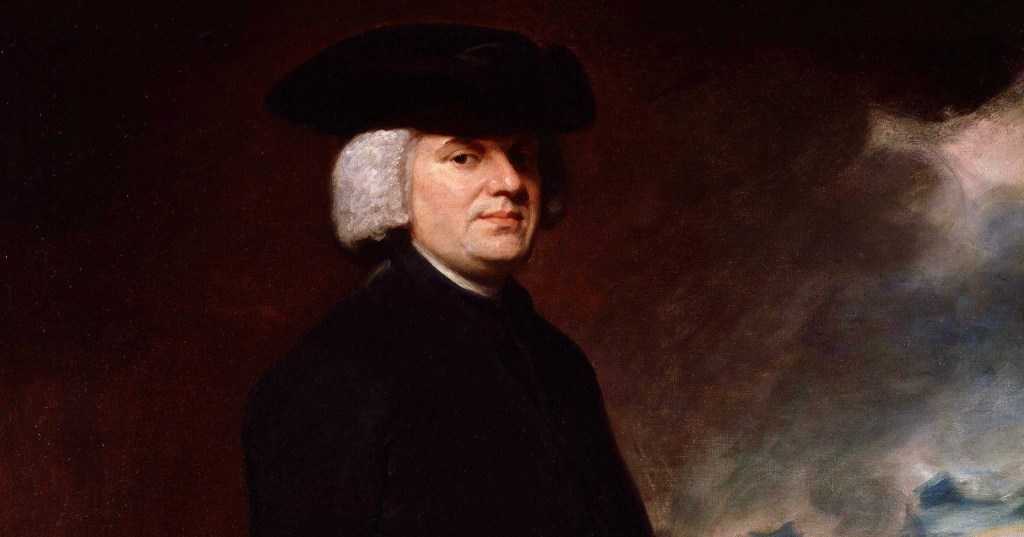
William Paley, born in July 1743 in Peterborough, England, was a distinguished English Anglican clergyman, moral philosopher, and pioneer of natural theology. Educated at Giggleswick School and later at Christ’s College, Cambridge—where he graduated as Senior Wrangler—Paley became a fellow and tutor before entering the Church, eventually serving as Archdeacon of Carlisle and holding various ecclesiastical positions. An energetic preacher, social reformer, and utilitarian thinker, he authored widely influential works on ethics, politics, Christian apologetics, and natural theology.
His most celebrated work, Natural Theology (1802), presents his powerful teleological—or “design”—argument, grounded in what became known as the watchmaker analogy. Here, Paley invites readers to imagine discovering a watch: its complexity, precision, and purposeful design naturally imply the existence of a watchmaker. He applied the same logic to nature, asserting that the intricate design of biological systems—from the human eye to joint mechanisms—reveals the handiwork of an intelligent Creator. Drawing on anatomical and natural history examples, Paley argued that living structures are far too complex to emerge by chance and must therefore be the product of deliberate design.
Natural Theology became the authoritative statement of the teleological argument in English, deeply influencing Victorian thought and resonating with figures like Charles Darwin, who later wrote that he once “could almost have said it by heart.” Though critics such as David Hume and, later, Charles Darwin and Richard Dawkins challenged Paley’s reasoning, his clear, persuasive use of analogy and his systematic presentation of natural evidence ensured his enduring role in the history of philosophy, theology, and the dialogue between science and religion.
Introduction
In every age, thoughtful observers have looked to the natural world for signs of its Creator. Both Christian and Islamic traditions speak of nature as a kind of divine book – a source of insight into God alongside the book of revealed scripture. Historic Christian theology, for example, described a “two-books” revelation: the figurative Book of Nature (God’s world) and the Book of Scripture (God’s word), both authored by the same God. The 16th-century Belgic Confession proclaimed that “the universe is before our eyes like a beautiful book in which all creatures, great and small, are as letters to make us ponder the invisible things of God”. In Islam, likewise, the Qur’an often refers to the phenomena of nature as āyāt (signs), the same term used for the verses of the Qur’an itself. As one scholar put it, beyond the written Qur’an, humankind has a “cosmic Qur’an” – a grand book of creation that “participates in revealing the truth” and complements scripture in pointing to the Almighty. Such perspectives affirm that studying the natural world can reveal the existence and attributes of the Deity, a pursuit known as natural theology.
It was in this spirit that William Paley, an English clergyman, penned his famous Natural Theology in 1802. Paley’s work assembled a wealth of examples from nature to argue that living organisms and the cosmos bear the hallmarks of design, thus attesting to an intelligent and benevolent Creator. The core of Paley’s argument was expressed in his enduring watchmaker analogy: if one finds a watch on the ground, with its intricate gears arranged for the purpose of keeping time, one rightly infers the existence of a watchmaker. By analogy, the far greater functional complexity in nature implies a grand Designer. This line of reasoning – the argument from design – was not entirely new (earlier thinkers like Cicero, and in the Islamic world, scholars like al-Ash‘ari had given similar examples, such as the necessity of a builder for a building). But Paley presented it with unprecedented thoroughness and clarity, describing myriad “contrivances” in biology and astronomy.
Paley wrote at a time when the sciences of biology and physics were still in early development. In the two centuries since, our understanding of nature has expanded immeasurably. Discoveries in geology and biology unveiled the immense age of the Earth and the interrelatedness of living creatures. Most significantly, the theory of evolution by natural selection, first rigorously formulated by Charles Darwin in 1859, offered a powerful explanation for how the complex adaptations of organisms could arise through gradual processes. At first glance, Darwin’s insights seemed to undermine Paley’s argument by attributing the appearance of design to an undirected natural mechanism. Darwin himself, who in youth “admired Natural Theology” greatly, later confessed that Paley’s argument “which formerly seemed to me so conclusive, fails, now that the law of natural selection has been discovered”. The watch, it appeared, could wind itself over eons of small changes, with no need for constant supervision by a watchmaker.
And yet, many thinkers – including religious scientists – have come to view evolution not as the negation of design, but as the Creator’s chosen method of unfolding life. In this view, often called guided evolution or evolutionary creation, God’s creative intelligence undergirds the evolutionary process, ensuring it produces the richness of life according to divine intention. We will assume this perspective throughout: that evolution is real and well-supported by evidence, but is ultimately guided by God’s providence. This approach allows us to embrace the scientific discoveries of our age without abandoning the fundamental intuition of Paley and others that nature’s order and complexity bespeak purpose. As one group of Christian scholars put it bluntly, “we reject views of evolution that make God a spectator to what matter can do on its own”. Rather, God is understood to be continuously involved – conserving, sustaining, and subtly directing outcomes – even if those divine actions leave no straightforward fingerprints for science to detect.
Another revolutionary development since Paley’s time has been the rise of quantum physics. Where classical Newtonian physics envisioned a clockwork universe of strict determinism, quantum mechanics reveals a world of underlying indeterminacy and probability. At the subatomic level, events often have no single predetermined outcome; instead, multiple possibilities can unfold, with only probabilities to describe which occurs. Some theologians today see in this quantum uncertainty a gracious opening for God’s ongoing action within natural law. God, they suggest, can “tip the scales” of quantum events – choosing one outcome or another – in a manner that is fundamentally undetectable to scientific measurement yet allows divine guidance to shape the course of larger events. Throughout this updated work, we will explore this fascinating idea: that Providence might operate through quantum possibilities, guiding processes like genetic mutations in evolution without overriding the scientific laws of nature. In this way, modern science may actually provide new modes (though not proofs) for understanding how God interacts with creation.
What follows, then, is an updated homage to Paley’s Natural Theology, written as if he were among us today – informed by contemporary knowledge, sensitive to subsequent critiques, and enriched with insights from both Christian and Islamic thought. We will survey the evidences of design and purpose in nature, from the intricate machinery of the living cell to the majestic fine-tuning of the cosmos. Each chapter examines a different facet of the natural world, asking what it reveals about the existence and attributes of the Deity. By the end, we hope to show that the appearances of nature, even when understood through the lens of modern science, still “declare the glory of God” (Psalm 19:1) and make visible “His eternal power and divine nature” (Romans 1:20) to the attentive mind.
Read further in PDF file:
Natural Theology_ Evidences of the Existence and Attributes of the Deity in Nature (21st Century Edition)
Download



 The Glorious Quran and Science
Leave a comment