
Written and collected by Zia H Shah MD
Introduction
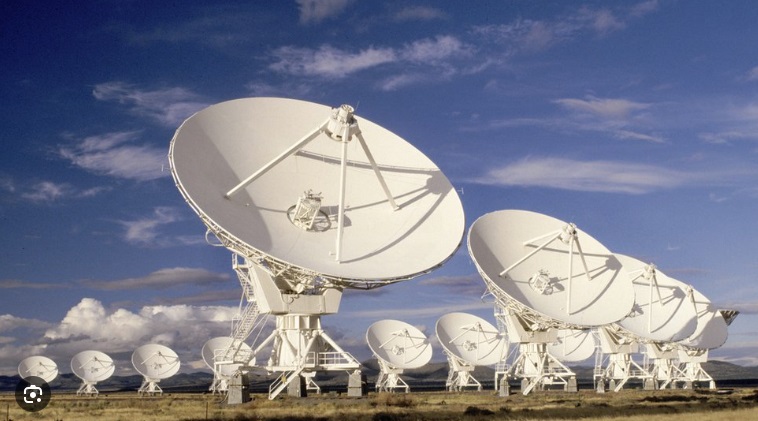
Qur’an 65:12 states: “It is Allah Who has created seven heavens and of the earth the like thereof. His command descends between them…” islamqa.info. Traditionally, Muslim exegetes (mufassirūn) understood the “seven heavens” in this verse as seven distinct layers or realms of the cosmos created by God. In this commentary, however, we explore a metaphorical reading of “seven” – not as a precise number, but as a symbol for innumerable celestial realms. This perspective suggests that the Qur’an subtly alludes to the vastness of the universe, with “seven heavens” representing a multitude of heavens or worlds beyond our own. We will support this interpretation by examining classical and modern tafsīr (Qur’anic exegesis) on the phrase “seven heavens,” by referencing the Qur’anic notion of an expanding universe (cf. Qur’an 51:47), and by integrating contemporary scientific findings on exoplanets, Earth-like planets in habitable zones, and theories regarding extraterrestrial life. Through an interdisciplinary lens spanning theology, philosophy, and astrophysics, we consider how Qur’an 65:12 can be understood as an invitation to contemplate a universe filled with countless worlds, with profound implications for humanity’s self-perception and Islamic cosmology.
Read further in PDF file:
Seven Heavens and Countless Worlds_ An Interdisciplinary Commentary on Qur’an 65_12
Download
 The Glorious Quran and Science
Leave a comment