
Written and collected by Zia H Shah MD
Our parents and grandparents often die before reaching the age of 90, and those who reach that age are usually suffering from different health setbacks. I haven’t known anyone planning to be living to be more than 100 years of age.
Approx. 108,000 centenarians currently live in the U.S., making it the world’s second-largest centenarian population after Japan.
That’s about 3 per 10,000 people—or roughly 0.03% of the population.
Projections suggest this number will quadruple to around 422,000 by 2054, reaching about 0.1% of the U.S. population.
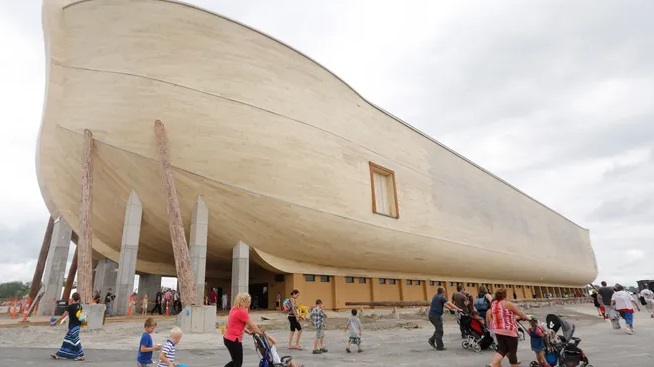
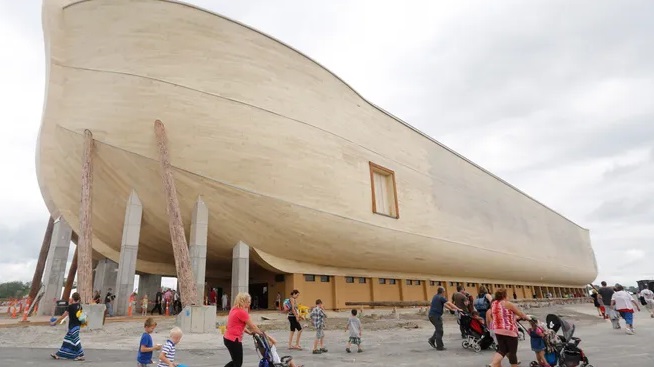
This is now possible after several centuries of medical research to touch 100. How could Noah be 950 years of age? It is scientifically untenable. As a physician, I feel so sure about it that I have written a critique of the Bible with the help of ChatGPT:
Yet there is a Quranic verse that most Muslim commentators have suggested implies that Noah lived to be 950 years of age:
وَلَقَدْ أَرْسَلْنَا نُوحًا إِلَىٰ قَوْمِهِ فَلَبِثَ فِيهِمْ أَلْفَ سَنَةٍ إِلَّا خَمْسِينَ عَامًا فَأَخَذَهُمُ الطُّوفَانُ وَهُمْ ظَالِمُونَ
“And, indeed, [in times long past] We sent forth Noah unto his people, and he dwelt among them a thousand years bar fifty; and then the floods overwhelmed them while they were still lost in evildoing.” (Al Quran 29:14 by Muhammad Asad)
From this translation, it is natural to conclude that he lived among his people 950 years. But, let us try a different translation:
“And verily we sent Noah (as Our messenger) unto his folk, and he continued with them for a thousand years save fifty years; and the flood engulfed them, for they were wrong-doers.” (Al Quran 29:14 by M.M. Pickthall)
The connection between the two clauses of this verse is an Arabic single-letter word ‘Fa,’ While Muhammad Asad translates it as ‘then,’ Pickthall translates it as ‘and,’ removing part of the reason why this verse has always been interpreted as 950 years of age of the Prophet Noah. Another reason is that it has been interpreted in light of the biblical mention of ages.
If we remove these two barriers, then the first clause of the verse could also be understood as the life span of the teachings of Noah or his Sharia, which was followed by one brought by the Prophet Abraham.
| Arabic Fa فَ Usage | English Sense |
|---|
| Sequential | “then” |
| Causal | “so”, “therefore” |
| Additive | “and then”, “and” |
| Conditional | “then” (after “if”) |
| Relational | “and (then)” after relative clauses |
| Interrogative | “then” in questions (“then will you…?”) |
Here are the main English meanings and functions of the Arabic particle فَ (fa‑):
1. Sequential / Temporal “then”
Indicates what happens next:
«قال فذهب» – “He said, then he went.” en.wikipedia.org+12revivearabic.blogspot.com+12en.wikipedia.org+12
2. Causal / Consequential “so” or “therefore”
Shows result or consequence:
«إِنْ تأتِهِمْ فَسَيَقُولُونَ…» – “If it is delivered to them, so they will say…” revivearabic.blogspot.com+1en.wikipedia.org+1
3. Conjunctive / Additive “and then”, “and”
Joins phrases or attributes:
«عالِمِ الغيب والشهادة فتعالى…» – “Knower of the unseen and the seen, then/furthermore exalted…” youtube.com+9revivearabic.blogspot.com+9youtube.com+9hinative.com
4. Conditional consequence (جواب الشرط)
Introduces what follows a fulfilled condition:
(e.g., “If X, then Y.”) revivearabic.blogspot.com
5. Connector after relative pronouns or quasi‑conditions
Links to a related clause following a relative expression:
Often appears after clauses beginning with الذي, من, etc. revivearabic.blogspot.com+1en.wikipedia.org+1youtube.com
6. Interrogative with أَ : “then” in questions
Used in questions to soften or sequence the inquiry:
«فَقُلْ أَفَلَا تَتَّقُونَ؟» – “Then say, ‘Will you not be conscious of [Allah]?’” revivearabic.blogspot.com+1
So, we could connect the two clauses of the verse under discussion in the sense of ‘and’ rather than ‘then.’
Additionally, if we look at the context, there is no good reason to talk about the age of Noah suddenly, while it will make sense to describe his history in relation to the Abraham as the topic shifts to him in the verses that follow:
“We also sent Abraham. He said to his people, ‘Serve God and be mindful of Him: that is better for you, if only you knew. What you worship instead of God are mere idols; what you invent is nothing but falsehood. Those you serve instead of God have no power to give you provisions, so seek provisions from God, serve Him, and give Him thanks: you will all be returned to Him.” (Al Quran 29:16-17 translated by M.A.S. Abdel Haleem)
Truth cannot contradict truth. The Glorious Quran is the literal word of God, and our universe and human life are His creations. There cannot be a contradiction between Quranic statements and the laws of nature. A humble correlation between science and scripture can provide us with new insights for the study of both.



 The Glorious Quran and Science
Leave a comment