
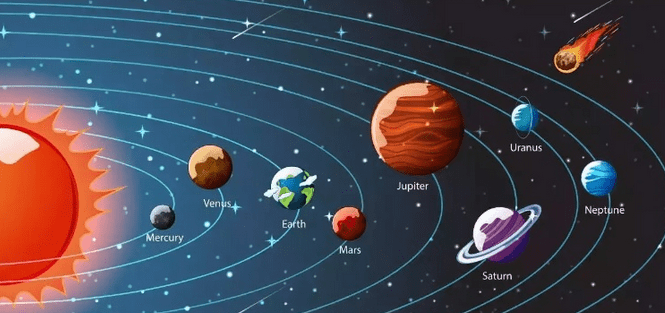

Presented by Zia H Shah MD with the help of Claude AI
Introduction
The Quranic verses 31:10-11 and 13:2-3 present profound cosmological insights that have captivated Muslim scholars for centuries and continue to resonate with contemporary scientific understanding. These passages, which describe the heavens as standing “without pillars that you see,” offer a remarkable lens through which to examine the enduring mystery of gravity across scientific, philosophical, and theological dimensions. This comprehensive commentary explores how these ancient revelations illuminate modern questions about the invisible forces that govern cosmic order.
I. The Quranic Text: Original Arabic and Translations
Arabic Text
Surah Luqman 31:10-11:
- 31:10: خَلَقَ السَّمَاوَاتِ بِغَيْرِ عَمَدٍ تَرَوْنَهَا ۖ وَأَلْقَىٰ فِي الْأَرْضِ رَوَاسِيَ أَن تَمِيدَ بِكُمْ وَبَثَّ فِيهَا مِن كُلِّ دَابَّةٍ ۚ وَأَنزَلْنَا مِنَ السَّمَاءِ مَاءً فَأَنبَتْنَا فِيهَا مِن كُلِّ زَوْجٍ كَرِيمٍ
- 31:11: هَٰذَا خَلْقُ اللَّهِ فَأَرُونِي مَاذَا خَلَقَ الَّذِينَ مِن دُونِهِ ۚ بَلِ الظَّالِمُونَ فِي ضَلَالٍ مُّبِينٍ
Surah Ar-Ra’d 13:2-3:
- 13:2: اللَّهُ الَّذِي رَفَعَ السَّمَاوَاتِ بِغَيْرِ عَمَدٍ تَرَوْنَهَا ۖ ثُمَّ اسْتَوَىٰ عَلَى الْعَرْشِ ۖ وَسَخَّرَ الشَّمْسَ وَالْقَمَرَ ۖ كُلٌّ يَجْرِي لِأَجَلٍ مُّسَمًّى ۚ يُدَبِّرُ الْأَمْرَ يُفَصِّلُ الْآيَاتِ لَعَلَّكُمْ بِلِقَاءِ رَبِّكُمْ تُوقِنُونَ
- 13:3: وَهُوَ الَّذِي مَدَّ الْأَرْضَ وَجَعَلَ فِيهَا رَوَاسِيَ وَأَنْهَارًا ۖ وَمِنْ كُلِّ الثَّمَرَاتِ جَعَلَ فِيهَا زَوْجَيْنِ اثْنَيْنِ ۖ يُغْشِي اللَّيْلَ النَّهَارَ ۚ إِنَّ فِي ذَٰلِكَ لَآيَاتٍ لِّقَوْمٍ يَتَفَكَّرُونَ
English Translations
Multiple scholarly translations reveal nuanced interpretations:
Sahih International (31:10): “He created the heavens without pillars that you see and has cast into the earth firmly set mountains, lest it should shift with you…”
Muhammad Asad (13:2): “It is God who has raised the heavens without any supports that you could see, and is established on the throne of His almightiness…”
Yusuf Ali (31:10): “He created the heavens without any pillars that ye can see; He set on the earth mountains standing firm, lest it should shake with you…”
The critical phrase “بِغَيْرِ عَمَدٍ تَرَوْنَهَا” admits two grammatically valid interpretations: either “without any pillars that you can see” (emphasizing the absence of visible supports) or “without pillars [that are] visible to you” (suggesting invisible supports exist).
II. Historical Context and Classical Islamic Commentary
Historical Background
Both surahs address fundamental theological concepts within distinct contexts. Surah Luqman, revealed in Mecca, counters polytheistic beliefs by emphasizing divine unity through cosmic order. Surah Ar-Ra’d, revealed in Medina, establishes divine authority through natural phenomena. The cosmological references directly challenged prevailing Arabian beliefs that the sky rested on mountains or physical pillars.
Classical Tafsir Analysis
The interpretation of “invisible pillars” generated rich scholarly debate among classical commentators:
Ibn Abbas and Mujahid favored the interpretation that pillars exist but remain invisible to human perception, suggesting divine forces beyond sensory experience.
Al-Hasan and Qatadah argued for the complete absence of pillars, emphasizing the miraculous nature of divine creation.
Fakhr al-Din al-Razi (d. 1210 CE) developed sophisticated cosmological theories, arguing for the possibility of “millions of worlds beyond this world” and viewing space as independent of bodies. His interpretation of natural laws as divine decrees anticipated later scientific understanding.
Ibn Kathir (d. 1373 CE) emphasized that Allah’s creation demonstrates His unique power: “all that Allah has mentioned here of the creation of the heavens and earth stems from His power of creation and control alone.”
Mountains as Cosmic Stabilizers
All major commentators interpreted mountains (رَوَاسِي – rawasi) as divinely placed stabilizers preventing earth’s movement. This concept of mountains as “pegs” (awtad) anchoring the earth’s crust reflects sophisticated understanding of geological function within theological framework.
III. Scientific Analysis: The Mystery of Gravity
Newton’s Universal Gravitation
Sir Isaac Newton’s 1687 formulation of universal gravitation marked a revolutionary understanding of invisible forces. His law, F = G(m₁m₂)/r², described how every particle attracts every other particle through an invisible force proportional to their masses and inversely proportional to the square of their distance.
Newton himself remained troubled by action at a distance, writing to Bentley: “It is inconceivable that inanimate brute matter should, without the mediation of something else, which is not material, operate upon and affect other matter without mutual contact.”
Einstein’s Revolutionary Reconceptualization
Einstein’s general relativity (1915) transformed our understanding by reconceptualizing gravity not as a force but as spacetime curvature. Massive objects bend the fabric of space and time, causing other objects to follow curved paths we perceive as gravitational attraction.
Key confirmations include:
- Light deflection during the 1919 solar eclipse
- Gravitational waves detected by LIGO in 2015
- Frame-dragging confirmed by NASA’s Gravity Probe B
Contemporary Gravitational Mysteries
Modern physics reveals gravity’s profound mysteries:
Dark Matter (~27% of universe): Detected purely through gravitational effects, providing invisible cosmic scaffolding for galaxy formation.
Dark Energy (~68% of universe): Causing accelerated cosmic expansion through “gravitational repulsion.”
Quantum Gravity: The failure to reconcile general relativity with quantum mechanics represents one of physics’ deepest challenges.
The Hierarchy Problem: Gravity is ~10³⁶ times weaker than electromagnetism, suggesting either extra dimensions or anthropic selection.
Connection to Quranic Description
The Quranic emphasis on invisible cosmic support appears remarkably prescient given:
- Ancient worldviews typically assumed visible physical pillars
- Gravitational force wasn’t understood until Newton (17th century)
- Dark matter/energy weren’t discovered until late 20th century
IV. Philosophical Perspectives
Historical Development
Aristotelian Physics eliminated action at a distance through material plenum and direct contact between celestial spheres.
Medieval Islamic Philosophers made crucial contributions:
- Ibn Sina (Avicenna) developed theories of motion anticipating Newton’s inertia
- Ibn Rushd (Averroes) emphasized natural laws as rational structure of creation
The Leibniz-Clarke Correspondence (1715-1716) crystallized fundamental debates:
- Leibniz argued for relational space and criticized Newton’s “occult qualities”
- Clarke defended absolute space and divine omnipresence as foundation for gravitational action
Kant’s Critical Philosophy proposed that space and time are forms of human intuition rather than features of things-in-themselves, making gravitational laws describe necessary structures of possible experience.
Contemporary Philosophical Issues
The Metaphysics of Forces: Do gravitational forces represent genuine physical entities or mathematical fictions? General relativity suggests “force” is manifestation of spacetime geometry.
Emergence and Reduction: Large-scale gravitational systems exhibit properties apparently irreducible to individual particle behavior.
Free Will and Determinism: Gravitational determinism combined with chaos theory raises profound questions about human agency.
Temporal Asymmetry: Gravitational processes contribute to time’s arrow through structure formation and entropy increase.
Natural Theology and Fine-Tuning
The gravitational constant appears remarkably fine-tuned:
- Too strong: Stars burn out quickly, unstable orbits
- Too weak: No star or galaxy formation
- Actual value: Allows 10+ billion year stellar lifetimes for complex chemistry
This precision features prominently in contemporary design arguments.
V. Theological Analysis
Islamic Theology of Natural Laws
The classical divide between Ash’arite occasionalism (God as sole cause) and Mu’tazila secondary causation continues to inform contemporary Islamic thought on gravity:
Ash’arite View: Gravitational effects represent God’s direct, moment-by-moment action maintaining cosmic order.
Mu’tazila Perspective: God works through genuine natural laws as expressions of divine wisdom.
Divine Sustaining in Islamic Thought
The Quranic emphasis on continuous divine sustaining (rather than deistic abandonment) provides framework for understanding gravity:
- Verse 13:2’s “raising” (رَفَعَ) indicates ongoing action
- Natural regularities as divine “customs” (عادة) that can be suspended for miracles
- Gravitational forces as instruments of divine will
Contemporary Islamic Scholarship
Seyyed Hossein Nasr: Develops “scientia sacra” integrating spiritual and natural knowledge.
Nidhal Guessoum: Advocates reconciliation between Islamic tradition and modern cosmology.
Mohammed Basil Altaie: Proposes quantum mechanics and relativity provide new venues for understanding divine agency.
Sufi Mystical Interpretations
Ibn Arabi’s school interprets gravitational forces as manifestations (tajalliyat) of divine names:
- Al-Qahhar (The Dominant): Gravitational dominance over creation
- Ar-Rahman (The Merciful): Fine-tuning enabling life
- Al-Hakeem (The Wise): Mathematical precision revealing wisdom
The doctrine of wahdat al-wujud (unity of existence) sees gravitational fields as divine presence made perceptible through physical effects.
VI. Interdisciplinary Synthesis
Convergences Across Disciplines
All three disciplines share:
- Wonder at cosmic order maintained by invisible forces
- Recognition of fundamental mystery despite centuries of investigation
- Common questions about the nature of forces holding the universe together
Methodological Tensions
Different approaches create productive tensions:
- Scientific empiricism vs. philosophical speculation vs. theological revelation
- Mathematical description vs. metaphysical explanation vs. spiritual meaning
- Reductionist analysis vs. holistic understanding vs. transcendent purpose
The Mystery of Gravity as Paradigm
Gravity’s enduring mystery exemplifies how:
- Scientific progress reveals deeper mysteries rather than eliminating wonder
- Ancient wisdom traditions offer insights that resonate with contemporary discoveries
- Interdisciplinary dialogue enriches understanding without reducing complexity
Hermeneutical Considerations
Avoiding both crude concordism and false conflict requires:
- Respecting historical context of Quranic revelation
- Recognizing metaphorical nature of religious language
- Maintaining scientific integrity while remaining open to theological insight
- Understanding that convergences may be suggestive rather than probative
VII. Contemporary Relevance and Future Directions
Emerging Scientific Frontiers
Recent discoveries continue to deepen the mystery:
- DESI findings confirming general relativity while revealing dynamic dark energy
- Gravitational wave astronomy opening new observational windows
- Quantum gravity research seeking unified framework
Philosophical Implications
New questions arise:
- How might consciousness relate to quantum gravity?
- What are implications of multidimensional theories?
- How does entropic gravity affect our understanding of fundamental forces?
Theological Development
Islamic scholarship increasingly develops:
- Sophisticated hermeneutical approaches beyond concordism
- Integration models in educational institutions
- Engagement with cutting-edge physics while maintaining theological integrity
Conclusion: The Illuminating Mystery
The Quranic verses about heavens standing without visible pillars offer profound insight into the relationship between divine wisdom and natural order. Rather than merely anticipating scientific discoveries, these verses direct attention to the fundamental mystery of invisible forces maintaining cosmic structure.
The convergence of scientific discovery (gravitational fields, dark matter, spacetime curvature) with Quranic description (invisible pillars, divine sustaining) suggests not crude concordism but rather that revealed wisdom and empirical investigation can mutually illuminate the deepest mysteries of existence.
The mystery of gravity thus becomes a paradigm for how ancient revelation, philosophical reflection, and scientific investigation can engage in productive dialogue. The invisible pillars supporting the heavens—whether understood as gravitational fields, divine action, or the marriage of both—remind us that the most fundamental aspects of reality often lie beyond direct perception yet remain accessible to human understanding through multiple complementary approaches.
As we continue to probe the nature of gravity through advanced instruments and theoretical frameworks, while simultaneously deepening our philosophical and theological reflection, we find that the Quranic invitation to “reflect” (تَفَكَّرُونَ) on cosmic order remains as relevant today as fourteen centuries ago. The heavens continue to stand without pillars we can see, maintained by mysteries that humble our intellect while elevating our wonder at the profound wisdom underlying all existence.
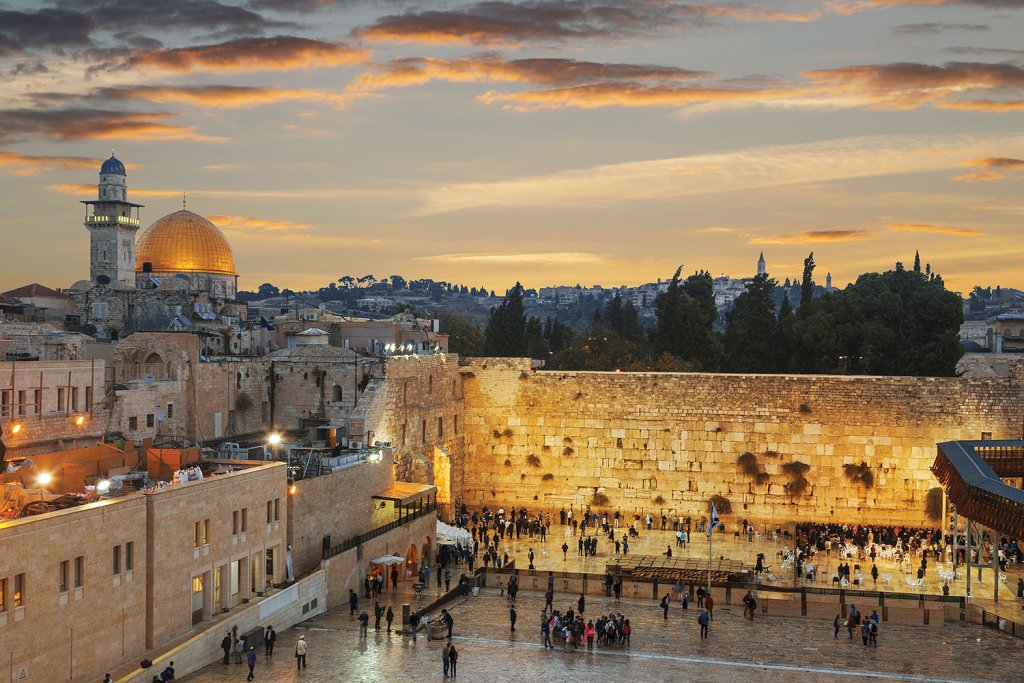


 The Glorious Quran and Science
Leave a comment