
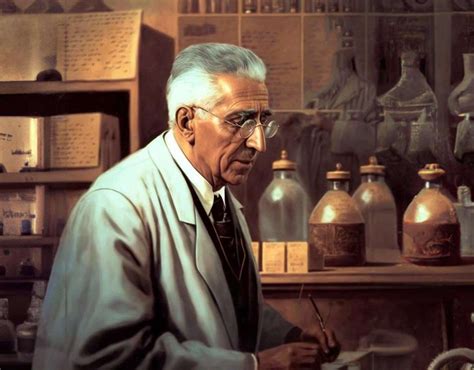
Written and collected by Zia H Shah MD, Chief Editor of the Muslim Times
Dr. Maurice Bucaille is my hero, but unlike some, I do not worship my heroes; I try to emulate them and work hard to become part of their legacy.
Bucaille, a French physician and author, is renowned for his 1976 book The Bible, The Qur’an and Science, in which he examines the scriptures of Judaism, Christianity, and Islam through the lens of modern scientific knowledge. His primary focus is on the Qur’an, and he draws several key conclusions:
1. Scientific Accuracy of the Qur’an
Bucaille asserts that the Qur’an contains statements that are remarkably consistent with modern scientific discoveries, particularly in fields such as astronomy, embryology, and geology. He argues that these descriptions are presented in a manner that aligns with contemporary scientific understanding, despite being revealed in the 7th century. For instance, he interprets certain verses as alluding to the Big Bang theory and the development of the human embryo. He contends that such knowledge could not have been known at the time, suggesting a divine origin for the text.
2. Authenticity and Preservation of the Qur’an
Bucaille emphasizes the Qur’an’s preservation, noting that it has remained unchanged since its revelation. He contrasts this with the Bible, which he argues has undergone numerous translations and revisions, leading to inconsistencies and scientific inaccuracies. He posits that the Qur’an’s consistent text and its alignment with modern science further support its authenticity.
3. Critique of Biblical Narratives
In his comparative analysis, Bucaille critiques certain Biblical narratives, such as the creation story and the account of the Flood, highlighting what he perceives as contradictions and scientific errors. He contrasts these with the Qur’anic versions, which he believes are more in harmony with established scientific facts. He suggests that the differences between the texts indicate that the Qur’an could not have been copied from the Bible, as some critics claim.
4. Distinction Between Qur’an and Hadith
Bucaille distinguishes between the Qur’an and the Hadith (sayings and actions of the Prophet Muhammad), noting that while the Qur’an has remained consistent, the Hadith literature varies in authenticity and sometimes contains statements that conflict with modern science. He cautions against conflating the two when assessing the scientific accuracy of Islamic texts.
Bucaille’s work has been influential in Islamic circles, giving rise to a movement known as “Bucailleism,” which seeks to reconcile Islamic teachings with scientific discoveries. However, his approach has also faced criticism from scholars who argue that interpreting religious texts through a scientific lens can lead to selective readings and may impose modern concepts onto ancient scriptures.
For a more in-depth understanding, you can refer to the full text of The Bible, The Qur’an and Science available here: The Islamic Bulletin.
Our website is a continuation of his work and legacy. Here are a few highlights:
Information Preservation in Black Holes and Divine Records: A Scientific and Quranic Perspective
The Enigma of Rūḥ: Qur’ān 17:85 in Context and Comparative Perspective
The Grand Show on Earth: From Embryology to Evolution to Afterlife



 The Glorious Quran and Science
Leave a comment