
Written and collected by Zia H Shah MD, Chief Editor of the Muslim Times
Introduction
Modern physics and Islamic theology both assert that nothing truly disappears without a trace. In science, this principle emerges in the context of the black hole information paradox, which asks whether information about physical states is lost forever inside black holes. Decades of research in quantum information theory and black hole thermodynamics now strongly suggest that information is never irretrievably destroyed, even by black holes en.wikipedia.org. Intriguingly, the Quran – Islam’s holy scripture – contains numerous verses stating that every human intention, thought, and deed is unfailingly recorded by God for ultimate accountability. For example, the Quran declares that “not a word does [one] utter except that with him is an observer prepared [to record].” (Al Quran 50:18) This article provides a comprehensive review of the scientific evidence that information is conserved in the universe, and examines the remarkable philosophical resonance (and clear differences) between this scientific principle and the Quranic doctrine of divine record-keeping.
Black Hole Information Paradox: From Loss to Conservation
Hawking’s Paradox and the Challenge to Unitarity
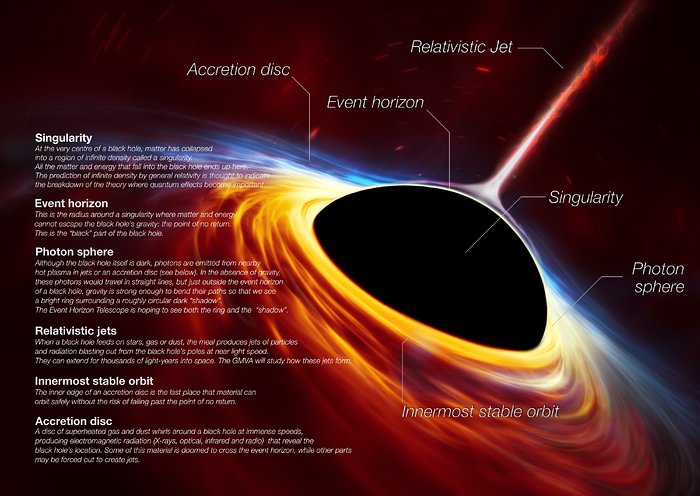
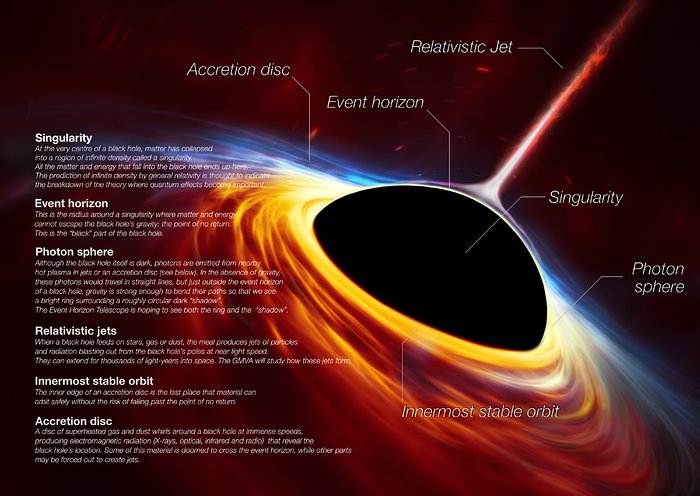
In the 1970s, Stephen Hawking made the startling prediction that black holes are not entirely black but emit thermal radiation (now known as Hawking radiation) due to quantum effects at the event horizon quantamagazine.org. Hawking found that particle–antiparticle pairs pop out of the vacuum near the black hole; one falls in while the other escapes as radiation quantamagazine.org. Over immense time, a black hole could therefore evaporate away. The puzzle Hawking raised was that this radiation appeared to carry no detailed information about what had fallen into the black hole – it was completely random or “thermal” quantamagazine.org. If a black hole evaporates entirely into featureless radiation, what happens to the information about the initial contents (the traits of the particles or objects that fell in)? Hawking’s calculation suggested that information about the infalling matter would be lost from the universe when the black hole vanished en.wikipedia.org. This flew in the face of a core principle of quantum physics: unitarity, which holds that the wavefunction evolution of a closed system is reversible and information-preserving en.wikipedia.org. In quantum theory, the present state encodes the past completely – no physical process, not even burning a book to ashes, truly erases the information encoded in the initial state (the information can in principle be reconstructed from the smoke and heat quantamagazine.org). Hawking’s assertion of information loss in black holes thus created a profound information paradox: general relativity seemed to permit information destruction, while quantum mechanics forbids it en.wikipedia.org.
Hawking himself initially leaned toward the view that black holes do destroy information, even betting that “so much the worse for quantum mechanics” if unitarity failed quantamagazine.org. Many physicists, however, suspected that Hawking’s semi-classical calculation was missing some subtle effect that would restore information conservation quantamagazine.org. Over the next decades, this paradox catalyzed tremendous progress in theoretical physics. Researchers sought a resolution that would reconcile black hole evaporation with quantum mechanics’ quantum determinism (the idea that complete information about a system’s initial state determines its future and past states) en.wikipedia.org.
The Holographic Principle and No Information Loss
By the 1990s, theoretical advances began to indicate that Hawking’s conclusion was incorrect and that information is indeed preserved in black holes en.wikipedia.org. Pioneering work by Gerard ’t Hooft and Leonard Susskind led to the proposal of the holographic principle, a radical idea that arose from black hole thermodynamics. In 1972, Jacob Bekenstein had first shown that a black hole has an entropy proportional to the area of its event horizon, not its volume. In effect, a black hole of area $A$ encodes an information content (entropy) of $A/4$ in Planck units. Susskind and ’t Hooft argued that this implies all the information about a three-dimensional volume that collapses into a black hole can be represented on its two-dimensional boundary (the horizon) quantamagazine.org. Susskind vividly described the idea: “what falls into a black hole never really falls in, but is encoded on the surface of the horizon in a kind of hologram.” quantamagazine.org In other words, the information of infallen objects is not lost inside the black hole’s singularity, but is smeared across the event horizon as microscopic degrees of freedom (sometimes figuratively called “soft hair”). The black hole then gradually returns this information to the wider universe via Hawking radiation – albeit in highly scrambled form – rather than destroying it. This principle, if correct, would resolve the paradox by ensuring that as the black hole evaporates, the information comes out with the radiation (maintaining overall unitarity), even though an infalling observer sees nothing special at the horizon due to general relativity.
Susskind’s complementarity hypothesis encapsulated this idea: to an outside observer, infalling matter is captured and “burned up” on the horizon (encoding its information in a holographic film that later radiates away), while to an infalling observer, they experience falling through the horizon unaware of this quantum drama quantamagazine.org. The infaller cannot communicate their experience back out, so no physical law is violated – the two descriptions are “complementary” and no single observer sees a violation of physics quantamagazine.org. For a time, black hole complementarity convinced many researchers that information could be preserved without contradicting relativity’s requirement of a smooth horizon quantamagazine.org. In 2004, Hawking himself was finally “persuaded that black-hole evaporation was unitary by the holographic principle” en.wikipedia.org. He conceded a famous bet, paying colleague John Preskill a baseball encyclopedia “from which information can be retrieved at will” in symbolic admission that information is not lost en.wikipedia.org.
The holographic principle gained concrete support through string theory. In 1997, Juan Maldacena discovered the AdS/CFT correspondence – a precise duality between a gravity theory in a (d+1)-dimensional Anti-de Sitter spacetime containing a black hole, and a quantum field theory living on its d-dimensional boundary (with no gravity). In this dual picture, a black hole’s formation and evaporation are described by an ordinary quantum theory on the boundary that manifestly preserves information (no information loss). AdS/CFT thus demonstrated on firm theoretical grounds that black hole evaporation can be a unitary process. As a result, since the late 1990s a “predominant belief among physicists is that information is indeed preserved in black hole evaporation” en.wikipedia.org. The question shifted from if information is conserved to how it gets out. Two broad paradigms emerged: (1) in string theory-based approaches, Hawking radiation is not perfectly thermal but carries subtle quantum correlations encoding the information from the hole’s interior; (2) in other approaches (e.g. loop quantum gravity), information might remain sequestered until the very end of evaporation or reside in a stable Planck-scale remnant en.wikipedia.org. Either way, the consensus is that no fundamental law actually deletes information. As physicist Raphael Bousso puts it, “it is now generally believed that information is preserved in black-hole evaporation,” even if we are still working out the details.
Modern Developments: Entanglement, Firewalls, and the Page Curve
The triumph of the holographic principle did not completely settle the matter – it opened new puzzles. A lingering tension came to a head in 2012, when A. Almheiri, D. Marolf, J. Polchinski, and J. Sully (AMPS) published the “firewall paradox.” They pointed out a fundamental conflict between three cherished principles: (1) unitarity (information conservation), (2) relativity’s equivalence principle (nothing special at the horizon for an infalling observer), and (3) quantum field theory near the horizon. In essence, if Hawking radiation does ultimately encode the information from the black hole’s interior, then late-time Hawking photons must be entangled with early-time photons (to carry out the information) and also entangled with their partners behind the horizon – a violation of the rule that quantum entanglement cannot be shared freely (monogamy of entanglement). AMPS argued that an infalling observer would encounter something drastic: a wall of high-energy quanta (a “firewall”) right at the horizon, breaking the equivalence principle. This uncomfortable result suggested that preserving information might force the smooth interior of the black hole to cease to exist – “the black hole just does not have an interior at all” as one physicist put it. The firewall argument generated intense debate; most physicists were unhappy with the idea of destroying spacetime at the horizon, but the paradox has not been definitively resolved. Proposed resolutions include more exotic forms of complementarity or novel quantum gravity effects (e.g. wormhole connections between the inside and Hawking radiation, dubbed “ER = EPR” by Maldacena and Susskind) that might preserve both unitarity and a smooth horizon. Research in this area remains active, but notably none of the credible approaches reintroduce true information loss; instead they adjust our understanding of spacetime, entanglement, or quantum gravity to avoid it. The driving principle is still that information must come out, one way or another.
One of the most significant recent breakthroughs was the explicit calculation of the Page curve for black hole evaporation using new tools in 2019. Earlier, physicist Don Page had predicted that if black hole evaporation is unitary, the von Neumann entropy of the emitted radiation should first rise (as the black hole emits initially thermal-looking radiation), then reach a maximum (halfway through the evaporation), and finally decrease back to zero by the end of evaporation – meaning the radiation ends up in a pure state that encodes all original information en.wikipedia.org. This characteristic entropy evolution is called the Page curve. Hawking’s original calculation gave a monotonically rising entropy (no decrease), which was the paradox. In 2019, groups led by Geoff Penington and by Almheiri et al. applied the AdS/CFT duality and a technique involving “replica wormholes” (novel saddle-points in the Euclidean path integral) to compute the entropy of Hawking radiation in toy models of gravity. They found exactly the Page curve: the radiation’s entropy indeed peaks and then declines to zero as the black hole disappears. In these calculations, quantum entanglement between the radiation and degrees of freedom behind a shrinking horizon shifts in such a way that information effectively leaks out after a certain time, resolving the paradox (at least in the simplified models). While these results were derived in lower-dimensional or specially controlled settings, they provide a compelling consistency check that information can escape black holes in principle. Some caveats remain – for instance, whether the same “island” formulas work in our real 4D universe is still under investigation en.wikipedia.org – but the overall thrust reinforces information conservation. As physicist Steven Giddings remarked, “the bits get out” in the end, even if we don’t fully understand the mechanism in full quantum gravity yet.
Black Holes under the Observational Lens: LIGO and EHT
Until recently, black holes were purely theoretical constructs. Today, however, astronomical observations have confirmed their existence and general properties, providing indirect tests of ideas related to information conservation. The LIGO observatory’s landmark detection of gravitational waves from merging stellar-mass black holes (GW150914, observed in 2015) allowed scientists to test the so-called no-hair theorem. According to classical general relativity, a black hole in equilibrium is completely described by only three externally observable parameters (mass, spin, and charge) – it has “no hair” to reveal any further information about what formed it. LIGO’s observations of the post-merger “ringdown” – the gravitational wave signal from the newly formed black hole settling into a stable state – matched beautifully with the predictions of a no-hair black hole astronomynow.com. In the LIGO data, researchers found the expected spectrum of quasinormal mode frequencies from the remnant black hole and were able to infer its mass and spin; these were consistent and no extra anomalous signals hinted at additional “hairy” parameters astronomynow.com. “This is the first experimental measurement that succeeds in directly testing the no-hair theorem,” said physicist Maximiliano Isi, adding that so far, “the picture of black holes with no hair lives for one more day.” astronomynow.com In other words, the outcomes of the merger were fully consistent with black holes being as bald as theory predicts. This supports the notion that any information about the progenitor stars beyond mass and spin (e.g. their internal composition) did not emerge in the classical gravitational wave signal – it seemingly stayed hidden behind the horizon. From an information paradox standpoint, this empirical validation of classical behavior sharpens the puzzle: if no hair is observable, the mechanism by which information is retained must be very subtle (quantum mechanical rather than classical). Recent theoretical work has suggested there may be extremely subtle “quantum hair” on black holes that evade classical detection but allow information imprinting reddit.com livescience.com, though this remains speculative.
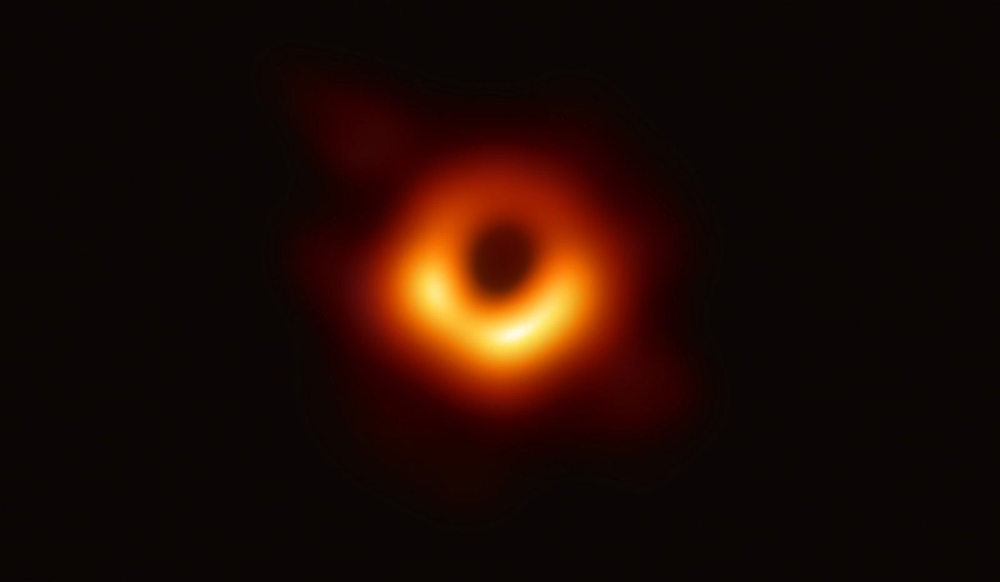
Another milestone came in April 2019 when the Event Horizon Telescope (EHT) collaboration released the first direct image of a supermassive black hole’s immediate environment – the glowing photon ring and “shadow” of the black hole at the center of galaxy M87 en.wikipedia.org. The M87* black hole image, shown above, was a triumph for general relativity. The size and shape of the dark shadow were in excellent agreement with the predictions of Einstein’s theory for a black hole of that mass and spin, essentially ruling out many alternative hypotheses (such as certain exotic non-black-hole compact objects) ias.edu. This means the EHT found no surprising deviations: the object behaves exactly like a textbook black hole with an event horizon. While this observation does not directly address the quantum information question (Hawking radiation is far too faint to observe from M87*, and the timescales for evaporation exceed the age of the universe), it underscores that any solution to the information paradox must conform to the existence of a real, macroscopic event horizon as described by relativity. The EHT results, like the LIGO tests, support the idea that whatever resolves the paradox does so without grossly violating classical expectations at observable scales. Together, empirical data from LIGO and EHT affirm that black holes in nature adhere to general relativity’s predictions, which in turn reinforces the theoretical insistence that the accounting of information must be done by subtle quantum effects consistent with those predictions (holographic storage, quantum correlations in radiation, etc.). In short, the physical black holes we observe appear to conserve information in ways that are hidden from us – just as the Quran suggests that many realities remain hidden until an appointed time.
The Quranic View: Every Deed Recorded in a Cosmic Ledger
Quranic Verses on Omniscience and Record-Keeping
In Islam, the principle that nothing is ever lost from God’s knowledge is a fundamental tenet. The Quran repeatedly stresses that God (Allah) is Al-ʿAlīm (All-Knowing) and Al-Ḥafīẓ (Preserver), and that on the Day of Judgment every human will find an exact account of their deeds, with nothing omitted. The imagery used is that of perfect record-keeping: books or scrolls in which each person’s every action – even their unspoken intentions and thoughts – are written by angels, to be unveiled in the hereafter. We will examine several key Quranic passages that illustrate this doctrine, accompanied by classical and modern exegesis (tafsīr).
One profound example comes from Sūrah Qāf (50:16-18), which describes God’s intimate knowledge of man and the angelic recording of all utterances. The verses in Arabic and English are as follows:
« وَلَقَدْ خَلَقْنَا الْإِنسَانَ وَنَعْلَمُ مَا تُوَسْوِسُ بِهِۦ نَفْسُهُۥ ۖ وَنَحْنُ أَقْرَبُ إِلَيْهِۦ مِنْ حَبْلِ الْوَرِيدِ. إِذْ يَتَلَقَّى الْمُتَلَقِّيَانِ عَنِ ٱلْيَمِينِ وَعَنِ ٱلشِّمَالِ قَعِيدٌ. مَّا يَلْفِظُ مِن قَوْلٍ إِلَّا لَدَيْهِۦ رَقِيبٌ عَتِيدٌ »
“We have certainly created man, and We know whatever his soul whispers to him, and We are closer to him than [his] jugular vein. [Remember] that the two receivers (recording angels) seated on the right and on the left record everything. He does not utter a single word except that an observer (angel) is ready [to record it].”
In these verses, the Quran first asserts God’s complete knowledge of every inner thought (“what his soul whispers”) – an affirmation of divine omniscience. It then vividly depicts two angelic scribes (“receivers”) accompanying each person, writing down every word and action. Classical commentators explain that nothing a person does escapes this recording. The 14th-century scholar Ibn Kathīr, for instance, notes that “not even an atom’s weight of good or evil is neglected” by these angels. The modern scholar Syed Maududi expounds that the phrase “closer than the jugular vein” means God’s knowledge and power pervade us more deeply than our own life-vein, so God directly knows all our secrets islamicstudies.info. In addition, as a mercy and for ultimate justice, God appoints the Kirāman Kātibīn (noble recording angels) to document every deed and word islamicstudies.info. Thus on Judgment Day, a person is confronted with a meticulous report of their life, both through God’s own all-encompassing knowledge and through these written records islamicstudies.info. The Quran underscores that “none of his actions or words is left unrecorded.” islamicstudies.info
Another verse affirms that even intentions and unseen motives will be exposed. Sūrah Al-Ṭāriq (86:9) succinctly states:
« يَوْمَ تُبْلَى السَّرَائِرُ »
“On the Day when the hidden secrets will be put to the test (exposed to scrutiny).”
Classical exegesis (e.g. Tafsīr al-Ṭabarī and Ibn Kathīr) explains “as-sarā’ir” as all the secrets of hearts – faith, disbelief, sincere intentions or hypocrisies – which in worldly life were concealed, but on that Day will be laid bare for judgment islamicstudies.info. No secret intention will remain hidden quranx.com. This resonates with the idea that information (in this case moral information) that might have been invisible or lost to human observers is nevertheless preserved and will come to light.
On that Day of Reckoning, the Quran emphasizes that nothing can be concealed. Sūrah Al-Ḥāqqah (69:18) addresses humanity:
« يَوْمَئِذٍ تُعْرَضُونَ لَا تَخْفَىٰ مِنكُمْ خَافِيَةٌ »
“On that Day, you will be brought forth [for judgment], and none of your secrets will stay hidden.”
Here “you will be brought forth” (tuʿraḍūn) evokes the image of defendants brought to trial with all evidence displayed. Nothing of us – no act or thought – can be kept hidden then islamicstudies.info. The 11th-century scholar Zamakhsharī comments that even deeds we have forgotten will be made to appear as if displayed on a grand expositional stage. There is a clear parallel to the physical idea that information might be inaccessible for a time (like inside a black hole or buried in memory) but not truly erased – at the final accounting it resurfaces.
The Quran also describes the astonishing scenario in which a person’s own body parts testify to their deeds, as if the information of one’s actions is literally embodied in one’s limbs. In Sūrah Al-Nūr (24:24), we read:
« يَوْمَ تَشْهَدُ عَلَيْهِمْ أَلْسِنَتُهُمْ وَأَيْدِيهِمْ وَأَرْجُلُهُم بِمَا كَانُوا يَعْمَلُونَ »
“On that Day, their tongues, hands, and feet will testify against them about what they used to do.”
This verse implies that one’s own limbs carry the record of one’s actions – metaphorically or literally bearing witness. Classical tafsīr literature often takes this as a literal occurrence on Judgment Day: Allah will empower people’s skins, tongues, and limbs to speak about the sins committed through them (as also described in Sūrah Fuṣṣilat 41:20-22). It is as if every part of creation involved in an action has recorded it. From a modern perspective, one might reflect on how our physical environment (including our bodies) indeed retains the “imprints” of our activities in subtle ways – an idea we will revisit shortly.
Finally, the Quran makes clear that the ultimate witness to a person’s life is the person themselves – their own conscience and soul, which has perfect memory of its intentions. Sūrah Al-Qiyāmah (75:14-15) states:
« بَلِ الْإِنسَانُ عَلَىٰ نَفْسِهِ بَصِيرَةٌ – وَلَوْ أَلْقَىٰ مَعَاذِيرَهُ »
“Rather, man will be a witness against himself – even if he presents his excuses.”
Here the Quran asserts that on the Day of Resurrection, a person’s own soul has inner sight (baṣīrah) of all they did, and even if they attempt to make excuses or deny, their very self testifies truthfully. In Islamic theology, this is linked to the concept of fiṭrah (innate God-given disposition towards truth) and the idea that one cannot lie to oneself before God when the veil of self-deception is removed. It is a powerful complement to the external records: not only are deeds documented externally by angels and acknowledged by one’s physical members, but one’s inner being also bears witness, leaving no room for denial.
Classical and Modern Tafsīr: A Cosmic Recording System
Medieval and modern Quranic commentators have offered striking interpretations of these verses, sometimes employing analogies that interestingly resonate with scientific concepts of information preservation. For instance, in his commentary on Qaf 50:16-18, Mufti Muhammad Shafi (1897–1976) writes that Allah’s knowledge is so complete that “His power and knowledge have encompassed man from within and without”, and thus God knows even the “promptings of his heart” better than the person himself quran.com. Regarding the recording angels, Mufti Shafi emphasizes that their task is to produce a “documentary record” of each person’s life for the Day of Judgment. He muses about the “nature of this documentary evidence”, acknowledging it is beyond precise human conception, but then offers a fascinating reflection:
“From the facts that we are witnessing today, it seems certain that the voices and pictures and marks of man’s actions and movements are being preserved and imprinted on every particle of the environment in which he lives and works, and each one of these can be reproduced in exactly the same form and voice… Man is doing this on a very limited scale with the help of his inventions, but the angels of God neither need these machines nor are bound by any limitation. Man’s own body and everything around it is their tape and their film upon which they can record every voice and every image with its minutest detail precisely and exactly, and can make man hear, on the Day of Resurrection, in his own voice, those very things which he spoke in the world, and can make him see…the pictures of all his misdeeds.” islamicstudies.info
This remarkable passage – penned in the mid-20th century – uses the metaphor of analog recording (tape and film) to convey how thoroughly our deeds are recorded by the angels. Mufti Shafi likens the universe to a vast recording device, such that every particle around us is a storage medium retaining the “voices and images” of our actions. On the Day of Resurrection, these records are “played back” to us – a person literally hearing their own past words and seeing scenes from their life. In modern terms, one might think of this as a complete informational imprint of one’s life on the fabric of reality. Notably, he observes that humans themselves had invented devices to capture sound and video (tape recorders, cameras), albeit imperfectly, suggesting by analogy that an Omnipotent Creator could easily record everything perfectly without any device. This aligns well with the Quranic theme that “Allah enumerated [all your deeds] while you forgot them” (Quran 58:6), and “We record that which they have put forward and that which they left behind; everything is enumerated in a clear Register” (Quran 36:12).
Classical scholars like Imam al-Qurtubī and Imam al-Ṭabarī also emphasize that the purpose of these detailed records is to establish justice. God does not need to rely on records to know the truth (since His knowledge is immediate and absolute), but the presentation of records and witnesses (including one’s own body) in the divine courtroom is to eliminate any pretext a person could have for denying their deeds. The Quran says, “And the record [of deeds] will be placed open, and you will see the criminals fearful of that within it. They will say, ‘Oh woe to us! What is this book that leaves nothing small or great except that it has enumerated it?’” (18:49). This idea of a comprehensive ledger that leaves nothing out is exactly the opposite of “information loss.” Every action, however trivial, is preserved. The 10th-century commentator Al-Ṭabarī, on Quran 69:18 (“no secret will be hidden”), writes that all matters are fully known to God and will be made fully known to mankind themselves, thus none can claim that something slipped from the record or was forgotten.
In summary, the Quran paints a worldview in which the universe has perfect memory of all events, guaranteed by God’s power. Each human life is an information-rich narrative that is being continuously recorded by unfailing agents (angels) and by one’s own being. At the final judgment, this information is fully retrieved and made accessible: secrets become public, one’s own organs and soul testify, and an objective record is laid out, so that divine justice is carried out on the basis of complete information. It is a theological assertion of absolute conservation of moral information. No good deed is overlooked, and no evil deed is forgotten unless forgiven; nothing “evaporates” without account. As one hadith (Prophetic saying) succinctly puts it: “The world is a plantation for the hereafter,” meaning every seed we sow here yields its fruit in the hereafter, for nothing is lost.
Metaphorical Resonances Between Physics and Theology
At first glance, the black hole information paradox and Quranic doctrines of divine record-keeping operate in entirely different domains – one concerns quantum bits in curved spacetime, the other concerns moral acts in a spiritual framework. Yet, it is striking how both converge on a principle of total information preservation. This resonance is largely metaphorical, but it can be illuminating to explore:
- “Nothing is truly lost”: In physics, the law of unitarity implies that the information about a system’s past states continues to exist (in principle retrievable) in the correlations of the present. The paradox forced physicists to reimagine black holes not as cosmic drains of information, but as transformers of information – perhaps scrambling and encoding it on event horizons and emitting it back via Hawking radiation quantamagazine.org. Similarly, the Quranic worldview insists that no deed or thought simply vanishes; it is known to God and recorded for eventual disclosure quran.com islamicstudies.info. The perspective is summed up by Quran 3:5: “Not even the weight of a dust particle in the heavens or earth escapes His knowledge; nor anything smaller or greater, but that it is in a clear register.” Both views reject absolute oblivion. There is always a ledger – whether a quantum state or a divine book – that balances the accounts.
- Conservation of information vs. Divine preservation: In physics, when we say information is conserved, we mean the complete physical description (quantum state) of a system can be, in theory, reconstructed from a later state. In the Quran, every action is unambiguously preserved by God’s will. One might see an analogy: just as physics implies that burning a letter encodes its content into smoke and heat (distributed but not destroyed) quantamagazine.org, the Quran suggests that even fleeting words and intentions are encoded into the fabric of the universe by angelic scribes islamicstudies.info. The difference is that in physics the preservation is an impersonal natural law, whereas in theology it is upheld by an omniscient Consciousness. Nonetheless, the imaginative parallel is that the universe has a memory. Indeed, some scientists have poetically described black hole event horizons as a kind of “memory surface” storing everything that falls in quantamagazine.org, which evokes the Quranic imagery of the “Preserved Tablet” (al-Lawḥ al-Maḥfūẓ) in which God inscribed all destinies and deeds.
- The event horizon and the Preserved Tablet: According to the holographic principle, the event horizon’s two-dimensional surface encodes the information of three-dimensional objects that fell into the black hole. One might liken this to a cosmic archive at the boundary of the unseen. The Quran speaks of the “Tablet that preserves [all things]” (Quran 85:21-22) and of angels recording deeds in scrolls that will be unrolled on Judgment Day (Quran 81:10). The metaphorical overlap is that in both cases, information from the “interior” (whether the black hole’s interior or a person’s inner life) is projected onto a boundary record. Of course, in physics that boundary is a literal spacetime surface with quantum degrees of freedom, whereas in theology the “tablet” and record books are of a metaphysical nature. The alignment is conceptual: nothing passes beyond retrieval.
- Retrieval of information and Judgment: In black hole physics, after a black hole evaporates, the information is believed to come out in the Hawking radiation – highly scrambled, but, as recent calculations suggest, not lost. If one had godlike computational power, one could in principle decode the Hawking radiation to learn what formed the black hole. In the Quranic scenario, the Day of Judgment is when all information is decoded and laid bare – each person’s “radiation” (so to speak) carries the imprint of their life, and God perfectly decodes it. What was hidden is now in the open. Interestingly, the Quran even uses language of “publishing” or making manifest: “And the records [of deeds] have been published; and you will see the guilty fearful of what’s in it” (Quran 18:49). This is analogous to an information release. In physics, unitarity assures that if one had the final state of all particles, one could in theory reconstruct the past. In Quranic theology, God does reconstruct every detail of the past for judgment, with witnesses to verify.
- Scrambling vs. clarity: A contrast is that physical information can be conserved yet practically irretrievable (for example, the bits in Hawking radiation are so scrambled that for all practical purposes the original message is hidden). The Quranic view, on the other hand, promises clarity of the record in the afterlife – a perfect unveiling where even one’s excuses fail because the truth is plain. Theologically, this is because God is just and will not punish without evidence that the soul itself recognizes as true. So while black hole information comes out in a highly entropic form (which only a “Maxwell’s demon” with infinite patience could decode), the divine record is presented in an immediately comprehensible form to each person (indeed, one’s own body spells it out). This highlights that while the metaphor of information is common, the intention is different: nature doesn’t care if we understand Hawking radiation, but God ensures we do understand our life record in the end.
- Who/What preserves information: In physics, information preservation is a blind process of nature – quantum amplitudes evolving unitarily. In Islamic doctrine, information is preserved through the agency of conscious recorders (angels) by God’s command, and by God’s own omniscience. The scientific account does not attribute intention or moral value to information, whereas the Quranic account is fundamentally moral – information is preserved for the purpose of justice. This is a crucial distinction: the why of preservation. Physics might say “because nature’s laws are time-reversible,” while the Quran says “because God is Just and All-Knowing.”
In light of these points, we see an analogy: The universe as described by modern physics has a kind of built-in bookkeeping – no information is truly eliminated, it is encoded in subtle ways. Likewise, the universe in the Quran is under absolute surveillance and accounting by its Creator – no deed goes unrecorded. Both worldviews reject a nihilistic “information sink” where things vanish irretrievably. However, it’s important to distinguish metaphor from doctrine. The Quran is not a physics textbook; it did not foreshadow Hawking radiation or quantum holography in a literal sense. When drawing parallels, we speak at the level of metaphor and philosophical reflection. The holographic principle in physics is a quantitative conjecture about entropy and gravity quantamagazine.org; the Quranic “preserved tablet” is a qualitative article of faith about God’s knowledge. It would be a mistake to conflate the two or claim one proves the other. Instead, the alignment of “no loss” principles provides a stimulating narrative: perhaps the deep intuition that reality does not delete meaning is something that spans both rational scientific thinking and spiritual wisdom.
From a faith perspective, a Muslim might view the scientific discovery that “information is never lost” as tashbīh (an analogy) that echoes God’s attribute of Preserver – the creation reflects, in its own way, the Creator’s principles. Conversely, a scientist (religious or not) might appreciate the Quran’s prescient insistence on an unbroken information ledger as a poetic anticipation of a universe that is fundamentally information-theoretic.
Conclusion
Both cutting-edge physics and Quranic theology converge on a profound idea: the preservation of information. In physics, after decades of intense debate, the prevailing view is that the universe does not erase information – even a black hole, the darkest of objects, cannot truly obliterate the quantum information of what falls into it. Instead, information is transformed and eventually released, preserving unitarity and the integrity of physical law en.wikipedia.org. In the Quranic worldview, by the decree of an omniscient God, every occurrence – public or private, large or small – is noted in an unfailing record, to be revealed on the Last Day quran.comquran.com. Nothing escapes the divine registry, ensuring ultimate justice.
These two perspectives operate in different realms, yet they mirror each other in fascinating ways. The scientific narrative of “no information lost” is grounded in mathematical principles and empirical hints, from the holographic entropy of black holes to the careful retrieval of the Page curve in toy models quantamagazine.org en.wikipedia.org. The Quranic narrative is grounded in moral and spiritual truth, asserting a universe under moral law and accountability. Both reject the idea of a cosmic forgetfulness. Instead, they affirm a kind of cosmic remembrance: in one case through conservation laws of nature, in the other through the perfect memory of God and His appointed recorders.
By comparing these worldviews, we gain a richer appreciation of each. The physics of information inspires awe at the hidden order of the universe – a black hole, once thought to irrevocably delete information behind a veil of darkness, is now understood as a vault that eventually “leaks” the truth back out quantamagazine.org. The Quran elevates our sense of responsibility – every moment of our lives is meaningful enough to be permanently inscribed, and one day we must face the full story of ourselves islamicstudies.info. The convergence of these ideas can stimulate a meaningful dialogue between science and religion. It invites us to reflect on the nature of reality: perhaps, at the deepest level, Reality safeguards truth.
In closing, we should heed the caution that while metaphors are enlightening, one should not overly literalize the comparison. The holographic storage of information on an event horizon is not the same as angels writing in a celestial book, nor is Hawking radiation a mechanism of moral accountability. The value of the comparison lies in analogy and shared intuition, not in equivalence. Each domain has its integrity: physics seeks how information is preserved, theology answers why our actions ultimately matter. Yet, it is heartening that in an age where science has vastly expanded our understanding of the cosmos, one of its most striking revelations – the indestructibility of information – finds an echo in ancient scripture. As the Quran says: “Indeed, it is We who bring the dead to life and record what they have put forth and what they left behind; all things We have enumerated in a clear register.” (36:12). In our quest to understand black holes or to live an ethical life, it seems nothing is forgotten – every piece of information, every deed, is preserved to play its part in the grand accounting of the universe.
Sources:
- Hawking, S. W. “Breakdown of Predictability in Gravitational Collapse.” Physical Review D 14, 2460 (1976).
- Susskind, L. The Black Hole War: My Battle with Stephen Hawking to Make the World Safe for Quantum Mechanics. Little, Brown (2008).
- Maldacena, J. “The Large N Limit of Superconformal Field Theories and Supergravity.” Advances in Theoretical and Mathematical Physics 2, 231 (1998) quantamagazine.org.
- Almheiri, A. et al. “Black Holes: Complementarity or Firewalls?” Journal of High Energy Physics 2013: 62 (2013) quantamagazine.org.
- Penington, G. et al. “Replica Wormholes and the Black Hole Interior.” Communications in Mathematical Physics 408, 1 (2021) en.wikipedia.org.
- Event Horizon Telescope Collaboration. “First M87 Event Horizon Telescope Results. I. The Shadow of the Supermassive Black Hole.” Astrophysical Journal Letters 875, L1 (2019) ias.edu.
- Quran 50:16-18 – Surah Qaf islamicstudies.info (with commentary by Maududi islamicstudies.info).
- Quran 69:18 – Surah Al-Haqqah quran.com.
- Quran 86:9 – Surah At-Tariq islamicstudies.info.
- Quran 24:24 – Surah An-Nur quran.com.
- Quran 75:14-15 – Surah Al-Qiyamah islamicstudies.info.
- Shafi, M. M. Ma’ariful Qur’an (English trans.), Vol. 8, p. 334-338 islamicstudies.info.
- Maududi, S. A. A. Tafhim al-Qur’an (Towards Understanding the Quran), commentary on Surah Qaf islamicstudies.info.
- Quanta Magazine, “New Calculations Show How to Escape Hawking’s Paradox,” August 2023 quantamagazine.org.
- Astronomy Now, “Black hole’s gravitational ringing supports ‘no hair’ theorem,” Sept 2019 astronomynow.com.




 The Glorious Quran and Science
Leave a comment