
Written and collected by Zia H Shah MD, Chief Editor of the Muslim Times
Introduction
The Quranic verse under study – “The Day when the secret thoughts of the hearts will be exposed” (Qur’an 100:10) – evokes a profound scenario of ultimate truth-revelation. It speaks of a future Day of Resurrection when every hidden intention, thought, and secret harbored in human hearts will be laid bare for judgment. This eschatological claim has inspired extensive commentary across disciplines. Theologically, it affirms divine omniscience and perfect justice; philosophically, it raises questions about the mind, self, and moral accountability; scientifically, it even resonates with modern insights about information conservation and the limits of privacy of thought. This paper provides a comprehensive commentary on Qur’an 100:10 through multiple lenses – quantum mechanics and the notion of information preservation, neuroscience and cognitive psychology on human consciousness and hidden thoughts, as well as classical and modern Islamic interpretations from Sunni, Shia, and Sufi perspectives. By integrating these viewpoints, we explore the verse’s metaphysical and ethical implications within the broader Quranic worldview.
At the heart of this verse is the promise that nothing internal will remain concealed: “what lies within breasts is made known” on that Day scribd.com. Classical Islamic scholarship identifies this event with the Day of Judgment, when the “veil” over all actions and intentions is removed and one’s true inner reality is revealed scribd.com. Such an unveiling carries deep significance. It not only underscores that God’s knowledge penetrates the innermost thoughts, but it also ensures complete justice – deeds are evaluated along with the intentions behind them islamicstudies.info. In what follows, we delve into how this concept finds echoes in scientific principles of information and mind, how Islamic theologians have understood it, and what it implies for our understanding of consciousness, morality, and divine judgment.
Quantum Mechanics and the Conservation of Information
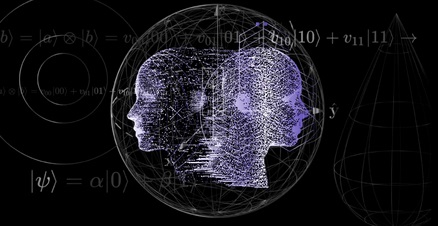
Modern physics, surprisingly, provides analogies that illuminate the idea that no information remains truly hidden or destroyed – an idea harmonious with the Quranic vision of all secrets eventually coming to light. In quantum mechanics, the linearity and unitarity of evolution lead to the remarkable result that information about a closed system’s state is never irrevocably lost. The no-hiding theorem formally proves that if information disappears from one part of a system (for example, due to decoherence), it must have migrated to another part – it cannot vanish from the universe en.wikipedia.org. In other words, quantum theory insists that physical information is always conserved, albeit it may be scrambled or dispersed. This principle has been dramatically affirmed in debates over the black hole information paradox: whereas Stephen Hawking once suggested a black hole could destroy information, subsequent work (notably by Leonard Susskind and others) showed that even black holes must encode and eventually release all the information of swallowed objects, preserving it on the event horizon scientificamerican.com. As Susskind explains, “information is never lost” – he dubs this the “minus-first law” underlying physics scientificamerican.com. It is considered more fundamental than energy conservation, implying that an ultimate accounting of all particles’ trajectories and states is, in principle, encoded in the universe’s fabric.
One can draw a parallel here: just as every physical event’s information remains eternally imprinted in the cosmos, every human action or thought – no matter how secret – could be thought of as leaving an indelible mark in the record of reality. The Quran often speaks of a “Book” or register in which “nothing, small or great, is left unlisted”islamicstudies.info. Scientifically, one might liken this to the universe itself being a giant information ledger (as hypothesized in the holographic principle, where the information of a volume is stored on its boundaryscientificamerican.com). If a theoretically “Laplace’s Demon”-like intellect knew the exact state of every particle (or the total quantum wavefunction), it could infer all past events and future outcomes from that datascientificamerican.com. Laplace’s thought experiment envisioned an almost omniscient intelligence that “would embrace in a single formula” the motions of the cosmos such that “the future just like the past would be present before its eyes”scientificamerican.com. In a striking analogy, the Quranic depiction of God’s omniscience – knowing all that happens openly and secretly in the heavens and earth – essentially postulates such an infinite intellect, for whom “nothing would be uncertain” and “no secret of yours shall be hidden”scribd.com.
Furthermore, the Many-Worlds Interpretation (MWI) of quantum mechanics offers an intriguing perspective on “hidden” possibilities and information. According to MWI (originating from Hugh Everett’s work), there is no wavefunction collapse; instead, every quantum measurement causes the universal wavefunction to branch into multiple non-communicating parallel universes, realizing every possible outcomeen.wikipedia.orgen.wikipedia.org. The universe becomes a vast superposition of countless actualized timelines, often poetically called “Everett’s many worlds.” In Everett’s formulation, the Schrödinger equation holds at all times and for all systems – nothing is truly eliminated, only separated into different branchesen.wikipedia.org. Thus, all information about all alternatives continues to exist in some world or another. While this is a highly theoretical construct, it reinforces the idea that reality, in totality, doesn’t delete information. For instance, if a person’s choices or inner impulses could have led down different paths, Many-Worlds implies those unrealized outcomes still exist in alternate branches. In a theological metaphor, one could say that God is aware of every potential and every actuality – nothing is hidden from the divine perspective, much as in Many-Worlds nothing that can happen truly vanishes from the wavefunction. At minimum, the Everettian view buttresses the intuition that information is conserved globally, even if inaccessible to us locally.
It is important to note that these scientific interpretations are analogies to, not proofs of, the Quranic doctrine. They illustrate a consonance between the idea that the universe has no “delete” key for information and the scriptural notion that ultimately all truths (even thoughts) persist to be revealed. As physics author John Horgan puts it, many physicists “take Susskind at his word” that conservation of information “underlies everything” in physicsscientificamerican.com. This law implies determinism: if one had complete information of the present, one could recover the past and futurescientificamerican.com. By comparison, divine omniscience in Islam entails knowing all outcomes and secrets across time. The Quran repeatedly affirms that God’s knowledge encompasses all that hearts conceal – e.g. “He knows the furtive glances of the eyes and all that the breasts conceal” (Qur’an 40:19)internetmosque.net. Thus, what modern science frames as a principle of information conservation, Islamic theology frames as the omnipresence of God’s knowledge and the preservation of human deeds in a transcendent record. On the Day of Resurrection, that record is laid open: “And the record [of deeds] will be placed [open]… and they will say, ‘What kind of book is this that leaves nothing small or great except that it has enumerated it!’” (Qur’an 18:49)islamicstudies.info. The scientifically grounded conviction that no information can truly be lost offers a provocative parallel to this Quranic vision – suggesting that the eventual unveiling of all information may be not only metaphysically just, but in some sense woven into the logical structure of reality.
Neuroscience, Cognitive Psychology, and the Transparency of Mind
From the perspective of neuroscience and psychology, Qur’an 100:10’s promise that inner thoughts will be exposed invites reflection on how “secret” our thoughts truly are. Human consciousness and mental content often feel private and inaccessible to anyone but ourselves. Indeed, a long-standing tenet in philosophy of mind is that there is a subjective, first-person dimension (“what it is like”) that outsiders cannot fully penetrate. Thomas Nagel famously described the inner experience (e.g. what it is like to be a bat) as essentially subjective and not derivable from objective data. However, advances in brain science are increasingly bridging the gap between private thought and external observation. Cutting-edge neuroimaging and decoding algorithms have shown striking success in deciphering aspects of a person’s thoughts from brain activity – hinting that even the most intimate mental content has physical signatures that can be detected and translated.
Neuroscience breakthroughs: In recent experiments, researchers have used functional MRI (fMRI) scans coupled with AI models to decode continuous language and thoughts from brain activity. For example, a team at the University of Texas developed a “semantic decoder” that can translate a person’s brain signals into a stream of text, effectively reading their thoughts (with consent) after trainingtheguardian.com. Using many hours of fMRI data and advanced language models, the system was able to reconstruct the gist of sentences people listened to or even silently imagined, with surprising accuracytheguardian.com. One participant’s internal monologue of “I don’t have my driver’s license yet” was decoded as “she has not even started to learn to drive yet,” closely capturing the meaningtheguardian.com. This non-invasive mind-reading leap, achieved by tracking blood-flow changes in language-processing regions of the brain, demonstrates that thoughts leave discernible neural traces that technology can increasingly interpret. Another study succeeded in reconstructing images seen or imagined by participants, by analyzing fMRI patterns and using generative models to output pictures – effectively pulling visual ideas from the mind’s eyenature.com. These developments, while rudimentary and requiring cooperative subjects, underscore a key point: our “secret” thoughts correspond to physical processes in the brain, and those processes can in principle be monitored and decoded. What was once science fiction – a machine reading minds – is becoming science facttheguardian.com. If humans are beginning to unveil thoughts via brain scans, the concept of an omniscient God fully unveiling all inner content becomes more conceivable: the mind, like any part of nature, can be “read” if one has sufficient knowledge and technique. Our brains broadcast our thoughts in the language of neural activity, and although decoding that is exceedingly complex, it is not impossible. The Quran’s assertion that an all-knowing God can expose all thoughts finds a tangible analogy in these technologies.
Cognitive psychology and hidden intentions: Psychology also reveals that inner states are often betrayed through behavior and physiology in everyday life. No thought is perfectly sealed. Emotions and intentions leak out via subtle facial expressions, tone of voice, or involuntary micro-reactions. For instance, a person harboring a guilty secret may exhibit nervous tics or changes in biometric measures (heart rate, skin conductance), which is the premise behind lie detector tests. While polygraphy is imperfect, more direct measures like the P300 wave in EEG have been used in Concealed Information Tests: when a person recognizes a known stimulus (like a crime detail they aim to hide), their brain’s event-related potential shows a characteristic spike (~300ms after stimulus)pmc.ncbi.nlm.nih.gov. Studies indicate the P300-based test can detect concealed memories of deeds with significant accuracypmc.ncbi.nlm.nih.gov. In essence, even if someone never verbally admits their knowledge or intent, their brain and body may “bear witness against them.” This is eerily reminiscent of Quranic descriptions: “On that Day, their tongues, hands, and feet will bear witness against them as to what they used to do” (Qur’an 24:24)scribd.com. The Qur’an further says man will be “a witness against himself, even if he offers excuses” (75:14-15)scribd.com – a notion mirrored by psychological reality that people, deep down, know their own guilt and often unwittingly reveal it. Our conscience itself is an inner witness. People can live in denial, but often their dreams, stress symptoms, or Freudian slips expose the truth they hide even from themselves. Cognitive dissonance theory in psychology notes that holding onto a known lie or acting against one’s values creates mental discomfort that demands resolution – the “truth” tries to surface.
Memory research also suggests that much of what we experience is stored in the brain, even if not accessible to conscious recall. Under hypnosis or extreme conditions, long-forgotten details can sometimes be retrieved, implying that our minds are vast archives of our past mental states. If a human examiner or a drug can draw out suppressed thoughts, then an Omniscient Creator certainly can retrieve every memory and intention from the soul. Islamic tradition indeed holds that on Judgment Day, people will marvel at how their own history is laid bare: “They will find all that they did placed before them” (Qur’an 18:49)islamicstudies.info. Neuroscience strengthens the idea that nothing in our mental life is truly lost; it is encoded in patterns of neurons or potentially in subtler forms we do not yet understand. Thus, the persistence of inner information aligns with both Quranic and scientific views.
Finally, philosophy of mind poses questions about whether consciousness could have a non-material aspect that survives bodily death, which would neatly allow one’s inner thoughts and character to persist for post-mortem exposure. While science cannot confirm an immaterial soul, many philosophical traditions (and indeed Islamic theology) accept that the self is not annihilated at death – consciousness, in some form, endures (as rūḥ or spirit in Islam). If so, the repository of a person’s intentions and thoughts (their qalb or heart, in Quranic terms) would carry into the Hereafter, to be unveiled by God’s permission. Even under a materialist view, one could speculate that if all quantum information of the brain is preserved in the environment (no-hiding theorem)en.wikipedia.org, a sufficiently powerful being could reassemble and read it. In summary, neuroscience and psychology illustrate the trend that the walls around the private mind are thinning – our inner world is not as ineffable as once thought. This scientific trajectory reinforces the plausibility and metaphorical truth of Qur’an 100:10: the subtlest whispers of the soul are knowable and will be exposed when the conditions allow, reaching their full disclosure in the divine courtroom of the hereafter.
Classical Islamic Exegesis: Sunni, Shia, and Sufi Perspectives
Sunni Tafsir: Classical Sunni scholars unanimously interpret Qur’an 100:10 as referring to the manifestation of hidden intentions and secrets on the Day of Judgment. The verse comes in Surat al-‘Adiyat (Qur’an 100), which dramatically describes the resurrection scenario: “Does he not know that when the contents of the graves are scattered, and that which is in the breasts is obtained, surely their Lord on that Day is Fully Aware of them” (100:9-11)quran.com. The phrase “ḥuṣṣila mā fī ṣ-ṣudūr” in Arabic implies extracting and thoroughly revealing what is in the hearts. Commentators note that the verb ḥuṣṣila (from taḥṣīl) conveys both bringing to light and separating or sortingversebyversequranstudycircle.files.wordpress.com. Thus, not only will private matters be exposed, but the good and evil within will be sifted and made distinctversebyversequranstudycircle.files.wordpress.com. No ambiguity will remain about a person’s true character. As Ibn ‘Abbas (a leading Companion) explained, “Whatever was in their souls will be made apparent”versebyversequranstudycircle.files.wordpress.com. The 20th-century exegete Abul A‘la Maududi elaborates that God’s judgment will “not be passed only on the apparent and superficial”; rather, “the secrets hidden in the hearts will also be brought out” so that real and complete justice can be doneislamicstudies.infoislamicstudies.info. In this perfect tribunal, actions will be evaluated in the light of their underlying intentions – something no worldly court can achieve, since “no court of the world has the means by which it may accurately ascertain the motive and intention. This can be done only by God”islamicstudies.info. The Tafsir Tafheem emphasizes that God will openly demonstrate those inner motives in front of all, making the justice transparently evidentversebyversequranstudycircle.files.wordpress.com. Classic scholars often link Qur’an 100:10 to similar verses: “The Day when all hidden secrets are held to scrutiny” (86:9) and “You shall be exposed, and no secret of yours shall remain hidden” (69:18)scribd.com. The Qur’an also depicts how on that Day, humans’ own bodies will testify: “their tongues, hands and feet will bear witness to what they used to do” (24:24)scribd.com, and even their skin will speak (per 41:21). With mouths sealed (36:65), a sinner’s limbs and faculties narrate the truth that the person might wish to denyscribd.com. All of these Qur’anic images affirm the same theme as 100:10: nothing inner or outer can be concealed before the All-Knowing on the Last Day.
Sunni exegesis also stresses that this exposure serves to distinguish the righteous from the wicked in full. As one commentary puts it, the good intentions, faith, and virtues hidden in some hearts will become their honor, while the ill intentions, disbelief, and vices in others will become their disgracebosraa.com. There is a hadith report from the Companion Ibn ‘Umar: “On the Day of Judgment, God will bring forth every secret. It will be made like an adornment on one’s face (if good) or a blemish (if evil).” In other words, people’s faces and appearance in the Hereafter will visibly reflect their inner truthbosraa.com. This concurs with Quranic hints that faces will shine or be darkened based on one’s inner state (e.g. 3:106, 75:22-24). Thus, Sunni scholars see 100:10 as encapsulating a cornerstone of Islamic teaching: God judges by the hearts. The Prophet Muhammad (ﷺ) taught, “Allah does not look at your outward forms or your bodies, but at your hearts and your deeds”m.facebook.com. Sincerity (ikhlāṣ) is paramount; on that Day, any pretense falls away and only the reality of one’s intention and faith remains.
Shia Tafsir: Shia interpretations of Qur’an 100:10 are fundamentally in agreement with Sunni views on the verse’s general meaning. Shia scholars, such as ‘Allāmah Al-Ṭabāṭabā’ī in Tafsīr al-Mīzān, explain that “obtaining what is in the breasts” is a kināyah (metonym) for distinguishing the inner qualities in the soular.wikifeqh.ir. In his commentary, Ṭabāṭabā’ī writes that on that Day the inner spiritual traits – faith (īmān) or unbelief (kufr), and the imprint of good or evil deeds – will be sorted out clearlyar.wikifeqh.ir. What one carried in one’s heart, whether true belief, hypocrisy, love of good, or hidden sin, will be decisively revealed and categorized. Shia exegesis often emphasizes the moral and spiritual qualities more than just individual acts. For instance, Tafsir Majma‘ al-Bayān by al-Ṭabarsī echoes that the verse means every buried intent (good or bad) will be brought forth and differentiated, just as the dead will be resurrected from gravesar.wikifeqh.ir. In Shia tradition, there is also a focus on the idea that intentions (niyyāt) and inner belief in the wilāyah (authority of the Imams) are crucial aspects that God will reveal. Some Shii narrations suggest that love or enmity toward certain holy figures, which a person might conceal, will become manifest in one’s treatment in the Hereafter. However, the core idea remains identical: no one can hide what is in their heart from God. This is consistent with the Shia emphasis on justice (‘adl) as a pillar of faith – perfect justice demands that the truth of one’s inner state be known. Thus, on yawm al-qiyāmah (Resurrection Day), “intentions and secrets will be tested” (per 86:9) and rewarded or punished accordingly. Both Sunni and Shia sources frequently quote the hadith that “Actions are judged by intentions”muslimink.com – meaning the real worth of deeds depends on the motive in the heart. Shia jurists and theologians equally uphold that God, who knows all intentions, will judge two outwardly identical deeds differently if one was done sincerely and the other hypocritically. Qur’an 100:10 is thus a reassurance that God’s judgment will account for these hidden differences that humans often miss.
Sufi Mystical Perspectives: Sufi commentators and philosophers took the meaning of this verse into the realm of spiritual introspection and purification of the heart (tazkiyat al-qalb). The Persian Sufi philosopher ‘Ayn al-Qudāt al-Hamadānī (d. 1131) offered a poignant interpretation: “this verse refers to the removal of the veil from the face of actions.” On the Day of Resurrection, he explains, “those actions of ours that were unseen and covered from others will now be put on full display.”scribd.com In Sufi terms, every action has an outer face (what people see) and an inner face (its true intent and spiritual reality). The veil is what prevents creatures from seeing the inner face. Yawm al-Qiyāmah is sometimes called Yawm al-Kashf (Day of Unveiling) in mystical literature, because it is when all veils are lifted between outward and inward, between the human and the divine. Sufi authors describe that the inner states (ḥāl) and secrets (asrār) of the heart will radiate outwardly. If a heart was filled with love of God, that light will adorn the person; if it was filled with egotism or attachment to the material world, that reality will darken the person. Rumi, for example, in his Masnavi uses the metaphor that in the next world, souls will wear their inner qualities visibly, like garments – the humble will wear humility like a robe of honor, the arrogant will wear arrogance like a chain. The Quranic notion that “the secrets of the hearts will be exposed” is thus a natural culmination of the Sufi path’s emphasis on cleansing the heart here and now. Sufi masters often say this life is the time to purify your bāṭin (inner self) because it will inevitably be laid bare. A saying in Sufi circles is: “Whoever polishes his heart now will have a shining heart on Judgment Day.” The ethical imperative is to make one’s inner reality beautiful (iḥsān), such that when it is disclosed by God, it brings joy rather than shame.
Many Sufi teachings also highlight God’s intimate knowledge of the heart. They take verses like “God is fully aware of what you do” (Qur’an 100:11) and “He knows what is in every heart” (67:13) as invitations to practice perpetual sincerity and God-consciousness (taqwā). The idea that “no secret of yours shall be hidden” (69:18)scribd.com is not only about the future; to the mystic it is a present reality – God currently sees all hearts. This fuels the practice of murāqabah (spiritual vigilance), where the seeker keeps an eye on their heart knowing God is watching it. Sufis like Al-Ghazālī wrote extensively on intentions (niyyah) and sincerity, effectively expanding on the hadith “deeds are by intentions”. On the Day of Exposition, the only currency accepted is a sound heart (qalb salīm, cf. Qur’an 26:88-89), free of inner corruption. Thus, Sufi commentaries deeply concur with the straightforward exegesis of the verse while adding a poetic and introspective flavor: they encourage us to expose our own hearts to ourselves now, before God exposes them to the world later.
In summary, across Sunni, Shia, and Sufi interpretations, Qur’an 100:10 stands as a solemn reminder of accountability for the unseen. All perspectives affirm that God’s omniscience and justice require that the inner dimension of human acts – faith, intentions, sincerity, grudges, etc. – will be made manifest. The schools of thought differ only in emphasis: Sunni scholars stress the legal-ethical side (justice and the need for sincere intentions in worship), Shia scholars additionally tie it to the manifestation of true belief versus hidden hypocrisy (especially regarding faith in God’s chosen leaders), and Sufi sages focus on personal spiritual purification in light of the ultimate unveiling. Together they present a holistic theological understanding: our entire being, not just external deeds, is subject to divine evaluation.
Philosophical Theology and Ethical Implications
The verse “the secret thoughts of the hearts will be exposed” carries profound metaphysical and ethical implications in the Quranic worldview and in philosophical theology generally. It prompts reflection on the nature of divine knowledge, human free will, the soul’s continuity, and the moral importance of intention.
Divine Omniscience and Human Free Will: The complete unveiling of inner thoughts presupposes a God who knows absolutely everything about the human person – not only their actions but their unspoken thoughts, feelings, and desires. In Islamic creed, one of God’s names is al-‘Alīm (the All-Knowing) who knows “the unseen of the heavens and earth” and “knows what you reveal and what you conceal” (Qur’an 64:4). Another name is al-Khabīr (the Fully Aware), emphasizing intimate knowledge of inner realities. The philosophical issue often raised is whether such exhaustive foreknowledge is compatible with human freedom. If God already knows every secret thought and future intention, do humans truly have free will? Islamic theologians generally answer yes: God’s knowledge encompasses all time without causing or coercing human choices. They often use the analogy of the sun illuminating objects – God’s knowledge reveals all things without forcing them. Thus, on the Day of Judgment, God exposing the heart’s secrets is seen not as a violation of autonomy, but as a culmination of accountability. Each person, having freely chosen their beliefs and intentions in life, will see those choices made evident. In philosophical terms, one could say the teleology of a free act includes its disclosure and judgment; freedom is given so that one may be tested (cf. Qur’an 67:2), and the test’s results must eventually be published. Notably, Qur’an 75:14 asserts that despite any excuses, “man will be a witness against himself,” indicating that humans will recognize the justice of what is revealed about themscribd.com. This coheres with a key ethical principle: true responsibility requires that the truth be known. If someone did evil in secret, justice is not complete until the veil is lifted and the person confronts their wrongdoing. Conversely, if someone harbored goodness or suffered silently (unacknowledged in life), fairness demands that it be acknowledged in the end.
The Persistence of the Soul’s Inner Qualities: Theologically, Qur’an 100:10 implies that the soul carries its inner configuration (beliefs, intentions) into the afterlife. This touches on the philosophy of mind question of personal identity and the afterlife: what is it that survives death and appears on Judgment Day? In Islam, it is the nafs or soul, which includes consciousness and memory of one’s life. The verse assures that nothing of the inner self is lost in the transition from worldly life to the hereafter – a view that resonates with the idea of the soul as an immortal bearer of personal identity. If one were a pure materialist, one might object: when the brain dies, thoughts and secrets die with it. But Islamic theology posits that the soul is more than the brain, and that God, who created human consciousness, can recreate or retain one’s mental and moral record. Philosophers like Avicenna (Ibn Sina) argued for the soul’s indivisibility and ability to exist apart from the body, meaning it can preserve knowledge of its character. Even those theologians who emphasize bodily resurrection (e.g. the Ash‘arites) hold that God’s omnipotence can restore even the minutest details of a person’s mind at resurrection. Thus, metaphysically, the verse underscores a form of psychological continuity: the same heart (self) that willed and intended in life will stand exposed before God. The “inner script” one has written in their heart is carried over to be read aloud, as it were, in the cosmic assembly of Judgment.
Ethical Accountability and Sincerity: Ethically, the unveiling of hearts elevates the importance of sincerity (ikhlāṣ) and inner virtue. If only outward deeds mattered, one might focus on appearances and social recognition. But Islam (like many ethical systems) teaches that God rewards based on the quality of one’s heart. This has a powerful moral implication: one should cultivate inner goodness and correct one’s intentions, even when no other person can see them. The Prophet’s famous hadith on intentions – “deeds are only by intention, and each person will have what they intended”muslimink.com – is essentially a commentary on the principle in Qur’an 100:10. It highlights that two people performing the same outward act (e.g. giving charity) might have utterly different outcomes in God’s sight if one acted out of compassion and faith and the other out of showmanship or ulterior motives. The knowledge that “Allah knows it all, whether you conceal it or reveal it” (3:29) instills an ethic of integrity. One is prompted to align outer behavior with inner principle, and to avoid hypocrisy (nifāq). The Qur’an often condemns the hypocrites who outwardly profess faith while inwardly disbelieving or scheming, and warns that their hidden reality will be exposed (e.g. Qur’an 9:64, 9:94). Thus, Qur’an 100:10 can be seen as an antidote to hypocrisy: it is a stark reminder that any discrepancy between one’s public persona and private self is temporary.
From a philosophical standpoint, this invokes the concept of moral realism of the self. In the end, a person is what they truly are in the heart, and any deception or self-deception is peeled away. Ethicists might say this promotes virtue ethics – cultivating virtues like honesty, sincerity, and purity of heart – since those will be one’s “currency” when internal truth becomes external fact. The verse also provides comfort to those who are misunderstood or whose good intentions were never appreciated by others. In Islamic thought, God’s unveiling is perfectly just: “Your Lord does not wrong anyone” (18:49)islamicstudies.info. Many narrations say that some believers will discover generous rewards for deeds they did quietly or intentions of good they could not realize – because God knew and recorded them. Likewise, hidden sufferings or patient endurance that no one else knew about will be richly compensated once exposed under God’s sight. In short, the ethical message is double-edged: a warning to those who think their hidden evils are safe and a consolation to those whose hidden goodness seemed unnoticed. Both will be revealed and requited in full.
Another layer of ethical implication is the notion of shame and honor. Philosophers like Kant have spoken about behaving morally as if one’s actions were to be publicly known. Here, the Qur’an flatly states they will be. This might cultivate an intrinsic sense of shame (ḥayā’) that deters wrongdoing even in private. If one internalizes that their secret sin will one day confront them before the entirety of creation (as Islamic eschatology describes the Day of Judgment as a grand gathering), the very anticipation of that exposure can act as a moral restraint. Conversely, those who strive to keep their hearts clean gain an anticipatory joy, reflecting verses like “On that Day, neither wealth nor children will avail, only he who comes to God with a sound heart [will be saved]” (26:88-89). Thus the ultimate ethic is: be in your heart what you purport to be outwardly, for the two will inevitably become one. This principle aligns well with philosophical theology ideas of authenticity and the unity of persons.
Conclusion
Qur’an 100:10, “The Day when the secret thoughts of the hearts will be exposed,” encapsulates a rich tapestry of insights spanning science, philosophy, and theology. Our exploration has shown that this single verse invites interdisciplinary reflection on the nature of information, mind, and morality. From the realm of quantum mechanics, we saw a provocative parallel: the universe fundamentally preserves information – hinting that, in the end, nothing truly vanishes without trace, much as the Quran assures that no deed or thought is truly forgotten en.wikipedia.org scientificamerican.com. The Many-Worlds interpretation further stretches imagination by positing a reality where all possibilities persist in branching worlds, an echo (albeit physical) of the theological idea that an Omniscient knows all outcomes and secrets en.wikipedia.org. In neuroscience and cognitive psychology, we discovered that the barrier of privacy around human thoughts is permeable and getting thinner – brain imaging can decode fragments of our inner speech and visualizations theguardian.com, and psychological tests can catch the mind’s recognition of hidden truths pmc.ncbi.nlm.nih.gov. These findings affirm that what we consider “secret” is in fact encoded in a physical-biological signature that can be revealed, aligning with the Quranic claim that an all-powerful God can make the unseen seen.
Classical Islamic interpretations across Sunni and Shia traditions ground the verse in the framework of divine justice: it assures that on Judgment Day absolute justice will be done by factoring in the intentions and unseen realities behind actions islamicstudies.info ar.wikifeqh.ir. No human court or observer can do this, but God will, thereby vindicating the righteous and exposing hypocrisy. Sufi perspectives added that this unveiling is not merely punitive – it is the moment of ultimate truth when the soul’s inner beauty or ugliness is manifested, urging us to strive for inner purity now. All these interpretations strengthen the ethical injunction that one must tend to one’s heart, knowing its contents will shape one’s eternal outcome.
Philosophically, Qur’an 100:10 challenges us to consider the ultimate convergence of the subjective and objective. In this life, our inner thoughts are subjective, hidden, and sometimes at odds with our outward behavior. But the Quranic worldview predicts a convergence point where subjective inner truths become objective reality for all to witness. This can be seen as a teleological fulfillment of personhood – the complete unveiling of a person as they truly are. It underscores principles of personal identity, moral accountability, and the transparency of truth in the final analysis of existence.
In conclusion, the verse “when the secret thoughts of the hearts will be exposed” serves as a powerful nexus between faith and reason, between scripture and the search for knowledge. It reminds the believer that no secret is truly safe except by sincere repentance, and no goodness is truly lost even if unseen by others – a deeply moral message. At the same time, it intriguingly resonates with scientific principles suggesting a universe where information (and perhaps by extension, truth) is never annihilated. Thus, both spiritually and rationally, one can appreciate the profound wisdom in this Quranic statement. It invites us to live with the awareness that we are ultimately transparent beings before the Light of Truth. All layers of illusion will peel away, and what will remain is the core of what we forged within our hearts. Preparing for that reality is a central concern of the Quran – and indeed, as our journey through multiple disciplines shows, it is a concern that can engage the entire span of human understanding.
Sources:
- The Qur’an, English Translations and Commentaries quran.com scribd.comscribd.com
- Archer, George et al. The Routledge Companion to the Qur’an (2022) – Commentary on Qur’an 100:10 (Ayn al-Qudāt’s interpretation) scribd.com
- Maududi, Abul A‘la. Tafheem al-Qur’an – Exegesis of Surah Al-‘Adiyat 100:9–11 islamicstudies.info
- Al-Ṭabāṭabā’ī, Sayyid Muḥammad Ḥusayn. Tafsīr al-Mīzān – Exegesis of Qur’an 100:9–10 (Arabic edition) ar.wikifeqh.ir
- Susskind, Leonard. The Black Hole War & related interviews – on the “minus-first law” (conservation of information) scientificamerican.com
- Braunstein, S. & Pati, A. (2007). No-hiding theorem – quantum information theory result en.wikipedia.org
- Horgan, John. “Will the Universe Remember Us…?” Scientific American (2021) – discussion of information conservation in physics scientificamerican.com
- Everett, Hugh (1957). Many-Worlds Interpretation (as summarized by John Gribbin, 2020) en.wikipedia.org
- Devlin, Hannah. “AI makes non-invasive mind-reading possible…” The Guardian (1 May 2023) theguardian.com – on fMRI-based semantic decoder of thoughts.
- NIH Research Matters (May 2023). “Brain decoder turns a person’s brain activity into words” – summary of Nature Neuroscience paper theguardian.com nih.gov.
- Rosenfeld, J.P. et al. (2019). Studies on P300 in Concealed Information Test pmc.ncbi.nlm.nih.gov.
- Sahih Muslim, Hadith on hearts and outward forms m.facebook.com; Sahih Bukhari & Muslim, Hadith “Actions are by intentions” muslimink.com.
- Qur’anic cross-references: 69:18 scribd.com, 75:14-15 scribd.com, 24:24 scribd.com, 86:9, 40:19 internetmosque.net, 18:49 islamicstudies.info, etc., illustrating the theme of God’s omniscience and the disclosure of secrets.


 The Glorious Quran and Science
Leave a comment