
Presented by Zia H Shah MD
Islam is often cited as the fastest-growing religion in the world – and notably, its growth in Western countries has drawn attention in recent years. Despite widespread misconceptions and sometimes negative portrayals, a diverse array of people in Europe, North America, and elsewhere are embracing Islam in significant numbers. This article explores the key reasons behind this phenomenon, drawing from arguments made in a recent analysis (delivered in the style of author Mel Robbins) about why so many are converting to Islam. We will examine each motivation in turn – spiritual, intellectual, and societal – and provide context, including references to Islamic teachings and voices of converts, to better understand what draws people to the faith.
Seeking Purpose and Meaning Beyond Materialism
One of the fundamental reasons people turn to Islam is a search for deeper meaning and purpose in life, beyond the confines of materialism. Modern secular societies, for all their comforts, often leave individuals feeling spiritually empty and without direction. Many converts describe a void in their lives – a sense that wealth, entertainment, or career success alone cannot provide inner peace or answer life’s big questions. Islam offers a compelling alternative: a life centered on spiritual purpose, devotion to God, and clear ethical guidance. As one commentary noted, “Islam offers a very different way of life in contrast to the materialism of [the] Western lifestyle. Many people find their lives empty and without purpose or inner peace. Islam offers a purpose and a disciplined way of life.”islamicity.orgquora.com
For example, Australian athlete Jack Matthews recently shared that he “needed something beyond material pursuits to guide him, and Islam’s ethical framework provided just that.”islamicity.org This sentiment is echoed by thousands who accept Islam – over 2,500 people in the U.S. embraced Islam during just the month of Ramadan 2023islamicity.org – finding in the faith a grounding purpose that material success couldn’t fulfill. The Qur’an reminds humanity that worldly attractions are fleeting, and that ultimate success comes from remembrance of God and living righteously. By realigning one’s life toward serving God (Allah) and a higher moral purpose, new Muslims often report feeling a sense of direction they lacked before. Islam’s teachings encourage believers to reflect on the purpose of life, emphasizing that this earthly life is a test and preparation for the hereafter, not an end in itself.
Importantly, Islam is not embraced as an escape from the world, but as a way to engage with the world more meaningfully. It provides a balanced outlook: one may enjoy worldly blessings, but must remain conscious of God and prioritize ethical living over hedonism. This balance resonates with those disillusioned by the excesses and moral relativism in secular society. They see in Islam a path to “get their lives back in order again” through purposeful livingcbn.com. In essence, the faith gives converts a renewed sense of purpose – to worship one Creator and contribute to society with the guidance of a divine value system. Many describe this as a feeling of coming home to something their soul was always seeking.
The Appeal of Islam’s Clear and Rational Beliefs
Another major factor is the intellectual appeal of Islam’s core beliefs. At the heart of Islam is a simple creed: There is no god but God (Allah), and Muhammad is His Messenger. This uncompromising monotheism (tawhid) is free of the complex doctrines or mysteries that some other faiths require believers to accept. Converts often find Islamic theology refreshingly straightforward and logically satisfying – faith that speaks to both heart and mind. Religious scholars have long noted that Islam presents “a creed so precise, so stripped of all theological complexities and so accessible to the ordinary understanding” that it has a “marvellous power of winning its way into the consciences of men.”mohtadeen.com In other words, Islam’s doctrine of the oneness of God, described in the Qur’an with unparalleled clarity and majestymohtadeen.com, appeals to reason.
Islam teaches that believing in one God and worshipping Him alone is the natural inclination (fitrah) of every person. The Prophet Muhammad ﷺ said, “Every child is born upon the natural disposition (fitrah)”, inclined to believe in one Creator, but societal influences can lead people astray (Sahih Muslim). Thus, many converts describe their acceptance of Islam as a “return” to an innate, intuitive truth about God. They are often relieved to find that Islam requires no leap of irrational faith – no Trinity, no incarnations, no elaborate priestly rites – just a direct relationship with the One God. The faith has no institutional priesthood; every individual can connect to God through prayer and supplication without intermediaries. This level of personal access and responsibility in worship is deeply empowering to seekers of truth.
Historically, Muslim thinkers made “a personal appeal to people’s religious consciousness” by highlighting Islam’s intelligibilitymohtadeen.com. As historian Marshall Hodgson observed, early Muslims often “ridiculed… the more mythically convoluted teachings of older traditions,” offering in their place “a single Creator, to be worshipped by each person for himself, on the basis of revelation… This was at once intelligible and plausible.”mohtadeen.com For modern converts too, this rational foundation is key. Consider Dr. Jeffrey Lang, a former atheist mathematician who converted to Islam – he wrote that the Qur’an “struck a chord” with his logical mind, addressing his doubts directly. Or take the story of Maryam Jameelah, a Jewish-American intellectual who accepted Islam in the 1960s: after studying the Bible and the Qur’an in depth, she found the Qur’an’s consistent message of pure monotheism and moral clarity to be vastly superior, convincing her it was “indeed God’s message to the human race.”mohtadeen.com
Many who embrace Islam also marvel at the preservation and authenticity of the Qur’an. The Islamic holy book has been meticulously preserved for over 1400 years, and its linguistic beauty and depth have been a decisive factor in countless conversionsmohtadeen.com. New Muslims often describe reading the Qur’an as a profoundly moving experience – as if the words are “speaking directly to me”. The Qur’an itself challenges readers: “If you have doubts about it, produce even one chapter like it” (Qur’an 2:23) – a challenge that stands unmetscribd.comscribd.com. This confidence in truth, combined with encouragement to question and verify, appeals to those coming from skeptical or secular backgrounds. Islam does not ask people to abandon reason; rather it calls them to use their reason in reflecting on creation and revelation. It is this fusion of faith and reason – a balance of the spiritual and logical – that draws many intellectual seekers into Islam’s fold.
Equality and Brotherhood: A Universal Community
For many converts, especially in the West, the egalitarian ethos of Islam is a major attraction. Islam teaches the equality of all humans before God, regardless of race, ethnicity, or social class. This message of universal brotherhood stands in stark contrast to experiences of racism, discrimination, or alienation that some converts have felt in other environments. The Islamic community (ummah) is meant to be a single brotherhood of believers. In the Qur’an, God addresses all people: “O humanity! Indeed, We created you from a male and a female, and made you into peoples and tribes so that you may know one another. Surely the most noble of you in the sight of Allah is the most righteous among you.”quran.com Thus, no ethnicity or nationality has inherent superiority – only piety and character matter in God’s sight.
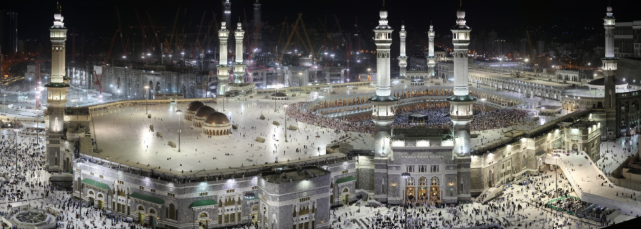
This principle is not just theoretical; converts often experience it firsthand among Muslims. A famous example is Malcolm X. When Malcolm X (El-Hajj Malik El-Shabazz) performed the Hajj pilgrimage in 1964, he was astonished by the genuine interracial harmony he witnessed. In a letter from Mecca, he wrote: “Never have I witnessed such sincere hospitality and the overwhelming spirit of true brotherhood as practiced by people of all colors and races… We were all participating in the same rituals, displaying a spirit of unity and brotherhood that my experiences in America had led me to believe never could exist between the white and the non-white.”icit-digital.orgicit-digital.org This revelation – that Islam erases the racism he had encountered all his life – led him to declare that “America needs to understand Islam, because this is the one religion that erases from its society the race problem.”icit-digital.org
The Prophet Muhammad’s own teachings reinforce this unity. In his final sermon, delivered during the Hajj, the Prophet ﷺ proclaimed: “All mankind is from Adam and Eve. An Arab has no superiority over a non-Arab, nor a non-Arab over an Arab; a white has no superiority over a black, nor a black over a white – except by piety and good action.”humanappeal.org.uk This powerful statement of human equality, made over 1,400 years ago, continues to resonate. New Muslims often cite how welcoming and brotherly the Muslim community is – a space where they are judged not by skin color or social background, but by their character and devotion. For those who may have felt like “outsiders” elsewhere, Islam’s global fraternity offers a profound sense of belonging. A Latino convert in Texas, an Aboriginal convert in Australia, or a Briton in London all describe the amazing feeling of instantly being part of a worldwide family of faith that cares for one another.
Furthermore, Islam’s egalitarian rituals reinforce this sense of unity. When Muslims line up shoulder-to-shoulder in prayer, socio-economic and racial distinctions vanish. The rich and the poor stand side by side; the former sinner might stand next to someone pious – all turning together towards the One God. The Hajj pilgrimage is perhaps the ultimate illustration: millions of pilgrims don the same simple white garments and perform the same rites, whether kings or peasants, embodying human equality. Such experiences can be deeply moving – even observing them can inspire conversions. (Indeed, one historical account tells of an Egyptian Jew who converted after witnessing the collective Friday prayers, struck by the solemn unity of Muslim worshipmohtadeen.com.) In a world still riddled with racism and division, Islam’s message of brotherhood and equality provides a refreshing and hopeful alternative, drawing people to a faith where “belief” is the great equalizer.
A Way of Life with Discipline and Guidance
Beyond theology and ideals, Islam offers a very tangible attraction: it is a complete way of life that brings discipline, structure, and healthy habits. Many people converting to Islam are seeking order and direction for their personal lives. Modern society, with its freedoms, can sometimes leave individuals unmoored – unhealthy lifestyles, addiction, family breakdown, and social chaos are common concerns. Islam addresses these by providing a clear framework for daily living. New Muslims often find that the five daily prayers, the dietary guidelines, and other practices instill a much-needed rhythm and self-control. As one observer noted, “Our society is disintegrating for lack of discipline… Through its disciplined lifestyle, to many people Islam seems to hold out the promise of helping them get their lives back in order again.”cbn.com
Daily prayers (Salah), for instance, cultivate punctuality, humility, and mindfulness of God throughout the day. The simple act of stopping worldly activities to pray at dawn, noon, afternoon, sunset, and night sets a pattern that can be life-changing. It constantly reminds believers of their purpose and keeps them away from immoral or harmful acts. Sir Thomas Arnold, a historian, observed that “the religion of the Muslim is continuously present with him and, in the daily prayer, manifests itself in a solemn and impressive ritual which cannot leave either the worshipper or the spectator unaffected.”mohtadeen.com The regular practice of prayer has indeed moved not just worshippers but even onlookers to appreciate Islam – it is a visible source of spiritual strength and discipline.
Likewise, fasting in Ramadan teaches self-restraint and empathy for the less fortunate, while Zakat (obligatory charity) and other forms of giving inculcate responsibility and compassion. The annual fast and charity are not just rituals; they actively shape one’s character and priorities. Many converts find that these practices help break bad habits and foster personal growth. For example, someone struggling with alcoholism or reckless behavior might find that Islam’s prohibition of intoxicants and the support of a sober Muslim lifestyle gives them the structure needed to overcome addiction. Indeed, Islam’s holy texts explicitly forbid consuming alcohol, gambling, or other destructive pastimes, regarding them as tools of Satan to sow enmity and heedlessness (Qur’an 5:90-91).
The comprehensive nature of Islamic guidance – covering everything from personal hygiene to business ethics – can at first surprise newcomers, but ultimately they appreciate it as holistic guidance. Rather than piecing together a moral code on their own, converts find a ready-made framework for living a good life. One American convert described Islam as “the best way of life,” noting that “it prohibits the poisons that are destroying individuals, families and communities: gambling, alcohol, drugs, sexual immorality, … interest (usury) dealings etc.”scribd.com. In a similar vein, many educated Westerners admit that modern society’s brightest minds have struggled to solve issues like drug abuse, family disintegration, or rampant greed – yet an illiterate Prophet 1400 years ago (Muhammad ﷺ) brought teachings that successfully curb these very illsscribd.com. This realization carries a powerful weight.
Islam’s practicality is often contrasted with the more abstract or Sunday-only practice some experienced in previous religions. As soon as one converts, there is a path forward: prayer to learn, community support, fasting to try, a clear code of halal (permissible) and haram (forbidden). There is guidance for how to eat, how to dress modestly, how to resolve conflicts, how to marry and raise a family, even how to greet others with peace. This practical framework is appealing for those who crave structure and self-improvement. It transforms Islam from just a set of beliefs into a daily practice – one that engages body, mind, and soul. In following this path, new Muslims often find themselves becoming more disciplined, kinder, and more focused individuals. They also often gain a supportive community that helps reinforce good habits (for example, friends from the mosque who encourage each other to wake up for the dawn prayer or to stay away from nightclubs). All of this gives converts a sense of empowerment and positive change – Islam becomes not just a faith they hold, but a life toolkit they actively use to become better people.
Moral Clarity and Social Justice
Closely related to the appeal of structure is the moral clarity Islam provides. In a time when moral relativism confuses many and societal values seem to constantly shift, Islam offers timeless ethical principles and a strong stance on justice. Converts are drawn to how Islam calls to goodness and forbids corruption or oppression, providing clear guidance on right and wrong. The religion’s moral code aligns with many people’s innate sense of justice: it emphasizes honesty, charity, kindness to neighbors, care for parents, and the sanctity of life. Simultaneously, it firmly prohibits exploitation, injustice, and harmful behaviors. This black-and-white clarity on many issues can be reassuring to those tired of grey zones. New Muslims often express relief at finding a faith that plainly identifies and tackles society’s biggest problems – from alcoholism and interest-driven debt traps to racism and sexual exploitation.
Many converts, for instance, appreciate Islam’s stance on social justice and charity. The concept of Zakat (the annual alms giving, usually 2.5% of one’s savings to the poor) strikes them as a brilliant system for social equity – a practical way to redistribute wealth and care for the vulnerable. In Islam’s golden age, no one had to beg because the community took Zakat seriously. Even today, the charitable spirit in Muslim communities impresses newcomers. It’s not uncommon for a curious non-Muslim to step into a mosque and be struck by the generosity and brotherhood – perhaps witnessing volunteers feeding the homeless or raising funds for disaster relief – and to realize this springs from faith. As one account notes, “one still meets converts who were impressed by the social justice of Islam, brilliantly expressed in the payment of Zakah.”mohtadeen.com Islam also champions justice in transactions, forbidding cheating, fraud, and usury (interest). The prohibition of riba (usurious interest) particularly appeals to those dismayed by exploitative banking that burdens the poor – they see Islamic finance’s ethical principles as a humane alternative.
Moreover, Islam’s moral teachings strongly defend family values and personal dignity. Many women (and men) who convert mention the appeal of Islam’s guidelines on modesty and chastity. In a hyper-sexualized culture, the idea of dignified dress and relations based on respect – not objectification – can be liberating. Likewise, Islam’s unequivocal ban on things like pornography or prostitution stands out as a principled stance to protect human dignity. Converts also often admire Islam’s emphasis on kindness and rights: the rights of parents, spouses, children, neighbors, even animals and the environment are all articulated in Islamic law. The Prophet Muhammad ﷺ taught that “the best of you are those who are best to their families” and showed extraordinary mercy to all creatures. Such teachings resonate with souls seeking an upright, compassionate way of life.
It’s worth noting that some people embrace Islam as a form of social or political protest as well. For instance, a number of African-American converts in the U.S. during the 20th century turned to Islam partly as a rejection of the racism and injustice they experienced in a “Christian” societycbn.com. By adopting Islam, they felt they were aligning with a religion that stood for equality (as discussed above) and distancing themselves from a system that had oppressed them. In a broader sense, conversion can be seen as a declaration of values: many converts are making a statement that they stand for truth, discipline, and justice – all values they see embodied in Islam – over the whims of contemporary culture. They are inspired that Islam calls upon them to enjoin good and forbid evil, even if it means going against the grain of society (Qur’an 3:110). This moral resolve, combined with the supportive framework of Islamic law and ethics, gives them confidence that they are living on the “straight path” and doing what is right for their souls and communities.
Spiritual Fulfillment and Inner Peace
Finally, at the heart of conversion stories is often a profound quest for spiritual fulfillment – and the intimate sense of peace that Islam brings. While intellectual conviction and moral admiration are important, many people ultimately convert because of how Islam makes them feel in their soul. Islam is not just a list of rules or ideas; it is a living spiritual tradition. Through acts of worship like prayer, supplication, reciting the Qur’an, and remembrance of God (dhikr), converts begin to experience a tranquility that they may never have felt before. “Verily, in the remembrance of Allah do hearts find rest,” the Qur’an promisesislambasics.com. New Muslims often attest that this verse comes alive for them – remembering and worshipping Allah indeed brings an inner calm that material pleasures or even other religious practices hadn’t given them.
Many converts describe an ineffable peace in their hearts right after taking the Shahada (the testimony of faith). Some say they were moved to tears the first time they put their forehead on the ground in Islamic prayer, feeling an overwhelming sense of humility and closeness to their Creator. One might hear a convert say, “For the first time, I feel that my heart is at peace and my life has a direction.” This personal transformation is often the most compelling evidence for them that they made the right choice. It’s not uncommon to hear phrases like “I feel reborn” or “I feel like I’ve come home” from new Muslims. When asked why they chose Islam, even after explaining the various intellectual reasons, many will simply say: “It feels true in my heart.”
Islam provides a direct, personal connection with God that satisfies the soul’s innate longing. The act of du’a (personal prayer) – calling on God for help, confessing one’s worries, seeking guidance – is encouraged in Islam at any time, in one’s own words. Converts marvel at the idea that they don’t need a priest or intercessor; they can raise their hands and speak to God at 2 AM when distressed, trusting He hears them. The Qur’an quotes God as saying, “Call upon Me; I will respond to you.” (Qur’an 40:60). That assurance, coupled with the practices of faith, often leads to real experiences of what Muslims call sakīnah, a divine tranquility. Over time, through prayer, reflection, and self-purification, converts notice positive changes in their inner state – less anxiety, more contentment. One new Muslim wrote, “When I follow the guidelines of the Qur’an and Hadith, I feel like a more complete human being. I feel positive, happy, and content with life.”reddit.com This contentment is priceless, and it fulfills the spiritual hunger that initiated their search.
It’s also notable that Islam offers hope and forgiveness that can heal a person’s spiritual wounds. No matter what someone did in the past, converting to Islam is seen as starting anew, with all previous sins forgiven by God’s mercy. This cleansing effect, and the ongoing opportunity to repent and seek mercy directly from the Most Forgiving, lifts heavy burdens from people’s hearts. Additionally, the simple acts of worship in Islam – bowing, prostrating, fasting, giving charity – all have a spiritual sweetness described by believers. They report feeling “connected to something bigger than myself” and part of a sacred tradition that goes back to the prophets of old. In an age of loneliness and mental stress, the solace found in prayer or reading the Qur’an can be life-changing. It is this experiential dimension that truly cements a convert’s faith: beyond all the logical reasons, Islam feels right and nurtures their soul. As the Islamic saying goes, “Whoever knows the taste of faith, never wants to let it go.”
Conclusion: A Convergence of Factors Leading to Islam
The wave of conversions to Islam in the West and around the world is driven by a convergence of factors – spiritual longing, intellectual satisfaction, moral and social alignment, and personal experiences of peace. Each convert’s journey is unique: one might have been attracted by the Qur’an’s wisdom, another by seeing the kindness of Muslims, another by the emptiness they felt elsewhere. Yet, common threads emerge. Islam’s timeless message manages to touch on all aspects of human life: it answers the mind’s questions, resonates with the heart’s yearning, and addresses social ills with justice and compassion. As people learn about the faith beyond media stereotypes – often through personal friendships or research – they “often find a religion of beauty, logic, and clarity,” one that “offers deep insights into life’s most profound questions.”islamicity.org Stripped of misconceptions, Islam appears in its true form: a religion that calls to the worship of the One God and the service of humanity with sincerity.
Modern converts and even public figures have testified to the transformative impact of embracing Islam. They frequently mention that they have found peace and purpose through Islamic teachingsislamicity.org. Many describe Islam as not just a set of beliefs but “a way of life that offers guidance, peace, and a deep connection to the Creator.”islamicity.org In a fast-paced, often chaotic world, this holistic spiritual path provides a refuge and a framework for living rightly. It’s therefore not surprising that Islam continues to attract people from all walks of life – from celebrities and academics to ordinary folks in small towns.
In summary, people are converting to Islam because it fulfills their spiritual needs (connection to God and inner tranquility), answers their intellectual questions (clear monotheism and authenticity), aligns with their moral values (justice, charity, family, equality), and guides their practical life (disciplined, purposeful living). These reasons, far from being “foreign” or hard to understand, speak to universal human desires – for truth, belonging, and peace. As long as these human needs persist, the motivations highlighted above will likely continue to inspire souls to embrace Islam. Each conversion story adds to the diverse mosaic of the Muslim community and exemplifies the Quranic idea that “Whoever God guides, none can mislead.” Those seeking guidance with an open heart are finding it in Islam, often to their own pleasant surprise. And their journeys remind the world that, even in the 21st century, faith and spirituality remain powerful forces in people’s lives, leading them to make profound life changes in the pursuit of truth and contentment.
Sources:
- Islam’s growth and convert experiencesislamicity.orgislamicity.org
- Simplicity and rationality of Islamic doctrinemohtadeen.commohtadeen.com
- Marshall Hodgson on Islam’s intelligibilitymohtadeen.com; Montet on Islamic creedmohtadeen.com
- Qur’an on no compulsion in religion (2:256)mohtadeen.com; on remembrance of God giving peaceislambasics.com
- Prophet Muhammad’s Farewell Sermon on equalityhumanappeal.org.uk; Quran 49:13 on unity of humanityquran.com
- Malcolm X’s letter from Hajj on racial unity in Islamicit-digital.orgicit-digital.org
- CBN report on converts seeking disciplinecbn.com
- Social justice in Islam (zakat, etc.) attracting convertsmohtadeen.com
- Quote on Islam prohibiting harmful vices and offering a better way of lifescribd.com
- Example convert sentiments on finding contentmentreddit.com and purposequora.com



 The Glorious Quran and Science
Leave a reply to Invitation to Islam: A Message to the People of Russia – The Glorious Quran and Science Cancel reply