
By Zia H Shah MD, Chief Editor of the Muslim Times
Text and Context of Quran 50:6
Quran 50:6 poses a contemplative question: “Have they not looked at the sky above them – how We built it and adorned it, and [how] it has no rifts?” surahquran.com. In this verse from Sūrah Qāf, God invites observers to reflect on the “sky above” – a reference to the heavens – noting it is built and adorned by divine design and contains “no flaws” or “no cracks” surahquran.com. Classical Islamic exegesis explains that “built it without supports and adorned it with planets”, leaving “no fissures blemishing it” surahquran.com. In the context of Sūrah Qāf, these signs in nature serve as proofs of God’s creative power and a prelude to resurrection: just as God created the cosmos flawlessly, He can recreate life. Verses immediately following 50:6 enumerate signs on earth (mountains, plants, rain) and conclude: “So were We incapable of the first creation? No indeed! Yet they doubt a second creation.” thequran.love. Thus, verse 6 functions as part of a broader argument from creation: the magnificent, orderly sky is evidence of God’s power and purpose, intended to awaken minds and hearts. Below, we explore this verse through multiple lenses – scientific, philosophical, and theological – to appreciate what it means for the heavens to be “built and adorned” without flaw.
Cosmological Grandeur: The Heavens “Built and Adorned”
The Qur’ān’s depiction of the sky as “built” suggests a structured cosmos. Intriguingly, modern cosmology also speaks of the universe’s construction: cosmologists describe a cosmic beginning (the Big Bang) followed by an expansive development of structure. The Quran elsewhere declares, “We built the universe with ˹great˺ might, and We are certainly expanding it.” quran.com, a statement uncannily resonant with today’s understanding that space itself is stretching outward. The “building” of the heavens can be reflected in how physical laws and fundamental forces shaped the orderly architecture of galaxies, stars, and planets after the Big Bang – essentially, the cosmos is “constructed” in a precise way much like a grand edifice.
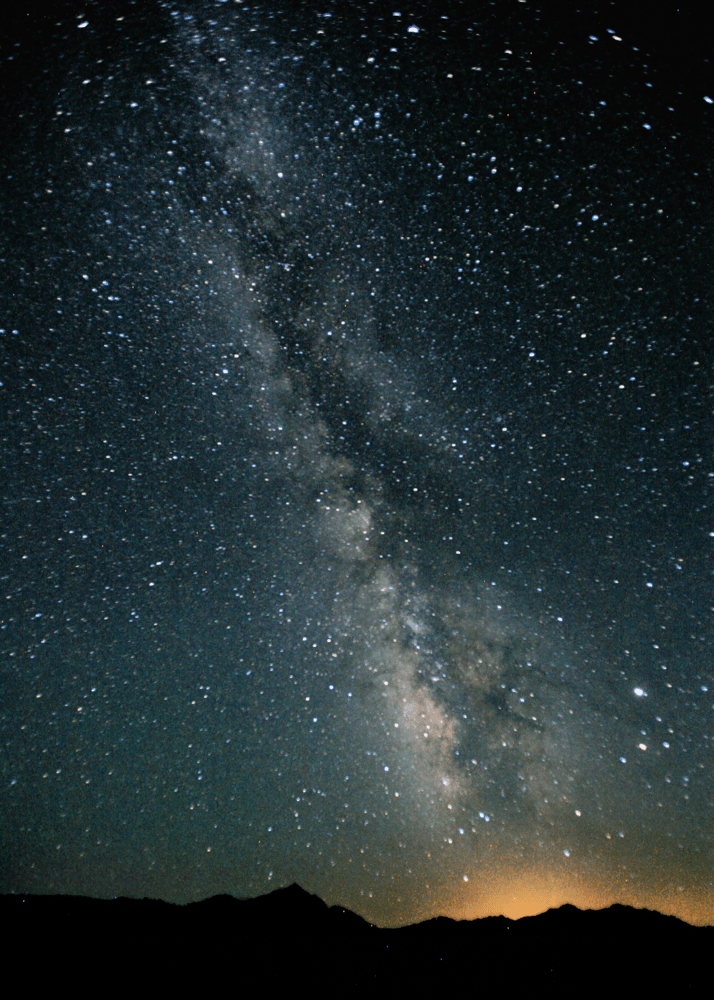
To say the sky is “adorned” implies it is beautifully furnished. Indeed, the night sky is studded with luminous “lamps” – as the Quran describes the stars – adorning the celestial dome surahquran.com. From a scientific perspective, we now know the universe contains on the order of 10 raised to the power 22 stars scattered across billions of galaxies, forming an immense cosmic tapestry. These stars and galaxies are not only scientifically significant; they are aesthetically magnificent. The Qur’an draws attention to this beauty: “We have made the sky a beautiful canopy” (Q.21:32) and “We adorned the lowest heaven with lamps (stars)” (Q.67:5). Astronomers looking up with modern telescopes see what ancient desert dwellers saw with the naked eye – a sky ornamented with dazzling lights and structured patterns. Such adornment elicits awe: as one commentary vividly puts it, the heavens “smile with [their] adornment,” like “myriad lamps hung on a festival night”, proclaiming the majesty of their Creator questionsonislam.com. In the Qur’anic view, the cosmos is not a chaotic void but a crafted artwork, brilliantly arrayed. Every star in the Milky Way and beyond can be seen as a jewel decorating the heavenly ceiling, inviting us to marvel at the artistry of creation.
Immaculate Order: “No Flaws” in the Fabric of Creation
When Quran 50:6 asserts the sky has “no flaws” (Arabic “فُرُوجٍ”, furūj), it signifies no cracks, gaps, or disharmony in the heaven’s structure surahquran.com. This notion of a flawless cosmos aligns strikingly with what science observes about nature’s consistency and order. Astrophysics reveals that the universe is governed by stable laws and precise constants that permit cosmic order rather than chaos. Modern cosmology emphasizes the uniformity of physical law across space and time – from the atoms on Earth to the furthest galaxies, the same gravity and quantum principles apply. We do not find the sky tearing open or the stars careening unpredictably; rather, planets and stars move in regular orbits with almost clockwork precision. As one scholar reflected, if these massive celestial bodies were “independent and unrestrained” by law, their motions would be utterly tumultuous, “causing such an uproar…that it would have scattered the universe.” Instead, their obedient orderliness “proclaims… the degree of power and wisdom of the All-Powerful One” questionsonislam.com. In other words, the very silence and stability of the heavens testify to an underlying harmony – no “uproar” or rupture, just tranquility governed by divine command.
Modern discussions about the cosmos go further, noting that the fundamental parameters of nature appear finely tuned – if they were even slightly different, serious “flaws” in the cosmos would result (stars wouldn’t form, galaxies would fly apart or collapse, etc.). Renowned physicist Stephen Hawking wrote: “The remarkable fact is that the values of [the fundamental constants] seem to have been finely adjusted to make possible the development of life.” libquotes.com If gravity were stronger or weaker by a tiny fraction, or if the charge of electrons were different, stable matter, stars, and life might not exist – the universe would, in effect, fall apart or be entirely uninhabitable. Instead, everything in the cosmic blueprint is “just right”. Astrophysicist Paul Davies mused that it is as though “somebody has fine-tuned nature’s numbers to make the Universe… The impression of design is overwhelming.” is-there-a-god.info. Likewise, Sir Fred Hoyle famously remarked that “a common sense interpretation of the facts suggests that a superintellect has monkeyed with physics… and that there are no blind forces worth speaking about in nature”, given how precise the cosmos’s parameters are is-there-a-god.info. Such statements from scientists – many of them not overtly religious – underscore how strikingly free of “flaws” the universe is in its fundamental design.
The Qur’an itself invites exactly this reflection. A parallel verse in Surah Mulk says: “[God] created seven heavens in layers. You do not see in the creation of the Most Compassionate any inconsistency. So look again: do you see any flaws?” islamawakened.com. It then challenges the skeptic to scan the sky repeatedly for defects: “Then look again and again – your sight will return to you humbled and exhausted” (67:3–4), having failed to find a crack. Both scripture and science converge on this point: the fabric of the heavens is seamless and coherent. From the large-scale structure of galaxy clusters down to the fine-tuned forces within atoms, creation exhibits order rather than error. This extraordinary cosmic precision conveys a sense of intent and reliability – a “flawless” handiwork that reflects the competence of its Maker. The absence of flaw does not mean nature is static – stars are born and die, the universe evolves – but even in its dynamism it follows laws established with breathtaking exactitude. For a believer, this immaculate order is a sign of divine wisdom; for a scientist, it is an invitation to investigate and be amazed by how cosmos and logic go hand in hand.
The Sky as a Flawless Canopy and Lifeline
Quran 50:6 directs our gaze to “the sky above them”, which includes not only deep space but also the immediate atmospheric sky over our heads. The atmosphere can be seen as the lowest heaven – and it too is “built” with an ingenious design, “adorned” with natural beauty, and free of defect in its life-sustaining function. The Qur’an in other verses alludes to the sky’s protective structure: “Allah is the One who raised the skies without pillars that you can see” (Q.13:2), highlighting the marvel that our atmosphere and heavens stand overhead unsupported, yet stable. From a modern scientific viewpoint, we understand that an invisible force – gravity – acts as those “unseen pillars,” holding the atmospheric layers around Earth. Our sky is a “secure canopy” (Q.21:32) ingeniously constructed. Astronauts peering from orbit often remark on the thin, delicate blue film encasing Earth. NASA scientists describe the atmosphere as a “pale-blue security blanket, clinging to us by the force of gravity.” It is extremely thin – 80% of its mass lies within 12 km of the surface – yet it does not rupture or dissipate under normal conditions science.nasa.gov. We see a smooth blue expanse by day and a clear window to the stars by night; nowhere do we notice a rip or gap in this blanket. In fact, “considering how thick the atmosphere is, it’s a miracle that we can see stars at all,” as one astronomy guide noted, yet our sky remains remarkably transparent to the light of those adornments beyond (scattering only enough to color the sky blue) – another subtle aspect of its provident design.
Not only is Earth’s sky visually flawless, it is functionally perfect for life. It is finely tuned in composition and layering – a balance of gases and properties that make our planet livable. The atmosphere acts as a multi-layered system (troposphere, stratosphere, mesosphere, etc.), each layer serving a purpose without which life would suffer. For example, our sky:
- Provides breathable air – containing ~21% oxygen for animal life and sufficient nitrogen for plants.
- Shields us from harmful radiation – the ozone layer in the stratosphere blocks most UV-B from the Sun, preventing deadly exposure science.nasa.gov.
- Maintains stable pressure and climate – creating the pressure needed to keep liquid water on the surface and a temperature range conducive to life science.nasa.gov.
- Burns up small meteors – acting as a protective veil so that we are not pelted by every space rock.
It is no exaggeration to say that without this “protective blanket”, life as we know it would not exist science.nasa.gov. The atmosphere is precisely not flawed: it has exactly the right thickness and mix to do its job. If it were much thinner (like on Mars), liquid water would boil away and cosmic radiation would sterilize the surface; if much thicker or composed differently (like Venus’s CO₂-rich atmosphere), we would be crushed by pressure or cooked by heat. Instead, Earth’s sky is “just right”, a stable system self-regulated in many ways (for instance, the hydroxyl radical cleanses pollutants in the air to keep the chemistry stable). We might say the sky has an inbuilt wisdom that keeps it in balance. Notably, the Quran says the sky is maintained “without any support”, and classical scholars interpreted this as a sign of God’s power upholding a stable order. Modern science fills in the mechanism (gravity and atmospheric physics), but the underlying wonder remains: the sky is secure and sound, not prone to random failure. It even “wears” beauty: from the gentle gradient of blues at noon to the blaze of colors at sunset, and the glitter of stars against the black firmament at night – our sky is both functional and aesthetic. This dual role of the sky as life-shield and adornment reflects a profound intentionality, as if it were deliberately crafted to be a comfortable home (roof) for humanity that is also filled with signs of splendor.
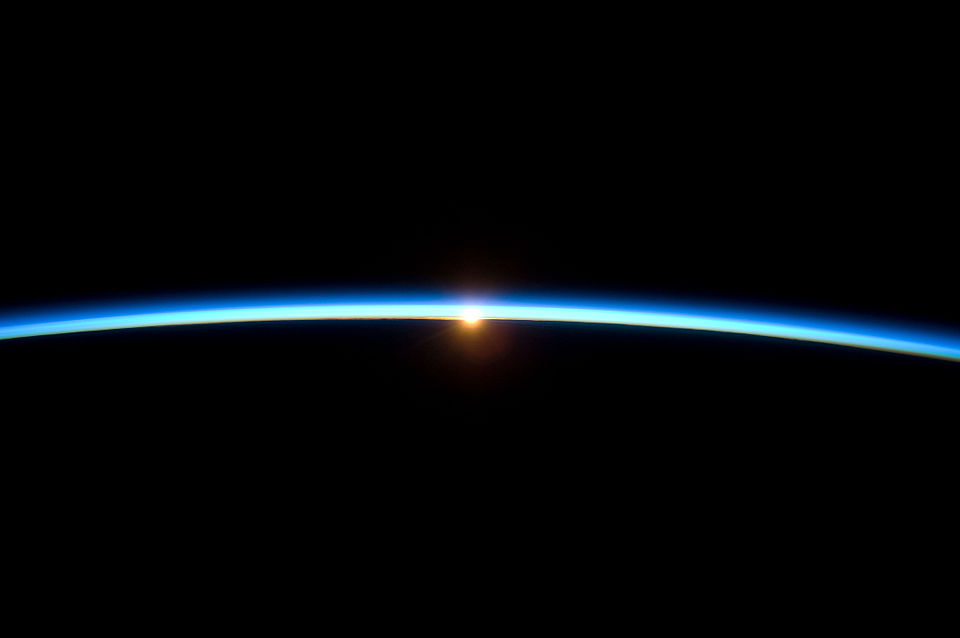
The atmospheric sciences today reinforce this Quranic point: our planet’s atmosphere is a remarkable system with no critical holes or missing pieces in its design (the only “holes” in the ozone layer were caused by human pollutants and are healing after our intervention, underscoring that in its natural state the system was whole). In sum, the samā’ (sky) above us is a purposeful construction and a majestic décor – perfect in form and function, as if set up to sustain life and invite contemplation simultaneously.
Perception, Beauty, and the Teleology of Nature
Beyond the physical descriptions of the sky, Quran 50:6 has deep philosophical implications about how we perceive nature and what it signifies. The verse opens with “Do they not look?”, challenging people to move from mere sight to insight. It suggests that seeing the sky’s order and beauty should lead one to acknowledge more than just an optical phenomenon – it should provoke questions of purpose (teleology) and aesthetics in the natural world. Philosophically, humans throughout history have felt a sense of awe under the starry sky, sensing meaning in its grandeur. The German philosopher Immanuel Kant famously confessed that two things filled him with ever-increasing wonder: “the starry heavens above me and the moral law within me.” The “starry heavens” have long been associated with the idea of the sublime – overwhelming beauty that hints at something beyond the mundane. The Qur’an encourages this same sensibility: the sky is meant to be “a lesson and a reminder for every servant who turns [to God]” (Q.50:7-8) thequran.love. The attractiveness of the heavens is not an end in itself, but a sign pointing to deeper truths.
From an Islamic philosophical standpoint, the beauty (jamāl) and order (niẓām) in nature reflect the attributes of its Creator and indicate intentionality. Nothing in the heavens is created in vain or for random sport. The Quran elsewhere has the faithful exclaim while contemplating creation: “Our Lord, You have not created all this without purpose – You are far exalted [above such a thing]!” quran.com. This is a clear teleological assertion: the vast cosmos, in all its elegant lawfulness and splendor, must have meaning and purpose. The phrase “no flaws” bolsters this view – a flawless system is one that is well designed for its ends. Islamic theologians (mutakallimūn) and philosophers have articulated arguments from design (dalīl al-ināyah or burhān al-tartīb) noting that the fine coordination of celestial and earthly phenomena for the benefit of life indicates a wise arranger. The regularity of the seasons, the precise distance of sun and moon, the way the sky provides light by day and navigation by night – all these hint at deliberate calibration. In the words of classical scholar Fakhr al-Dīn al-Rāzī, the arrangement of the heavens and earth in such harmony “demonstrates the existence of an All-Wise Creator”, for chance alone cannot account for unwavering order on such a cosmic scale.
Furthermore, the human ability to appreciate the sky’s beauty itself has philosophical weight. Why should the glowing Milky Way streak or a golden sunset move us emotionally? There is a harmony between human consciousness and the spectacle of the heavens. Philosophers of aesthetics might say this harmony suggests that beauty is a fundamental aspect of reality, not an incidental illusion. The Qur’an’s use of the term “adornment” (ziyānah) for the sky implies that beauty is intentional in creation – it’s not just physics, it’s also art. This counters a purely materialistic narrative that would consider beauty a subjective byproduct. Instead, the verse nudges us to see beauty as meaningful: the sky’s beauty serves to delight the eye and uplift the soul, directing us to the Artist behind the art. In theological terms, one might say the beauty of the sky is a mercy and a sign.
The idea of teleology (purposefulness) in nature had been sidelined in Enlightenment science in favor of mechanistic explanations, but verses like 50:6 invite a reintegration: it is possible to recognize the mechanism (e.g. gravity, nuclear fusion in stars) while also recognizing an underlying purpose or end (telos). As physicist George Ellis remarked about cosmic fine-tuning, coming to terms with it “makes it very difficult not to use the word ‘miraculous’” for the universe’s order en.wikiquote.org. The believer would indeed use that word – miraculous – and attribute it to deliberate choice by a Creator. While science may not speak of purpose explicitly, it provides the data (the uncanny order, the bio-friendliness of the cosmos) that philosophy and theology can interpret as evidence of purpose. Thus, reflecting on “no flaw in the sky” becomes an exercise in seeing beyond the surface – recognizing that the seamless integrity of the cosmos is a signpost. As the Quran says, “Indeed, in the creation of the heavens and earth and the alternation of night and day are signs for those of understanding” (Q.3:190). Perception, then, is not merely a sensory act but an intellectual and spiritual one: one must look at the sky with open eyes and mind, as 50:6 urges, to decode the rich message of beauty and purpose woven into its flawless expanse.
Divine Intent and Qur’anic Theological Reflections
Theologically, Quran 50:6 underlines several key concepts about God’s nature and relationship to the world. First, it emphasizes Divine Omnipotence: only an Almighty Creator (al-Qadīr) could “build” the enormous, unwobbling firmament above us. The effortless suspension of the sky “without pillars” surahquran.com and the absence of any crack testify to God’s power and mastery over creation. It is as if the verse is saying: if you think re-creating human beings for an afterlife is difficult, just look at the far greater feat of the flawless heavens – clearly nothing strains the power of the One who made that. In fact, verse 50:15 (a few lines after) drives this point home: “Were We then worn out by the first creation? Yet they are in doubt about a new creation.” thequran.love The answer is obviously no – the first creation of skies and earth did not tire God at all, as their pristine condition shows, so a second creation (resurrection) is entirely within His power thequran.love. Thus, belief in God’s creative power and belief in resurrection are tied together, each reinforcing the other.
Secondly, the verse conveys God’s Wisdom and Perfection. A flawless creation implies a flawless Creator – one who does not err or make things in jest. The Qur’an repeatedly states that God created the heavens and earth bil-ḥaqq (in truth, with an underlying reason) and bi-qadar (in precise measure). The lack of flaw is essentially the Qur’an’s way of saying that creation was measured, proportioned, and balanced exactly as it should be. In Islamic theology, this relates to the concept of “Itqan” – doing something with utmost perfection. The Prophet Muhammad (ﷺ) said, “God has prescribed excellence (itqan/ihsān) in all things.” The cosmos is the prime example of itqan: an entire universe executed in excellence, nothing shoddy or haphazard. Such excellence reflects God’s attribute of al-Ḥakīm (the Wise), for wisdom is manifest in purposeful order, and al-Ṣanīʿ (the Skillful Maker), whose craftsmanship admits no fault.
The adornment of the sky also speaks to God’s attribute of Beauty. A famous saying in Islam is “Allah is Beautiful and loves beauty.” The celestial adornment – stars strewn like pearls – is a tangible sign of this divine aesthetic. It’s noteworthy that the Quran does not depict the Creator as a distant engineer only, but as an artist who “beautified” the heavens for observers. Classical Qur’ān commentators often mention that stars have been made beautiful to our eyes and also serve practical purposes (navigation by the stars, missile against devils in Islamic cosmology, etc.), underscoring a theme of graceful utility in creation.
Additionally, the verse implies Divine Maintenance and Sustenance of creation. The fact that the sky stays up, intact and gorgeous, indicates a continuous divine care. In Islamic thought, God’s act of creation is not a once-and-done event; it is ongoing (tajdīd al-khalq). At every moment, the stability of the cosmos reflects God’s sustaining command (al-Qayyūm – the Sustainer). The Qur’an in verse 35:41 says, “Indeed, Allah alone keeps the heavens and the earth from falling apart. And if they were to fail, none could hold them in place besides Him.” The flawless sky of 50:6 is thus a living sermon about God’s providence – His guarding of the universe so reliably that we sleep under the stars without fear of the sky literally falling.
In the broader Qur’anic worldview (Qur’anic cosmology), the heavens and earth are often brought up as signs to cultivate a sense of gratitude and humility in the human being. Sūrah Qāf begins by addressing the disbelief of the Meccans in resurrection and the Qur’an. By verse 6, the narrative shifts to cosmic signs to shake human heedlessness. The unspoken question is: if the Creator can deck out the entire sky above you, what makes you think He does not know about you, or that He would leave you without guidance and reckoning? The function of verse 50:6 within the sūrah is to humble the skeptic and comfort the believer. It humbles the skeptic by displaying an inescapable proof of a higher power – no one can claim credit for the cosmos’ design except its Maker – and it comforts the believer by highlighting the reliability of God’s creation (hence, the reliability of His promise to resurrect and to judge justly). Indeed, the sky’s flawless order is often contrasted with human frailty in the Qur’an to remind us of our dependence on God. Sūrah Qāf later says, “We did indeed create man… We know what his soul whispers… We are closer to him than his jugular vein” (50:16) thequran.love. The all-knowing, all-powerful Creator of the flawless heavens is also intimately involved with the human soul – a profoundly theological point linking cosmology with spirituality.
Finally, verse 50:6 underscores Divine Intentionality. Nothing about the sky is accidental in Qur’anic perspective. Its construction, adornment, and preservation all serve an intentional end: to be “a reminder for every servant turning (to God)” (50:8) thequran.love. In Islam, the universe is often described as a book of signs (āyāt), just as revelation is a book of verses (āyāt). The sky above, with its grand design, is like an open scripture spread out for us to read. Its lack of flaws means the message it carries is uncorrupted and clear: a flawless creation points to the glory of its Creator. Thus, Quran 50:6 has theological implications about knowing God (through His signs) and trusting God (through His power and wisdom manifest in creation). It reminds us that just as the heavens have a coherent order, our lives and the entire drama of existence are not meaningless; they unfold under the care of a wise God who “has not created all this in vain” quran.com. Recognizing this instills a sense of purpose in the human observer: if the universe has intention behind it, so do our lives within that universe. Every time a believer gazes at the flawless sky, it reaffirms faith that truth and order undergird reality by Allah’s will.
Conclusion: Synthesis of Qur’anic Vision and Scientific Insight
In contemplating Quran 50:6, we find a remarkable synthesis of ancient scripture with modern insight. The verse’s simple, evocative language – “built and adorned… no flaws” – encapsulates realities that today’s cosmology, astrophysics, and Earth sciences have explored in depth. We discovered that the Qur’anic cosmology of a sky made with stability and beauty resonates with the scientific understanding of a finely structured, finely tuned universe. Far from being at odds, the Qur’an’s invitation to “look” at nature complements the scientific quest to observe and understand the heavens. Both paths, if followed sincerely, lead to awe and appreciation. The scientist marvels at the cosmos’ order and the believer marvels at the cosmos as an expression of the Creator – and in many cases these two responses unite in the same person, as scientific knowledge deepens spiritual insight.
We have seen that “built and adorned” can be read literally (the physical formation of the heavens and the stars) and metaphorically (the establishment of natural laws and the infusion of beauty), and in both senses the description holds true. We have also seen that “no flaws in it” stands up to scrutiny: whether one examines the physics that hold the stars in their courses or the atmospheric design that protects life, the more one examines, the more one appreciates the integrity of the system. Even where one finds “defects” – such as a supernova explosion or a hurricane – further understanding reveals these too play roles in a larger stability (supernovas spread heavier elements necessary for planets like Earth, storms distribute heat and water, etc.). In a holistic sense, the creation works exactly as intended. This bolsters a philosophical view that our universe is a cosmos (ordered whole) rather than chaos, suggesting a purposeful origin. The Qur’anic commentary of Bediuzzaman Nursi sums it up well: “An unending and infinite sovereignty is proclaimed to those who think, by the order in [the sky’s] creation, by the symmetry in its art, by its shining lamps… look at the order… see their precise balance, then understand just how powerful and wise is their Maker.” questionsonislam.com.
In reflecting on Quran 50:6, we engaged not just with theology but also with cosmology, astrophysics, atmospheric science, and philosophy of beauty and purpose. This interdisciplinary approach highlights that truth is multi-faceted: the Qur’an speaks to all these facets simultaneously. It addresses the external reality of the sky and the internal reality of human contemplation. It connects the scientific (how the sky is) with the teleological (why it might be so). By focusing solely on the Qur’anic paradigm and scientific-philosophical reasoning (without importing concepts from other religious traditions), we see a coherent picture emerge: The natural world, as described in Islam’s holy text, is “ayatullah” – a sign of God.
Thus, when we look up on a clear night and see the Milky Way arching overhead, or witness the seamless blue dome by day, we are experiencing exactly what Quran 50:6 calls us to notice. In that experience is a possible epiphany: the realization that we inhabit a designed, meaningful universe. The verse’s commentary therefore comes to life in our own encounter with the sky. Our modern knowledge only amplifies the glory described – knowing the Milky Way is one of billions of galaxies, or that the atmosphere is balanced by precise physical constants, should deepen our awe. The adornment is grander and the flawlessness more profound than a 7th-century observer could have imagined, which for a faithful mind only magnifies praise of the Creator. “Glory be to Him who fashioned it all”, as the Quran would say. In the end, the function of Quran 50:6 is achieved when the reader or observer goes from noticing the sky to remembering its Maker. Science, philosophy, and theology converge to affirm the same truth: The sky above is a signpost of transcendence, built and beautified by God, perfect in its decree. Such a sky invites us not only to scientific inquiry but to a humble reverence and a renewed sense of purpose under heaven’s flawless canopy.
Sources: Quran 50:6 surahquran.com; Classical Tafsīr al-Jalālayn & Ibn Kathīr on 50:6 surahquran.comuran.com; Nursi, Signs of Miraculousness questionsonislam.com; The Quran and Science (Z. Shah) thequran.love; NASA Earth Science on atmosphere science.nasa.gov; Hawking, A Brief History of Time libquotes.com; Paul Davies quoted in The Mind of Godis-there-a-god.info; Fred Hoyle in Caltech Engineering & Science (1981) is-there-a-god.info; Quran 67:3-4 islamawakened.com; Quran 3:191 quran.com.



 The Glorious Quran and Science
Leave a comment