
Written and collected by Zia H Shah MD, Chief Editor of the Muslim Times
Shared Theological Ground: Monotheism and the “People of the Book”
In Islamic theology, Christians (including Catholics) are regarded as Ahl al-Kitāb – “People of the Book” who received earlier divine revelations. The Qur’an emphasizes a fundamental kinship of faith with such communities: all who follow monotheistic scriptures share a “community of faith” in contrast to idolatry en.wikipedia.org. In fact, the Qur’an occasionally pays tribute to the virtues of Jews and Christians despite theological differences en.wikipedia.org. For example, it acknowledges that among the People of the Book “there is an upright party; they recite Allah’s verses during the night and prostrate in worship” (Qur’an 3:113) – meaning not all are alike, and some are truly devout in faith and good works islam.stackexchange.com. This respect sets a tone of recognition: even if the Catholic Church is not theologically “pure” from an Islamic standpoint (e.g. due to doctrines like the Trinity), it still worships the one Almighty God and upholds many revealed teachings, which Islam views as a significant step toward true monotheism.
Islamic scripture encourages finding common ground with the People of the Book. The Qur’an invites them to come to a “common word” — to worship none but God alone islamawakened.com. Catholics, in their belief in one Creator and moral law, fulfill much of this principle. The Qur’an even states “our God and your God is One” when addressing Christians (implicitly affirming that at core, Catholics direct their worship to the same God of Abraham) acommonword.com. While Islamic creed disagrees with certain Christian concepts (like deifying Jesus or saints), the Church’s steadfast proclamation of one God who is the author of creation is seen as a noble quality. Classical Muslim commentators note that those “who at least share belief in God, in prophethood and in revelation” naturally have more sympathy with Muslims than polytheists do islamicstudies.info. In other words, the Catholic Church’s monotheistic heritage – however imperfect in doctrine – is valued in Islam as part of humanity’s journey toward full submission to the One God.
The Qur’an explicitly holds out the possibility of salvation and virtue for upright Christians. It declares that “the believers, Jews, Sabians, and Christians—whoever truly believes in Allah and the Last Day and does good, there will be no fear for them, nor will they grieve” en.wikipedia.org. This verse (and its parallel in Qur’an 2:62) shows that from an Islamic view, non-Muslims are not automatically doomed; sincerity and righteous conduct matter. Many classical scholars interpreted this to mean that those Christians who sincerely worship God and live righteously may earn God’s grace en.wikipedia.org. Another verse praises Christians’ character, saying Muslims will find “the nearest in affection to the believers are those who say, ‘We are Christians.’ That is because among them are priests and monks, and because they are not arrogant” islamicstudies.info. Islamic exegesis explains that Christian humility and devotion (exemplified by monks and clergy who renounce worldly arrogance) inclined them to recognize truth versebyversequranstudycircle.wordpress.com. Early Islamic history offers a shining example: the Christian king Najāshi of Abyssinia, who, when Muslims sought refuge with him, received them kindly and justly. The Prophet Muhammad ﷺ praised this just Christian ruler and even prayed for him. Such examples underscore that a non-Muslim institution like the Catholic Church can produce leaders and followers of great moral integrity, whom Islam can commend as allies in faith and goodness.
Classical Islamic perspectives, while viewing Islam as the final, complete message, still held Christians in esteem as fellow monotheists. Islamic law historically accorded People of the Book protection (dhimma) and freedom of worship under Muslim rule en.wikipedia.org. Many jurists went further, urging kindness and justice toward Christian subjects. For instance, medieval scholars emphasized Quranic commands to “deal kindly and justly” with those non-Muslims who live in peace with Muslims (cf. Qur’an 60:8) – enjoining humane treatment and respect en.tohed.com. The Prophet Muhammad himself participated in the Hilf al-Fudul (Alliance of Virtue) before his prophethood – a pact with non-Muslim Meccans to uphold justice – and later said, “I would not break this alliance even for a herd of red camels, and if I were called to it again, I would gladly join it” en.wikishia.net. This oft-cited statement is profoundly instructive: it shows that Muslims can cooperate with others (even outside the faith) in pursuit of justice and goodness, without compromising their own beliefs. In the same spirit, one can envisage the Catholic Church – guided by a moral Pope – as a partner in promoting monotheism’s ethical ideals. The Church’s teachings against secularism and idolatry of material things, its affirmation that humans are called to a higher purpose under God, and its preservation of biblical wisdom all resonate with Islam’s view of ahl al-kitāb as people who, despite doctrinal differences, carry forward the torch of ethical monotheism in the world.
Moral and Social Impact: Shared Values in Justice and Peace
Beyond theology, the Catholic Church’s global social and moral influence can align closely with Islamic values. Both Catholicism and Islam stress justice, compassion, and peace, providing a strong basis for collaboration in worldly affairs. The Qur’an commands Muslims to cooperate in righteousness and good works (Qur’an 5:2), and the Church’s humanitarian efforts and moral teachings often exemplify these virtues. In several key areas, the Catholic Church has been a force for good that Muslims can appreciate and support:
- Interfaith Dialogue and Mutual Understanding: The Catholic Church has increasingly engaged in respectful dialogue with other faiths, especially since the Second Vatican Council’s declaration Nostra Aetate (1965) which acknowledged the truth and holiness in other religions and specifically praised Muslims’ faith in one God. Contemporary Muslim scholars likewise emphasize the moral duty of interfaith engagementislamicity.orgacommonword.com. A notable example is the 2007 open letter “A Common Word Between Us and You,” signed by 138 Muslim scholars, which highlighted the shared Qur’anic and Biblical mandate to love God and love one’s neighboracommonword.com. The Pope (Benedict XVI at the time) and many Christian leaders warmly received this as a “Muslim hand of conviviality and cooperation” extended to Christiansacommonword.com. Such initiatives show the Church and Muslim world actively finding common spiritual values. From an Islamic perspective, when the Church facilitates sincere dialogue, it is fulfilling the Quranic injunction to “come to common terms” with People of the Book in a positive way. This builds bridges and reduces hatred – a fulfillment of the Islamic principle that there should be no compulsion in religion (Qur’an 2:256) and that truth stands clear through respectful exchange, not coercion.
- Promotion of Justice and Human Dignity: The Catholic Church’s social teachings on justice, human rights, and dignity strongly parallel Islamic ethics of
adl(justice) andkaramah(human honor). The Church often speaks out against oppression and inequality – for example, Papal encyclicals calling for economic justice and for the rights of the poor and workers. The Qur’an likewise condemns injustice and tyranny, commanding believers to “stand up firmly for justice, even against yourselves” (4:135). In international politics, the Vatican has used its influence to advocate for peace and fair solutions to conflicts. Muslims have noted with appreciation when popes have opposed unjust wars or occupations. For instance, Pope John Paul II’s outspoken opposition to the 2003 Iraq War and Pope Francis’s advocacy for the Palestinian cause and for refugees align with the Quranic mandate to defend the oppressed and seek just peace. These stances embody what the Qur’an describes as enjoining the right and forbidding the wrong (al-amr bil maʿruf wa-nahy ʿan al-munkar), a duty for both Muslims and righteous People of the Book. Indeed, Islamic tradition holds that one of the reasons certain Christian communities historically earned respect was their refusal to support oppression. The Qur’an praises a group of monks and priests who “are not arrogant” – they stand humbly for truthislamicstudies.info. When the Church raises its voice for the voiceless, Muslims see echoes of these Quranic virtues in action. - Advancement of Global Peace: The Catholic Church has been a prominent voice for peace and reconciliation, a mission very much in harmony with Islam’s greeting of peace (salam) and its teachings that war is a last resort. Modern Popes have convened interfaith prayers for peace (e.g. the Assisi gatherings) and have worked to heal divides between civilizations. In 2019, Pope Francis and the Grand Imam of Al-Azhar (Egypt’s preeminent Islamic institution) co-signed the historic Document on Human Fraternity for World Peace and Living Together. This document invokes God’s name and fundamental religious teachings to renounce violence and promote fraternity: “In the name of God… who has called us to live as brothers and sisters, to fill the earth with His values of goodness and peace… whoever kills a person is like one who kills all humanity, and whoever saves a person is like one who saves all humanity”vatican.va. Remarkably, the document directly mirrors a Qur’anic verse (Qur’an 5:32) about the sanctity of life, showing the Pope actively affirming an Islamic ethical principle. It “invites all persons who have faith in God… to unite and work together… to advance a culture of mutual respect”vatican.va. Muslims worldwide applauded this joint declaration, seeing the Catholic leader championing peace, mercy, and the sanctity of life – all central tenets of Islam. As one Muslim commentator noted, “Without peace and justice between these two religious communities, there can be no meaningful peace in the world”acommonword.com. This sentiment, shared by both sides, underscores that Catholics and Muslims have a shared responsibility (and capability) to foster global peace. The Church, representing 1.4 billion people, and the Muslim ummah (community) of similar size, together can uphold the Qur’anic ideal of being witnesses for justice and peace among humanity.
- Charity and Service to Humanity: “Love thy neighbor” in Christianity finds a close parallel in the Islamic emphasis on rahmah (mercy) and care for others. The Catholic Church is one of the largest charitable organizations in the world – running hospitals, schools, orphanages, and aid agencies (like Caritas Internationalis) that serve all people regardless of creed. From an Islamic viewpoint, these works are highly esteemed, as caring for the poor, sick, and needy is a fundamental religious duty. The Prophet Muhammad ﷺ said, “He is not a true believer whose stomach is full while his neighbor goes hungry,” reflecting a value the Church also holds dear. Catholic relief efforts in disaster zones, campaigns for debt relief of poor nations, and advocacy for migrants and refugees (for example, Pope Francis’s passionate calls to welcome refugees) demonstrate compassion in action. Muslims recognize these efforts as fulfilling the Quranic injunction to feed the hungry, help orphans, and show mercy to God’s creatures. Indeed, Islam teaches that God’s mercy encompasses all, and those who are merciful to others will receive mercy. When the Church stands up for the downtrodden or extends a hand of help, it is acting on a moral plane that Islam wholeheartedly endorses. These are areas where Muslims and Catholics often find themselves working side by side – whether in local community service projects or global humanitarian campaigns – united by shared values of charity (sadaqa), kindness, and human dignity.
- Ethical Stances and Common Values: In today’s world, many moral challenges – from materialism to family breakdown to environmental crisis – concern both Muslims and Catholics. The Catholic Church’s commitment to the sanctity of life, the importance of family, and the preservation of moral values in society often mirrors Islamic positions. For instance, both faiths promote chastity, care for the family unit, and respect for life at all stages. Pope Francis’s landmark encyclical on ecology, Laudato Si’, called for stewardship of the environment; Muslims found this deeply resonant, as the Qur’an describes humans as khalifa (stewards) on earth tasked with caring for God’s creation. In such causes, the Church acts as an ally in promoting what Islam considers maʿruf (good and wholesome). The moral voice of the Papacy in international forums – advocating debt forgiveness for poor countries, equitable development, and ethical guidance in biotechnology – is welcomed by Muslims who seek a God-centric, ethical approach to these issues. In short, the Catholic Church’s social and moral impact frequently advances justice (ʿadl), compassion (rahma), and the common good, which are pillars of Islamic teaching. The Qur’an commends cooperation in al-birr wat-taqwa (“righteousness and piety”) islamicity.org, and the Church’s work often exemplifies this, making it a valuable partner from an Islamic perspective in tackling humanity’s ills.
Pope Leo XIV: A Future Vision of Qur’anic Ethics in Practice
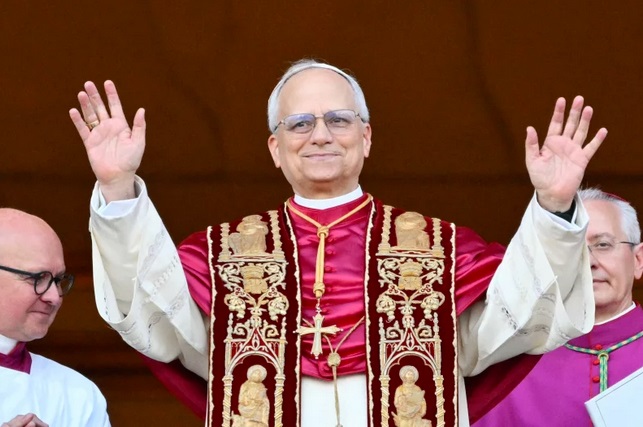
Envisioning a future Pope Leo XIV who leads the Catholic Church’s 1.4 billion followers, one can imagine reforms and stances that would strongly align with Qur’anic ethics and garner admiration in the Muslim world. Assuming the truth of the Qur’an, such a Pope’s actions would be evaluated by how well they reflect the values God revealed – values like monotheism, justice, mercy, and the promotion of goodness. What might Pope Leo XIV do, in this hypothetical scenario, to exemplify those principles? Below are a few possibilities, along with how Muslims might interpret these actions:
- Reaffirming Pure Monotheism: Pope Leo XIV might emphasize the absolute oneness of God in Catholic worship and encourage his flock to direct all prayers to God alone. He could deepen the Church’s understanding of the First Commandment (“Thou shalt have no other gods”) in a way that deemphasizes any practices that Muslims see as bordering on shirk (association of partners with God). For example, while maintaining Christian doctrine, he might discourage excessive veneration of statues or icons, clarifying that such images are mere reminders, not objects of worship. He could highlight the teachings of Jesus that align with strict monotheism (e.g. Jesus praying to one God, instructing love of God with all one’s heart). From a Muslim viewpoint, these steps would be warmly welcomed as moving closer to tawḥīd (Islamic monotheism). Muslims might cite the Qur’an’s own respectful address to Christians: “O People of the Book, let us agree on a common word between us: that we will worship none but God” (Qur’an 3:64)islamawakened.com. A Pope who echoes this common word by stressing that God alone deserves worship would be seen as a true ally in guiding humanity toward the pure worship of the Creator. While theological differences would remain (e.g. Islam rejects the Trinity outright), Muslims could interpret Pope Leo XIV’s monotheistic emphasis as a fulfillment of the Qur’anic hope that People of the Book draw nearer to the truth of one God. Such a Pope might even quote the Qur’an or Islamic wisdom occasionally in emphasizing monotheism, much as Pope Francis referenced the Qur’an’s teaching on protecting lifevatican.va. This would signal sincerity in finding convergence, and Muslims, recalling that the Qur’an says “our God and your God is one”, would respond with respect and optimism.
- Strengthening Interfaith Solidarity: Building on the legacy of documents like Nostra Aetate and the Document on Human Fraternity, Pope Leo XIV could initiate even more robust engagement with Muslim leaders. He might, for instance, institutionalize an annual “Abrahamic Summit” where Christian, Muslim, and Jewish authorities meet to discuss global peace and mutual understanding. He could visit major Muslim countries or invite imams to the Vatican in friendship. If Pope Leo XIV were to publicly acknowledge the Prophet Muhammad as a figure who taught important moral truths (while stopping short of theological endorsement), it would be a groundbreaking gesture of goodwill. Even without that, by consistently referring to Muslims as brothers and sisters in faith’s journey and condemning Islamophobia or anti-Muslim bigotry, he would embody the Qur’anic ideal of taʿāruf – knowing one another across differences (Qur’an 49:13). Muslim observers would likely compare him to the Najāshi (the just Christian king) or other historic righteous Christians. The response among many Muslims would be appreciation and an increase in affection, as predicted by the Qur’anic verse that “nearest in love to the believers are those who say, ‘We are Christians’” islamicstudies.info. They might say that Pope Leo XIV exemplifies the kind of Christian leader the Qur’an had in mind – one who is not arrogant, who works with humility alongside others for the sake of God. Joint declarations under his leadership – for example, condemning religious extremism on all sides and promoting coexistence – would fulfill contemporary Muslim scholars’ calls for an “alliance of virtue” among faith leaders to serve the common goodabc-usa.org. Indeed, the Marrakesh Declaration (2016) issued by hundreds of Muslim scholars specifically urged Muslim, Christian, and Jewish leaders to form a global alliance to “fight poverty, protect freedom, and end oppression… to advance the common good for all”abc-usa.orgabc-usa.org. A Pope who steps forward to actualize such an alliance – hand in hand with Muslim counterparts – would be heralded in the Islamic world as a force for immense good, and as someone living up to the Quranic ethic of cooperation in righteousness.
- Championing Justice and Anti-Oppression: In line with Qur’anic ethics, Pope Leo XIV could take bold stances against injustice wherever it occurs. For example, he might be an outspoken advocate for the rights of persecuted Muslim minorities (such as the Rohingya or Uighurs), just as he would for persecuted Christians. By using the moral authority of his office to defend oppressed peoples regardless of faith, he would embody the Quranic principle of “stand out firmly for justice, as witnesses to God, even against yourselves” (Qur’an 4:135). Muslims would likely respond with great respect, seeing him as practicing the Islamic concept of adl. If he also worked to reform any injustices within the Church’s own sphere – say, continuing to root out corruption or abuse – that commitment to justice at home and abroad would resonate strongly with Islamic values of ihsan (excellence in conduct). A concrete example might be the Pope leading a campaign for debt relief for impoverished nations or fairer trade policies – issues that affect many Muslim-majority countries. Islam has a deep concern for economic justice (the Quran forbids exploitative usury and encourages charity and fair dealing), so Muslim economists and leaders might applaud the Pope for echoing these concerns on the world stage. In doing so, Leo XIV would effectively be siding with Quranic ideals against global injustice. Muslims often note when the Pope calls out the powerful for their treatment of the weak; such courage parallels how prophets in Islamic tradition spoke truth to tyrants. The response would likely be increased trust and willingness to partner with the Church on humanitarian and justice initiatives. In sum, by “forbidding evil” (e.g. condemning torture, war crimes, human trafficking) and “enjoining good” (e.g. promoting education, healthcare, equitable development), the Pope would be seen as walking the Qur’anic talk, even if he wears a different faith’s cloak.
- Fostering Global Peace and Reconciliation: Pope Leo XIV might also undertake diplomatic and peacekeeping roles that align with Islam’s staunch preference for peace over war. He could mediate conflicts – perhaps between Muslim nations or between Muslim and Christian communities in conflict zones – leveraging the trust he’s built. For instance, he could bring together Sunni and Shia leaders for dialogue, or help reconcile communities in places like Nigeria or the Middle East where Christian-Muslim tensions exist. Such peacemaking efforts would fulfill the Quranic injunction to “make peace between the people” (49:10) and the prophetic saying “make peace and reconciliation among your brethren.” If the Pope succeeded in brokering a truce or improving relations, Muslims would likely view him as an instrument of divine goodness, recalling how the Qur’an says God sometimes uses members of one community to check the excesses of another so that churches, synagogues and mosques are all protected (see Qur’an 22:40) – a verse that pointedly notes God’s care for all houses of worship. A Muslim interpretation might be that God is using this just Christian leader to bring harmony, much as historic Muslim rulers sometimes protected Christian communities. Notably, when Pope Leo XIV speaks the language of peace, mercy, and forgiveness, Muslims listening can often find a familiar ring in their own scripture. A future Pope who perhaps calls for universal disarmament or an end to nuclear weapons, citing the catastrophic humanitarian impact, would find Muslims agreeing, as Islam forbids wanton destruction (fasād fil-ard). In response, Muslim leaders (both political and religious) might increase collaboration with the Vatican on peace initiatives, seeing the Pope as a partner who echoes the Prophet’s teaching that “All creation is the family of God, and the most beloved to God is the one who is kindest to His family.” The shared understanding that peace is a religious duty could lead to unprecedented unity of purpose.
- Living the Spirit of Humility and Service: If Pope Leo XIV models personal humility, simplicity, and service, this too would win Muslim hearts. The Qur’an lauds humility and condemns arrogance; the Prophet Muhammad lived as a humble servant-leader. Popes who forgo ostentation (as Pope Francis did by adopting a simpler papal residence and washing prisoners’ feet on Holy Thursday) are often admired by Muslims as well. They see in such actions the Quranic value that “Allah loves not the arrogant, boastful” (31:18) and loves those who are humble and serve the poor. A future Pope could initiate, for example, a “Year of Service” where Catholics are encouraged to volunteer globally to help the less fortunate. This echoes the Islamic concept of khidma (service) and could prompt joint Catholic-Muslim volunteer programs. Muslims might respond by highlighting how this reflects the Prophet’s saying “the best of people are those most beneficial to people.” Moreover, Pope Leo XIV could speak out against the modern ills of consumerism and moral relativism, championing a return to God-centric living. Such moral clarity is much in line with Islamic dawah (calling to goodness). In essence, by leading through moral example, a humble and ethical Pope would embody qualities of a righteous People of the Book that Islamic tradition can hold up as exemplary. The response among Muslims could range from informal praise in sermons and Islamic conferences – citing him as a just leader – to formal interfaith awards or joint prayers for global wellbeing. It is not far-fetched that Muslims might even quote the Qur’an (5:82) to describe Pope Leo XIV: “among them are priests and monks who are not arrogant.” That Quranic commendation, originally referring to certain Christians in Muhammad’s time, could be applied to a contemporary Pope whose life and policies reflect humility, piety, and compassion.
In interpreting such positive actions, Muslims would still recognize theological distinctions – Islam would still regard even a virtuous Pope as calling to a faith that is incomplete without the final Prophet – but they would emphasize practical shared values over abstract differences. The Qur’an provides guidance here: it tells Muslims not to dispute with People of the Book except in the best manner, and to say to them “we believe in what was revealed to us and revealed to you; our God and your God is One, and to Him we submit” (Qur’an 29:46). In this light, Muslims could view Pope Leo XIV as someone moving closer to that ideal submission to the One God, and as an ally whose good deeds benefit all of God’s creation. Classical scholars like Imam al-Ghazali or Ibn al-Qayyim, who wrote about Christianity, often concluded that while doctrinal disagreements are real, the intentions and love of God found among many Christians are honorable. Contemporary Muslim thinkers go further to assert that collaborating with virtuous non-Muslims is not only permissible but obligatory to achieve the common goodislamicity.org. The Marrakesh Declaration affirmed that “religious leaders must draw on their respective scriptures to affirm mutual respect…and that people of all faiths working together can build a culture of peace”abc-usa.org. Therefore, Muslims would likely interpret Pope Leo XIV’s Quran-aligned reforms as a fulfillment of this vision – a case of a Christian leader drawing from his scripture in a way that harmonizes with the Quran’s teachings, thereby bringing Christians closer to Muslims in devotion to God and service to humanity.
Conclusion
In summary, assuming the truth of the Qur’an does not preclude acknowledging the Catholic Church as a force for good – rather, it provides the framework to understand how and why the Church can contribute positively to humanity’s spiritual and moral journey. Islamic theology, while holding Islam as the final truth, recognizes Christians as fellow believers in God who can exemplify many Islamic virtues en.wikipedia.org. The Catholic Church, under a wise and ethical Pope (like our imagined Leo XIV), can be viewed through the Qur’anic lens as an institution that, despite theological impurities from the Islamic standpoint, helps lead souls toward God’s light by upholding monotheism’s core ethical teachings. Its efforts in promoting peace, justice, and compassion echo the Qur’anic call for a righteous society, and its cooperation with Muslims in these arenas realizes the Quranic injunction: “Cooperate with one another in goodness and piety” (5:2).
Muslims can thus see the Church not as a rival, but as a partner in realizing God’s will on earth – especially on issues where our scriptures align, such as caring for the poor, honoring God’s creation, and striving for a just peace. The Qur’an addresses Christians as “People of the Book” with both respect and a gentle challenge: it acknowledges their devotion and invites them nearer to the fullness of truth en.wikipedia.org. In practical terms, every act of goodness by the Church is a step toward that truth, and Muslims are taught that God does not let any good deed go unrewarded (Qur’an 2:272). Therefore, when 1.4 billion Catholics feed the hungry, educate the ignorant, or work for peace under their Church’s guidance, an observant Muslim will find much to celebrate. He or she may quote the Prophet’s hadith, “Wisdom is the lost property of the believer – wherever they find it, they have the right to take it.” The moral wisdom and goodness emanating from the Catholic Church can be “taken” by Muslims as part of our shared Abrahamic heritage – a proof that God’s message continues to have positive effect even among those who have not accepted Islam.
Ultimately, Islam teaches that God’s guidance unfolds in stages and that there is no compulsion in matters of faith. Catholics, as followers of an earlier stage of revelation, are seen with compassion and hope in the Qur’an. It is in this spirit that Muslims can appreciate Pope Leo XIV and the Catholic Church’s good works: as advancing the world toward the Qur’anic ideals of tawḥīd (recognition of the One God) and ṣalāḥ (righteous conduct). By emphasizing shared values – worship of God, love of neighbor, mercy, justice, and peace – Muslims and the Catholic Church can journey together as friends. Each step the Church takes that aligns with Qur’anic ethics is a step blessed in Islamic eyes. In a world plagued by atheism, materialism, and strife, the sight of a God-fearing Catholic Pope and devoted Muslims working side by side for the common good is not only a diplomatic nicety – it is, one might say, a fulfillment of God’s promise that “those who believe and do good – be they Muslim or Christian – will have their reward with their Lord” en.wikipedia.org. Thus, under a leader like Pope Leo XIV, the Catholic Church can indeed be a towering force for good, helping lead humanity towards the one God and the values cherished by the Qur’an, all while Muslims and Catholics alike acknowledge their theological differences with mutual respect. Such a partnership exemplifies the Qur’anic vision of practical monotheism – unified in worshiping God and unified in caring for God’s creation.
Sources:
- The Qur’an, verses on the People of the Book and interfaith virtues en.wikipedia.org islamicstudies.info
- Classical Islamic accounts of relations with Christians (e.g. the Prophet’s pact of virtue and refuge with the Negus)en.wikishia.net versebyversequranstudycircle.wordpress.com
- Contemporary Muslim scholarship promoting interfaith collaboration (e.g. “A Common Word” letter, Marrakesh Declaration) acommonword.com abc-usa.org
- Document on Human Fraternity (2019) by Pope Francis and Grand Imam Al-Tayyib, exemplifying shared values vatican.va
- IslamiCity – Interfaith Dialogue a Moral Duty, highlighting Quranic basis for respecting other faiths islamicity.org.


 The Glorious Quran and Science
Leave a reply to Peace Cancel reply